• Skip to primary navigation
  • Skip to main content

International Salsa Magazine

  • HOME
  • Previous editions
    • 2026
      • ISM / March 2026
      • ISM / February 2026
      • ISM / January 2026
    • 2025
      • ISM / December 2025
      • ISM / November 2025
      • ISM / October 2025
      • ISM / September 2025
      • ISM / August 2025
      • ISM / July 2025
      • ISM / June 2025
      • ISM / May2025
      • ISM / April 2025
      • ISM / March 2025
      • ISM / February 2025
      • ISM / January 2025
    • 2024
      • ISM / December 2024
      • ISM / November 2024
      • ISM / October 2024
      • ISM / September 2024
      • ISM / August 2024
      • ISM / July 2024
      • ISM / June 2024
      • ISM / May 2024
      • ISM / April 2024
      • ISM / March 2024
      • ISM / February 2024
      • ISM / January 2024
    • 2023
      • ISM / December 2023
      • ISM / November 2023
      • ISM / October 2023
      • ISM – September 2023
      • ISM – August 2023
      • ISM July 2023
      • ISM Edition June 2023
      • ISM – May 2023
      • ISM April 2023
      • ISM March 2023
      • ISM February 2023
      • ISM January 2023
    • 2022
      • ISM December 2022
      • ISM November 2022
      • ISM October 2022
      • ISM September 2022
      • ISM August 2022
      • ISM July 2022
      • ISM June 2022
      • ISM May 2022
      • ISM February 2022
      • ISM January 2022
    • 2021
      • ISM December 2021
      • ISM November 2021
      • ISM October – 2021
      • ISM September 2021
      • ISM August 2021
      • ISM July 2021
      • ISM May 2021
      • ISM April 2021
      • ISM June 2021
      • ISM March 2021
      • ISM February 2021
      • ISM January 2021
    • 2020
      • ISM December 2020
      • ISM November 2020
      • ISM October 2020
      • ISM September 2020
      • ISM August 2020
      • ISM July 2020
      • ISM June 2020
      • ISM May 2020
      • ISM April 2020
      • ISM March 2020
      • ISM February 2020
      • ISM January 2020
    • 2019
      • ISM December 2019
      • ISM November 2019
      • ISM October 2019
      • ISM Septembre 2019
      • ISM August 2019
      • ISM July 2019
      • ISM June 2019
  • Download Salsa App
    • Android
    • Apple
  • Spanish

Search Results for: El Gran Combo

El “Día de San Juan” Salsa Festival

North America / USA

El “Día de San Juan” Salsa Festival Western Region Puerto Rican Council, Inc.

Concilio De Organizaciones Puertorriqueños Del OEste

Countdown to El “Día de San Juan” Festival 2018

40th Anniversary

SAVE THE DATE

June 30, 2018

Due to the ongoing effects of the devastation of Hurricane Maria in Puerto Rico, the WRPRC will be directing all proceeds of El Dia de San Juan Festival to aid in the educational programs of the youth of Puerto Rico. http://www.wrprc.org/


“Día De San Juan” Salsa Scholarship Festival Line Up

Charlie Aponte

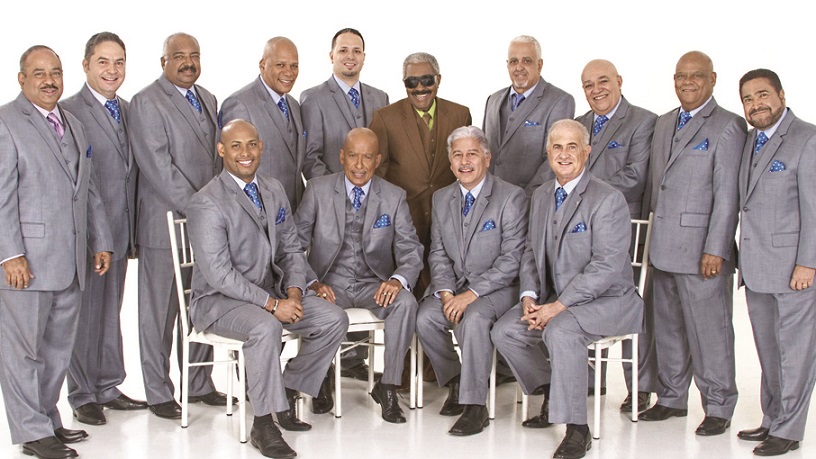
Charlie Aponte, one of the most beloved and remembered voices by millions of Salseros worldwide, returns to the stage as a  Soloist after 41 successful years with La Universidad de la Salsa…El Gran Combo de Puerto Rico.

Charlie Aponte
Charlie Aponte

With Charlie Aponte as their lead singer El Gran Combo recorded many hits Brujería; Amor Brutal; La Loma del Tamarindo; No hay Cama pa’ tanta Gente; Hojas Blancas; Arroz con Habichuelas; among many others.

Tony Vega

Internationally known salsa singer and band leader, Tony Vega, emerged from Puerto Rico in the 1980’s, He has worked with many of the greatest salsa stars from the beginnings of the genre, to the present.

Vega was exposed to music at a very early age; influenced by many adults in his family who were musicians.  Even in those early days, it was clear to Vega that nothing could satisfy his musical preferences like the music of his native Puerto Rico.

He was greatly influenced then by Ismael “Maelo” Rivera and Cortijo y su Combo, Rafael Ithierand El Gran Combo.  Vega signed with the then new RMM record label and released his solo debut with “Yo Me Quedo!” in 1988.

Tony Vega
Tony Vega

Vega’s riveting voice and his innate ability to perform contemporary salsa in the best tradition of the classic “soneros” has been honed and refined over 19 years as an artist, first as a percussionist and then as a singer. Thus far Vega has participated in the recording of 17 albums, including the last four on the RMM label with his own band.

Tony Vega has recorded Hablando del Amor, Greatest Hits, Aparentemente, Hoy Quiero Cantarte, the self-titled Tony Vega, and these have established Vega as a highly regarded salsa star.


Taino ​Orchestra​

Taino Orchestra began as a project to deliver salsa and latin jazz in August of 2010.  The concept is very simple, a nine piece band with the sound and elegant sophistication of a big orchestra.

Inspired by bands and individuals such as Ray Barretto, Tito Puente, Willie Rosario, Eddie Palmieri and many others, TAINO has developed into one of the most solid, hard-hitting salsa bands in the area.

The band is led by percussionist and lead vocalist, Aaron Routtenberg.  Aaron has toured and performed with some of the biggest names in the salsa industry including Jerry Rivera, Tito Nieves, La India, Tito Rojas and many more.

Taino ​Orchestra
Taino ​Orchestra

The percussion section features Carlos Caro on congas and Papo Martinez on bongo.  On bass, Taino is proud to have veteran bandleader and musician Gilbert Roman, while the extremely talented Erick Peralta occupies the piano chair.

The sizzling horn section is proud to have Mike Rinta and Charly Aguilar on trombones, while Carlos McCoy dazzles audiences on baritone sax and flute.  With this strong vocal section, swinging rhythm section, and blazing horn section that will make you move, we invite you to experience a musical masterpiece that you won’t soon forget!  Ya lo ves, que viene TAINO!

Thank you Rafael for all you have done for Salsa. Without you many of us would not be salseros

On August 29, 1926, Rafael Ithier was born in Rio Piedras, Puerto Rico. Brilliant and talented pianist, composer, arranger, producer and founding director of the University of Salsa “El Gran Combo de Puerto Rico”.

Thank you Rafael for all you have done for Salsa.

Former member of Cortijo y su Combo. Don Rafael Ithier is by his own merit an authentic living legend of salsa worldwide.

The Korean War was imminent. The young Puerto Rican soldier Rafael Ithier, in the service of the U.S. Army, feared being sent to the battlefield. Music was his thing.

He had been a pianist in several ensembles in his native San Juan before his military service.

His mission at that time (1950) was to organize an orchestra to liven up the parties at the military base.

But the group did not progress because the soldier with the soul of a musician did not hurry the coupling of the incipient band.

He wanted to buy time. “Sorry, sergeant, the band is not ready to perform,” Ithier would say every time he was called upon. In the end, his cunning saved him from war. Several of those musicians would later form the Borinqueña Mambo Boys band. From then on, Ithier would earn his living at the piano.

With that same astuteness, and after six glorious years and a painful separation from Combo de Cortijo, one of the most successful groups in West Indian music, this self-taught musician founded El Gran Combo de Puerto Rico.

He called several of the best musicians of the defunct Combo and two very young singers: Andy Montañez and Pellín Rodríguez.

May 26, 1962 marks the birth date of the orchestra, which today has become a living legend of the genre, with 48 years in the salsa music scene and 57 recordings.

Since its first presentation at the Rock and Roll saloon in Bayamón (Puerto Rico), the Gran Combo revolutionized West Indian music with an innovative clave rhythm for that time, which was aimed at the dancer’s ear.

The jocular lyrics of their songs with Andy Montañez’s and Pellín Rodríguez’s strong voices made an immediate impact.

In addition, the band’s fresh image and colorful choreography soon gave the band its own identity, at a time when orchestras were proliferating.

For its founder, “fidelity to an original style, but at the same time adaptation to musical evolution and group discipline have allowed us to get to where we are today,” says the 84-year-old bandleader. With this formula they survived the difficult times of the industry, the genre and the passing of the years and fashions.

Thank you Rafael for all you have done for Salsa. Without you many of us would not be salseros

One of the difficult moments that Ithier remembers was when the two flagship voices of the group left in the seventies. According to the musician, “many decreed the death of the Gran Combo”.But once again, the director’s wisdom came to the fore when he found two voices that matched the band’s style.

The arrival of the new singers (Jerry Rivas and Charlie Aponte) reflected Ithier’s knowledge and leadership in managing his orchestra. When Rivas, white and blond, was introduced to replace the stellar Andy Montañez, the other musicians, most of them dark-haired, looked at him with suspicion. Ithier, with his traditional good humor, responded: “You can rest assured, he’s a black man painted white”.

On the cusp of success today few remember the vicissitudes to consolidate, after the disintegration of Cortijo y su Combo (due to indiscipline of the musicians, among them Ismael Rivera), from where the base of musicians of the Gran Combo came from. Ithier recalls how they were branded as “traitors” by the public and the musical milieu.

“Several times we were hired in clubs and when we arrived to play and they saw us, they closed the doors. Those were difficult times, we didn’t even have a place to rehearse”. The orchestra was on the verge of disappearing, says its director, who, disillusioned, locked himself in his house, determined to give up music.

Rafael Ithier received Honorary Doctorate Degree

“The musicians came looking for me and after begging me to conduct for a while, I returned. The truth is that with so many problems I thought the group would last one or two years at most and look where we are now,” confesses Ithier.

But the constancy, the iron but friendly discipline and the virtuosity of the 14 members of the group paid off. In 2005 alone, they performed in 137 shows around the world.

Los Mulatos del Sabor, La Bandera Musical de Puerto Rico or La Universidad de la Salsa, nicknames by which the legendary group is known, are now in their 48th year.

The successful musical life of El Gran Combo de Puerto Rico is linked in every musical note to the style andpersonality of its director and founder Rafael Ithier. This pianist describes himself as a self-taught musician who never attended a conservatory.

His musical school was the street and his discipline to learn from the musicians of his time. Ithier, born in Rio Piedras, Puerto Rico, in 1926, has proven throughout his 63-year career to be a visionary of Latin music. In the 1960s, when he founded the group, he cemented his own style based on the rhythms that dominated the music scene of the time, such as bogaloo, jala-jala, bomba and plena. As for him, he was always a classical pianist.

In the seventies he understood the new direction that West Indian music was taking, already known as salsa, and he adapted to the changes.

He introduced the trombone to the brass section to give it a modern sound. Thirty years later, when the romantic salsa trend emerged, the Gran Combo knew how to stay current and worked in this line, without losing its style, but even so, the critics came.

“Music evolves like everything else and we adapt to the changes. Many orthodox of the genre do not accept it and criticized us, but for this reason many orchestras disappeared”. However, Ithier is one of the defenders of classic salsa and a critic of the so-called salsa monga (romantic), today in decline due to the resurgence of salsa dura.

“Those little guys missed the formula. They didn’t know what the clave was and they took away all the flavor of our music, they all did the same thing and that scared the dancer away. They even said that the clave was a delay in the music”.

In Latin music industry and genre circles, his influence is more than recognized.

It was Ithier who Gilberto Santa Rosa sought out for advice and support to become a soloist after having played with orchestras such as Willie Rosario’s. At present, Rafael Ithier continues in the direction of the Gran Combo and has no plans to retire, although he has not sat at the piano for three years due to hearing loss, according to himself, “due to an illness poorly cared for by not stopping traveling with the orchestra.”

Source: Alejandro-Gonzalez Teodoro (Dr Ted Alejandro Jr)

Also Read: The Royalty of our Latin Music Pete “El Conde” Rodríguez first singer signed by Fania Records label

The Dudamel | Father and son

Latin America / Venezuela / Caracas

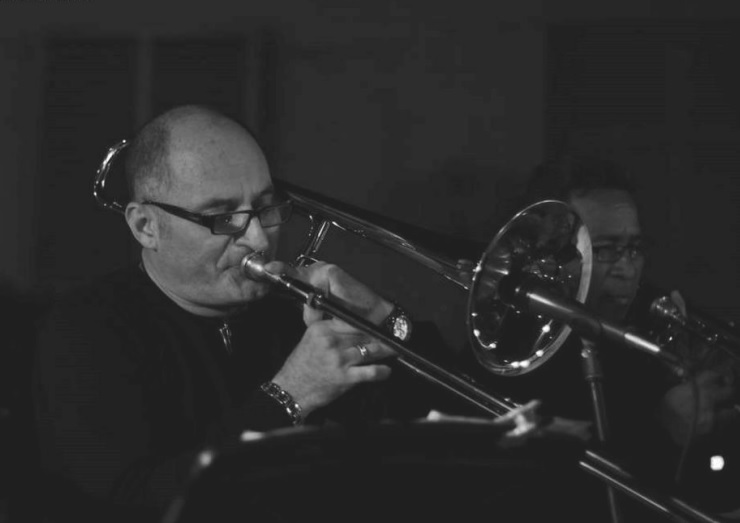
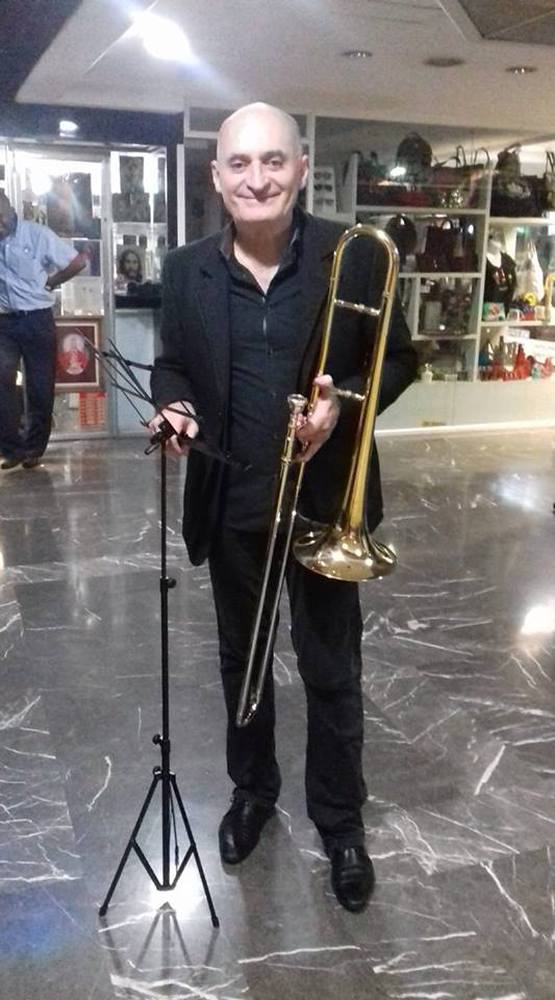
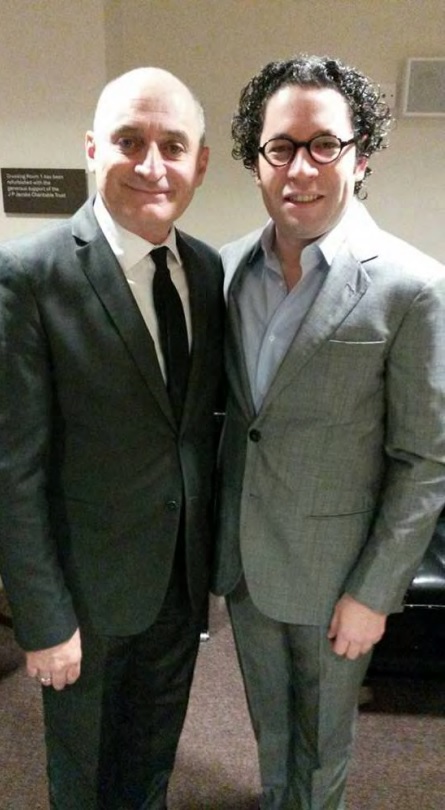
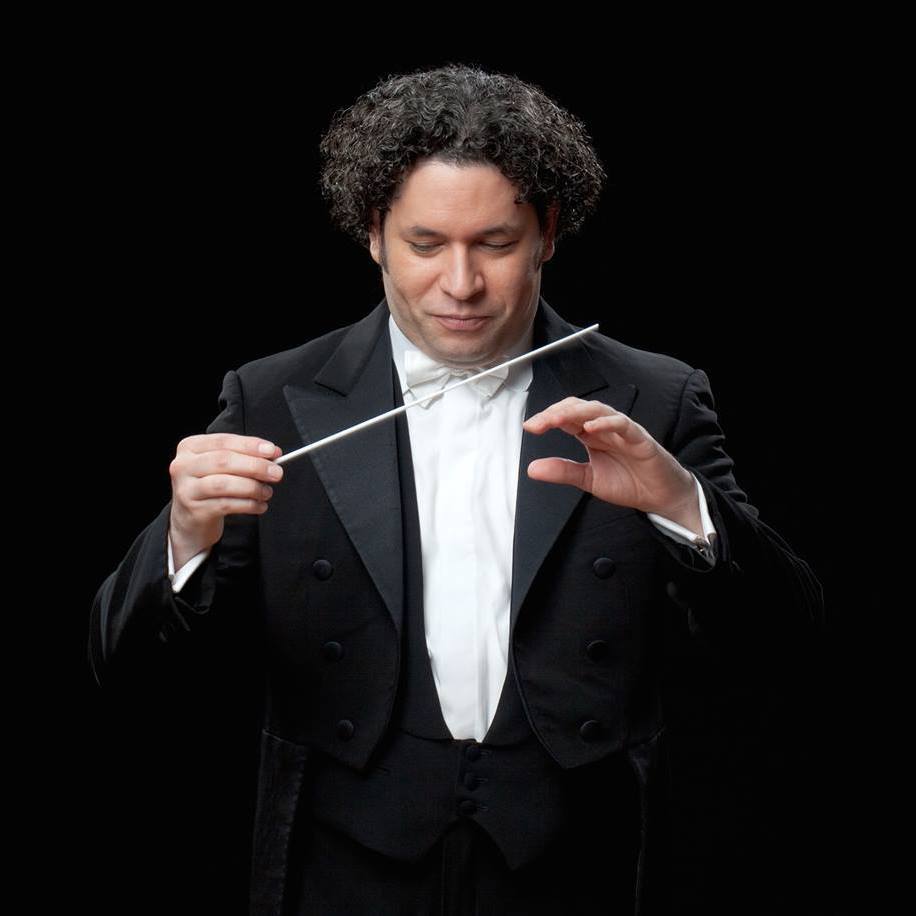
Oscar Dudamel, the father of Gustavo Dudamel, director of the Los Angeles Philharmonic Orchestra and the Simón Bolívar Orchestra of Venezuela, has been a musician for many years. Every Friday and Saturday, he receives applause from the public in the place where he plays the trombone since a small stage with “La Otra Banda de Dudamel” the Agraz ensemble, a salsa group whose main course is the songs of the duo made famous by Héctor Lavoe and Willie Colón.

Dudamel Padre e Hijo
Dudamel Father and Son

On Sundays, Oscar Dudamel has to be on the other shore and applaud standing up, as parents do, swollen with pride at the talent of their son who, with baton in hand, conducts a world-renowned Symphony Orchestra and if he think about it, his musical vein germinated from the brass bands of charanga, salsa and guaguancó.

After 10 at night it is difficult to find a place in “The Temple of Salsa”, the tickets are not sold out, but the tables and the best stalls of this place located on 7th Street that crosses Bolivar Avenue in Maracay, there fanatics and amateur dancers meet. of salsa and logically admirers of Héctor Lavoe and Willie Colón

Oscar Dudamel on the trombone is accompanied by Charly Guzmán, a talented young man who, at just 18 years old, shows the gifts of his voice; Oswaldo Agraz (musical director, piano and backing vocals), Gerardo Vargas (bass), Vicente Guzmán (timbale), Júnior Narváez (bongo), Diego Camus (conga and backing vocals), Ventura Prieto (trombone) and Johan Figueroa (alternate trombone). It is about the same format, instruments and identical distribution (the trombones next to the vocalist) of the orchestra that captivated him.

Dudamel father playing trumpet

And it is that music often also enters through the eyes, as Oscar Dudamel says, who knew he wanted to be a trombonist when he saw Willie Colón at La Feria de la Alegría holding his instrument while puffing out his cheeks, in that In this way, it is known that the first approach of the today brilliant, young and valued Orchestra Director Gustavo Dudamel to music, was not appreciating the Tchaikovsky that he likes to conduct so much, on the contrary, it was appreciating the music that came out of the trombone of his beloved dad.

The previous June, Oscar paid homage to Hector Lavoe as usual, for commemorating years of his death. “Héctor Lavoe died on Monday, June 29, 1993 at 11:45 in the morning”, an event that he remembers with the accuracy that sad events mark, but despite the pain, with satisfaction and pride, he mentions that his son Gustavo de Only 29 years old, before entering the stage he repeats a special ritual: “Before entering New York to direct, someone asked Gustavo: ‘“Master, what are you listening to? Tchaikovsky? and Gustavo replied: ‘No, Tito Rodríguez because he gives me swing'”.

If someone were to say that Gustavo Dudamel owes a debt to Willie Colón and Héctor Lavoe for his vocation as a musician, he would not be wrong, or acknowledge his father, who has often referred that his son’s versatility is due to the fact that he always listened to popular and classical music. . “I listened to more salsa than Beethoven, that’s why it has so much rhythm,” he says with a laugh.

Dudamel Padre
Dudamel Father

“I am his number one fan. He fulfilled the goals that I, due to various circumstances, could not fulfill, he made the dream that I wanted come true. He has reached where I would have liked”, reveals the father, who sees in his son an extension of his, “ .

In a life marked by music, a soundtrack for falling in love could not be missing. It was during the visit of El Gran Combo de Puerto Rico to Barquisimeto in the late 1970s that Oscar noticed Solange Ramírez, his wife and Gustavo’s mother; Today, 30 years later, when Falsaria sounds in Maracay, the song leads him to remember that indelible moment.

Gustavo Adolfo, as his mother calls him, began playing the güiro before he was four years old; later he would build his own battery out of biscuit tins and safety helmets.

Dudamel Padre e Hijo photo
Dudamel Father and Son photo

Gustavo received his first knowledge of music from his father, who was then a trombonist with the Lara Symphony, who had plenty of passion to play and lacked patience to teach. He wanted to be a trombonist, like his father, but his small arm could not reach the instrument.

“I imagined that Gustavo was going to be a musician,” he says. “I told him: ‘You have to be the best or among the best and never lose your principles or forget where we come from.'”

At the age of seven Gustavo played the timpani with La Banda Actual and at the age of nine he arranged for this salsa orchestra in which Oscar played for 16 years and with which he met again after many years.

Gustavo Dudamel
Gustavo Dudamel

Gustavo decided on the violin, an instrument that adjusted to his size, and at home, father and son had the habit of studying while walking. There were times when one would bend down for the other to pass, so that the slide of the trombone and the bow of the violin would not trip over each other. However, popular music and academic music finally made their own meeting.

Oscar does not shake his hair, but he inflates his lungs with force and from that mouth-to-mouth breathing with his instrument, he manages to get the best out of it…. The father speaks of his salsa orchestra with the same pride that the son (Gustavo) does of his classical musicians.

The Great Combo of Puerto Rico – The famous salsa orchestra

Latin America / Puerto Rico / Puerto Rico

The Great Combo of Puerto Rico will receive 2019 in Puerto Rico.

The famous salsa orchestra will offer a dance concert on the last day of this year at the Miramar Convention Center.

For the first time in more than two decades El Gran Combo will have the opportunity to say goodbye to the year on its island, a fact that for the legendary Rafael Ithier does not go unnoticed.


The Great Combo of Puerto Rico

“For me it is a huge satisfaction and I think for the whole as well. Lately we have said goodbye to the year in Colombia, Ecuador, Peru, Venezuela, in the (Dominican) Republic, where we are going quite frequently, but in Puerto Rico it has been more than 20 years since we said goodbye and for us it is an enormous satisfaction that we they invited him to fire him,” the musical director of the famous salsa orchestra said in an interview with Primera Hora about the dance concert they will offer at the Miramar Convention Center.

“We are going to be able to be with the family and many friends that we do not see during the year. Because remember that we are a traveling band, and we spend all the time traveling”, added Ithier, anticipating that the public will be able to enjoy the best of the repertoire of the group with more than 56 years of experience.

“And if they allow us, and they will always allow it, we will play three or four numbers that we have new, because people always expect something new from El Gran Combo,” Ithier assured, sitting on the balcony of his home in Bayamón.

The Great Combo of Puerto Rico - Photo
The Great Combo of Puerto Rico – Photo

Founder of Yambu Productions and host of ”Alma Del Barrio” Guido Herrera-Yance

Singers, dancers, musicians and artists in general are usually the first thing the public sees during any type of event, but very little is spoken about the companies, producers and promoters that are in charge of managing all the logistics behind these shows, so we wanted to talk to Guido Herrera-Yence, founder of Yambu Productions, which is an important music production company based in Los Angeles, so he could tell us a little about all these subjects.   

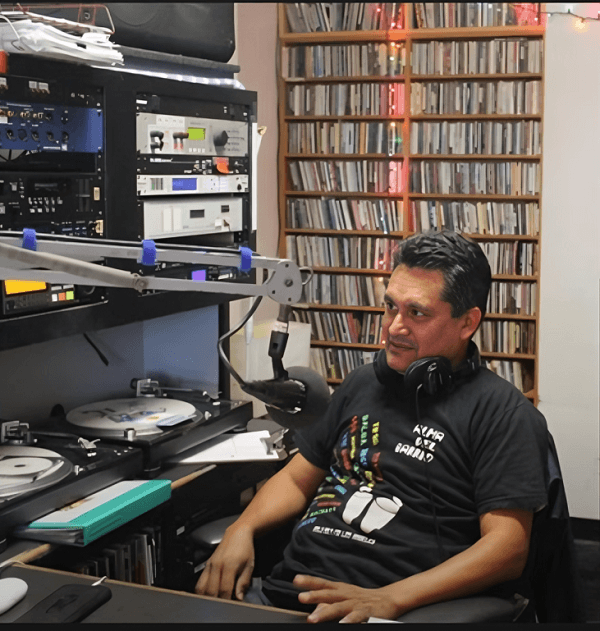
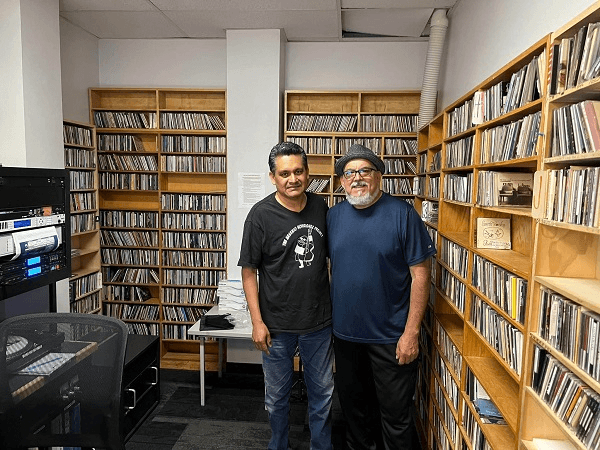
Guido working at KXLU 88.9 FM
”Alma Del Barrio” host Guido Herrera-Yance working at KXLU 88.9 FM

How Guido Herrera-Yance started in the world of music as a radio host 

Many years before Guido even thought about the idea of forming a company, he began to establish himself as a radio host on the popular public radio station KXLU 88.9 FM, specifically on the show ”Alma Del Barrio”, which is about to turn 51 years on the air in October. In Guido’s case, he has been hosting the show for more than 30 years, bringing the best Latin music and artistic news to all his listeners.   

The also producer confesses that he did not really like locution and that he was simply in the right place at the right time, resulting in the career he has built in this type of media. What it does say is that he was a frequent listener of several radio shows and a voracious music collector, which led him to meet certain personalities who saw potential in him to belong to ”Alma Del Barrio”. When a show was opened, he was the leading candidate for the job and accepted immediately. 

Guido did not have any kind of experience in radio, but his employers trained him and taught him everything he needed to know to carry out his tasks properly. 30 years later, Guido is still one of the main hosts of the show and a reference in terms of Latin music radio.    

From radio to event production   

In 1995, one year after having joined ”Alma Del Barrio”, a friend told him that Chucho Valdés was going to the United States after many years and proposed him to make a show together with the artist as the main attraction. When Guido accepted, they began to look for artists to accompany the Cuban that night and some of them were Alex Acuña, Justo Almario, Luis Conte, among others.   

The results were so good that Guido was left with the desire to keep experimenting with this field of the industry, so he continued to produce events of all kinds on a small and large scale since that year. 

As the years went on, he realized that he would need a bigger and more elaborate structure if he wanted to continue to work on this, so the idea of founding a music production company began to take shape in his mind.    

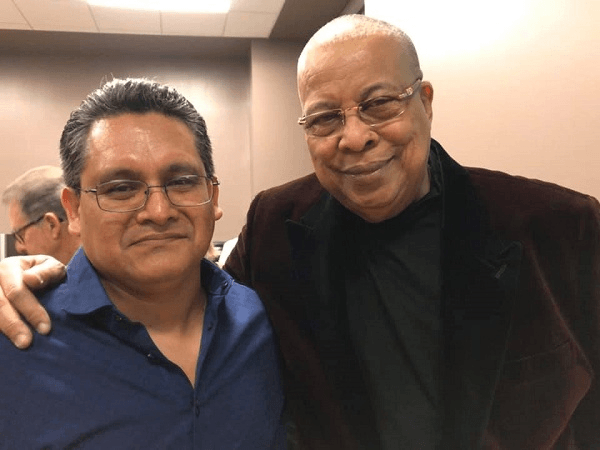
Guido and Chucho Valdés
Guido Herrera-Yance next to Cuban bandleader and pianist Chucho Valdés

How Guido created Yambu Productions   

On the creation of Yambu Productions, something that Guido highlighted is that, in the United States, ”everything must be done very formally”. In light of the obligation to declare the income from his musical activities, Guido saw the need to create a company that would facilitate the procedures related to taxes and issues of this sort in order to cover his back.   

Regarding the name ”yambu”, the businessman was inspired by a song by the Cuban popular music singer Carlos Embale, who was one of his favorite artists, so he wanted to honor him in that way. Taking this detail into account, it is not surprising that Cuban music and its exponents play a fundamental role in the events and groups that Yambu Productions seeks to promote, but it is not limited to nationalities or genres.   

The company has set up events for Los Papines, El Conjunto Folklórico Nacional de Cuba, Chucho Valdés, Los Van Van, El Gran Combo de Puerto Rico, Tito Nieves, José Alberto ”El Canario” and the list goes on. Guido is very proud that Yambu Productions was the one that produced the only concert given by Los Van Van Van and El Gran Combo in the United States, which was in the year 2029. He says he is a fan of both groups, so this was a dream come true for him.   

Upcoming Yambu Productions Events    

This year, Yambu Productions was about to hold the Cuban American Music Festival on 2 June this year, but it has been suspended due to multiple factors, but the main one is that Guido feels that many things have changed in the entertainment industry after the pandemic such as demographics and the public tastes. This has caused the producer to rethink many things, as he is not quite clear  what will be the path to follow by the company, so he prefers to wait. 

In addition to the above, Guido is focused on his own restaurant that opened just six months ago and needs to dedicate all his time and effort to this new project, so it is very possible that the previously festival will be back better than ever for the year 2025, when he will be clearer about what he wants to do with this event.   

However, he said he does not want to be away from live music, to which he attaches a great deal of importance in his work, so with the support of one of the most important jazz clubs in California, Catalina Jazz Club, he rolled up his sleeves and organized the Salsa Meets Jazz Concert Series for 26 April this year (at the time of publishing this article, the concert must have taken place). In this way, Guido wants to recreate that golden era of Latin jazz and salsa in New York, but in his own way. 

The Salsa Meets Jazz Concert Series is expected to pay tribute to a different artist who has contributed to these genres each edition and this year it was the torn for Tito Puente. In addition, Catalina Jazz Club proposed Guido to hold events of this type several times a year, so tribute concerts to Ray Barreto and Andy Gonzalez are also scheduled before 2024 is up. He maintained a close friendship with both musicians, especially with Gonzalez.  

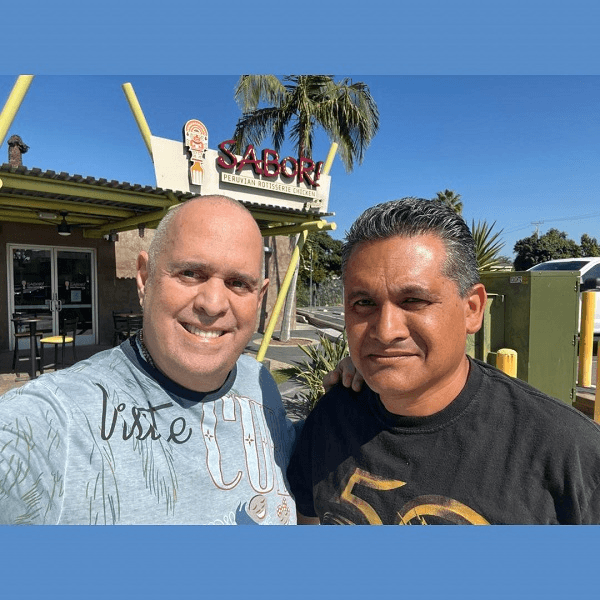
Guido and Alfredo de La Fe
Cuban violinist Alfredo de La Fé next to Guido Harrera-Yance in front of Sabor! Peruvian Rotisserie Chicken, a venue in which Alfredo would perform some hours later

How are the logistics behind a Yambu Productions event? 

When Guido plans to hold an event, the first thing he should do is to find a venue that complies with the requirements for the type of show he plans, analyze the costs involved, find the best talent for the show, hire sound engineers, recruit the people who will be in charge of the logistics part, among other things. It is an arduous work of at least six months before the event takes place.   

An example of the above is the Cuban American Music Festival, which has always been held in May, so he should start organizing and planning for it since November or December of the previous year. This in order to have every detail ready on the day of the festival and to avoid any unforeseen problems that could put those involved down.  

On this subject, Guido said he feels lucky to be able to have so many friends in the world of music, to stay on ”Alma Del Barrio” for so many years and to know people like Nelson González, Johnny ”Dandy” Rodríguez, Genaro Rivera and many others who are always ready to come to Yambu Productions events without even asking about payment, since they know that Guido and his company are very responsible about these issues.  

How talent is selected for events 

”Everything falls on me. I believe that I have the capacity, knowledge and experience to know what the public wants. It is for the very reason that we will not be making the Cuban American Music Festival this year, since the pandemic changed everything in the industry and I have to accept that what sold yesterday is not the same as what sells today” said Guido when asked how he chooses the talent he wants for his shows. He also added that ”I’m still debating with myself on which way to go with the company after quarantine”. 

What Guido will never do is let go of live music because, in his words, ”it feeds his spirit”. As long as he is dedicated to music production and Yambu Productions is still operating, live events will always have a highly important place in the activities carried out by the company. 

Guido and Poncho Sánchez
Guido Herrera-Yance next to conguero, Latin jazz band leader, and salsa singer Poncho Sánchez

Read also: What The Namm Show is and how it works 

  • « Go to Previous Page
  • Page 1
  • Page 2
  • Page 3
  • Page 4
  • Page 5
  • Interim pages omitted …
  • Page 28
  • Go to Next Page »

International Salsa Magazine (ISM) is a monthly publication about Salsa activities around the world, that has been publishing since 2007. It is a world network of volunteers coordinated by ISM Magazine. We are working to strengthen all the events by working together.