• Skip to primary navigation
  • Skip to main content

International Salsa Magazine

  • Home
  • Previous editions
    • 2025
      • ISM / November 2025
      • ISM / October 2025
      • ISM / September 2025
      • ISM / August 2025
      • ISM / July 2025
      • ISM / June 2025
      • ISM / May2025
      • ISM / April 2025
      • ISM / March 2025
      • ISM / February 2025
      • ISM / January 2025
    • 2024
      • ISM / December 2024
      • ISM / November 2024
      • ISM / October 2024
      • ISM / September 2024
      • ISM / August 2024
      • ISM / July 2024
      • ISM / June 2024
      • ISM / May 2024
      • ISM / April 2024
      • ISM / March 2024
      • ISM / February 2024
      • ISM / January 2024
    • 2023
      • ISM / December 2023
      • ISM / November 2023
      • ISM / October 2023
      • ISM – September 2023
      • ISM – August 2023
      • ISM July 2023
      • ISM Edition June 2023
      • ISM – May 2023
      • ISM April 2023
      • ISM March 2023
      • ISM February 2023
      • ISM January 2023
    • 2022
      • ISM December 2022
      • ISM November 2022
      • ISM October 2022
      • ISM September 2022
      • ISM August 2022
      • ISM July 2022
      • ISM June 2022
      • ISM May 2022
      • ISM February 2022
      • ISM January 2022
    • 2021
      • ISM December 2021
      • ISM November 2021
      • ISM October – 2021
      • ISM September 2021
      • ISM August 2021
      • ISM July 2021
      • ISM May 2021
      • ISM April 2021
      • ISM June 2021
      • ISM March 2021
      • ISM February 2021
      • ISM January 2021
    • 2020
      • ISM December 2020
      • ISM November 2020
      • ISM October 2020
      • ISM September 2020
      • ISM August 2020
      • ISM July 2020
      • ISM June 2020
      • ISM May 2020
      • ISM April 2020
      • ISM March 2020
      • ISM February 2020
      • ISM January 2020
    • 2019
      • ISM December 2019
      • ISM November 2019
      • ISM October 2019
      • ISM Septembre 2019
      • ISM August 2019
      • ISM July 2019
      • ISM June 2019
      • ISM May 2019
      • ISM April 2019
      • ISM March 2019
      • ISM February 2019
      • ISM January 2019
    • 2018
      • ISM December 2018
      • ISM November 2018
      • ISM October 2018
      • ISM September 2018
      • ISM August 2018
      • ISM July 2018
      • ISM June 2018
      • ISM May 2018
      • ISM April 2018
      • ISM March 2018
      • ISM February 2018
      • ISM January 2018
    • 2017
      • ISM December 2017
      • ISM November 2017
      • ISM October 2017
      • ISM September 2017
      • ISM August 2017
      • ISM July 2017
      • ISM June 2017
      • ISM May 2017
      • ISM April 2017
  • Download Salsa App
    • Android
    • Apple
  • Spanish

Search Results for: Festival

Tempo Latino: Creating Connections Through Music

An Interview with Eric, Founder of Europe’s Premier Latin Music Festival

On the last week-end of July, a festival celebrates Latin and Afro-Cuban music and brings thousands of music lovers to a small town in France. Eric, the festival’s creator, shares its origins, inspirations, and evolution.

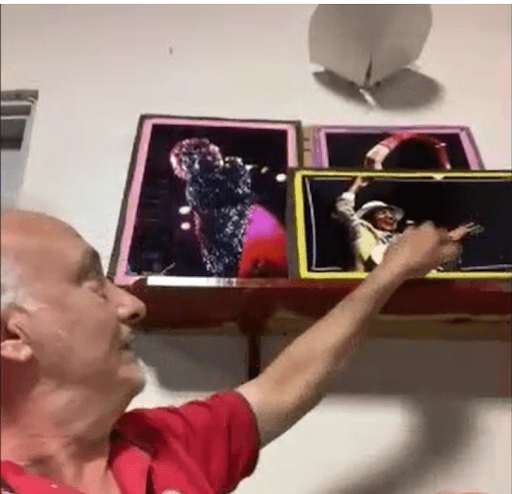
Interview with Eric Duffau
Eric Duffau showing a photo of Compay Segundo

Since its inception in 1994, the Tempo Latino festival has welcomed incredible artists to this small town in the Southwest of France.

Creating a Musical Oasis in Vic-Fezensac

Having lived across France, Eric settled in Vic-Fezensac, where he felt the need to create something beyond work. His passion for Latin and Afro-Cuban music led him to start Tempo Latino, aiming to provide what he missed – concerts of these genres.

A Journey of Music and Discovery

Eric’s radio inspiration and his love for vibrant rhythms ignited the idea for a music festival. He yearned to introduce others to the music he cherished, giving birth to Tempo Latino in 1994. The inaugural edition featured Fatal Mambo and Mambomania, attracting 2,800 attendees. Now the festival attracts over 10,000 people.

Eric’s selection process for artists is fueled by genuine connections, resulting in a diverse lineup that weaves different styles into a harmonious experience. His curation creates unique narratives each night. Pairing artists with contrasting energies, like Lila Downs and Cimafunk, creates a captivating tapestry that reflects the festival’s essence. Eric’s journey involves tireless pursuit and strong artist relationships. From Bernard Lavilliers to Excelencia, his commitment to music’s magic and meaningful collaborations remains steadfast.

A Melodic Journey Unfolds

The festival’s theme guides its trajectory, from Africa’s heart to New York’s energy. Lavilliers’ Paris and the Caribbean’s vibrancy unite through music, creating a diverse yet cohesive experience.

In a digital era, Tempo Latino reminds us of music’s power to unite. Eric’s dedication and knack for blending genres into harmonious narratives continue to resonate.

Tempo Latino: 28 Years of Latin Rhythms, Community, and Artistry

The charm of Vic-Fezensac, a small town in France, transforms every year as over fifty thousand people gather for the renowned Tempo Latino Festival. In an exclusive interview, Eric, the festival’s creator, discusses the intricacies of managing such an event in a local community and the relationship it shares with the town.

Mural for the entrance of the 2023 Festival, by Martin, a local graffiti artist.
Martin, the local graffiti artist, putting the final touches on the entrance mural.

Local Community and Involvement

Eric sheds light on the local engagement, emphasizing that while not everyone participates, the festival is supported by some local partners. What brings him contentment is the transformation he witnesses each year as the town welcomes an eclectic crowd of festival-goers. The festival’s vibrant audience, composed of diverse backgrounds, gives life to the town’s streets and squares in ways that were once unimaginable.

Eric reminisces about the support he received from the former mayor, Jean Arnaud, whose open-mindedness and appreciation for the festival’s diverse attendees left a mark. Jean Arnaud’s encouragement and acknowledgment of the festival’s contribution to cultural diversity added an emotional connection between the festival and the town.

Fostering Relationships with Artists

Eric’s dedication to music and fostering connections with artists has been at the heart of the festival’s growth. He shares anecdotes about musicians like Oscar D’Léon and Celia Cruz, who have left an indelible mark on the festival’s history. These relationships, he emphasizes, are more than business; they’re rooted in mutual respect and genuine affection.

Celia Cruz – Yuri Buonaventura
Oscar D’Léon – Cachao

Overcoming Challenges

Throughout its 28 editions, the festival has faced numerous challenges, both financial and logistical. Eric reflects on early deficits, weather-related disruptions, and organizational intricacies. Each year’s success has hinged on meeting these challenges head-on, often pushing the festival to its limits.

The Ever-Evolving Vision

Eric’s vision for the festival’s future remains unwavering – bringing together people from diverse backgrounds through music. He acknowledges the changing landscape of music and dance styles, highlighting the importance of maintaining a balance between cultural integrity and evolving tastes.

Looking Ahead

With the 30th edition approaching, Eric envisions continued growth while staying true to the festival’s roots. He expresses his desire to bring acclaimed artists like La India and Carlos Santana to the stage, continuing the legacy of diverse and passionate musical experiences.

In the grand tapestry of the Tempo Latino Festival, Eric’s passion, dedication, and genuine relationships have woven together a cultural masterpiece. The festival remains a beacon of unity, showcasing the power of music to transcend boundaries and create shared experiences. As the festival moves towards its next milestone, it stands as a testament to Eric’s unwavering commitment and the enduring magic of Latin and Afro-Cuban rhythms.

Mark your calendar and plan your trip for the 2024 Tempo Latino on the last weekend of July 25 to 28, 2024.

Visit for more information

[Read more…] about Tempo Latino: Creating Connections Through Music
Colombia a Cradle of Salsa Talents

Latino America / Colombia / Medellin

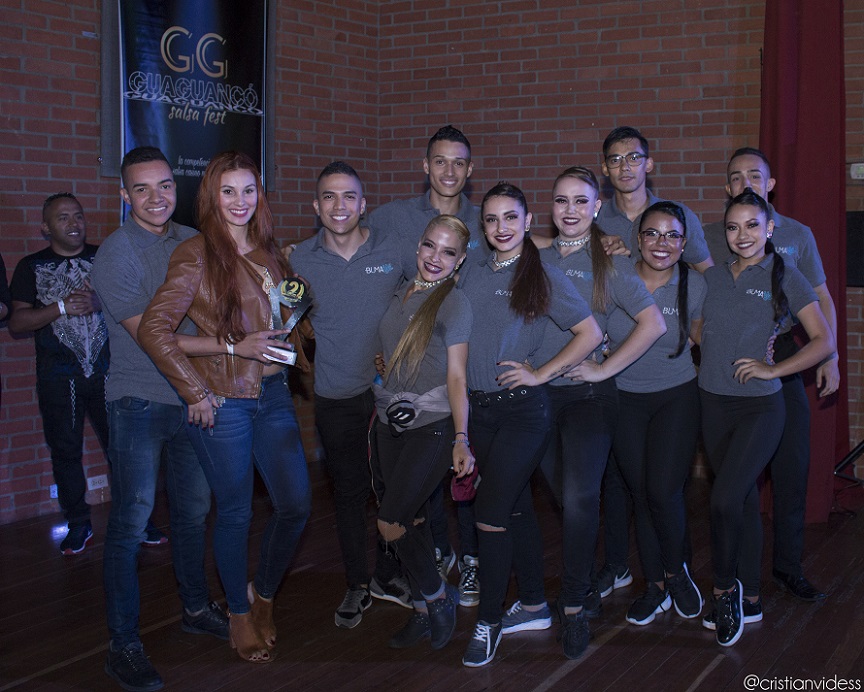
1 Cradle of Salsa Talents “Medellín dressed up with the Guaguancó Salsa Fest”

On July 10, 11 and 12 in Medellín, 3 days of great experiences were lived, we were part of the 1st edition of a great festival, the Guaguancó Salsa Fest, developed in the beautiful town of Envigado.

We were able to see a gala of great talents of dancers from all over the country, from Cali, Bogotá, Ibagué, Barranquilla, Popayán and local schools.

From the first day we were able to demonstrate the professionalism of soloists, couples and groups, from the largest to the stars of the festival, the smallest, who left the audience in shock with their talent.

Semifinals and finals were full of high-level choreographic samples, steps, turns, cleans, tricks and the best acrobatics filled the afternoons of that weekend with a great show, equally full of parties for the local celebrations in Envigado. The most attractive categories were those guided by acrobatics, the well-known Cabaret, children and adults showed their best tricks, movements of great technique and high level of complexity.

In future editions we will be showing the great results of the competitors, academies that have been working to give the best of their talent in the national and international competitions to which they have a place.

Humberto Ramírez

Latin America/ Puerto Rico / San Juan

Humberto Ramírez one of the most innovative musicians on the Island of Enchantment Puerto Rico

Recognized as one of the most innovative musicians of his generation, Humberto Ramírez grew up in a home where the music of Miles Davis, Thelonious Monk, John Coltrane, Lee Morgan, Tito Puente, Tito Rodríguez, Cal Tjader and Machito was heard.

His father, who is a saxophonist and conductor, was the one who inspired him to play the flugelhorn at age 11.

By the age of 14, Humberto was performing professionally with his father’s orchestra and at the same time taking orchestration courses with bassist Inocencio “Chencho” Rivera.

Humberto Ramírez
Humberto Ramírez

At the age of 18, after graduating from the Escuela Libre de Música de San Juan, his interest in composing and arranging music motivated him to enroll at Berklee College of Music in Boston, Massachusetts where he obtained his bachelor’s degree in music, then studied composition and orchestration for film and television at the Dick Grove School of Music in Los Angeles, California.

In 1985, and for a period of four years, Humberto worked with the Willie Rosario orchestra, one of the most popular bands in Puerto Rico.

In 1989 he became the musical director of Tony Vega.

His admirable ability as a producer and arranger led him to make important collaborations with great figures in music.

In 1999 he took over the musical direction of merengue and tropical music star Olga Tañón.

His work as a producer, arranger, composer and director for tropical music artists such as Willie Colón, Gilberto Santa Rosa, Marc Anthony, India, Domingo Quiñones, Lourdes Robles, Rubén Blades, Brenda K. Starr, Tito Nieves, Víctor Manuelle and others , has established him as one of the busiest arrangers and producers in the industry.

He has also had the responsibility of directing the concerts of important exponents of reggaeton such as Daddy Yankee, Tito El Bambino and Zion, which undeniably demonstrates his broad musical mastery in various genres.

His great dream was always to develop a career in Jazz. In 1992, Humberto Ramírez debuted as group leader in his first production for the Tropijazz label entitled “Jazz Project”.

Since then he has shared the stage with important jazz musicians such as Freddie Hubbard, Justo Almario, Alex Acuña, Chick Corea, McCoy Tyner, Gonzalo Rubalcaba, Tito Puente, Hilton Ruiz, Michel Camilo, Herbie Hancock, Eddie Gómez, Michael Brecker, Paquito D ‘Rivera, Chucho Valdés, Ray Santos, Gato Barbieri, Terence Blanchard and Herb Alpert, with whom he recorded the album “Passion Dance”.

His music has received rave reviews from prestigious publications such as Down Beat, Jazz Times, Jazziz, Latin Beat, CD Review, Hispanic Magazine, New York Daily News, The Plain Dealer, Miami Herald, The Boston Globe, and Austin Chronicle.

From the launch of his first record proposal, Humberto Ramírez has established himself as the most important exponent and promoter of Jazz in Puerto Rico.

He has recorded 26 albums in which he has experimented with all kinds of formats: duets, trios, quartets, quintets, sextets, octets and “Big Bands”.

His collaborations with the group Rumbantela and with the queen of filin, Lucy Fabery have received great praise from specialized critics. In 2005 he founded his own record label, Nilpo Music and last year he began to present his own Jazz festival: Puerto Rico Jazz Jam, marking a new stage in his musical career.

This year 2011 celebrates its 20 years cultivating the difficult expression of Jazz, a career that began with its debut as a leader in the first edition of the Puerto Rico Heineken Jazz Fest in June 1991. This year 2016 celebrates its 25 years.

Humberto Ramírez has received 4 Grammy Award nominations as a producer. His first nomination was for the album “Nueva Cosecha” by Willie Rosario in 1985, then for “Hecho en Puerto Rico” by Willie Colón in 1993, “Tony Vega” in 1996 and “Olga Viva, Viva Olga” by Olga Tañón, which earned him the Grammy Award in 2000.

In 2013 he was nominated for a Latin Grammy for his album Sentimentales with Lucy Fabery.

Among the awards he has received are 6 Platinum records, 12 Gold records, 4 “Visionary Awards” and six “Tu Música” awards. He has received tributes from Ohio State Representative Dennis J. Kucinich and from the Senate of Puerto Rico.

In 1997 he had the honor of entertaining the inauguration of the President of the United States, Bill Clinton in Washington, D.C. In October 2009 he was invited to play at the White House for President Barack Obama.

After having received several awards and nominations, as well as having recorded his own record successes, Humberto Ramírez shows that his creative explosion is still in its infancy.

https://www.humbertoramirez.com/#home-section

https://www.facebook.com/Humberto-Ram%C3%ADrez-Jazz-Project-110525453672/

ISM – August 2023

titule salsagoogle.com is International Salsa Magazine

Founder and owner of Guapacha Productions Gil Tower

Talk with Gil Tower 

From this platform, we have had to interview many famous Latinos who have left their countries and Latin culture in general on high, but today is the turn of a very special one. We are talking about the talented Venezuelan musical director and multi-instrumentalist Gilberto Torres, better known as Gil Tower in the artistic environment.    

Thanks to a mutual friend, we have managed to make contact with Gil Tower, who from the beginning has been very accessible and willing to share everything related to his work in the music industry and his contribution to the Latin cultural scene, so we are very grateful to him for giving us the opportunity to hear his great story.   

Below, we share the topics covered in a conversation that was as enjoyable as it was enlightening.   

Gil talked with us
Talented musical director and multi-instrumentalist Gil Tower kindly talked with us

Musical beginnings in his home country   

Gil Tower always knew that he wanted to devote himself to the world of music. When he was about five years old, he began watching television programs related to classical music and zarzuela. Several of his aunts were zarzuela teachers and took him to see zarzuela orchestras, which was great for him. In fact, several of those musicians he got to see play on these occasions ended up teaching him when he began preparing to become an artist. 

One of the most important institutions in the training of Gil is the National System of Youth and Children’s Orchestras and Choirs of Venezuela (El Sistema), where he was trained directly by maestro José Antonio Abreu, a fundamental part in the path which this young musician would take later in his career.   

He joined the children’s orchestra, advanced all the way to the youth orchestra and finally reached a more professional level in the national orchestra. At about this time, Gil recalls that ”maestro Abreu always said that we were rich because we had an instrument in hand and could change the world through music. As a child, I didn’t understand what he was getting at. Now I do understand and I think he was absolutely right.   

”Abreu was a unique influence on me because he transformed me as a person and musician. He also made me become a leader, as he had always wanted me to be,” he continued.   

Learning from the groups he was in 

As to the learning acquired in the many groups he worked with, Gil singled out Carlos Rojas, who was a musician and jazz lover. Carlos took the initiative to give a workshop in La Pastora (a very important area of the city of Caracas, Venezuela). 

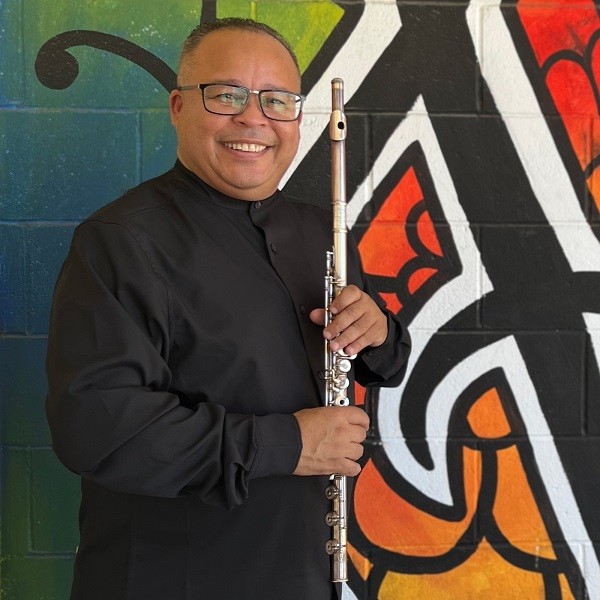
Gil with his flute
Gil Tower with his flute

As a teenager, Gil used to go to La Pastora to learn to improvise with Carlos in salsa, as he liked this genre so much ever since. This is how he started learning about harmonies and taking his first steps as a composer. 

When given the chance to play with the group Los Morrillos, he learned a lot about gaitas and other Venezuelan rhythms from the western region of the country. In the case of the group Madera, he learned (and keeps learning) a lot about Afro-Venezuelan music in general.   

After that, he met Jesús ”Chucho” García, who is an intellectual, activist and author of several books on Afro-Venezuelanity. Together they formed a group called Cimarrón, with which they represented Venezuela at the International Jazz Plaza Festival in 1989. To date, they are still very good friends and continue to learn about this great musical branch from one another. 

Why move to Germany? 

His initial plan was to move to the United States to continue his studies in Berkeley, but he was unable to obtain the required visa at the time. However, that would not be the end of his dream.   

It turns out that some friends of his from the group Madera went on a Germany tour and stayed to live there. Then, one of them, Felipe ”Mandingo” Rengifo offered him to join them to work in that country and try to be admitted in one of their conservatories. At the time, Gil only had a saving of $1,000, with which he took a gamble.    

Although he had to play in the streets and wash bathrooms at the beginning, he achieved his goal of entering a conservatory, an institution that gave him the opportunity to fix his papers to have a legal status in Germany. Having solved this inconvenience, he was able to focus his attention on his musical project Guapacha (name in honor of a great Cuban drummer who lived in the parish of San Agustin del Sur, Caracas).   

All this experience was preparing him for when he could finally achieve his goal of going to the United States.   


Gil and Guapacha
His project Guapacha was named after a great Cuban drummer who lives in Caracas

Arrival in the United States   

While still in Germany, Gil was invited to participate in a jazz festival in the United States, specifically in Montana. He did so well that he amazed many musicians with whom he shared the stage that day and exchanged contact information for future events.   

Later, he managed to play in San Diego and Boston, where he had the opportunity to share the stage with the Boston Power Orchestra and meet Danilo Pérez, Dizzy Gillespie’s pianist. The latter, in turn, recommended him to maestro Tito Puente, whom he met shortly thereafter. 

This was how the artist managed to build a very respectable reputation in the industry through his talent. This is how he ended up playing with ”half the world” and building a great prestige as a musician and composer.   

In addition to singing and playing multiple instruments, Gil has also taught low-income youth in order to spread the knowledge he has gained throughout his career. He even created an orchestra composed of children whose parents have no resources or documents in order to help them learn music and provide them with better work-study opportunities in the future. Some have even got into college and obtained scholarships thanks to this knowledge.    

Parallel to these activities, he began composing and making arrangements for other artists who began to require his services.    

Guapacha Productions   

On the subject of Guapacha Productions, Gil says that the idea came when he began researching on the music industry, licensing, distribution and other things. 

The musician saw an opportunity to achieve his dreams during the pandemic, which is when he noticed that many artists had no idea how to register a composition and how other necessary licenses to collect their royalties from their music works.   

Gil, Guapacha, and major labels
Guapacha was created for the purpose of becoming independent from major labels


Noticing the ignorance of many young talents about the industry, he created the company Guapacha Productions, which is responsible for the musical production and arrangements for artists signed to this label.    

When asked how the economic issue was handled for artists who do not have the resources to launch their career as it should be, he explained that there are three types of music distributors: major labels, labels created by the artists themselves and independent companies like Guapacha Productions. We are a group of independent artists who created our own label and we are trying to have our own distribution, so we would not be obliged to negotiate with any big distribution company” explained Gil. 

Along with that, it is Guapacha Productions that will make agreements with Spotify, iTunes and other digital platforms to distribute the music of its artists without intermediaries. 

The company has been so successful in these efforts that its name will soon be part of the Latin Grammys, which means that the talents signed to the label will have the chance to stand out and be finalists in the various categories.   

Cheo Valenzuela’s ”Salsa Buena” Tour   

With respect to the important issue of Cheo Valenzuela’s ”Salsa Buena” tour (artist signed to Guapacha Productions) in Europe, there are negotiations with some event producers in France, Spain and England so that Cheo Valenzuela can perform at various venues in those countries. There are also talks of taking the artist to Central America and the United States, specifically to San Francisco, where Gil lives.   

In addition to that, Valenzuela is working on an EP with five songs by other artists and another one with five compositions created by himself. Being already a singer with a long-standing career, this last work would also become him a consacrated composer before the world. Once all this material has been released, his name is going to be considered for a Grammy nomination, which Gil has a lot of faith that he will win due to his great talent.   

At the time of doing this interview, Valenzuela is taking a few days off due to the death of his mother, so we send our condolences and solidarity to him and his family at such a difficult time. 

Read also: Musical director of VibraSÓN Jake Jacobs is here 

  • « Go to Previous Page
  • Page 1
  • Interim pages omitted …
  • Page 59
  • Page 60
  • Page 61
  • Page 62
  • Page 63
  • Interim pages omitted …
  • Page 109
  • Go to Next Page »

International Salsa Magazine (ISM) is a monthly publication about Salsa activities around the world, that has been publishing since 2007. It is a world network of volunteers coordinated by ISM Magazine. We are working to strengthen all the events by working together.