• Skip to primary navigation
  • Skip to main content

International Salsa Magazine

  • Home
  • Previous editions
    • 2025
      • ISM / November 2025
      • ISM / October 2025
      • ISM / September 2025
      • ISM / August 2025
      • ISM / July 2025
      • ISM / June 2025
      • ISM / May2025
      • ISM / April 2025
      • ISM / March 2025
      • ISM / February 2025
      • ISM / January 2025
    • 2024
      • ISM / December 2024
      • ISM / November 2024
      • ISM / October 2024
      • ISM / September 2024
      • ISM / August 2024
      • ISM / July 2024
      • ISM / June 2024
      • ISM / May 2024
      • ISM / April 2024
      • ISM / March 2024
      • ISM / February 2024
      • ISM / January 2024
    • 2023
      • ISM / December 2023
      • ISM / November 2023
      • ISM / October 2023
      • ISM – September 2023
      • ISM – August 2023
      • ISM July 2023
      • ISM Edition June 2023
      • ISM – May 2023
      • ISM April 2023
      • ISM March 2023
      • ISM February 2023
      • ISM January 2023
    • 2022
      • ISM December 2022
      • ISM November 2022
      • ISM October 2022
      • ISM September 2022
      • ISM August 2022
      • ISM July 2022
      • ISM June 2022
      • ISM May 2022
      • ISM February 2022
      • ISM January 2022
    • 2021
      • ISM December 2021
      • ISM November 2021
      • ISM October – 2021
      • ISM September 2021
      • ISM August 2021
      • ISM July 2021
      • ISM May 2021
      • ISM April 2021
      • ISM June 2021
      • ISM March 2021
      • ISM February 2021
      • ISM January 2021
    • 2020
      • ISM December 2020
      • ISM November 2020
      • ISM October 2020
      • ISM September 2020
      • ISM August 2020
      • ISM July 2020
      • ISM June 2020
      • ISM May 2020
      • ISM April 2020
      • ISM March 2020
      • ISM February 2020
      • ISM January 2020
    • 2019
      • ISM December 2019
      • ISM November 2019
      • ISM October 2019
      • ISM Septembre 2019
      • ISM August 2019
      • ISM July 2019
      • ISM June 2019
      • ISM May 2019
      • ISM April 2019
      • ISM March 2019
      • ISM February 2019
      • ISM January 2019
    • 2018
      • ISM December 2018
      • ISM November 2018
      • ISM October 2018
      • ISM September 2018
      • ISM August 2018
      • ISM July 2018
      • ISM June 2018
      • ISM May 2018
      • ISM April 2018
      • ISM March 2018
      • ISM February 2018
      • ISM January 2018
    • 2017
      • ISM December 2017
      • ISM November 2017
      • ISM October 2017
      • ISM September 2017
      • ISM August 2017
      • ISM July 2017
      • ISM June 2017
      • ISM May 2017
      • ISM April 2017
  • Download Salsa App
    • Android
    • Apple
  • Spanish

Search Results for: Grammy nomination

International Salsa Magazine Celebrates 2020 Latin Grammy Nominees

North America / United States

Latin Grammy Awards

The Latin Grammy Awards were created to honor Spanish-speaking artists. They are awarded by the Latin Academy of Recording Arts & Sciences, created from the National Academy of Recording Arts & Sciences, an American organization specializing in music and production in general. The Latin version was broadcast for the first time in 2000, through the CBS network.

The Academy was founded by Michael Greene and Mauricio Abaroa. The first Grammy ceremony was held in 1959. 41 years later the Latin version was inaugurated. They are not awarded by popularity but by the number of votes received by members of the academy.

The award for excellence in Latin recording achievements is a gramophone. Its base is red and the gramophone is gold. For its part, the statuette of “Awards for Musical Excellence” has a copper-colored gramophone. As you might imagine, its creation goes through a long process, it is composed of a zinc alloy and is plated in 24-karat gold.

Latin Grammy Nominees were announced recently
The Latin Grammy 2020 Edition will be soon

The ceremony is held annually in the United States, in the third week of November. The locations have varied through the years between Los Angeles, Miami, New York, Houston, Las Vegas for the last nine years and in 2020 is returning to Miami, at the American Airlines Arena.

The presenters have been a true parade of stars: Jennifer López, Gloria Estefan, Antonio Banderas, Lucero, Eugenio Derbez, Patricia Manterola and Ricky Martin, among others. In this opportunity, the honor will go to the Dominican Carlos de la Mota and the Polish, nationalized in Mexico, Ludwika Paleta.

On September 29, the names of the candidates for the awards were announced.

Among the nominees are:

Best Salsa Album

40 Años De Power
Luisito Ayala y La Puerto Rican Power
Record Label: Musical Productions, Inc.

Tentaciones Vol. 1
Charlie Cruz
Record Label: Get Crazy Note, LLC

40
Grupo Niche
Record Label: PPM USA

Memorias De Navidad
Víctor Manuelle
Record Label: Sony Music Entertainment US Latin LLC

Un Gallo Para La Historia
Tito Rojas
Record Label: J&N Records, LLC

Some of these nominees belong to JN Music Group, J&N Records and Musical Productions Disquera, a company that for more than thirty years has been in charge of producing Latin music for the whole world. Tito Rojas and Luisito Ayala and La Puerto Rican Power have received the support of the record company and their directors are very proud of their representatives.

The emblematic band Puerto Rican Power
Pure energy of Puerto Rican Power

Puerto Rican Power was born in the 70s by the hand of its founder Jesús Castro. Later Luis Ayala, assumed the role of director and trumpeter of the band. They became known quickly, thanks to the participation they had with greats of the show such as Ismael Miranda, Cheo Feliciano, Héctor Lavoe, among others. The group has mixed the roots of Puerto Rican folklore with its great performance on stage; becoming known in the United States and Latin America. This is his first Latin Grammy nomination.

Charlie Cruz, a Dominican salsa singer, also competes in this category. He has collaborated with greats of the genre such as Tito Nieves. Cruz is proud to be Latino and to work with his heart. He thanked his producer, work team and members of the academy for their support in reaching his nomination.

For its part, Grupo Niche is enjoying its third nomination for the Awards. They proudly represent their home country, Colombia. 40, his latest production, refers to the number of years since his birth. The album was recorded between Puerto Rico, Cali and Miami.

Victor Manuelle participates with his album “Memorias De Navidad”, he sought to rescue the traditions of the Christmas season and remember two loved ones. In early 2018, he lost his father Victor Manuel Ruiz and last year his younger brother, Héctor Gustavo.

To finish the round of nominees, we find Tito Rojas, known for his salsa songs. He began his artistic career in the early 70s. He has more than thirty record productions (one with La Puerto Rican Power). Rojas thanked through his social networks for the support of his career.

Best Merengue and / or Bachata Album

The Genetics Of Bachata
José Manuel Calderón
Record Label: Baile Records

Bailando Contigo
Manny Cruz
Record Label: Manny Cruz / La Oreja Media Group, Inc

Los Conquistadores
Grupo Manía
Record Label: Mania Music, Inc.

Ahora
Eddy Herrera
Record Label: Intermusic

Larimar
Daniel Santacruz
Record Label: Penluis Music

Thanks to Diario Libre, we could know that Latin Grammy Awards were evaluating the possibility of eliminating this category. This, due to the lack of submitted proposals. This warning activated the exponents of the genre. The academy received around 40 applications. The competition is very close between artists with a long history and young people who have come to give a new air to the genre.

José Manuel Calderón is considered the pioneer of bachata. Most of his hits are his own and he has also dabbled in merengue. The artist is very happy with this recognition for so many years of experience. He considers it “a great blessing.”

Manny Cruz receives his fourth Grammys nomination in two different categories. “Bailando Contigo” is the singer’s second album and it took him more than a year to produce. The Dominican was very happy and sent his thanks through his Instagram account. He became the Dominican with the most Latin Grammy nominations.

For its part, Grupo Manía celebrates its tenth nomination. The Puerto Rican singers released their album “Los Conquistadores” to celebrate their twenty-five years of artistic career.

Eddy Herrera, renowned merengue singer, has been nominated for the fifth time and, within the framework of his virtual concert, he expressed his happiness.
“Being nominated in normal times is wonderful, but being nominated within this world of the pandemic is doubly great. This has fallen from my soul, from heaven, “he said.

Daniel Santacruz, has his eighth Latin Grammy nomination for his album “Larimar”, his seventh musical production. The artist was in charge of all the elaboration of the disc that counts on eleven subjects.

Best Tropical Song

Among the 5 nominees are:
Imaginarme Sin Ti
Elvis Crespo & Maribel Vega, songwriters (Elvis Crespo y Manny Cruz)
Record Label: Flash Music

Quédate
Paula Arenas, Debi Nova & Juan Pablo Vega, songwriters (Debi Nova & Pedro Capó)
Record Label: Sony Music Entertainment US Latin LLC

Y Basta Ya
Pavel Nuñez, songwriter (Pavel Nuñez)
Reco Grrd Label: La Oreja Media Group, Inc

Tropical Music is present in the Latin Grammy
Manny Cruz and Elvis Crespo

Elvis Crespo by the hand of his wife and manager Maribel Vega and the composition of Manny Cruz, received a nomination for the album “Imaginarme Sin Ti”. The promotional theme was dedicated to Crespo’s daughter. The singer thanked through his social networks and made special mention of his label and the singer Manny Cruz.

Debi Nova, a Costa Rican singer-songwriter, bet on romantic bachata and had the collaboration of Paula Arenas and Juan Pablo Vega. The promotional theme of the album talks about taking advantage of time with our loved ones.

We finished the round with the Dominican Pavel Núñez, a young man who has surprised with the amount of Sovereign Awards obtained, a total of eleven; took advantage of the global pandemic to make music. With his album “Y Basta Ya” he adds his third nomination for Los Premios.

The 21st edition of the Latin Grammy will be held on November 19, in the city of Miami. Although it is an achievement to be on the coveted list, everyone wants to be recognized.

Who will be the winners?

Home

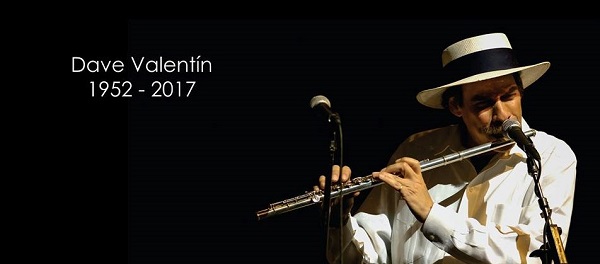
Dave Valentín is considered one of the most important Latin jazz flautists in history, thanks to his technique and rhythm

Valentín: The Master of the Flute in Latin Jazz.

Dave Valentín is considered one of the most important flutists in the history of Latin jazz, thanks to his technique, rhythm, and vast musical knowledge.

Dave Valentín is considered one of the most important Latin jazz flutists in history, thanks to his technique and rhythm

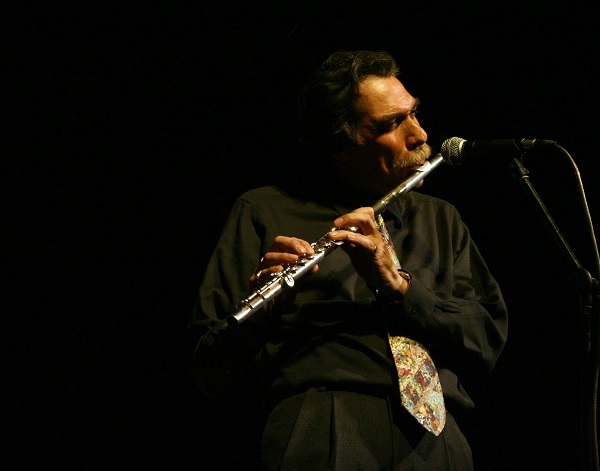
Born in the Bronx, New York, on April 29, 1952, to Puerto Rican parents from Mayagüez, Valentín grew up in a home filled with music. From the sounds of Tito Rodríguez and Tito Puente to Machito, the musical culture that surrounded him as a child was a major influence. Although he loved the bongos and congas, he joined a Latin group as a timbalero during his teenage years. He played in the “cuchifrito” circuit and in working-class dance halls in New York.

Dave Valentín’s life largely reflects the story of the children of Puerto Rican immigrants in New York who forged their own destiny through hard work, dedication, talent, and family support. In fact, the musician, composer, and arranger himself liked to say that “each person creates their own reality.”

A Legacy-Filled Career

  • GRP Records Pioneer: Valentín was the first artist to sign with the influential GRP record label, which allowed him to consolidate his career and spread jazz fusion and Latin jazz to a wider audience. He recorded 16 albums with the label, including titles like Legends, The Hawk, Land of the Third Eye, Pied Piper, In Love’s Time, Flute Juice, Kalahari, and Red Sun, among others. These works combine the intensity of Latin cadences with influences from pop, R&B, Brazilian music, and smooth jazz. For the musician, being signed by this multinational company represented “the opportunity of a lifetime.”
  • Notable Collaborations: Throughout his career, he worked with major figures in jazz and Latin music such as Tito Puente, Manny Oquendo, Cano Estremera, Eddie Palmieri, Ricardo Marrero, Dave Grusin, and Patti Austin.
  • Awards and Recognitions:
    • He earned a Grammy nomination in 1985.
    • He won a Grammy Award in 2003 for his work on the album Caribbean Jazz Project, alongside vibraphonist Dave Samuels.
    • He was chosen as the top jazz flutist by readers of Jazziz magazine for seven consecutive years.

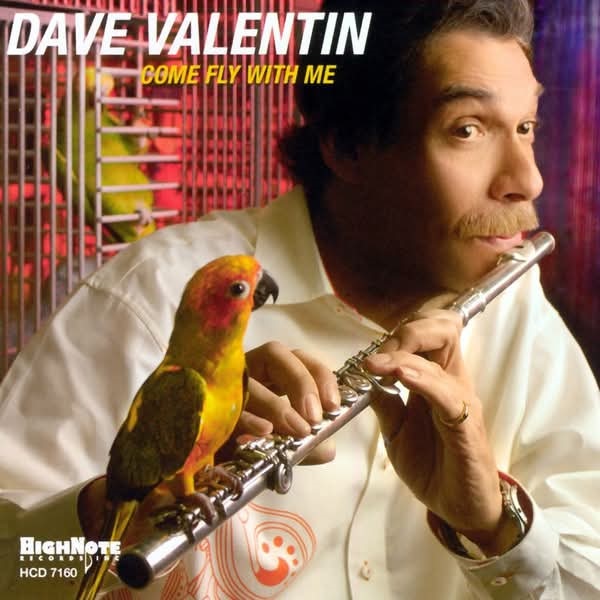
Come Fly with Me (2006)

Dave Valentin - Come Fly With Me
Dave Valentin – Come Fly With Me

Dave Valentín always moved in the realm of fusion. His incorporation of smooth jazz elements, Latin influences, and the sensitivity of modern jazz made him a difficult artist to pigeonhole. Come Fly with Me is one of his most notable albums, as it focuses on a direct approach to Latin jazz. The majority of the songs are Afro-Cuban with a New York flair, without including funk or samba rhythms.

Driven by a formidable rhythm section that includes Robert Ameen on drums, Milton Cardona and Richie Flores on percussion, Luques Curtis on bass, and his friend Bill O’Connell on piano, the album overflows with power and elegance. Trombonist and arranger Papo Vázquez also participates on several tracks. The group’s rhythm is profound and the solos are filled with inspiration. Despite some less successful moments, Valentín’s innate sense of taste and melody shines brightly.

Album Credits

Musicians:

  • Dave Valentín (Flute)
  • Bill O’Connell (Piano)
  • Luques Curtis (Acoustic Bass)
  • Papo Vázquez (Trombone)
  • Chris Barretto (Tenor Sax #1)
  • Robert Ameen (Drums)
  • Milton Cardona (Percussion)
  • Richie Flores (Percussion)

Tracks:

  • Come Fly with Me
  • Twinkle Toes
  • Enciendido
  • Mind Games
  • If You Could See Me Now
  • Easy Street
  • Tu Pañuelo
  • House of the Sun
  • Song for My Brothers

Sadly, Dave Valentín suffered a stroke in 2012 that forced him to step away from music. He passed away in 2017. Despite his passing, his musical legacy remains a fundamental reference for flutists and lovers of Latin jazz.

Valentín El maestro de la flauta en el jazz latino

By:

L’Òstia Latin Jazz

Rafael Vega Curry for the National Foundation for Popular Culture

Dj. Augusto Felibertt

Also Read: Pamir Guánchez, brilliant Venezuelan singer, flutist, saxophonist and arranger.

Albert Torres The Ambassador Of Salsa

North America / USA / New York
Albert Torres
Albert Torres

Albert Torres, a sympathetic boy with blushing cheeks who born in Brooklyn – New York – never suspected what his destiny had prepared him, to be the father of the Congresses of Salsa worldwide. His name would resound from North to South and from East to West, by the continents: American, European and Asian; in the different important scenes of the Latin music movement and would be the inspiration for many dancers of this branch.

His legacy would belong to the astonishment and shelter of the artists and the public that would applaud his talent, vigor and semblance to the rhythm of the phrase “Una Bulla”. This cheerful infant, without a doubt, was going to be a legend of Afro-Caribbean music. I’m talking about Albert Torres, The Ambassador of Salsa!

Photo by Albert Torres

Albert began to listen to the salsa genre from the age of 5, staring in astonishment at the whole scene, sitting, of his first dance lessons … At the famous Palladium in New York, where his mother danced and liked the music of Mongo Santamaría and Tito Puente.

This child, future congressman of Salsa, grew up when the history of Latin popular music (salsa) was being written in the South Bronx, where Puerto Rican communities were having a great explosion of creativity and musical activity.

At the age of 12 years old his family decides to move to Puerto Rico, “By that time I did not want to speak Spanish, I did not want to be Puerto Rican. I did not want to be part of that environment”, said Torres. He only danced disco and Hustle. However, at the age of 15 his life took a dizzying turn when he heard:

“Oye que lio que lio se va a formar

cuando mi gatito sepa

y es tan simple la razón

El que a su gata le cuenta que el que a

su gata le cuenta

no es nada más que un ratón

un ratón…

…Échale semilla a la maraca pa que

suenen

chacucha cuchu cucha cucha

échale semilla a las maracas pa que

suenen

échale semilla a esas maracas oye

chacucha cucha cucha cucha

y hace rato está sonando sonando

chacucha cucha cucha cucha…”


Albert Torres simply fell in love with the Salsa thanks to this theme: “El Ratón” of Cheo Feliciano together to Fania All Stars. “The legends of salsa changed my life. When I heard these legends, that August 26th of 1971, in the Cheetah, something happened inside me. The music entered by the feet and came to my heart”. Thus, declared his beginnings in the Salsa, Albert Torres.

In 1991 his passion for Salsa took him to impress the girls of the neighborhood by his incredible steps to a Hollywood celebrity when he, first time, participated in the movie Mambo Kings in which he was chosen as one of the main dancers.

Hollywood - Albert Torres
Hollywood – Albert Torres

There he not only helped Antonio Banderas with the dance steps, but also with the English by that time for Banderas was very hard. In addition, during the filming of the movie Albert had the opportunity to share with big of Salsa like Celia Cruz, José Alberto “El Canario” and his great idol Tito Puente.

That film was the hit that catapulted Torres to world fame being chosen by Debbie Allen as one of the 4 dancers (of more than 400 couples) to participate in the Academy Awards (1993) and to dance “My beautiful Maria” whose Singer was Plácido Domingo and where he stood out as the first Puerto Rican to dance in the history of the ceremony.

Then, he returns to the cinema being the choreographer and dancer of Salsa scenes in the romantic film “Dance with Me” with Vanessa Williams and Chayanne during 5 months.

Later he worked on the movie “Out to See” (1998) with Jack Lemmon and Walter Matteau and in the same year he also made a guest starring appearance on the Keenan Wayan’s Show where he performed with Jennifer Lopez. Everywhere there was Salsa, Torres seemed to be there. At the time and with all this like trajectory Albert Torres in 1991 also began his stage as a producer.

He started promoting Salsa clubs in Los Angeles, “I lost a lot of money. Nobody wanted to know about Salsa”, said Albert. Nonetheless, he began to handle Johnny Polanco y Su Conjunto Amistad, which were the best-known salsa group in the Western United States.

In 1992 he founded his own company, Albert Torres Productions Inc. (ATP) and began to organize salsa parties in several places in Los Angeles. The most important were the Boathouse in Santa Monica, St. Marks in Venice and Sportsmen’s Lodge in Studio City.

3- Albert Torres
3- Albert Torres

At that moment the genre of salsa was losing popularity. However, Albert Torres with his wit, insight and a lot of intelligence pulled him forward on his own. He revived it in such a way that he became the most influential salsa promoter in the United States. He was who brought to Los Angeles some of the most important names in the Latin music such as: Fania All-Stars, El Gran Combo, Oscar D ‘León, José Alberto “El Canario” and the Spanish Harlem Orchestra, among many others.

In the late 1990s, after the I administration of President Clinton relaxed the laws restricting presentations by Cuban artists in the USA, Albert Torres was the first promoter, who brought to the famous and the notorious Van Van group to Los Angeles in January, 1997.

The show, which took place in a night club in downtown LA, was a success. Since then, Los Van Van has received major media awareness with prestigious publications such as Los Angeles Times, New York Times, among others and including the most coveted music honor, a Grammy and Latin Grammy nomination. Torres’s passion and promotional skills have played a key role in the U.S.A Latin Entertainment explosion. Ricardo Lemvo, musician and singer living in Los Angeles, founder and leader of the salsa band Makina Loka said:

“Personally, I have a great deal of gratitude to Albert. In 1996 when I released my first album, Tata Masamba, he was the one who presented my music to the Latin audience in Los Angeles. He also placed my band at Sportsmen’s Lodge, Grand Park and many other venues. Albert was also who recommended me to film director Randa Haines and as a result, my band, Makina Loca came out in the movie “Dance with Me” with Chayanne and Vanessa Williams. I will be eternally grateful to Albert Torres for giving me a hand at the beginning of my career”.

4- Albert Torres
4- Albert Torres

1997 was crucial for Albert and the world of Salsa in Los Angeles because began the dream of Mr. Eli Irizarri of Puerto Rico, the concept of the Salsa Congresses in San Juan. “I was not the first year, but I heard a lot of nice things even though it was a financial failure. I attended the event in 1998 and was the master of ceremonies. Then, I started the same concept in Los Angeles beginning in 1999 and in the next 8 years following the Los Angeles Congress stood out as the largest in the world. There attend more than 6000 people daily arriving from more than 42 countries”, said Albert for an Argentine media.

In 1998, at the head of ATP, organized the first edition of Los Angeles Salsa Congress and in May 1999 was carried out, with the presentation of Tito Puente in the opening. In this first congress Albert transformed the event into an exciting music and dance venue that attracted 20,000 Latin Music enthusiasts from all over the world and USA and with such great success that he immediately became co-producer Salsa Congresses in over 32 countries.

“My most important desire to be a promoter of the Congresses would be that this can be used for dancers, can realize their dream of dancing on a stage and also find a way to respect the dancers as they deserve it. This is extremely important”. Albert Torres.

In LA Salsa Congress the stars are born, many of the world renowned dancers have their start at this event. The mission of LA Salsa Fest is to pass on to the next generation through educational seminars, dance workshops and being able to perform on stage.

Since then, Albert Torres Productions has created and produced the World’s Largest Salsa Music event. In addition to this, ATP is the co-producer of the World Salsa, broadcast from Las Vegas every year by the ESPN TV network being watched by more than 20 million homes worldwide, where more than 1000 competing dancers will be known on the planet. “On ESPN told me that if I wanted to see it on TV I had to do competitions.

I do not like it, but for the dancers to get to know each other worldwide, I decided to make the World Salsa Championship, the biggest and most important salsa tournament in the world. Now, since April (2012) I decided to do it alone, without partners, and now it’s called World Latin Dance Cup. I added other categories like cumbia, bachata, casino, children and people over 45 years. We have about 20 categories”. Torres Said in an interview with a Peruvian media.

5- Albert Torres
5- Albert Torres

In the World Latin Dance Cup No requirements. You have to take stock and follow the world rules. These are of time, originality of the dressing rooms, of musicality. If you drop the wig, the earring (while dancing), points are removed; if you do not wear stockings, too. A wig will not give points, but if it falls it will take the points. In this championship there is not a world champion, so there is a champion in each category.

According to his friends, Albert was a “workaholic”. He was always on the road promoting salsa music through all the congresses he organized around the world. Always in transit, he spent one night in Istanbul, the next in Paris and the following week in Tokyo. For example, at the beginning of 2007 he had 48 weeks of travel and in one year he could travel to 48 exotic countries such as Dubai, United Arab Emirates, Japan, Hong Kong, Brazil, Bulgaria, Romania, China, Colombia, Venezuela, Spain, Mexico, Peru, Holland, Hamburg, Italy, Switzerland, Sweden, France, Ecuador, New Zealand, Australia and Puerto Rico.

Therefore, it is not surprising to see on your Facebook wall, the immense and felt messages of thanks from dancers from all corners of the earth. His latest project called “The Legacy Project” is an initiative to combine our music culture with the latest technology tendencies in order to reach and unite more people so future generations can appreciate, preserve and be part of the history of Latin dance and music around the world.

In 2011 Albert Torres was honored to be accepted as a Member of the Council for Dance of UNESCO (United Nations Educational Scientific and Cultural Organization) and Elected Grand Marshall at the National New York Puerto Rican Day Parade in front of 2 million spectators lined up on 5th Ave that past June 12 of the same year. This past May, 25th the world of Salsa and entertainment received a huge impact, the news of the death of Albert Torres, victim of a Stroke.

Family, friends, national and international press as well as web portals lamented and reviewed this regrettable fact. Rudy Mangual, creator of the famous magazine Latin Beat Magazine commented to an international media that before this terrible fatal outcome, Albert was very delicate of health in the last months; he had diabetes and had an infection in the pancreas. He also said that he regretted his gone because he and his wife Yvette Mangual had a very special affection to Albert.

Albert Torres’s family wishes to thank all of our Salsa Family for your thoughts, prayers and well wishes during this difficult time. Albert passed away today May 25th, 2017, peacefully, surrounded by family and loved ones. We all find comfort knowing that he is now promoting and dancing alongside his Idols, Celia Cruz, Tito Puente, Cheo Feliciano, Tito Rodriguez and Ray Barreto. As well as his close friends Johnny Polanco, Rudy Regalado, Alicia Gomez and many others. We would love nothing more than for you to help us continue keeping his legacy and DREAM OF UNITY alive by supporting the great event that he started 19 years ago:

The LA SALSA FEST.

Thank you again and may you all be blessed. UNA BULLAAAA!

Rest In Peace ALBERT TORRES

6/14/1956 – 5/25/2017

On the other hand, different personalities of the artistic world expressed their deep pain:

“Salsa and I lost a good friend. Like everyone else in the music world, I was in shock: Albert was an exuberant, vibrant person. It seems unfair that he left the planet in the prime of his life at only 60 years old.

2- Albert Torres
2- Albert Torres

I remember in one of our many conversations, he expressed his great desire to bring the famous African salsa group Africando to the United States. Africando had a song, “Yay Boy,” that was all the rage not only in New York but also in Latin America, but not many people had seen the group live. It was a huge undertaking to organize a concert with Africando since the lead vocalists lived in Senegal, Togo, and other parts of Africa. When Albert finally managed to bring Africando to Los Angeles in 2004, he was over the moon. That was one of his greatest triumphs.

Albert, your passing is a huge blow to all of us in the salsa world. We will miss you terribly. Thank you for everything you’ve done to promote our music. Salsa. We will never forget you.

Rest in peace, brother.” Ricardo Lemvo

1- Albert Torres
1- Albert Torres

“Creating Unity through Salsa”, words from my brother Albert Torres. That’s exactly what we are trying to do, will keep this in my heart forever… Your legacy lives. Thank you Albert! Thank you Edwin and the #LASalsaFest team for this”. Tony Succa

Famed Salsa legend, dancer and Hollywood choreographer turned mega event planner Albert Torres is already part of our history. His continuous efforts to globalize Salsa have made a major impact on the preservation and accessibility of both Salsa Music and Salsa Dance around the world. To achieve this, he was constantly traveling around the world, encouraging conferences and festivals, discovering talents for dancing.

No doubt, Albert Torres brought the music it in the blood. He had his own vibration and constantly he was being a role model. He played that key role in the confluence of people and places that created an environment for the growth of Latin music in America and the world.

Photo1: Albert Torres

For that reason, on the Facebook wall of Albert thousands of emotions multiply. And the messages coincide in the gratefulness and the claim of “una bulla”, una bulla salsera para Albert. Today on some side of the Salsa´s Big, sure, you’re dancing and singing!

Albert Torres in solidarity with charitable causes

“Before I was an event producer, I handled 50 beds in a hospital helping people with drug, alcohol, and mental problems… I have been sober since December 14, 1985. For that, I can live and help others to live their Dreams”. Albert Torres

Great dancer and Champion fell ill last year after the WLDC. With the support of dancers worldwide he was able to beat leukimia and will be back this year. What an inspiration and great story. Let’s all appreciate each day that we are blessed with. Welcome back Jeremy.

ATP continues with the Albert’s legacy and offering top-notch quality events with world-class performers. His bands are legendary and his events feature some of the finest musicians and dancers the world has ever known.

“Para mí la salsa no es latina sino mundial. No tiene barreras de colores ni de país. Es increíble ver niños chiquitos bailar como los de los 80 que bailan… Para mí la salsa es como si fuera una paella, una comida increíble: tiene tantos condimentos y tantas cositas.

Albert Torres and his records

La salsa es así: con un poquito de rumba, jazz, tango, y si le pones swing, ballet y se mezclan todos con una bella canción de Óscar de León, algo sucede que nos afecta desde los tobillos hasta el corazón… Los problemas siempre van a estar esperándonos en casa, pero qué cosa bonita llegar a un lugar donde todo el mundo se lleva. Cuando empieza esa música todos tenemos algo en común. Ojalá el mundo aprendiera de eso”. Albert Torres (June 14, 1956 – May 25, 2017)

To learn more about Albert Torres and his events, please visit: www.worldlatindancecup.com, www.mysalsacongress.com and www.alberttorresproductions.com

To read more about Albert Torres’ work with Baile de Los Niños, providing cultural outreach programs to at-risk youth and low-income families, visit: www.alberttorresevents.com/bailedelo sninos/mission.asp

Nicaraguan composer and pianist Donald Vega’s hard-luck story

The character’s story we are going to talk about today is extremely fascinating, since the challenges he has had to endure did not prevent him from becoming the great musician he is now. We are talking about Donald Vega and the inspiration he is for those who believe their dreams and goals impossible to achieve.

Donald and his piano
Nicaraguan composer and pianist Donald Vega and his piano

Donald Vega and his interesting story

Donald Vega is a composer and jazz pianist born in Masaya, Nicaragua, whose family has had musicians for several generations. His grandfather, Don Alberto Gutiérrez Laguna was a composer and multi-instrumentalist and had a love for music that was passed down through his children as they grew older. This was the case of his uncle, Tránsito Gutiérrez, who was honored in 2022 at the Rubén Dario National Theater for his great artistic career.

Tránsito was one of the great inspirations for his nephew to become interested in music and play the piano at the tender age of three, guided only by his ear. His grandfather Alberto, seeing this, wanted to teach his grandson Donald to read music and prepare him as well as possible for the future. As part of this preparation, he attended the conservatory to study the greatest exponents of classical music such as Beethoven, Chopin and Mozart. 

Unfortunately, his parents quickly understood that the country was not safe for their son to pursue his dreams. 

Challenges of adolescence 

At that time, 15- and 16-year-olds were forced to join the Nicaraguan army, so his mother left the Central American country to find a way to get him and his siblings out of there and give them a better future far from armed conflict. Something that struck him at that time was that there were many wakes in his neighborhood where the body was not even present, but some parts of the military uniform such as the helmet or boots. This led his mother to want to get her son out of the country, so she got him a visa to go to Mexico so he could cross the land border into the United States with his godmother. 

Donald and Poncho
Donald Vega when playing with Poncho Sanchez some years ago

His first stop was Los Angeles, where he joined his mother and applied for political asylum. At that moment, he did not have any resources to buy instruments, but he received a scholarship at a conservatory where he got much support to train properly despite the want of money.

While in school, a music teacher heard him play the piano and invited him to participate in a national music competition in Los Angeles where he won first place and was given 5000 dollars and a piano as a gift. It can be said that this was his official start in the world of music, so he is very grateful to have participated in the competition.

Sometime later, he received a scholarship to study at the Manhattan School of Music in New York and the Juilliard School of Music, of which he is now a music teacher.

Golden Striker Trio

The opportunity to belong to the Golden Striker Trio is described by Donald as incredible, since it has been a fascinating experience with an interesting beginning.

It all started when a Ron Carter’s student at Juilliard, with whom Donald made a recording together in New Orleans to be shown to Professor Carter to determine what aspects needed to be improved. Carter was so fascinated with Donald that he asked to meet him and talk with him to learn more about his work.

When they met, the professor proposed the artist to watch him live in one of his performances. After that, he had him come to his home to tell him that he was giving him the opportunity to participate in his Golden Striker Trio as a pianist, since the previous one wanted to dedicate more time to his own group. Donald has been working with Carter and his group for more than 15 years and is very grateful for what he has achieved and learned. 

Donald, Ron, and Russell
Donald Vega, maestro Ron Carter, and guitarist Russell Malone from Golder Striker Trio

Backcountry Jazz   

Backcountry Jazz is a non-profit organization that seeks to support talented youngsters with limited resources to achieve their dreams in the music industry. Donald has become part of this noble initiative motivated by the teachings of his parents, who have always told him to be generous and give of his time to others. It is for this same reason that he also teaches at the Juilliard School of Music, since sharing his time and knowledge with others gives him an incredible satisfaction.

Due to the situation he himself experienced with lack of money and instruments in order to get ahead in his passion, he understands perfectly how children and young people who do not have the resources to be successful with music feel, so he seeks to give them a hand through this organization and his mentoring.

Grammy Nomination for As I Travel

Donald talks about ”As I Travel” as a description of the path he had to pass to become the musician he is today. He was also inspired by his journey across more than 44 countries he has visited with different musicians including, of course, Ron Carter.

The whole album is inspired by his experiences. An example of that is ”Baila! Dance Like No One’s Watching”, which is inspired by the happiness of those around him, especially his son, his biggest inspiration for writing the song. It is a celebration of life, family and his countrymen in Nicaragua.

Donald and Ruben
Rubén Blades and Donald Vega posing for the camera

Another example worthy of mention is ”I Know I can Fly”, which was inspired by the host of challenges he faced upon arrival to the United States and the whole process of adapting to the country, its lifestyle, its climate and its language. It was also inspired by his determination to succeed despite all the challenges he faced along the way. 

Read also: Cuban pianist Daniel Amat achieves his dream abroad

Mulatu Astatke, the first African to earn a PhD from Berklee College of Music

Mulatu Astatke (or Astatqé) (Jimma, Ethiopia, December 19, 1943) is an Ethiopian musician, composer and arranger. He is considered the father of Ethio-Jazz.

His musical training took place at the Trinity Laban Conservatoire of Music and Dance in London, where he studied clarinet, piano and harmony, New York and Boston, where he was the first African student and also the first African to earn a PhD from Berklee College of Music; there he was trained in vibraphone and percussion.

Mulatu Astatke, the first African to earn a PhD from Berklee College of Music

Later he combined the influence of jazz and Latin music with traditional Ethiopian music.

My desire to start making Ethio-jazz began in London while I was studying there in the 1950s; then I knew I wanted to be different with my music. I looked for musicians from different African backgrounds and saw that they were successful and promoted the culture of their country.

However, there was very little from East Africa and Ethiopia, so I decided at that point that I would create something unique based on the rich heritage of our music and show how much we have contributed to the world of music in general.

That journey began to take shape at Berklee College in Bastan. I was the first African musician to study there and that period was very important for me.

I learned the technical aspects of many different musical forms and my teachers gave me the confidence to move in my own direction, teaching me that it was okay to be different in my music and try something completely new.

Mulatu Astatke.
Mulatu Astatke.

Ethiopian cultural music is based on four modes  tezeta, bati, anchihoy and Ambassel  and within my music, I knew that those modes could not be played.

They had to remain at the center of my music or the whole character of the sound would change and become distorted. I began to add beautiful colors with chords, voicings, bass lines and rhythm sections, writing progressions that fit together well. It’s very difficult to write 12-note music around the Ethiopian modes without destroying them.

In the mid-’60s I returned to Addis, but I kept going back and forth to the United States.

At that time, no one was fusing Ethiopian music with jazz.

In my country there was the First National Theater Orchestra, and both the police and the army had their own orchestras.

There were also bands like the Echoes and the Ras Band.

Musicians at that time based their melodies strictly on the four Ethiopian modes, using techniques like the “canon,” with melodic lines echoing each other.

With Ethiopian jazz, I consciously wanted to expand and explore the modes in different ways.

Mulatu Astatke (or Astatqé) (Jimma, Ethiopia, December 19, 1943) is an Ethiopian musician, composer and arranger. He is considered the father of Ethio-Jazz.

I formed a group called The Ethiopian Quintet in New York, made up of a mix of Ethiopian, Latino, and African-American musicians (there weren’t many Ethiopian musicians in the United States at that time).

The band included trumpeter and pianist Rudy Houston, who later played with Yambu, and Felix Torres, who played with Sonora Ponceña.

I have always felt a deep connection between Latin and African music; I traveled to Cuba to find out where the first American landed, I heard their musicians play and dance and although they sang in Spanish, the tempo, rhythm and feeling were very similar to aspects of African music.

So, with the Ethiopian Quintet, I wanted to show the African contribution to Latin music and it was my first opportunity to experiment and start developing my vision of Ethio-Jazz with this band.

With the American and Puerto Rican musicians in the group we created a different atmosphere and arrangements.

It was a great opportunity for me and they loved what I was writing and the direction I was trying to take.

We did quite a few concerts, some Spanish weddings, events upstate New York and in Manhattan.

We played at the Village Gate with Dave Pike, a great friend of mine at the time, one of the world’s greatest vibraphone players. He played a lot with Herbie Mann and I remember sitting in to watch one of his recording sessions.

I saw a lot of other great musicians in concert, from Coltrane to Bud Powell and Bill Evans. On the New York live circuit I met a producer called Gil Snapper.

His musical training was at the Trinity Laban Conservatoire of Music and Dance in London,

Gil was a very nice and interesting guy and worked with musicians of many different styles.

He picked up on my music very quickly; we got on well and he invited me to record with The Ethiopian Quintet, so our first albums with him were ‘Afro Latin Soul’ Volumes 1 and 2, both recorded during 1966.

On the first volume, I performed an adaptation of an old Ethiopian warrior song, ‘I Faram Gami I Faram’.

I would have liked to have an Ethiopian singer for the song, but it was sung in Latin and the lyrics were translated to the singer so he could sing it in Spanish.

Nevertheless, it turned out to be a nice combination. The album included other compositions that were important steps for me: ‘Mascaram Setaba’ (Summer is Coming), ‘Shagu’ and ‘Almaz’. On the second volume, Rudy Houston suggested a piece of music that we called ‘The Panther’, in reference to the animal, but also in recognition of the Black Panthers, who were very active in the civil rights struggle in the United States at that time.

On this album, one of my favorites is my composition ‘Girl From Addis Ababa’, which worked very well as a fusion of Ethiopian modes and R&R rhythms, an indicator of the more refined Ethiopian jazz sound of my later album for Worthy, ‘Mulatu Of Ethiopia’ (1972). It also included my new arrangement of the 1950s tune ‘Lover’s Mambo’.

Both albums include nice arrangements also by Oscar Garcia, Rudy Houston and Gil Snapper as well.

I feel proud of the recording when I listen to it again. It was an important moment in my career and it was a very interesting and progressive time to be in New York in the mid-60s.

I was there at the same time as Hugh Masekela, Miriam Makeba and Fela Kuti and, each in their own way, we tried to do our part to put Africa on the map of contemporary jazz.

Mulatu Astatke & His Ethiopian Quintet - Afro-Latin Soul (1966, R-2018)
Mulatu Astatke & His Ethiopian Quintet – Afro-Latin Soul (1966, R-2018)

Mulatu Astatke, April 2018

Mulatu Astatke & His Ethiopian Quintet – Afro-Latin Soul (1966, R-2018)

Tracks: Afro Latin Soul: 01. I Faram Gami I Faram (Mulatu Astatke)

02. Mascaram Setaba (Mulatu Astatke)

03. Shagu (Mulatu Astatke)

04. One For Buzayhew (Mulatu Astatke) ke)

05. Alone In The Crowd (Gil Snapper)

06. Almaz (Mulatu Astatke)

07. Mulatu’s Hideaway (Mulatu Astatke)

08. Askum (Rudy Houston)

09. A Kiss Before Dawn (Gil Snapper & Weiss)

10. Playboy Cha Cha (Oscar Garcia) Afro Latin Soul Vol. 2:

11. The Panther (Boogaloo) (Rudy Houston)

Konjit (Pretty) (Oscar Garcia)

Soul Power (Rudy Houston)

Lover’s Mambo (Traditional, Arr. Mulatu Astatke)

Love Mood For Two (Rudy Houston)

Jijiger (Rudy Houston)

Girl From Addis Ababa (Mulatu Astatke)

Karayu (Oscar Garcia)

Raina (Rudy Houston)

Musicians:

Mulatu Astatke (Vibraphone, Piano, Drums)

Rudy Houston (Piano, Trumpet)

Robert Cuadrado (Bass)

Felix Torres / John Perez (Congas / Bongos on Vol. 1)

Pete Iglesias (Congas on Vol. 2)

Tony Pearson (Timbales)

Information provided (October 5, 2024)

Also Read: Flora Purim has earned her two Grammy nominations for Best Female Jazz Performance

  • « Go to Previous Page
  • Page 1
  • Page 2
  • Page 3
  • Page 4
  • Interim pages omitted …
  • Page 14
  • Go to Next Page »

International Salsa Magazine (ISM) is a monthly publication about Salsa activities around the world, that has been publishing since 2007. It is a world network of volunteers coordinated by ISM Magazine. We are working to strengthen all the events by working together.