• Skip to primary navigation
  • Skip to main content

International Salsa Magazine

  • Home
  • Previous editions
    • 2025
      • ISM / November 2025
      • ISM / October 2025
      • ISM / September 2025
      • ISM / August 2025
      • ISM / July 2025
      • ISM / June 2025
      • ISM / May2025
      • ISM / April 2025
      • ISM / March 2025
      • ISM / February 2025
      • ISM / January 2025
    • 2024
      • ISM / December 2024
      • ISM / November 2024
      • ISM / October 2024
      • ISM / September 2024
      • ISM / August 2024
      • ISM / July 2024
      • ISM / June 2024
      • ISM / May 2024
      • ISM / April 2024
      • ISM / March 2024
      • ISM / February 2024
      • ISM / January 2024
    • 2023
      • ISM / December 2023
      • ISM / November 2023
      • ISM / October 2023
      • ISM – September 2023
      • ISM – August 2023
      • ISM July 2023
      • ISM Edition June 2023
      • ISM – May 2023
      • ISM April 2023
      • ISM March 2023
      • ISM February 2023
      • ISM January 2023
    • 2022
      • ISM December 2022
      • ISM November 2022
      • ISM October 2022
      • ISM September 2022
      • ISM August 2022
      • ISM July 2022
      • ISM June 2022
      • ISM May 2022
      • ISM February 2022
      • ISM January 2022
    • 2021
      • ISM December 2021
      • ISM November 2021
      • ISM October – 2021
      • ISM September 2021
      • ISM August 2021
      • ISM July 2021
      • ISM May 2021
      • ISM April 2021
      • ISM June 2021
      • ISM March 2021
      • ISM February 2021
      • ISM January 2021
    • 2020
      • ISM December 2020
      • ISM November 2020
      • ISM October 2020
      • ISM September 2020
      • ISM August 2020
      • ISM July 2020
      • ISM June 2020
      • ISM May 2020
      • ISM April 2020
      • ISM March 2020
      • ISM February 2020
      • ISM January 2020
    • 2019
      • ISM December 2019
      • ISM November 2019
      • ISM October 2019
      • ISM Septembre 2019
      • ISM August 2019
      • ISM July 2019
      • ISM June 2019
      • ISM May 2019
      • ISM April 2019
      • ISM March 2019
      • ISM February 2019
      • ISM January 2019
    • 2018
      • ISM December 2018
      • ISM November 2018
      • ISM October 2018
      • ISM September 2018
      • ISM August 2018
      • ISM July 2018
      • ISM June 2018
      • ISM May 2018
      • ISM April 2018
      • ISM March 2018
      • ISM February 2018
      • ISM January 2018
    • 2017
      • ISM December 2017
      • ISM November 2017
      • ISM October 2017
      • ISM September 2017
      • ISM August 2017
      • ISM July 2017
      • ISM June 2017
      • ISM May 2017
      • ISM April 2017
  • Download Salsa App
    • Android
    • Apple
  • Spanish

Search Results for: Grammy

Efrain ‘’Junito’’ Davila, Victor Manuelle and Ricardo Arjona’s producer in International Salsa Magazine

Efrain ”Junito” Davila is one of those faces behind the scenes that makes many things the public enjoys possible, which has led him to work with big names in the industry who respect his work and know that having him on their teams is a guarantee of success and quality. The arranger, music producer, composer, orchestrator and pianist has honoured us by talking a little about his life and career, something he himself admits that he does not do very often, so we thank him for his trust in International Salsa Magazine to tell his story.

Efrain Junito Davila working
Producer, arranger, and pianist Efrain ”Junito” Davila doing his work. Photo by Gisselle

Efrain’s interest in music from an early age

Efrain begins his story by telling us that his house always had tropical music, in fact, his father Efrain Davila was a musician and his mother was a singer, so they took their young son to their respective orchestras’ rehearsals and constantly exposed him to everything about music. However, he did not show much interest in music until he was about 11 or 11 years old, when he started playing with a little piano he had at home. He found the instrument fascinating and very easy to understand, to the point that his father noticed how easy it was for him to play and bought him a bigger piano, music books and several cassettes so that he could learn about that whole world.

It can be said that at the age of 12, Efrain was already a musician and played in the same orchestra as his father, but it was the following year, at the age of 13, that he made his first tour to Panama, which was the first country he visited for work.

An interesting fact we want to mention about the group in which his father was trombonist, Orquesta Xariz, is that it was one of the first Christian salsa orchestras of the time, because back then, this genre was still seen as something mundane and ordinary, something similar to what we see with urban music today. Therefore, it was not easy for people to identify Christianity with salsa, but Orquesta Xariz did it and Efrain learned a lot from it.

Professional start in music

Although Efrain made his first tour at the age of 12, for him the beginning of his career as such was at the age of 15, age in which he was no longer playing with his father, but with other artists in nightclubs. Although he was still a minor, the fact that he was tall and had a little beard helped him to be allowed to perform in those places. By that time, the artist was already being paid for his work and was performing much more often.

Victor, Efrain, and Jerry
Victor Manuelle, Efrain ”Junito” Davila, and Jerry Rivera

Around the same time, he began to make musical arrangements, first for the Orquesta Xariz and then later for other independent artists in New York City. Efrain himself got involved in this area in a completely self-taught way, since he did not want to be dedicated solely to play piano for the rest of his life, but sought to explore what other areas music could offer him.

Already at 20 or 21 years old, he also became interested in music production, to which he has devoted himself ever since.

Efrain as a producer, arranger and orchestrator

Efrain comments that he began to be recognised for his work for the first time thanks to the group DLG (Dark Latin Groove), which was looking for young musicians to join their ranks at that time. It was then that he met Sergio George, the owner of the group, who was the first to offer him his first major opportunity to arrange music for artists signed to great labels such as Sony. It could be said that this was the moment the young man knew he wanted to remain dedicated to this field and, over the years, he grabbed much more experience to the point of dealing with multinationals and artists of great name.

Grammy and Premios Lo Nuestro nominations

Throughout his career, Efrain has been nominated for a Grammy, a Latin Grammy, and a Premios Lo Nuestro award once in every case, he was nominated due to a work made for Prince Royce because he was doing much bachata at the time and, on another occasion, it was together with his friend and partner Guianko Gomez. In that same year, a couple of projects with the Venezuelan group Guaco were also nominated, indicating that the musical elite had him on its radar and acknowledged his efforts over time. 

Victor, Efrain, and Tito
Victor Manuelle, Efrain ”Junito” Davila, and Tito Nieves

Although the artist greatly appreciated that his work is taken into account in this way, he is very clear that obtaining prizes should not be his main goal, so he has to keep working hard and not settle for what he has achieved so far. He comes down to “you must not only look into the past, but also into the future”.

Collaborations with great artists 

In the case of Maluma, Efrain clarifies that he did not work directly with him, but covered some of his best-known songs in salsa. However, there have been other great artists whom he does know directly, such as Ricardo Arjona, who coincidentally called him on the day of our conversation to discuss some pending issues.

He has also met and worked directly with Victor Manuelle, with whom he has been friends and worked on his last nine record productions. Efrain says that it is nice working with the Puerto Rican artist because he really knows what he wants. “Many artists today don’t know what they want. They know what they don’t want, but they don’t know what they do want, which makes things a little difficult for me. Artists with long-spanning careers like Victor, Ricardo himself, Servando, and Florentino Primera know exactly what they want, so they are able to tell me what they are looking for in their work,” Efrain said about the topic. 

He also mentioned that he usually has trouble with new artists for the same reason, since being inexperienced, he is the one who has to create a sound or wave from where starting. However, he continues to work with them, but he has to use much more creativity in constantly inventing and creating song demos so that they can see what they like. 

It should also be mentioned that other important artists he is working with such as La India, Olga Tañón, and Tito Nieves.

Florentino, Efrain, and Servando
Florentino Primera, Efrain ”Junito” Davila, and Servando Primera

Behind-the-scenes work

Owing to the nature of his work, Efrain’s face is not as well known to the public as is the case of the great singers and musicians who work with him. When questioned about this, he says that he has never liked drawing attention and prefers to stay behind the cameras as a producer. He acknowledges that there are colleagues who do like media attention, but this is not his case. In fact, he does not participate much in interviews like this or podcasts. He believes that being very famous brings problems and prefers to live in peace and retain his privacy. 

Read also: The composer and singer Carlos Xavier reveals unpublished details of his career

Maite Hontele

Europe / Holland

Maite Hontele. The perfect mix between Latin flavor and European roots

Maite Hontele
Maite Hontele

A girl with passion and talent, nominated for a Latin Grammy Award in the category Best Salsa Album, trumpeter Maite Hontelé is transforming the role of women in music. People in America, Europe and Asia have witnessed her magical talent and the way she performs on stage. Born in Holland, but Colombian in her heart, Maite’s music is a perfect mix of European elegance and tropical joy, which is reflected in her 4 albums:

Llegó la Mona, Mujer Sonora, Déjame Así, and Te Voy a Querer, the last two edited in vinyl.

Maite Hontele in concert

Also known as ‘Mujer Sonora, Maite has collaborated with artists such as Rubén Blades, Buena Vista Social Club, Chocquibtown, Oscar D´ León, among others, all of them lured by her style. Immersed in Latin American music from her earliest years, she went on to study at the conservatory in Rotterdam, specializing in jazz, salsa, flamenco and Brazilian music.

She was also invited to take part in Buena Vista Social Club’s European tour.

She arrived in Medellín following her heart and her trumpet, releasing one record after another and touring internationally with her salsa band. Perhaps inevitably, she quickly made a name for herself in Colombia through her exploration of salsa in its many forms.

Maite Hontele - Flyers
Maite Hontele – Flyers

Oscar D´ León says “She is the best in the world, what a delight! The ways she plays is extraordinary, outstanding!”

Her next step in Europe: Fiestas de la Virgen del Pino TEROR, SPAIN – 5TH OF SEPTEMBER Stay with us four further information about the European tour! For further information https://www.facebook.com/fansmaitehontele/

Fidelis Studio

Latin America / Venezuela / Caracas

The Fidelis studio is located in Caracas Venezuela, Urb. El Cafetal, El Morao street, Qta. Tere, is an excellent recording studio, where national and international artists and groups created their records; An example of this, Maracaibo 15, Billo’s, Los Melodicos, Salserin, Los Adolentes, Oscar D’ León…, the Latin Dimension recorded 8 of its 20 albums.

Fidelis Studio - Photo 1
Fidelis Studio – Photo 1

Currently those in charge of the study are Javier and Francisco González, who succeed their father Antonio José González “Gonzalito” founder of the Study in 1952 with great professionalism; who, despite being a professional photographer, had the inspiration and musical taste that led him and his friend “Toro” to go to the United States where he studied audio, upon arriving in Venezuela he was recognized as the pioneer of Recording Engineering since he did not This race exists to date in Venezuela.

Fidelis Studio - Photo 2
Fidelis Studio – Photo 2

Javier and Francisco González narrate how the recording of music was at that time, where it was recorded on a “Reel” tape where the channels were previously mixed in the matrix and then passed to the “Stamper” which is a metal disc where it was kept. the information to the factory and later this information was transferred to the acetate disc through electromagnetism.

Fidelis Studio - Photo 3 of Reel Tape
Fidelis Studio – Photo 3 of Reel Tape

As the years went by, recording equipment was modernized, going from “vinyl” to analog cassettes, and now it is digitized to CD’s, and digital formats such as FLAC, mp3… to send over the internet through a computer and with this new technology the artist has higher quality and content capacity than the 33 ½ rpm LP disc to record their songs.

Fidelis Studio - Photo 4 sound program
Fidelis Studio – Photo 4 sound program

Now if the artist wishes to transfer an acetate disc or tape that he had, to a current digital format, the studio is able to make the transition without losing the quality of the music recorded on it.

The current recording equipment has 72 channels, usually 24 are used. With each channel the instrument or voice of the artist(s) is recorded, and with the program they are unified, adjusting the appropriate volume levels where the artist or group listens to it and sees if it is to their liking or not, having the ability to modify it.

Fidelis Studio - Photo 5 - instruments and sound program
Fidelis Studio – Photo 5 – instruments and sound program

The studio and especially the room where the singers or members of a band or orchestra are placed has been designed in such a way that the sound that is produced has no alterations such as echo, making the sound that is generated the most pure possible.

They also make recordings both inside and outside the studio, since they have the right equipment (portable studio, headphones, microphones, amplifiers, recorder, among others), so that there would be no difference in the recording either inside the Fidelis Studio or in the outside.

Fidelis Studio - Photo 6
Fidelis Studio – Photo 6
Fidelis Studio - Photo 7
Fidelis Studio – Photo 7

And they tell us that their experiences over the years have been very lively, fun and interesting at the time of making the recordings since each singer or band has their own personality when playing and producing their music, whatever the genre they play, that in the studio all types of music are recorded today.

Fidelis Studio - Photo 8
Fidelis Studio – Photo 8
Fidelis Studio - Photo 9
Fidelis Studio – Photo 9

The most significant artist for the studio and especially for “Gonzalito” according to his children was Alfredo Sadel whose voice ranged from opera to the popular rhythm of Venezuela, later it was Simón Díaz, Mauricio Torrealba… although they are all very important.

Fidelis Studio - Photo 10
Fidelis Studio – Photo 10
Fidelis Studio - Photo 11
Fidelis Studio – Photo 11

The Grammy Awards are a distinction given by the National Academy of Recording Arts and Sciences to recognize an especially outstanding achievement of the music industry to a specific artist, obtaining this award is a great honor since an extensive study is carried out to the CD where sound engineers, producers and other specialists participate to determine the physical and sound quality of the CD created and to participate in this award you must register in the academy to participate.

Fidelis Studio - Photo 12
Fidelis Studio – Photo 12

The Studio currently has 2 Latin Grammy Awards:

1st Recording “Treasures of Venezuelan Music” with Ilan Chester (2010).

2nd Recording “Maria Teresa Chacin Canta Cuentos” with María Teresa Chacín (2012).

Fidelis Studio - Photo 13
Fidelis Studio – Photo 13
Fidelis Studio - Photo 14
Fidelis Studio – Photo 14

Where the team that makes up this renowned recording studio feels proud and happy for the work they are doing.

It should be noted that despite the situation in the country, they continue to provide the best service to singers and musical groups, whether national or international, being a strong competition for other recording studios in other countries, in relation to cost / quality. .

Fidelis Studio - Photo 15
Fidelis Studio – Photo 15

My person who had the opportunity to visit and interview its members, see, know and appreciate the type of study that is Fidelis I can say that the following:

“There are many recording studios in Caracas, Venezuela, but if you want your songs to be recorded with excellent audio quality in a recognized center, don’t think twice and choose them, they are the best”

Fidelis Studio - Photo 16
Fidelis Studio – Photo 16

For more information:

  • WebSite: http://fidelis.com.ve/
  • Teléfono: +58-212-9860722
Fidelis Studio Flyers

The multifaceted Aymée Nuviola delivers her ‘Corazón Sonero’ to Puerto Rico, at the historic Tapia Theater in Old San Juan

Pete Perignon’s orchestra kicked off Aymée Nuviola’s concert, entitled Corazón Sonero, with a powerful Latin jazz introduction. During the first minute, the instrumental melody settled into a salsa key, giving way to the voices of Lorna Marcano and Ricely Colón, who chanted: “Yo te invito a bailar y a gozar con Aymée, la sonera del mundo” (I invite you to dance and enjoy with Aymée, the sonera of the world). The chorus duo of Marcano and Colón prepared the theater for the triumphant entrance of the voice of La Sonera del Mundo.

La multifacética Aymée Nuviola Imágenes Conrado Pastrano

As the curtain rose at the historic Alejandro Tapia y Rivera Theater in Old San Juan, the stage design by José “Quenepo” Ramos Vega, which revealed two transparent fabric borders held in the middle by an imposing white star, caught the attention of the audience. The red of the triangle of the Cuban flag was represented by the pendant unfurled to the left of the star, while the cloth representing the Puerto Rican flag was held on the right hand side of the same star. The inspiration of the design demonstrates that the Cuban and Puerto Rican flags are fraternal twins.

The opening lyric that resounded in the theater, which was filled to capacity, with the vocal power of Aymée Nuviola read: “A little bit of good salsa, a little bit of pure salsa, so that new people, get to know our culture”. From then on, the music obeyed Nuviola’s command, singing: “Let the clave get into your body, let the conga and the bongo move the floor”. Sure enough, three hours later we were still letting the stage delivery of the musical team continue to move the floor. Pete masterfully directed: Jean Carlos Camuñas on tumbadoras, Carlos Pagán on bongó, campana, güiro and maracas, Miguel Camilo on piano, Jorge Rivera on bass, Pedro Marcano and Víctor Ambert on trumpets, César Ayala and Léster Pérez on trombones and Saviel Cartagena on tenor and soprano saxophones.

Ten minutes into the music under the direction of the leader of the generation of the present, as timbalero Pete Perignon is known on Puerto Rican soil, Aymée greeted the audience with a heartfelt, “¡Buenas noches, Puerto Rico!” She thanked the attendees in a candid manner for joining her, while making jokes about how heavy her dress was as she elegantly adjusted the flounce and wings of her sleeves. She also commented on the design of the theater, inaugurated in 1832.

Gilberto SantaRosa y Aymée Nuviola Imágenes Conrado Pastrano

That first conversation with the audience served to connect with a: “we are survivors”, in clear reference to the COVID-19 pandemic, shortly before quoting Celia Cruz saying: “As Celia said so well: ‘Thank you Puerto Rico, for lending me your flag’. She also recognized actor Willy Denton, who played Pedro Knight when Aymée impersonated Celia Cruz in the soap opera Celia and who was among those present.

Nuviola boasted of having reached the fifth floor, as she recounted that she was going to record her version of ‘El ratón’ with Cheo Feliciano, whose unexpected death thwarted the long-awaited collaboration. However, Aymée decided to record it anyway, in order to pay tribute to Señor Sentimiento. The evening’s repertoire included: ‘Un poco de salsa’, ‘Salsa con timba’, ‘Yo sé que es mentira’, ‘El ratón’, ‘La tierra del olvido’ and ‘La gota fría’.

Many remember Aymée for her character of Celia Cruz in an acting performance that marked “a before and after” in the singer’s career. This was acknowledged by the actress, shortly before paying tribute to Celia, with her versions of ‘Cúcala’ and ‘Quimbara’, in addition to performing a medley of some of the songs with which Celia was crowned the Queen of Salsa. The medley included ‘Toro mata’ and ‘Bemba colorá’, among others.

The concert included a bohemian part during which Aymée accompanied herself on the classical piano to share with us her passion for the filin. The selected repertoire was: ‘Obsesión’, ‘Bésame mucho’, ‘Me faltabas tú’, ‘Perfidia’ and ‘Lágrimas negras’.

Before performing ‘El espacio’, of her own composition, and accompanied by Miguel Camilo on piano, Aymée said that the song was inspired by “someone else’s skeleton”, as the composer described it. Aymée emphasized that ‘El espacio’ is not dedicated to her husband. Between jokes and laughter, the sonera shared with those present her love story with Paulo Simeón, while acknowledging the presence of Fabio Díaz Vilela, who was the owner of the place where the couple met more than 14 years ago. Aymée expressed her gratitude to Fabio, for also having been a great support for the career of the producer, “from day one”.

Aymée Nuviola Imágenes Conrado Pastrano

The climax of the concert came as the sonera took off ‘El cuarto de Tula’, Gilberto Santa Rosa -who was among the attendees- went up on stage to duet with Aymée, between each soneo to describe the scope of the talent of the Cuban who gave her sonero heart to Puerto Rico. El Caballero de la Salsa was also able to tell La Sonera del Mundo the fascination that the Puerto Rican public has for her. For their part, Aymée’s soneos expressed to Gilberto the admiration she has for him for being “a great maestro”.

The repertoire of this last section included the songs ‘Fiesta’ and ‘El manisero’, which incorporated correspondences between the singer and the pianist. The coda of ‘El manisero’ coincided with the closing of the curtain, while the audience shouted “another, another, another”. The ñapa corresponded to ‘Chan chan’, a song included in the album that won Nuviola a Grammy for his production A Journey through Cuban Music. The interpretation was sprinkled with the strength brought by the trumpets of Pedro Marcano and Víctor Ambert, along with the trombones of César Javier Ayala and Léster Pérez. Chan Chan’ announced the farewell with which Aymée Nuviola’s energetic “God bless Puerto Rico” resounded as the curtain came down on her first solo concert on Puerto Rican soil. For my part, I reciprocate: “God bless Aymée Nuviola and her team (including Paulo Simeón and Luis Solís)”.

Here in the Island of Enchantment we are pleased to know that Corazón Sonero has consolidated this high-end artist, whom we already consider our own.

Bella Martinez Puerto Rico

Images: Conrado Pastrano

Also Read: Mel Martinez I come from Puerto Rico and Puerto Rico is Salsero

15 Panama Jazz Festival

Latin America / Panama / Panama

Once again, Panama makes its appearance beginning the year at the City of Knowledge and Casco Antiguo – Panama Jazz Festival in its 15th edition, thanks to the “Danilo Pérez” Foundation, where it gives us the opportunity to enjoy music in a healthy way, once again becoming the The largest Jazz stage in the Region, where musicians and fans from different countries such as Costa Rica, Colombia, Chile, USA, Mexico, among others, will participate from January 15 to 20.

15 Panama Jazz Festival

Its director Danilo Pérez mentions “From the heart of America to the world” giving us a message, which is not just to make and carry out a festival but to show everyone his dedication worldwide by showing us his cultural project that consolidates creativity, exchange and talent. , with a strong commitment to Panamanian education and social welfare, returns with a strong artistic billboard.

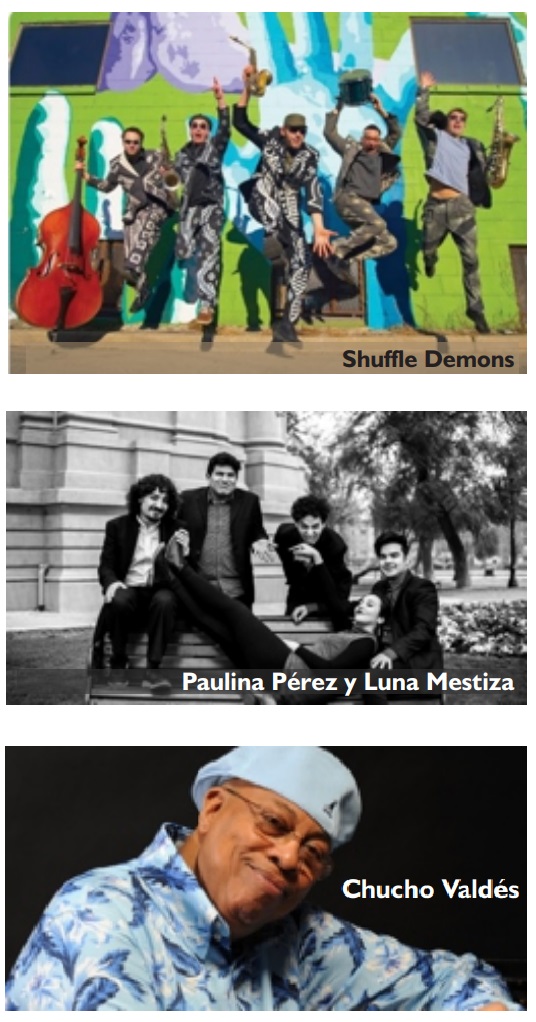
Performing artists include the Wayne Shorter Quartet; Latin jazz legend Chucho Valdés; the Brazilian singer, Luciana Souza; the legendary American pianist, Ran Blake, the master composer and pianist, Bill Dobbins accompanied on stage by the Global Jazz Big Band and the Panamanian cumbia patrons, Samy and Sandra Sandoval. Not to mention that the musical billboard is also strengthened with the participation of Panamanian bassist Santi Debriano along with saxophonist Craig Handy, pianist Bill O’Connell and drummer Will Calhoun, as core members of this musical banquet.

Others that will perform are the Panamonk Revisited trio, made up of maestro Pérez together with the Grammy-winning percussionist, Terri Lyne Carrington and bassist Ben Street, who will share this celebration with other renowned ones such as the Italian saxophonist Marco Pignataro and his Almas Antiguas quartet, with the Panamanian saxophonist Carlos Agrazal as a special guest; the Panamanian saxophonist Luis Carlos Pérez, and the famous Pan-African Jazz Project, made up of the Chilean saxophonist Patricia.

Collash of the 15th Panama Jazz Festival

Zárate Pérez, the Panamanian Luz Acosta (voice and bass) and Graciela Núñez (violin) and the Egyptian musicians Hesham Galal and Balquei.

The Global Stage will be back this year, which will be a stage to enjoy in style with bands from different latitudes such as Rubén Amador and Yahuba (Puerto Rico), The Shuffle Demons (Canada), Paulina Pérez and Luna Mestiza (Chile), Josean Jacobo & Tumbao (Dominican Republic), Marco Pignataro (Italy), Yogev Shetrit Trio (Israel), Fundación Armonía Colectiva (Costa Rica), Four On a Swing (India) and Shea Welsh (United States); and Panamanian talents German Pinzón Jiménez, Tambo Jazz Collective, Digger Descendants Calypso Band, Proyecto Shuruca and Pureza Natural.

In addition, there will be highly prestigious educational institutions, Berklee College of Music, Berklee Global Jazz Institute, New England Conservatory, Thelonious Monk Institute of Jazz, New York Jazz Academy and Crossroads High School, which offer great support every year.

And of the institutes that will be: Berklee Global Jazz Institute, New England Conservatory, Thelonious Monk Institute Of Jazz and New Yorl Jazz Academy.

Artists of the 15th Panama Jazz Festival

And the schedule of activities to be carried out are:

Schedule of the 15th Panama Jazz Festival

One of the most important details of the festival is that auditions, countless educational clinics, as well as the VI Latin American Music Therapy Symposium, the I Classical Music Exchange Program and the II Symposium of Musical, Artistic and Cultural Expressions will be held. of Afro-descendants in Panama with the main theme El Calypso:

A unique Latin rhythm being known as an African and Afro-American music that began in Trinidad and Tobago, later being very popular in the highlands of Venezuela, San Andrés and Providencia in Colombia, Trinidad and Tobago, Puerto Rico and others from the Antilles, where they use instruments such as the stellpan (steel drums), trumpet, trombone, flute, Spanish guitar, electric bass, saxophone, congas, bongos, maracas. This rhythm varies depending on the country where it is performed, giving a unique touch to studying Calypso to all fans or interested in it.

For more information about the Festival, you can contact them through:

  • WebSite: http://panamajazzfestival.com/
  • Facebook: https://www.facebook.com/PanamaJazzFest/
  • Instagram: https://www.instagram.com/panamajazzfestival/
  • Twitter: https://twitter.com/PanamaJazzFesti
  • Email: [email protected]
  • Phone: +507 317-1466


  • « Go to Previous Page
  • Page 1
  • Interim pages omitted …
  • Page 4
  • Page 5
  • Page 6
  • Page 7
  • Page 8
  • Interim pages omitted …
  • Page 50
  • Go to Next Page »

International Salsa Magazine (ISM) is a monthly publication about Salsa activities around the world, that has been publishing since 2007. It is a world network of volunteers coordinated by ISM Magazine. We are working to strengthen all the events by working together.