• Skip to primary navigation
  • Skip to main content

International Salsa Magazine

  • Home
  • Previous editions
    • 2025
      • ISM / November 2025
      • ISM / October 2025
      • ISM / September 2025
      • ISM / August 2025
      • ISM / July 2025
      • ISM / June 2025
      • ISM / May2025
      • ISM / April 2025
      • ISM / March 2025
      • ISM / February 2025
      • ISM / January 2025
    • 2024
      • ISM / December 2024
      • ISM / November 2024
      • ISM / October 2024
      • ISM / September 2024
      • ISM / August 2024
      • ISM / July 2024
      • ISM / June 2024
      • ISM / May 2024
      • ISM / April 2024
      • ISM / March 2024
      • ISM / February 2024
      • ISM / January 2024
    • 2023
      • ISM / December 2023
      • ISM / November 2023
      • ISM / October 2023
      • ISM – September 2023
      • ISM – August 2023
      • ISM July 2023
      • ISM Edition June 2023
      • ISM – May 2023
      • ISM April 2023
      • ISM March 2023
      • ISM February 2023
      • ISM January 2023
    • 2022
      • ISM December 2022
      • ISM November 2022
      • ISM October 2022
      • ISM September 2022
      • ISM August 2022
      • ISM July 2022
      • ISM June 2022
      • ISM May 2022
      • ISM February 2022
      • ISM January 2022
    • 2021
      • ISM December 2021
      • ISM November 2021
      • ISM October – 2021
      • ISM September 2021
      • ISM August 2021
      • ISM July 2021
      • ISM May 2021
      • ISM April 2021
      • ISM June 2021
      • ISM March 2021
      • ISM February 2021
      • ISM January 2021
    • 2020
      • ISM December 2020
      • ISM November 2020
      • ISM October 2020
      • ISM September 2020
      • ISM August 2020
      • ISM July 2020
      • ISM June 2020
      • ISM May 2020
      • ISM April 2020
      • ISM March 2020
      • ISM February 2020
      • ISM January 2020
    • 2019
      • ISM December 2019
      • ISM November 2019
      • ISM October 2019
      • ISM Septembre 2019
      • ISM August 2019
      • ISM July 2019
      • ISM June 2019
      • ISM May 2019
      • ISM April 2019
      • ISM March 2019
      • ISM February 2019
      • ISM January 2019
    • 2018
      • ISM December 2018
      • ISM November 2018
      • ISM October 2018
      • ISM September 2018
      • ISM August 2018
      • ISM July 2018
      • ISM June 2018
      • ISM May 2018
      • ISM April 2018
      • ISM March 2018
      • ISM February 2018
      • ISM January 2018
    • 2017
      • ISM December 2017
      • ISM November 2017
      • ISM October 2017
      • ISM September 2017
      • ISM August 2017
      • ISM July 2017
      • ISM June 2017
      • ISM May 2017
      • ISM April 2017
  • Download Salsa App
    • Android
    • Apple
  • Spanish

Search Results for: Israel

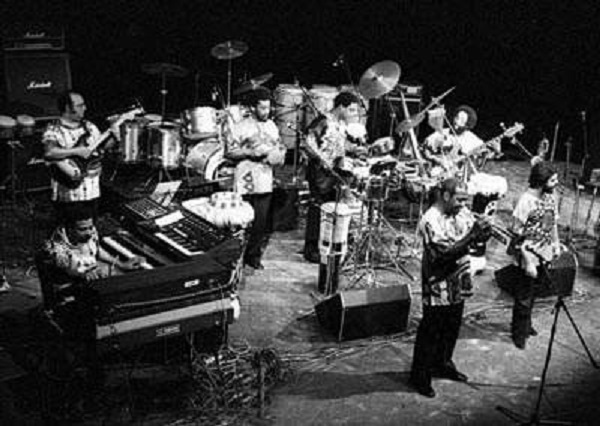
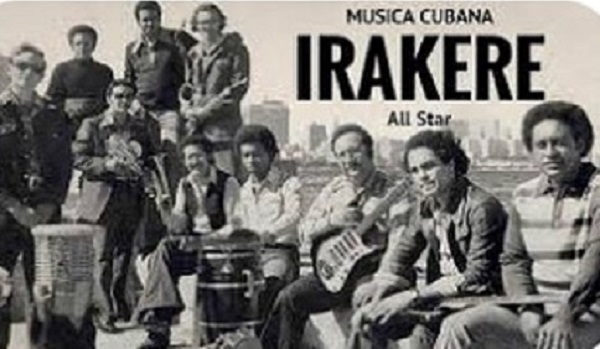
Irakere was a Cuban group that developed an important work in Cuban popular music and Latin Jazz under the direction of Chucho Valdés

Irakere was formed as such in 1967 but had begun to work much earlier; in that year precisely they went to a selection called in Havana to organize with the best musicians of that time the Cuban Orchestra of Modern Music; already in 1972 they were approaching to what they currently produce deciding in 1973 to call it Irakere, which in Yoruba language means Vegetation and that is how, starting from its name, they work based on the Afro-Cuban musical roots.

In this way, through the combination, mixture and interrelation of classical, impressionism, jazz, rock and various compositional techniques they managed to walk through all styles such as dance music, concert, traditional and popular Cuban music.

Thanks to the impulse of pianist Chucho Valdés, the Cuban group Irakere took off in 1973, nourished by Thelonious Monk’s bop.

Founders

Grupo Irakere: It was founded in Havana in 1973, by:

Jesús Valdés(Chucho) composer, director and pianist;

Paquito D’Rivera (Paquito), alto and tenor saxophone, flute and clarinet;

Carlos Averhoff, tenor saxophone, soprano, flute and bass clarinet;

Jorge Varona, trumpet, trombone and percussion;

Carlos del Puerto, bass, bass guitar and tuba;

Carlos Emilio Morales, guitar;

Bernardo García, drums and batá drums;

Jorge Alfonso, batá drums;

Enrique Plá, drums;

Carlos Barbón, güiro, chekeré and tambourine; and

Oscar Valdés, singer, tumbadora (conga), batá drums and bongo.

Irakere, fue un grupo cubano que desarrolló un importante trabajo en la música popular cubana y el Jazz Latino

On the founding of Irakere, Chucho Valdés expressed:

“For us the group always existed, it was present at all times; it was like something pending. At the beginning it had no name, it was just an idea we were working on: to use Cuban folkloric percussion in dance music, and to look for different timbres with a common characteristic: “ours”.

Then Oscar Valdés came up with the idea of combining the not easy and little known batá drum with the tumbadora, güiro and cowbell and so, step by step we arrived at the current group…”.

About Irakere’s first stage, the musicologist Leonardo Acosta points out: “one of the successes of Irakere had been not to try to invent and identify itself with a “new rhythm”, according to the old guidelines of advertising so much used from the forties to the sixties.

The slogan about the “new rhythm” was until recently the “open sesame” on which the musicians counted to become famous overnight, and by that way sometimes quite commercial results were achieved.

Apart from the fact that no “new rhythm” is so new, they all come from the alteration or amalgamation of pre-existing rhythms.

Irakere’s only alchemy comes from the spontaneous creativity of its members. Since there is no commercial endeavor, laboratory practices are unnecessary, and the group can perform a contradanza, a danzón, a son montuno or a cha cha chá without fear of seeming “old-fashioned”, since they are in fact playing something else at the same time. And without setting themselves the goal, nor having to invent a “pega” name, almost by an imperative of the material they are working on, new rhythmic combinations are emerging, to the point that Irakere’s rhythm is unmistakable among Cuban listeners or dancers.

Grupo cubano Irakere

Certainly, and in spite of their triumphs in international jazz festivals, Irakere is not a jazz group. But these successes are not gratuitous either, because as we have seen, they have formidable musicians with great experience in the jazz field, especially in the aspect of improvisation, the great discovery of jazz and perhaps its greatest contribution to the music of the 20th century.

“Paquito D’Rivera: Irakere was born against the will of the Cuban authorities”.

When talking about Cuban music, the name of one of the most emblematic groups in the country’s musical history comes to mind, Irakere, which in Yoruba language means vegetation, jungle.

Irakere became the seed that would germinate a lush forest of rhythms and sounds, a school through which many of the great stars of Cuban music have paraded.

Founded more than four decades ago, this legendary band has been a pioneer of Afro-Cuban jazz and the initiator of the musical revolution in the seventies.

Gracias al impulso del pianista Chucho Valdés, el grupo cubano Irakere levantó vuelo en 1973

Irakere emerged at a time when, due to political demands on the island, music and culture were treated as an instrument of revolutionary identification and jazz was branded as imperialist music.

It was at this time, in the late sixties and early seventies, that a group of great musicians founded a band whose main goal was to enrich Cuban popular dance music with Latin jazz as essential elements.

Under the direction of the outstanding pianist Jesús “Chucho” Valdés, excellent musicians came together in search of a different sonority, based on the use of Afro-Cuban folkloric percussion together with the renewed timbres of the popular rhythms of the time that fused jazz, rock, funk and popular Cuban rhythms such as son, mambo or cha cha chá, together with classical or concert music.

“Irakere was the Musical Generation of change”.

Sources:

https://www.ecured.cu/Irakere

Leonardo Acosta

Radio Televisión Marti

Mirna Guerra

Irakere

You can read: Israel Kantor was an excellent bassist, arranger and composer who achieved great popularity in Cuba for his vocal technique and original “Sonear” style

José Fajardo was a virtuoso flutist, composer, orchestra conductor and music producer

José Antonio Fajardo, in the month of November we refer to one of the greatest musicians that the island of Cuba has given in the last century; we are talking about maestro José Antonio Fajardo Ramos: flutist, composer, orchestra conductor and music producer; one of the great promoters of Cuban music represented in the rhythms of bolero, son, guaracha, mambo, chachachá and pachanga.

José Fajardo was born in Guane, province of Pinar del Río in 1919. He began his musical career as a maraquero in his father Alberto Fajardo’s orchestra, later he took up the flute.

From the age of 16 he was part of several groups such as: Joseíto Fernández, Paulina Álvarez, Melodías del 40, La Romance de René Álvarez, the orchestra of maestro Antonio María Romeu, the orchestra of pianist Luis González Valdés: “Neno” González and the orchestra of Antonio Arcaño, known as Arcaño y sus Maravillas.

José Fajardo fue un virtuoso flautista

After his time in these famous groups, in 1949, Fajardo created his own orchestra called Fajardo y sus Estrellas, with musicians such as: Orlando “Cachaito López”, René Fernández on piano, violinists Ignacio Berroa and Félix Reyna, who was also the composer; percussionist Jesús Esquijarrosa on timbales; Carlos Real on tumbadora and Rolando Valdés on güiro; in the vocal part he initially integrated Joseito Valdés.

In the early fifties, with the boom of chachachá in 1951, things improved a lot and the charangas orchestras began to perform in the best cabarets, aristocratic salons and private parties of high society, such as the Montmatre and Tropicana cabarets.

Fajardo became internationally known in the mid 50’s at the head of his orchestra, Fajardo y sus Estrellas, he was the first charanguero to introduce the cymbals to the timbal and the pioneer in the incorporation of the cowbell and the bongo to the charanga, his group was one of the sensations of the golden age of chachacha and pachanga.

After going into exile in the 1960s, he toured Asia, Africa, Europe and Latin America, popularizing an eminently Cuban repertoire.

Maestro José Fajardo has been one of the only musicians who have stood out in different periods of Latin music; initially in Cuba, in the 50’s with the arrival of Chachachá, later in the era of Pachanga and Boogaloo, in the sixties in the United States, and he also came to prominence in the golden era of salsa in the seventies and eighties of the last century.

In the seventies, eighties and later, the flute master recorded with Joe Quijano & His Conjunto Cachana, Tico-Alegre All Stars; Ray Barretto and Adalberto Santiago; Johnny Pacheco, Pupi, Javier Y Su Charanga; Jimmy Sabater, Orlando Contreras, Alfredo Valdés Jr, Fania All Stars, Louie Ramirez, Graciela and Mario Bauza, Israel “Cachao” Lopez, with our great Joe Arroyo in the nineties and with Hector Casanova, Mario Muñoz, Andy Gonzalez, Eddie Montalvo, Manny Oquendo, Alfredo “Chocolate” Armenteros, Carlos “Patato” Valdes, Alfredo Rodriguez and Francisco Aguabella.

After a brilliant musical career spanning more than six decades, Maestro José Antonio Fajardo passed away in New York City on December 11, 2001, leaving an enormous legacy to our culture.

José Fajardo fue un virtuoso flautista, compositor, director de orquesta y productor musical

The great musical contribution of this portentous son of Pinar del Rio, has highlighted him as the highest flute of Cuba and Latin America, a true ambassador of Cuban music and salsa in the world; from our beautiful page ‘Los Mejores Salseros del Mundo’ we want to highlight the enormous artistic career of maestro José Antonio Fajardo Ramos as a tribute to his wonderful musical work.

José Antonio Fajardo,  uno de los más grandes músicos que ha dado la isla de Cuba

José Fajardo Jr.

You can read: Ángel Bonne He was part of Juan Formell’s Los Van Van Orchestra, and collaborated with the impressive Irakere band of maestro Chucho Valdés

The recently released single “Cómo te quiero yo” is the preview of what will be the album, Sabrosura y Tradición, soon to be released also in acetate.

With a fifty-year career in music, the leader of the Salsa 220 Orchestra, Colombian trombonist Oscar “El Gato” Urueta releases the second song of the musical concept he now directs.

“El Gato” delivers his latest single “Cómo te quiero yo”, composition and arrangement by Venezuelan pianist Alberto Crespo; this time with Rodrigo Mendoza, remembered for his time with Dimensión Latina de Venezuela, on vocals. Urueta got in touch with Alberto Crespo after seeing his work in social networks.

This single, in my opinion, deserves international diffusion because of the Afro-Caribbean interpretation in this concept described by Urueta himself as high-voltage salsa.  I listened to the track and I feel obliged to highlight it for bringing us a classic salsa concept, without being more of the same; so let’s go to the mambo, here is what you hear:

During the first 10 seconds, Rodrigo Mendoza leads the vocal part opening the theme as if opening a door; inviting the listener to go on a musical journey that merges various cultural influences.

At the first minute mark it is already known that the trombones of Oscar “El Gato” Urueta and Eliel Rivero are in charge of the musicalization.  At minute 1:45, Alberto Crespo’s piano solo delights us without making it dense.

This piano solo, from which the salsa dancer who dances in tune can benefit, seems to embrace in perfect synchrony the sound of José Soto “Mortadelo”‘s bass.

At minute 2:30 the trombones take over the song, and melodically give way to the tumbadora, in the hands of Carlos Padrón; meeting with the sound of the same in a tasty instrumental correspondence full of cadence and Caribbean flavor.

At minute 2:36, the bass of José Soto embraces again the sound of the tumbadora.

At minute 2:40 the tumbadora turns on the mambo. At minute 2:42 the tumbadora leads the percussion, opening the way for a bell that plays with the coros of Luisito Cabrera, Rodrigo Mendoza and Edgar “Dolor” Quijada, as well as interweaving with the trombones.

The trombones persist and sustain a mambo of those that bring “more salsa than pesca’o”, as we say in Puerto Rico; until around minute 2:55 the conga, the timbal and the bell execute a forceful cut and in unison, to return the arrangement to the trombones.

At minute 4:00, the leader’s trombone seems to be in sync with the percussion and vocalist to close the track; shortly after the trombones enter into a brief correspondence with the tumbadora, just before Padrón’s campaneo concludes the track at minute 4:25.

Urueta has a healthy musical trajectory, surrounded by the greats of the salsa sound.  “El Gato” was part of the Colombian orchestra La Protesta, when Joe Arroyo was the group’s vocalist. Urueta was also part of the now world renowned Grupo Niche, replacing Alexis Lozano on trombone. Urueta traveled to New York City with Grupo Niche as part of the first international tour of the group founded by the late Jairo Varela. He later settled in Miami where he was part of the orchestras that accompanied stars such as Frankie Ruiz, Hansel y Raúl and Santos Colón, to name a few.

Coincidentally, “El Gato” Urueta joined Hansel y Raul’s orchestra when the song ‘Maria Teresa y Danilo’ had become a hit throughout Latin America. Urueta shared the stage with musicians of the stature of Israel López “Cachao”.

In the 1990s, Urueta was a musician with Joe Arroyo’s Orquesta La Verdad, with whom he traveled around the world.

After participating in several concerts accompanying Richie Ray and Bobby Cruz, about five years ago, Urueta took on the task of forming the Orquesta Salsa 220 with which he presented the single “Guaguancó sabroso”, which featured Puerto Rican Rico Walker as guest artist on vocals.

“Cómo te quiero yo” is the preview of what will be the album: Sabrosura y Tradición, soon to be released also on acetate.

Bella Martínez

You can read: Sigo entre amigos de Luis “Perico” Ortiz


By Bella Martinez, ISM Correspondents, San Juan, Puerto Rico

Xiomara Laugart, nicknamed “La Negra” was born in Guantanamo, Cuba

For Xiomara Laugart, the past never goes away; she likes to hide in music. “My faith, I believe in you, you won’t go away,” Alberto Tosca wrote to her in that song and Xiomara seems to have decided to live by those lyrics, to this day.

Her loud laughter filled my kitchen this afternoon, while Omar brewed coffee, many times, and my mother cooked pumpkin flan. She evokes her mother in the sweet, comes back to life and tells.

She tells with astonishing naturalness that she never studied music and goes on and on. She goes on to freedom, and overflows with passion, because for her freedom is music.

Technically she could do whatever she wants, but if she does not feel it, if it does not make her vibrate, Xiomara, “The voice of Cuba”, could not sing.

On September 8, 1960 in Guantanamo, Cuba, XIOMARA LAUGART, nicknamed “La Negra”, was born. Excellent singer, established in Massachusetts.

Before emigrating to the United States, Laugart had an extensive career within the Cuban Nueva Trova movement. He has recorded more than 17 albums.

Representative of Cuban music in various parts of the world. He worked with the group Pisos Nuevos in Nicaragua. Also with Descemer Bueno. He led the group Yerba Buena. She represented Celia Cruz on Broadway.

Xiomara Laugart was born in Guantánamo. She attended university and graduated in Economics, then began her musical career through the nueva trova, a movement of political musical protest, very popular between the sixties and nineties.

He studied music at the Escuela de Superación Profesional Ignacio Cervantes. He began his artistic career professionally in 1985.

His beginnings were quite intense, participating quickly in international stages.

In 1979 he participated in the Festival of Political Song in Berlin. In 1980 he traveled to Nicaragua with the Pinos Nuevos Group, from the Isle of Youth.

The following year she participated again as a guest at the Berlin Political Song Festival and that same year she won third prize at the Political Song Interpretation Contest in Sochi, Soviet Union.

In 1980 she won third place in interpretation at the Adolfo Guzmán Cuban Music Contest; she participated in the V Festival y Activo de la Nueva Trova, the VI Cumbre and Carifesta. He belonged to the Guiñol Theater group of Isla de la Juventud. He was a member of the group Aconcagua and Talla Extra (X-L), and, for a time, worked with Alberto Tosca.

In 1982 he performed at the Café Concert in Mexico, participated in the Festival for Non-Intervention in Central America and Disarmament, held in Holland, Belgium, and the same year, he traveled to France. He became a regular in Mexico and returned to the Aztec country in 1984.

That same year she participated in the Political Song Festival held in Sopot, Poland, and later toured Honduras and Costa Rica.

His voice has a very wide register, although he stands out for his high tones.

She shows a vivid and exceptional sense of rhythm that allows her to interpret from bolero to salsa, from danzón to guaracha to the most sophisticated jazz and funk.

Atrapando espacios, Qué manera de quererte, Hoy mi Habana, Se fue, Ni un ya no estás and Oh melancolía! are some of the songs that are part of her repertoire and that continue to receive a standing ovation every time she performs on the stages of South Florida.

“The first person who introduced me to Miami was the maestro Meme Solis.

Meme has been my mentor in this city and was responsible for opening the doors to a new audience that followed him for years and now goes to my concerts, she says when referring to her close relationship with the legendary Cuban composer.

Source: Hyper Media

Xiomara Laugart

You can read: Israel Kantor was an excellent bassist, arranger and composer who achieved great popularity in Cuba for his vocal technique and original “Sonear” style.

Latin America – September 2022


  • « Go to Previous Page
  • Page 1
  • Interim pages omitted …
  • Page 14
  • Page 15
  • Page 16
  • Page 17
  • Page 18
  • Interim pages omitted …
  • Page 20
  • Go to Next Page »

International Salsa Magazine (ISM) is a monthly publication about Salsa activities around the world, that has been publishing since 2007. It is a world network of volunteers coordinated by ISM Magazine. We are working to strengthen all the events by working together.