• Skip to primary navigation
  • Skip to main content

International Salsa Magazine

  • Home
  • Previous editions
    • 2025
      • ISM / November 2025
      • ISM / October 2025
      • ISM / September 2025
      • ISM / August 2025
      • ISM / July 2025
      • ISM / June 2025
      • ISM / May2025
      • ISM / April 2025
      • ISM / March 2025
      • ISM / February 2025
      • ISM / January 2025
    • 2024
      • ISM / December 2024
      • ISM / November 2024
      • ISM / October 2024
      • ISM / September 2024
      • ISM / August 2024
      • ISM / July 2024
      • ISM / June 2024
      • ISM / May 2024
      • ISM / April 2024
      • ISM / March 2024
      • ISM / February 2024
      • ISM / January 2024
    • 2023
      • ISM / December 2023
      • ISM / November 2023
      • ISM / October 2023
      • ISM – September 2023
      • ISM – August 2023
      • ISM July 2023
      • ISM Edition June 2023
      • ISM – May 2023
      • ISM April 2023
      • ISM March 2023
      • ISM February 2023
      • ISM January 2023
    • 2022
      • ISM December 2022
      • ISM November 2022
      • ISM October 2022
      • ISM September 2022
      • ISM August 2022
      • ISM July 2022
      • ISM June 2022
      • ISM May 2022
      • ISM February 2022
      • ISM January 2022
    • 2021
      • ISM December 2021
      • ISM November 2021
      • ISM October – 2021
      • ISM September 2021
      • ISM August 2021
      • ISM July 2021
      • ISM May 2021
      • ISM April 2021
      • ISM June 2021
      • ISM March 2021
      • ISM February 2021
      • ISM January 2021
    • 2020
      • ISM December 2020
      • ISM November 2020
      • ISM October 2020
      • ISM September 2020
      • ISM August 2020
      • ISM July 2020
      • ISM June 2020
      • ISM May 2020
      • ISM April 2020
      • ISM March 2020
      • ISM February 2020
      • ISM January 2020
    • 2019
      • ISM December 2019
      • ISM November 2019
      • ISM October 2019
      • ISM Septembre 2019
      • ISM August 2019
      • ISM July 2019
      • ISM June 2019
      • ISM May 2019
      • ISM April 2019
      • ISM March 2019
      • ISM February 2019
      • ISM January 2019
    • 2018
      • ISM December 2018
      • ISM November 2018
      • ISM October 2018
      • ISM September 2018
      • ISM August 2018
      • ISM July 2018
      • ISM June 2018
      • ISM May 2018
      • ISM April 2018
      • ISM March 2018
      • ISM February 2018
      • ISM January 2018
    • 2017
      • ISM December 2017
      • ISM November 2017
      • ISM October 2017
      • ISM September 2017
      • ISM August 2017
      • ISM July 2017
      • ISM June 2017
      • ISM May 2017
      • ISM April 2017
  • Download Salsa App
    • Android
    • Apple
  • Spanish

Search Results for: Javier Plaza

Javier Plaza – Biography

Europe / Alemania / Munich

Javier Plaza was born on October 4, 1952 in the Target Shooting sector of the populous neighborhood of Sarría, in Caracas – Venezuela.

In 1957 the urbanization 23 de Enero was inaugurated and the Plaza Castillo family is one of the many founding families of this beautiful project of the government of Marcos Pérez Jiménez. Javier’s Plaza childhood and adolescence take place in this environment.

The parking lot of block 5 of the Monte Piedad area on January 23, was the space where Javier Plaza began to discover his skills as a percussionist, because it was the place chosen by the neighborhood boys to take out the drums, unload and share. Among some of these future stars we can mention Bitervo Plaza, José “Cheo” Navarro and Alfredo “Cutuflá” Franchesqui.

Starting in the mid-70s, he began his professional career in Latin music, forming part of groups such as Rumbón 10, Sexteto Juventud, Enrique “Culebra” Iriarte y su Orquesta, Culebra being the one who gave him the opportunity to be one of the orchestra singers.

This work opens the doors for him in the record market, with the help of producer Víctor Mendoza, he participates in recordings of different groups such as José Rosario y sus Soneros, Federico y Su Combo and El Clan de Victor.

At the beginning of the 80s, the Orquesta Café was formed, Javier is one of its vocalists along with Joe Ruiz and Carlos Espósito, managing to record one of the most important albums of his career and one of the most significant for the inhabitants of January 23, Due to the fact that most of its musicians are parishioners, the rehearsals were held in Monte Piedad and the economic resources for the recording of the album arose in the neighborhood, thanks to a great collaborator and music lover, Mr. Andrés “Culebra” Vasquéz.

In this group musicians participated, who at the time were not as recognized as today, among others Jose “Tucky” Torres, César “Chino” Pérez, Carlos “Kutimba” Espósito, Bitervo Plaza, Gerardo Rosales, Jorge “Venado” Ponce and the late Joe Ruiz.

Javier Plaza
Javier Plaza

By the mid-1980s, Javier began to knock on doors in the old continent and Alfredo Cutuflá, who lives in Paris, invited him to participate in Combo Ventú, a group established in Paris with most of its Venezuelan members.

There he began a successful career in Europe participating in different groups and collaborating in recordings and presentations of other artists. Thanks to the presentations of Combo Ventú, the director of the Conexión Latina Orchestra, based in Munich-Germany, contacted him to be part of their ranks, he has remained with this orchestra for 18 years, currently being the oldest musician of the grouping.

Since he (Javier Plaza) was hired by the Connection, he has lived in the city of Cologne-Germany, a place where a large group of Venezuelans live, many of them dedicated to culture.

He (Javier Plaza) reinforced his musical studies of vocal technique, theory and music theory at the Köln Mülheim and studied the German language at the IBM Institute.

He has participated in groups such as Kimbiza, La Charanga Nueva de Alfredo Cutuflá, the Colombian pianist Francisco Zumaqué, Salsamanía, Cesar “Chino” Pérez and Gerardo Rosales, without abandoning his responsibility within the Latin Connection vocalists.

With La Conexión, he has had the opportunity to accompany international stars of Latin music, such as Perico Ortiz, Ismael Miranda, Adalberto Santiago and Azuquita, among others. Javier comments that Nicky Marrero worked with La Conexión for five years.

Since 1992, Javier Plaza has been managing his personal project, the Son-Risa Orchestra. With her he has made two productions entitled “Libre Soy” and “Mi Música”, with most of the songs of his own authorship.

In 2006 he came to Venezuela with a project under his arm, lyrics, musical arrangements and a proposal, in search of private or government financial support.

The name of the project “El Reencuentro”, with which he planned to bring six talented Venezuelan musicians based in Europe to meet again with musicians who make life in our country and thus make a recording where this experience would be reflected, these musicians were Alfredo ” Cutuflá” Franchesqui, Orlando “Watussi” Castillo, Carlos “Kutimba” Espósito, Orlando Poleo, Yma América and José Ávila…

but the money was not enough to purchase the tickets. Therefore, El Proyecto Reencuentro was recorded with the musicians residing in our country, resulting in a product of excellent quality, among others, Nelson “Melo” Douglas, Alberto Crespo, Leonel Sanchez, Charles Peñalver, Alberto Naranjo, Tucky Torres, Rafael González, Carlos Julio “El Oso” Ramírez, Marcial Istúriz and José Ramoncini.

During the recording of this album, his mother passed away (02-04-2006), Rosario Castillo, popularly known in the neighborhood as Rosarito, to whom he dedicated this album and one of its songs was written especially for her.

The chorus of one of the themes of the new Son-Risa production says: “Let’s get the drums out again, let Caribe not die”.

As the boys did in the parking lot of Block 5 of Monte Piedad, we know that Javier Plaza and his Son-Risa Orchestra will have the support of all Venezuelan music lovers.

Javier Plaza “With Coconut Flavor”

From the 23 de Enero neighborhood of Caracas to Cologne – Germany

October 4, 1952: Javier Ernesto Plaza Castillo was born in the Tiro al Blanco area of the Sarría neighborhood in Caracas, Venezuela. He is a musician, percussionist, singer, and composer.

Javier Plaza is a great and veteran Venezuelan sonero that was trained in the 23 de Enero parish.

He started his professional career as a member of groups such as Rumbón 10, Sexteto Juventud, and Enrique “Culebra” Iriarte y Su Orquesta. It was “Culebra” who allowed him to be one of the singers of the orchestra.

He participated in records from different groups such as José Rosario y Sus Soneros, Federico y Su Combo, and El Clan de Victor.

Javier Plaza is an excellent veteran Venezuelan sonero trained in the parish of 23 de Enero
With Coconut Flavor

Javier visited Cali to promote his album “Con Sabor a Coco” and had the opportunity to listen to his live music accompanied by the Coimbre Orchestra formed by young musicians from Cali at the Baile Swing Latino Academy in March 2011. Without a doubt, it was a unique experience, Javier demonstrated that he is a true sonero.

In the early ’80s, Plaza created his band called Orquesta Café in the company of Joe Ruiz and Carlos Espósito, making possible the recording of one of his most important songs.

Sometime later, he participated in the group called Combo Ventú established in Paris.

In Europe, he participated in different groups and collaborated in recordings and performances of other artists.

Thanks to the performances with the Combo Ventú group, the Conexión Latina Orquesta’s director, contacted him, he has continued to remain in this orchestra for 18 years, being now the most ancient musician of the group.

In Europe he participates in different groups, and collaborates in recordings and presentations of other artists.
Javier Plaza and The Conexión Latina Orchestra

He has also participated in groups such as: Kimbiza, La Charanga Nueva de Alfredo Cutuflá, pianist Francisco Zumaqué, Salsamanía, César “Chino” Pérez and Gerardo Rosales. All this without dropping his responsibilities to the Conexión Latina orchestra.

Thanks to the orchestra, he has had the opportunity to accompany international figures in Latin music such as Luis Perico Ortiz, Ismael Miranda, Adalberto Santiago, and Camilo Azuquita, among others.

Since 1992, Javier Plaza has been managing his personal project, which is the Son-Risa Orchestra. Additional to that, he has performed two productions titled “Libre Soy” and “Mi Música” and most of the songs of his authorship.

Javier Plaza is one of the most recognized Venezuelan percussionists in Europe, with a career spanning more than 20 years in the salsa and Latin music industry. Do you want to know more about him? Here are the details.

Currently, he is still in Germany, working on his own project, the salsa band Son-Risa, and his mission is to spread the Venezuelan flavor throughout Europe.
Javier Plaza and his own project, the salsa band Son-Risa

While growing up, music was one of the most important things, and practiced different instruments with friends and family. Among those friends were future stars such as Bitervo Plaza, José “Cheo” Navarro, and Alfredo “Cutuflá” Franchesqui.

In the mid-’70s, his career took off when he joined different Latin bands such as Rumbón 10, Sexteto Juventud, and Enrique “Culebra” Iriarte, and his orchestra; this allows him to open the doors to a new recording market from the hand of producer Víctor Mendoza.

After many years, Alfredo Cutuflá invited him to join the Combo Ventú group in Paris with other Venezuelan musicians.

This is when Plaza started a career in Europe playing with different bands and in projects by other artists.
He participated in recordings of different groups, such as: José Rosario y Sus Soneros, Federico y Su Combo and El Clan de Víctor.
Javier Plaza “Con Sabor A Coco” (With Coconut Flavor)

Thanks to the Combo Ventu group’s connections, the Conexion Latina orchestra’s manager offered him to join the group in Munich, Germany, and from that moment he has been in this band for 18 years.

Currently, he is still in Germany, working on his project that is the salsa band Son-Risa and his mission is to spread the Venezuelan flavor throughout Europe.


Inicio

Betty Zapata ¨The Lady of Salsa¨

Latin America / Venezuela / Caracas

In Venezuela, Caracas, the neighborhood is a way of life with its own identity. The neighborhoods of the entire National Territory, its inhabitants, become outstanding characters. Such is the case of Betty Zapata who was born in the emblematic La Pastora Parish located in the Capital (Caracas). There he spends his childhood in a neighborhood of colonial and historical houses of Venezuela.

Betty Zapata ¨The Lady of Salsa¨

There are many memories of that legendary Zone, they are inevitably built by those associated with survival, preparation, development, work, love, struggle and family formation, its magic and what marked it for life… . “Music”.

My connection with music is due in part to the fact that I live in a popular area where the music that was heard was Afro-Caribbean (mostly Salsa), the parties or meetings in my house and the neighborhood were always enlivened by that type of music, the most rooted and sticky collectively, originating the most varied dancers.

In the Carnestolendas festivities, improvised platforms (Templetes) were installed to stage the most varied costume and dance contests. Leaving my childhood and beginning my adolescent stage, I participated in dance competitions, obtaining recognition and prizes that were awarded to the young people of my generation.

I attended festive celebrations (dance meetings) with my older sisters at the age of 12, not because I was a dancer, but to not leave me alone, since I was the youngest of 3 sisters, this allowed me to share with people older than me and which I was learning the different dance styles “remembering with great affection the Cayender family, made up of excellent dancers” they are part of my school and love for dance. My cadence, flavor and body movement also allowed me to learn until I had my own dance style.

The music of the moment was the Danzones, Billo’s, Melodicos and in my house my sisters listened in the 70’s to Joe Cuba, Ricardo Rey and Bobby Cruz, Eddie Palmieri, the Latin Dimension prevails, Grupo Mango, Salsa Mayor, La Banda and his Young Sauce. That stuck with me forever and I felt drawn to Salsa.

That gave me the basis to fully incorporate myself into the exciting world of music. In the Barrio salsa is something essential, if you don’t dance it, enjoy it, feel it, you’re nothing.

Attending a meeting, an event, a concert, a presentation, a party or a meeting and there is no salsa, you feel an emptiness since with it we enjoy, we share, we dance and it definitely puts us to enjoy.

Photo - Betty Zapata ¨The Lady of Salsa¨
Photo – Betty Zapata ¨The Lady of Salsa¨

In the course of my 6 decades of existence, I have not ceased to be linked to it in different facets: as an audience, spectator, guest, contestant, jury, organizer, producer and director of events.

Each of these participations has allowed me to stand out, stand out and be a well-known, popular and loved person, a reference in the organization of a good party, night events, presentations of representative groups of the world of Salsa such as:

Ray de La Paz, Herman Olivera, Frankie Vásquez, Bobbie Valentin, Willie Rosario, Spanish Harlem Orchestra, Sonora Ponceña, La Selecta, Mulenze, Carlos Cano Estremera, Julio López, Yolandita Rivera, Mambo Legends among others, and for those from the Patio: Bailatino, Rumberos del Callejón , Ensamble La Calle, Albondiga y su Pandilla, Repicao, Tributo, On Fire, La áquina de la Salsa, La Negramenta, Gerardo Rosales, Javier Plaza’s Son Risa Orchestra among others.

This has allowed me to be an obligatory reference when it comes to producing and making an event of great importance and musical quality where the Dancing Public is respected and appreciated, providing them with the comforts to enjoy an excellent show and Latin music is seen as an element of identity that belongs to all of us to live it and feel it.

I am (Betty Zapata) currently planning and developing projects in the short, medium and long term and to give you a heads-up I am giving you the scoop: I am here with my radio program to promote, support, disseminate and promote our exciting and magical world of Caribbean music.

Europe – June 2018

Salsa Trip thubnails ingles - Europe - June 2018

Javier Plaza thubnails - Europe - June 2018

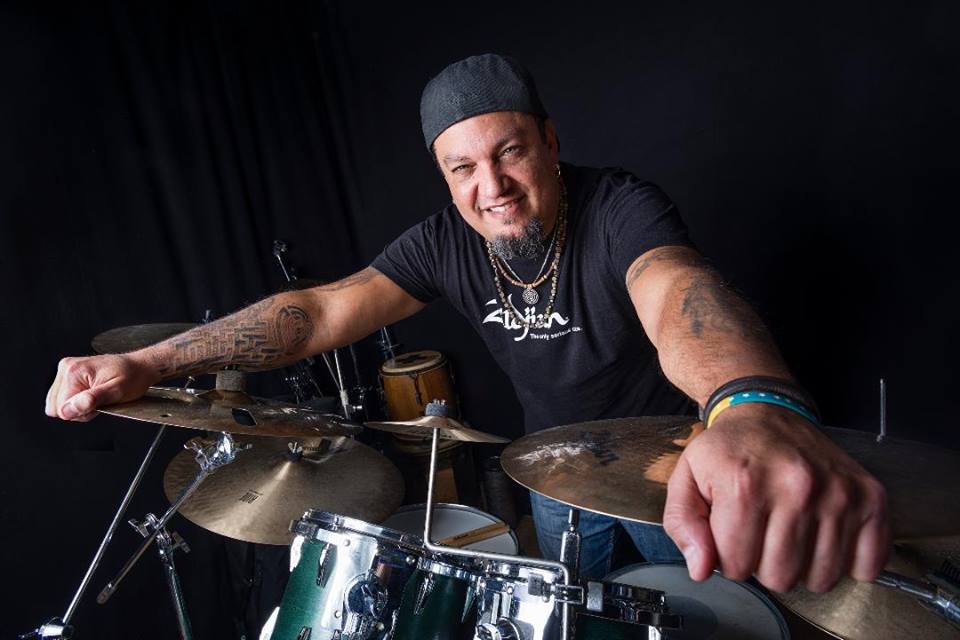
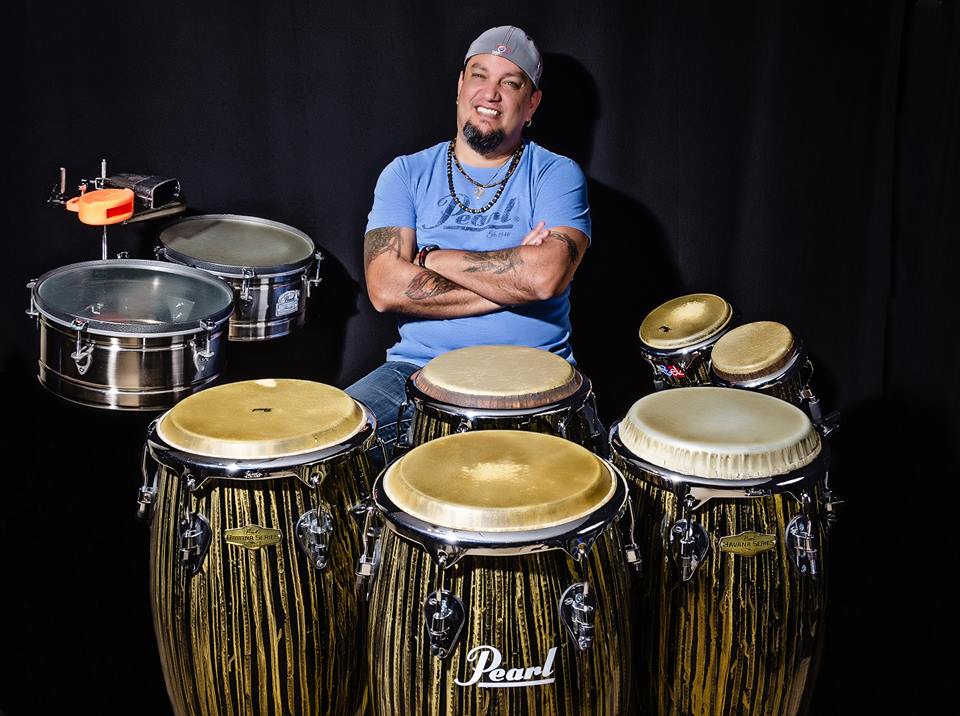
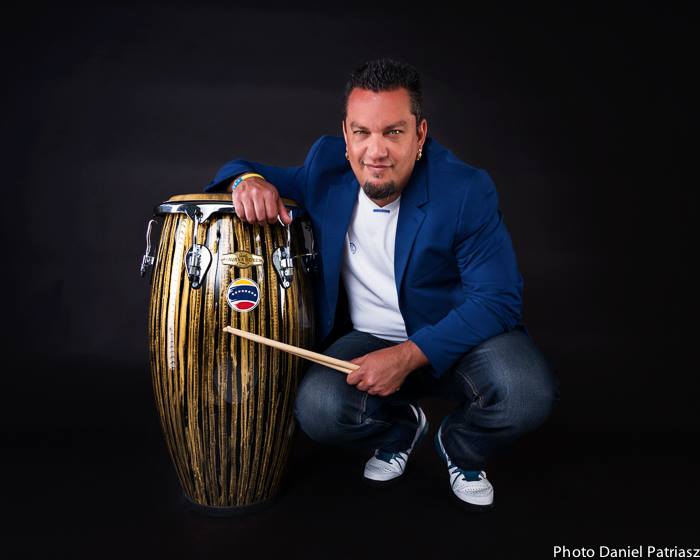
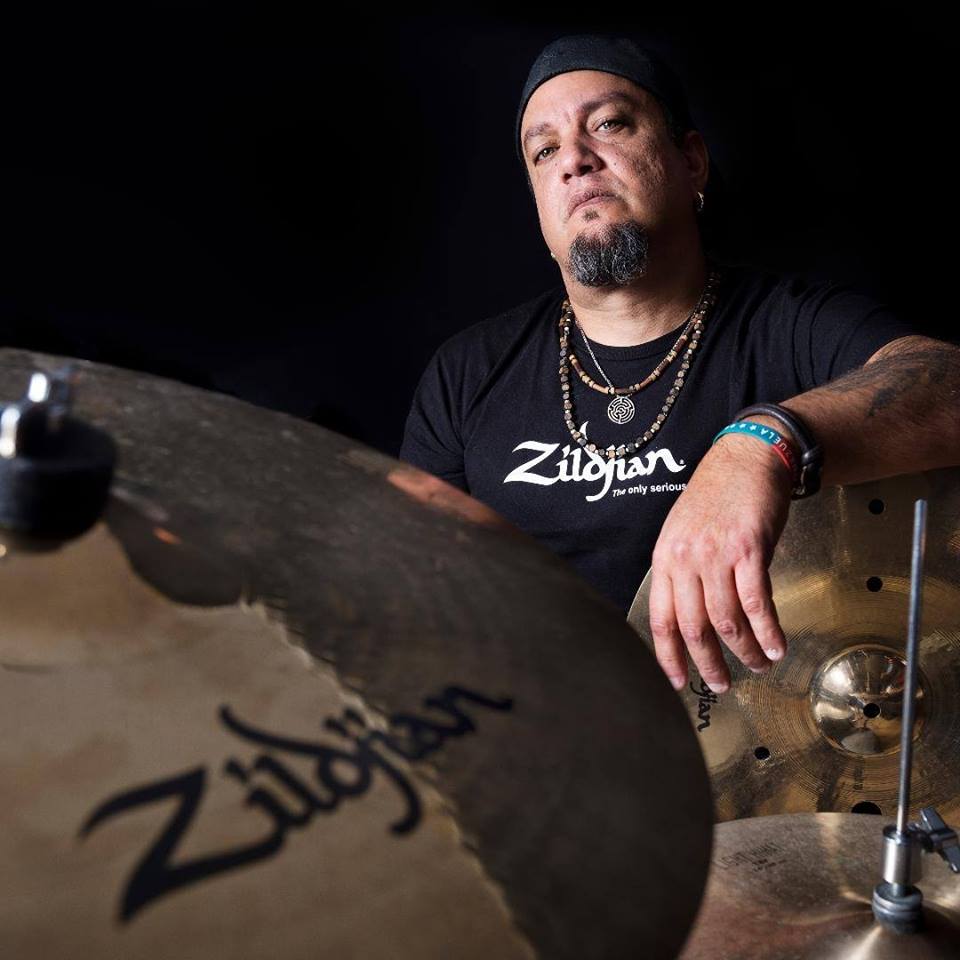
Marco Toro. The Versatile of Percussion

Europa/ Holanda

Marco Toro is a versatile drummer, percussionist and composer born in Caracas, whose roots are embedded in Venezuelan popular music and culture.

Marco Toro
Marco Toro

In October 2015 he released his latest work, this time it’s about Latin jazz: Marco Toro presents Zambo Jazz, a mix of rhythms and flavors that reminds the listener of places like Africa, South America and New Orleans.

Marco Toro once again shows his diversity on drums and percussion, playing as always with top-notch musicians who also share credits on this production.

Marc Bischoff, from Germany on piano, wrote two of the eight songs: Oh Lame Saint and Mojitos and Daikiries, trumpeter Oscar -Chucky- Cordero, from Venezuela, wrote The Tour. Michael Simon, also from Venezuela, arranged Marialí. James 2 AM It is a composition by Chilean Alekos Vuskovic and Let It Walk is by trumpeter and arranger Francisco Peña from Colombia. Matthias Konrad plays the trombone; He is also from Germany and the Venezuelan Samuel Ruiz plays the bass.

Marco Toro
Marco Toro

In addition to playing drums, timbales, congas, bongos and cowbells, he also plays typical Afro-Venezuelan instruments such as cumaco, culo e puya, bell drum, tamboras, maracas, etc.

He not only plays all kinds of percussion instruments, he also plays a wide variety of styles.

Already in 2004 he embarked on a solo project: Marco Toro y su Ensamble, exploring South American rhythms such as Son, Joropo and Salsa, among others. With this group he released eight albums; The last CD is from 2017: Marco Toro y su Ensamble 12+1 Anniversary more info (www.toro-ensamble.com).

Marco Toro is currently playing with Lucas van Merwijk’s Drums United and Cubop City Big Band since 2008, touring Europe, the United States, Canada, South America, China and Thailand.

In 1989 Marco Toro formed Laberinto, a rock band that became known for creating “Metalatino”, a unique blend of heavy metal and Latin percussion.

In 1992 Laberinto moved from Caracas to Amsterdam, where the band released eight albums between 1996 and 2010.

Dutch rap legend Osdorp Posse appears on The World Might Suck, since 2008.

A ninth album: The best of Labyrinth was released in Venezuela.

After years of successful and extensive touring in Europe, Colombia and Venezuela went their separate ways.

Marco Toro
Marco Toro

He has shared the stage and recorded with many renowned artists such as:

  • Andy González
  • La India, Jimmy Bosch
  • Pedro Arroyo
  • Metropole Orkest
  • Laberinto, Osdorp Posse
  • Def P
  • Beatbusters, Lucas van Merwijk’s Drums United
  • Cubop City Big Band
  • Ricky Luis N’Clave
  • Zambo Jazz
  • De Pana
  • Beatbusters and Def P
  • Santanico,
  • G. Clarinda y la Rítmica
  • Primera Plana Orchestra
  • Bembe Orchestra
  • El Trabucombo by Gerardo Rosales
  • Marejada, Tierra Caliente
  • Rudy Albano
  • Jacqueline Castro
  • Subject to change
  • Tumbao
  • Grupo Kilele
  • Javier Plaza and his Orquesta Sonrisa
  • FP La Banda
  • Chucky y su Trabuco Guarimba
  • Barrio Nuevo
  • La Misma Gente
  • Marike Jager Kuenta i Tambu
  • King of the bongo
  • Carmen Gabriela Lozada
  • Grupo Mate
  • Alejandro Carbajal
  • Flaco Carrillo
  • Silicon Head
  • Wereld Kinder Festival
  • The virtual school of Bart Noorman
  • Pistoleros de la Paz
  • Download Amsterdam
  • Ensemble Amsterdam
  • Cabo Cuba Jazz
  • The Soul of Spanish Harlem
  • Jean Paul Tamayo

among others.

Marco Toro
Marco Toro

Marco Toro is sponsored by Zildjian Cymbals, Pearl Percussion and Evans Drumheads.

  • Page 1
  • Page 2
  • Page 3
  • Go to Next Page »

International Salsa Magazine (ISM) is a monthly publication about Salsa activities around the world, that has been publishing since 2007. It is a world network of volunteers coordinated by ISM Magazine. We are working to strengthen all the events by working together.