• Skip to primary navigation
  • Skip to main content

International Salsa Magazine

  • Home
  • Previous editions
    • 2025
      • ISM / November 2025
      • ISM / October 2025
      • ISM / September 2025
      • ISM / August 2025
      • ISM / July 2025
      • ISM / June 2025
      • ISM / May2025
      • ISM / April 2025
      • ISM / March 2025
      • ISM / February 2025
      • ISM / January 2025
    • 2024
      • ISM / December 2024
      • ISM / November 2024
      • ISM / October 2024
      • ISM / September 2024
      • ISM / August 2024
      • ISM / July 2024
      • ISM / June 2024
      • ISM / May 2024
      • ISM / April 2024
      • ISM / March 2024
      • ISM / February 2024
      • ISM / January 2024
    • 2023
      • ISM / December 2023
      • ISM / November 2023
      • ISM / October 2023
      • ISM – September 2023
      • ISM – August 2023
      • ISM July 2023
      • ISM Edition June 2023
      • ISM – May 2023
      • ISM April 2023
      • ISM March 2023
      • ISM February 2023
      • ISM January 2023
    • 2022
      • ISM December 2022
      • ISM November 2022
      • ISM October 2022
      • ISM September 2022
      • ISM August 2022
      • ISM July 2022
      • ISM June 2022
      • ISM May 2022
      • ISM February 2022
      • ISM January 2022
    • 2021
      • ISM December 2021
      • ISM November 2021
      • ISM October – 2021
      • ISM September 2021
      • ISM August 2021
      • ISM July 2021
      • ISM May 2021
      • ISM April 2021
      • ISM June 2021
      • ISM March 2021
      • ISM February 2021
      • ISM January 2021
    • 2020
      • ISM December 2020
      • ISM November 2020
      • ISM October 2020
      • ISM September 2020
      • ISM August 2020
      • ISM July 2020
      • ISM June 2020
      • ISM May 2020
      • ISM April 2020
      • ISM March 2020
      • ISM February 2020
      • ISM January 2020
    • 2019
      • ISM December 2019
      • ISM November 2019
      • ISM October 2019
      • ISM Septembre 2019
      • ISM August 2019
      • ISM July 2019
      • ISM June 2019
      • ISM May 2019
      • ISM April 2019
      • ISM March 2019
      • ISM February 2019
      • ISM January 2019
    • 2018
      • ISM December 2018
      • ISM November 2018
      • ISM October 2018
      • ISM September 2018
      • ISM August 2018
      • ISM July 2018
      • ISM June 2018
      • ISM May 2018
      • ISM April 2018
      • ISM March 2018
      • ISM February 2018
      • ISM January 2018
    • 2017
      • ISM December 2017
      • ISM November 2017
      • ISM October 2017
      • ISM September 2017
      • ISM August 2017
      • ISM July 2017
      • ISM June 2017
      • ISM May 2017
      • ISM April 2017
  • Download Salsa App
    • Android
    • Apple
  • Spanish

Search Results for: Javier Plaza

Gerardo Rosales is the creator and producer of Combo Mundial, Venezuela Masters and Charanga La Crisis

Gerardo Rosales was born in Caracas Venezuela on July 6, 1964. At the beginning of his musical career he was a percussionist for important figures of his country.

He has been living in Europe since 1992, and has taken up residence in Holland, a country that has served as a base for him to project his music around the world.
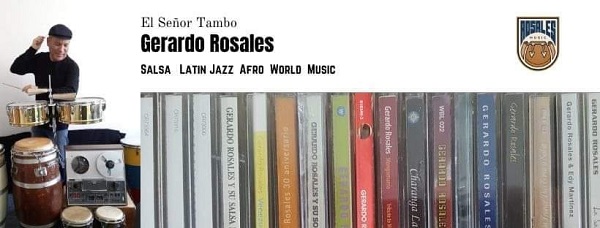
He has recorded 20 albums under his own name and more than 70 productions with other artists.

Gerardo Rosales’ specialty is creating musical projects in the styles of salsa and Latin jazz.

Gerardo Rosales is the creator and producer of El Combo Mundial, Venezuela Masters, Charanga La Crisis, Our Latin Groove, La Gran Charanga, Son del Sofá, Rítmico y Pianístico, Cachao Sounds and many more.
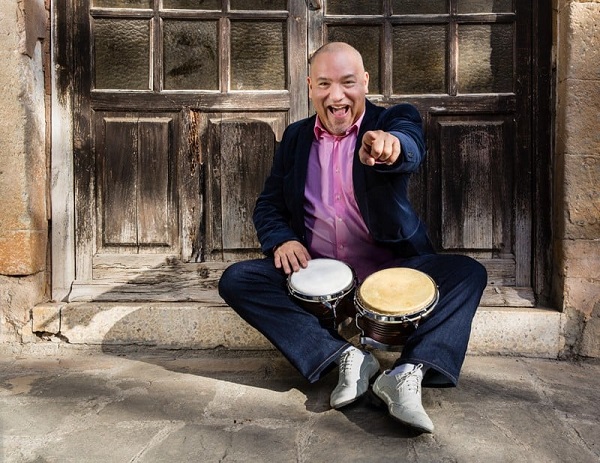
In his beginnings in his country Venezuela he performed with:  Orquesta Café, Orlando Poleo, José Rosario, Canelita, Soledad Bravo, Adrenalina Caribe, Ilan Chester, Cecilia Todd, Víctor Cuica, Alberto Naranjo, El Trabuco Venezolano, Joe Ruiz, Tabaco, Los Satélites, Nancy Ramos, Wilmer Lozano,Watussi, Trina Medina etc.

In Europe he has performed with: The Rosenberg Trio, Saskia Laroo, Hans Dulfer, Benjamin Herman, Peter Beets, Tango Extremo, Drums United, Nueva Manteca, New Cool Collective, Fra Fra Sound, Denisse Jannah, Laura Fygi, Izaline Calister, Metropole Orchestra, Holanda Big Band, Cubop City Big Band, Lilian Vieira, Rolf Sanchez, ChaChaChalina y Maite Hontelé etc.
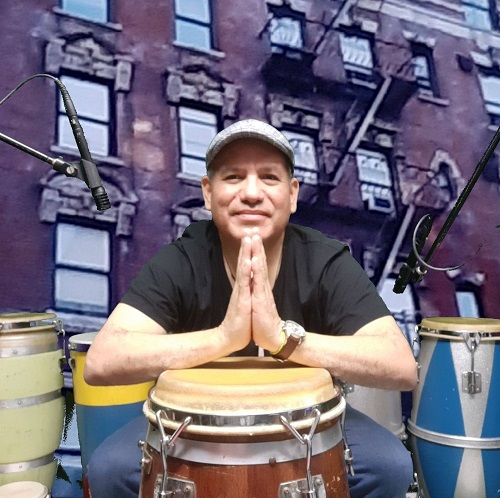
Gerardo Rosales has accompanied on tours, recordings and performances in Europe artists such as Dee Dee Bridgewater, Benny Bailey, Paquito D Rivera, Bebo Valdés, Toots Thielemans, Jimmy Bosch, Juan Pablo Torres, Herman Olivera, Oscar D León, José Alberto El Canario “, Andy Montañéz, Meñique, Edy Martínez, Carlos” Patato “Valdés, Conexión Latina, Orlando Valle” Maraca “, Alfredo Rodríguez, Armando Peraza, Luisito Quintero, Ramón Valle, Larry Harlow, Adalberto Santiago, Frankie Vázquez, Oscar Hernandez, Africando, Chamaco Rivera, Luisito Carrion, Jorge Herrera, Edgar Dolor, Dorance Lorza, Luisito Rosario, Watussi, David Cada, and Tito Allen, etc.

The Records of Gerardo Rosales:

2016 Gerardo Rosales “Salsa Vintage” (Download – CD – LP)

2014 Gerardo Rosales “Son Del Sofa” (Single) ITunes

2013 Gerardo Rosales “Síguelo” (CD).

2011 Gerardo Rosales “Chano Pozo’s Music” (CD).

2011 Gerardo Rosales “30 Aniversario” (CD).

2010 Cachao Sounds “La Descarga Continúa” (CD).

2010 Gerardo Rosales “Buscando Chamba” (CD).

2009 Venezuelan Masters Orchestra “Toros y Salsa” (CD).

2008 Gerardo Rosales “Salsa Mundial” (CD).

2007 Our Latin Groove “Bringin’ it All On Back” (CD).

2005 Gerardo Rosales “Mongomanía” (CD).

2005 Charanga La Crisis “Salsa Antigua” (CD).

2004 Gerardo Rosales “Tribute to Fania” (CD).

2001 Gerardo Rosales “La Salsa es mi Vida” (CD).

2001 Gerardo Rosales & Edy Martínez “Rítmico y Pianístico” (CD).

1999 Gerardo Rosales “El Venezolano” (CD).

1998 Gerardo Rosales “Señor Tambó” (CD).

1996 Gerardo Rosales “Venezuela Sonora” (CD).

1992 Gerardo Rosales “Salsa Pa’lante de Venezuela” (CD).

1991 Gerardo Rosales “Salsa Pa’Lante de Venezuela” (33 RPM Vinyl).

Algunos discos grabados por Gerardo Rosales con otros Artista:

Orquesta Cafe “Criollisima” 1987 (Fama) Venezuela ( Salsa )

Joe Ruiz – Javier Plaza – Jose Torres – Gerardo Rosales

Bebo Valdes “Rides Again” 1994 ( Messidor) Germany ( Latin Jazz )

Paquito D Rivera – Patato Valdes – Amadito Valdes – Gerardo Rosales

Conexion Latina – “La Conexion” 1996 (Enja) Germany ( Salsa )

Rudi Fuesers – Leslie Lopez- Anthony Martinez – Nicky Marrero – Gerardo Rosales

David Rohschild “Looking Up” 1997 (Via) The Netherlands ( Salsa )

Adalberto Santiago – Banjamin Herman – Gerardo Rosales

Leslie Lopez “Bomba Moderna” 1999 (Buitenkunst) The Netherlands (Latin Jazz)

Ramon Valle – Joe Rivera – Nils Fischer – Gerardo Rosales

The Rosemberg Trio “Suenos Gitanos” 2001 (Polydor) The Netherlands ( Latin )

Toots Thielemans – Leonardo Amuedo – Gerardo Rosales

Ronal Snijders “Bijlmerjazz 2004 (Independent) The Netherlands (Jazz)

Randal Corsen – Jesse van Ruller – Gerardo Rosales

Cubop City Big Band “Arsenio 2004 (Tam Tam) 2004 The Netherlands (Cuban)

Lucas van Merwijjk – Edy Martinez – Nelson Gonzalez – Gerardo Rosales

Drums United “World of Rhythm” 2006 (Tam Tam) 2004 The Netherlands (World Music)

Lucas van Merwijk – Nils Fischer – Aly N ‘ Diaye Rose – Gerardo Rosales

Samba Salad – Metropol Orkest “Live Vredenburg” 2006 The Netherlands (World Music)

Herman Link – Dick Bakker – Maurice Luttikhuis – Rita Iny – Gerardo Rosales

Aquilez Baez “ La Patilla” 2007 (Cacao) Venezuela (Latin Jazz)

Anat Cochen – Huascar Barradas – Diego Alvarez – Gerardo Rosales

Maria Catharina “Obsecion” 2010 (Independent) The Netherlands (Jazz)

Adinda Meertins – Thomas Bottcher – Marc Bischoff – Gerardo Rosales

Masalsa “Resurreccion” 2012 (Independent) The Netherlands (Salsa)

Soeshiel Sharma – Ray de La Paz – Marcos Bermudez – Gerardo Rosales

Izaline Calister “Kandela” 2012 (Coast to Coast) The Netherlands (Latin)

Yumarya – Vernon Chatlein – Larc Alban Lotz – Gerardo Rosales

Africando “Viva Africando” 2013 (Sterms Music) France (Salsa)

Boncana Maiga – Oscar Hernandez – Doug Beavers – Luisito Quintero – Gerardo Rosales

Mezcolanza “Headbanger” 2015 (O.A.P Records) The Netherlands (Jazz)

Peter Wenk – Chistof May – David Barker – Mick Paauwe – Gerardo Rosales

Tango Extremo “ Havana” 2015 (JWA) The Netherlands (Latin)

Ben van den Dungen – Rob van Kreeveld – Tanya Schaap – Gerardo Rosales

Orquesta La Potente “ Potente “ 2018 (Independent) Colombia (Salsa)

Coco Ramirez – Guarnizo – Gerardo Rosales

Barry Hay & JB Meijers (Universal Music Group) 2019 The Netherlands ( Pop)

Barry Hay – JB Meijers – Gerardo Rosales

Estrella Acosta “Noche Cubana” 2020 (Independent) ( Cuban) Grammy Nominated

Carlitos Irarragorri – Pedro Luis Pardo – Gerardo Rosales

ChaChaChalina “Mira Antes de Saltar” 2021 (Independent) (Salsa)

Chalina Smit – Dani Brands – Gerardo Rosales

Actuaciones realizadas por Gerardo Rosales en diversos lugares del mundo:

Concerts & Events of Gerardo Rosales:

Poliedro de Caracas: Caracas – Venezuela

Centro Cultural BOD: Caracas – Venezuela

Feria de Cali: Cali -Colombia

North Sea Jazz: Rotterdam – The Netherlands

Toros y Salsa: Dax – France

SOBS: New York – USA

Club Babalu: New York – USA

Expo Sevilla 1992 : Sevilla – España

Festival Latinoamericando: Milano-Italia

Accessible Art Festival: Turquia – Mersin

Bimhuis: Amsterdam – The Netherlands

Melkweg: Amsterdam – The Netherlands

Concertgebouw: Amsterdam – The Netherlands

Paradiso: Amsterdam – The Netherlands

Oosterpoort: Groningen – The Netherlands

Glastonbury Festival: Glastonbury – England

Tabarka Jazz Festival: Tunesia

Music Haal: Berlin – Germany

Las Leyendas Vivas de la Salsa: Medellin – Colombia

Exit Festival: Serbia

La Topa Tolondra: Cali – Colombia

Punto Bare: Cali – Colombia

Cafe Libro: Bogota – Colombia

Bird: Rotterdam – The Netherlands

De Doelen: Rotterdam – The Netherlands

Paard van Troje: Den Haag – The Netherlands

Amazonico:Emiratos Arabes-Dubai
Home

Lawrence and his Vanguard Orchestra I always went ahead of what I wanted and broke “The barriers”

Lawrence Daniel Ibarra Perdigón

The Vanguardia Orchestra was born on May 28, 2001, the name of Vanguardia comes because I always ahead of what I wanted and break the barriers, beginnings date back to 1974 in Block 6 of January 23 in Caracas, musicians rehearsing: Cheo Navarro, Miguel Pacheco, el Gordo Zambrano, Miguel Diaz, Edgar Dolor Quijada and my older brother who supports me and gives me a drum set.

My first professional presentation was with a group called Clave and Son de Caricuao, the director was David Zurita, I made my debut as a chorus singer, imagine if we only alternated with the Caribbean Classical Sonero, that was on May 1st 1983, then in 1985 I began my career as a bongosero in the Fundarte Workshops in the Aquiles Nazoa Library with Professor Orlando Poleo until 1987, the Orchestra Conductorship came later.

The Orquesta Vanguardia is made up of 12 musicians, all of whom have great experience and professionalism. The orchestra is made up of Vicente Frigeiro 1st trumpet, Douglas Villarreal 2nd trumpet arranger, and Miguel Sánchez 1st trombone. 2nd trombone Wilfredo Calderón, Percussion, Oliver Meneses timbal, Richard Avila tumbadoras, Jackson Monterola bongo and bell, piano Douglas Madera arranger and director, bass Elio Torres, singers and choirs José Cedeño, Pedro Rivera and Lawrence Ibarra.

Lawrence and his Vanguard Orchestra I always went ahead of what I wanted and broke "the Barriers".
Lawrence and his Vanguard Orchestra I always went ahead of what I wanted and broke “the Barriers”.

We have alternated, with figures like Hildemaro, Bailatino, Erick Francheski, Grupo madera. Manuel Guerra, Watussi, Naty y Su Orquesta, Noche Caliente, Son Madera Son, Mandinga Star Band, Orquesta Sabor y Swing, Orquesta La Oportunidad, Orquesta Saraguey, Sabor a Pueblo, Orquesta Sinsaye de Venezuela, Agrupación los Tan Tan, Pibo Marquez and his Criollo download, El Combo de Venezuela, Javier Plaza, music lovers meeting in Cali Colombia sharing on Channel 14 with Samir Bazzi and Eddie Saa Colombian singer, Radio Z te Prende with the Pepezon Cali Colombia.

As a bongosero I started in 1985 going through several groups such as: Clave y Son, Son Bacara, Son 27, until 2001 when I founded my own orchestra today Vanguardia, but it was for a short time in the Bongo with Vanguardia.

Beginning as a singer, thanks to the great teacher Oswaldo Morales, well known for his hits like Cinco Centavitos and Ella, I studied with him for about three years. In 2005 I recorded my first production entitled Marcando la Diferencia with 11 songs like SABROSITO by Jose Reina, Cheo Navarro’s Fashion Orchestra, Quiero llorar , Ni llanto ni Flores , Déjalo Volar by Composer Angel Flores, Escaleras de tu Mente by Fran Quintero and Ciriaco by Pedro Rivera With this first production we traveled to Cali and made ourselves known to the public.

I have 8 songs of which 6 are Originals and 2 versions of songs like; Eres tu this is the promotional song that has its video clip that can be viewed on YouTube, as Lawrence and his orchestra Vanguardia.

The Vanguardia Orchestra was born on May 28, 2001, the name Vanguardia comes because I always went ahead to what I wanted and break the barriers, beginnings date back to 1974 in Block 6 of 23 de Enero in Caracas, rehearsing musicians: Cheo Navarro, Miguel Pacheco, el Gordo Zambrano, Miguel Diaz, Edgar Dolor Quijada and my older brother who gives me the support and gives me a drum set as a gift.
Lawrence and his Vanguard Orchestra

I want to cry by Elias Escalona, Eduardo Serrano’s Barlovento, Viejo Chévere by Maestro Luis María Frómita (Billo), Guayabera no dé, Dame otra Tarde by Maestro Alfredy Bogado, Ven y Vacila by myself as well as Eres tu debuting as a composer and Vanguardia Son by Douglas Villarreal Arranger of this second production, Jose Guachafa Guzmán , Jose Tuky Torres, Douglas Madera and Douglas Villarreal.

Tours presentations clear promotional tour to Cali Colombia, Peru, Mexico presentations contrasts in VTV, covers in Venevision, Cota 800 Alba, Gaveguero and Bellaglio.

Promotional tour of Colombia in 2019, cities like Bogota and Cali, participating in radio and television, Fairs of Cali, currently I have my third production which consists of 9 unreleased songs and two video clips, Esa Mujer and Block 6 and placed on YouTube by the hand of Alfredo Montilla, musicians who participated Pianos: Douglas Madera and Sammy Infante, Bass: José Guachafa Guzmán, Julito Antillano and Eliot torres, Percussion: José Cheo Navarro, Carlos Guzmán, Enrique Sojo and Oliver Meneses, Trumpets: Vicente Frigueiro, Luis Ruiz and Douglas Villarreal, Trombones: Miguel Sánchez, Singers and Chorus, Edgar Dolor Quijada, Pedro Rivera, José Cedeño and Lawrence Ibarra, Recorded at Requena Studios, Recording Technician Francisco Requena.

Emisora Oye Ven por 106.9 FM
“En Vanguardia con Ritmo Salsa y Sabor”

Currently I have been 3 year in my new facet as a broadcaster, by the Emisora Oye Ven on 106.9 FM with the program that comes out every Saturday from 12:00 pm to 2:00 pm which is entitled “En Vanguardia con Ritmo Salsa y Sabor” which I support the Venezuelan with talent, ephemeral music reviews and where everyone sounds.

 Musical Production, Douglas Madera and Douglas Villarreal, Executive Production, Lawrence Ibarra

Photography by Alfredo Montilla

Contacts: Email: [email protected]

Twitter: @vanguardiaven

Mobile: 0412-998-14-06

Facebook: Lawrence Daniel Ibarra Perdigon

Article of Interest: José Madera Niño “Salsa became part of my growth”

Eliel Rivero, “The Shaman of the Trombone”

The versatility, trajectory, and professionalism of this musician and composer, born in the capital of Venezuela, make him one of the most important and sought-after salsa bastions in the country.

This time comes to Salsa Escrita “La Columna Salsera de Barquisimeto”, the outstanding trombonist Eliel Rivero Rivas, who was born on April 3, 1961, and already has an artistic life with more than 40 years; for this and many reasons, we bring to our readers a complete review about “El Chamán del Trombón”, as he is jokingly nicknamed by his musical friends.

Eliel, welcome to the salsa column, which is currently dedicated to providing information on the happenings of Afro-Caribbean music and therefore also projects and makes known nationally and globally the musical talent here.

Thank you very much Professor Carlos Colmenárez, for giving me this opportunity to share with you and all the regular readers of your prestigious Salsa Escrita “La Columna Salsera de Barquisimeto”, and to spread my career.

To begin with, we want to know how were your beginnings in music? -My life was surrounded by music since I was a child since my grandfather Pablo Emilio Rivas was the first tuba player of the Symphonic Orchestra of Venezuela, besides that in the family gatherings we listened from symphonic music to the most emblematic Caribbean artists of the moment, and so on, until I lived in Los Frailes de Catia, Macapaya sector, there was “La Dimensión Latina” and I was captivated by a cover where the trombone was shown, I think it was Dimensión Latina 76, and since that time I said, I would like to learn to play that instrument, but I did not do it because it was so expensive to buy one. Until one day Rodrigo Mendoza, who had just joined Dimensión Latina and who lived in front of my house, heard me playing a trombone solo of the song “Yo tenía una mujer” by Roberto Roena in a meeting that we often had and he told me: start studying that instrument.

The versatility, trajectory and professionalism of this musician and composer, born in the capital of Venezuela, make him one of the most important and sought-after salsa bastions in the country.
Eliel Rivero, “The Shaman of the Trombone”

From then on my musical career began, I was able to buy a trombone and thus began this beautiful story that I enjoy to this day, thanks to the support of my family. I began to have contact with many musicians in the area, among them, Johán Muñoz, a brother sent to me by God, Antonio Acevedo “Toñito”, son of maestro Dugarte, trombonist of the Sinfónica Venezuela and Alberto Crespo, who also lived in Los Cuatro Vientos de los Frailes.

We all followed the trajectory of orchestras and musicians that rehearsed in the area such as “La Banda y su Salsa Joven”, “La Renovación”, we followed the steps of Alejandro Pérez Palma, Faustino González, Enrique Blanco “El Bachaco”, César Monjes “Albóndiga”, José Antonio Rojas “Rojitas”, Nené and Taíto Piñango and many more. From that moment I began to take my course as a trombonist with seriousness and professionalism until today.

Eliel, where did you study music and with whom? My friend Carlos, I studied theory and solfeggio at the Musical Association of the Federal District with maestros Daniel Contramaestre and Daniel Milano.

I continued my training at the “Simón Bolívar” Conservatory of Music, directed by maestro José Antonio Abreu, and at the “José Ángel Lamas” music school, under the guidance of professors Ángelo Pagliuca, Tiero Pezutti, Antonio Estévez, Erick Colón, among others.

I continued my professional and work training with the “Simón Bolívar” Symphony Orchestra for 40 years, sharing with different masters of national and international music.

At the same time, I had the opportunity to participate as an active or guest musician in national and international orchestras of the salsa genre.

Now that you mention the salsa genre, with which orchestras and vocalists have you participated? Professor, at the national level, apart from the Simón Bolívar Symphony, Municipal Symphony, Venezuelan Symphony and Caracas Philharmonic, I have been on stage with: Bailatino, Oscar D’León, El Pavo Frank, Mariana, Marianella, Andy Durán, Cheo Navarro con Tributo, la Banda Sigilosa, Orlando Poleo, Hildemaro, Alfredo Naranjo y su Guajeo, Silva y Guerra, Saxomanía, Trina Medina, Orlando Watussi, Magia Caribeña, Moisés Daubaterre with Grupo Mango, Bacheo, Servando y Florentino, Naty y su Orquesta, La Negramenta, El Trabuco Venezolano, La Nueva Parranda, Canelita Medina, Javier Plaza, Guarará, among other participations to which I have been invited.

And as for international artists and groups, which ones have you worked with? My friend Carlos, I have had the honor of accompanying: Gilberto Santa Rosa, Celia Cruz, Justo Betancourt, Nino Segarra, Eddie Santiago, Willie González, Roberto Lugo, Ismael Miranda, Maelo Ruiz, Cheo Feliciano, Paquito de Rivera, Andy Montañez and in relation to artists outside the salsa genre: Rafael, Andrea Bocelli and José Luis Rodríguez “El Puma”.

Excellent and admirable career Eliel, now, what can you tell us about who you have recorded with? Indeed Carlos, I have made recordings with the Simon Bolivar Orchestra, Música Latinoamericana, Bailatino, El Pavo Frank, Naty y su Orquesta, Victor Quintana, Rumberos del Callejon, Bacheo, Un Solo Pueblo, Trina Medina, Saxomania, La Dimension Latina with Joseito Rodriguez, La Negramenta, Orlando Poleo, Carlos Julio “El Oso”, Juan Pablo Barrios, Víctor Cardona y su Máquina de la Salsa, Gilberto Santa Rosa con la Sinfónica Venezuela, Cheo Navarro y su Orquesta Tributo, Francisco Requena, Oscar Dudamel, Otilio Galíndez, Luisito Quintero, among others.

Eliel, what can you tell us about your facet as a composer? I started when I was 13 years old and I have written songs for the following artists: Orquesta Los Satélites de Cheché Mendoza with the song “Sufrí por ti” on the LP Di Corazón, I have also written compositions for the Sabadonga orchestra, Oscar Dudamel, Victor Quintana and most for the Bailatino group, of which the hit “Bailatino llegó” was versioned and recorded by the Hispanic Orchestra of Harlem (SHD) of New York under the name “Baila Latino” on the CD “Viva la Tradición”, Grammy award-winning album.

World Artistic Tours? I have performed in Italy, France, Spain, Japan, Germany, Argentina, Colombia, Chile, Switzerland, England, Holland, USA, Mexico, Australia, Cuba, Dominican Republic, and Peru.

Eliel Rivero is one of the most important and sought-after salsa bastions in the country.

At present, what do you do besides being with different orchestras?

Well, Professor Carlos, I am currently involved in pedagogical activities with the trombone, doing master classes and I am a frequent guest in the “Orquesta Nuevo Mundo” of Bogota, directed by Alejandro Orellana, covering symphonic salsa and permanently in the trombone and composer with the group Bailatino.

By the way, how did Cheo Navarro ask you to be part of the staff of musicians of Bailatino y Tributo? In fact, my friend Carlos, that was one night when we were in block 6 of 23 de Enero in Caracas, we greeted each other and he told me that he wanted to make a band to cure us playing the salsa that fed our lives, such as Palmieri, Libre, Mon Rivera, Típica 73, Bobby Rodríguez and others.

And I told him to count on me and since at that time I was playing with Johán Muñoz with Ajoporro of Grupo Mango in private parties, Cheo told me: “Tell Johán if he wants to participate in this project” and the affirmation was not long in coming. As for “Tributo”, the same thing happened, Cheo wanted to record emblematic songs that nurtured his career, and of course, we gave him our support since those of us who recorded in that project are from “Bailatino”.

Eliel Rivero performing pedagogical activities with the trombone.

Finally, what are your social networks? My social networks are Eliel Bailatino on Facebook and eliel_bailatino on Instagram. Concluding, we want to know why that nickname “El Chamán”. Ha, ha, ha, ha, my friend Carlos, that epithet was given to me by my great friends of the “Negramenta” Orchestra. Let me tell you Eliel that for me and for “Salsa Escrita” it was a privilege to have you as a special guest in this issue and from “International Salsa Magazine”, we wish you the best of the best and of course, keep on giving it up with pure tastiness…!

Thank you very much Professor Carlos Colmenárez for this opportunity that you give me and I take this opportunity to send my greetings to the great number of salseros in the city of Barquisimeto and congratulate you for this praiseworthy work of supporting and projecting the musical talent of Venezuela and the world.

Remember not to leave your house…! Until next time and let’s keep on salsing!

Article of Interest: Written Salsa, Barquisimeto’s Salsa Column presents Pamir Guánchez

Photos: courtesy Lisbeth Weffe

Gerardo Rosales meets Orlando Poleo, who invites him to study Afro-Caribbean percussion in Caracas

Gerardo Rosales was born on July 6, 1964, in Caracas, Venezuela. He has been living in the Netherlands since 1993.

At the age of 8 he started studying piano and at the same time he became interested in playing congas and bongo.

In 1977, at the age of 13, he met Orlando Poleo, who invited him to study Afro-Caribbean percussion at the “Taller de Arte” in the Sarría neighborhood in his hometown Caracas.

From 1977 to 1980, he studied congas and bongo with Orlando Poleo, and timbales with Alberto Borregales.

In 1985, he studies Afro-Venezuelan percussion with Alexander Livinali at the “Fundación Bigott”.

Gerardo Rosales Mr. Tambo

In 1987 Gerardo starts his career with very important figures such as: Soledad Bravo, Cecilia Todd, Canelita Medina, Alberto Naranjo y el Trabuco Venezolano, Maria Rivas, Joe Ruiz, Ilan Chester, Orquesta Café, Trina Medina y Yarake, Victor Cuica among others.

At the same time, Gerardo began his own orchestra called “Salsa 70” and with it he toured the neighborhoods, theaters and night spots of the capital.

In 1992, he receives an invitation to participate in the Expo Sevilla in Spain, with the group ‘Caracas Son 7’.

From that moment on he decided to settle in Europe. In 1993, he releases his first CD “Gerardo Rosales y su Salsa Pa’lante”, in Spain, which was recorded in Venezuela.

At the same time, Gerardo started his own orchestra called "Salsa 70" and with it he toured the neighborhoods, theaters and nightclubs of the capital.
In 1992, he received an invitation to participate in the Expo Sevilla in Spain, with the group “Caracas Son 7”.

From this moment on he is invited to work in France with Alfredo Rodriguez and Orlando Poleo; in Germany with Conexión Latina and Nicky Marrero and in Holland with Saskia Laroo, Jose Avila y su Quimbombo and Cedric Dandaree. In 1995, Paquito D’Rivera invited him to participate in the recording of the CD “Bebo rides again” together with the legendary Cuban pianist Bebo Valdés.

From 1996 until now, Gerardo Rosales has been touring Europe with his own salsa and Latin jazz projects. Gerardo has earned the respect and admiration of the public through his concerts and recordings, managing to spread and project rhythms from Venezuela, Cuba, Puerto Rico, Colombia, Peru, Curaçao, Suriname and the Caribbean.

In 2002, he produced the music for the film “Madamme Jeanette” directed by Paula van der Oest which was nominated for an Oscar as a Dutch film.

These are the titles of his CDs: “Salsa pa lante” (1992), “Venezuela Sonora” (1996), “Señor Tambó” (1998), “El Venezolano” (1999), “Rítmico & Pianístico” (2001), “La Salsa es mi Vida” (2001), Tribute to Fania all stars (2003), Charanga La Crisis “Salsa Antigua” (2005), Mongomania “Tribute to Mongo Santamaria.

Gerardo Rosales has accompanied on tours, recordings and performances in Europe artists such as:

Dee Dee Bridgewater, Benny Bailey, Paquito D Rivera, Bebo Valdés, Toots Thielemans, Jimmy Bosch, Juan Pablo Torres, Herman Olivera, Oscar D’León, José Alberto “El Canario”, Andy Montañéz, Meñique, Edy Martínez, Carlos “Patato” Valdés, Conexión Latina, Orlando Valle “Maraca”, Alfredo Rodríguez, Armando Peraza, Luisito Quintero, Robert Quintero, Ramón Valle, Larry Harlow, Adalberto Santiago, Frankie Vázquez, Oscar Hernandez, Africando, Chamaco Rivera, Luisito Carrion, Jorge Herrera, Edgar Dolor, Dorance Lorza, Ajo Porro, Luisito Rosario, David Cada and Tito Allen.

Discography by Gerardo Rosales:

Gerardo Rosales has accompanied artists on tours, recordings and performances in Europe
Discography by Gerardo Rosales:

2019 Gerardo Rosales “Cachandera and Singapore Vibes” (Single)

2016 Gerardo Rosales “Salsa Vintage” (Download – CD )

2014 Gerardo Rosales “Son Del Sofa” (Single) ITunes

2013 Gerardo Rosales “Síguelo” (CD)

2011 Gerardo Rosales “Chano Pozo’s Music” (CD)

2011 Gerardo Rosales “30 Aniversario” (CD)

2010 Cachao Sounds “La Descarga Continúa” (CD)

2010 Gerardo Rosales “Buscando Chamba” (CD)

2009 Venezuelan Masters Orchestra “Toros y Salsa” (CD)

2008 Gerardo Rosales “Salsa Mundial” (CD)

2007 Our Latin Groove “Bringin’ it All On Back” (CD)

2005 Gerardo Rosales “Mongomanía” (CD)

2005 Charanga La Crisis “Salsa Antigua” (CD)

2004 Gerardo Rosales “Tribute to Fania” (CD)

2001 Gerardo Rosales “La Salsa es mi Vida” (CD)

2001 Gerardo Rosales & Edy Martínez “Rítmico y Pianístico” (CD)

1999 Gerardo Rosales “El Venezolano” (CD)

1998 Gerardo Rosales “Señor Tambó” (CD)

1996 Gerardo Rosales “Venezuela Sonora” (CD)

1992 Gerardo Rosales “Salsa Pa’lante de Venezuela” (CD)

1991 Gerardo Rosales “Salsa Pa’Lante de Venezuela” (33 RPM Vinyl)

Discography of Gerardo Rosales with other artists:

Orquesta Cafe “Criollisima” 1987 (Fama) Venezuela ( Salsa )
Joe Ruiz – Javier Plaza – Jose Torres – Gerardo Rosales

Bebo Valdes “Rides Again” 1994 ( Messidor) Germany ( Latin Jazz )
Bebo Valdes – Paquito D Rivera – Patato Valdes – Amadito Valdes – Gerardo Rosales

Conexion Latina – “La Conexion” 1996 (Enja) Germany ( Salsa )
Rudi Fuesers – Leslie Lopez- Anthony Martinez – Nicky Marrero – Gerardo Rosales

David Rohschild “Looking Up” 1997 (Via) The Netherlands ( Salsa )
David Rothschild – Adalberto Santiago – Banjamin Herman – Gerardo Rosales

Leslie Lopez “Bomba Moderna” 1999 (Buitenkunst) The Netherlands (Latin Jazz)
Leslie Lopez – Ramon Valle – Joe Rivera – Nils Fischer – Gerardo Rosales

The Rosemberg Trio “Suenos Gitanos” 2001 (Polydor) The Netherlands ( Latin )
Rosemberg Trio – Toots Thielemans – Leonardo Amuedo – Gerardo Rosales

Ronal Snijders “Bijlmerjazz 2004 (Independent) The Netherlands (Jazz)
Ronal Snijders – Randal Corsen – Jesse van Ruller – Gerardo Rosales

Cubop City Big Band “Arsenio 2004 (Tam Tam) 2004 The Netherlands (Cuban)
Lucas van Merwijjk – Edy Martinez – Nelson Gonzalez – Gerardo Rosales

Drums United “World of Rhythm” 2006 (Tam Tam) 2004 The Netherlands (World Music)
Lucas van Merwijk – Nils Fischer – Aly N ‘ Diaye Rose – Gerardo Rosales

Samba Salad – Metropol Orkest “Live Vredenburg” 2006 The Netherlands (World Music)
Herman Link – Dick Bakker – Maurice Luttikhuis – Rita Iny – Gerardo Rosales

Aquilez Baez “ La Patilla” 2007 (Cacao) Venezuela (Latin Jazz)
Aquilez Baez – Anat Cochen – Huascar Barradas – Diego Alvarez – Gerardo Rosales

Maria Catharina “Obsecion” 2010 (Independent) The Netherlands (Jazz)
Maria Catharina – Adinda Meertins – Thomas Bottcher – Marc Bischoff – Gerardo Rosales

Masalsa “Resurreccion” 2012 (Independent) The Netherlands (Salsa)
Soeshiel Sharma – Ray de La Paz – Marcos Bermudez – Cachito Vaz – Gerardo Rosales

Izaline Calister “Kandela” 2012 (Coast to Coast) The Netherlands (Latin)
Izaline Calister – Yumarya – Vernon Chatlein – Larc Alban Lotz – Gerardo Rosales

Africando “Viva Africando” 2013 (Sterms Music) France (Salsa)
Boncana Maiga – Oscar Hernandez – Doug Beavers – Luisito Quintero – Gerardo Rosales

Mezcolanza “Headbanger” 2015 (O.A.P Records) The Netherlands (Jazz)
Peter Wenk – Chistof May – David Barker – Mick Paauwe – Gerardo Rosales

Tango Extremo “ Havana” 2015 (JWA) The Netherlands (Latin)
Ben van den Dungen – Rob van Kreeveld – Tanya Schaap – Gerardo Rosales

Orquesta La Potente “ Potente “ 2018 (Independent) Colombia (Salsa)

Coco Ramirez – Guarnizo – Gerardo Rosales

Barry Hay & JB Meijers (Universal Music Group) 2019 The Netherlands ( Pop)

Barry Hay – JB Meijers – Gerardo Rosales.

Gerardo Rosales

( Salsa – Latin – Jazz – Cuban )

Bands – Percussion Workshops – DJ – Percussionist – Shows

+31627862001

[email protected]

The Netherlands

Gerardo Rosales was born on July 6, 1964, in Caracas, Venezuela. He has been living in the Netherlands since 1993
Gerardo Rosales meets Orlando Poleo, who invites him to study Afro-Caribbean percussion in Caracas

Marco Toro y su Ensamble Leave Venezuela on high

Marco Toro – How it all began

Music knows no barriers in cultural and linguistic terms. Proof of this is drummer and percussionist Marco Toro’s amazing trajectory, who was born in Caracas, Venezuela, and whose musical roots are embedded in the rhythms and culture of that country.

Five years ago, the artist launched his latest music work based on what we know as Latin jazz, which is a blend of rhythms and sounds that transport its hearers to certain parts of Africa and South America.

Marco Toro in the netherlands
Marco Toro with one his instruments

This percussionist always flaunts his versatility by interacting with first-class musicians from all latitudes, with whom he has created certain musical productions. In addition to that, he can play the drums, timbales, the conga, the big drum, the maracas, among others.

In 2004, Toro released his solo project called Marco Toro y su Ensamble, with which he began to venture into rhythms such as joropo, salsa and rock.

We were pleased to converse with him on his musical history told by himself.

You have a very interesting musical and personal story. We would like to know a little more about your beginnings. When did you decide you wanted to make a career out of this? How were your first steps into the musical world and what inspired you to accomplish what you have done today?

Well, my beginnings were with my dad, may he rest in peace. I started by playing the maracas with him. He sang and played the cuatro. I sang llanera music in bands and trios like Los Panchos. I sang serenades, I was a serenader within the Guarenas blocks and played llanera music with a hat Pelo É Guama since I was 9, which I did not like when I was little kid, but anyway I did it.

After that, I began taking drum lessons when I was 14 or 15 years old with a drummer friend named Ildemaro, and afterwards in Caracas, I also took a couple of classes with the Daiquiri band’s drummer in Hemisferio Musical, which was a school with music store in Sabana Grande (area of Caracas) with a teacher named José Matos.

Finally, I also took lessons with Willy Diaz who is a drummer in Caracas and with whom I made recordings and other things.

Then from there, I was hitting on rock. Let’s say, I knew much about salsa from my mother and I don’t know if the new generation is aware, but there was what we used to call matinees, where I danced salsa while at home, I listened to rock. That’s where this mix comes from, but overall I have always liked those musical styles and it shows at what I do.

In Guarenas there was a group called Estandard and we started playing original music with musicians from Caracas and Guarenas, with whom we used to mix these two styles (salsa and rock). We mixed heavy metal with Latin music and rehearsed in a studio in Caño Amarillo (another area in Caracas), which was equipped with many Latin instruments such as the conga or the timbales, and that was how the whole mixing of the Latin with rock began.

We started doing very well, so much so that we recorded a demo and ended up playing with Desorden Público, which at the time was one of the best bands.

We played with them in Mata de Coco and the Poliedro of Caracas. The band was getting a lot of swing until, like every young man with dreams, the time came when we felt we had to head to new directions, so we decided to go to the Old Continent and bring our savings here.

When we finally got to Europe, many doors were opened for us because this was a style that was not being done anywhere in the world at the time. So, through the Dutch ministry of culture, began to appear the first recording deals and we got a chance to play on local television networks.

A lot of people did not even know where Venezuela was, so we did really well and started touring Europe. I got a little off track there (laugh), but that is what the emotion of talking is about.

It is a very interesting mix of rhythms without a doubt. You commented to us that you started a rock band, took salsa classes and listened to rock at home.

From here arises what is known as Latin jazz or sambojazz, could you tell us a bit about this interesting mix made in your career? How do you think your Venezuelan roots influenced your music along with all that you have learned abroad?

The Venezuelan roots have always been in me. Also, I have a regionalist family. My parents and my uncles always bet on Venezuela, so I grew up with this picture in my mind even though I listened to foreign music. Thankfully I have always been open to any kind of rhythms, but my roots became to grow when I played Christmas bonuses, aguinaldos and Afro-Venezuelan drums in the block where I lived. By the way, I lived very close to Curiepe (a Venezuelan town in the state of Miranda where drums and Afro-Caribbean music are very common).

More than once, I went to Curiepe (another Venezuelan town in the State of Miranda) rumbas to celebrate the festival San Juan, so this Afro-Venezuelan part was always very present.

When I got to Europe, I wanted to learn more about Afro-Venezuelan and Afro-Caribbean drums in general. In Venezuela, drums were a mere pastime, but here we had to explain the origin of our music, so we had to learn many more about these instruments.

After that, I realized that our music was different and very original to each other’s ears. When there was talk of Caribbean music, you just heard the names of Cuba and Brazil, but things have changed because Europeans have become much more open to new rhythms and the large number of Venezuelan musicians who have left the country and brought Venezuelan culture to a new level. That has made Venezuelan music more present and many musicians, artists, dancing painters have been in this. Everyone doing their bit.

Musician Marco Toro next to his drum
Marco Toro poses next to his drum

Everything what you told us is very interesting. In that case, can you tell us about the change in attitude of Europeans toward all those Venezuelan rhythms and the vision they have of Latin talent compared to a few years ago?

If you want to enter, you need to get it nice and slow. Venezuelan music have been accepted immediately by Europeans, but they feel like it is something new by listening.

That does make them pay a little more attention. That is like saying that arepa vendors should make them thinner for the European, since they don’t like it too thick. Thus, you should turn this around to introduce our music so people can enjoy it, but we have only been able to form music groups in December and the majority of attendees are Venezuelans and their Dutch partners.

Our music has not become as internationalized as much as salsa. When you go to a place where you dance salsa, the band can come from anywhere and people will always dance it. We have not yet succeeded in making people dance to Venezuelan drums in the same way. We have only participated in festivals where all kinds of music are played, but we are working on it.

And so we go on little by little. The important thing about Venezuelan musicians is that we have always been influenced by all kinds of Afro-Caribbean music, which makes a big difference. The other countries do not play our music, which makes make a big difference. In addition, there are always Venezuelan musicians in almost all orchestras. I mean, we have entered our music thanks to our musical aperture and our participation in any genre.

I personally don’t like labels, I’m a musician and if there is anything I can do in any genre I will do so without any problem. I am not one to take salsa or any musical style as a religion. I am very open to playing with the Dutch, the gringos and whoever. I love participating with different nationalities because that is where learning occurs.

Everything you have told us is very interesting. Certainly, This set of mixtures you use is what has made your work so interesting, you are not afraid of anything. You also told us that you have to adapt your rhythms to the European’s ear to make it more enjoyable.

Could you tell us how you have made Europeans to get interested in Venezuelan music and what arrangements have you made at instrumental level to make it more enjoyable to their ears the first time they hear them?

I’m going to give you an example. I am performing with a group called Drums United with which I have toured the world. With them I included Curiepe’s drums culo e´puya and have a show where I play that instrument. What do I do? I play that instrument first for people to hear it and at the same time one of the members explains to them how these drums sound, where they come from, their roots, how they got there, among other things.

After playing them, I sing the most popular music with those drums in the background and people really get into it. My way of singing is so easy for the European who come to party with those drums. I also sing with the attendees and throw a party with them, I think it is the best way to interact with the public when they do not know our music.

Also, I have made compositions in which we do not use the drums that are typical in Venezuela. We use a grenadier and a snare drum that are known around these parts. One of my own compositions is called Reina Pepiada (arepa with chicken and avocado salad which name means ¨curvy queen¨ in honor of Susana Dujim, the first Venezuelan international beauty queen) and the other is Guasacaca (savory sauce very similar to guacamole).

When our songs come up, people ask the meaning of the names mean, and that is where we need to explain this. In my case, music is closely linked to food, and so you start to raise public interest.

In that case, in what way has music helped to put Venezuela and other Latin American countries on the map after listening to these rhythms?

Venezuela has become known for all the Venezuelan musicians who are in these parts. Each of us, within his style, has done that. La India came here and we joined her. We were rehearsing without her and when she came in she said she knows that there are Venezuelans on the team and asked who they are.

We were six Venezuelans and she said she had nothing to worry about because everything will be fine. That is the explanation of how Venezuelans in Europe and elsewhere have earned a reputation for discipline and effort. That has helped us turn the attention of the European public to what we are doing.

For instance, in New York there is a group of Venezuelans who are an emblem. I can name Luisito Quintero, Roberto Quintero, Raúl Agrá, and some others. Here is also a tremendous crowd putting on the table their best effort. There is Orlando Poleo in France, Javier Plaza in Germany, and many others. Here’s a crowd doing his best.

What we do have is a short break for the pandemic. Well, in my case, I had a tour with some saxophonists, but all of this year was cancelled. We are all waiting for things to go back to normal to move forward. Meanwhile, I wrote two new songs during the pandemic. Everyone has been recording material at home and sending us their files. There was even a song that Marcial Isturiz sang from Colombia and sent me the files, so I worked on the mixes and turned this around.

Marco Toro smiling
Marco Toro willing to play his music

Covid-19 and adaptation to the new normal

In view of the fact that all artists had to reinvent themselves because of all this situation caused by COVID-19, in what way have you been impacted, both professionally and personally?

I have been touring, playing in all places, and suddenly the front door gets slammed in your face. And it happens to be, like, what now? Not just for myself, but for many people as the world was surprised by this and now we have to learn to live with it.

What else are we going to do? You have to look after yourself and turn this around. In spite of everything, I am not complaining because I have noticed that I have sold many records. I have sent records from here to the United States and other parts. At a certain point, the live shows have been cancelled, but music is still sold. Additionally, there is a couple of interview there and over there.

In that case, what would you recommend to all new generations of musicians?

What I recommend is that the new generations is that they should have discipline. I bethink that this is the most indispensable in the music world and when I talk about discipline I mean the study of your instrument to try to be better. For example, you have to be on time or earlier for the band plays or practices. Please call if you have a problem. Everything that has to do with discipline is important because I have seen many excellent musicians who have failed as they have not had discipline. So these is paramount to succeed.

So, as we confront this new normal, what advice can you give to these new generations at the suspension of concerts are going to be canceled for a long time? Given this new scenario, what would you advise those who are starting in the music world?

Well, I recommend them remain positive and use the brain to get what they want. If one door has closed on us, one will be open up. However bad the situation is, one can always invent things. There are many musicians who are doing online concerts. So they have their account, and if people like their music, they can put some money in their accounts. I think it is fabulous. Other people are doing other things. There are people that play in front of their homes and those who walk around can give them some money too. A lot is happening here until then, you have to be positive.

When a person is complaining all the time, he is just adding negativity upon himself, making doors harder to open. In my case, I just made two new songs, one is called Mi casa (My house in Spanish), which is a parrandón (musical genre typical in Christmas) with Afro-Venezuelan drums and is dedicated to Venezuela. The other is called Sólo un poco. I have a little studio and from where I record and send material to other places. That is how I held mi own and made my productions here from the house.

My message is that. We have to move forward. When I came to Europe, I arrived with a small suitcase without knowing where to go and my English was so bad that I could not make myself clear. I got in touch with the culture of this country and met people. However, I have not lost touch with Venezuela, and what is more, I go every year. In 2018, I was playing at La Casa del Artista, La Rumba Latina in Guatire and elsewhere.

A final message to the public of International Salsa Magazine and your social networks.

My website is www.toro-ensamble.com, you can follow me on my Facebook Marco Toro y su Ensamble and you can follow me on Instagram as @Sambojazz

As a final message, we have to be positive and think about the good times to come. We have to be patient, wear a mask and take care of ourself because this is not a game. And most of all, we have to take care of elders.

I tell young people to listen to your elders. Listen to old music that is very important and then listen to modern music because everything has its roots and starts at a certain point.

Home

  • « Go to Previous Page
  • Page 1
  • Page 2
  • Page 3
  • Go to Next Page »

International Salsa Magazine (ISM) is a monthly publication about Salsa activities around the world, that has been publishing since 2007. It is a world network of volunteers coordinated by ISM Magazine. We are working to strengthen all the events by working together.