• Skip to primary navigation
  • Skip to main content

International Salsa Magazine

  • HOME
  • Previous editions
    • 2026
      • ISM / March 2026
      • ISM / February 2026
      • ISM / January 2026
    • 2025
      • ISM / December 2025
      • ISM / November 2025
      • ISM / October 2025
      • ISM / September 2025
      • ISM / August 2025
      • ISM / July 2025
      • ISM / June 2025
      • ISM / May2025
      • ISM / April 2025
      • ISM / March 2025
      • ISM / February 2025
      • ISM / January 2025
    • 2024
      • ISM / December 2024
      • ISM / November 2024
      • ISM / October 2024
      • ISM / September 2024
      • ISM / August 2024
      • ISM / July 2024
      • ISM / June 2024
      • ISM / May 2024
      • ISM / April 2024
      • ISM / March 2024
      • ISM / February 2024
      • ISM / January 2024
    • 2023
      • ISM / December 2023
      • ISM / November 2023
      • ISM / October 2023
      • ISM – September 2023
      • ISM – August 2023
      • ISM July 2023
      • ISM Edition June 2023
      • ISM – May 2023
      • ISM April 2023
      • ISM March 2023
      • ISM February 2023
      • ISM January 2023
    • 2022
      • ISM December 2022
      • ISM November 2022
      • ISM October 2022
      • ISM September 2022
      • ISM August 2022
      • ISM July 2022
      • ISM June 2022
      • ISM May 2022
      • ISM February 2022
      • ISM January 2022
    • 2021
      • ISM December 2021
      • ISM November 2021
      • ISM October – 2021
      • ISM September 2021
      • ISM August 2021
      • ISM July 2021
      • ISM May 2021
      • ISM April 2021
      • ISM June 2021
      • ISM March 2021
      • ISM February 2021
      • ISM January 2021
    • 2020
      • ISM December 2020
      • ISM November 2020
      • ISM October 2020
      • ISM September 2020
      • ISM August 2020
      • ISM July 2020
      • ISM June 2020
      • ISM May 2020
      • ISM April 2020
      • ISM March 2020
      • ISM February 2020
      • ISM January 2020
    • 2019
      • ISM December 2019
      • ISM November 2019
      • ISM October 2019
      • ISM Septembre 2019
      • ISM August 2019
      • ISM July 2019
      • ISM June 2019
  • Download Salsa App
    • Android
    • Apple
  • Spanish

Search Results for: Jazz Festival

Virginia Ramirez is the artist of the XXI century, the Princess of Piano and Voice, the hope that will save the new generations of anti-music

Virginia Ramirez, the talented concert pianist, pianist and singer-songwriter, has been making an impact for her contributions to the music of her country and the world. She was born in the city of San Cristobal, Venezuela and grew up in a family where art, poetry and music were the language of every day.

Virginia Ramírez es la artista del siglo XXI

His mother was a poet (Etha, the Lady of Love), Dr. Enriqueta Martinez, his father Asdrubal Ramirez, a self-taught harpist, guitarist and singer of Venezuelan popular music.

Since she was 7 years old she plays the piano and from a very young age she began to develop her musical skills, she started her training at the Miguel Angel Espinel School with the well-known teachers Edgar Vasquez (Piano) and Heliodoro Contreras (Theory and Solfeo).

She graduated as a pianist, concert pianist and piano teacher at the National School of Music in Havana (Cuba) where she graduated with the highest qualifications and studied at the José Lorenzo Llamozas School and the Simon Bolivar Conservatory of Music.

He has taken courses in harmony and improvisation with professors Gerry Weil, Andres Alen Rodriguez and Mike Orta at the “FIU of Miami” in the jazz department.

Ramirez studied classical piano with Professor Igor Lavrov, recorded her jazz projects with drummer Willy Díaz and bassist José Velázquez in the “Jazz” program of the Venezuelan TV channel “Venezolana de Televisión” in Venezuela on several occasions, and her first album “Espiral de Fuego”.

She participated as a special guest of other groups such as Alberto Borregales and Fredy Roldán and El grupo la Calle.

She participated with a new proposal as a composer and pianist in important Jazz festivals in Venezuela as the “Latin Festival” of the Teatro de la Opera de Maracay (June 2003) and the “Prehot” of the 5th.

Festival de Jazz del Hatillo (October 2003), where he alternated and shared the stage with the American bands of Aaron Thurston (drummer) and Jaime Baum (flutist), receiving excellent reviews from the radio and television press.

She alternates her activity as a jazz concert performer with teaching, as a piano and singing teacher.

In her music school Vicky’s harpsichord.

Her formidable work in music and composition is very beautiful and colorful, because in her proposal she has fused jazz and Afro-Venezuelan elements highlighting the values of Venezuelan and Latin American music and using a variety of drums such as the Culo’e Puya, Quitiplas, Clarines, Cumaco and Chimbangles combining them with the songs of the peoples of the coast of Venezuela making excellent personal harmonic contributions.

He has achieved a high musical concept that has been recognized in the continent and the world, for that incredible capacity to unite the idea of the concert with the characteristics of the Show and for that reason he contributes much more of the pure musical element in each one of his performances.

With a rich repertoire and an unparalleled originality in the world of Venezuelan Female Jazz, this excellent artist is a source of joy and an excellent contribution to the new generations of Jazz.

She has won countless national and international awards and recognitions, among which stand out: World Prize “César Vallejo” for Artistic Excellence, World Prize “El Águila de Oro” for Artistic Excellence 2022, 2023, almo Chispeante prize 2024, awarded by the UHE, world Hispanic writers union, thousand minds for Mexico, and world academy of literature, history, art and culture First Mention in the Juan Sebastián Bach Competition in Havana Cuba.

1993 as a teacher, pianist, concert pianist has participated in various festivals and concerts such as the Fitztrovia Festival in London, in Mexico, Madrid, the south of France, in Colombia with his salsa group tabaco latino, where he performed in different cities, Cali, Bogota and Medellin.

Within the salsa accompanied artists such as: Cheo Feliciano, Hernán Olivera, Meñique Lena Burke the singer Alfredy Bogado of the Venezuelan group “La Calle” and precisely with this group La Calle in the Juan Sebastian Bar when she worked there in 2000 was where they began their activities with salsa in several cycles of pianists, composers and arrangers.

In the Keyboard Museum of Caracas, in a jazz trio with Nene Quintero and William Velázquez on bass, in the Festival a toda Música Caracas, in the opera theater of Maracay and the Simón Bolívar University, among others.

Excellent comments in the national and international critics, have generated the presentation of his CD “Espiral de Fuego” presented by Otmaro Ruiz Jaquest Braunstein and Gerry Weil in his album “Manos y Alma” recorded, outstanding musicians such as: Nene Quintero, Aquiles Baez, Roberto Koch, Gonzalo Teppa.

Carlos Nene Quintero y Virginia Ramírez

Special guests: Vasallos del Sol, Aquiles Baez and C4 trio. This album “Manos y Alma” was presented by Aquiles Baez, Luis Perdomo and Pablo Aguirre from the BBC in London, received excellent reviews from the press in the south of France.

Her performance in the church La Canourgue in the south of France accompanied by the musicians Didier Hennot and Tonny Margalejo and her tour of successive concerts, carried out in France in different cities Mende, Saint Privat Des Vieux, Lozere, Ispagnac presenting her albums mentioned above.

She participated in the assembly and production of the play Cabaret with important theater artists such as Francis Rueda, Cayito Aponte, Natalia Martinez, Adrian Delgado, Karl Hoffman, Luis Fernandez performing in the Rios Reyna hall of the Teresa Carreño in different cities of Venezuela.

Virginia had the luxury of playing keyboards in the Kit Kat Club Band directed by Armando Lovera.

Great impact had her album “jazzguinaldos” produced as a trio with musicians Gonzalo Teppa and Nene Quintero, including as special guests Enio Escuariza, composer of all the lyrics of the album.

Her project “Acro Jazz” opens the horizon towards the world of circus arts, performing in different cultural centers of Venezuela musicalizing with the piano circus works and participating herself as a circus artist with the artist Jesús Piña in a pulsating work in the museum of the keyboard, Trujillo, Valencia among other cities with a new band integrated by Rubén Rebolledo Guitar, Willy Díaz Drums, David Rubio Bass and as special guests Jesús Piña and Kerlly Garcia.

He performed in the city of Morelia and Mexico, founded in 2015 a trio with musicians Fernando Mendoza Drums and Flavio Meneses bass, presenting the music of his albums in different nightclubs like Amati, Café de las Rosas, Casa de la cultura de Uruapan, and other cities of Morelia.

Virginia Ramírez, la talentosa concertista, pianista y cantautora

She accompanied drummer Antonio Sanchez in the house of music in Morelia.

Virginia Ramirez has collaborated with different artists of the Venezuelan music scene such as the group Facundo Project a Venezuelan Rock group, the singer Cheo Linares in his album “llegó la Navidad”, the singer Amarilis Bolaño in her album singing Henry Martinez, the singer Alejandra Gonzales in her album “Joyas de mi País” in the album “Tierra Liberada” and in the project “Venezuela demo”.

Ramirez has made music a matter of life and in her habitat of pianist and concert pianist, prepares for this year a vast plan to musicalize the poetry of the greatest poets of the world and a program entitled “La Totalidad de Virginia Ramirez”, by Cabina 11, Canal Global de Queretaro, Mexico, a country that has already known of her beauty and great talent.

I see in Virginia Ramirez, the complete artist with infinite talents as a pianist, singer, composer, songwriter and circus artist, who intentionally projects herself, illuminating the artistic firmament of the world with daring and magical projects that will always surprise the audience and make them feel the desire to ask for more.

Undoubtedly Virginia Ramirez is the artist of the XXI century, the princess of the piano and voice, the hope that will save the new generations of anti-music.

Dr. Carlos Hugo Garrido Chalem president of mil mentes por México and of the UHE Hispanic World Writers Union. President of the world academy of literature, history, art and culture.

Alterna su actividad de concertista de Jazz con la docencia, como profesora de piano y canto en su escuela de música la clave de Vicky.

Also Read: Wilmer Lozano from a very young age his mother saw in him the desire to be a musician
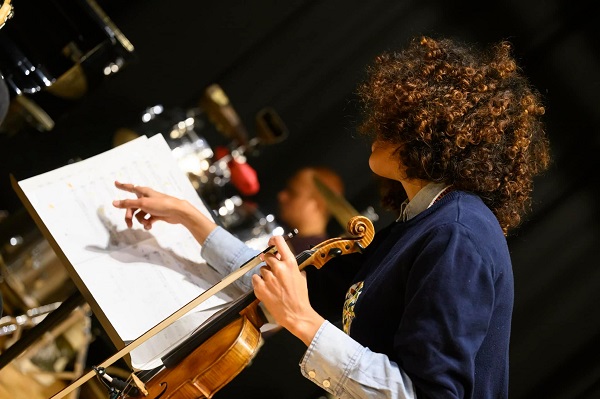

Yilian Cañizares, an excellent Cuban musician, studied in her hometown in the strictest tradition of the Russian school of violin

Yilian Cañizares is a Cuban and Swiss musician. She has lived in Switzerland since 2000.

Born in Havana, Yilian Cañizares began studying violin in her hometown, in the strictest tradition of the Russian violin school.

At the age of 14 she obtained a scholarship in Caracas and in 2000 she moved to Switzerland to complete her studies at the Freiburg Conservatory.

Soon after, the main orchestras in the area began to contact her and once settled in Lausanne, she collaborated for six years with different ensembles.

Yilian Cañizares excellent Cuban musician

In Switzerland, she opened up to jazz and decided to embark on a new musical path, including singing in her career as a professional artist.

It was during this period that the artist decided to form a quartet with musicians from Germany, Venezuela and Switzerland (and later Cuba), and the group “Ochumare” was born, with which, just six months after its creation, in 2008, she won the prize of the Montreux Jazz Festival Competition.

From that moment on, his career has been growing steadily. In recent years, she has shared the stage with Ibrahim Maalouf, Omar Sosa, Youn Sun Nah, Richard Bona, Chucho Valdés, Roberto Fonseca, Dhafer Youssef, the Lausanne Chamber Orchestra and El Comité.

She also teaches violin at the Ecole de jazz et de musique actuelle de Lausanne (EJMA).

The success of her albums “Ochumare”, an independent production released in 2013, followed by “Invocación”, under the direction of Alê Siqueira (who has collaborated with Roberto Fonseca, Omara Portuondo), has consolidated her notoriety as an innovative artist, capable of venturing and transcending musical boundaries.

Yilian Cañizares, an excellent Cuban musician, studied in her hometown in the strictest tradition of the Russian school of violin.

She was listed by the French weekly Le Nouvel Observateur as “revelation artist of the year” for her great virtuosity and charisma with which she is able to sing and play the violin.

“My sound reflects the richness and mix of cultures that I carry with me to this day and represents who I am: woman, Cuban, musician and citizen of the world”, said the artist.

Her second album “Invocación” reached the top of the Qobuz – World Music chart and was re-released in a Deluxe edition.

“Aguas”, the album produced in collaboration with Omar Sosa, saw the light of day in October 2018.

Accompanied by another compatriot, Inor Sotolongo on percussion, the duo created an intimate and personal album that reflects the views of two generations of Cuban artists living far from their homeland.

This album is a mix of energetic rhythms and emotional ballads that clearly reflect the unparalleled musical chemistry that exists between the two artists.

It constitutes a powerful and unique fusion of Afro-Cuban roots, classical music and jazz.

On November 15, 2019 was released the new album “Erzulie”, with its new formation Yilian Cañizares & The Maroons and dedicated to the Haitian deity of love and freedom.

This album was recorded in New Orleans and features the participation of numerous guests such as Christian Scott (trumpet), Michael League (double bass), Bill Laurance (piano), Bobby Sparks (organ) and Justin Stanton (keyboards).

Yilian Cañizares es una música cubana y suiza. Vive en Suiza desde 2000.

His style reflects the variety of his influences, with touches of jazz, classical music, Cuban music, with a large space left to improvisation.

The French magazine Les Inrockuptibles speaks of a jazz orchestration mixed with Yoruba ritual percussions.

She sings in Spanish, Yoruba and French and one of her distinctive features is that she sings and plays the violin at the same time.

There are so many influences on this album; Cuban, jazz, Venezuelan, Swiss, that it is difficult to pinpoint in each song which track falls into which category. In fact, they don’t.

Today it is too easy to want to pigeonhole music into one category: this is jazz; this is soul; this is funk. Yilian Canizares, in this wonderful album, breaks the stereotypes and that is why it is a pleasure to listen to it.

Sweet musical outbursts, explosions of improvisation that jump all over the place. He even finds a place to rap on “Iya Mi” and, obviously, it’s brilliant!

If we had to put a label on it, which I’m not thrilled about, I’d say this is a warm jazz album with Latin infused touches and tricks.

The meandering melody of “Beroni Abebe Osun”, the first track on the album, is a good indicator of this.

The throbbing bass, the heartbeat of the track, with its plucked violin, the blood pumping through his veins.

Cañizares is also a linguist, in case that wasn’t enough for us all to admire her.

The way he transitions from Spanish to perfect syllable-perfect French in his version of Edith Piaf’s “Je Ne Regrette Rien” (a beautiful version, by the way) is seamless and you could be forgiven for thinking it’s his first language.

It’s not easy to cover songs as big as Piaf’s classic, but Cañizares does it with style, class and, most importantly, grace.

Anything less than grace in a song like this makes it a bad version. It could be its own track, the strings perfectly light to complement the calmness of the voice and the ease with which Piaf’s lyrics take the weight of the world off our shoulders. I don’t regret a thing.” So simple. Yilian Canizares, we salute you.

And we’ll be on the lookout for the next album. 

(kreolmagazine)

Yilian Cañizares – Invocación (2015).

Musicians:

Yilian Cañizares (Violin and vocals).

Daniel Stawinski (Piano)

David Brito (Double bass and electric bass)

Cyril Regamey (Drums and percussion).

Guests:

Akua Naru on Iya Mi

Gabi Guedes Gã & atabaques Rum, Pi, lé

Blaise Lambelet English horn on Laïla

Caxeiras do Divino da Família Menezes, Graça Re Reis & Bartira Menezes Caxeiras & Bartira Menezes &

Brazilian choir in Beroni

Julia Stuller, Gàbor Barta, Ivan Zerpa strings in Non je ne regrette rien

Luis Carbonell Voice in Canciòn de cuna para dormir a un negrito (Lullaby to put a little black boy to sleep)

Juan Carlos Toca Voice in Mapucha

All the songs by Yilian Cañizares except Beroni Abebe Osun (traditional/ Y. Cañizares) and

Non je ne regrette rien (Vaucaire/Dumont)

String arrangement (Non je ne regrette rien ) by André Mehmari

Cyril Regamey uses exclusively Istambul cymbals, Vater drumsticks and Aquarian drumheads.

Information provided (December 30, 2023)

New CD AfroCuban & World Music HABANA BAHIA YILIAN CAÑIZARES 2023 2024

Yilian Cañizares

Also Read: José Alberto “El Canario” and his orchestra enjoy a great international reputation in the Latin music scene.

Nestor Torres

North America / USA / New York

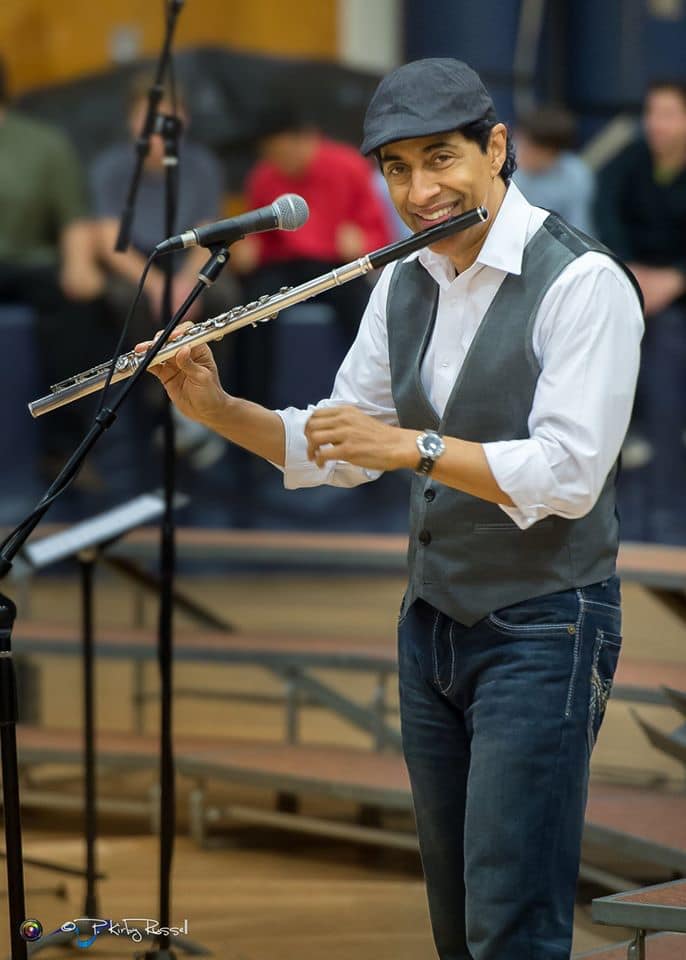
If a flute could talk and sing, it would certainly be in the voice of Nestor Torres

If a flute could talk and sing, it would certainly be in the voice of Nestor Torres, for he speaks through his instrument. Equally fluent in Jazz, Classical and Latin sounds, his fluid versatility sets him apart.

Nestor Torres
Nestor Torres

Nestor’s total command of his instrument allows him a freedom of expression that is at once captivating and liberating, powerful and genuine.

Born in Mayaguez, Puerto Rico, Nestor Torres has played music all his life. His parents (His father, a gifted musician himself, and his mother, an educator and business woman) gave him a set of drums at age 5, and later took up the flute (at age twelve).

He moved to NYC with his family in his teenage years and went on to study at Mannes School of Music and later at the New England Conservatory of Music in Boston.

At that time he was also able to learn to improvise in a style of Cuban Dance music called ‘Charanga’, which helped to shape and develop Nestor’s melodic and danceable sound.

In 1981, Nestor moved to Miami, where he continued to develop his unique sound – and a strong following. Since then he has – and continues to – tour all over the world.

He has also performed and recorded Ricky Martin, Tito Puente, Herbie Hancock, Gloria Estefan, and many more.

Nestor Torres has recorded 14 Cd’s to the date. His 5th & 7th records, Treasure of the Heart and My Latin Soul, were nominated for a Latin Grammy, and his production This Side Of Paradise won the Latin Grammy award in the Pop instrumental category on September 11, 2001.

“Of course it was a great honor and privilege to win the Grammy,” Torres reflects. “That being said, the fact that I was to receive it on 9/11 gave my work and my music a stronger sense of mission and purpose. Terrorism and violence come from ignorance, anger, and hopelessness.

Music inspires and empowers; it soothes the human heart and enlightens the spirit. I have made it my prime point to create music and live my life in a way that does just that.”

From that experience, together with a commission to compose and perform for the Dalai Lama, Nestor Torres produced Dances, Prayers & Meditations For Peace in 2005.

In his brand new CD, Nouveau Latino, Nestor Torres returns to his Latin roots with a fresh approach, impeccable musicianship, and irresistible improvisations. Featuring songs from stars like Celia Cruz and Ruben Blades, Torres’ interpretations of these great Latin hits appeal to those discovering the songs for the first time as much as those who remember them.

In addition to his achievements in the studio and on the stage, Torres is also recipient of two honorary doctorate degrees; one in 1994 from Barry University, and the other in 2000 from Carlos Albizu University, for his commitment to youth education and cultural exchanges.

Nestor Torres
Nestor Torres

NESTOR TORRES: Facts & Career Highlights

• Classical and Jazz flute studies at Mannes School of Music, and New England Conservatory of Music.

• Early improvisational ‘on the job training’ playing in Cuban and Latin Dance bands including Ray Barretto, Eddie Palmieri, Celia Cruz and Tito Puente.

• Regular featured guest at the ‘Salsa Meets Jazz At The Village Gate’ series in NYC.

• Has toured Japan repeatedly, including collaborations with Herbie Hancock, and Wayne Shorter.

• Collaborations: with James Moody, Jon Faddis, Chris Botti, Larry Coryell, Hubert Laws, Arturo Sandoval, Michel Camilo, Paquito D’ Rivera, Danilo Perez, David Sanchez, Pablo Zigler, Makoto Ozone, Patrice Rushen, Bob James, George Duke, Wallace Roney, Peter Nero and Clare Fisher, among many, many others.

• Jazz Festivals: Capitol Jazz Festival, JVC Jazz Festivals; in Los Angeles and in NYC with Eddie Palmieri; Aspen Snowmass; Maui; Heineken in Puerto Rico and Dominican Republic; Sedona; Atlanta…. Among many others.

• Symphonic: Has performed with the New World, Singapore, Springfield Missouri, Charleston, Signature (Tulsa, OK), Puerto Rico, and Stanford Symphonies; Philly Pops Orchestra; and the Naples, Florida; Malaysia, and Florida Philharmonics.

• Recordings to date (14): ‘Colombia En Charanga’, ‘Afro Charanga Volume 2’, ‘No Me Provoques, ‘Morning Ride’, ‘Dance of the Phoenix’, ‘Burning Whispers’, ‘Talk To Me’, ‘Treasures Of The Heart’, ‘Canciones Primeras’, ‘This Side Of Paradise’, ‘My Latin Soul’, ‘Sin Palabras’ (Without Words),‘Dances, Prayers & Meditations For Peace’, and ‘Nouveau Latino’.

• Grammys: His Latin-jazz composition “ Luna Latina” (from Treasures of the Heart) was nominated in 2000 for a Latin Grammy as well as his CD ‘My Latin Soul’ in 2002. In 2001, he won a Latin Grammy for his CD ‘This Side of Paradise’.

• Two Honorary Doctorate degrees from Miami-based Universities – one in 1994 from Barry University and the other in 2000 from Carlos Albizu University – for his commitment to youth education and cultural exchange as an Ambassador of Peace and Culture.

Nestor Torres
Nestor Torres

Current location

Miami, FL USA

General Manager

Ivette Delgado/ [email protected]

Influences

My Father, Hubert Laws, Miles Davis,Tito Puente, Richard Egues & Orchestra Aragon

Contacto de prensa

Wanda Jimenez/ [email protected]

Representative

The Jazz Agency
[email protected]
818-813-5299

https://www.facebook.com/NestorTorresMusic/

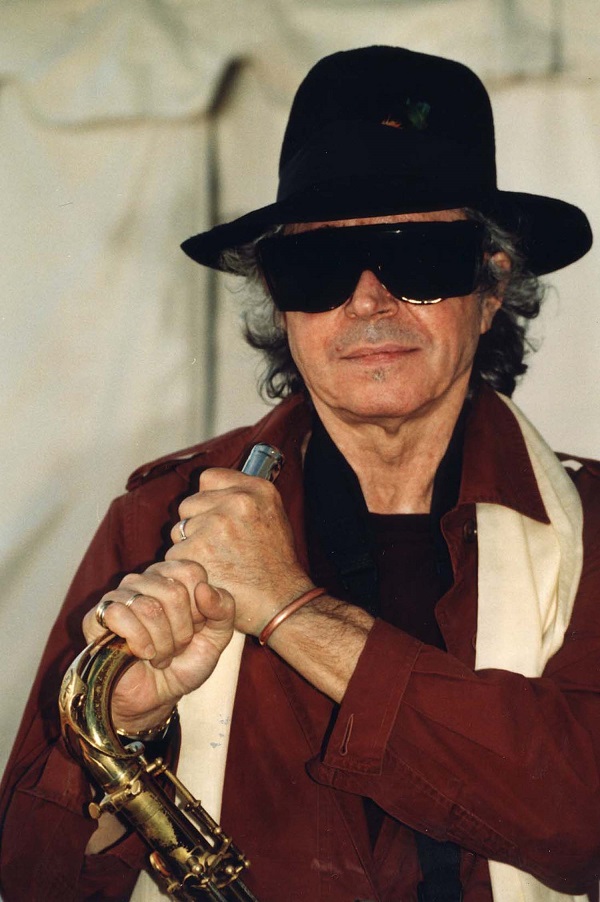
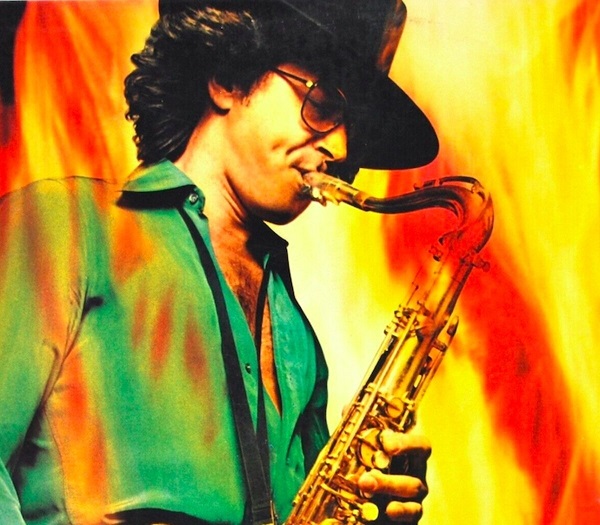
Gato Barbieri was an excellent and virtuoso Argentine saxophonist par excellence

The Argentine musician takes us on a journey through his illustrious career.

Gato Barbieri

Editor’s note: Famed saxophonist Leandro “Gato” Barbieri passed away on Saturday, April 2, 2016, in New York City. He was 83 years old.

In 2015, the Latin Grammy Award for Musical Excellence was presented to Argentine composer Gato Barbieri, one of the most deserving musicians to be honored for his extensive career, throughout which he created a bridge between Latin music and an international audience.

In love with jazz since his formative years in the city of Rosario, Barbieri trained playing with great figures of American jazz during the 1960s.

The eternal radiance of Gato Barbieri

But his heart never left his Latin American sensibility. When he came to fame as a soloist and leader of his own group, he sold millions of records, forging a personal language that draws inspiration from tango, Brazilian cadences, the sounds of the Andes and South American folklore.

Over the past few years, Barbieri, who turns 83 on November 28, has suffered several health complications. From his home in New York, the musician spoke with remarkable sincerity about this new stage of his life, now far from his youth, but full of acceptance and hope.

You recently performed at the Blue Note club in New York and sold out. How does it feel to be a jazz legend at the age of 80-something?

When I play here at the Blue Note, people come from Russia, from Europe, from everywhere, because people identify with what Gato has done.

Now, I’m a little sick and it’s hard for me to walk. I don’t like that. I have to do exercises and things like that. I’m going to be 83 years old and it’s necessary to do these things that put me in a horrendous mood [laughs].

Life is like that, it has nice things and ugly things, and you have to keep walking, walking, walking…It’s like a tango. If you pay attention, tango talks about beautiful things: people, siblings, loves, the sweet details of existence. To this day, there are some tango songs that I find incredible.

What memories do you cherish from the beginning of your career?

When I started playing with the Casablanca orchestra, when I was 17. We played bebop music, which for me was something incredible. We used to perform at carnivals in the provinces of Argentina.

He is the most influential Argentine saxophonist in the global jazz scene.

I also have fond memories of playing in Europe with trumpeter Don Cherry, because I learned so much. He never said anything; he didn’t talk to us or explain anything about the music we were going to play. When we played together, we improvised, and he never stopped changing his compositions. It was a great thing.

And then, in 1972, came the music for Last Tango in Paris, which brought you international fame. What was it like to write the soundtrack for such a controversial film?

It was a magical thing, because Bernardo [Italian director Bernardo Bertolucci] is an incredible guy, an incredibly talented director. I was in good spirits, but it wasn’t an easy job because there were 50 moments in the film that needed music.

I remember we took a piano up to Pepito Pignatelli’s [owner of a legendary jazz club in Rome] house, which was on the fifth floor. Doing something like that 50 years ago was not easy, but when we recorded it, it was a beautiful thing. Sometimes the difficult things are the most beautiful.

And that unforgettable main theme, which is repeated throughout the film, how did it come about?

Bernardo called me and asked me to present him with several melodies, and that they should be as beautiful as possible. We had just gone to Italy to play some concerts, and we met Bernardo. I played him three or four tunes, and he immediately chose one and said: “This is the theme from The Last Tango in Paris”.

What do you think has been the secret of your success?

Gato Barbieri
Gato Barbieri

From 1970 onwards, I recorded about 45 records. That’s a lot. I was a guy who was always doing something, for me that lifestyle was a great satisfaction. As for the sax, I never knew much about chords. I make up my own chords, put one thing on top of them… and that’s it.

It’s hard to explain why I made the artistic choices I did. I wanted to do a little bit of everything, play an Argentine chacarera, or record with an Italian singer like Antonello Venditti [the hit ballad “Modena”, in 1979]. I always chose to play music from many different countries, and people identify with that.

Undoubtedly, you have lived a privileged life….

Yes, in a certain way, yes. Michelle [his first wife, who died in 1995] helped me a lot. She’s always in my heart, because she was incredible. She knew about film, art, so many things. In that sense, I learned a lot from her. And now I am living with Laura, my wife, who is a great person.

She has given me my only son, who is now 17 years old. He is tall and very intelligent, although a bit lazy, as I was myself at his age. It must be hereditary [laughs].

EL PAMPERO (1971)

After El Gato left his native Argentina, but before becoming a Latin jazz star, Gato Barbieri spent the second half of the 1960s collaborating with great, avant-garde musicians: trumpeter Don Cherry, vibraphonist Gary Burton and bassist Charlie Haden, among others. Capping a career for Barbieri as the leader of his own group, El pampero is an album recorded live at the Montreux Jazz Festival. Four tracks with extensive improvisations, steeped in South American nostalgia.

Gato Barbieri Album Caliente 1976

Gato Barbieri: Latin ‘jazz’ with a touch of pop and South American folklore.

By: Ernesto Lechner

Also Read: Irakere was a Cuban group that developed an important work in Cuban popular music and Latin Jazz under the direction of Chucho Valdés

Humberto Ramírez

Latin America/ Puerto Rico / San Juan

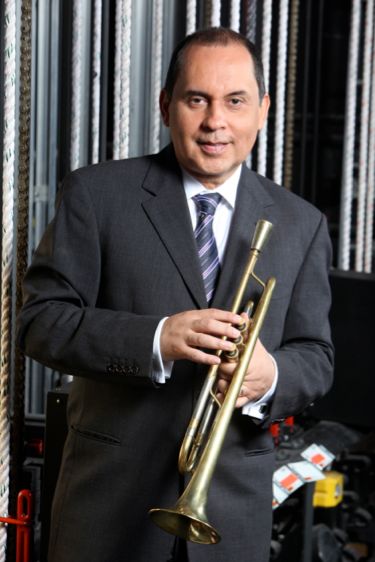
Humberto Ramírez one of the most innovative musicians on the Island of Enchantment Puerto Rico

Recognized as one of the most innovative musicians of his generation, Humberto Ramírez grew up in a home where the music of Miles Davis, Thelonious Monk, John Coltrane, Lee Morgan, Tito Puente, Tito Rodríguez, Cal Tjader and Machito was heard.

His father, who is a saxophonist and conductor, was the one who inspired him to play the flugelhorn at age 11.

By the age of 14, Humberto was performing professionally with his father’s orchestra and at the same time taking orchestration courses with bassist Inocencio “Chencho” Rivera.

Humberto Ramírez
Humberto Ramírez

At the age of 18, after graduating from the Escuela Libre de Música de San Juan, his interest in composing and arranging music motivated him to enroll at Berklee College of Music in Boston, Massachusetts where he obtained his bachelor’s degree in music, then studied composition and orchestration for film and television at the Dick Grove School of Music in Los Angeles, California.

In 1985, and for a period of four years, Humberto worked with the Willie Rosario orchestra, one of the most popular bands in Puerto Rico.

In 1989 he became the musical director of Tony Vega.

His admirable ability as a producer and arranger led him to make important collaborations with great figures in music.

In 1999 he took over the musical direction of merengue and tropical music star Olga Tañón.

His work as a producer, arranger, composer and director for tropical music artists such as Willie Colón, Gilberto Santa Rosa, Marc Anthony, India, Domingo Quiñones, Lourdes Robles, Rubén Blades, Brenda K. Starr, Tito Nieves, Víctor Manuelle and others , has established him as one of the busiest arrangers and producers in the industry.

He has also had the responsibility of directing the concerts of important exponents of reggaeton such as Daddy Yankee, Tito El Bambino and Zion, which undeniably demonstrates his broad musical mastery in various genres.

His great dream was always to develop a career in Jazz. In 1992, Humberto Ramírez debuted as group leader in his first production for the Tropijazz label entitled “Jazz Project”.

Since then he has shared the stage with important jazz musicians such as Freddie Hubbard, Justo Almario, Alex Acuña, Chick Corea, McCoy Tyner, Gonzalo Rubalcaba, Tito Puente, Hilton Ruiz, Michel Camilo, Herbie Hancock, Eddie Gómez, Michael Brecker, Paquito D ‘Rivera, Chucho Valdés, Ray Santos, Gato Barbieri, Terence Blanchard and Herb Alpert, with whom he recorded the album “Passion Dance”.

His music has received rave reviews from prestigious publications such as Down Beat, Jazz Times, Jazziz, Latin Beat, CD Review, Hispanic Magazine, New York Daily News, The Plain Dealer, Miami Herald, The Boston Globe, and Austin Chronicle.

From the launch of his first record proposal, Humberto Ramírez has established himself as the most important exponent and promoter of Jazz in Puerto Rico.

He has recorded 26 albums in which he has experimented with all kinds of formats: duets, trios, quartets, quintets, sextets, octets and “Big Bands”.

His collaborations with the group Rumbantela and with the queen of filin, Lucy Fabery have received great praise from specialized critics. In 2005 he founded his own record label, Nilpo Music and last year he began to present his own Jazz festival: Puerto Rico Jazz Jam, marking a new stage in his musical career.

This year 2011 celebrates its 20 years cultivating the difficult expression of Jazz, a career that began with its debut as a leader in the first edition of the Puerto Rico Heineken Jazz Fest in June 1991. This year 2016 celebrates its 25 years.

Humberto Ramírez has received 4 Grammy Award nominations as a producer. His first nomination was for the album “Nueva Cosecha” by Willie Rosario in 1985, then for “Hecho en Puerto Rico” by Willie Colón in 1993, “Tony Vega” in 1996 and “Olga Viva, Viva Olga” by Olga Tañón, which earned him the Grammy Award in 2000.

In 2013 he was nominated for a Latin Grammy for his album Sentimentales with Lucy Fabery.

Among the awards he has received are 6 Platinum records, 12 Gold records, 4 “Visionary Awards” and six “Tu Música” awards. He has received tributes from Ohio State Representative Dennis J. Kucinich and from the Senate of Puerto Rico.

In 1997 he had the honor of entertaining the inauguration of the President of the United States, Bill Clinton in Washington, D.C. In October 2009 he was invited to play at the White House for President Barack Obama.

After having received several awards and nominations, as well as having recorded his own record successes, Humberto Ramírez shows that his creative explosion is still in its infancy.

https://www.humbertoramirez.com/#home-section

https://www.facebook.com/Humberto-Ram%C3%ADrez-Jazz-Project-110525453672/

  • « Go to Previous Page
  • Page 1
  • Interim pages omitted …
  • Page 9
  • Page 10
  • Page 11
  • Page 12
  • Page 13
  • Interim pages omitted …
  • Page 41
  • Go to Next Page »

International Salsa Magazine (ISM) is a monthly publication about Salsa activities around the world, that has been publishing since 2007. It is a world network of volunteers coordinated by ISM Magazine. We are working to strengthen all the events by working together.