• Skip to primary navigation
  • Skip to main content

International Salsa Magazine

  • HOME
  • Previous editions
    • 2026
      • ISM / March 2026
      • ISM / February 2026
      • ISM / January 2026
    • 2025
      • ISM / December 2025
      • ISM / November 2025
      • ISM / October 2025
      • ISM / September 2025
      • ISM / August 2025
      • ISM / July 2025
      • ISM / June 2025
      • ISM / May2025
      • ISM / April 2025
      • ISM / March 2025
      • ISM / February 2025
      • ISM / January 2025
    • 2024
      • ISM / December 2024
      • ISM / November 2024
      • ISM / October 2024
      • ISM / September 2024
      • ISM / August 2024
      • ISM / July 2024
      • ISM / June 2024
      • ISM / May 2024
      • ISM / April 2024
      • ISM / March 2024
      • ISM / February 2024
      • ISM / January 2024
    • 2023
      • ISM / December 2023
      • ISM / November 2023
      • ISM / October 2023
      • ISM – September 2023
      • ISM – August 2023
      • ISM July 2023
      • ISM Edition June 2023
      • ISM – May 2023
      • ISM April 2023
      • ISM March 2023
      • ISM February 2023
      • ISM January 2023
    • 2022
      • ISM December 2022
      • ISM November 2022
      • ISM October 2022
      • ISM September 2022
      • ISM August 2022
      • ISM July 2022
      • ISM June 2022
      • ISM May 2022
      • ISM February 2022
      • ISM January 2022
    • 2021
      • ISM December 2021
      • ISM November 2021
      • ISM October – 2021
      • ISM September 2021
      • ISM August 2021
      • ISM July 2021
      • ISM May 2021
      • ISM April 2021
      • ISM June 2021
      • ISM March 2021
      • ISM February 2021
      • ISM January 2021
    • 2020
      • ISM December 2020
      • ISM November 2020
      • ISM October 2020
      • ISM September 2020
      • ISM August 2020
      • ISM July 2020
      • ISM June 2020
      • ISM May 2020
      • ISM April 2020
      • ISM March 2020
      • ISM February 2020
      • ISM January 2020
    • 2019
      • ISM December 2019
      • ISM November 2019
      • ISM October 2019
      • ISM Septembre 2019
      • ISM August 2019
      • ISM July 2019
      • ISM June 2019
  • Download Salsa App
    • Android
    • Apple
  • Spanish

Search Results for: Jazz Festival

From Peru and based in France we have Wálter Antonio Rebatta Hinostroza is a brand new and spectacular percussionist.

We are honored to present in this new release, one of the most outstanding figures of Latin music, representing the brother country of Peru, who has put the name of the musicians born in Inca lands very high in the world.

With you, directly from France, we have as a special guest Wálter Antonio Rebatta Hinostroza, a brand new and spectacular percussionist, who was born on September 14, 1973, in Bella Vista, Callao, Peru, being artistically known as “El Chato”.

Welcome Wálter to Salsa Escrita “La Columna Salsera de Barquisimeto, Venezuela”. It is a great pleasure to have you as a special guest in International Salsa Magazine, www.SalsaGoogle.com.
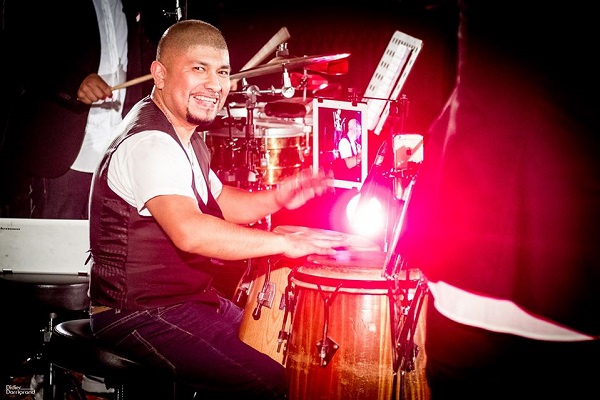
Thank you very much to you, my friend, Professor Carlos, for the invitation to your well read and recognized column and I take this opportunity to give a sincere greeting to all Venezuelans who are like my brothers.

How did you start in music? Well, teacher in my neighborhood called Ventanilla, in Peru, I grew up and since I was a child I breathed musical air, where at the age of 6 years old I was already playing “El Cajon”, traditional Peruvian Creole instrument, under the tutelage of my older brother Kike Rebatta, who took me later to learn other percussion instruments and prepare me with music theory, and then enter the music school of the renowned teacher Edelmi Chavez, and thus join the ranks of the most renowned orchestras in my country, such as: La Iniciativa, Orquesta la Grande, Banana Latin Jazz, among others.

Wálter, which international orchestras and artists have you accompanied? I have accompanied and worked with “Los Hermanos Colón” from Puerto Rico and among many groups, I have had the honor of being on stage with my Venezuelan brothers, Hildemaro “El Sonero del Amor”, with whom I have a great friendship, as well as with the master timbalero Alfredo Villamizar, from whom I have learned a lot and from whom I must thank through his column Salsa Escrita. “Chato”, you are currently based in the French city of Grenoble and we would like to know how is the salsa movement, especially in Europe. In fact, professor, in 1995, I came to Europe with the “Orquesta Salsa Perú” and I met Mr. Rodolfo Guerra, with whom a great friendship was born and I became part of the “Orquesta Sincopa Latina”, directed by him, being present in his productions: Salsa que te pasa, Demasiado corazón, Mi bachata, Puerto Rico, Todo, Escándalo, Mi silencio, Mi toque, Habla conmigo and Azafata. Wálter, I have heard that you have accompanied great salsa artists in their presentations, tell me who? I have had the honor of accompanying the late Tito Gómez, Willie González, Luisito Carrión and the great Venezuelan sonero Orlando José Castillo “Watussi”.

Also, let me tell you professor, that I have worked in the Italian television Media Set, in the very popular program “Notte Vola”, also in 2002, I participated in the Tour of the Queen of Salsa, Celia Cruz, along with the orchestra of the prestigious world famous violinist Alfredo de La Fe.

Likewise, my friend Carlos, in 2004, I performed in numerous events with Latin jazz groups, among them “El Royal Cuba”, of the Cuban musician and singer Eduardo Céspedes.
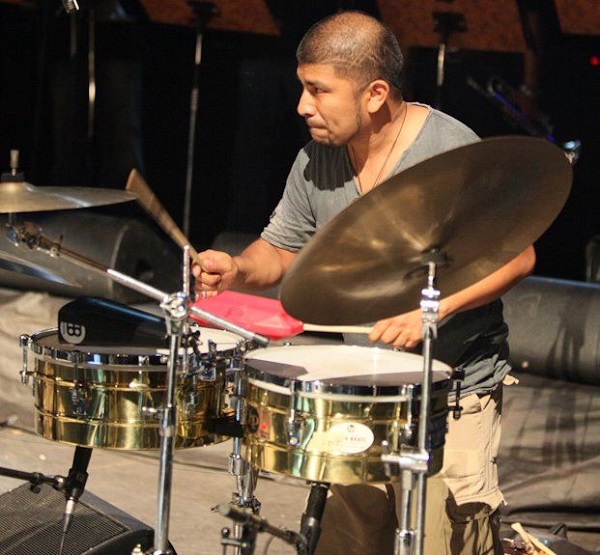
In 2007, I participated in the prestigious and famous festival of San Remo with the singer Daniele Silvestri, with whom I have recorded in his productions. In 2009, I participated in the Italian tour “Terromotati Dil Abruzzo”, conducted by the famous singer Laura Pausini and later that same year I participated again in a tour in the United States for charity with Pausini again.

Excellent Wálter, and what can you tell us about the orchestra you are currently working with and what are your future projects? Professor Carlos, at present I am an official musician of the renowned orchestra “Mercadonegro” and in relation to my projects, is to form my own group and perhaps dabble in bachata, but without leaving aside the salsa, since living in Europe I have met many bachateros. And something very important, my friend Colmenárez, I am also working on the project of my Venezuelan compadre, the musician Edwin Sanz, whom I would like you to interview at some point.

Very good Wálter, congratulations for your career, what are your contacts on digital platforms?  My Facebook is: Wálter Antonio Rebatta Hinostroza and my whatsapp: +41 77 5122633.

We want to wish you the best on behalf of Salsa Escrita “La Columna Salsera de Barquisimeto” and that you continue to put the name of Peru on high in all the stages of the world.

Thank you a thousand times, Professor Carlos Colmenárez, for taking me into account and thus make my career known and offer my greetings, thanks and respect to all the salseros of the world through International Salsa Magazine, www.SalsaGoogle.com and long live salsa, Peru and Venezuela, united forever…!
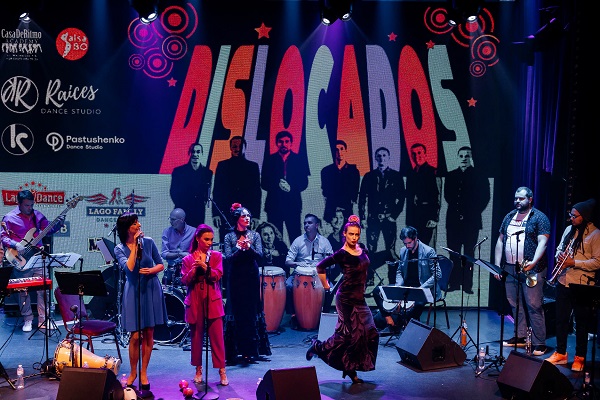
Dislocados is a group from Ukraine that is taking Salsa to the whole world.

Dislocados Ukrainian Latin American band, exploded onto the Kyiv music scene as the Kiev Salsa Kings in November 2005.

Led by Ilya Yeresko, one of Ukraine’s most respected young pianists and composers, with – among others – Dennis Adu (named best jazz musician in Ukraine at the Dodj Competition 2009) they started playing in Kyiv’s best live music bars.

This first salsa band in Ukraine was soon joined by Karolina Patocki and Lesya Zdorovetskaya, finalizing the group’s vocal flavor, and now the 10-piece band has become a force to be reckoned with in the country.

Dislocados’ new name, literally translated as “dislocated”, plays on the crazy personality of the band, and the idea that the birth country of the musicians does not dictate their musical direction and expertise.

While continuing to perform three times a week to live audiences around Ukraine, on February 10th 2008, Dislocados made its world debut by being the first international Hard Salsa band aired on Hard Salsa Radio and on WHUT 91.9 FM in New York City with their promotional song “Resaca.”

Minutes after “Resaca” aired, emails poured in like wildfire from worldwide listeners asking for more information on this particular band from an unknown land, which led to Dislocados’ inclusion in Salsa Dura Mundial, a worldwide salsa compilation album out of New York from Latin Soul Records.

After gaining popularity in New York and Western Europe, Dislocados released the first salsa album to come out of Ukraine, with an intro written by salsa legend Andy Harlow, featuring ten original salsa tracks, inspired from Puerto Rico, New York, and Cuba.

Since its release, La Salida has enjoyed overwhelming international praise from top musicians such as Jimmy Bosch and Andy Harlow, promotion from top respected salsa review sites such as descarga.com and has led to the band’s inclusion in international salsa projects, such as the Summer Salsa Festival in Stockholm where the band played with Huey Dunbar, of DLG fame.

Dislocados’ internationally recognized top musicianship is now the vehicle by which they try to popularize the musical style of Hard Salsa in Ukraine in order to include their country among the list of top contenders for worldwide attention in the genre.

Awards:

Winner of the Independent Music Awards 2012 with Best Latin Song, ¨Como Tú¨.

Winner of the Independent Music Awards’ Vox Pop Award for Best Latin Album 2012, ¨Pasaporte Universal¨.

Winner of the Independent Music Awards’ Vox Pop Award for Best Holiday Song 2012, ¨Navidad en Heathrow¨.

Winner of the Independent Music Awards’ Vox Pop Award for Best Latin Song 2012, ¨Como Tú¨.

Winner of the Independent Music Awards’ Vox Pop Award for Best Latin Album 2011, ¨La Salida¨.

Facebook: Dislocados

Tromboranga Will Visit America And Europe With Their World Tour 2022

France, Norway, the Netherlands, and the United States will be some countries that will dance to the rhythm of Salsa Dura

Músicos: Joaquín Arteaga, Diego Coppinger, Freddy Ramos, Rafael “Madagascar” Arciniegas, Lorenzo “El diablo” Barriendos, Vladimir Peña, Albert Costa, Miguel Moises, Oriol Martínez, Climent Campa.

With the solid and unmistakable sound of the trombone & percussion sections and the strong influence on Salsa from the 60s and 70s, Tromboranga with their Hot Salsa will visit France (Festival Corazón Latino 2022 – Bordeaux), Norway (featuring the trombonist, Jimmy Bosch at Kafe Sync – Oslo), the Netherlands (Summer Breeze Latin Night 2022 – Amsterdam), Spain (Pamplona and Barcelona), the United States (The Great Colombian Festival Miramar – Florida), and Ecuador (Guayaquil ) with its World Tour 2022 from May to September.

The friendly musicians residing in Barcelona (Spain) will offer a series of performances to captivate Latin audiences in Europe and America to celebrate their tenth anniversary on the music scene.

The orchestra will play all their hits including Agua que va caer, Alabanciosa, Humildad, Mi china Colombiana, Ah Caraj, Palo pa’ la campana, Charrupi, Como la marea, Sangre sudor y Salsa, Esclavo de tu apariencia, Que linda que estás, likewise the nine unreleased songs from their album Te voy a contar, released to the Salsa scene in 2019.

Te voy a contar has the participation of the Jazz and Salsa master, the trombonist Jimmy Bosch in the song Te perdono. Oscar Hernández (the Spanish Harlem Orchestra leader and winner of several Grammy awards) arranged the Latin Jazz theme, Sal de la Cueva. In addition to this, Huracán no me tumbas (dedicated to the Island) was recorded in Puerto Rico, and they shared voices with one of their idols from the Fania All-Stars, Ismael Miranda.

The followers of Tromboranga call themselves “Salseros Tromborangueros”.

During the pandemic in 2020, Tromboranga http://www.tromboranga.com/en continued with their new record production Salsa Terapia. Melodies such as El cuero del tambor, Devuélveme mis discos, Pachanguera y El mundo al revés are part of this album that has gone viral in choreographies on social networks in addition to being reproduced as multimedia content by Latin radio stations around the world.

 “Our success is the dedication and love in selecting the songs, most of them are my authorship, I carry out the general production and the concept of each album”, said the Venezuelan musician Joaquín Arteaga (Director of the orchestra and known for his extensive career as a percussionist and Timbales expert).

In 2021, this Salsa Dura orchestra released the single “Baila Africa” ​​sharing with African artists such as Msaki (voice of the promotional theme) while they toured South Africa (2020). The authorship of this salsa melody was in charge of the leader of Tromboranga, Joaquín Arteaga.

Telling a little about their history, the orchestra made up of ten Latin and European musicians released their first studio album in April 2012 titled Salsa Dura, rated among the top ten of that year by DJs, dancers, and specialized bloggers of the genre.

The stellar and Sabrosa Salsa reunion will be from May to September.

In 2013, Tromboranga recorded Al Mal Tiempo Buena Salsa, rewarding them with their first international tour in Europe and Latin America. During that same year (November 2013), they released the Special Edition Vinyl “Solo para Coleccionistas Vol. 1” exclusive for 300 people.

The sum of the rest of their recordings reaches a total of five albums published in successive years: Como La Marea (2014), Sangre, Sudor Y Salsa (2015), Golpe Con Melodía (2015), Tumbando Fronteras (2017), Una Noche En Bangkok (2018).

To speak of Leonardo Ortiz Chacón is to speak of a musical institution of Mexico

Performer of the tres, composer, arranger, music and radio producer, director and founder of Combo Ninguno since 1983.

He studied at the Faculty of Music of the UV, in JAZZUV, in Musinetwork in Boston MA and with teachers Luis Martinez, Carlos Tercero and Edgar Dorantes, he is a teacher of Musical Education in the Ministry of Education of Veracruz and since January 2019 participates in the direction of the Papakilistli Orchestra of the same Secretariat.

He has collaborated in television as musical director of the program “Cómo suena la clave” in TV Más. He is currently producer and host of the program “Cadencia Caribe”.

Since 1983 in Xalapa, the members of Combo perform dance music from the Antilles, integrating a repertoire with their own creations and original arrangements to themes of other authors in different musical genres such as son, guaracha, mambo, merengue, danzón, bolero, etc, achieving in their thematic diversity, a unique sound full of references to their native state of Veracruz.

He has taught workshops of appreciation and execution of Caribbean music and has participated as a lecturer and speaker on this subject in countless events, have been presented in Spain, Cuba, United States and Canada.

Accessing different forums from the small and improvised street space to large venues with capacity for tens of thousands of spectators such as the Azteca stadium or the Salsa Fest in Boca del Rio.

He has performed at prestigious cultural festivals such as the Cervantino, the Quimera, the Afro-Caribbean of Veracruz, the Vancouver Folk Festival and the International of Houston, at Fairs such as the San Marcos and the Expo Sevilla, Carnivals such as the one of Veracruz, Havana and the Mardi Gras in New Orleans and Galveston Texas.

Maestro Leo, how can you define yourself in the music scene?

Leonardo Ortiz Chacón is to speak of a musical institution in Mexico.
Leonardo Ortiz Chacón Tres player, composer, arranger, music and radio producer

I see myself as someone captivated by this music since I heard it for the first time, thanks to it I have been able to enjoy unforgettable moments and for many years I have not had a day in my life without doing something related to music. Be it as a performer, manager, broadcaster, props man, audio manager, producer, etc.

I understand that you have had many presentations abroad?

For me there have been many and I would like to have more. I think I have been fortunate to take advantage of the opportunities that have presented themselves with Combo Ninguno. I must say that personally I would never have been able to be in the places where music has taken me.

As part of your presentations you toured the U.S. How pleasant was the experience?

At one time we participated in a project to promote tourism in the State of Veracruz and we continually visited the State of Texas and then extended to Louisiana and Colorado, thanks to this an American promoter invited us to tour from coast to coast presenting a show of music and dance that began in New Hampshire and continued in New York, Pennsylvania, Illinois and other states to conclude in California after performing in New Mexico and Arizona. The program of the presentations was with original repertoire and Mexican authors.

What did it mean to you to perform for the first time in such a musical country where many great exponents of the island of Cuba came from?tional in 1989 at the Na Theater of Cuba

For me this was one of the memorable moments that I thank to music, the fact of participating with Combo Ninguno in a Gala dedicated to Mexico, in such an important place in Cuba, the country where this music was born.

I tell you that my emotion was so great that at the beginning of our performance, I could not complete the first verse of the song with which we opened, it was El jarocho by Lino Carrillo, I had to sing: Jarocho yo soy señores and I only said Jarocho, the rest was a sort of incomprehensible sounds that I could emit with a lump in my throat.

Have you had an endless number of participations in Cultural Festivals, which is the one that leaves a mark on you in your own country?

I can’t say one in particular, I remember presentations at anti-nuclear rallies where there were children, young people, adults and elderly people that were not festivals strictly speaking, a Cervantino festival where in the middle of a downpour people danced in the Alhóndiga de Granaditas under an impressive downpour, the Festival de la Nueva Canción Mexicana where we performed for the first time in 1983. And I could go on mentioning many more.

How did the Como Suena La Clave Festival come about?

 Combo Ninguno
Combo Ninguno

This festival arises with the intention of being a showcase where to make visible and position the Mexican orchestras with original proposal. Trying to promote, preserve and spread salsa music made in Mexico.

At first the orchestras were invited to play original arrangements of songs by other composers, then they were asked to play music by national composers and nowadays they are asked to play original music complemented of course with songs by national composers.

You don’t stop, you continue harvesting and now the project Coloquio Musical Afroantillano is born, why make this new proposal?

I think that in Mexico little is reflected and little is written about this genre. It seems that when we take the music out of the dance floor, we lose the rhythm and also the step.

For some time now, most of the debates on this subject have taken place backstage and in the places where musicians and some dancers gather to refresh themselves after the events. Recently, social networks have continued with this exercise, I must point out that for decades the main topic to be discussed has been: Does salsa exist or not? Should it be called salsa or son? And I believe that among other issues, we have left aside fundamental matters such as the creative part, the economic aspect and the diffusion.

Based on this consideration and thanks to the support of Rafael Figueroa, the Festival Como suena la clave, the Centro de Estudios de la Cultura y la Comunicación of the Universidad Veracruzana and the Red de estudios de la Música Afroantillana en México convened the Colloquium La música afroantillana en México: confluencias y divergencias where the participants in a framework of cordiality and respect have made valuable contributions that will be included in a report that will be released as a digital multimedia document for free distribution.

Do you think that the music called salsa is evolving worldwide?

I don’t have the slightest doubt about it, just as I don’t hesitate to mention that due to diffusion factors we only know a small part of the new salsa music that is being made in many places and that perhaps most of the music that is more accessible to us on digital platforms is not the best.

Have you experienced the best times in music today, and what do you think is missing?

Among other things, today and always it will be necessary to contribute new music that increases the cultural heritage of this genre. We need to talk about our present without forgetting the past, about our environment and our daily life in a globalized world. We need to speak our own language and disseminate these productions in the best possible way, trying to overcome the reluctance of many towards what is new and what does not come from the places where this music has traditionally been produced.

Already with seventeen record productions, now that you have worked on them, which is the production that has marked the history of Combo Ninguno? What has been the one that has left the greatest mark on you?

Undoubtedly the most significant record production is the first one, in it, as in each of the subsequent ones, our desires and also our possibilities and limitations are recorded musically. The most present record you have now is the one you are making or that you intend to make. Each record becomes a part of your musical history and your own life.

Have I heard salsa with the jalapeño touch mentioned because of that phrase?

In our case it is an advertising phrase that alludes to the hot sauce.  Salsa with jalapeño flavor. Initially it was used for our presentations in the United States where the chili peppers are called jalapeños. Today we use it by writing jalapeños with an x.

Combo None other cultural heritage that we have while we are still alive that you feel after 39 years in the music industry?

I’m looking forward to at least as many more. Looking back I realize that Combo Ninguno became a life project that has filled my days with music, so there will always be little I can do for music.

What do you expect from Leonardo Ortiz Combo Ninguno?

I have two record productions pending with Combo Ninguno, one of them is already quite advanced and I hope to finish both this year. I hope to give continuity to the Festival Como suena la clave and continue participating and enjoying everything that has to do with salsa made in Mexico.

Maestro, what would you like to say goodbye with and what message would you like to leave to the new generations?

I would invite them, besides the musical study, to try to make their contribution and leave their name in the salsa made in Mexico, to document their creativity in our reality and then communicate it in their creations, I would also ask them to debate and collaborate with their colleagues.

DISCOGRAPHY

 In their discographic work we can see a style that can be projected without problems towards the universal, but that does not cease to feed on their own Veracruz identity by offering us a combination of traditional and original pieces that exude Veracruz and Afro-Hispanic Caribbean flavor.

 To date they have made seventeen recordings, seven exclusively of combo none:

– Tumba Verde (1987)

– Traigo este son (1990)

– Son de amor (1994)

– Carnaval Veracruzano (2001)

– Con Sabor a Veracruz (2005)

– La Bruja recorded at the 17th Afro-Caribbean Festival Veracruz 2011 (2012)

– Inventario- Combo Ninguno, of which the singles Descarga de las flores, Calaveritas de Azúcar and Alambre, cuero y madera have been presented.

 And ten productions in which they intervene with other groups:

– Son 13 rolas antinucleares (1989).

– Somos indios (1995)

– Homenaje a Luis Martínez, recorded live at Barlovento de Xalapa in the 1st.

Festival Como Suena la Clave 1997 (1998)

– Tribute to Carlos Pitalúa, recorded live at Barlovento de Xalapa in the 2nd Festival Como Suena la Clave 1998 (1998).

Festival Como Suena la Clave 1998 (1999)

– From Son to Danzón (2000)

– Tribute to Emilio Domínguez, recorded live at Barlovento de Xalapa in the 3rd Festival Como Suena la Clave 1998 (2000)

3rd Festival Como Suena la Clave 2004 (2010)

– Con sabor a Veracruz-RTV music (2012)

– Tribute to Toña la Negra, a recording that records the V Festival Como Suena la Clave

Clave Festival held in Veracruz, Veracruz, Ver (2013)

– Salsa a la veracruzana, recording of the VI Festival Como Suena la Clave held in Veracruz, Veracruz, Veracruz, Veracruz (2015).

Veracruz, Ver (2015)

– Al Son del Covid, record of the VII Festival Como Suena la Clave held in Veracruz, Veracruz, Veracruz (2015).

virtual way in December 2020.

Erika Muñoz (La Mulata Rumbera)

Article of Interest: Maestro Jorge Anselmo Barrientos Silva, conductor, arranger and composer

Get Through March With Latin Atmosphere And Sound

France is ready to enjoy Latin events during the third month of the year

Covid-19 and its multiple variants have already ceased in France and that is why this European country is ready to start enjoying Latin events during this third month of the year. So don’t miss the details of each of the Latin parties that we bring this month dedicated especially to you.

Mulatason & Alfredo Buendía Y Los Picaflores

(Salsa / Mambo)

The 5 Mulatason singers dressed in white
This event will comply with current health measures.

Join and enjoy the end of this winter in the country with the Latin concert of the female group Mulatason and the band with the singular joy of Mambo Alfredo Buendía y Los Picaflores, this Saturday, March 5th at 9 PM at 3 Rue Ferdinand Buisson, 82000 Montauban, France Association Le Rio. Try to pre-sale tickets for € 20 because the price at the door will be € 24 per person.

And for those who still don’t know Mulatason, here I make a summary of their history. This orchestra formed in September 2013 by its director Yarelis Martínez Chávez is made up of five women with harmonious voices, and their music is a mixture of dance rhythms that range from Salsa through Timba and ending with the traditional melodies of the island of Cuba. Their popular and peculiar choreography called “Rikiti” has been their hallmark that they have managed to spread across large national and international stages.

The orchestra is made up of nine talented artists residing in Havana (Cuba) who graduated from higher art schools. Each member of the band is no older than 25 years old and they have a repertoire of original compositions.

Mulatason “Las Princesas de la Salsa” returns to Europe to present their new album No Vale Rendirse celebrating almost nine years in the art scene.

The 7 members of Alfredo Buendía and the Picaflores dressed in blue and black card
Seven musicians with a good dose of humor and passion for Afro-Latin music and Jazz make up the Mambo band, Alfredo Buendía y Los Picaflores

On the other hand, and for those who have not heard before about Alfredo Buendía y Los Picaflores, below I will tell you a little about them. This project of seven musicians was born on an afternoon in December 2016 in order to have fun on stage, make a type of music that injects energy into the audience, and transports joy and light madness to the spirit.

Alfredo Buendía (Lead Vocals – Trumpet 2) was returning from three years as a Jazz crooner in Rio de Janeiro (Brazil), he wanted to bring something new, interesting, and different to the artistic scene in France since he had become accustomed to the type of show that it’s made in America. Also, he wanted to play rhythmic and deliberately festive music like the one he had been listening to for a long time-El Mambo by Pérez Prado-with its history from Cuba in the 1950s to Mexico.

This bewitching goal materialized with Pierre Levy (Tenor Saxophone), Jonas Chirouze (Drums), Clément Lefèvre (Trumpet), Hugo Lebeau (Congas), Guillaume Pique (Trombone), Youssef Ghazzal (Double Bass), and Alfredo Buendía managing to create El Mambo a novel concept between Afro-Latin music and jazz little explored on the French scene.

Le Balajo

(Salsa / Bachata)

Le Balajo Salsa Class Flyer in France
Le Balajo is located at 9 Rue de Lappe, 75011 Paris, France

Le Balajo nightclub open since 1936 brings Salsa and Bachata classes every Tuesday from 7:30 PM to 2 AM for beginners and intermediate level dancers. Salsa lessons for amateurs start at 7:30 PM while intermediate level classes begin at 8:30 PM followed by a Latin party hosted by DJ Karim until 2 AM.

Remember that to access the club you must present a Vaccination Certificate (Required) and an identity document.

The fees to attend this weekly event of joy and good humor are €8 and include non-alcoholic drinks and €12 if the drink is alcoholic, but if you just want to enjoy the bar and its atmosphere, the admission is €5.

La Pachanga

(Salsa)

Colorful flyer of La Pachanga club in France
On the dance floor of La Pachanga, you can dance to the rhythm of Salsa, Bachata, Merengue, and Kizomba

The Bar/Restaurant/Club La Pachanga is a place of reference for Salsa lovers, it is located in Paris at 8, rue Vandamme 75014. This club is designed with a cozy and Caribbean style. At the bar, you can enjoy different types of cocktails, Mojitos, Caipirinha, or Cuba Libre, just as they offer only Latin American dishes at the restaurant.

At Pachanga, you can attend classes for beginner and intermediate levels from Tuesday to Saturday from 7:30 PM to 8:30 PM with different instructors who will make you live an hour of Salsa Cubana and Salsa Puertorriqueña dance.

Latin Music Bonus In France

Dancing couple dressed in black
The Latin Party at Bar Le 3 is back

On Friday, March 18th, you can enjoy the Soireé Mix Latino “La Calle” event from 4 PM to 9 PM at Bar Le 3 located at the French city and commune Valence at 4 rue André Lacroix. This bar has a tropical atmosphere with living rooms with sofas and armchairs as well as a cozy and warm decoration. It also has a selection of 30 cocktails and a permanent musical atmosphere with a selected playlist of Jazz and other genres.

And the last Latin Music Bonus in France that I bring you for this edition is the Fiesta Latina Metz to be held on Friday, March 26th. This festival will offer you two workshops (Salsa and Bachata), in addition to having fun with the rhythm of Cuban Salsa, Dominican Bachata, Sensual Bachata, Kizomba, and other Caribbean melodies. There will be big parties with DJ Will, DJ Papy Culio, and DJ Kylian starting at 9 PM and ending with seven shows from 11 PM to 3 AM. Fiesta Latina Metz will have three rooms (Salsa/ Bachata/ Kizomba) and the prices to attend vary by combo: one workshop + evening: €12, while two workshops + evening: €20, and if you just want to attend to enjoy the shows the ticket has a value of €7. Fiesta Latina Metz will take place at the Quai Sablon Social and Cultural Center at 1 bis rue Castelnau 57000 Metz.

You Can Also Read: Enjoy 4 Latin Events In Prague

  • « Go to Previous Page
  • Page 1
  • Interim pages omitted …
  • Page 34
  • Page 35
  • Page 36
  • Page 37
  • Page 38
  • Interim pages omitted …
  • Page 41
  • Go to Next Page »

International Salsa Magazine (ISM) is a monthly publication about Salsa activities around the world, that has been publishing since 2007. It is a world network of volunteers coordinated by ISM Magazine. We are working to strengthen all the events by working together.