• Skip to primary navigation
  • Skip to main content

International Salsa Magazine

  • HOME
  • Previous editions
    • 2026
      • ISM / March 2026
      • ISM / February 2026
      • ISM / January 2026
    • 2025
      • ISM / December 2025
      • ISM / November 2025
      • ISM / October 2025
      • ISM / September 2025
      • ISM / August 2025
      • ISM / July 2025
      • ISM / June 2025
      • ISM / May2025
      • ISM / April 2025
      • ISM / March 2025
      • ISM / February 2025
      • ISM / January 2025
    • 2024
      • ISM / December 2024
      • ISM / November 2024
      • ISM / October 2024
      • ISM / September 2024
      • ISM / August 2024
      • ISM / July 2024
      • ISM / June 2024
      • ISM / May 2024
      • ISM / April 2024
      • ISM / March 2024
      • ISM / February 2024
      • ISM / January 2024
    • 2023
      • ISM / December 2023
      • ISM / November 2023
      • ISM / October 2023
      • ISM – September 2023
      • ISM – August 2023
      • ISM July 2023
      • ISM Edition June 2023
      • ISM – May 2023
      • ISM April 2023
      • ISM March 2023
      • ISM February 2023
      • ISM January 2023
    • 2022
      • ISM December 2022
      • ISM November 2022
      • ISM October 2022
      • ISM September 2022
      • ISM August 2022
      • ISM July 2022
      • ISM June 2022
      • ISM May 2022
      • ISM February 2022
      • ISM January 2022
    • 2021
      • ISM December 2021
      • ISM November 2021
      • ISM October – 2021
      • ISM September 2021
      • ISM August 2021
      • ISM July 2021
      • ISM May 2021
      • ISM April 2021
      • ISM June 2021
      • ISM March 2021
      • ISM February 2021
      • ISM January 2021
    • 2020
      • ISM December 2020
      • ISM November 2020
      • ISM October 2020
      • ISM September 2020
      • ISM August 2020
      • ISM July 2020
      • ISM June 2020
      • ISM May 2020
      • ISM April 2020
      • ISM March 2020
      • ISM February 2020
      • ISM January 2020
    • 2019
      • ISM December 2019
      • ISM November 2019
      • ISM October 2019
      • ISM Septembre 2019
      • ISM August 2019
      • ISM July 2019
      • ISM June 2019
  • Download Salsa App
    • Android
    • Apple
  • Spanish

Search Results for: Jazz Festival

Javier Cabanillas and his Cabanijazz Project

It has been a privilege for International Salsa Magazine to talk to Mexican bandleader, professor and musician Javier Cabanillas, who told us in detail about his life from the day he started in music until today, when the fruits of all the hard work and great talent are seen.

Javier Cabanillas playing the conga

Interesting beginnings

Javier begins by speaking of his beginnings in the world of music on the streets of Tijuana, in his native Mexico. He tells us that he used to work in San Diego, USA, and Tijuana is a border city, so he had to cross the border every day in order to fulfill his professional commitments.

On his days off, he often went to what is known colloquially as ”sobremesas” or ”tianguis”, which are closed streets where vendors set up their stands to offer their goods to passersby. In those places, he played the conga, as he felt that this was a space where he could freely express his art in front of an audience, although his dream was to do it on stage. What he did not know was that sooner or later it would come true.

Javier did not think he could walking down a red carpet in Los Angeles, since his activity was completely informal. He was just looking to blow off some steam and drain daily stress. I felt very comfortable playing the conga as I did, but over time, I began to professionalize myself in the musical area and that is how I have gradually achieved what I have set myself out to do,” says the artist.

Although it is a long time ago, Javier remembers very fondly those years because that gentle scene and that communication with people on the street helped him to develop the warmth an artist needs to connect with the audience.

Javier Cabanillas and his Cabanijazz Project at the 62nd Monterrey Jazz Festival

How have your Latin roots affected your career in the United States?

As to how his roots have affected his career, Javier says that he had to learn most things on the go, but always ramaining respectful toward all cultures in which his music was involved. He mentions this as his origins are focused on northern Mexico where the typical thing is to listen to norteño and banda music, but he did not choose those genres for his career, but jazz and Afro-Cuban rhythms. ”I had a lot of respect for that culture because I felt that it was not completely mine, which led me to be much more responsible and respectful when experimenting with this market,” he said.

When talking about learning to play an instrument or genre that does not belong to his culture, he said that there are always some limitations because musical language will always vary. In his case, the kind of musical language comprehensible to him is that of mariachi or banda music, making easier for him to identify certain elements. When he went to live in San Francisco, he spent time with musicians from all nationalities and could realize that they were not able to do many of the things that were not proper from their countries of origin. This makes learning more complicated, but not impossible.

In that sense, Cabanillas says there are some useful techniques to learn to play instruments and rhythms we did not grow up with, so there is a revolution of percussionists and musicians who have managed to break that mold. The Internet has played an extremely important role in all this, as artists of all kinds can access content that helps them improve and develop professionally. In his particular case, YouTube and these online tools did not exist, so he could only count on his ear and imitate what he heard to learn.

Cabanillas' music is based on jazz and Afro-Cuban rhythms
Cabanillas’ music is based on jazz and Afro-Cuban rhythms

The Grammy

One of the great victories in Cabanillas’ artistic life was the Grammy he won with the Pacific Mambo Orchestra. Since the members of the group did not have the necessary funds to produce an album, they turned to other financing options supported by the community through an online fundraising campaign. The intention was that anyone could make a donation or even buy the album in advance.

30 days later, they achieved their goal and recorded the album. Javier was one of the 36 musicians who participated in the production and his role was to be in charge of percussion with his congas. The orchestra was not supported by any major label, so they did everything independently. This gave them more control over what they wanted to offer to the audience, since they were not subject to what any management wanted from them. This meant that the process of preparing the material was very organic and spontaneous.

When the album came into competition in the ”Best Tropical Album of the Year” category, it managed to be among the five best nominees along with Marc Anthony, Carlos Vives, Los Ángeles Azules, Sergio George, Oscar D’ León and many more. Three of them were working with Sony Latin Music, so they had great chance chances to win because they worked with such a big label, while Pacific Mambo did not have all that machinery behind them, not even close.

Javier Cabanillas with the Grammy he won with the Pacific Mambo Orchestra

That’s how we were invited to Los Angeles, walked down the red carpet like the rest of the artists and took a huge surprise to win the Grammy in our category. At that moment, I felt that all my effort was worthwhile” the conguero said excitedly. He confesses that he and his orchestra fellows did not expect the win because they were the least popular nominees in the category. Fortunately, the judges focused their attention on the quality of their work and not on their popularity at the time.

Cabanijazz Project

As noted, the name of the group is a play on words between the artist’s last name and the word ”jazz”. The whole idea came up in Tijuana, where he was clear that he wanted to start a project in which he would not limited to a single rhyming scheme. He did not want to use something as generic and worn-out as ”Javier Cabanillas Y Su Orquesta”, so he started to play with other elements to obtain an original name that would capture the essence he wanted to show. This is how the name ”Cabanijazz Project” was born.

The project started as a quintet that played in several festivals and events, achieving some success in a short time. Later, he added more musicians until having eight. When he started working in San Francisco, he began studying more and absorb the culture around him for a few years. Some time later, he restarted his project again with Bay Area musicians and started uploading his material to music platforms such as ITunes and Spotify.

Among the instruments used by his group, the trombone, the tenor saxophone and the baritone cannot be left out. They are the three largest wind instruments in the brass range, so they were the ones that achieved the sound Javier was looking for in his orchestra.

Another important detail is that the music they play is entirely original and they only change their repertoire a little when they play live.

San Francisco Salsa Festival 2023

One of the group’s upcoming performances will be at the annual San Francisco Salsa Festival to be held in March 2023. Cabanillas says that one day he received an email from the event organizers informing him that Cabanijazz Project was the choice to play there. They were recommended by several of Javier’s friends and colleagues who assured the organizers that the band was the best choice for its quality.

They have already played three times at the festival before the pandemic resulted in the suspension of the event, so the artist and his musicians already have a lot of experience entertaining the tough Bay Area audience. Cabanijazz Project will be the opening band for the festival and will perform along with two other local groups that will also offer their talent to the attendees.

Read also: Tribute to Eddie López for his career
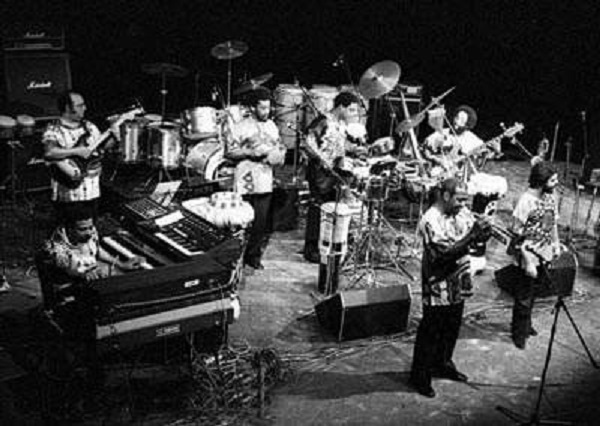
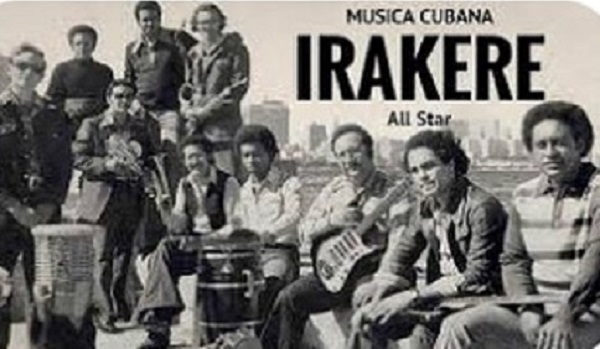
Irakere was a Cuban group that developed an important work in Cuban popular music and Latin Jazz under the direction of Chucho Valdés

Irakere was formed as such in 1967 but had begun to work much earlier; in that year precisely they went to a selection called in Havana to organize with the best musicians of that time the Cuban Orchestra of Modern Music; already in 1972 they were approaching to what they currently produce deciding in 1973 to call it Irakere, which in Yoruba language means Vegetation and that is how, starting from its name, they work based on the Afro-Cuban musical roots.

In this way, through the combination, mixture and interrelation of classical, impressionism, jazz, rock and various compositional techniques they managed to walk through all styles such as dance music, concert, traditional and popular Cuban music.

Thanks to the impulse of pianist Chucho Valdés, the Cuban group Irakere took off in 1973, nourished by Thelonious Monk’s bop.

Founders

Grupo Irakere: It was founded in Havana in 1973, by:

Jesús Valdés(Chucho) composer, director and pianist;

Paquito D’Rivera (Paquito), alto and tenor saxophone, flute and clarinet;

Carlos Averhoff, tenor saxophone, soprano, flute and bass clarinet;

Jorge Varona, trumpet, trombone and percussion;

Carlos del Puerto, bass, bass guitar and tuba;

Carlos Emilio Morales, guitar;

Bernardo García, drums and batá drums;

Jorge Alfonso, batá drums;

Enrique Plá, drums;

Carlos Barbón, güiro, chekeré and tambourine; and

Oscar Valdés, singer, tumbadora (conga), batá drums and bongo.

Irakere, fue un grupo cubano que desarrolló un importante trabajo en la música popular cubana y el Jazz Latino

On the founding of Irakere, Chucho Valdés expressed:

“For us the group always existed, it was present at all times; it was like something pending. At the beginning it had no name, it was just an idea we were working on: to use Cuban folkloric percussion in dance music, and to look for different timbres with a common characteristic: “ours”.

Then Oscar Valdés came up with the idea of combining the not easy and little known batá drum with the tumbadora, güiro and cowbell and so, step by step we arrived at the current group…”.

About Irakere’s first stage, the musicologist Leonardo Acosta points out: “one of the successes of Irakere had been not to try to invent and identify itself with a “new rhythm”, according to the old guidelines of advertising so much used from the forties to the sixties.

The slogan about the “new rhythm” was until recently the “open sesame” on which the musicians counted to become famous overnight, and by that way sometimes quite commercial results were achieved.

Apart from the fact that no “new rhythm” is so new, they all come from the alteration or amalgamation of pre-existing rhythms.

Irakere’s only alchemy comes from the spontaneous creativity of its members. Since there is no commercial endeavor, laboratory practices are unnecessary, and the group can perform a contradanza, a danzón, a son montuno or a cha cha chá without fear of seeming “old-fashioned”, since they are in fact playing something else at the same time. And without setting themselves the goal, nor having to invent a “pega” name, almost by an imperative of the material they are working on, new rhythmic combinations are emerging, to the point that Irakere’s rhythm is unmistakable among Cuban listeners or dancers.

Grupo cubano Irakere

Certainly, and in spite of their triumphs in international jazz festivals, Irakere is not a jazz group. But these successes are not gratuitous either, because as we have seen, they have formidable musicians with great experience in the jazz field, especially in the aspect of improvisation, the great discovery of jazz and perhaps its greatest contribution to the music of the 20th century.

“Paquito D’Rivera: Irakere was born against the will of the Cuban authorities”.

When talking about Cuban music, the name of one of the most emblematic groups in the country’s musical history comes to mind, Irakere, which in Yoruba language means vegetation, jungle.

Irakere became the seed that would germinate a lush forest of rhythms and sounds, a school through which many of the great stars of Cuban music have paraded.

Founded more than four decades ago, this legendary band has been a pioneer of Afro-Cuban jazz and the initiator of the musical revolution in the seventies.

Gracias al impulso del pianista Chucho Valdés, el grupo cubano Irakere levantó vuelo en 1973

Irakere emerged at a time when, due to political demands on the island, music and culture were treated as an instrument of revolutionary identification and jazz was branded as imperialist music.

It was at this time, in the late sixties and early seventies, that a group of great musicians founded a band whose main goal was to enrich Cuban popular dance music with Latin jazz as essential elements.

Under the direction of the outstanding pianist Jesús “Chucho” Valdés, excellent musicians came together in search of a different sonority, based on the use of Afro-Cuban folkloric percussion together with the renewed timbres of the popular rhythms of the time that fused jazz, rock, funk and popular Cuban rhythms such as son, mambo or cha cha chá, together with classical or concert music.

“Irakere was the Musical Generation of change”.

Sources:

https://www.ecured.cu/Irakere

Leonardo Acosta

Radio Televisión Marti

Mirna Guerra

Irakere

You can read: Israel Kantor was an excellent bassist, arranger and composer who achieved great popularity in Cuba for his vocal technique and original “Sonear” style

Omar Ledezma Jr talks about his experience at the Tempo Latino Festival

His reaction to the scholarship

We are here with Venezuelan percussionist and musician Omar Ledezma Jr. Good afternoon, Mr. Ledezma, how are you? Nice to meet you.

Same to you, Karina. It’s great to be participating again in the activities of International Salsa Magazine, a magazine that I have much appreciation and I’m find of it. Here we are always at your service.

man with glass
Venezuelan Grammy Award–winning singer and percussionist Omar Ledezma Jr

According to your website, you received a scholarship to study at Berkeley College of Music. How did you receive the news that you were selected?

That was interesting because when I arrived in the United States, I applied for the scholarship, so I had to extend my stay here in order to attend the audition in a December. In January, I got a letter that said I passed the audition and awarded the scholarship to study at the school. That was one of the most important news in my life.

So you were in the United States at the time you received the scholarship.

Yes, because there was no way I could have done that in Caracas, where I am from. So, I had the opportunity to travel to Boston to apply for the scholarship. Thank goodness, I had the opportunity to come and everything worked out fine.

Regarding technical and musical issues, what differences between your native country and the United States did you notice?

The first thing I noticed was that there were many opportunities. Really, I can say that I didn’t face the same constraints as in Caracas. When I started playing, I had many opportunities to go abroad to take my art. I already had the experience of having done it in my country with many other artists.

I think It would’ve been no different if I was in Caracas because I would have taken all the opportunities, played with many people and made my career there. However, I was able to go to Boston and took that opportunity. A few months later, I was already playing with school teachers, classmates, graduates and new people I met in a very interesting way. Despite my constraints related to the language, you can establish such interaction with all of them.

man playing the timbales
Omar Ledezma Jr playing the timbales

We understand that you are teaching at the SF Community Music Center and work hand in hand with other academic institutions, what made you dedicate yourself to teaching and training young talent?

I think it is important to lay the groundwork for the future. The present is lived now and the past provides us with experience, but we should always open the road forward for the future and new generations. I think that legacy for musicians is very important. We have to pass those teachings on to new generations.

Do you feel that the language shut doors on you at the beginning?

Not really. I have always thought that language should not be a limitation to fulfill your dreams. You have to respect the language of the country you are moving to, but without forgetting the mother tongue with which you were born, which is why I am a big supporter of bilingualism. You have to learn English, but without forgetting Spanish. It is a very important tool for young people whose parents were born outside the United States and moved here, but they should not forget their roots.

His experience at the Tempo Latino Festival

You have already told us that you have had the opportunity to tour the world. Could you tell us a little about your experience with Tempo Latino?

It was a very important experience for me and the group that I’m in, Pacific Mambo. It was an incredible experience with a massive attendance and it was surprising that we were able to meet that many people after the pandemic. We were playing in an arena full of people where we were warmly received.

It was very nice to feel the warmth of the live audience again and massively.

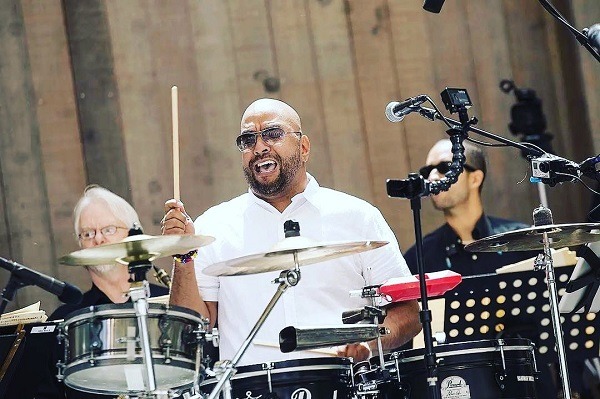
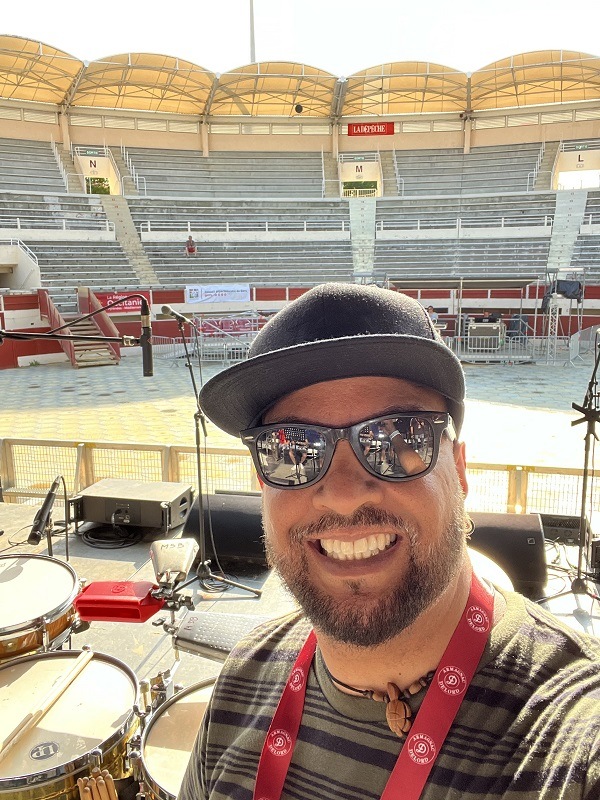
Omar Ledezma Jr in the arena at the Tempo Latino Festival

How was the flight, the arrival, the reception and everything that happened before the show?

It’s interesting because when I lived on the Northeast United States coastline, it was very easy for me to travel to Europe, Latin America, the Caribbean and other parts of the United States. Moving to California makes it more difficult because the trip is longer. It takes me about 11 hours to get to any port in Europe, and then being there, you have to make connection to get somewhere else. In our case, it was a full day of travel, as we arrived through Portugal. It was there that we waited for our connection to get to France. There were many people entering through the port of Lisbon, but there was no problem at all.

Already in France, the welcome the Tempo Latino staff was absolutely incredible. The audience was already waiting for our show. Then, we arrived to the village where the festival takes place and traveled a very beautiful route with spectacular scenery. Despite the fatigue, we fully enjoyed the trip.

When you played in the arena, how many people were there?

It is difficult to count the amount of people people there. I don’t have the exact numbers, but I can tell you that the arena was packed at the time of getting to the stage. We had the responsibility of opening for other well-known groups such as Los Van Van, so the arena was already full of people at the time of performing our show.

How was the audience reception towards you?

The audience reception was very warm and touching. People did not expect the band to have that contact and respect for the public like every time we perform. Many people enjoyed the hits we have had throughout our career such as OverJoyed by Stevie Wonder, Pink Panther Mambo, among other songs. When I did my solo with the timbales and the drums, I achieved a sound very much like We will rock you by Queen and I had to keep playing it because people were singing the song. An amazing thing that had never happened to me in my career.

Pacific Mambo performing at the Tempo Latino Festival

I heard that when you left France, you turned out to be infected with Covid-19, could you tell us what it went?

Yes, it came a surprise for me because I had not been infected since I went back to work on the street after the pandemic. I returned to my activities in the schools where I work and started providing shows again, but I had never tested positive for Covid-19 despite having been exposed. In fact, I have traveled to play in many places and even went on vacation to Venezuela, but I never contracted the virus.

When I return from my travel at the Tempo Latino festival, I was feeling a little sick and thought it was the fatigue of travel, but it turned out to be Covid-19. Fortunately, symptoms were very mild and I followed the treatment prescribed by the doctors. It took a little while for the virus to go away, but it all worked out. It was a period of forced vacation, as I had to wait about 20 days for the tests to be all negative.

Are you planning other international tours to Europe or Latin America?

We are negotiating to go to the East Coast and Canada in November. We are also making preparations for another small tour in the fall.

Today, the San Francisco Jazz Organization is going to broadcast our concert for subscribers, which makes us very happy.

What projects do you have on hand?

With regard to the band is concerned, we have talked about the possibility of making a new album and the way we want to do it. We are already looking for the music, the composers and the songs for the pre-production of this new musical work.

Pacific Mambo performing at the Tempo Latino Festival

In Barrio Marianao in Havana, Cuba was born Armando Peraza was a Latin jazz percussionist

Peraza (May 30, 1924-April 14, 2014) was a Cuban Latin jazz percussionist.

Thanks to his collaborations with guitarist Carlos Santana, jazz pianist George Shearing and vibraphonist Cal Tjader between 1950 and 1990, he is internationally recognized as one of the most important figures in the field of Latin percussion.

Known primarily as a conguero and bongocero, Peraza is also a skilled dancer and composer. He has appeared on recordings by Pérez Prado, Machito, George Shearing, Charlie Parker, Tito Puente, Cal Tjader and Carlos Santana. Performances with Santana, Shearing and Tjader brought him international fame.

He was inducted into the Smithsonian Institute and had three “Armando Peraza Days” from the city of San Francisco.

One of the most important and respected figures in the world of percussion.

He is a legendary master on both congas and bongoes, whose unorthodox style and story are an inspiration to countless young musicians.

He began his artistic career in the early 1940s, played with singer Alberto Ruiz’s Kuvabana ensemble where he played the bongo and moved to San Francisco in 1949.

At the New York World’s Fair he played congas in an African pavilion with a Nigerian.

This African arrives and says to me: “Man, what part of Africa are you from? I told him, I am from Cuba. He said: “Don’t tell me” He later worked with the orchestras of Paulina Álvarez and Dámaso Pérez Prado, and the Bolero group.

In 1947 he moved to Mexico, where he joined with Mongo Santamaría the ensemble Clave de Oro, and in 1948 they both traveled to New York as percussionists accompanying the dance couple Pablito y Lilón.

At the end of that year, Peraza joined Slim Gaillard’s jazz combo with which he traveled throughout the United States. After arriving in New York in 1949, Armando became a sought-after musician, especially in the contemporary Bebop and Latin Jazz scenes.

Armando built a reputation for impressively fast and complex hand technique, experimental techniques and great talent for entertaining. He flourished in progressive atmospheres that combined jazz with Afro-Cuban styles and was at the center of a new expression called “Cubop”.

He has played on more than 100 albums and is the composer of more than 40 songs. Some of these works include collaborations with Mongo Santamaria, George Shearing, Cal Tjader and Carlos Santana.

Settled in San Francisco, California, in the early 1950s, Peraza began working with pianist George Shearing’s quintet, where he demonstrated his mastery as a player of the tumbadora and bongo; also in this period he recorded several albums of Cuban folk music with Mongo Santamaria.

In the 60’s he joined the quintet of vibraphonist Cal Tjader, with whom he remained for several years and with whom he popularized Chano Pozo’s Guachi guaro. In the 1970s, he joined Mongo Santamaría’s orchestra, with which he participated in the Montreaux Jazz Festival in Switzerland.

Later he worked with Carlos Santana’s rock band, in which he remained for 17 years, until his retirement from artistic life in the 90s.

He possessed a great capacity to obtain the most unusual sounds of the bongo and the tumbadora, and distinguished himself for his extraordinary solos on both instruments.

He died on April 14, 2014 in California, United States, as a result of pneumonia.


Fuente: https://kripkit.com/armando-peraza/

Cuba Will Be the Protagonist at the Music Meeting Festival

Nijmegen is the city that will host this musical meeting with “Cuba Al Revés” as the main theme

Music Meeting Festival was organized in Concertgebouw de Vereeniging and Stadsschouwburg Nijmegen until 2003

This year Latin America will invade the 37th edition of the Music Meeting Festival with Cuban music from Saturday, June 4th to Monday, June 6th at the Park Brakkenstein facilities. This park can accommodate 12,500 visitors and is in the Nijmegen city in the province of Gelderland. Nijmegen has more than 170,000 inhabitants (2015 data provided by the UN) and is very close to the border with Germany.

This festival in the Netherlands will have as its main theme this time Cuba Upside Down. In this event, around 30 concerts will be presented with the participation of established artists and new promises from the Cuban music scene, Spanish, and Brazilian.

Regarding the main theme of this edition, the Dutch trumpeter and Artistic Director of the Music Meeting Festival, Maite Hontelé, pointed out: “I would like to have been born in Havana, to have grown up with Son, Mambo, and even the beginning of Cuban Salsa modern, Timba. But I grew up in Haaften…although almost every day, I listened to Cuban music on cassettes and played it on my trumpet.”

The artists from the Afro-Caribbean Island that will converge at the Music Meeting Festival 2022 are:

Alain Pérez with the Orchestra demonstrates the origin and future of Cuban music

The musical genius in the Salsera scene, Latin-Jazz and Flamenco, Alain Pérez will take the stage on Sunday, June 5th at 11PM for an improvisation party at the Jam. This show will last 50 minutes. Alain with the rhythm section of his orchestra will establish the basic rhythm to which countless musicians will join and improvise, bringing special guests for that day. Who are they? They are still a surprise.

After 24 hours, Alain Pérez returns to the stage, but this time with his young Orchestra for the closing day. They will perform for the first time on Monday, June 6th from 8:40PM to 10:50PM. Alain with this band of young Cuban artists brings a sound in which traditional Cuban music is intertwined with modern Jazz and Funk.

The same way will also join this celebration of Afro-Caribbean music Osain Del Monte with a group of young percussionists, singers, and dancers. They will recreate during their musical act a traditional cult with initiation rituals to be members of a secret brotherhood. This one-hour act will take place on the first day of the festival, on Saturday, June 4th, starting at 5:30 PM.

Likewise, Music Meeting Festival will feature the percussionist and singer Brenda Navarrete as a special guest in several musical presentations. Brenda has trained in Batá drums and has belonged to Latin Jazz bands such as Joaquín Betancourt and Alain Pérez, as well as in the Interactivo group, where Funk and Ska melodies are mixed with Afro-Cuban rhythms.

Cellist Ana Carla will also be brought to this stage of the festival. She will be on Sunday, June 5th from 8PM to 8:40PM. Her third studio album is Bahía and has influences from Cuban Son, Tango, Samba, Bossa Nova, Jazz, and even the classic French Chanson. She currently is touring for South America.

Ramón Valle, Marialy Pacheco, Rolando Luna, and Ivan “Melón” Lewis

Joining this constellation of established and emerging Cuban artists on Sunday, June 5th, starting at 2PM, is the Ping Pong Piano project. This 50-minute musical project brings together the following virtuous of this instrument: Rolando Luna, Marialy Pacheco, Ramón Valle, and Ivan “Melón” Lewis, the latter winner of the Latin Grammy for Best Latin Jazz Album for his album Voyager in 2021.

The starting point of this “four-sided” meeting is spontaneous. It consists of placing two grand pianos on stage and letting four stellar pianists converse musically. There will be friendship, rivalry, confrontation, and harmony putting aside their impressive resumes.

“Marialy Pacheco is a concert pianist known for her duets with Omar Sosa and her contagious rhythmic interpretation. Grammy winner Ivan ‘Melón’ Lewis counters this with almost mathematical precision as the founder of modern Cuban Salsa, Timba. Ramón Valle swings across styles and feels best when given the freedom to let his Cuban heritage hang over the music. The quartet of star pianists is completed by the whirlwind Rolando Luna, one of the most important Cuban pianists of the last ten years, who became world-famous for his work with Omara Portuondo”. Fragment extracted from the Music meeting Festival 2022 website. www.musicmeeting.nl

Likewise, the band El Comité will be present (Saturday, June 4th, 10:30 PM – 11:30 PM), the Son Bent Braam orchestra (Saturday, June 4th, 4PM – 5PM), African electronics, percussion from Brazil with the duo made up of Oleg Fateev & Simone Sou, and the New York afrobeat represented by the musical group from Brooklyn, Antibalas.

This interesting congregation of artists will be completed by the Spanish trombonist Rita Payés, one of the emerging artists of the new era of the Catalan scene.

Tickets for the three days of the Music Meeting Festival in Nijmegen are €80 at the box office. It costs €34 daily, and for those under 16 who want to attend, the admission is free.

  • « Go to Previous Page
  • Page 1
  • Interim pages omitted …
  • Page 3
  • Page 4
  • Page 5
  • Page 6
  • Page 7
  • Interim pages omitted …
  • Page 41
  • Go to Next Page »

International Salsa Magazine (ISM) is a monthly publication about Salsa activities around the world, that has been publishing since 2007. It is a world network of volunteers coordinated by ISM Magazine. We are working to strengthen all the events by working together.