• Skip to primary navigation
  • Skip to main content

International Salsa Magazine

  • HOME
  • Previous editions
    • 2026
      • ISM / March 2026
      • ISM / February 2026
      • ISM / January 2026
    • 2025
      • ISM / December 2025
      • ISM / November 2025
      • ISM / October 2025
      • ISM / September 2025
      • ISM / August 2025
      • ISM / July 2025
      • ISM / June 2025
      • ISM / May2025
      • ISM / April 2025
      • ISM / March 2025
      • ISM / February 2025
      • ISM / January 2025
    • 2024
      • ISM / December 2024
      • ISM / November 2024
      • ISM / October 2024
      • ISM / September 2024
      • ISM / August 2024
      • ISM / July 2024
      • ISM / June 2024
      • ISM / May 2024
      • ISM / April 2024
      • ISM / March 2024
      • ISM / February 2024
      • ISM / January 2024
    • 2023
      • ISM / December 2023
      • ISM / November 2023
      • ISM / October 2023
      • ISM – September 2023
      • ISM – August 2023
      • ISM July 2023
      • ISM Edition June 2023
      • ISM – May 2023
      • ISM April 2023
      • ISM March 2023
      • ISM February 2023
      • ISM January 2023
    • 2022
      • ISM December 2022
      • ISM November 2022
      • ISM October 2022
      • ISM September 2022
      • ISM August 2022
      • ISM July 2022
      • ISM June 2022
      • ISM May 2022
      • ISM February 2022
      • ISM January 2022
    • 2021
      • ISM December 2021
      • ISM November 2021
      • ISM October – 2021
      • ISM September 2021
      • ISM August 2021
      • ISM July 2021
      • ISM May 2021
      • ISM April 2021
      • ISM June 2021
      • ISM March 2021
      • ISM February 2021
      • ISM January 2021
    • 2020
      • ISM December 2020
      • ISM November 2020
      • ISM October 2020
      • ISM September 2020
      • ISM August 2020
      • ISM July 2020
      • ISM June 2020
      • ISM May 2020
      • ISM April 2020
      • ISM March 2020
      • ISM February 2020
      • ISM January 2020
    • 2019
      • ISM December 2019
      • ISM November 2019
      • ISM October 2019
      • ISM Septembre 2019
      • ISM August 2019
      • ISM July 2019
      • ISM June 2019
  • Download Salsa App
    • Android
    • Apple
  • Spanish

Search Results for: Jazz

Jazz, soul and rap singer Danay Suárez has an incredible talent

Cuban talent for the world

Danay Suárez (https://www.facebook.com/danaysuarezoficial) is a Cuban jazz, soul and rap singer who has achieved a lot of international notoriety in recent years thanks to her talent and dedication in each of her musical works. We are honored to talk to her and this is what we asked her:
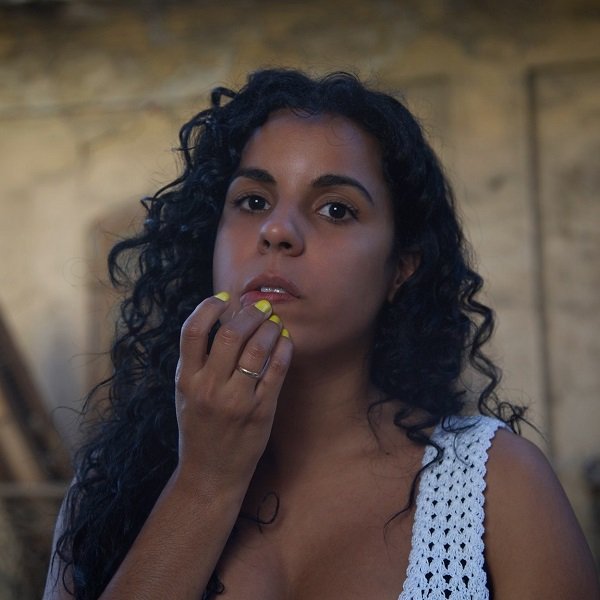
Danay Suárez has given concerts in many cities of the United States and Europe

Questions for Danay Suarez

I have been able to see that you are a self-taught artist. Would you say that your musical progress was to do with ear or do you already have any formal education related to music?

I was trained as a lyric singer by one of the most important musical theater companies in Cuba (Opera de la Calle). My training involved rhythm, harmony, music theory and acting classes. Most of my musical progress is to do with living my career, improving my thoughts, stage, recording studios, reaching culture, entering various musical genres and meeting and collaborating with musicians from around the world.

You’ve gone into jazz, soul, reggae, traditional Cuban music and hip hop. However, it can be said that you started with socially conscious rap and were even called “The queen of Latin rap”. Did you experiment with all these rhythms and genres at the same time or in stages during your career?

I sing several genres because I am not static or orthodox, creativity inspires me, I need to move my ideas and explaining them with rhythm is a great and good challenge. Which is why I combine the freedom delivered by jazz gives to move the words and the possibility afforded by rap to create a speech with creating pleasant and danceable moments, perhaps alluding to reggae because this genre allows you to intellectualize while dancing. I listen to a lot of music and think I might go to new places and be inspired by new sounds.
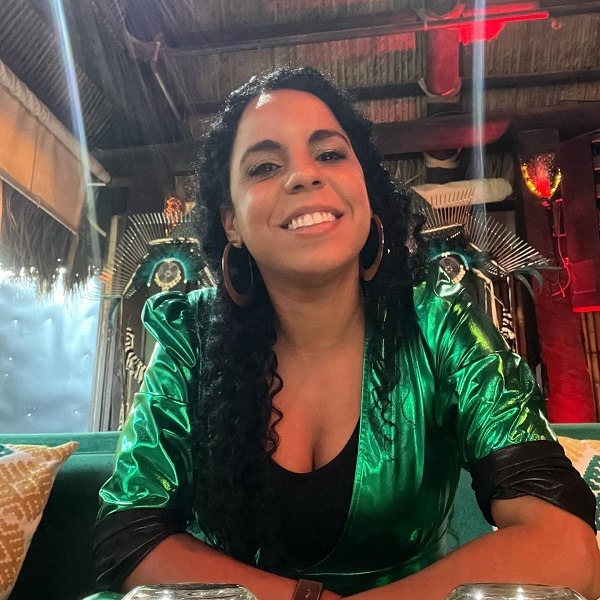
Danay Suárez has been known as The Queen of Latin Rap

We saw a spectacular video of you singing your song “Yo Aprendí” with The Kennedy Center Orchestra. How can two seemingly different genres join in something so special? Tell us how was that experience, how they became interested in you for that project and how these musical elements came together. 

I don’t think two different genres came together, my arrangement for the symphony was very similar in its harmonic and melodic base. Making art and taking all the things we do to a level of excellence is what makes the worlds integrate and complement each other without being forced. For me the symphony is the complete picture, I place a high value on my words and I think many of them are divinely inspired, visual, parables, timeless most of the time. Sometimes I feel that only a symphony can support them at the highest level. Living my lyrics as I have imagined them is a dream come true, a dream fulfilled I want to repeat many times.

You have made music for Netflix and already some video games. How did they come to you? Why do you think they became interested in your music?

Together with my publishing company Kobalt Music, I was given proposals on synchronizing such as these video games, series, and some offers I’ve refused because I belive that they do not build anything of value that can be linked to the message of my songs. You never know what makes people connect with my music, but they can be the rhythm, the word, or the artist.

This Cuban singer has made music for Netflix and video games

Last year, you released your album “Vive”, which is very different from what you have been doing and come any closer to Christian music.

“Vive” is a thoroughly evangelical album because it was born in a period of deeped intimacy with the Lord, all my work is partly biographical and a portrait of the moment I’m living or I got over it, so I can already it. Those who know my work can see the sincerity through the music of each stage I’ve lived. At the end, the most honest approach I can offer to my music is my own testimony.

You have been in the United States and several European countries. How has been the responses of your music been in all these places? How are you perceived there?

The reception has always been extraordinary, people cry at my concerts and I know it’s because they listen to any advice that can transform their lives, they have a vivid and real moment, which is sealed with values that make good. That motivates me to always bring life to my people with the songs, I know that there is a thirsty world from which I’ve been part and that’s why I do not take lightly to make music, I do not even treat it strictly as a business. What I do is I finance my music through other businesses to allow me do things correctly. In the case of the non-Spanish speaking public, my answer is that music is a universal language that is felt and enjoyed in the same way when it’s genuine.

Danay Suárez next to Colombian singer Juanes


Home

In Barrio Marianao in Havana, Cuba was born Armando Peraza was a Latin jazz percussionist

Peraza (May 30, 1924-April 14, 2014) was a Cuban Latin jazz percussionist.

Thanks to his collaborations with guitarist Carlos Santana, jazz pianist George Shearing and vibraphonist Cal Tjader between 1950 and 1990, he is internationally recognized as one of the most important figures in the field of Latin percussion.

Known primarily as a conguero and bongocero, Peraza is also a skilled dancer and composer. He has appeared on recordings by Pérez Prado, Machito, George Shearing, Charlie Parker, Tito Puente, Cal Tjader and Carlos Santana. Performances with Santana, Shearing and Tjader brought him international fame.

He was inducted into the Smithsonian Institute and had three “Armando Peraza Days” from the city of San Francisco.

One of the most important and respected figures in the world of percussion.

He is a legendary master on both congas and bongoes, whose unorthodox style and story are an inspiration to countless young musicians.

He began his artistic career in the early 1940s, played with singer Alberto Ruiz’s Kuvabana ensemble where he played the bongo and moved to San Francisco in 1949.

At the New York World’s Fair he played congas in an African pavilion with a Nigerian.

This African arrives and says to me: “Man, what part of Africa are you from? I told him, I am from Cuba. He said: “Don’t tell me” He later worked with the orchestras of Paulina Álvarez and Dámaso Pérez Prado, and the Bolero group.

In 1947 he moved to Mexico, where he joined with Mongo Santamaría the ensemble Clave de Oro, and in 1948 they both traveled to New York as percussionists accompanying the dance couple Pablito y Lilón.

At the end of that year, Peraza joined Slim Gaillard’s jazz combo with which he traveled throughout the United States. After arriving in New York in 1949, Armando became a sought-after musician, especially in the contemporary Bebop and Latin Jazz scenes.

Armando built a reputation for impressively fast and complex hand technique, experimental techniques and great talent for entertaining. He flourished in progressive atmospheres that combined jazz with Afro-Cuban styles and was at the center of a new expression called “Cubop”.

He has played on more than 100 albums and is the composer of more than 40 songs. Some of these works include collaborations with Mongo Santamaria, George Shearing, Cal Tjader and Carlos Santana.

Settled in San Francisco, California, in the early 1950s, Peraza began working with pianist George Shearing’s quintet, where he demonstrated his mastery as a player of the tumbadora and bongo; also in this period he recorded several albums of Cuban folk music with Mongo Santamaria.

In the 60’s he joined the quintet of vibraphonist Cal Tjader, with whom he remained for several years and with whom he popularized Chano Pozo’s Guachi guaro. In the 1970s, he joined Mongo Santamaría’s orchestra, with which he participated in the Montreaux Jazz Festival in Switzerland.

Later he worked with Carlos Santana’s rock band, in which he remained for 17 years, until his retirement from artistic life in the 90s.

He possessed a great capacity to obtain the most unusual sounds of the bongo and the tumbadora, and distinguished himself for his extraordinary solos on both instruments.

He died on April 14, 2014 in California, United States, as a result of pneumonia.


Fuente: https://kripkit.com/armando-peraza/

Preparence is close to the Panama Jazz Festival 2022.

From January 10 to 15, the Panama Jazz Festival 2022 will be held, this being this 19th edition, which will take place both virtual and face-to-face activities, so that the Biosafety regulations of the Ministry of Health will be met (“No cloth” masks and gel), where they are informed that to enter all events they will be asked for the card and QR code 100% vaccinated with a minimum of 14 days and 12-year-olds must present a negative Covid test 24 hours before.

It will be held at the City of Knowledge Athenaeum, where every day except for Wednesday (12) from 7 pm at the National Theater there will be a Gala night with Danilo Pérez and Kurt Elling, however the other days will be presented:

  • Monday (10): Panamá Connections and Mayra Hurley.
  • Tuesday (11): Borderlands Trio e Idania Douman.
  • Thursday (13): Global Messengers and Pz533-Global Jazz Womxn.
  • Friday (14): Antonio Hart and Solinka.

This year the festival of this edition will be dedicated to Frank Anderson born in Panama, Bocas del Toro on January 24, 1929, in Panama he met and played with many Cuban musicians; In New York, he played piano and directed several recordings by Vicentico Valdés and worked with other artists such as Marcelino Guerra, Polito Galíndez, Arsenio Rodríguez, Andrés Andino and Yomo Toro, Israel López “Cachao”, Clark Terry, and in 1950 he founded his own big band, the musicians were members of the Duke Ellington and Count Basie orchestras. In the 1970s he became musical director and accompanist for many Broadway plays such as Purlie, Don’t Bother Me I Can’t Cope, A Raisin in the Sun, Eubie !, The Wiz, and Guys and Dolls. He also recorded on the discs of those works.

In 2009 he was recognized by the New York State Senate for his musical contributions, particularly his role as organist in various Brooklyn churches and his most recent recording is Ochosi Blues (2015) by Benjamin Lapidus and Kari-B3 where he is accompanying with the organ. in its unique style and unmatched flavor that combines Caribbean music, jazz and more in a very personal way. Anderson currently maintains his residence in Brooklyn.

The International Artists to participate are:

  1. Kurt Elling Dúo with Danilo Pérez “Secrets are the Best Stories”:
    Renowned for his unique combination of robust swing and poetic acumen, two-time GRAMMY winner Kurt Elling secures his place among the world’s leading jazz vocalists. The New York Times proclaimed him the “most prominent male vocalist of our time.” Over a 25-year touring and recording career, he has won 3 Prix du Jazz Vocal, 2 German Echo Awards, 2 Dutch Edison Awards and been nominated for a GRAMMY Award fifteen times. He has had a 14-year career at the top of DownBeat’s Critics and Readers polls, and has won twelve Jazz Journalist awards for “Male Vocalist of the Year.”Elling’s voice is instantly recognizable, embracing listeners with her warm, rich baritone and navigating the four-octave range as a virtuoso improviser and compelling storyteller. The Guardian has named him “some kind of superpowered Sinatra” and “one of the great jazz vocalists of all time.”
  2. Kris Davis and Bordeerlands Trio with Eric McPherson, Stephan Crump:In Borderlands Trio, the collective efforts of bassist Stephan Crump, pianist Kris Davis, and drummer Eric McPherson have luck on your side. In less than a year their chemistry is unusually deep. The title of their album Asteroidea is the Latin term for starfish, a creature capable of regenerating parts of itself, in turn related to the trio’s ability to constantly develop new landscapes. The word starfish evokes notions of both the ocean and outer space. “Gravity, magnetism, constellations, nature. With this band, we are always expanding and contracting, recontextualizing what surrounds us and heading towards the instantly inevitable. ” Crump comments.Asteroidea is a treatise on immediacy and a deep dive into the spectrum of responses to any gesture. Its rhythms are always transforming, its drama has wacky moments, and its creators are just getting started.
  3. Antonio Hart:He studied jazz at Berklee College of Music in Boston with Bill Pierce, Andy McGhee and Joe Viola. Of his friendships in Berklee, Roy Hargrove stands out, with whom he spends three years traveling the world and recording the first three Hargrove albums. During these years on the road, Hart completed a master’s degree at Queens College where he learned from teachers Donald Byrd and Jimmy Heath, who also produced the artist’s second recording ‘Don’t You Know I Care’.With his 1997 release, Impulse Records’ ‘Here I Stand’, he earned a Grammy nomination for ‘Best Jazz Instrumental Soloist’ and additionally participated in more than 100 guest recordings. Since its inception, Hart has recorded eight CDs as a leader. The latest JLP Jazz Legacy productions, ‘Blessings’.The artist balances his time as a full professor at Aaron Copland School of Music, Queens College, with touring with his bands, The Dave Holland Big Band and The Dizzy Gillespie Big Band.
  4. El Berklee Global Jazz Institute (BGJI):It is a musical performance program designed to foster creativity and musical mastery across various musical disciplines, with pianist and composer Danilo Pérez as its founder and artistic director.The BGJI provides a comprehensive contemporary music environment where students have the opportunity to explore their creativity to the highest level possible, advance the power of music as a tool for the betterment of society, and connect musical creative thinking with the environment. natural.
  5. Global Messengers:Directed by Panamanian pianist and composer Danilo Pérez, Global Messengers draws its unique spirit from the culture and experiences of its members, who come from Palestine, the United States, Greece, Jordan and Panama, with varied musical traditions and instrumentation to match. They are committed to the ancient practice of building community through rhythmically rich and melodically exciting music.* Danilo Pérez piano
    * Farayi Malek voice
    * Vasilis Kostas laouto
    * Layth Sidiq violin
    * Naseem Alatrash cello
    * Tareq Rantisi percussion
  6. The New England Conservatory (NEC):It was founded in 1867, being the oldest independent music school in the United States. Since its opening it has played an important role in the musical life of Boston and the world. Its mission is to provide a more rigorous education at the level of musicians of all ages and parts of the world. Additionally, we have teachers who encourage individual excellence in a welcoming community.NEC works for music to have an important place in people’s lives and for rigorous education and excellent recognition. Beyond the study of music, NEC teachers help explore the historical and social frameworks that support our musical traditions.
  7. PS-533:It is the number of a class called “Musical Performance and Social Activism” for the Berklee Global Jazz Institute Master’s Program at Berklee College of Music. The PS refers to the department of “Performance” and 533 refers to an upper level class open only to graduate students. Patricia Zarate, a teacher of this class, organized this group in 2022 to present the Global Jazz Womxn (women and dissidents) that stand out as alumni and of the program. The letter “S” was changed to “Z” to reflect the change from a school environment to a professional environment led by Zarate.

The National Artists to participate are:

  1. Solinka: better known as Solange Arias, she was a public servant in the 1950s, working as a secretary in the Ministry of Education of Panama, has a beautiful voice and is very attractive, so a Cuban agent convinced her to be a singer of professional sauce. In those years, men dominated the salsa genre, which is why Solange was not successful at first. It was in Peru that she became a sensation as a salsa presenter, so much so that one journalist wrote that her performance was as brilliant as an “Inca sun,” a nickname she adopted as her stage name, changing the c to a k. Later he found success in his native country and signed a contract with a record company, traveled a lot and won the first prize at the Valparaíso international song festival.
  2. Idania Dowman: She has a privileged and unmistakable voice that has transcended throughout her 27-year career. Daughter of the renowned Panamanian calypsonian Lord Byron. She publicly began in the Church where she was director of the Archdiocesan Choir of Panama and was part of Jazz Effects of Panama with Reginal Boyce. Today he has two groups of his own: The Emotions and Cache. He shared projects with Billy Herron, as he believes in the generational sharing of culture. He has represented Panama in Peru, Barbados, Trinidad and Tobago, Costa Rica, Colombia, the United States and Dubai. She was recognized by receiving a Doctorate in Art from the United Graduate College and Seminary International (United States) for her career in ART, MUSIC AND CULTURE; by the National University of Panama in 2012 and 2014, and awarded the Golden Star Awards of the distinguished VIP Diplomática magazine of Peru in 2019.She is recognized for her virtuosity in each of her presentations, for maintaining her Afro jazz essence and being a defender of Panamanian culture.

    She is recognized for her virtuosity in each of her presentations, for maintaining her Afro jazz essence and being a defender of Panamanian culture.

  3. Panama Connections: Group made up of professors and scholarship students from the Danilo Pérez Foundation, under the premise of “community and sharing”, Panama Connections explores the creative possibilities between Jazz and its links with Pan-African and Caribbean folklore, from its compositions originals, arrangements and adaptations are focused on this fusion.
  4. Mayra Hurley: Singer, film and television actress, and broadcaster. The Panamanian singer-songwriter is inspired by her multicultural roots that are expressed in all her artistic expressions, from funk, salsa, to rock n’roll, each show is a live experience with Caribbean flavor. In his more than 10 years of experience in musical theater, he has worked under the artistic direction of Bruce Quinn and Edwin Cedeño and has participated in works such as Jesus Christ Superstar (2005), Cabaret (2006), A Chorus Line (2008), Peras en el huerto (2006-2012), Little Shop of Horrors (2010), en la guerra y el amor todo se vale (2011) and Hairspray (2013).He made his film debut in the acclaimed film Historias del canal (2014), presented in the official IFF Panama selection and at international film festivals in Spain, the United States, Costa Rica, Mexico, Canada and Jamaica. In 2019 he participated in the Panamanian film Escribiendo el General by Oscar Faarup and in 2021 he won the Panama positive award in the category Positive Artist.

Buy your tickets through https://panamajazzfestival.com/ or if you want to have other information, follow the following accounts:

  • WebSite: https://panamajazzfestival.com/
  • Facebook: @PanamaJazzFesti
  • Instagram: @PanamaJazzFestival
  • Twitter: @PanamaJazzFesti
  • Correo: [email protected]
  • Telefono: +507 317-1466

Blue Note Club in New York continues to carry the torch of jazz in the 21st century

After 30 years of success, Blue Note continues to carry the torch of jazz in the 21st century in the cultural heart of the Big Apple.

Since its creation in 1981, Blue Note has become one of the larger jazz clubs in the world and a cultural institution from Greenwich Village.

Artists who had ceased to play in jazz clubs decades earlier, such as Sarah Vaughn, Lionel Hampton, Dizzy Gillespie, Stanley Turrentine, Oscar Peterson, Ray Brown, and Tito Puente soon named Blue Note their home.

In addition to the main events involving artists of the stature of Chick Corea, McCoy Tyner, Joe Lovano, John Scofield, Robert Glasper, and Chris Botti, Blue Note offers a Monday night performance and the bi-weekly performance Late Night Groove to introduce the most promising New York jazz, soul, hip-hop, R&B, and funk artists.

Over the years, Blue Note has been an economic engine for Greenwich Village, attracting jazz fans from all over the world.

Blue Note Jazz Club on 3rd street. New York

The club receives rave reviews on a weekly basis in New York newspapers such as The New York Times and in international travel guides and magazines.

What is so special about the Blue Note is that anything can happen on any given night. It is not strange to see the likes of Stevie Wonder, Tony Bennett, Liza Minelli, and Quincy Jones going on stage from the audience to sit down.

Frequently Asked Questions

Q: Where can you find the Blue Note?

A: The Blue Note is located at 131 West 3rd Street, between MacDougal Street and 6th Avenue, right in the heart of Greenwich Village in Manhattan.

Q: What time should I get there? What is your seating policy?

A: The 20:00 doors of the shows will open at 18:00 hours and the 22:30 doors of the shows will be at 22:00 hours. The timetables of the doors are subject to change without notice.

Q: Is there parking close by? Is it possible to park in the immediate vicinity?

A: Unfortunately, we do not provide or validate parking. However, you can pack your car in from of the Blue Note in the Minetta Garage. You can also go to www.primospot.com to search for parking places in the area.

Q: What are my payment options?

A: American Express, VISA, MasterCard, JCB, Diners Club International.

Q: What if I cannot do my reserve?

A: There are no refunds or exchanges. Please be sure your tickets are purchased for the correct date and time before making the purchase.

Q: Is there a dress code?

A: There is no dress code; however, it is advisable to dress smart casual.

Q: Are there any age restrictions in your club?

A: The tables are for all ages. Bar seats are for persons over 21 years of age. If you purchase tickets for the bar and cannot show your identity card, your tickets will not be accepted.

Q: When is the gift shop open?

A: The gift shop is currently closed.

Q: Is the club handicap accessible?

A: The first floor, where the stage is, is handicap accessible. Unfortunately, the bathrooms are on the second floor and are only accessible by stairs.

Q: Is the Blue Note rented for private events?

A: The Blue Note would love to host your next event. Send an email to [email protected] for more information.

Q: Can I take pictures at the show?

A: The club’s policy allows photos without flash. Some artists may not allow photos in their concerts. The photo policy is announced each night before the concert. No kind of audio or video recording is allowed.

“What makes Blue Note so special is that anything can happen on any given night.”

Since its inception in 1981, Blue Note has become one of the world's leading jazz clubs and a cultural institution in Greenwich Village
Blue Note Club in New York continues to carry the torch of jazz in the 21st century

Website: Blue Note Jazz Club

131 W. 3rd St

New York, NY 10012

212-475-8592  

Article of Interest: Luis Perdomo one of the most avid pianists of the Jazz in New York

Meet The Amazing Fasching Jazz Club In Sweden

The Home Of The Best Live Jazz Since 1977

Group of musicians playing in Fasching
Fasching offers an intimate setting where you get a good view of the stage regardless of where you are sitting

Located in the heart of the Swedish capital (Stockholm), the Fasching Jazz club has been the residence of lovers of this genre for 44 years. Thousands of people certify and endorse it as the protagonist of the numerous presentations of renowned artists or future stars of the national and international music scene.

Fasching has hosted 350 events per year of which more than 70% have been live concerts, obtaining an astronomical total of approximately 80,000 guest artists. In this club, bar, performance area, and restaurant in the Venice of the North, you can also go on stage on Monday afternoons because the upstarts also have their space here.

In Fashing, the art of improvisation thrives!

This home of jazz entertainment can host 360 people, distributed in 110 seated and 250 standing. Some nights they offer live music in the lobby bar with free admission and annually, during the fall, it is the main venue for the city’s Jazz Festival.

In the discotheque there are age limits: only those over 23 years old can stay inside the facilities on Fridays, while people 20 years and older on Saturdays. At concerts, the minimum age to witness them is 18 years old, and most of the time these live performances start at 8 PM and end at 10 PM with a short break between the two sets.

Fasching currently follows the guidelines of the Public Health Agency regarding the number of people in the audience and the respective distance meter between the groups. Likewise, they maintain sanitary measures such as dew on tables and public spaces between concerts at night to keep the risk of contagion low and at the same time keep you safe within the areas of the premises.

History Of Fasching Jazz Club In Stockholm

Melissa Aldana with hat
Melissa Aldana (Chilean Saxophonist)

One of the oldest jazz clubs in Europe is Fasching. The only one that is the principal owner is the Swedish Jazz Musicians Association (FSJ its Swedish acronym) and the Friends of Fasching Association (as co-owner) with almost 2,000 members.

FSJ managed to acquire the current premises located at Kungsgatan 63 in 1977 with state support, thus achieving its highest aspiration of having a meeting place for musicians and the public to help improve the conditions of professionals of this genre and to publicizing Swedish Jazz and its interpreters.

Since 2004, Fasching has been given the task of ensuring the artistic content, initiating and executing several musical and educational activities from the Ministry of Culture, politicians, and even city officials.

At the end of the 80s, this incredible club through the Jazz Musician Association decided to award an annual scholarship to a young virtuoso of this musical style. By 2019, this financial aid had reached the figure of 40,000 SEK due to the celebration of the 30th anniversary of the Association and although this year the distribution of this scholarship was not made due to the pandemic, the possibility that be reactivated shortly.

  • Discover The Alternative To Dance Latin Music In Israel

However, the events in Fasching continue and Chilean saxophonist Melissa Aldana will participate in the Stockholm Jazz Festival which will be organized in the club’s concert hall.

Saxophonist Melissa is credited with exceptional talent and an unmistakable sound. From a very young age, she occupied a privileged place in the Jazz scene of Santiago de Chile. She has performed with Randy Brecker (Spring 2006) and was accepted to Berklee College of Music in Boston (USA) as a researcher and student of composition and improvisation. She graduated and changed her residence to New York in 2009. This same year Melissa was nominated for a Grammy for best solo improvisation and two years later her biggest dream came true when she signed with the Legendary record company Blue Note.

Melissa Aldana, moreover showing her music in countless clubs and concerts in New York City, has shared the stage with figures such as George Coleman, Antonio Sánchez, Marc Copland, Kendrick Scott, and the female group Artemis.

Date: Saturday, October 23rd

Address: Kungsgatan 63, 111 22 Stockholm, Sweden

Tickets: Tickster

Fasching also broadcasts its concerts live through Facebook free of charge. You have to like their official page, and they will send you a notice when they have a performance live on the doorstep.

By doing so, you will receive a link to the event hours before its start. When the link is active, an image of the Fasching stage will appear, exactly at the time, the concert will be broadcast. Therefore, you will not be able to enter in advance but be prepared for when the clock strikes 8 PM.

Book: Fasching

Lina Nyberg (1996) black & white
Lina Nyberg (1996) Photo: Paul Deker

For more than 40 years, this jazz club has offered nearly 10,000 concerts. World stars such as Chet Baker, Chick Corea, and Wayne Shorter, as well as all the great names of Swedish Jazz have set foot in its concert hall. Fasching is one of the few venues in the world that pays tribute to this genre, thus maintaining its position as one of the major organizers of events in this musical style that has been operating uninterruptedly for decades.

Besides Jazz, here you can listen to related genres such as Blues, Funk, Hip-Hop, and Soul.

But running this club has been a fight for survival on multiple occasions. In the eponymous book, you can go back in time and learn about the success and difficult stages in the history of Fasching including the greatest challenge for Swedish cultural life: the prevailing corona pandemic. All this information is contained in 256 pages with more than 200 illustrations and images in black & white.

The book entitled Fasching is written by journalist and author, Carlsson Bokförlag.


Home

  • « Go to Previous Page
  • Page 1
  • Interim pages omitted …
  • Page 5
  • Page 6
  • Page 7
  • Page 8
  • Page 9
  • Interim pages omitted …
  • Page 104
  • Go to Next Page »

International Salsa Magazine (ISM) is a monthly publication about Salsa activities around the world, that has been publishing since 2007. It is a world network of volunteers coordinated by ISM Magazine. We are working to strengthen all the events by working together.