• Skip to primary navigation
  • Skip to main content

International Salsa Magazine

  • Home
  • Previous editions
    • 2025
      • ISM / November 2025
      • ISM / October 2025
      • ISM / September 2025
      • ISM / August 2025
      • ISM / July 2025
      • ISM / June 2025
      • ISM / May2025
      • ISM / April 2025
      • ISM / March 2025
      • ISM / February 2025
      • ISM / January 2025
    • 2024
      • ISM / December 2024
      • ISM / November 2024
      • ISM / October 2024
      • ISM / September 2024
      • ISM / August 2024
      • ISM / July 2024
      • ISM / June 2024
      • ISM / May 2024
      • ISM / April 2024
      • ISM / March 2024
      • ISM / February 2024
      • ISM / January 2024
    • 2023
      • ISM / December 2023
      • ISM / November 2023
      • ISM / October 2023
      • ISM – September 2023
      • ISM – August 2023
      • ISM July 2023
      • ISM Edition June 2023
      • ISM – May 2023
      • ISM April 2023
      • ISM March 2023
      • ISM February 2023
      • ISM January 2023
    • 2022
      • ISM December 2022
      • ISM November 2022
      • ISM October 2022
      • ISM September 2022
      • ISM August 2022
      • ISM July 2022
      • ISM June 2022
      • ISM May 2022
      • ISM February 2022
      • ISM January 2022
    • 2021
      • ISM December 2021
      • ISM November 2021
      • ISM October – 2021
      • ISM September 2021
      • ISM August 2021
      • ISM July 2021
      • ISM May 2021
      • ISM April 2021
      • ISM June 2021
      • ISM March 2021
      • ISM February 2021
      • ISM January 2021
    • 2020
      • ISM December 2020
      • ISM November 2020
      • ISM October 2020
      • ISM September 2020
      • ISM August 2020
      • ISM July 2020
      • ISM June 2020
      • ISM May 2020
      • ISM April 2020
      • ISM March 2020
      • ISM February 2020
      • ISM January 2020
    • 2019
      • ISM December 2019
      • ISM November 2019
      • ISM October 2019
      • ISM Septembre 2019
      • ISM August 2019
      • ISM July 2019
      • ISM June 2019
      • ISM May 2019
      • ISM April 2019
      • ISM March 2019
      • ISM February 2019
      • ISM January 2019
    • 2018
      • ISM December 2018
      • ISM November 2018
      • ISM October 2018
      • ISM September 2018
      • ISM August 2018
      • ISM July 2018
      • ISM June 2018
      • ISM May 2018
      • ISM April 2018
      • ISM March 2018
      • ISM February 2018
      • ISM January 2018
    • 2017
      • ISM December 2017
      • ISM November 2017
      • ISM October 2017
      • ISM September 2017
      • ISM August 2017
      • ISM July 2017
      • ISM June 2017
      • ISM May 2017
      • ISM April 2017
  • Download Salsa App
    • Android
    • Apple
  • Spanish

Search Results for: Johnny Cruz

6 artists who helped make Latin Music successful in the United States

The success of Latin Music in the United States

Some artists have taken Latin music to another level. They fell in love with the public on American borders and helped shape the market as we know it today. We will tell you more details!

Latino immigrants who made their way into the United States gave way to Hispanic music as it is known today.

The Argentine tango, for example, was a success in the US in 1930 and is considered the first Latin genre to have participation on American soil. As you can imagine, from then on a movement was born that is here to stay. At the end of the 90s, this musical boom finished exploding. The numbers were increasing and more and more artists were honoring their Latin roots.

Currently, the industry numbers give prominence to Latin artists, having a greater incidence when they present their songs in Spanish. Also, there are a large number of versions that have been translated into English and are heard in renowned venues. In fact, it is enough to go to a nightclub or a Latin concert in iconic venues such as Madison Square Garden, located in New York or American Airlines Arena in Miami to check acceptance by the public. How much ground have they gained to have a leading role in the most powerful country in the world?
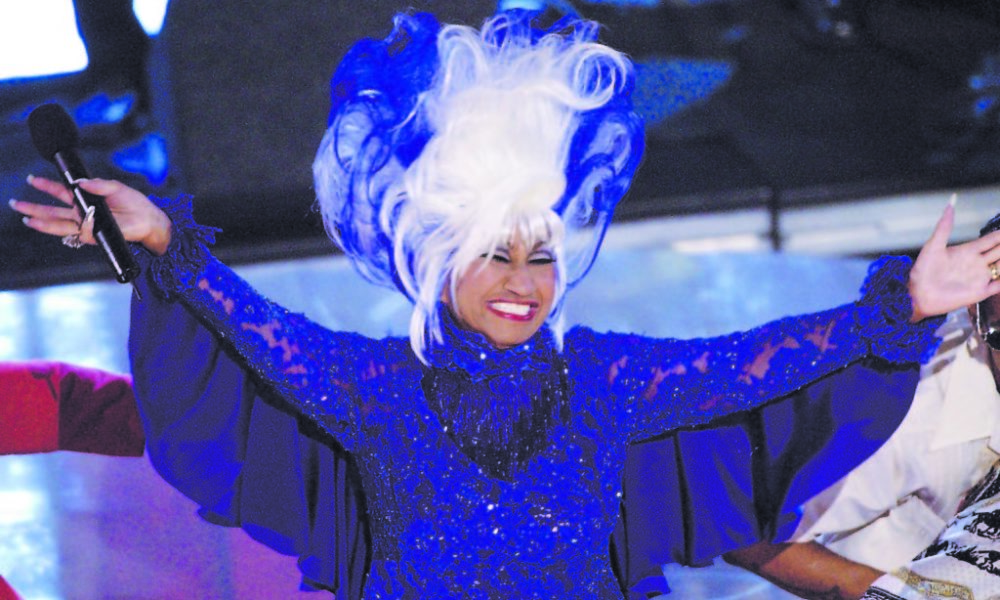
La Guarachera del Mundo - Latin America
Celia Cruz is well known all around the latin world

The road has not been easy, it has been marked by countless artists who, little by little, were making known the rhythms of Caribbean countries. Salsa, for example, was one of the most popular rhythms at the time. Starting in 1960, it was catapulted into the United States, paving the way for Latina artists who are now considered legends of the genre. Celia Cruz, Willie Colón, Héctor Lavoe, Rubén Blades, Johnny Pacheco, among others, marked a before and after in the industry.

Today we want to talk about some famous singers who set the tone and promoted the careers of other Hispanics.

6 Latino artists who paved the way for new generations

Emilio Estefan, Cuba

The Cuban was born in 1953 and arrived in the United States at the end of 1960, from Spain. Estefan always had musical interests. Although, in principle he had to work in other areas. He formed the band “Miami Latin Boys”, which would later be called “Miami Sound Machine”. Thanks to his different presentations, he met Gloria Fajardo, today known as Gloria Estefan, who accompanied them as vocal reinforcement. No one imagined that this singer would become their life partner.

Despite the success of the group, it is other achievements of the artist that place him in this category. Emilio Estefan soon established himself as a producer for Latin American artists and contributed to Gloria Estefan’s success as a soloist. He quickly became known within the industry, working with artists such as Charliee Zaa, Cristian Castro, and Carlos Vives.

In 2002, Estefan became a producer for the Latin Grammy Awards, an annual event that awards artistic excellence for productions in Spanish, Portuguese or other languages ​​of Hispanic countries.

Emilio Estefan and his wife have been awarded the Presidential Medal of Freedom from the United States, the highest honor in the country, due to their work in the training of artists and projection of Latin music in the world.

Celia Cruz, Cuba

Celia Cruz, began her career in her native Cuba. She excelled in tropical music and was known as “The queen of salsa.” During her first years of career, she stood out in her country, and later ventured into Mexico and the United States. She moved to the US and at the end of the 70s she joined the Fania All-Stars, along with other artists, fully joining salsa. In 1987, her star was debuted on the Hollywood Walk of Fame.

Cruz is part of a legacy that will continue throughout history. Her songs remain current and are part of the heritage of Latin America. She was nominated for two Grammys and three Latin Grammys.

The Postal Service of the United States included it in a selected group of five stamps, destined to the greats of Latin music; together with Selena, Tito Puente, Carmen Miranda and Carlos Gardel.

Selena, Mexico

The singer was born in the United States and was of Mexican descent. Her genre leaned toward ranchera, Mexican cumbia, and ballads. Selena is known as “the queen of Latin music” and has exceeded 70 million records worldwide.

In the 1990s, the US Billboard magazine named her “the most influential and best-selling Latin artist.” In addition, she is credited with catapulting Latin music in the United States and the world. Selena featured five albums ranked on the Billboard 200 at the same time. Her album Live (1993) won a Grammy for best Mexican-American music album, leaving behind the paradigms of those who considered the Tejano musical style as exclusive to men.

Selena was murdered in 1995. A great loss to show business. Her fans still regret her departure and imagine what she could achieve thanks to your talent. However, it leaves a very broad legacy for Latinos. After her death, she continues to be an example and inspiration for those who want to enter the market.

Juan Luis Guerra, Dominican Republic

The Billboard Winner Juan Luis Guerra
An Artist who help the genre in USA

Juan Luis Guerra is one of the most recognized Latin artists in the world. In the United States, he has been the recipient of 24 Latin Grammys, three Latin Billboard Awards and two American Grammys. He has recorded in Portuguese, English and, of course, in Spanish.

She trained at the largest private music college in the world, Berklee College of Music, in Boston. Earning a degree in jazz composition.

Guerra has made different tours of the US obtaining a box office record. He is a recognized exponent in the genre of merengue and bachata. In 2015, he collaborated with the financing of the Juan Luis Guerra Scholarship, presented by the Latin GRAMMY Cultural Foundation for a low-income student.

The singer is of Dominican origin and today he works as a composer, arranger, musician and producer.

Héctor Lavoe, Puerto Rico

Considered one of the best salseros of all time. He is credited with helping to bring about the genre’s golden age in New York. In addition, to expand the popularity of salsa in the 60’s, 70’s and 80’s.

In New York City, he takes his first steps as a bolero vocalist to make his way in what would be a great musical career. The Puerto Rican’s success kept on rising, he sang with the famous Willie Colón and together they toured different stages. Lavoe was also part of the Fania All Stars, a salsa and Latin music group. The Singer, as he was also baptized, died on June 29, 1993. He left an unforgettable musical legacy in the United States and the world; his songs and style are inspiration for many salsa performers today.

Marc Anthony, United States

For many, it could come as a great surprise that an American artist has such a marked and extraordinary Latin musical rhythm. However, his parents are Puerto Rican and he grew up with part of this culture. Marc Anthony is a singer of ballads, pop, salsa and bolero; ambassador of Latin music and culture.

When he began his career, many doubted whether he would be successful in Latin music.

“My career was not easy at first, because I neither looked nor sounded like the ‘typical salsero’. My sound was not considered usual for purists, ”he told The Associated Press.

The singer and actor has sponsored young talents such as Luis Figueroa, a Latino who was just beginning his career in the artistic medium. In addition, it has sold more than 30 million records around the world. Received 2 Grammys and 7 Latin Grammys. Marc Anthony has many fans worldwide. However, Latinos have a very special appreciation for him. In 2012, he started the Maestro Cares Foundation, to raise funds to build orphanages in Latin America.

If we wanted to mention those musicians to whom the expansion of Latin music is due, the list would be endless. Infinity of people who overcame cultural barriers to carry the name of their country, its rhythms and culture high. Currently, the city of Miami is considered as the starting point. The first contact of the young musicians, before venturing to the rest of the country. In addition, the same experts call it “the epicenter of the Latin industry.” This is due to the number of media, producers, multinationals and locals that are willing to open their doors to them and boost their talent.

Latin music represents an industry that does not stop, is profitable and is taking more and more space in the United States. Therefore, a decline is not expected in the coming years.


Home

Villariny Salsa Project from Puerto Rico

Committed to continuing the legacy of the greats in Salsa

Villariny Salsa Project made its debut on July 25th, 2009, at an international event held in Puerto Rico called “Puerto Rico Salsa Congress” where it was presented twice in the same year, as a prelude to Roberto Rohena and later, to the Gran Combo de Puerto Rico.

Villariny Salsa Project
Committed to continuing the legacy of the greats in Salsa

In the summer of 2010, Oscar Villariny (founder of the group) after working as a professional musician with salsa artists such as Gilberto Santa Rosa, Jerry Rivera, Puerto Rican Power, Viti Ruiz, Rey Ruiz, Anthony Cruz, Jose Alberto “El Canario”, Luigi Texidor, Tito Nieves, Michael Stuart, David Pabon, Johnny Rivera among others; began recording the first musical production which was entitled “En tu tiempo”.

Before making the “relayase” of the musical production, Villariny Salsa Project recorded the Christmas song “Trulla Caliente” to the rhythm of full, being a total success occupying the first positions in the radio lists.

In 2011, the first musical production of the band comes out with 8 songs, which has the hits “Que bien me va”, “Estoy Enamorao”, “Bendita la luz (salsa version)”, “A punto de Caramelo” and “Amigo es un peso en el bolsillo”.

This musical production was in charge of Mr. Tommy Villariny (arranger, musical producer, and trumpet player) who is Oscar Villariny’s father.

Within this production, he had the vocal coaching of Gilberto Santa Rosa, Victor Manuelle, Tony Rivas, Jerry Rivas (singer of the Gran Combo).

Villariny Salsa Project debuted on July 25th 2009 at an international event held in Puerto Rico called "Puerto Rico Salsa Congress".
Music Producer: Tommy Villariny & Oscar Villariny

At the time, it had a great acceptance from salseros and managed to be present in massive concerts such as Luisito Carrión (Roberto Clemente Coliseum), José Alberto El Canario (Tito Puente Theater), and the 2012 National Salsa Day. In 2014, VSP presented its second musical production entitled “De tu mano”.

This production has 10 songs and includes guest artists such as: Manny Trinidad (four Puerto Rican), Prodigio Claudio (four Puerto Rican), Camilo Azuquita, Luisito Carrión, José Alberto “El Canario (We were born in Salsa) and Medina Carrión.

The songs “De tu mano”, “Color Esperanza”, “Nacimos en salsa “and “Con computadora no feat NG2”, occupied the first positions in the radio waves.

In the year 2019, Villariny Salsa Project released a new music single entitled “Homenaje”, in honor of his father’s career and some of his successes by bringing together the same singers who originally recorded them such as Andy Montañez, Eddie Santiago, Rey Ruiz, and Viti Ruiz. “Many artists in the salsa genre have been hand in hand with my father Tommy Villariny to create what are successes today,” said Oscar Villariny.

Villariny Salsa Project released a new musical single entitled "Homenaje", in honor of his father's
Tribute to his father’s career

Our vision at Villariny Salsa Project is to make way for the New Generation and offer new opportunities, which is why Oscar Villariny (Founder of Villariny Salsa Project) is recording his first album with talented young people from the patio, produced by veteran musician Tommy Villariny.

Recently Villariny Salsa Project launched “Agua” available on all digital platforms.

Villariny Salsa Project presenta "Agua" feat. Mari Picorelli
Villariny Salsa Project presenta “Agua” feat. Mari Picorelli

The Villariny Salsa Project orchestra is a group with a lot of projection and refreshing for the industry.


Home

Orestes Vilató is one of the most influential figures in the world of Latin percussion

The Cuban multi-percussionist, Orestes Vilato, is undoubtedly one of the greatest figures in the history of Cuban drums known as timbales.

He is one of the most influential figures in the world of Latin percussion.

He was born on May 4, 1944 in Camagüey, Cuba, and currently resides in San Francisco, California in the United States.

He has worked with many of the best exponents of Cuban popular dance music and Latin jazz, from José Antonio Fajardo and Israel López (Cachao) to Rubén Blades and Carlos Santana.

He is one of the most influential figures in the world of Latin percussion. He was born on May 12, 1944 in Camagüey, Cuba, currently resides in San Francisco, California in the United States
Orestes Vilato is one of the most influential figures in the world of Latin percussion

During the 1950s, the Vilato family moved to New York, the world capital of salsa, where the young Orestes would rise to fame as an innovator of his beloved traditional instrument, “Los Timbales.

While living in New York City for 25 years, Orestes was intimately involved with many musical organizations that played key roles in shaping the course of Latin music around the world.

Among the many groups were: Fania All Starts (founding member), Ray Barretto, Tipica 73 (founding member), Los Kimbos (founder-director), Tito Puente, Johnny Pacheco, Cheo Feliciano, Ismael Rivera, Joe Cuba, Eddie Palmieri, Ruben Blades, La Lupe, Celia Cruz, Rolando La Serie, Chico O’Farril, Lionel Hampton, Los Chavales de España, Cal Tjader.

Other artists he has recorded or worked with include: Winton and Bradford Marsalis, Paco De Lucía, Whitney Houston, Linda Ronstadt, Aretha Franklin, Willie Nelson, Herbie Hancock, McCoy Tyner, Cachao, Andy García, Emilio Estefan, Gloria Estefan, Paquito de Rivera, Dave Valentín, Mongo Santamaría, Armando Peraza, John Santos, Rebeca Mauleon, Giovanni Hidalgo and Raúl Rekow.

In 1980 he moved from New York to San Francisco, California, where he worked with Armando Peraza, in the band of Chicano rocker Carlos Santana.

He later recorded with American jazzmen Bobby Hucherson and Buddy Montgomery, and with Cuban percussionist Luis Conte.

He also works with Jon Santos’ Batachanga Orchestra and Machete Ensemble.

He is one of the most influential figures in the world of Latin percussion. He was born on May 12, 1944 in Camagüey, Cuba, currently resides in San Francisco, California in the United States
Orestes Vilató Born May 12, 1944 in Camagüey, Cuba

In 1992 he recorded with Israel López (Cachao) as well as with Cuban percussionist José Luis Quintana (Changuito).

In 2009 he recorded his production entitled Orestes Vilató ?- Its About Time, with a repertoire in the style of Salsa, Latin Jazz, Descarga.

In 1981, Mr. Vilato moved to the San Francisco Bay Area, where he continues to reside with his family.   From 1980 to 1989 he recorded and toured with Carlos Santana’s renowned band.

Orestes was nominated for a Grammy in 1995 (Latin Jazz category) for his CD, Ritmo y Candela con Patato y Changuito. In 2009 his solo CD Its About Time was nominated for a Latin Grammy.

Orestes has recorded several film soundtracks including  Our Latin Thing, Mambo Kings, Carlito’s Way, Steal Big Steal Little, The Bird Cage, Dance With Me, Just A Ticket, Things To Do In Denver and The Lost City.

He has been a special guest artist at multiple jazz festivals around the country and in Puerto Rico, including the San Jose Jazz Festival.   He has performed and taught at numerous music conservatories including the Berkeley School of Music, UCLA, the University of Fresno, Stanford University, as well as many conservatories abroad.

Orestes was honored at the Yerba Buena Garden, Monterey and San Francisco Jazz Festivals.

Orestes’ style is one of the most imitated and emulated among recording artists.

Orestes Vilató It's about time
Orestes Vilató It’s about Time

Credits
Acoustic Bass – Carlitos Puerto Jr.
Backing Vocals, Handclaps – James Zavaleta
Bass – René Camacho
Bongos, Cowbell – Johnny “Dandy” Rodriguez
Co-producer, Timbales, Bongos, Lead Vocals, Cowbell, Cajón, Guiro, Maracas, Claves, Handclaps, Backing Vocals, Music Director – Orestes Vilató
Congas – Joey De León
Engineer [Assistance] – Joshua Blanchard
Engineer, Mixed By – Jimmy Branly
Executive Producer – Camerina Campillo, Ralph Campillo
Flute, Soprano Saxophone, Alto Saxophone, Tenor Saxophone – Justo Almario
Lead Vocals, Handclaps, Backing Vocals – Adonis Puentes
Mastered By – Peter Doell
Piano – Alberto Salas
Piano, Arranged By, Handclaps, Backing Vocals, Music Director – Rebeca Mauleón
Producer [Associate] – Manolo Santana
Tres, Acoustic Guitar – Ramón Stagnaro
Trumpet – Luis Eric González*, Sean Billings

Home

Choco Orta The Queen of Flavor

Choco Orta: “The Queen of Flavor and the Diva of Puerto Rico”

Virgen Milagros Orta Rodríguez is the first name of “La Reina Del Sabor”: Choco Orta, as this Puerto Rican actress, percussionist and singer-songwriter is internationally known. She was born in Santurce, a traditional neighborhood in San Juan, the capital city of La Isla Del Encanto.

Choco Orta The Queen of Flavor and the Diva of Puerto Rico
Choco Orta Diva of Puerto Rico

Choco is the only female daughter in a home formed by the brothers Tomás Jr., Jaime, Gilberto (her twin) and Ismael; fruits of the union of don Tomás Orta Abad and doña Andrea Rodríguez Rivera. By the way, the brothers are mostly percussionists, among amateurs and professionals.

The father, Don Tomás, is an excellent guitarist and Mrs. Andrea, the mother, has a privileged voice. We could say, then, that Choco Orta’s talents are “purebred”.

In Santurce, specifically in the area known as El Chícharo, Choco’s childhood, adolescence, and youth are present.

The blackness of this neighborhood cradled and nursed her, imprinting on her a deep imprint that she knew how to capitalize on and externalize in her artistic development.

Choco still remembers and celebrates the improvised musical meetings in her neighborhood with neighbors and friends, in which to the rhythm of percussion instruments they recreated the famous rumbas that blacks and blacks of the Caribbean turned into one of the most recognized standards of their culture.

This activity led her to become interested in her musical training, which she did in a self-taught manner first and then alongside renowned musicians from the patio such as Giovanni “Mañenguito” Hidalgo, Anthony Carrillo, and Angel “Cachete” Maldonado.

Recognized teachers of the Conservatory of Music of Puerto Rico offered him knowledge of Theory and Solfeggio, and great cultivators (men and women) of classical and popular dance also contributed to mold the artist that we know today.

In the academic field Choco Orta, she is a graduate of the University of Puerto Rico.

She has a Bachelor of Arts degree after graduating with honors (Cum Laude) from the Theater Education Program of the Rio Piedras campus of this prestigious University.

Choco’s academic formation, oriented to the teaching of Theater in schools, was not capitalized as such; however, it allowed her to venture into the stage by staging diverse plays in Puerto Rico such as “La Verdadera Historia De Pedro Navaja”, “El Bombón De Elena”, etc.; she even mounted her own show: “Choco, Mambo Y Algo Más” (at the end of the ’80s), through which she musically recreated the golden ages of the ’40s and ’50s.

We finish the current appearance of this brilliant artistic career of Choco Orta with the celebration of its 30 years in music
She was born in Santurce, a traditional neighborhood in San Juan, the capital city of La Isla Del Encanto

Television programs such as “La Tiendita De La Esquina” (comedy) and “Latino” (musical program), also record Choco’s talent. As if that weren’t enough, the seventh art: the cinema, also knew about the talent of this complete artist. “Bala Perdida”, “Dios Los Cria” and “Assassins 1995” are proof of Choco Orta’s talent and versatility.

Her entrance to the recording rooms is produced by the hand of the famous trombonist and conductor Julio “Gunda” Merced, who on one occasion enjoyed an improvised presentation of Choco with the Giants of the South.

That night, Gunda Merced made the approach to Choco, and some months later the musical production AND SOMETHING MORE! (Gunda Merced Y Su Salsa Fever) included the songs “Huracán” in Choco Orta’s voice and “El Baile Del Buey Cansao” (Choco Orta in duet with Raquel Velázquez). The year was 1987.

The first years of the 90’s present us with a multifaceted Choco Orta: always in music and accompanied by diverse formations: trios, quartets, etc.; also doing jingles and commercials for radio and television, but also internationalizing her work with various participations in the Club Hammou (southeast of France known as French Riviera or Costa Azul) and as it corresponds in an artist avid of knowledge: nourishing herself with the people and their culture.

By 1997 -always under the guidance of Julio “Gunda” Merced- with the support of the record label Musical Productions (MP) of the late but always remembered Tony Moreno, Choco Orta published his debut album. It was titled SENTIMIENTO Y SABOR (Feeling and Flavor) and presented us with 10 very well achieved cuts that quickly placed themselves at the top of the Latin music charts (Basta, Y Qué De MI, Yo Perdí El Corazón, El Hombre Que Yo Amo, etc.).

By the way, this production was presented at the MIDEM Convention for Latin America, which is why Choco Orta recorded an official video clip of the song “El Hombre Que Yo Amo”. MIDEM is the chapter for music professionals of Reed MIDEM: a professional market organizer founded back in 1963.

SENTIMIENTO Y SABOR was also featured in PULSE Magazine! (USA) and Choco would later be invested as Ambassador of Puerto Rican Culture in Tampa, Florida. He also obtained the Farándula Award (Puerto Rico) as best salsa singer and made an extensive and acclaimed tour in the Dominican Republic, performing in various Dominican stages including television sets.

She is remembered -also- until today, her ovation and applause with La Universidad De La Salsa, El Gran Combo de Puerto Rico, for the 16th edition of the National Salsa Day (1999) in the Juan Loubriel Stadium in Bayamón.

In 2001, Choco Orta received an invitation from Banco Popular de Puerto Rico to be part of their famous annual production entitled RAÍCES. Here Choco performs two songs with the accompaniment of two important musical institutions from the patio, the Orchestra of Maestro Lito Peña (Para Los Boricuas Ausentes) and the Orchestra of Maestro William Cepeda (Melitón Tombé).

That same year, it was part of the production of the Borinquen quartet player José Antonio Rivera Colón, better known as “Tony Mapeyé”, with the title VIEQUES, TIERRA PARA LA PAZ. Here he prints his vocal record in the songs Ni Bala Inerte Ni Viva and Plegaria Por Vieques.

Then to round off a great year, the release of his second production is made official: this one would be titled LA REINA DEL SABOR and from that record label, we continue enjoying the quality and flavor of songs like La Nueva Reina Del Sabor, Que Pague, Se Acabó Y Punto, etc. In this production, the tribute paid to “El Rey Del Timbal” stands out: Ernesto “Tito” Puente, who was the one who nicknamed Choco as “La Nueva Reina Del Sabor” (The New Queen of Flavor), a theme that is also Choco’s incursion into composing.

The repercussion of the song was such that Choco Orta briefly established himself in New York where he performed in renowned venues such as the Copacabana, to offer successful presentations, accompanied by orchestras such as that of the famous Dominican pianist and arranger Ricky González.

At this time of year, we also highlight her journey through various cities of the Major Island: Cuba, where she was loudly applauded during her participation in the Fifteenth International Festival of Golden Boleros and distinguished as the Favorite Daughter of Christ, a community near Santiago (Cuba).

The years between 2001 and 2009, allowed Choco to record in three recognized collaborations:

– HIJOS DE LA SALSA GORDA: published in 2004 under the concept of La Mundial De La Salsa with the direction of the pianist and arranger Willie Sotelo. Here Choco Orta performs the song “Me Saludas A La Tuya”.

– Cuando Hay Amor” is another of Choco’s well-achieved songs that includes his profuse record of collaborations. This number is part of the production EL CORTE PERFECTO (2004) with the Orquesta Sueño Del Caribe.

– In 2006, Mr. Afinque Willie Rosario publishes his production LA BANDA QUE DELEITA in which he invites Choco to bring to life with his voice the song “Lo Que Más Yo Quiero”, a song -by the way- that is a must in Choco’s personal presentations.

We arrive to the year 2009, musically speaking, and Choco Orta of the hand of “El Caballero De La Salsa” Gilberto Santa Rosa, as well as of Charlie Donato (both in the executive production and choirs) and Rei Peña (in the musical direction), publishes its third discographical plate. This one is entitled AHORA MISMO, a production of nine successful songs among which “Ahora Mismo”, “Por Accidente”, “Marido Majadero”, etc. stand out. We highlight in this production the duet with Moncho Rivera -his guest on the album- to evoke and pay tribute to the remembered union between Celia Cruz & Ismael Rivera for the song “Cúcala”.

Choco Orta
Choco Orta What’s Yours is a Lie

In 2011, Choco delighted us with a new production entitled CHOCO SWING. This work was considered among the 20 Best Productions of 2011 by the National Foundation for Popular Culture. On this plate we find again Rei Peña as a musical producer, Choco’s pen stands out represented by the excellent theme Homenaje A Las Soneras, a tribute made a song with which Choco highlights the presence of women in the musical world; additionally, you can enjoy compositions of Gino Meléndez and Raúl Marrero, among others; having magnificent arrangements of musicians of the height of Ricky Zayas, Guillermo Calderón, Ernesto “Tito” Rivera, Carlos Torres, etc.

The next seven years (2011 – 2018) have been prolific in collaborations and here is a synthesis of these:

– Ralphy Santi y Su Conjunto (2012): The Puerto Rican musician (Ponce) invites Choco Orta to be part of his extensive discography. The musical production is entitled HOMAGE TO THE DANCER and there he performs the song “Sin Clave Y Bongó No Hay Son”.

– Orquesta Guayacan (2013): The popular Colombian group celebrated at that time its 25 years of institutional musical trajectory, for which they publish the production 25 YEARS, 25 SUCCESSES, 25 ARTISTS, in which Choco is responsible for the theme “Como Una Hoguera”.

– Kambalache Negro (2014): Group led by Peruvian percussionist Robert “El Chino” Bolaños, an “old” acquaintance of Choco as he integrated and is part of Choco’s musical staff for his presentations at the Iron Babel: New York. In this production titled POR FINAL EN LA CALLE, Choco performs the song “Añoranzas”.

– La Orquesta Del Solar (2017): Orchestra whose musical epicenter is the Spanish capital: Madrid and is composed of musicians of various nationalities (Peruvian, Colombian, Venezuelan, Spanish, etc.) and led by Ecuadorian Julio Mena. In this production entitled BACK TO MY ROOTS, several of the singers that the group usually accompanies when they perform in Spain are invited. Choco Orta is the voice of the song “No Insistas Más”.

– Medley Soledad Bravo” song that will be part of the production LEGACY OF WORLD SALSA of the outstanding Venezuelan musician and arranger Mauricio Silva. In this medley, Choco Orta participates with Marianella (Venezuela) and Mélida Trujillo (Panama). Choco interprets the song “Son Desangrado” by Silvio Rodríguez and his colleagues the song “Déjala Bailar” by Chico Buarque.

– Noel Quintana & The Latin Crew (2018): Recent musical work by percussionist Noel Quintana who has invited a series of renowned singers to this production. Choco Orta gives life to Pedro Jesús’ composition “Qué Viva La Salsa”, a tribute this time to the dancer, an important element of this artistic binomial: dance-music. The production is entitled NOEL QUINTANA & THE LATN CREW VOL. 1.

– Abran Paso Orchestra: The Abran Paso Orchestra is getting ready to launch its new musical production soon. For this musical work, Choco has been invited to interpret a theme of the French musician and composer Paul Mauriat that, for the Latin environment, decades ago La Lupe adapted and interpreted (in Spanish) for our enjoyment. Its title: “Si Vuelves Tu”.

We should also refer to some singles that were recorded by Choco Orta, as is the case here:

– Chico Is The Man (2010): Adaptation of the song that José Feliciano (Chico And The Man) popularized, aimed at celebrating the arrival of the young Mexican soccer player Javier Hernández Balcázar known as “Chicharito” to England when he was hired by the English soccer team Manchester United.

– Killing Me Softly (2013): Crossover of the theme “Killing Me Softly With His Song” by Charles Fox and Norman Gimbel, based on Lori Lieberman’s poem “Killing Me Softly With His Blues”. Lori was his first performer but became notorious in the early ’70s with Roberta Flack. Choco gives this song a characteristic feeling when performed in its original language.

– Bomba Lamento Para Oscar López Rivera (2015): Interpreted to the rhythm of bomba, this song by Choco Orta demanded the immediate release of the now free Oscar López Rivera: a Puerto Rican politician who defended the independence of the island and who served 35 years in prison in the United States.

– Tofu Sin Lechón (2016): This song is based on the lifestyle of its composer and performer who has had a vegan lifestyle for approximately 30 years.

We round up and finish the present semblance of this brilliant artistic career of Choco Orta with the celebration of her 30 years in music. An event also marked by the publication of the musical production entitled CHOCO ORTA: 30 AÑOS REPARTIENDO SABOR.

At the beginning of 2017, he published the song “Te Perdí La Fe” by the notable Elizabethan composer (Puerto Rico) Johnny Ortiz, with which he began the recordings of his fifth personal musical work. He then recorded in Colombia an inspiration of the late poet Petronio Álvarez, “Mi Buenaventura”.

It continues with a theme of the also disappeared composer Palenque, that made very popular Ismael Rivera with Cortijo y Su Combo: “Severa”, here Choco Orta correctly “improvises” vindicating in first person Severa as a black woman and although humble, beautiful and intellectual.

It was March of that year when Puerto Rico received waves of media and fans of the salsa movement and their representatives, who from different parts of the planet attended the “National Salsa Day” organized by the Z-93 radio company.

The festivities begin in the days before the central (usually the third Sunday of the month) and for the past year, Choco Orta took advantage of the occasion and captivated the attendance of the dance of its 30th Anniversary in The Latin Roots, a local located in El Viejo San Juan.

The presence in Puerto Rico of José Alberto “El Canario”, one of the guests of the National Day, made possible the recording in the studios of Maestro Ángel “Cucco” Peña of the song “Sé Que Tú”, an event to which a good part of the international press had access.

Lino Iglesias, Choco’s friend and ad honorem advisor, composed the song “Choco Orta: 30 Años De Sentimiento Y Sabor”, a musical portrait of The Queen of Flavor is recorded before her trip to Cuba with the purpose of recording the songs “Canta Choco Canta” by the Cuban singer-songwriter living in Puerto Rico Juan José “Juanchi” Hernández and the bolero “Miénteme” (“Chamaco” Domínguez) under the arrangements of the Cuban guitarist and composer Reinaldo “Rey” Montesinos Muñoz and a pleiad of musicians from La Isla Mayor.

He includes in this production a theme of his own authorship and that he interprets together with Ismael “Maelo” Ruiz; by the way, a theme of the daily life and of necessary listening and analysis. Finally, he closes his production with the invitation of his musical brother, the great Herman Olivera, with whom he performs the song “Otro Amor”.

The production, although it should have been published at the end of last year, only saw the light in March of this year due to the circumstances that were lived after the passage of the hurricanes Irma and Maria (of this last one especially), that paralyzed all type of activity in Puerto Rico.

Weeks prior to this natural phenomenon, Choco Orta performed under the concept of The Last Fania Legends, which brought together in a much-applauded concert the still existing and former members of the Fania Machinery with a group of renowned guest musicians and singers, a concert of approximately four hours made the Rubén Rodríguez Coliseum in Bayamón vibrate. For this show, Choco Orta paid a well-deserved tribute to Queen Rumba Celia Cruz, through three of her popular songs: Kimbara, Yerbero Moderno, and Bemba Colorá, whose performance brought the respectable audience to its feet.

To round out the faena, cutting “tail and ear”, Choco Orta joined the legendary duo Richie Ray & Bobby Cruz, interpreting with them in a majestic way the theme “Cuando Me Digas Si”.

We return then to the launch of their recent production, the same one that is of great acceptance in Puerto Rico; Colombia, Peru, New York, and other countries and cities that pride themselves in being salsa musicians. He has been positioning himself with several of the themes that integrate this production, especially “Choco Orta: 30 Años De Sentimiento Y Sabor”, “Te Perdí La Fe” and “Otro Amor”.

It is also necessary to highlight the facet of Choco Orta as a woman who fights for the interests of her country and for a greater presence of women in the music industry; this through panels and talks in academic spaces and by sponsoring and promoting attendance at vegetarian and vegan restaurants, as well as diverse businesses.

We celebrate the trajectory of this great representative of Puerto Rican culture and her musical trail, which has been captured in acclaimed productions of her own and prestigious collaborations. The maturity is notorious and the feeling and flavor has also aged. Congratulations because we need and will have Choco for a while, we are sure of that.

Choco Orta, virtual concert, Saturday November 21st 7pm. From My Home to the World 3
Choco Orta of my House to the World

Home

  • « Go to Previous Page
  • Page 1
  • Interim pages omitted …
  • Page 36
  • Page 37
  • Page 38

International Salsa Magazine (ISM) is a monthly publication about Salsa activities around the world, that has been publishing since 2007. It is a world network of volunteers coordinated by ISM Magazine. We are working to strengthen all the events by working together.