Search Results for: King of Mambo
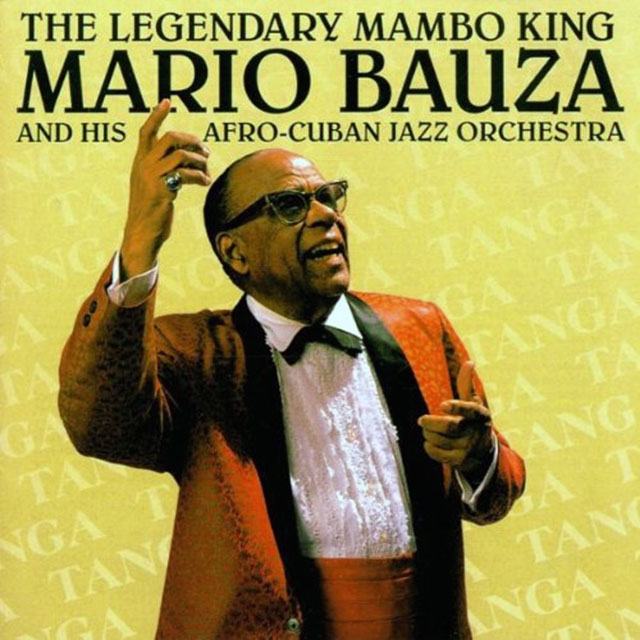
Mario Bauza
North America / United States / New York
Mario Bauza, Pioneer of Afro-Cuban jazz in New York, Clarinetist, saxophonist, trumpeter and arranger
Mario Bauzá (Havana, April 28, 1911 – Manhattan, July 11, 1993) was a Cuban saxophonist, clarinetist, trumpeter, arranger and composer.
Known above all for having been the musical director of the Machito orchestra (of whom he was also a brother-in-law), he was a pioneer of what is now known as Afro-Cuban jazz.

Bauzá played the clarinet in the Havana Philharmonic Orchestra. However, after traveling to New York in 1927 with the Antonio María Romeu orchestra, he was so impressed by the Big Bands of Paul Whiteman, Fletcher Henderson and Tommy Dorsey, and by the Harlem music revues, that in 1930 he decided to emigrate definitively to USA.
During the trip, he became friends with Antonio Machín. Mario Bauzá would return on the same boat in which Don Aspiazu’s orchestra was travelling, who immediately began the arrangements to record El manisero.
Upon arriving in New York, Bauzá went to live in Harlem with his cousin, the trumpeter René Endreira. Bauzá began playing the saxophone at house parties with pianist Lucky Roberts and began to absorb African-American culture.

Between 1930 and 1931, he was a trumpeter in the Antonio Machín quartet and made important recordings with this group in New York City. Anecdotally, it is said that he had learned to play the trumpet in just two weeks.
His first jobs were with the orchestras of Cass Carr, Noble Sissle and Sam Wooding.
In 1933 he entered Chick Webb’s orchestra as first trumpet, where he ended up as music director. He then worked with Don Redman and Fletcher Henderson, eventually landing Cab Calloway.
Being in that band, Mario brought the young trumpeter Dizzy Gillespie to the orchestra.
Bauzá married Estela Gutiérrez, sister of Francisco Raúl Gutiérrez Grillo, known as Machito.
On December 3, 1940, he debuted with Machito at the Park Plaza, a dance hall, with the Afro-Cubans, later working for almost four years at the La Conga club.
Bauzá works for Machito as artistic director, taking care of the arrangements and hiring the musicians.
The style of the Afro-Cubans mixes the son montuno of Cuba with features of swing bands.

Thanks to this, musicians like Dizzy Gillespie or James Moody introduced Afro-Cuban rhythms into jazz, starting in 1947.
He became interested in jazz when he heard Frankie Trumbauer play the saxophone performing Rhapsody in blue with the Paul Whiteman orchestra.
In the forties, Mario will develop the sound of Afro-Cuban jazz. His work as a clarinetist, trumpeter, saxophonist and arranger in the Machito orchestra constitutes one of the main pillars in the emergence and development of that Cuban genre.
Tempo Latino: Creating Connections Through Music
An Interview with Eric, Founder of Europe’s Premier Latin Music Festival
On the last week-end of July, a festival celebrates Latin and Afro-Cuban music and brings thousands of music lovers to a small town in France. Eric, the festival’s creator, shares its origins, inspirations, and evolution.


Since its inception in 1994, the Tempo Latino festival has welcomed incredible artists to this small town in the Southwest of France.
Creating a Musical Oasis in Vic-Fezensac
Having lived across France, Eric settled in Vic-Fezensac, where he felt the need to create something beyond work. His passion for Latin and Afro-Cuban music led him to start Tempo Latino, aiming to provide what he missed – concerts of these genres.
A Journey of Music and Discovery
Eric’s radio inspiration and his love for vibrant rhythms ignited the idea for a music festival. He yearned to introduce others to the music he cherished, giving birth to Tempo Latino in 1994. The inaugural edition featured Fatal Mambo and Mambomania, attracting 2,800 attendees. Now the festival attracts over 10,000 people.
Eric’s selection process for artists is fueled by genuine connections, resulting in a diverse lineup that weaves different styles into a harmonious experience. His curation creates unique narratives each night. Pairing artists with contrasting energies, like Lila Downs and Cimafunk, creates a captivating tapestry that reflects the festival’s essence. Eric’s journey involves tireless pursuit and strong artist relationships. From Bernard Lavilliers to Excelencia, his commitment to music’s magic and meaningful collaborations remains steadfast.
A Melodic Journey Unfolds
The festival’s theme guides its trajectory, from Africa’s heart to New York’s energy. Lavilliers’ Paris and the Caribbean’s vibrancy unite through music, creating a diverse yet cohesive experience.
In a digital era, Tempo Latino reminds us of music’s power to unite. Eric’s dedication and knack for blending genres into harmonious narratives continue to resonate.
Tempo Latino: 28 Years of Latin Rhythms, Community, and Artistry
The charm of Vic-Fezensac, a small town in France, transforms every year as over fifty thousand people gather for the renowned Tempo Latino Festival. In an exclusive interview, Eric, the festival’s creator, discusses the intricacies of managing such an event in a local community and the relationship it shares with the town.


Local Community and Involvement
Eric sheds light on the local engagement, emphasizing that while not everyone participates, the festival is supported by some local partners. What brings him contentment is the transformation he witnesses each year as the town welcomes an eclectic crowd of festival-goers. The festival’s vibrant audience, composed of diverse backgrounds, gives life to the town’s streets and squares in ways that were once unimaginable.
Eric reminisces about the support he received from the former mayor, Jean Arnaud, whose open-mindedness and appreciation for the festival’s diverse attendees left a mark. Jean Arnaud’s encouragement and acknowledgment of the festival’s contribution to cultural diversity added an emotional connection between the festival and the town.
Fostering Relationships with Artists
Eric’s dedication to music and fostering connections with artists has been at the heart of the festival’s growth. He shares anecdotes about musicians like Oscar D’Léon and Celia Cruz, who have left an indelible mark on the festival’s history. These relationships, he emphasizes, are more than business; they’re rooted in mutual respect and genuine affection.


Overcoming Challenges
Throughout its 28 editions, the festival has faced numerous challenges, both financial and logistical. Eric reflects on early deficits, weather-related disruptions, and organizational intricacies. Each year’s success has hinged on meeting these challenges head-on, often pushing the festival to its limits.
The Ever-Evolving Vision
Eric’s vision for the festival’s future remains unwavering – bringing together people from diverse backgrounds through music. He acknowledges the changing landscape of music and dance styles, highlighting the importance of maintaining a balance between cultural integrity and evolving tastes.
Looking Ahead
With the 30th edition approaching, Eric envisions continued growth while staying true to the festival’s roots. He expresses his desire to bring acclaimed artists like La India and Carlos Santana to the stage, continuing the legacy of diverse and passionate musical experiences.
In the grand tapestry of the Tempo Latino Festival, Eric’s passion, dedication, and genuine relationships have woven together a cultural masterpiece. The festival remains a beacon of unity, showcasing the power of music to transcend boundaries and create shared experiences. As the festival moves towards its next milestone, it stands as a testament to Eric’s unwavering commitment and the enduring magic of Latin and Afro-Cuban rhythms.
Mark your calendar and plan your trip for the 2024 Tempo Latino on the last weekend of July 25 to 28, 2024.
[Read more…] about Tempo Latino: Creating Connections Through Music
Latin music Festival in Germany August 2023
![]() |
Berlin Salsa MarathonAug 11 2023 – Aug 14 2023
https://www.berlinsalsamarathon.com/ https://www.facebook.com/photo/?fbid=1371329693007998&set=a.508891677907567 |
Gaststätte Tegeler- Seeterrassen RestaurantWilkestraße 1, Berlin, Germany, 13507 DescriptionBerlin Salsa Marathon offers 44 hours of social dancing with 250 Salsa addicts, All this over a single summer weekend, focused purely on social dancing (There’ll be no shows or workshops):
Cost Pass: € 129 |
Frankfurt Salsa MarathonAug 17 2023 – Aug 20 2023
https://www.edancefever.de/fsm-2023-1 |
EDanceFever HotelFrankfurter Strasse 121, Dreieich, Germany 63303 Description42th “SOCIAL DANCING“ Salsa-EVENT!! Be part of our first FRANKFURT SALSA MARATHON!! We are proud to present you our first edition at EDanceFever and cordially invite you to this spectacular 42-hour with Salsa Dura, Guaguanco, Son Montuno, Cha-Cha- Cha, Descargas, Guaracha and Pachanga will be played by a diverse, talented and famous group of DJs (Kamal SalsaDura, Medicus, Papi, Aimé & Michelle) in alternation. Our new oak parquet floor, new professional cocktail bar, as well as the new entire harmonious furnishings ensure an absolute feel-good atmosphere in our exclusive dance school. Cost From: 129 to 149 € |
|

Bailamos! Salsa Festival ChemnitzAug 18 2023 – Aug 20 2023
|
SubbotnikAddress: Vettersstraße 34a, Chemnitz, Germany, 09126 DescriptionBailamos! Salsa, Bachata, Kizomba und Tango Argentino and Salsa Festival Chemnitz offers workshops & parties. Cost Pass: from € 40 |
|
Berlin Salsa CongressAug 24 2023 – Aug 27 2023
|

Groundplan TempodromMockernstrabe 10, Berlin, Germany, 10963 DescriptionThe 22th edition of Berlin Salsa Congress offers workshops, performances and social dancing with national and international performers, instructors and dj’s. Cost Pass: from € 164 |

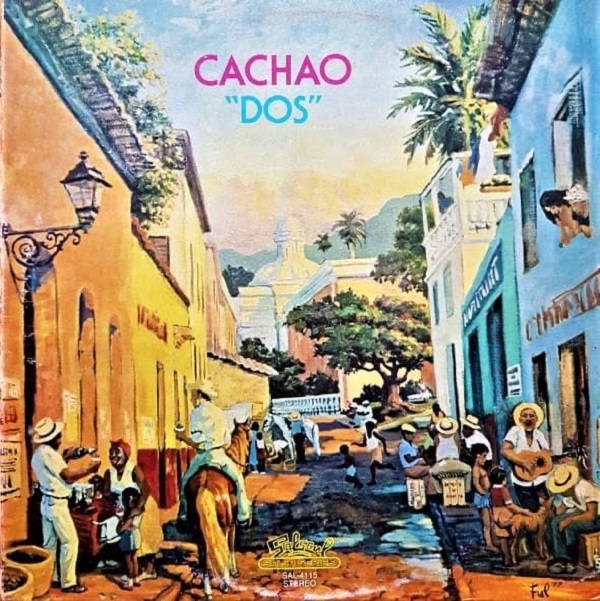
Israel “Cachao” Lopez Sobrado in fame and respect in the seventies was dedicated to maintain the tradition at the highest level
“Cachao Dos” for the year 1977.
It will be enough to mention the name of this celebrity to open a whole range of creativity and genius embodied in what is considered a cult discography.
Since 1931, the year in which he started musically as a member of the Havana Philharmonic Orchestra, the precocious Israel would give a foretaste of the talent he had and that, as time went by, would be consummated hand in hand with his right-hand man and musical accomplice, Orestes “Macho” López, his older brother.
Certainly, music was impregnated in the DNA of the López family, a generating machine of musicians by tradition, something that Lázara Cachao, Israel’s niece and daughter of his deceased younger brother Orlando “Cachaito” Lopez, reaffirms: “The tradition of being musicians comes from the grandparents and great-great-grandparents, all the Cachao are musicians”.

Regarding his transcendence, he and his older brother Orestes are said to be the creators of the Mambo, a rhythmic variation of the Danzón and a genuine musical expression that would mark a before and after in Latin music.
However, and as it is known, this contribution would change its clothing and would reach worldwide popularity when it reached the hands of another “inventor” born in Matanzas, Cuba, named Dámaso Pérez Prado, who as it is known, gave it another treatment and musical twist reaching surprising popularity.
“Cachao”, after a 31-year stay with the Havana Philharmonic Orchestra, decided to leave Cuba, settling for many years in New York City.
As it is understandable, his presence in this city was more than important for the musical guild and music fans.
He was nothing less than one of the managers and protagonist of the famous Jam Sessions recorded by the Panart whose presence was capitalized among many others by Tito Puente, Tito Rodríguez and Eddie Palmieri.
From the first one we could say, a whole school, a musician with a deep knowledge of his double bass and creator of his own style, bow in hand, and as a prolific composer, with approximately three thousand compositions together with his brother “Macho” López.
The years in New York were musically very good for Israel Lopez as well as in Las Vegas and finally Miami, where he lived until his last days.
Making a discography of him is quite a task and a challenge. However, after his arrival, I remember with great pleasure his collaboration for the album Latin Explosion by Joe Cain and his orchestra in 1964, where among others, Listen dos Trompetas and Mungo, Mungo Baby stand out.
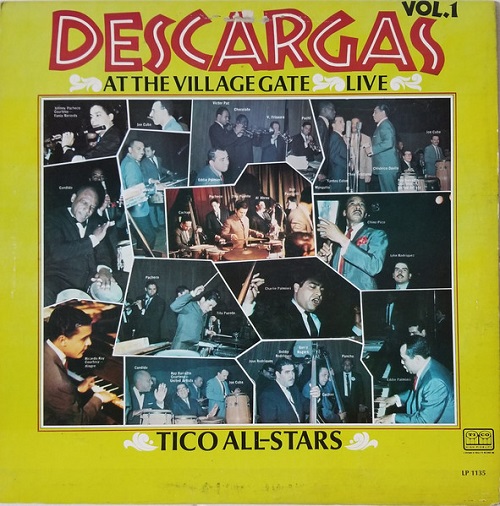
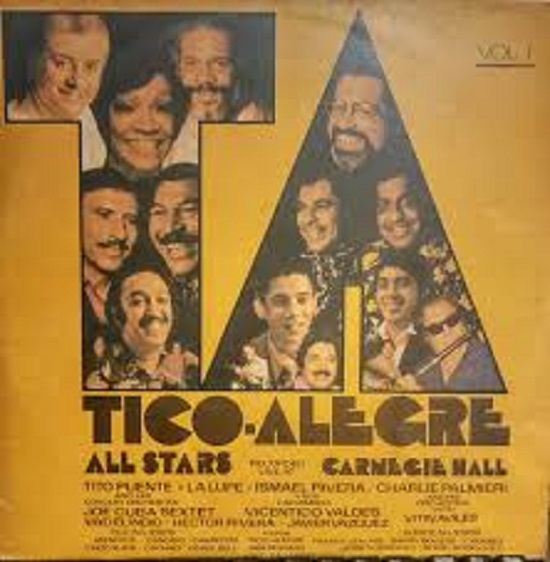
Esta es mi Orquesta, theme/performance of Tito Rodriguez’s musicians emulating what Stan Kent and his Big Band did, or those performances as special guest in the famous Descargas at The Village Gate Live and Tico All Stars, among many others.


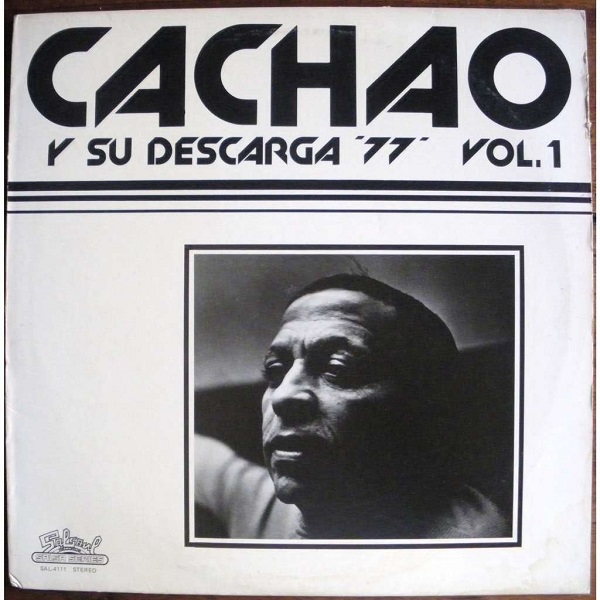
In the seventies, Cachao, with his fame and respect, dedicated himself to maintain the tradition at a supreme level, and from that period, punctually 1977, Cachao will present two epic works, the first one entitled Cachao y su Descarga Vol. 1 and then Cachao Dos, both recorded for Salsoul Records under the production of René López and Andy Kaufman.

The latter contains only a total of five tracks, but they are well fulfilled in their purpose of maintaining a fierce defense of the rhythms that Gran Cachao has been proclaiming for years.
This album, like everything else recorded by the double bass player, is genuine and of supreme quality, something that is due to Israel’s responsible and dynamic character, something that the leader Julio Castro can attest to, having not only known him personally but also having worked with his orchestra La Única, which arrived in NYC for a prolonged stay of a little more than half a year.

Repertory
Ko Wo Ko Wo: (Guiro): Julito Collazo
Israel “Cachao” López: Contrabajo
Julito Collazo: Vocal, Chekere, Conga
Mario Muñoz “Papaito”: Campana
Diane Cardona: Coro
Marcelino Guerra: Coro
Héctor “El flaco” Hernández: Coro
Zunny López: Coro
Frankie Rodríguez: Coro
Fela Wiles: Coro
Jóvenes del Ritmo: (Danzón): Israel López
Israel “Cachao” López: Contrabajo
Julián Cabrera: Congas
Gonzalo Fernández: Flauta de Madera
Oswaldo “Chihuahua” Martínez: Timbales
Charlie Palmieri: Piano
Rolando Valdés: Guiro
Cuerdas:
“Pupi” Legarreta: Violín
Alfredo de la Fe: Violín
Eddie Drenon: Violín
Yoko Matsuo: Violín
Carl Héctor: Violín
Patricia Dixon: Cello
Centro San Agustín: (Danzón-Cha): Israel López
Israel “Cachao” López: Contrabajo
Carlos “Patato” Valdés: Congas
Gonzalo Fernández: Flauta de Madera
Lino Frío: Piano
Rolando Valdés: Guiro
Nelson González: Tres
Mario Muñoz “Papaito”: Percusión
Alejandro “El negro” Vivar: Trompeta
Alfredo “Chocolate” Armenteros: Trompeta
Rafael “Felo” Barrios: Coro
Roberto Torres: Coro
Trombón Melancólico: (Descarga): Israel López
Israel “Cachao” López: Contrabajo
Manny Oquendo: Timbales
Charlie Palmieri: Piano
Barry Rogers: Trombón
José Rodríguez: Trombón
Andy González: Campana
Frankie Rodríguez: Percusión
Gene Golden: Percusión
Milton Cardona: Percusión
Rafael “Felo” Barrios: Coro
Roberto Torres: Coro
Chambelona (Popurrí de Congas): Neri Cabrera
Israel “Cachao” López: Contrabajo
Julito Collazo: Bombo
Lino Frías: Piano
Mario “Papaito” Muñoz: Percusión
Oswaldo “Chihuahua” Martínez: Percusión
Virgilio Martí: Percusión
Eugenio “Totico” Arango: Coro
Rafael “Felo” Barrios: Coro
Read Also: Carlos “Patato” Valdés one of the best percussionists in the history of Latin Jazz