• Skip to primary navigation
  • Skip to main content

International Salsa Magazine

  • Home
  • Previous editions
    • 2025
      • ISM / November 2025
      • ISM / October 2025
      • ISM / September 2025
      • ISM / August 2025
      • ISM / July 2025
      • ISM / June 2025
      • ISM / May2025
      • ISM / April 2025
      • ISM / March 2025
      • ISM / February 2025
      • ISM / January 2025
    • 2024
      • ISM / December 2024
      • ISM / November 2024
      • ISM / October 2024
      • ISM / September 2024
      • ISM / August 2024
      • ISM / July 2024
      • ISM / June 2024
      • ISM / May 2024
      • ISM / April 2024
      • ISM / March 2024
      • ISM / February 2024
      • ISM / January 2024
    • 2023
      • ISM / December 2023
      • ISM / November 2023
      • ISM / October 2023
      • ISM – September 2023
      • ISM – August 2023
      • ISM July 2023
      • ISM Edition June 2023
      • ISM – May 2023
      • ISM April 2023
      • ISM March 2023
      • ISM February 2023
      • ISM January 2023
    • 2022
      • ISM December 2022
      • ISM November 2022
      • ISM October 2022
      • ISM September 2022
      • ISM August 2022
      • ISM July 2022
      • ISM June 2022
      • ISM May 2022
      • ISM February 2022
      • ISM January 2022
    • 2021
      • ISM December 2021
      • ISM November 2021
      • ISM October – 2021
      • ISM September 2021
      • ISM August 2021
      • ISM July 2021
      • ISM May 2021
      • ISM April 2021
      • ISM June 2021
      • ISM March 2021
      • ISM February 2021
      • ISM January 2021
    • 2020
      • ISM December 2020
      • ISM November 2020
      • ISM October 2020
      • ISM September 2020
      • ISM August 2020
      • ISM July 2020
      • ISM June 2020
      • ISM May 2020
      • ISM April 2020
      • ISM March 2020
      • ISM February 2020
      • ISM January 2020
    • 2019
      • ISM December 2019
      • ISM November 2019
      • ISM October 2019
      • ISM Septembre 2019
      • ISM August 2019
      • ISM July 2019
      • ISM June 2019
      • ISM May 2019
      • ISM April 2019
      • ISM March 2019
      • ISM February 2019
      • ISM January 2019
    • 2018
      • ISM December 2018
      • ISM November 2018
      • ISM October 2018
      • ISM September 2018
      • ISM August 2018
      • ISM July 2018
      • ISM June 2018
      • ISM May 2018
      • ISM April 2018
      • ISM March 2018
      • ISM February 2018
      • ISM January 2018
    • 2017
      • ISM December 2017
      • ISM November 2017
      • ISM October 2017
      • ISM September 2017
      • ISM August 2017
      • ISM July 2017
      • ISM June 2017
      • ISM May 2017
      • ISM April 2017
  • Download Salsa App
    • Android
    • Apple
  • Spanish

Search Results for: Kizomba

6th International Kizomba Gala Hamburg

Europe / Germany / Hamburg

6th International Kizomba Gala Hamburg – Germany 13 – 16 Oct 2017

6th International Kizomba Gala Hamburg

We invited you to be part to one of the oldest and Best Kizomba Festivals in Germany. They are pioneers of Kizomba in Germany. They have a tradition of inviting 1st class International Teachers and DJs. Just follow their history of the Artists they have invited the last years. They brought most of the Artists you see at current Festivals in Germany for the first time. That tell you about the quality of this event.

We believe in Quality not Quantity!

They have invited first class International Instructors to teach you the proper way of Dancing Kizomba, Zouk and other African Dance. There will be an intensive 3 days Workshop starting from 9pm Friday – 07:00 pm Sunday, which will end with a Party. The Party will be thrill with shows and animations from the international instructors.
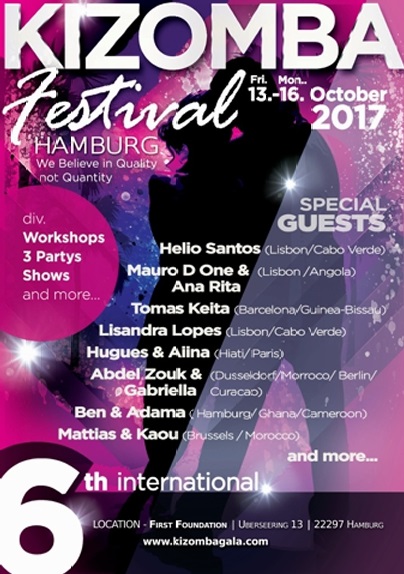
6th International Kizomba Gala Hamburg - Flyers
6th International Kizomba Gala Hamburg – Flyers

Confirmed Artists

  • Helio Santos (Lisbon/Cabo Verde)
  • Tomas Keita (Barcelona/Guinea-Bissau)
  • Mauro D One and Ana Rita (Lisbon /Angola)
  • Lisandra Lopes (Lisbon/Cabo Verde)
  • Hugues & Ailina (Haiti/ Paris)
  • Abdel Zouk & Gabriella (Dusseldorf/Morroco/ Berlin/Curacao)
  • Ben & Adama (Hamburg/ Ghana/Cameroon)
  • Mattias & Kaou (Brussels / Morocco)
6th International Kizomba Gala Hamburg 2017

DJ’s

  • DJ Ze Zom (Angola/Copenhagen)
  • DJ Ben (Hamburg/Ghana)
  • DJ Dos Anjos (Rotterdam/ Cabo Verde)

and more to come…

Photo by Kristi Fuoco. http://blog.young-germany.de/2012/12/hamburg-germany-top-ten -reasons-i-love-living-here/

See more information at this page: http://www.kizombagala.com/

2nd Edition Kizomba-Salsa-Schiff July 8. Mississippi Queen Dampfer.

For the second time in Hamburg we are going to have a KIZOMBA SHIP with Salsa, Bachata and Zouk shared on 3 Floors. We have been able to book the Mississippi Queen with selected DJs & Live act. Germany Hamburg Überseebrücke South-East Ponton 20459.

Germany / Hamburg
Germany / Hamburg

Kizomba Conquering the World of Salsa

North America / USA /

These are some of the things I learned about Kizomba when my boss told me to write about it: Its official language is Portuguese; I bet you didn’t know that, either.

See, even when we thought we knew about this music genre, because we hear it at parties, get together or social events; as a Caribbean music, known by its movements that are alike the common Latin rhythms, it actually comes from Angola; a country in Southern Africa, near Namibia; and its official language is Portuguese.

Kizomba Conquering the World of Salsa

That is why the first and most popular Kizomba songs are in Portuguese.

Diogo Cão was that responsible Portuguese explorer to discover Angola and to determine its official language and culture. Who could possibly know that after the colonization era, MUSIC would be that one thing capable of combining cultures and mixing beats taste between humans? Kizomba is a clear example of that. Another fun fact is that its name comes from Kimbudo; which means ‘party’, maybe that’s why it’s so exciting to dance it.

It’s good to know that its characteristic for its slow and sensuous rhythm, came with a mixed touch of African rhythm and Haitian Kompa, until it became the one we know now a day. In the 1990s, when the actual Kizomba got more and more popular, Angolan semba dancers started to adapt their semba steps, according to the tempo and flavour of the Kizomba beats.

Dancers
Dancers

Back in the 60’s, the big parties were referred as: “Kizombadas”; since at that time, Kizomba wasn’t really “Kizomba”. Imagine calling your own parties like that, funning right? Many other dance styles from other continents were also enjoyed, since the rest of Africa received the influence of many other cultures; as a result of African rhythms and European styles.

As Angola did with Portugal. During the years, it has spread ALL AROUND THE WORLD; to countries like: England, France, Spain, Poland, Denmark, Belgium, Sweden, Belarus, Lithuania, Egypt, Switzerland, Serbia, Canada and the United States of America. And now, we hear it in South America, through all these famous artists like: Prince Royce, Romeo Santos and Juan Luis Guerra.

Not always was Kizomba defined, as we know it today. See, through the years, it has been confused with other genres like Cape Verdaen; which turned out to be the first similar rhythm before Kizomba was, what it is today. Many immigrants confused Cape Verdaen rhythm with Kizomba vibes, back in the 80’s. This genre comes from Cape Verde, in Africa; where the official language is Portuguese as well, and their movements are very similar.

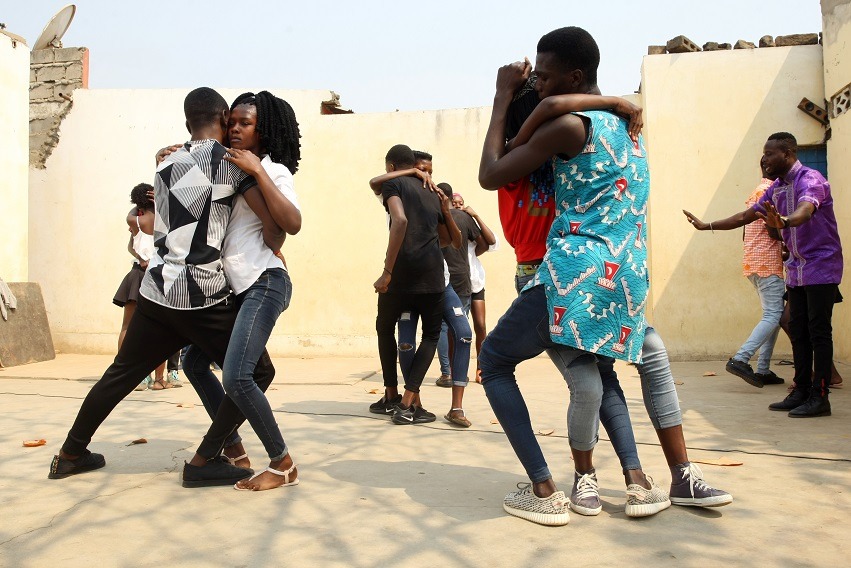
Photo 2: Dancers
Photo 2: Dancers

Another interesting fact that I learned about the origin of Kizomba, was its first popular name, “Zouk”. It is good to know that this term represents the origin of Cape Verdaen and Kizomba, because people used to call every type of music by this name. Now with the other name, Kizomba, people can tell them apart. In the history of Kizomba, we will find the popular Brazilian Zouk dance, evolved from a dance called Lambada.

In this following video you could see how to dance Zouk and Lambada https://www.youtube.com/watch?v=BlK5oIjVNfM By HOWCAST

https://www.youtube.com/channel/UCSpV HeDGr9UbREhRca0qwsA

I know what you are thinking; How many dance types come from the same one? That in fact is the magic of Kizomba; it involves so many rhythms and cultures and that’s why it as special and popular, as it is today.

Photo 3: Dancers
Photo 3: Dancers

Lambada, was a dance that took over most night clubs in Brazil; especially, in Rio de Janeiro. In the mid 90’s, Brazilians discovered Zouk from the French Caribbean; which had many similarities with Lambada, because of its Caribbean rhythm influence.

Soon, Lambada started to adapt to Zouk. However; Zouk’s rhythm was slower than the Lambada, so it was necessary to make alterations to the dance, including to its basic steps.

All Zouk professionals then decided to call Lambada style, Brazilian Zouk (Zouk Brasileiro); with the objective to protect their culture and also with the objective, not to interfere with different culture’s interpretations of Zouk.

Ghetto Zouk Dance is one type of Zouk that a couple dances to, very closely with higher dynamics, fun, flow and precision, that follows the ghetto Zouk beat. It combines the basic Kizomba steps and techniques, with faster rhythm in footwork, requiring firm posture and higher level of power, pressure and movement control from both partners.

In the Ghetto Zouk Dance, both partners share the same amount of pressure, tension and impulse which makes, especially the ladies, be more involved in the dance. It also improves the communication between partners and helps them to maintain the flow. Ghetto Zouk Dance uses syncopated rhythm more often to better reflect the beat. In practice, it is demonstrated by faster footwork than the one of Kizomba and higher overall dynamics of the dance.

Unlike very soft movements of Kizomba, Ghetto Zouk Dance applies more energy and extension, while still emphasizing the precision of the movement.

In this link https://www.youtube.com/watch?v=7n9p DcSGwgg you will see how to dance Guetto Zouk step by step. By GHETTO ZOUK DANCE & KIZOMBA PRAGUE https://www.youtube.com/channel/UCA6q QHYwbcfaIQNL23tKk-A

Kaysha dancing
Kaysha dancing

Knowing its steps, in some places of the world, Kizomba is known as African Tango. The body position is very similar to the Argentine Tango, with the upper body leaning forward with head touching at times.

The lower body, particularly the hips, is very fluid using forward, backward and circular movements, in connection with the partner. Like salsa, dancers can break apart and perform ‘solo’ movements.

Everything we learned today about this music genre and its origin leaves us the knowledge that cultures were made to mix up, to blend with others and to spread their believes. Music is that one thing supposed to teach us, how to enjoy life and make dancing as special as it is. The different styles and movements make us feel part of their culture and origin.

Involving all tastes and rhythms, known by its slow, insistent, somewhat harsh, yet sensuous rhythm, as the result of electronic percussion, some of the most popular Kizomba and Zouk artists of all times are:

Kaysha, the Democratic Republic of the Congo (1974 – present):

Kaysha is a French-based musician originally from the Democratic Republic of Congo. His music is a blend of styles such as kizomba, rhumba, zouglou, zouk, zouk love, calypso, R&B, and hip hop. Kaysha is also a successful music producer, having produced songs for some of the bestknown artists on the Afro-Caribbean scene, including Passi, Solaar, Jacob Desvarieux, Soumia, Lynnsha, Elizio, and Ludo.

Kaysha
Kaysha

Elizio, aka Mister ODC (Original Di Cabo Verde):

He is a singer-songwriter, born in Angola in 1979; of Cape Verdean origin. Revealed with the title 10 fois, 100 fois featuring Perle Lama in 2003, Elizio quickly meets his first big solo success with Melodia which leads him to the top of the zouk scene. The artist then connects the tubes and expands his musical universe with more than 70 titles, ranging from general dancefloor with sounds like Bad Man on Kizomba with Angel or Make love on tempo in particular, through the kuduro as Sabi Di Mas.

Elizio - Kizomba
Elizio – Kizomba
  • Anselmo Ralph Andrade Lamb (born 1981 in Luanda, Angola):

Better known as Anselmo Ralph; is a singer of R&B, Soul and Kizomba. In January 2006 he released his first album titled “Love Stories”. That year he was nominated by the Channel O Music Video Awards in the “Best R&B” and “Best Director” categories, and by the MTV Europe Music Awards 2006 in the “Best African Artist” category.

Anselmo Ralph - Kizomba
Anselmo Ralph – Kizomba

In 2012, Coca-Cola announced a promotional campaign featuring Ralph, their first with an Angolan artist. As of January 2013, Ralph was touring the Benguela region of Angola to promote his album “Best of Anselmo Ralph”, which premiered the month before in the #5 position on the Portugal Albums Top 30 chart.

  • Nelson Freitas was born and raised in the Netherlands, with creativity and talent he constantly tries to refresh the world of Zouk music. In 1997 the compilation CD of “MOBASS Presents” was released featuring the track, “Hoje em Dia” (Now a Days), which officially launched Quatro Plus (formerly known as Quatro) in the market. As one of the lead singers of the group, Quatro Plus went on to release three successful albums “4-Voz” (Four Voices) in 1998, “Bem Conche” (Get to Know Us) in 2002 and “Ultima Viagem” (Last Voyage) in 2005.
Nelson Freitas - Kizomba
Nelson Freitas – Kizomba

In almost a decade, Freitas has earned what’s rightfully his as he is of the most admired and respected producers, singers and writers in the Cape Verdean as well as the Zouk music industry. With a blend of Cape Verdean Kriol and English lyrics, a twist of R&B and hip-hop incorporated with Zouk and traditional Cape Verdean music. With all these ingredients Nelson made his solo album called “Magic” In October 2006.The album sold over 25.000 copies worldwide.

  • Don Kikas, born Emílio Camilo de Carvalho, is an Angolan singer from the city of Sumbe in the southern Angolan province of Cuanza Sul. In 1997, Don Kikas released his second album, Pura Sedução which was silver in Portugal. That same year, the album’s Esperança Moribunda song received the “Music of the Year” award granted by the Rádio Nacional de Angola (national radio station). By this time, invitations were extended for Kikas to perform at international level. His third album, Xeque Mate, released in December 1999, produced a totally-renewed Don Kikas as it included songs recorded in three different countries and featured foreign musicians as well.
Don Kibas - Kizomba
Don Kibas – Kizomba
  • Soumia is of Moroccan origin and was born on August 27, 1977 in Saint Mandé in Paris. She made her appearance onto the music scene first in 1998 singing a duet with Talina on the RUBIZOUK compilation album. Since then, she has been featured in numerous compilations including ZOUK R&B VOLUMEs I, II & III; TROPICAL HIT MACHINE and SECTION ZOUK. She released her first album STILL IN LOVE in 2002 and her hits include Mes Sentiments; Trahison; and Avec des si ou Rendez moi.
Soumir - Kizomba
Soumi – Kizomba

Vinny Rivera releases his New Kizomba Hit “Compatible”

North America / USA / Massachusetts

The sensation of Kizomba music of all time, Victor Vincent Rivera, better known as Vinny Rivera, releases to the musical scene his new Kizomba single “Compatible” off the upcoming album “La Cosecha”. An album that will be centered in big melodies, the explosion of rhythms and the Tropical sound characteristic of Kizomba music and whose genre we have become accustomed to hear in his sweet and melodious voice.

Vinny Rivera
Vinny Rivera

The #1 Latin Kizomba Artist in the World who was born in Boston, Massachusetts, during his total successful European Tour where performed songs coming off of his album “La Torre”, Vinny achieved to conquer audiences of all ages, cultures and languages, falling in love to the international public.

Vinny has arrived this year with this new video of his most recently hit “Compatible” taking beautiful footage the Nederlands and starring with the international model Lillyann heaven, scenes in marvelous landscapes with a romantic history based on Rivera seducing a beautiful lady to establish a loving relationship with her. COMPATIBLE is destined to establish itself among the best song in the billboards of popularity in the world because it mixture sensuality with a cadence that invite you to dance softly with your dance partner to the rhythm of the Kizomba so popular in festivals and special events currently.

Vinny Rivera continues to shine in the music entertainment scene in America and the rest of the world increasing his fans between knower and professional dancers of this Latin Kizomba music, and if the LA COSECHA album will be so excellent like COMPATIBLE song, no doubt, he will be one of the artists with fruitful career and major projection nowadays…

art
 

Eduardo Paim: The Father of Kizomba

Eduardo Paim
Eduardo Paim

Eduardo Paim, the creator of the musical genre called Kizomba, is well-cherished in the Latin Dance community for being one of the most influential musicians in Latin music history. He is internationally renowned as the godfather of Kizomba music.

Born in Angola in the 1980s, Kizomba music is a blend of Kilapanga, Semba, and Angolan Merengue. Semba is the traditional Angolan music. As compared to Semba, Kizomba has a more sensuous rhythm. It’s slower and more romantic than Semba. As the principal language of Angola is Portuguese, therefore Kizomba songs are mostly sung in Portuguese. Coming from the Bantu term “Kimbundu”, Kizomba means fiesta or party. The forefathers of Kizomba are Eduardo Paim and his band SOS that he founded in 1982.

Eduardo Paim

Though it was the album “Luanda minha banda” Eduardo Paim made his successful debut with, his real breakthrough is considered “Do kaiaia” which was his second recording in 1992.

This album exceeded 50,000 copies. Later on, he released the album “Kambuengo” which was a great success too. “Ka-Ne-La” “Rosa baila” and “Chindu a tempo” are still on the top of the list of his popular songs.

The father of Kizomba, Eduardo Paim, calls himself “the precursor of Kizomba”. According to him, it was in the early 80s that the process of creating Kizomba started. There were two groups, namely SOS and Afro Sound Star (ASS). The use of kilapanda (type of music and dance from Angola. It is related to semba and kizomba, two other popular genres of Angolan music) as a reference style by the group Afro Sound Star inspired him a lot. Moreover, traditional African music such as Semba also contributed to his inspiration for the development of a new music genre. Today, kizomba is danced worldwide.

Just like everything else in this world, Eduardo Paim also had his ups and downs in his journey to music. Having said that, a time came when his schedule was just reduced to one show per year from six shows a month! At this point, he dreamed to build up his own record studio, and started working for it. And yes, he succeeded in earning a name as a producer in Angolan music industry. He named his studio “EP Studios”. Being a producer, he supported many Angolan singers of the new generation. With his release of the album “Maruva na taca” he made his comeback to the music industry in 2006.

Eduardo Paim with Paulo Flores

Though it was the album “Luanda minha banda” Eduardo Paim made his successful debut with, his real breakthrough is considered “Do kaiaia” which was his second recording in 1992. This album exceeded 50,000 copies. Later on, he released the album “Kambuengo” which was a great success too. “Ka-Ne-La”, “Rosa baila”, and “Chindu a tempo” are still on the top of the list of his popular songs.

Many musicians of the new generation of Angolan music participated in his album “Maruva na Taca”. Yuri da Cunha, Nancy Vieira, Paulo Flores, Big Boss, and Bonga are to name a few. He also released his new cd “Etu mu dietu” a long period after “Maruva na taca”. You can keep yourself updated about his shows and releases by subscribing to Eduardo Paim Official Channel on YouTube.

Eduardo Paim, the father of Kizomba, has given birth to such a music genre that knows no borders. Known for having a sensuous, slow, and insistent rhythm, Kizomba is danced not just in Angola but also in other African countries and in USA and Europe as well. Moreover, Kizomba is also gaining a lot of fame in China, especially in cities such as Shenzhen, Shanghai, and Beijing.

https://www.youtube.com/channel/UCXO-PNPuF1K6eNSed203RMQ

https://www.facebook.com/EduardoPaimOficial/about

Origins of Kizomba

Kizomba is a very catchy musical genre that has its origin in Angola, Africa. It can be said that its birth was in the 1980s; but if we want to understand its history, we must look further back to the 50s and 60s.

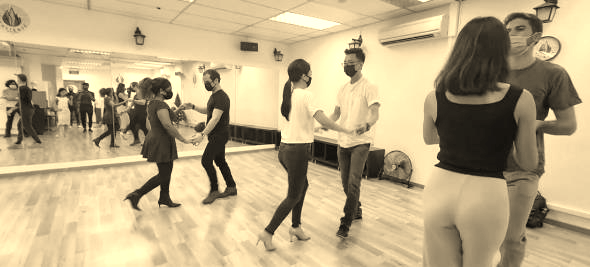
Kizomba class photo
Kizomba class photo

It was then that certain traditional dances of the African country and one of them was semba, began mixing with other rhythms both from its country of origin and other cultures after Africa was colonized by Europe in the 14th century. It is from there that a fusion of rhythms begins in which partner dancing takes center stage.

However, the old continent did not do all the work. Argentina and Cuba also played an essential role in the form in which semba must be danced.

In Portugal, the word Kizomba has its origin in all musical rhythms that derive from zouk, with which it is often constantly confused. It is a type of dancing laden with great sensuality and highly contagious that has become very popular with the passage of time, particularly in countries such as the United States, Canada, France, Spain, Poland, Belgium, Denmark, among others. Many Latin Americans consider that this is a breath of fresh air because it does not seem like anything they previously knew in terms of dance.

One of the reasons that it became so famous around the world is that this dance is very easy to learn due to its softness and simple dance steps. If you want to learn to dance, kizomba is a very good option to begin with.

Kizomba lets the couple play the music they dance. The more intimate the members of the couple, the more likely that the dance will be much more sensual and there will be much more complicity between men and women who enjoy this pleasure.

How kizomba originated

As we have said previously, kizomba has its origin in Angola, which was a colony of Portugal in the mid-1970s. With the arrival of Cuban military personnel, certain rhythms came from the Caribbean island that started to be used by various Angolan artists for their musical projects. The result was a fabulous mix of fast local rhythms with much slower, romantic and partially synthetic sounds.

The resulting genre was danced with semba and merenque, which made it known as kizombadas and, subsequently, kizomba.

By the 90’s, the word kizomba started to be used in Portugal to refer to all African rhythms danced in the nightspots of the most important cities in the European country. With the passage of time, the term would be used to refer to the musical genre and many other sub-genres with which it shares history.

Once this type of dance began to take hold in the rest of Europe, it was in France where all these rhythms that resemble one another started to be called kizomba, leading to the controversy over whether it and soft zouk are the same. Given that on certain islands belonging to France they were the cradle of zouk, it can be assumed that this has kindled heated debate even further still.

At the beginning, kizomba was only able to spread throughout the African continent, but migration allowed it to reach Europe and America respectively where a lot of passionate dance groups of this genre began to appear. The number of followers accumulated by this genre in countries such as Portugal, France or Spain was very huge.

Currently, there are a number of exponents of this kind of music that became famous worldwide such as Nelson Freitas, Djodje, Anselmo Ralph, Matias Damasio, among many others.

Kizomba dancer in Europe
Kizomba dancer in Europe – Origins

Kizomba in Europe

It is incredible the number of places where you can enjoy this spectacular dance. One of them is the world famous Eiffel Tower, where there are many options to learn or improve the dance steps. In France, the genre has been very popular, so much so that many places for dancing celebrate exclusive kizomba nights known as kizomba soirées by the locals. Considering the major African influence on this dance, those wishing to find out more will be able to enjoy a wonderful mix of dance styles and cultures that will leave no one indifferent.

In these places, you can share with a very impressive amount of tourists and foreigners from around the world. This contributes enormously to linkages and friendships between people of other cultures and other ways of seeing the world, which may be very rewarding from all points of view.

In the case of Lisbon, Portugal, it can be said that this is another place that every lover of kizomba in Europe should visit. Besides being a city that receives all its visitors with genuine hospitality, the dancing and music are ever-present. Among the many places you can go to enjoy the dance, it is important to mention the Estudio Sabor & Dança dance studio, the Academy World Dance and the Kizomba Power Dance School.

Kizomba class in Europe

Regarding Barcelona, Spain, what can be said is that this is one of the best European cities for dancing as there is a gigantic variety of musical styles that can be found there. There are always parties and events worth attending. One of those dances that can be found in the city’s nightlife is kizomba that has gained popularity in recent years.

Latin music events and festivals were based on salsa and bachata, but kizomba has completely changed that reality. Today, it is very common to find festivals and congresses dedicated exclusively to this dance and its most loyal lovers. If you want to learn to dance this genre, there are a number of schools and workshops that could be very useful such as Así se Baila, Seven Dance and Baila Barcelona.

Kizomba in Latin America

Many people who do not know the origin of the kizomba think that it originated in Latin America due to its type of dancing, but the fact is that this dance was not even known in most countries of the continent. In fact, its main boom started relatively recently in some places such as Colombia, where it began to be known not long ago. In that country, there are currently academies and teachers who are dedicated exclusively to this musical style, which has started to happen in other Latin nations.

In Venezuela, it is said that it has been danced for more than 10 years, but it began to be known a short while ago thanks to some videos on the major social networks after it became famous in Europe. The pioneers of this practice were a certain number of instructors born in the Caribbean country after being trained in Brazil. Following this, kizomba was the subject of a great deal of interest in many young Venezuelans who want to learn to dance it. There are not many records on places to dance where this genre may be found, but there is no doubt that soon it will be like this.

Kizomba dancer in Europe

Kizomba in Asia

There are many events and congresses linked to kizomba in Asia, which have a great influx of visitors, even when it is commonly believed that Asians are not fans of this type of rhythm. Experience with congresses of the last years has given the impression that this is not true. In fact, there are many fans of this rhythm from the continent who want to know all events and competitions details that are carried out in their countries for the coming months.

Japan is one of the nations where this type of event can be found the most. Such is the case of the Japan Kizomba Festival that has been going on in the country for many years due to the high level of attendance of visitors.

Video: https://www.youtube.com/watch?v=6WOVBNULkYc


  • Page 1
  • Page 2
  • Page 3
  • Interim pages omitted …
  • Page 29
  • Go to Next Page »

International Salsa Magazine (ISM) is a monthly publication about Salsa activities around the world, that has been publishing since 2007. It is a world network of volunteers coordinated by ISM Magazine. We are working to strengthen all the events by working together.