• Skip to primary navigation
  • Skip to main content

International Salsa Magazine

  • Home
  • Previous editions
    • 2025
      • ISM / November 2025
      • ISM / October 2025
      • ISM / September 2025
      • ISM / August 2025
      • ISM / July 2025
      • ISM / June 2025
      • ISM / May2025
      • ISM / April 2025
      • ISM / March 2025
      • ISM / February 2025
      • ISM / January 2025
    • 2024
      • ISM / December 2024
      • ISM / November 2024
      • ISM / October 2024
      • ISM / September 2024
      • ISM / August 2024
      • ISM / July 2024
      • ISM / June 2024
      • ISM / May 2024
      • ISM / April 2024
      • ISM / March 2024
      • ISM / February 2024
      • ISM / January 2024
    • 2023
      • ISM / December 2023
      • ISM / November 2023
      • ISM / October 2023
      • ISM – September 2023
      • ISM – August 2023
      • ISM July 2023
      • ISM Edition June 2023
      • ISM – May 2023
      • ISM April 2023
      • ISM March 2023
      • ISM February 2023
      • ISM January 2023
    • 2022
      • ISM December 2022
      • ISM November 2022
      • ISM October 2022
      • ISM September 2022
      • ISM August 2022
      • ISM July 2022
      • ISM June 2022
      • ISM May 2022
      • ISM February 2022
      • ISM January 2022
    • 2021
      • ISM December 2021
      • ISM November 2021
      • ISM October – 2021
      • ISM September 2021
      • ISM August 2021
      • ISM July 2021
      • ISM May 2021
      • ISM April 2021
      • ISM June 2021
      • ISM March 2021
      • ISM February 2021
      • ISM January 2021
    • 2020
      • ISM December 2020
      • ISM November 2020
      • ISM October 2020
      • ISM September 2020
      • ISM August 2020
      • ISM July 2020
      • ISM June 2020
      • ISM May 2020
      • ISM April 2020
      • ISM March 2020
      • ISM February 2020
      • ISM January 2020
    • 2019
      • ISM December 2019
      • ISM November 2019
      • ISM October 2019
      • ISM Septembre 2019
      • ISM August 2019
      • ISM July 2019
      • ISM June 2019
      • ISM May 2019
      • ISM April 2019
      • ISM March 2019
      • ISM February 2019
      • ISM January 2019
    • 2018
      • ISM December 2018
      • ISM November 2018
      • ISM October 2018
      • ISM September 2018
      • ISM August 2018
      • ISM July 2018
      • ISM June 2018
      • ISM May 2018
      • ISM April 2018
      • ISM March 2018
      • ISM February 2018
      • ISM January 2018
    • 2017
      • ISM December 2017
      • ISM November 2017
      • ISM October 2017
      • ISM September 2017
      • ISM August 2017
      • ISM July 2017
      • ISM June 2017
      • ISM May 2017
      • ISM April 2017
  • Download Salsa App
    • Android
    • Apple
  • Spanish

Search Results for: La Sonora Matancera

Where the idea of the name of the Fania Record label came from

October 2020

Jerry Masucci and Johnny Pacheco


Genaro Masucci, known as Jerry Masucci and Juan Azarías Pacheco Kiniping, known as Johnny Pacheco
Jerry Masucci and Johnny Pacheco

Where the idea of Genaro Masucci, known as Jerry Masucci ((Brooklyn, New York, Oct. 7, 1934 -Argentina Dec. 21, 1997)) and Juan Azarías Pacheco Kiniping, known as Johnny Pacheco ((Santiago, Dominican Republic, Mar. 25, 1935)) to give the title to the record label “Fania” arose.

The name was taken from the old Cuban son: “Fania”, which was successfully performed by the Conjunto Estrellas de Chocolate and composed by Reinaldo Bolaños.

The lyrics present a syncretism between the Spanish and African languages.


Chocolate Stars Set
Chocolate Stars Set

Members of the Conjunto Estrellas De Chocolate.

Theme: Fania

Author: Reinaldo Bolaños

Voice: Filiberto Hernández Fuentes

Voice: Chinese Lion Lahera Wilson

Voice: Agustín Cabrera .

Three: Andrés “Nino Rivera” Echevarría

Bass guitar: Sergio De Cuba

Bongos: “Pichi”

Piano: David Palomares

Trumpet: Armando “El Gorilla” Albertini

Felix “Chocolate” Alfonso was not afraid to put together and lead an ensemble in the style of Arsenio and Chappottín in 1959. The ensemble format was part of the medium in which he swam like a fish in water.

He knew the best montuneros musicians and called them together. The good ensembles still retained the favor of part of the public.

Jesús Gorís, the architect of the Puchito label, didn’t think twice about it and recorded them right away.

Victrolas in bars and bodegas all over the island began to spread the son montuno macho of Las Estrellas de Chocolate.

But the 1960s in Cuba were too strong, diverse and creative, and the good work of Chocolate with its stars had to deal with a scene that was too competitive for a novel ensemble.

As often happens, it took several years for the Chocolate Stars to finally shine as stars and be on everyone’s lips.

was recorded in the voice of Pedro Juan Rodríguez Ferrer "Pete" El Conde Rodríguez
“My New Tumbao Cañonazo”

Fania, although composed by Reinaldo Bolaños for Conjunto Estrellas de Chocolate, was recorded on the voice of Pedro Juan Rodríguez Ferrer “Pete” El Conde Rodríguez (Ponce, Puerto Rico, Jan. 31, 1933 – Dec. 2, 2000); who along with Pacheco’s group recorded the company’s first album entitled “Mi Nuevo Tumbao. Cañonazo”, with a majority of Cuban songs, like most of the albums recorded by Pacheco and many of those recorded by that label.

In 1964 Jhonny Pacheco and Jerry Massucci founded Fania Records and created the international and renowned Fania All Stars.

Pete was the first singer that Fania had, and on his shoulders was the responsibility of taking that project forward.

In the first Fania album Cañonazo (1964) Pete interpreted the theme Fania, composition of Reinaldo Bolanos and with which the band was inaugurated.

It is 1964 and the history of Latin music is about to change.

The Dominican flutist Johnny Pacheco, one of the most popular Latin artists in New York, has parked his flute, changed his orchestra and recorded an album, “Mi Nuevo Tumbao…Cañonazo”.

It’s a curious recording, although it doesn’t seem special.

It sounds like a somewhat modernized Sonora Matancera. But it has been released under a new label, Fania Records, which he has just founded in partnership with New York lawyer Jerry Masucci.

And what was only meant to be a start to relaunch and boost Pacheco’s career is out of the hands of both of them and becomes a phenomenon.

Fania All Stars

Additional information:

The name of one of the most important record labels in Latin America and the world All comes from a song by Cuban Reinaldo Bolaños called Fanía, which refers to a story about a woman whose name was Epifanía and her mentally challenged son.

The story goes that in the middle of a fight between the two, she threw flour (funche as it is called in the Caribbean) in her son’s face and he responded “Fania Funché”.

Bolaños liked the story very much, as did the founders of the record company Jerry Masuci and Jhonny Pacheco, who decided to name their music company after her and include the song in the first album produced.

With the passage of time, they stopped pronouncing the tilde on the “i” and started calling it Fania, without an accent.

Research sources:

Thomas Muriel (Puerto Rico)

www.gladyspalmera.com


Home

Oscar D’ León. Confessions by Oswaldo Ponte by William Briceño Part II

Latin America / Venezuela / Caracas

“Continuing the musical biography of Oscar D’ León. He moved on to new horizons, new learnings, difficult experiences, and decisions, as life always holds a wide variety of surprises over time. One of those changes was his breakup with Dimensión Latina due to various internal group problems.

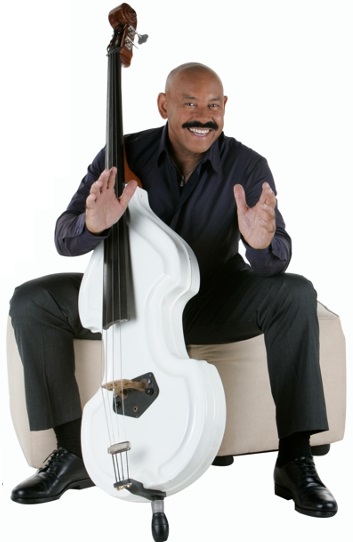
Photo 1: Oscar D' León
Photo 1: Oscar D’ León

Oscar’s departure caused issues for the group, as several of their scheduled performances in other countries were canceled, and over time, they lost audience, leading most of their members to split up and leave. Nevertheless, the group managed to carry on successfully but without the unique touch or ‘sazón’ that Oscar D’ León provided.

After leaving Dimensión Latina, Oscar ingeniously created La Salsa Mayor in 1976 and was able to release his first discography with his new group, thanks to the record label TH, which provided it because they were very interested in his new project, naming it ‘Con bajo y to’.’ From that moment, Oscar knew that he could consolidate himself with this group or any other, as his exceptional and unparalleled talents, so much originality, had never been witnessed”

“In any generation of Venezuelan artists. He also created another group called ‘La Crítica’ with the purpose that if any member of the Salsa Mayor Group was absent, one of them would substitute. However, the orchestra ‘La Salsa Mayor’ lasted only 4 years due to a strong disagreement Oscar had with his band on stage because the songs played during those two performances ‘were not accepted,’ leading to the closure of ‘Salsa Mayor.’ From that moment, he began to practice with his orchestra ‘La Crítica’ before his performances in Curaçao, where his songs, ‘Suavecito,’ ‘No ha pasado nada,’ served as a way to allude that everything had been overcome.”

“With this group, he achieved significant success. From that era, Oscar D’ León was known as the leading artistic figure in the country and on the American continent, with his music being heard in various homes in Venezuela and other Latin American countries. During that time, he traveled throughout the Latin American continent, the Caribbean islands, and the United States. From that moment, he leveraged his figure as he ventured into artistic promotion. He did so with Daniel Santos, Héctor Lavoe, El Gran Combo de Puerto Rico, and Celia Cruz.

If we have to mention which country Oscar liked or idolized the most, it was Cuba, because ever since he was very young, he loved the music played there, which over the years underwent various transformations in different stages, such as ‘La inmortal guaracha Celia Cruz’ which brought glory to the island; ‘la sonora Matancera’ carried the name of Martí’s land around the world; ‘Dámaso Pérez Prado,’ among other artists who contributed to the origin of Cuban music.”

“When Oscar D’ León first visited Cuba, it was an unforgettable experience and held extraordinary significance not only for the young artist but for the country itself. Its magnitude was such that, first and foremost, the ministers of culture and foreign affairs welcomed him, and every time he performed, large numbers of fans awaited to see and hear him. The respect and admiration for him were immense. In fact, this book mentions that ‘Cuban music,’ among other things, made Oscar D’ León’s existence as an artistic figure and as a person possible.”

Photo 2: Oscar D' León presenting his bibliography
cccc

“For Cubans, Oscar D’ León’s arrival had a profound effect; it was the rebirth of existing music. In short, he rescued it, causing Cuban music, ‘son,’ the central show, and entertainment venues to become their activities for relaxation and fun.

Oswaldo Ponte, in his research, mentions that when he looked for everything related to Oscar D’ León, there was immense admiration for him. Everyone he interviewed, even if they knew he was his manager and his biographer accompanied him, always said incredible things about Oscar. He not only rescued Cuban ‘son’ but also taught them to dance Cuban music, opening the minds and perspectives of Cubans, as Cuban ‘son’ continued to be known internationally. Everyone mentions what a good musician he is, that they can’t believe he isn’t Cuban and has that ‘sazón’ (flavor/charisma).

He was famous not only in Cuba but also in other countries. An example of this was Oscar’s participation in the Rome Festival when he sang a song by Adalberto. Mr. Adalberto Álvarez passed backstage and commented: ‘Cuba will never be able to repay Oscar for what he has done for Cuban music. He has kept it alive; if it hadn’t been for him, for Johnny Pacheco, for Celia Cruz, for La Sonora Ponceña and others who took it upon themselves to keep ‘son’ alive outside our country’… ‘and of all of them, the fundamental leader was Oscar D’ León because he is the most connected to authentic Cuban musical roots.'”

“In short, every time Oscar goes out to sing and dance, he is representing Cubans. For Cubans, dancing is almost a ritual. In 1950, they danced ‘son,’ ‘danzón,’ ‘mambo,’ ‘chachachá,’ ‘rumba,’ and other dances, some of which lasted a very short time, such as ‘dengue,’ ‘monzambique,’ ‘pilón,’ ‘carioca’; and others transcended time, like ‘conga’ and ‘rumba.’ Salsa is the continuation of, or the same as, ‘son,’ which can be danced with the same style or with different styles.

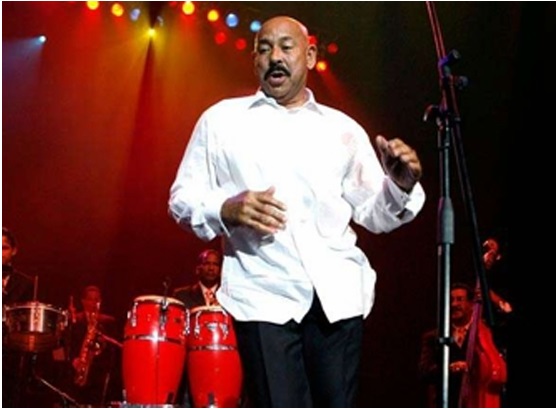
Photo 3: Oscar D' León in concert
Photo 3: Oscar D’ León in concert

Oswaldo Ponte began his promoter plan by hiring figures, among whom was Oscar D’ León. Becoming a serious entertainment promoter, he took the risk of doing it internationally (outside Venezuela) where he bought a contract from Guillermo Arena to present Celia Cruz with La Sonora Matancera. He also partnered with Juan Caravallo and managed to present the biggest show in Higuerote, Venezuela; with this great step, he was becoming a potential successful entrepreneur in international shows.”

“In 1983, he hired Oscar for 3 performances with ‘Roberto Blades,’ two at the Ávila Hotel and one at San Jacinto Park (both in Venezuela). At that time, Oscar was returning from Cuba, and with a new event, Oswaldo, upon seeing the show, pondered the difference between the two artists.

The Panamanian star was well-managed by his team. However, when it came to judging which was the better show, it was Oscar D’ León’s. When Ponte went to talk with him, he proposed becoming his manager on the condition that Oscar follow his instructions, as he always directed everything, which Oscar accepted. From that moment, many things changed not only artistically but also personally, offering the public not just Oscar D’ León and his orchestra, but Oscar D’ León himself, giving more charm and charisma to his audience.

One of the challenges he had to face was a stagnation in record sales. His new record productions weren’t taking off, so he decided to rely on television. Venezuela was both a recipient and a transmitter country, so his performances were broadcast on different television channels that gave great musical importance, such as ‘Siempre en Domingo,’ which covered the center and north of the American continent, and ‘Sábado Gigante,’ which covered South America, thus giving him international exposure.

One of his best and most unforgettable collaborations was with singer Celia Cruz, who was a great friend of Oscar’s. They participated in many events, one of which was in 1993, where Ralph Mercado did what he called ‘The Perfect Combination,’ which consisted of combining stars for public performances.

Participants included Oscar D’ León, Celia Cruz, Marc Anthony, La India from New York, Tito Nieves, Tony Vega, Cheo Feliciano, José Alberto El Canario, and Domingo Quiñones, of which the most recommended songs were ‘El Son de Celia y Oscar’ and ‘Vivir lo nuestro’ by Marc Anthony and La India. At that time, Oscar had left the TH label and was now with Ralph Mercado; his colleagues were Tito Puente, Celia Cruz, Sergio George, Cheo Feliciano, Tito Nieves, La India, José Alberto El Canario, and other significant stars.

There are many other details and more events up to the present day, but it would be too much to explain in one article. What is very clear is that Oscar D’ León has conquered countless goals in his life, and we can all do the same in the different areas in which we operate, if we set our minds to it with determination and an iron will.

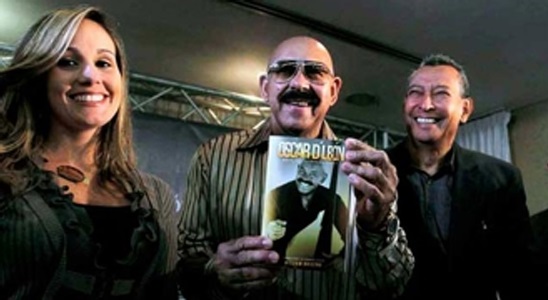
Photo 4: Oscar D' León and his bibliography
Photo 4: Oscar D’ León and his bibliography

To learn more about this, we recommend reading ‘Oscar D’ León, Confesiones De Oswaldo Ponte’ by William Briceño, published by Fundación Simón Bolívar.”


Eddie Muñíz continues to head Swing Sabroso

From this space, every day we are much more aware of the unusual wealth of Latin talent that makes up the New York’s music scene, which continues to show many artists and orchestras that do not surrender to high competition and give their best to earn their place and stand out from the rest.

This is the case of Ray Rodríguez & Swing Sabroso, whose current leader, Eddie Muñiz, gives us a broader picture of the way any artist should go to keep his name alive in public taste and avoid getting lost in the large artistic catalog where there is a lot of content to choose from.

Swing Sabroso leader Eddie
This is current Swing Sabroso bandleader Eddie Muñiz

Talented musician Eddie Muñiz’s beginnings in the world of music

Eddie, who was born in Brooklyn, USA, but communicates in excellent Spanish, had his first approaches to music in elementary school at the age of 13, when he played in several classical music and jazz groups to keep improving in these arts and find his style until he had his big break.

This opportunity came when the young man turned 17 years old, at which point he had his professional career in music with a group of friends, with whom he stayed for two or three years. After that, his next group was called ”Herencia Latina” whose director was the talented Ray Rodriguez and would become the starting point of his current orchestra Swing Sabroso. 

After leaving Herencia Latina, he joined Ismael’s conjunto for four years and subsequently played with Conjunto Clasico, Ray de La Paz, La Sonora Matancera, Tony Vega and many more.

About eight years later, the group did not go ahead and Ray moved to New Jersey, but as it happens, Eddie had to do the same for work reasons. Back then, Ray started a group he called Ray Rodriguez y Swing Sabroso, which invited Eddie to join the orchestra in 2000. 24 years later, it is he himself who moved such an ambitious project forward after Ray’s sad loss from the cancer on April 17, 2016.

Swing Sabroso singer
Singer Angel Rios, who is Swing Sabroso vocalist

Swing Sabroso

By the time Ray was in good health, the orchestra released two albums, one in 2005 and another in 2015. When the bandleader began to sicken, he knew he could not give the group the attention it required, so he asked Eddie to take the helm of the ship in his place as long as the group was only called Swing Sabroso, nothing else. 

At that time, the group only had two trumpets and a trombone, but Eddie was gradually enlarging it and adding more instruments to make the sound fuller. Being in total control of the orchestra, the artist released the album ”Swing Sabroso, Mejor Que Nunca” in the year 2022, when they played everything that the three albums included.

Swing Sabroso, Mejor Que Nunca
Cover of the album ”Swing Sabroso, Mejor Que Nunca”

Currently, Eddie is the oldest of all the Swing Sabrso members, but not for that things are always done his way. In fact, the artist assures that the younger musicians are frequently those who teach him what to do in certain cases.

Far more than a salsa orchestra, Eddie considers that ”Swing Sabroso” is also a family of musicians in which they support each other, despite the regrettable absence of its main founder, the great Ray Rodriguez. Even so many years later, Rodriguez remains the biggest influence on everyone working with Swing Sabroso. 

Read also: Dominican trumpeter Wilson Portuondo talks about La Sonora Nuyorkina

Papo Lucca. The Giant of the South

Latin America / Puerto Rico

Papo Lucca born in Ponce, Puerto Rico on April 2, 1946, Enrique ‘Papo’ Lucca began playing the piano at age 11 with his father’s orchestra. Initially, La Ponceña played versions of tropical hits of the moment by bands like Cortijo y su Combo and La Sonora Matancera.

Papo Lucca. The Giant of the South

In the late 1960s, Papo became the orchestra’s musical director, beginning a profound transformation that would eventually establish la Ponceña as one of the most progressive groups in the history of Afro-Caribbean music. Papo’s orchestrations were bold, experimenting with elements of jazz, rock, and Brazilian music. Representing the authentic spirit of Puerto Rican salsa, his piano solos were velvety, displaying elegance, restraint, and infinite swing.

During the mid-’70s, La Ponceña began to enjoy unprecedented success with critics and the public. The band recorded for the Inca label, which eventually became part of the Fania empire. Papo was invited to arrange and play on sessions for the company’s biggest artists, including Johnny Pacheco, Celia Cruz and Cheo Feliciano. He also recorded and toured with the Fania All Stars.

This compilation pays tribute to the art of Papo Lucca through 14 classic songs recorded between 1967 and 1981. Although Lucca has recorded as a solo artist and also collaborated with a multitude of salsa stars, it is his work with La Ponceña that best expresses the clarity of his vision.

The music we make has to make people happy, as well as make them dance. That’s what it’s all about, says Lucca from her home in Puerto Rico. When the public can dance, no matter how complicated the music is. The first theme that this genre had was to divulge the things that happened in the different communities, as if it were a newspaper.

Our journey begins with two fiery songs from the beginnings of La Ponceña: “Hachero Pa’Un Palo” and “Fuego En El 23” are versions of songs by Cuban Arsenio Rodríguez. La Ponceña always had a soft spot for Puerto Rican folklore, but she also found inspiration in the golden age of Cuban music.

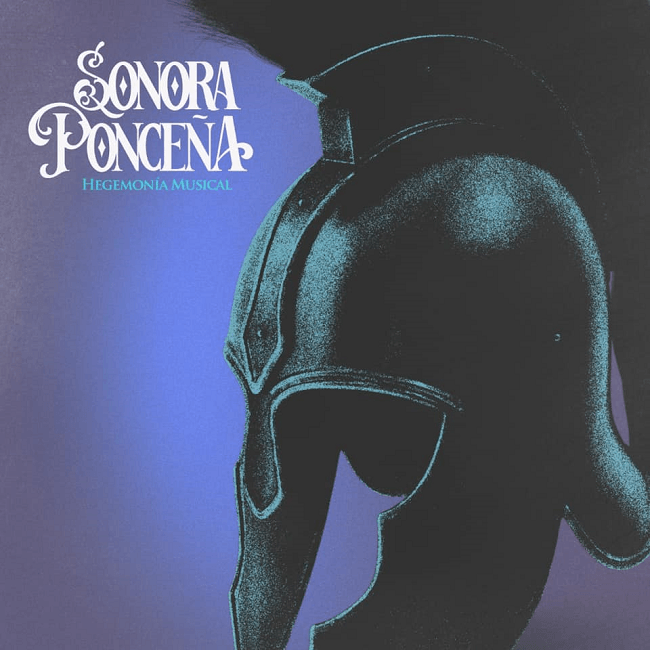
La Sonora Ponceña
La Sonora Ponceña

The precise moment in which La Ponceña becomes a mature orchestra in total control of its aesthetics can be found in the six songs from the Musical Conquest/Conquista Musical and El Gigante Del Sur albums. Launched on the market in 1976 and 1977 respectively, they represent the pinnacle of the salsa movement.

These songs combine a musical skill that approaches virtuosity with deep lyrics and a generous sense of humor. “Ñáñara Caí” is a hilarious narrative of pure magical realism, describing a world where everything is turned upside down (my favorite phrase: I saw a cow/Hit with Pacheco). Also included in Musical Conquest, “El Pío Pío” achieves the perfect cross between Afro-Cuban rhythm and contagious pop. This hit is a mandatory part of all La Ponceña concerts.

The opening theme of the El Gigante Del Sur album, “Boranda” seems to offer a salsa version of progressive rock. Its lyrics contain an important sociopolitical message, and the sophistication of its arrangement is a slap in the face for all those who believe that this music is only for dancing. “Soy Tan Feliz” combines bolero climates with an electric piano solo that recalls the psychedelic sound of jazz-rock from the ’70s. “Noche Como Boca ‘E Lobo” creates a tasty collision between salsa fever and Brazilian rhythms.

Lucca was not alone in his mission to reinvent the rules of Puerto Rican dance music. It was also benefited by the prowess of some of the best instrumentalists on the island. Furthermore, his instinct for choosing singers was always irreproachable.

Some of the vocalists of la Ponceña that appear here are Tito Gómez, who would later find fame with the Grupo Niche de Colombia; the inimitable Luigi Texidor, who gave a sense of placidity to all the songs he performed; and Yolanda Rivera, who added variety to the band’s sound with her unique timbre.

One of Rivera’s happiest moments is included here: Coming from 1980’s Unchained Force, Johnny Ortiz’s “Borinquen” is a soulful anthem to Puerto Rico, blessed with a sinuous melody and subtle instrumental arrangement–one of Rivera’s happiest moments. transcendental within the Ponceña canon.

The golden days of salsa are a distant memory in the new millennium, but Papo Lucca hasn’t stopped shining. Perhaps precisely because he continues to record new music, he refuses to idealize the past when I ask him what his favorite album with “La Ponceña.”

The last one, the most recent, he explained in his characteristically introverted tone. All the albums are very important in the career of the orchestra. They all fulfilled their mission at the time, which was to reaffirm the previous one. That’s the way to maintain a pool after 50 years.

Papo Lucca
Papo Lucca

The teacher was a little more direct when I asked him about his favorite concert of all time.

It was my first concert with the Fania All Stars at Madison Square Garden, back in 1974, he said. All the stars of the Fania were still alive. A few years later we played in front of 47,000 people in Cali. My knees always shake before I go on stage, but this time they shook a little more.

Ezequiel Lino Frías Gómez was an excellent musician, pianist, arranger and composer.

Ezequiel Lino Frías Gómez was born on April 10, 1915 in Havana, Cuba.

Lino Frías y Daniel Santos

Musician, Pianist, Arranger, Composer. He began his artistic career in the early 30’s, working with singer and composer Joseito Fernandez, in the orchestra of Raimundo Pla.

Later he became part of the Fantasía Orchestra.

At the end of the decade he worked with the Septeto Carabina de Ases.

Some time later he joined Arsenio Rodríguez’s Conjunto Todos Estrellas in September 1940, remaining in it until November 1943, leaving his place to Adolfo Oreilly Panacea, to join the Sonora Matancera in 1944, until 1976, where he contributed in an important way both in the composition and musical arrangements, imposing his particular piano solos.

In 1974 he helped found with Armando Sánchez the Conjunto Son de la Loma.

Upon his retirement from La Sonora Matancera, the Puerto Rican producer René López invited Lino, together with Israel “Cachao” López, to revive the descargas he had already recorded in the fifties, assembling a Típica together with “Cachao”.

Sonora Matancea
Sonora Matancea

In his independent years Lino worked with Johnny Pacheco and Carlos “Caito” Diaz.

He accompanied great artists in recordings, in that period in New York, such as La Lupe, Olga Guillot, Daniel Santos, Carmen Delia Dipini, Bobby Capo, among others.

He died on May 22, 1983 in New York, USA.

Lino Frías, who for twenty-two years was the pianist of the Sonora Matancera, composed the very popular Mata Siguaraya in 1951.

One of the most popular photos of the Sonora Matancera.

In it we can see Lino Frías from his piano looking at Celia Cruz, great interpreter of Mata Siguaraya, together with Benny Moré and Oscar D’León.

Ezequiel Lino Frías Gómez was born in Havana and died in New York in 1983.

Lino studied piano at the Havana Conservatory. For a time, in the 1930s, he played in the Raimundo Pia y Rivero Orchestra, whose singer was Joseito Fernandez. He would later play in the Orquesta Fantasía.

In 1939 he joined the Septeto Carabina de Ases, led by Mariano Oxamendi, guitarist and second voice, and with Bienvenido Grande, singer and harpsichord player, Nilo Alfonso, double bass, José Bergerey, maracas and third voice, Ramón Liviano Cisneros, tres player, Florencio Coco Morejón, bongos player, and Félix Chappotín, trumpet player.

In 1944, Lino joined the Sonora Matancera as a pianist, where he remained until 1976.

In the 1960s, Frías joined the movement that created the so-called salsa music, alongside Fania All Stars, Johny Pacheco, Bobby Rodríguez, Carlos Patato Valdés y Caíto, Carlos Manuel Díaz (Matanzas 1905-New York 1990), among others.

Don Adolfo, a Puerto Rican timbalero, worked with Lino Frías in a group that included some of the most renowned musicians and singers of the 1950s and 60s: Olga Guillot, Daniel Santos, Lucecita Benítez, Bobby Capó, Marco Antonio Múñiz, Carmen Delia Depiní, Chucho Avellaneda, Sergio González Siaba and La Lupe, among others.

In 1974, parallel to his work as a pianist in the Sonora Matancera, Lino Frías created the ensemble Son de la Loma, with the participation of Cuban-Niuyorquinos such as Marcelino Guerra, Rapindey (Cienfuegos 1914-Spain 1996), author of Convergencia, and Pedro Rudy Calzado (Santiago de Cuba 1929-New York 2002).

Celia Cruz y La Sonora Matancera

Due to arthritis, in 1976 Lino left the Sonora. His place is taken by Javier Vázquez, (Matanzas 1936), son of the double bass player Pablo Vázquez.

It is said that the death of Lino Frías, in 1983, was a hard blow for his great and faithful friend Celia Cruz (Havana 1925-New Jersey 2003).

In addition to Mata Siguaraya, Lino Frías composed Pan de piquito, Óyela, gózala, Vamos todos de panchanga, Cañonazo, Vive la vida hoy, Suena mi bajo, Convencida, Afecto y cariño, Has vuelto a mí, Baila Yemayá.

Also Read: Israel “Cachao” López Sobrado en fama y respeto en los años setenta se dedicó a mantener la tradición a nivel supremo

  • « Go to Previous Page
  • Page 1
  • Interim pages omitted …
  • Page 3
  • Page 4
  • Page 5
  • Page 6
  • Page 7
  • Interim pages omitted …
  • Page 9
  • Go to Next Page »

International Salsa Magazine (ISM) is a monthly publication about Salsa activities around the world, that has been publishing since 2007. It is a world network of volunteers coordinated by ISM Magazine. We are working to strengthen all the events by working together.