
Search Results for: Latin Dance
Los Adolescentes Giving The Swing The World Needs
Latin America / Venezuela / Caracas
Los Adolescentes “We are premiering our most recent video clips “Close your eyes””
When talking about the great salsa orchestras of Venezuela, there are many names that come to the fore, either because of history, the great successes of the golden years of Salsa in Venezuela or because of their great distinguished voices of so many successes that the world well-known from this land of southern salsa, but if there is something impossible not to mention, it is one of the most important orchestras of this movement of the nineties.
The Adolescents, a group that marked a before and after of the new salsa era in this beautiful country. House of great youth voices, teenagers have made millions of people dance around the world, revealing the talent that this group has managed to nurture in more than 20 years of artistic journey.

Claiming Our Space, a record production with which they went on the market in 1995 with great songs like “Hoy aprendí”, “I can’t be your friend” and “Anhelo”, six songs from this CD; occupied the first place as hits throughout Venezuela and other countries of the Latin American continent, they started a sequence of successes for more than 20 years that have made this great group distribute Salsa and flavor throughout the world, it is that even the pope John Paul II had the honor of listening to this great musical event at Jubilee 2000, which brought together two million five hundred thousand people outside the University of Bergata, an event that lasted four years to prepare for this event.
In conversations with Carlos Mendoza, manager and main helmsman, we found out about the group’s latest projects for this 2019, great things continue to happen for these young salseros.

This new year started with great things for our young salseros, during the month of March and April they will be giving rhythm in Colombia with a tour of more than 5 cities, Mendoza tells us “We will be visiting Armenia, Bogotá, Medellin among other cities of the beautiful Colombia, we take a train that does not stop, we offer a list of unforgettable concerts”.
On the 23rd they will be in Armenia at the Fonda, the local forest that has received great national and international artists, they will continue in the capital of this southern country Bogotá on the 30th in Sutton club of the best clubs in the city, they will pass through Medellin in Emporium on April 05, 06 for Cartagena and closing on 06 in Marseille, they have dates for hiring, contact that we will leave at the end of this review for your contact, in the voices of Arnaldo Quintero, Renzo Romero, Ronald Gómez, Josep Palacios and Leonardo Leal we will be able to listen to the successes of these almost three decades of rhythms.

“For the month of June we will be part of the great experience that will be lived in the Adventure Dance Cruise, together with greats like Torito Acosta” Mendoza told us that the great company Royal Caribbean presents what they call: World’s Largest Latin Dance Cruise, from June 6 to 10 from Miami passing through the beautiful island of son and rumba Cuba and arriving in the Bahamas, full of dance classes, attractions, distractions and the best concerts on the high seas.
For the last semester of the year they are already preparing a concert in Tampa, Miami, presentations of variable types in North America, to close the projects for this 2019 an important tour of Europe with the great Maelo Ruiz is being prepared, a detail that we will have better reviewed in future editions.
For bookings on the tour of Colombia, contact the number +57 310 3293158, don’t miss out on living this great experience of dancing alongside one of the best salsa orchestras in the world.

Asia / February 2024
Nestor Torres
North America / USA / New York
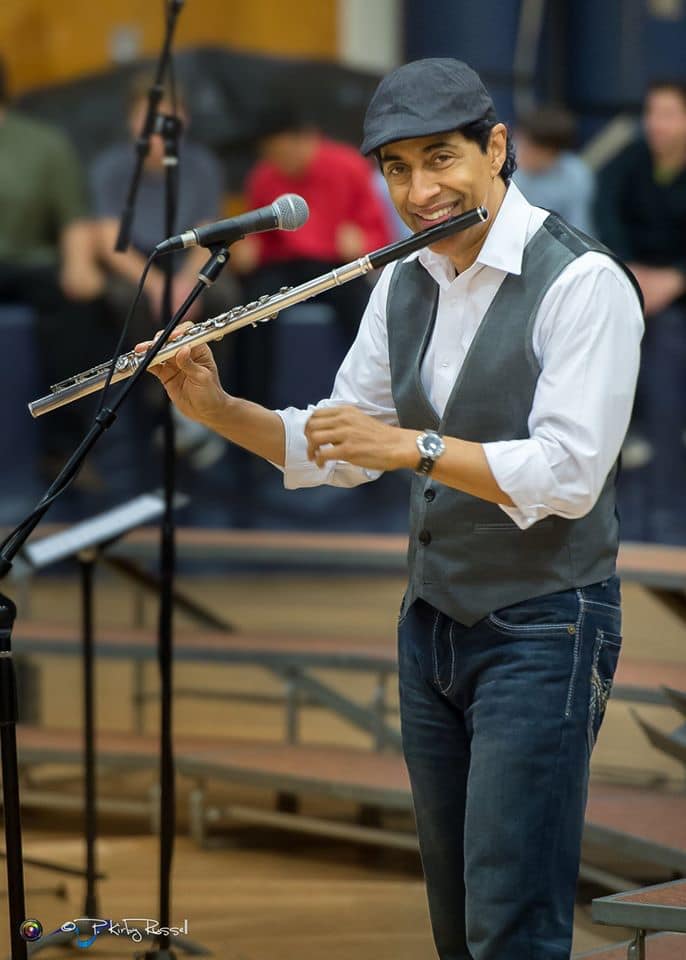
If a flute could talk and sing, it would certainly be in the voice of Nestor Torres
If a flute could talk and sing, it would certainly be in the voice of Nestor Torres, for he speaks through his instrument. Equally fluent in Jazz, Classical and Latin sounds, his fluid versatility sets him apart.

Nestor’s total command of his instrument allows him a freedom of expression that is at once captivating and liberating, powerful and genuine.
Born in Mayaguez, Puerto Rico, Nestor Torres has played music all his life. His parents (His father, a gifted musician himself, and his mother, an educator and business woman) gave him a set of drums at age 5, and later took up the flute (at age twelve).
He moved to NYC with his family in his teenage years and went on to study at Mannes School of Music and later at the New England Conservatory of Music in Boston.
At that time he was also able to learn to improvise in a style of Cuban Dance music called ‘Charanga’, which helped to shape and develop Nestor’s melodic and danceable sound.
In 1981, Nestor moved to Miami, where he continued to develop his unique sound – and a strong following. Since then he has – and continues to – tour all over the world.
He has also performed and recorded Ricky Martin, Tito Puente, Herbie Hancock, Gloria Estefan, and many more.
Nestor Torres has recorded 14 Cd’s to the date. His 5th & 7th records, Treasure of the Heart and My Latin Soul, were nominated for a Latin Grammy, and his production This Side Of Paradise won the Latin Grammy award in the Pop instrumental category on September 11, 2001.
“Of course it was a great honor and privilege to win the Grammy,” Torres reflects. “That being said, the fact that I was to receive it on 9/11 gave my work and my music a stronger sense of mission and purpose. Terrorism and violence come from ignorance, anger, and hopelessness.
Music inspires and empowers; it soothes the human heart and enlightens the spirit. I have made it my prime point to create music and live my life in a way that does just that.”
From that experience, together with a commission to compose and perform for the Dalai Lama, Nestor Torres produced Dances, Prayers & Meditations For Peace in 2005.
In his brand new CD, Nouveau Latino, Nestor Torres returns to his Latin roots with a fresh approach, impeccable musicianship, and irresistible improvisations. Featuring songs from stars like Celia Cruz and Ruben Blades, Torres’ interpretations of these great Latin hits appeal to those discovering the songs for the first time as much as those who remember them.
In addition to his achievements in the studio and on the stage, Torres is also recipient of two honorary doctorate degrees; one in 1994 from Barry University, and the other in 2000 from Carlos Albizu University, for his commitment to youth education and cultural exchanges.

NESTOR TORRES: Facts & Career Highlights
• Classical and Jazz flute studies at Mannes School of Music, and New England Conservatory of Music.
• Early improvisational ‘on the job training’ playing in Cuban and Latin Dance bands including Ray Barretto, Eddie Palmieri, Celia Cruz and Tito Puente.
• Regular featured guest at the ‘Salsa Meets Jazz At The Village Gate’ series in NYC.
• Has toured Japan repeatedly, including collaborations with Herbie Hancock, and Wayne Shorter.
• Collaborations: with James Moody, Jon Faddis, Chris Botti, Larry Coryell, Hubert Laws, Arturo Sandoval, Michel Camilo, Paquito D’ Rivera, Danilo Perez, David Sanchez, Pablo Zigler, Makoto Ozone, Patrice Rushen, Bob James, George Duke, Wallace Roney, Peter Nero and Clare Fisher, among many, many others.
• Jazz Festivals: Capitol Jazz Festival, JVC Jazz Festivals; in Los Angeles and in NYC with Eddie Palmieri; Aspen Snowmass; Maui; Heineken in Puerto Rico and Dominican Republic; Sedona; Atlanta…. Among many others.
• Symphonic: Has performed with the New World, Singapore, Springfield Missouri, Charleston, Signature (Tulsa, OK), Puerto Rico, and Stanford Symphonies; Philly Pops Orchestra; and the Naples, Florida; Malaysia, and Florida Philharmonics.
• Recordings to date (14): ‘Colombia En Charanga’, ‘Afro Charanga Volume 2’, ‘No Me Provoques, ‘Morning Ride’, ‘Dance of the Phoenix’, ‘Burning Whispers’, ‘Talk To Me’, ‘Treasures Of The Heart’, ‘Canciones Primeras’, ‘This Side Of Paradise’, ‘My Latin Soul’, ‘Sin Palabras’ (Without Words),‘Dances, Prayers & Meditations For Peace’, and ‘Nouveau Latino’.
• Grammys: His Latin-jazz composition “ Luna Latina” (from Treasures of the Heart) was nominated in 2000 for a Latin Grammy as well as his CD ‘My Latin Soul’ in 2002. In 2001, he won a Latin Grammy for his CD ‘This Side of Paradise’.
• Two Honorary Doctorate degrees from Miami-based Universities – one in 1994 from Barry University and the other in 2000 from Carlos Albizu University – for his commitment to youth education and cultural exchange as an Ambassador of Peace and Culture.

Current location
Miami, FL USA
General Manager
Ivette Delgado/ [email protected]
Influences
My Father, Hubert Laws, Miles Davis,Tito Puente, Richard Egues & Orchestra Aragon
Contacto de prensa
Wanda Jimenez/ [email protected]
Representative
The Jazz Agency
[email protected]
818-813-5299
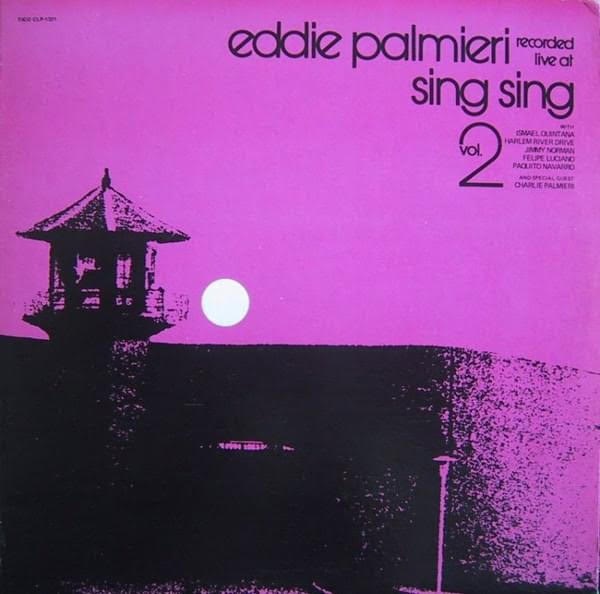
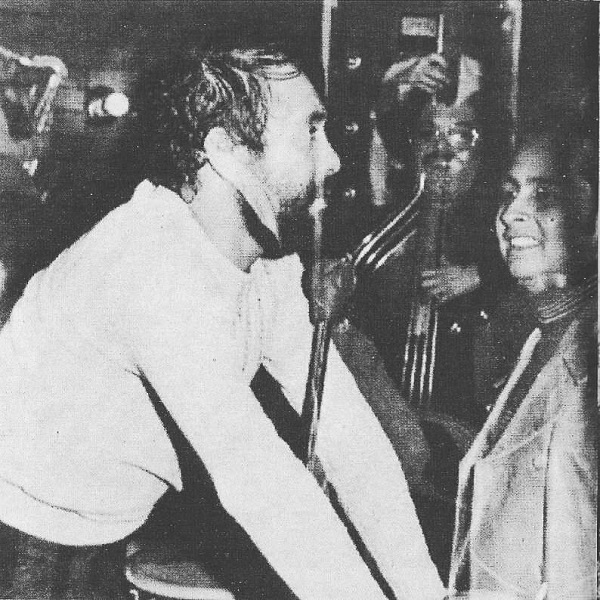
Eddie Palmieri brought salsa for the first time and live from Sing Sing Penitentiary in New York
In the early 1970s, the American social landscape was dominated by the Vietnam War and the birth of several protest movements advocating for equality, justice and the defense of human and civil rights, and from sing sing a historic concert.
In the midst of all that collective turbulence, Eddie Palmieri and his orchestra were giving free rein to their social rebellion with a sweeping musical proposal.
But Palmieri’s rebelliousness was not only reflected in his music, but also in his decision to take his group’s sound to atypical and controversial scenarios that would attract the attention of the authorities.
By the beginning of 1972, Eddie Palmieri had already performed in some correctional institutions, including the Louisville Correctional Facility and the Attica and Rikers Island prisons in New York, but the pianist wanted something more.

In those days, a good friend of Eddie Palmieri was incarcerated in the sinister and historic Sing Sing Correctional Facility, also known as Sing Sing Prison, infamous for the reputation of its inmates and for its executions with electric chairs.
It was at that moment that the idea of an unprecedented performance at the facility was born.
Palmieri’s group was not only the orchestra of choice for Hispanics, it was also favored by the majority of African-Americans in the Latin dance world, and at that time the prison population at Sing Sing was composed mostly of Hispanics and African-Americans, so the stage was perfect.
However, it was not easy to perform a concert in a maximum security prison like the dreaded Sing Sing Prison.
However, at the request of Eddie Palmieri himself and with the coordination of Roulette Records and the prison administration, the performance took place on Wednesday, April 12, 1972.

Sing Sing Correctional Facility is a New York State Department of Correctional Services prison in Ossining, New York State, United States. The name comes from the original name of the town of Ossining.
It was the third prison in New York State, built in 1825. The state legislature allocated $20,100 to purchase the Silver Mine farm. The prison was to be self-supporting and not require a state budget.
Elan Lynds, a jailer at Auburn Prison (New York’s second prison), brought 100 convicts from Auburn to the new prison and employed them for its construction.
Harris A. Smiler was the first person executed by electrocution at Sing Sing on July 7, 1891. From 1914 until 1971, only the electric chair at Sing Sing was used for executions.
On January 8, 1983, more than 600 inmates in B Block started a riot, taking 17 officers hostage; it ended 53 hours later.
Sing Sing in popular culture
Near the end of Herman Melville’s short story Bartleby, the Scribe, it is mentioned that Monroe Edwards died of tuberculosis in Sing Sing Prison.
There is a song called La cárcel de Sing Sing, written by Bienvenido Brens, which tells the story of a prisoner in this jail who was sentenced to death for killing his wife and her lover. The song was made famous by José Feliciano. It is also performed by Colombian singer-songwriter Alci Acosta.

In addition, it was performed live by the band Corizonas (union of Arizona Baby and Los Coronas) in their live album “Dos bandas y un destino”.
There is a song by the salsa group Conjunto Clásico on the album El panadero released in 1986, called A los muchachos de Sing Sing, which has a message of encouragement to convicts.
There is a song by the French-Tunisian singer-songwriter (Michel) Laurent entitled Sing Sing Barbara, from 1971, which tells the story of an inmate who sends desperate messages of love to his wife from this prison.
There is a song by the Madrid group Los Nikis entitled Diez años en Sing Sing, which also gives title to the tribute album to that group.
There is a song by the Basque group Sorotan Bele titled Sing Singatiko Folk & Rolla.
In 1932 the film Twenty Thousand Years in Sing Sing was shot, directed by Michael Curtiz and starring Spencer Tracy and Bette Davis. The film is based on the book of the same name by Lewis E. Lawes.
In the film Constantine, and in the official Constantine comic book, John Constantine is seen to use the Sing Sing prison chair to connect to hell.
In the film Citizen Kane, protagonist Charles Kane threatens his political rival, Jim Gettys, to send him to Sing Sing, when Gettys informs Kane that he will publish his affair with Susan Alexander in the newspapers if he does not withdraw from the election.
In the film The Pilgrim, Charles Chaplin plays the role of a convict recently escaped from prison, who, when he is at the train station, moves his finger without looking over the board of destinations to choose one at random and falls on Sing Sing, so he repeats the process again when he realizes his unfortunate choice.
In the movie Breakfast at Tiffany’s, Holly Golightly periodically visits inmate Sally Tomato at this prison.
In the movie and musical The Producers, the main characters stop at the same prison and create a musical called Prisoners of Love.
In the video game Driver Parallel Lines, the protagonist spends 28 years in Sing Sing.
In the ABC television series Castle, Sing Sing is cited during an episode of the fourth, fifth and eighth seasons.
In the film noir movie Odds Against Tomorrow, Johnny, the character played by Harry Blafonte, says, “I know they changed his color when they rehabilitated him in Sing Sing.”
In the AMC television series Mad Men, Sing Sing is quoted during an episode of the third season.
In the series Breakout Kings, prisoners are transferred to Sing Sing for their help.
In the song Báilalo como tú quieras, by artist Tego Calderón, the phrase “If rapping was a crime, I’d be in Sing Sing!” appears.
In the horror movie saga Maniac Cop, cop Max Cortell is killed in Sing Sing prison by inmates and is resurrected in the form of a “maniac cop”.
In the Netflix series The Punisher, Arthur mentions to Billy Russo having been imprisoned 10 years in Sing Sing, in episode 4 of the second season.
In the novel “The Ppsychoanalyst” by John Katzenback published in 2002, the Sing Sing prison where a man served six months is named.
In Georges Simenon’s novel The Hound Dog starring Commissar Maigret, one of the characters spends several years in Sing Sing prison.
In the comics “Mortadelo y Filemón”, by cartoonist Francisco Ibáñez, when a character has done something barbaric, he is sentenced to Sing Sing prison and appears with the typical black and white striped prisoner’s suit, chopping stone with an iron ball chained to his leg.
In the series Law and Order the Sing Sing prison is constantly mentioned.
Also Read: Carlos “Nene” Quintero comes from a family of musical prodigies