Search Results for: Latin Dance
Omar Ledezma Jr. shares with us the new from his project with Azesu
Today’s guest needs no further introduction because you know him very well. This is the talented Venezuelan percussionist and singer Omar Ledezma Jr., with whom we have been able to talk about his latest projects, one of which gets him focused and excited in equal parts.

What is Omar Ledezma Jr. up to now?
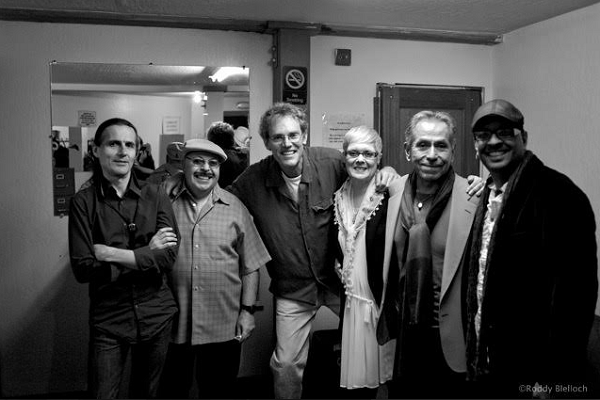
After showing his gratitude for the latest of many invitations we have made to him in International Salsa Magazine, Omar went on to describe the new phase of his career, in which production plays a major role. We are talking about a project he has been involved in since 2011 called Azesu, which includes great musicians and is led by Cuban percussionist Orestes Vilato.
Although the initiative had progressed considerably, Omar and the rest of the group are still waiting for official communication from the social media of the organization that will fund the project by the artists who have applied for it. The group is awaiting approval, although they already have promotion, photos, and a series of details ready to be released once the financing becomes a reality.
What was required of Omar and the rest of the team to present the project
At the beginning, the idea of a recording was floated because this was one of the categories in which artists could apply for funding, so Omar and the others chose to pay tribute to Orestes Vilato. The organization loved the idea, which led them to be one of the groups chosen to receive this financial aid, and they are very happy about that.
However, not everything was rosy, as the members of Azesu could not find the right moment to start recording due to personal situations of some of them and the arrival of the pandemic. After overcoming all that, Jonathan Alford, the group’s pianist and overall director on the project, came to Omar with the idea of recording a second album (they had already recorded one in 2011, also called Azesu) to resume the project they had left behind.
It was then that the Venezuelan artist came up with the idea of paying tribute to Orestes and, in turn, bringing to life some of the lyrics written by his father, who passed away two years ago.
The material also seeks to be a tribute to that generation that is quickly departing, which is why Azesu tries to recreate those concepts and that way of making music, but at this time.

Timeline and objectives for the project
When Azesu released his first album in 2011, it all started with Orestes calling some of the group’s members, who were pianist Jonathan Alfort, Venezuelan singer María Fernanda Vázquez, Peruvian bassist David Pinto, and American saxophonist Sheldon Brawn.
The project is not conceived as a commercial album in every sense of the word, but as a hymn to Las Americas that has a little bit of everything, including jazz, folklore, popular music, dance music, and many more elements coming together to create a unique and different result.
It is also important to note that Azesu’s new album, next to release in 2016, will feature new tracks and covers with completely new versions in the style of Azesu, some of which will be sung and others instrumental. In addition, the new music was composed and arranged by Jonathan and David, although Omar also played an important role in the creative process when it comes to lyrics and melody. It is anticipated that they will enter the studio to start recording in about three weeks, and the album is expected to be released before the summer of 2026.

Omar and teaching
We have already addressed the issue of Omar and his role as a teacher in previous editions, so we wanted to know if he is still teaching and which capacity he is using. The musician replied that the teaching part has been and will remain very important in his overall project as an artist, as he believes that, due to his profession, he has a great responsibility to showcase the music he grew up with and the instruments that have allowed him to develop his career.
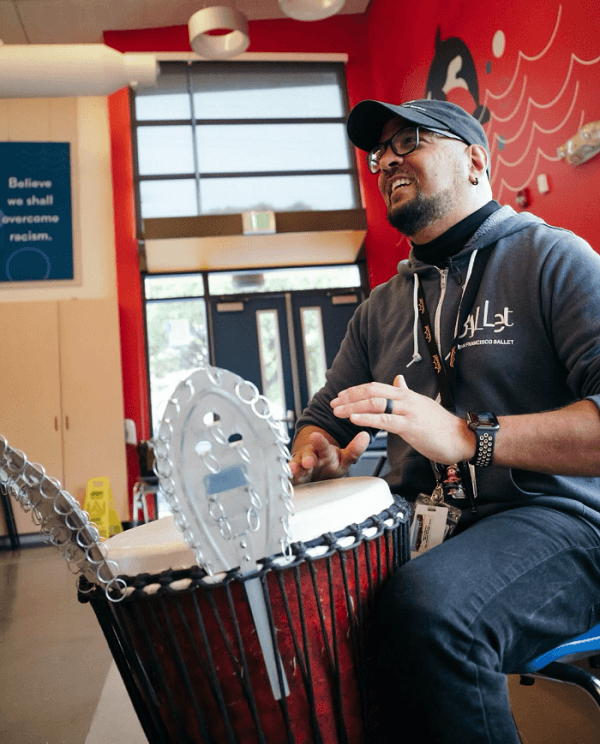
He currently teaches Latin percussion at the California Jazz Conservatory at Berklee, which is basically a summer ensemble where students learn to play congas, timbales, and bongos. During the rest of the year, he focuses on specific instruments and developing the tumbadora curriculum.
He also offers private lessons in which students can enjoy a much wider range of instruments to learn, such as drums, cajón, bongos, timbales, and much more.
Omar concluded this important topic by saying, “I always take on the idea of remaining a student. Just as I teach classes, I want to continue acquiring knowledge and taking classes with teachers who know many things I don’t.”
Read also: Caesar Vera Y Su Sexteto NuevoSon, traditional Cuban music with a touch of modernity
Europe / August 2025
Cache Orchestra in United Kingdom
Europe / United Kingdom / Holanda
Cache Orchestra in United Kingdom. The Best Mix for Salsa!
Cache Orchestra it’s known for its Salsa sound and is considered to be one of the finest bands of its kind in the UK. Their passion for the music is infectious and gets both Salsa enthusiasts and those new to the sensuous Latin American rhythms straight on the dance floor.
Cache Orchestra has thrilled audiences throughout the UK and internationally, playing authentic Latino rhythms that come straight from the streets of San Juan and Havana. The band is a lively and accessible mix that brings a vibrant spark to all the different rhythms that make up Salsa – mambo, rumba, chacha, bomba, merengue, bolero.

Cache Orchestra has thrilled audiences throughout the UK and internationally, playing authentic Latino rhythms that come straight from the streets of San Juan and Havana. The band is a lively and accessible mix that brings a vibrant spark to all the different rhythms that make up Salsa – mambo, rumba, cha-cha, bomba, merengue, bolero.
“UK’s very own Buena Vista band….absolutely tremendous…. music like that and we’re all feeling terrific. If you don’t start to move to this there is no hope for you. Extraordinary music.” Sean Rafferty, BBC Radio 3
“Most of the band members hail from Santiago De Cuba, the birthplace of Cuban son…. and have the effortless musicianship that comes from being to the manor born…..a set infused with rhythm changes and infectious melodies and grooves. ….the best band playing Cuban son.” Jane Cornwell, Songlines (Homegrown)
“Band were great, intoxicating music and a great crowd – all of which made for a fabulous vibe. Thank you!”Cecile Jackson “Please pass on my thanks to the band who were brilliant at our event and were just what was needed to get the party going. My only regret was that I did not have more time to enjoy the band myself!” Anne Davis, Asylum Productions
“….the acoustic septet with the real sound of Santiago De Cuba.” Simon Broughton, CD of the week, Evening Standard.
“A big thank you to the band for an exceptional wedding party. Everyone was very impressed with the sound and impeccable musicianship and is still talking about the band.” Jessica Garland Communications & Events Manager .

“Thank you to you, the band and dancers for a fantastic evening at the Chanel Conference. Everyone had a great time and they were still talking about it when they left the next day!” Emma Stoker – World Event Management Ltd
“I just wanted to let you know how much we enjoyed the band on Saturday. The music was superb and everyone was so complimentary about the group. So, thank you for helping to make our day so memorable.” Linda Marks – Harrison Parrott Ltd, Project Management.
“Please pass on my thanks to the whole band who were great on Friday and really got everyone going in the Vodafone Village. I look forward to working with you again.” Dee Goldstraw – Business Development Manager, Liz Hobbs Group
For tours and more stay tuned with us and check their website
https://www.facebook.com/OrquestaCach%C3%A9-320982197917226/
Caesar Vera Y Su Sexteto NuevoSon, traditional Cuban music with a touch of modernity
It is very important for us to show and provide coverage to the most important Latin music artists of today in the United States and now it is the turn of Chicagoan musician Caesar Vera, who very kindly accompanied us in this edition of International Salsa Magazine.
Caesar is the current director of Caesar Vera Y Su Sexteto NuevoSon, which we will talk about later along with other equally important issues for the musician’s career.

How Caesar began his journey in music
Although Caesar has developed his professional life in Miami and currently lives there, he was actually born in Chicago and spent the early years of his life there. His parents arrived from Cuba in 1966 in the freedom flights and, once in the United States, the Catholic Church helped them and placed them in Chicago, where he was born and lived until 1978. Later, the couple divorced and his father went to live in Miami, so Caesar spent long holiday periods together with him in that city.
The path with music for Caesar began in high school, when he became very interested in rock music, to the point of creating a band with some of his classmates. He played the drums and was a huge fan of Led Zeppelin, Kiss, Van Halen, and other groups of that style.
The only connection the young man had with Latin music was his grandfather, who loved to dance danzón and always played Orquesta Aragón records so that they could both move to the beat music in the living room of his house. Although these moments with his grandfather were very pleasant, he did not yet like this kind of music, but that would change over the years.
In Miami, there was a time when there were many Latin bands playing, and every corner had a nightclub with orchestras playing. Caesar and his friends used to attend these places a lot, which led the young man to finally become interested in these genres. This coincided with the arrival from Cuba of his uncle who was a musician and had a band there, which they talked about constantly, and he even taught his nephew to play instruments such as the tumbadora, bongos, timbales, and all minor percussion.
In 1987, what happened was a turning point for Caesar musically speaking, as he finally decided to take Cuban music more seriously and study its history to understand it better.

Groups prior to Caesar Vera Y Su Sexteto Nuevo Son
Before creating his own group, the wife of a friend who had a group invited him to play percussion with them, a proposal Caesar accepted, and he started playing the tumbadora with the orchestra. Something new in this case was that he had never played with an established band in formal performances, so it was something new for him.
By 1992, he had met the famous Cuban bongo player Juan Méndez, who had played with the Roberto Faz Orchestra, Roberto Torres, and Luis Santi Y Su Conjunto. Méndez told him that he needed a bongo player in an orchestra he was forming at the time and asked Caesar to fill the vacancy, to which he answered yes and remained in the group until 2003, that is, for around 11 years.
In addition to that, he was a replacement in various orchestras in Miami for a while, one of which was Gilberto Díaz Y Su Conjunto Los Profesionales. He was with them for two years, but by then traditional Cuban music, more specifically Cuban son, had captured his full attention. It just so happens that one of his orchestra fellows told him that Norberto from the group Norberto Y Marcela Y El Septeto Caribe called him because they needed a bongo player and asked if he was interested in the vacancy. Caesar did not think twice and went to play with the orchestra even though he did not have much experience with the bongos, but he took the risk anyway. It was with this group that he started playing traditional Cuban music and prepared to do the same once he became independent.

Foundation of Caesar Vera Y Su Sexteto NuevoSon
Still playing with Norberto and Marcela, Caesar started having his own creative ideas on how to lead an orchestra, but he could not carry them out because he was only a musician who collaborated with the orchestra, which started to bother him and cause him enormous dissatisfaction. One day, his wife saw him stressed and frustrated by the situation, leading her to ask him why he did not become independent and create his own project.
That is when he started thinking about it seriously until, in early 2007, he finally founded the group Fusión 4 with Carlos Alberto “El Flaco”, who had previously sung with Fajardo Y Sus Estrellas, Larry Harlow, and La Fania. They managed to play every Saturday at the Deauville Jazz Club for a year.
However, the sextet as we know it today was created just two years ago because it was costing to Caesar much to find work for such a large orchestra, especially after the pandemic when much of the live music scene fell off a cliff.
Today, some of its members are tres player Roberto Acosta, bassist Arturo Santi, conga player Hebert García, trumpeter Orlando Fraga, and singer Billy Velázquez.
Read also: Young promise of music Sofia Grace Doellefeld tells us about her dreams