• Skip to primary navigation
  • Skip to main content

International Salsa Magazine

  • HOME
  • Previous editions
    • 2026
      • ISM / March 2026
      • ISM / February 2026
      • ISM / January 2026
    • 2025
      • ISM / December 2025
      • ISM / November 2025
      • ISM / October 2025
      • ISM / September 2025
      • ISM / August 2025
      • ISM / July 2025
      • ISM / June 2025
      • ISM / May2025
      • ISM / April 2025
      • ISM / March 2025
      • ISM / February 2025
      • ISM / January 2025
    • 2024
      • ISM / December 2024
      • ISM / November 2024
      • ISM / October 2024
      • ISM / September 2024
      • ISM / August 2024
      • ISM / July 2024
      • ISM / June 2024
      • ISM / May 2024
      • ISM / April 2024
      • ISM / March 2024
      • ISM / February 2024
      • ISM / January 2024
    • 2023
      • ISM / December 2023
      • ISM / November 2023
      • ISM / October 2023
      • ISM – September 2023
      • ISM – August 2023
      • ISM July 2023
      • ISM Edition June 2023
      • ISM – May 2023
      • ISM April 2023
      • ISM March 2023
      • ISM February 2023
      • ISM January 2023
    • 2022
      • ISM December 2022
      • ISM November 2022
      • ISM October 2022
      • ISM September 2022
      • ISM August 2022
      • ISM July 2022
      • ISM June 2022
      • ISM May 2022
      • ISM February 2022
      • ISM January 2022
    • 2021
      • ISM December 2021
      • ISM November 2021
      • ISM October – 2021
      • ISM September 2021
      • ISM August 2021
      • ISM July 2021
      • ISM May 2021
      • ISM April 2021
      • ISM June 2021
      • ISM March 2021
      • ISM February 2021
      • ISM January 2021
    • 2020
      • ISM December 2020
      • ISM November 2020
      • ISM October 2020
      • ISM September 2020
      • ISM August 2020
      • ISM July 2020
      • ISM June 2020
      • ISM May 2020
      • ISM April 2020
      • ISM March 2020
      • ISM February 2020
      • ISM January 2020
    • 2019
      • ISM December 2019
      • ISM November 2019
      • ISM October 2019
      • ISM Septembre 2019
      • ISM August 2019
      • ISM July 2019
      • ISM June 2019
  • Download Salsa App
    • Android
    • Apple
  • Spanish

Search Results for: Latin Dance

Colombia a Cradle of Salsa Talents

Latino America / Colombia / Medellin

1 Cradle of Salsa Talents “Medellín dressed up with the Guaguancó Salsa Fest”
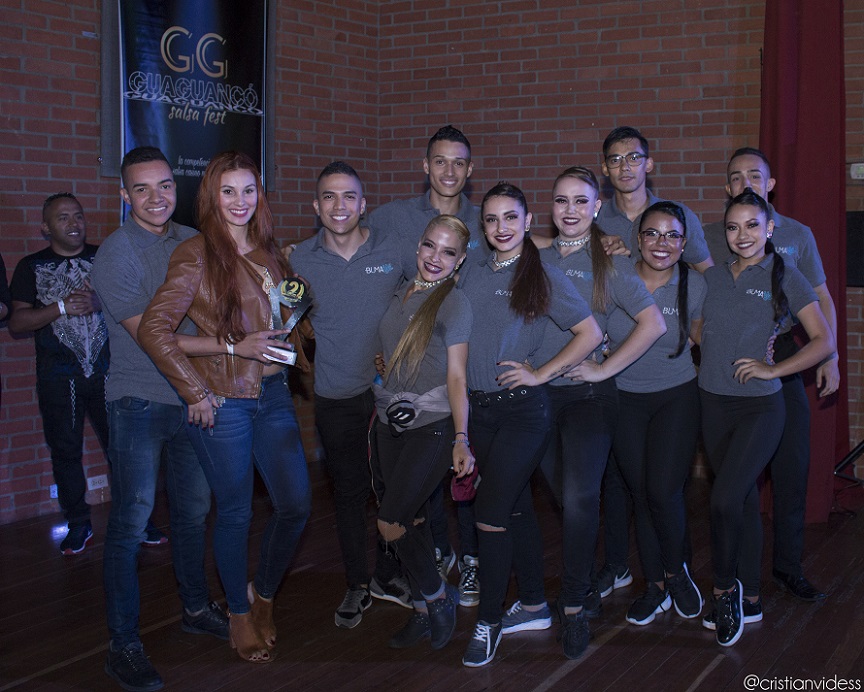
On July 10, 11 and 12 in Medellín, 3 days of great experiences were lived, we were part of the 1st edition of a great festival, the Guaguancó Salsa Fest, developed in the beautiful town of Envigado.
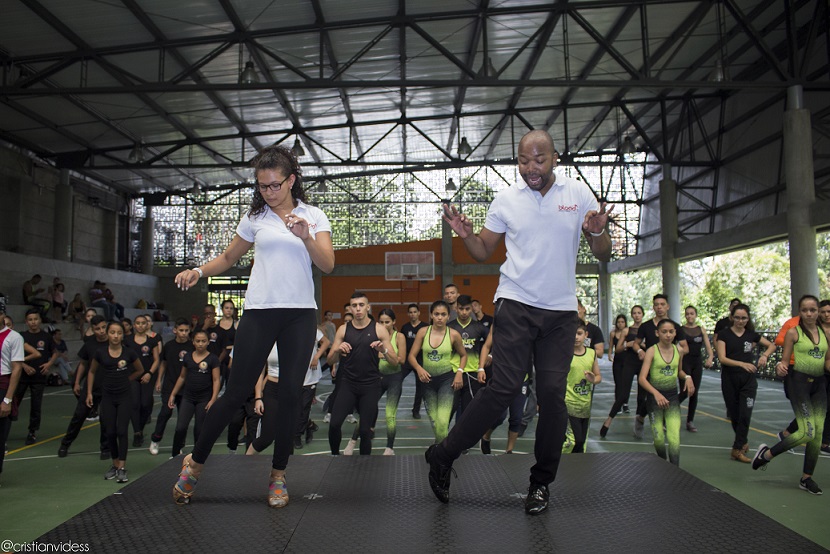
We were able to see a gala of great talents of dancers from all over the country, from Cali, Bogotá, Ibagué, Barranquilla, Popayán and local schools.
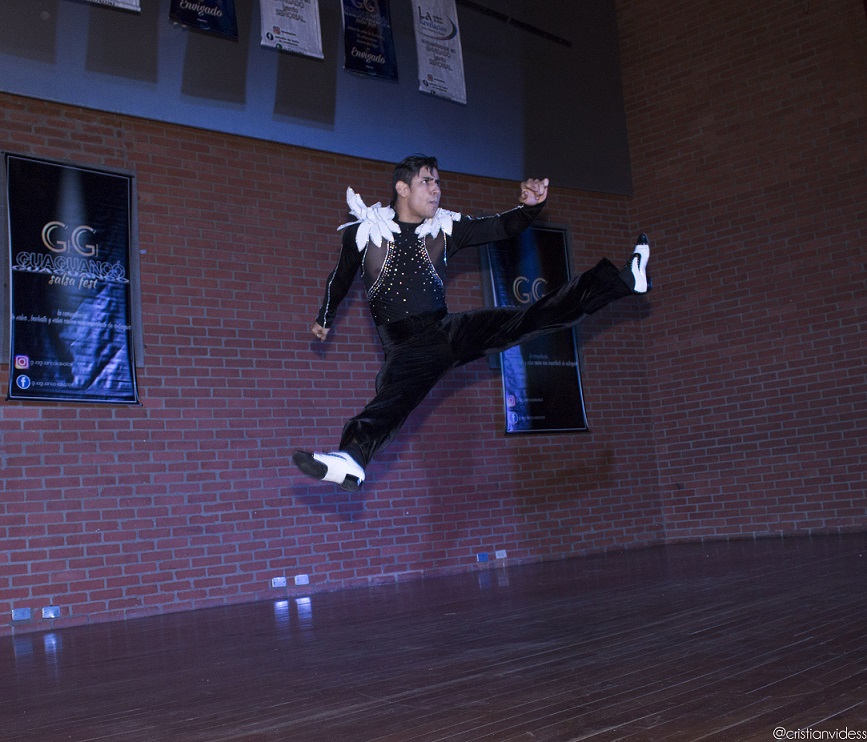
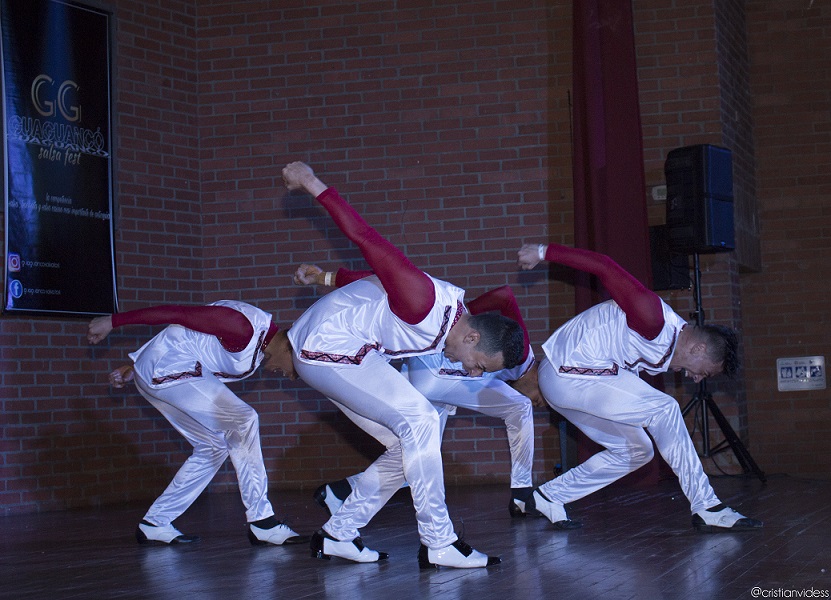
From the first day we were able to demonstrate the professionalism of soloists, couples and groups, from the largest to the stars of the festival, the smallest, who left the audience in shock with their talent.
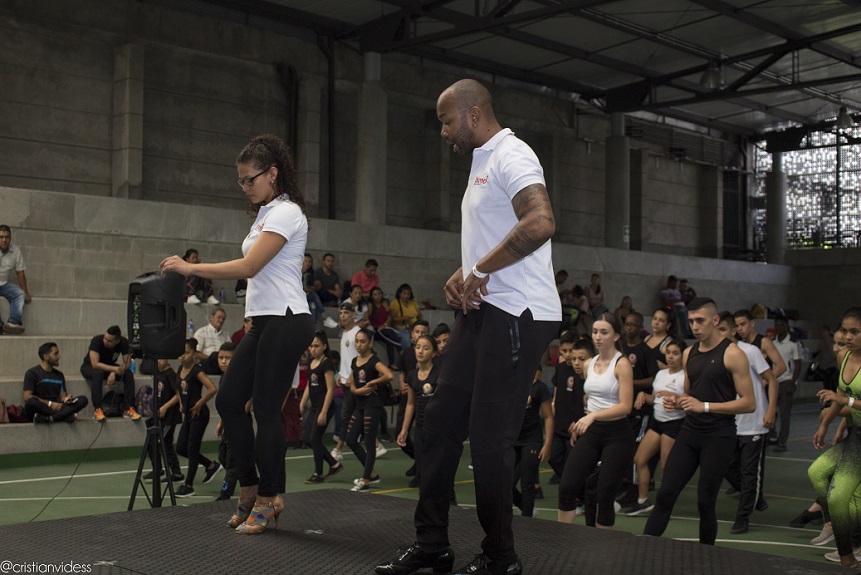
Semifinals and finals were full of high-level choreographic samples, steps, turns, cleans, tricks and the best acrobatics filled the afternoons of that weekend with a great show, equally full of parties for the local celebrations in Envigado. The most attractive categories were those guided by acrobatics, the well-known Cabaret, children and adults showed their best tricks, movements of great technique and high level of complexity.
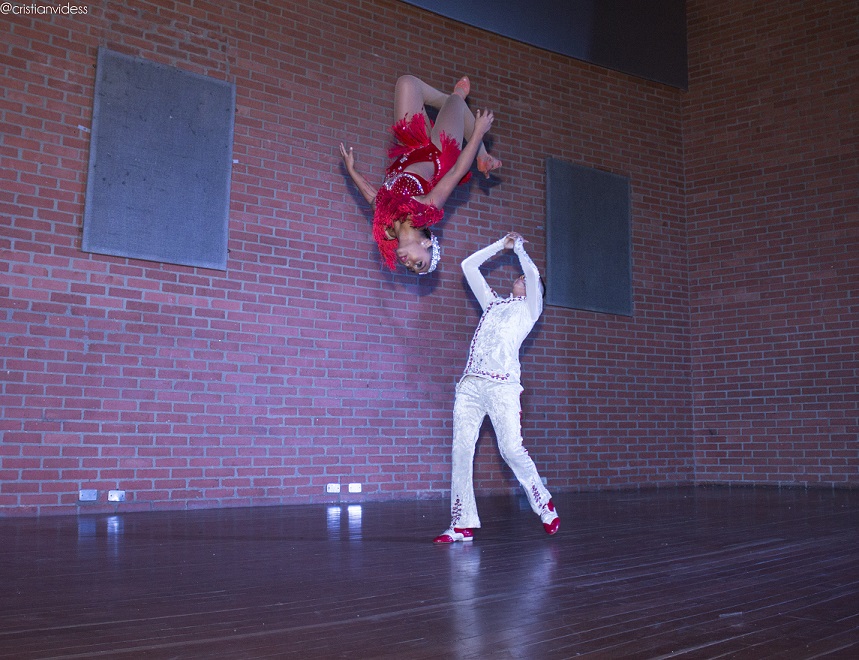
In future editions we will be showing the great results of the competitors, academies that have been working to give the best of their talent in the national and international competitions to which they have a place.

Humberto Ramírez

Latin America/ Puerto Rico / San Juan

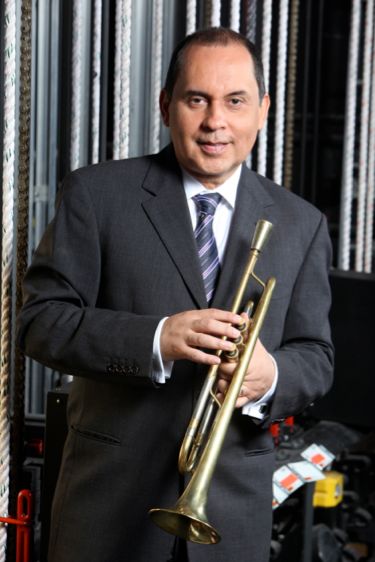
Humberto Ramírez one of the most innovative musicians on the Island of Enchantment Puerto Rico

Recognized as one of the most innovative musicians of his generation, Humberto Ramírez grew up in a home where the music of Miles Davis, Thelonious Monk, John Coltrane, Lee Morgan, Tito Puente, Tito Rodríguez, Cal Tjader and Machito was heard.

His father, who is a saxophonist and conductor, was the one who inspired him to play the flugelhorn at age 11.

By the age of 14, Humberto was performing professionally with his father’s orchestra and at the same time taking orchestration courses with bassist Inocencio “Chencho” Rivera.

Humberto Ramírez
Humberto Ramírez

At the age of 18, after graduating from the Escuela Libre de Música de San Juan, his interest in composing and arranging music motivated him to enroll at Berklee College of Music in Boston, Massachusetts where he obtained his bachelor’s degree in music, then studied composition and orchestration for film and television at the Dick Grove School of Music in Los Angeles, California.

In 1985, and for a period of four years, Humberto worked with the Willie Rosario orchestra, one of the most popular bands in Puerto Rico.

In 1989 he became the musical director of Tony Vega.

His admirable ability as a producer and arranger led him to make important collaborations with great figures in music.

In 1999 he took over the musical direction of merengue and tropical music star Olga Tañón.

His work as a producer, arranger, composer and director for tropical music artists such as Willie Colón, Gilberto Santa Rosa, Marc Anthony, India, Domingo Quiñones, Lourdes Robles, Rubén Blades, Brenda K. Starr, Tito Nieves, Víctor Manuelle and others , has established him as one of the busiest arrangers and producers in the industry.

He has also had the responsibility of directing the concerts of important exponents of reggaeton such as Daddy Yankee, Tito El Bambino and Zion, which undeniably demonstrates his broad musical mastery in various genres.

His great dream was always to develop a career in Jazz. In 1992, Humberto Ramírez debuted as group leader in his first production for the Tropijazz label entitled “Jazz Project”.

Since then he has shared the stage with important jazz musicians such as Freddie Hubbard, Justo Almario, Alex Acuña, Chick Corea, McCoy Tyner, Gonzalo Rubalcaba, Tito Puente, Hilton Ruiz, Michel Camilo, Herbie Hancock, Eddie Gómez, Michael Brecker, Paquito D ‘Rivera, Chucho Valdés, Ray Santos, Gato Barbieri, Terence Blanchard and Herb Alpert, with whom he recorded the album “Passion Dance”.

His music has received rave reviews from prestigious publications such as Down Beat, Jazz Times, Jazziz, Latin Beat, CD Review, Hispanic Magazine, New York Daily News, The Plain Dealer, Miami Herald, The Boston Globe, and Austin Chronicle.

From the launch of his first record proposal, Humberto Ramírez has established himself as the most important exponent and promoter of Jazz in Puerto Rico.

He has recorded 26 albums in which he has experimented with all kinds of formats: duets, trios, quartets, quintets, sextets, octets and “Big Bands”.

His collaborations with the group Rumbantela and with the queen of filin, Lucy Fabery have received great praise from specialized critics. In 2005 he founded his own record label, Nilpo Music and last year he began to present his own Jazz festival: Puerto Rico Jazz Jam, marking a new stage in his musical career.

This year 2011 celebrates its 20 years cultivating the difficult expression of Jazz, a career that began with its debut as a leader in the first edition of the Puerto Rico Heineken Jazz Fest in June 1991. This year 2016 celebrates its 25 years.

Humberto Ramírez has received 4 Grammy Award nominations as a producer. His first nomination was for the album “Nueva Cosecha” by Willie Rosario in 1985, then for “Hecho en Puerto Rico” by Willie Colón in 1993, “Tony Vega” in 1996 and “Olga Viva, Viva Olga” by Olga Tañón, which earned him the Grammy Award in 2000.

In 2013 he was nominated for a Latin Grammy for his album Sentimentales with Lucy Fabery.

Among the awards he has received are 6 Platinum records, 12 Gold records, 4 “Visionary Awards” and six “Tu Música” awards. He has received tributes from Ohio State Representative Dennis J. Kucinich and from the Senate of Puerto Rico.

In 1997 he had the honor of entertaining the inauguration of the President of the United States, Bill Clinton in Washington, D.C. In October 2009 he was invited to play at the White House for President Barack Obama.

After having received several awards and nominations, as well as having recorded his own record successes, Humberto Ramírez shows that his creative explosion is still in its infancy.

https://www.humbertoramirez.com/#home-section

https://www.facebook.com/Humberto-Ram%C3%ADrez-Jazz-Project-110525453672/

José Madera Niño & his 3rd his World

Latin América / Venezuela / Caracas

José Madera Niño “The records and the radio were my first teachers”

Soon he will premiere his second production entitled Matices, with the promotional song Canta Sonero.

José Madera Niño
José Madera Niño

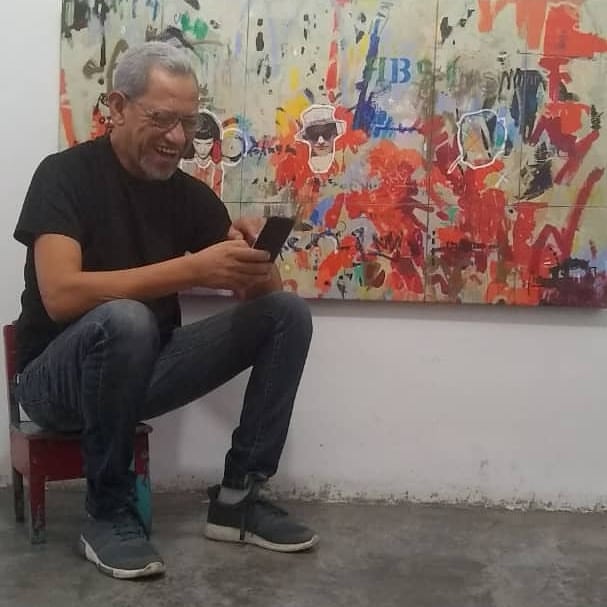
A creator, a great human being, this is José Madera Niño, this Colombian-Venezuelan musician, self-taught, percussionist, composer and plastic artist; who after participating in different groups decides to form his own Orchestra, José Madera Niño & 3er Mundo, assures that his passion for music began when he was very young, following the example of his father, uncle and his older brothers, defines his songs as “simple and diaphanous”. He confesses that our salsa genre, “needs to feed on new things, unpublished songs, in short, proposals, and that the music lover is the one who decides if it is good or not”; As the chorus of one of their songs says, let them be the ones to speak and express their emotions.


His first record production De amor, desamor y rumba, contains 8 songs, of which 6 are his own, with the participation of leading Venezuelan musicians; in this work he presents us with an innovative style, where he sings to love, to spite and invites us to dance to the rhythm of the conga that is in fashion. In each composition, everyday life is reflected, the adventures and misadventures that music lovers make their own, a work made of guava trees and poetic joys.

Soon he will launch his second record production with a very striking name; Nuances, something that in his words “makes him very happy”, where there is no doubt, his gift as an artist will be present and a motley of musicians with a great career who will put the final touch on his new production.


How did you start in music?


“I remember that at the age of seven, I was drawing a lot, on paper, on the walls and on whatever came my way. My older brothers already showed an interest in music, so instruments began to arrive at the house. While I drew they practiced and when they went to school I took possession of a drum and a radio, I tried to accompany all the rhythms I heard on the stations”.

Was your training professional or are you a self-taught musician?


“Autodidact. I entered the school of plastic arts, to study drawing and painting, at the age of fourteen. There I saw nine subjects, also I started at the high school where I saw nine more subjects, so there was no space to study music. I listened to a lot, yes. Records and the radio were my first teachers”.


Tell us about your experience with Orlando Poleo?


“In a self-taught way, almost without realizing it, I began to play with different groups and orchestras, I was already in trouble, so on the fly, I decided to take theory and solfeggio classes at the headquarters of the Musical Association. On a Caracas night I was playing with La Orquesta Ideal and there I met Williams Hernández -Percussionist and manufacturer of Latin percussion instruments-. It was he who recommended that I attend the workshop in Sarria where the teacher Orlando Poleo taught. The experience there at the beginning was a bit traumatic because although I already had time playing congas, I didn’t have the ideal technique. I had to get rid of what I learned on my own and put new ways into practice. It was not easy but I am very grateful to have passed through the school of Grand Master Poleo”.


Where does your musical vein and passion for painting come from?


“My father was a bolero singer back in his native Colombia, my uncle was a guitarist. That’s where the taste for music comes from.”


What motivated you to make your first production, in a market so Competitive and often poorly supported by the media?


“I was motivated by a passion for music and by that need to contribute at least one point of view, a way of doing things. For example, I think that this genre that we love, called Salsa, needs to feed on new things, unpublished songs, in short, proposals and that it is the music lover who decides if it is good or not”.


What is the reason for the name of the group; 3rd world?


“That’s where we are, that’s where we come from. This is how they classified the countries of our region and we assumed them without complexes or pride. I think it’s just a title that doesn’t detract from our ability to do great things. Baptizing the band with that name was an act of rebellion, it shows a little that despite many limitations we are capable of making quality music”.


Why the name De Amor, Desamor y Rumba?


“There were many hours of recording, then editing, then came the art of the album and when we were already finalizing details, a doubt assailed me, I thought: Isn’t the selection going to be very rockolera? I started to review the production and I realized that it was balanced. We sing to spiteful love and I think it’s very danceable. From there the title was born: “Of love, lack of love and rumba”.


What inspired you to write 6 songs of your first production?


“The need to do unpublished things, on the other hand I didn’t know so many composers who wanted to risk their songs in a novel production. The language of my songs is simple and diaphanous”.


Which of the themes do you identify with, and why?


I like them all.


How would you define the 3rd world style and how do you get there?


“It’s just Salsa, without a “surname”, as it was before. It’s not erotic Salsa or hard Salsa or Nothing Salsa… Just dance music”.


Any relationship with the percussionist José Madera -the one from Tito Puente-?


“Only immense admiration for his work and the fact that like him I play percussion and have the same first and last name.”


Have you ever been interested in another musical style?


“I listen to almost everything and in my career I have had the opportunity to play other popular music rhythms such as merengue, cumbia, vallenato.”


An artist you admire?


“There are many whom I admire, it would be unfair to name just one.”


What inspires you to write a song about love or heartbreak?


“Both, in addition to the simple, everyday things.”


Define yourself in one sentence?


Creator


How does the soul see through painting or music?


The soul sees and manifests itself in the purest and most honest way through art. Call it painting, music or another related manifestation.


Tell us about your 2nd production, who participates in it?


This is something that makes me very happy because we are giving the last brushstrokes, soon, very soon my dear friends will know about this work. There are many guests.


Why nuances?


Precisely because of the variety of its guests.

Meet and learn the Venezuelan Salsa

Latin America / Venezuela / Caracas

Meet and learn the Venezuelan Salsa

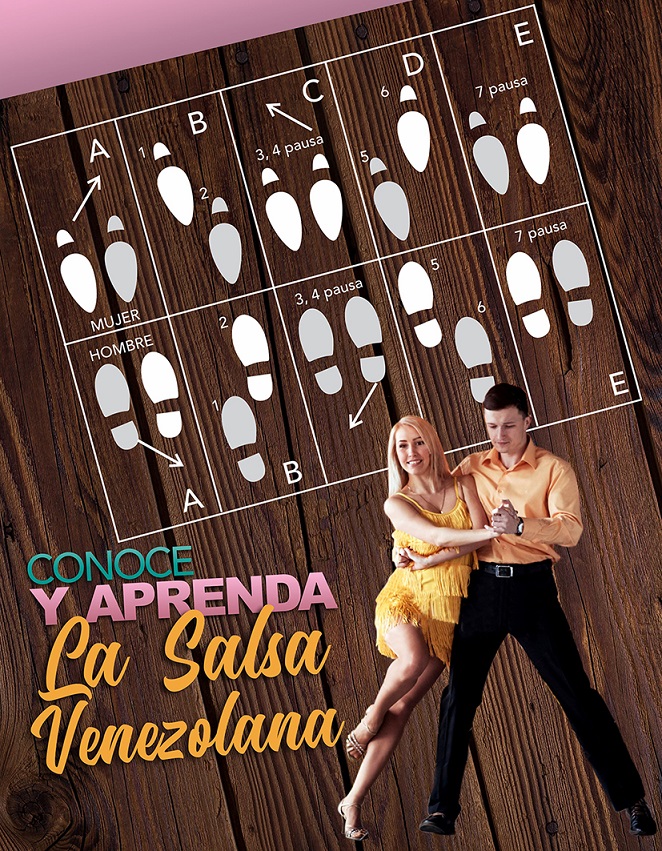
Did you know that in Venezuela the basic traditional Salsa is known as “Salsa Cero”, where the only thing anyone needs is “Not knowing how to dance”, knowing the basic steps of salsa, hearing and feeling the rhythm of the music and the musicalization.

The basic steps of the sauce are:

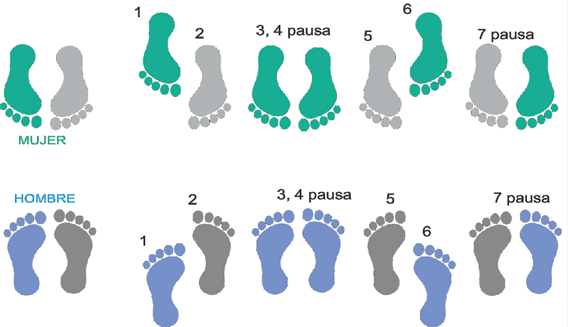
  1. Paso de lateral and/or lateral: This basic step consists of three steps that are executed on the first three beats of the bar. The fourth beat of the measure is a pause where no step is performed. The three steps are repeated in reverse in a second measure to complete a sequence of the step.
  2. Cruzado o cross: en este paso los pies se mueven de la siguiente manera: En el golpe 1, el pide derecho da un paso por delante del pie izquierdo, de manera que lo cruza. En el golpe 2, el pie izquierdo cruza al pie derecho, y así sucesivamente.
  1. Gait: It is a very similar step to the side, but this time it consists of taking two “2” steps forward and two “2” backwards, advancing in short steps and repeating the cycle. With this step the dancer can execute it alone or with a partner, the latter is not performed and is usually executed in a couple but not face to face, since the two people cannot perform the march at the same time.     
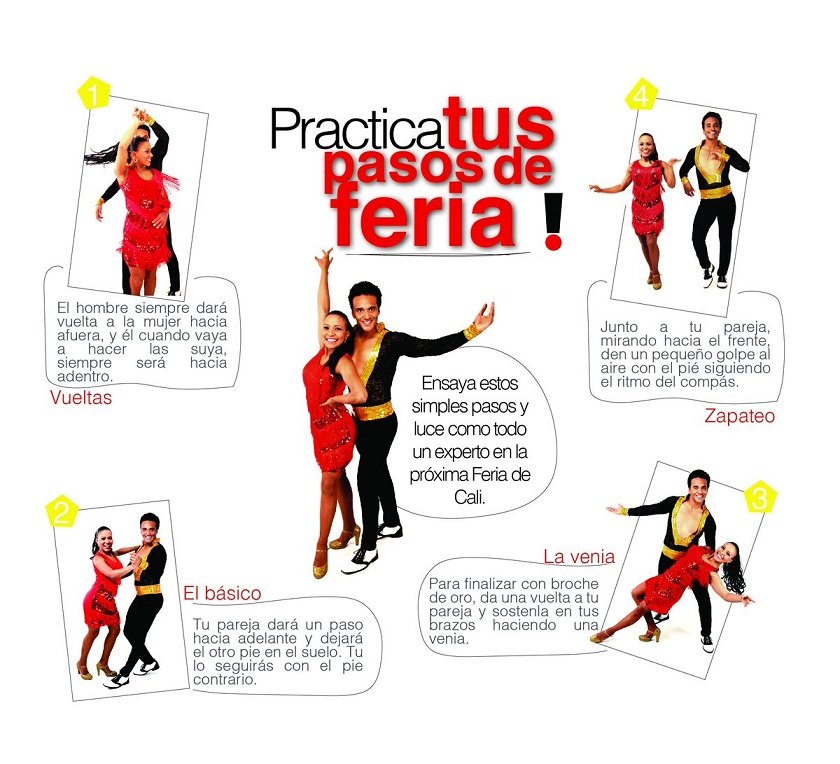
  1. Turns: The turns in both the man and the woman can be done with any of the steps mentioned above. The turn is usually done in step 1 where the man invites the woman to perform her basic step to turn, everything will depend on the entry made by the couple. There are different types of laps, we mention the basic ones on this occasion:
a.   Return of the woman/man.

b.   Back in Croos.

c.   Return of the man.

d.   Right left.

e.   The butterfly.

f.    The Bridge.

g.    The 70.

h.     Sixty.

Did you know that Salsa Cero is not just for learning to dance?

Many people who practice or learn “Salsa Casino” take the workshop and/or zero salsa classes to learn to “count” the music that is being danced since musical counting is the fundamental basis of any dance.

One of the characteristics of this rhythm is the corporal expression, since there are details or corporal messages that make the couple understand how to move or what turn they are going to perform and these details can be known with the look, position of the hands and the body. before and during the return to perform. These details are very important especially in the man who is the one who controls and/or manipulates the woman so that she dances to the beat.

Among the different styles of salsa, Venezuelan salsa has a very special and interesting detail and that is that it is a very sensual style, in which the dancers make thousands of turns and constantly hug each other, showing their potential, emotion and feelings at the moment.

Redames (Randy) Plaza

Latino America / Puerto Rico / Carolina

Redames Randy Plaza. Salsa Legacy

“It is salsa from yesterday and today for the dancer and the romantic salsero”.

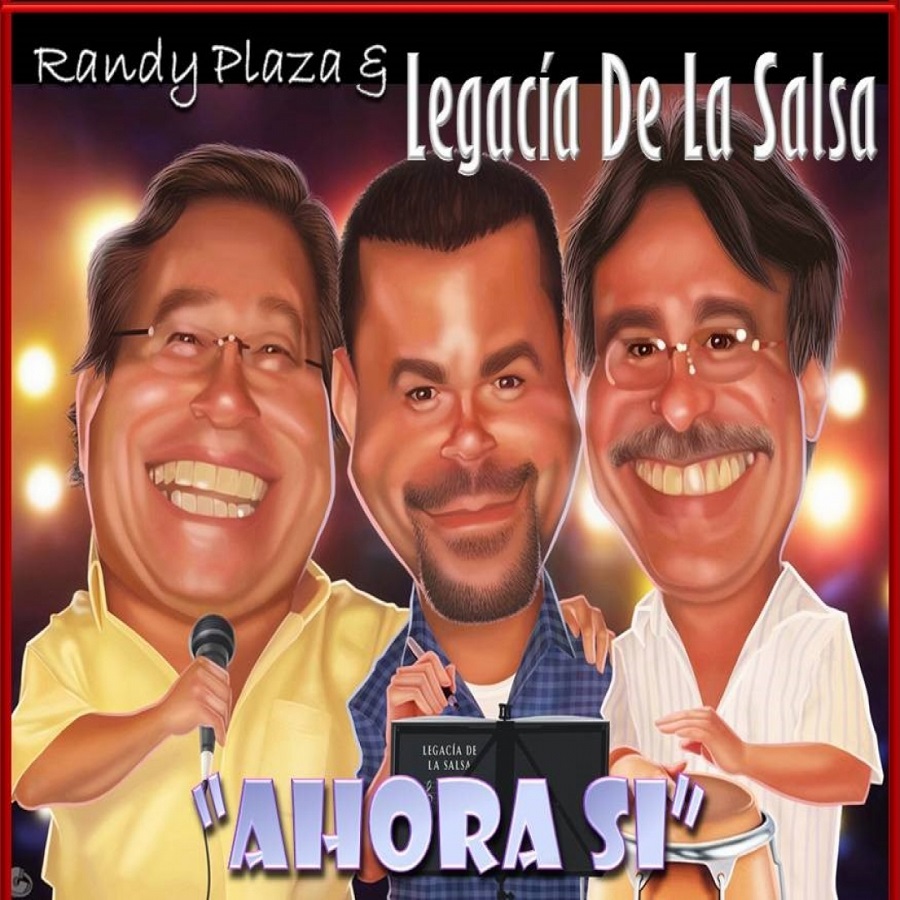
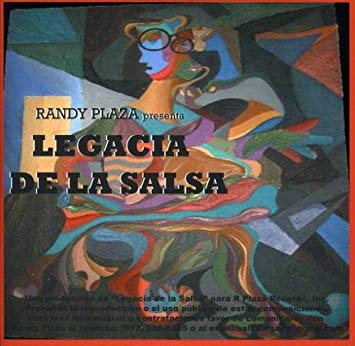
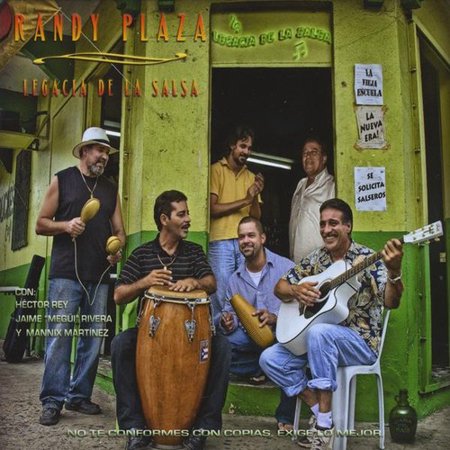
Randy Plaza, a native of Carolina, Puerto Rico, is the producer, composer, publisher and independent label of Legacía de la Salsa. Created in 2007, LS arises under a constant concern of seeing and feeling how the salsa genre has been musically devalued over the years.

Legacy of Salsa is an invention, a concept, a movement, an experiment, which tries firstly to raise the musical quality of salsa to another level, to keep the tradition alive, to demonstrate that if we work together and without interest, everything can be achieved. and proclaim to everyone that the sauce is not over.

That it is not in extinction, that it has not gone out of fashion, nor has it lost its style.

“That all these are tales of the boring.”

Legacy of Salsa is the legacy and teaching received from the great masters of salsa, who have captivated us in various ways and to whom we owe everything that was the development and fusion of this genre to the point of establishing it as a root in the heart of every Latino.

“It is salsa from yesterday and today for the dancer and the romantic salsero”.

Legacy of Salsa manages to incorporate the feeling of some of the greatest salsa institutions in this project, whether it be for the musical sound, for the style, for the arrangements, for the romantic, the singers, etc.

Randy Plaza
Randy Plaza

In this way we can recover a little of what has been lost today, please the entire salsa market, and fill that empty space; orphan of style and rhythm, and musically instructing and educating the disoriented and those who got lost along the way.

“The essence of yesterday in today’s day, traditional sauce without monotony and without fillers. For you salsero, cocolo, rumbero, with flavor and feeling”.

The unexpected, unfortunate and tragic death of Humberto Gómez leaves a huge void in the formation of Legacía de la Salsa.

A week before leaving Tito Gómez was already part of this musical concept.

Due to such loss, it was decided to cancel the first Legacía de la Salsa concert in New York City on July 21, 2007, where he would have participated as a guest star.

At that moment we entered the recording studio insecure and with the enormous concern of wanting to do the best possible on his behalf, never forgetting the person he was and will continue to be for us and without leaving aside his musical legacy.

Randy Plaza - Legacia de la Salsa
Randy Plaza – Legacia de la Salsa

https://www.legaciadelasalsa.com/

  • « Go to Previous Page
  • Page 1
  • Interim pages omitted …
  • Page 84
  • Page 85
  • Page 86
  • Page 87
  • Page 88
  • Interim pages omitted …
  • Page 137
  • Go to Next Page »

International Salsa Magazine (ISM) is a monthly publication about Salsa activities around the world, that has been publishing since 2007. It is a world network of volunteers coordinated by ISM Magazine. We are working to strengthen all the events by working together.