• Skip to primary navigation
  • Skip to main content

International Salsa Magazine

  • HOME
  • Previous editions
    • 2026
      • ISM / March 2026
      • ISM / February 2026
      • ISM / January 2026
    • 2025
      • ISM / December 2025
      • ISM / November 2025
      • ISM / October 2025
      • ISM / September 2025
      • ISM / August 2025
      • ISM / July 2025
      • ISM / June 2025
      • ISM / May2025
      • ISM / April 2025
      • ISM / March 2025
      • ISM / February 2025
      • ISM / January 2025
    • 2024
      • ISM / December 2024
      • ISM / November 2024
      • ISM / October 2024
      • ISM / September 2024
      • ISM / August 2024
      • ISM / July 2024
      • ISM / June 2024
      • ISM / May 2024
      • ISM / April 2024
      • ISM / March 2024
      • ISM / February 2024
      • ISM / January 2024
    • 2023
      • ISM / December 2023
      • ISM / November 2023
      • ISM / October 2023
      • ISM – September 2023
      • ISM – August 2023
      • ISM July 2023
      • ISM Edition June 2023
      • ISM – May 2023
      • ISM April 2023
      • ISM March 2023
      • ISM February 2023
      • ISM January 2023
    • 2022
      • ISM December 2022
      • ISM November 2022
      • ISM October 2022
      • ISM September 2022
      • ISM August 2022
      • ISM July 2022
      • ISM June 2022
      • ISM May 2022
      • ISM February 2022
      • ISM January 2022
    • 2021
      • ISM December 2021
      • ISM November 2021
      • ISM October – 2021
      • ISM September 2021
      • ISM August 2021
      • ISM July 2021
      • ISM May 2021
      • ISM April 2021
      • ISM June 2021
      • ISM March 2021
      • ISM February 2021
      • ISM January 2021
    • 2020
      • ISM December 2020
      • ISM November 2020
      • ISM October 2020
      • ISM September 2020
      • ISM August 2020
      • ISM July 2020
      • ISM June 2020
      • ISM May 2020
      • ISM April 2020
      • ISM March 2020
      • ISM February 2020
      • ISM January 2020
    • 2019
      • ISM December 2019
      • ISM November 2019
      • ISM October 2019
      • ISM Septembre 2019
      • ISM August 2019
      • ISM July 2019
      • ISM June 2019
  • Spanish
  • Download Salsa App
    • Android
    • Apple

Search Results for: Latin Music

From Italy Albert Giorgio Giovanni DJ. Lindo Salsa and Bachata

Albert Giorgio Giovanni Fiorentu Dj Lindo is an Italian and Latin music producer (Salsa and Bachata).

Albert Giorgio Giovanni Fiorentu aka Albert Lindo or DJ. Lindo is an Italian DJ. and producer of Latin music (Salsa and Bachata).

Born in Udine, Italy in 1989, he started his career as a dancer in 1997.

In 2008 he graduated as a dance teacher.  In 2011 he moved to Austria (until today) and in 2014 he started working as a dance teacher at the school Conny & Dado in Graz.

In the same year he started his career as a DJ and in 2017 as a producer.

Dj Lindo is an Italian DJ and producer of Latin music (Salsa and Bachata).
Albert Giorgio Giovanni Fiorentu to Dj Lindo producer of Latin music (Salsa and Bachata).

In 2019 (after the first 2 unfortunate productions) the first world production “The Phantom” is released, helped by the pianist and composer Marco Ronca.

In 2020 he obtained his second diploma as a dance teacher and also launched his new single “No Te Detengas” always with Marco and in collaboration with several recognized artists.

Between the end of 2020 and the beginning of 2021, 4 new productions will be ready, a bachata and three salsas (a romantic salsa, a hard salsa and a Cuban salsa) with the collaboration of many recognized artists.

Currently Dj Lindo is part of the record label located in Milan (Italy) Alosibla Music Group and Downbridge Publishing, which each year presents the famous compilation.

Albert Giorgio Giovanni Fiorentu aka Albert Lindo or Dj Lindo is an Italian DJ and producer of Latin music (Salsa and Bachata)
Italian DJ and Latin music producer (Salsa and Bachata)

“SALSA IT”

Did you know the origin of the DJ…

The 9th of March is World DJ Day, thanks to the initiative of the ‘Worl DJ Fund’ and the NGO ‘Nordoff Robbins Music Therapy’. But, do you really know the history of these music mixing artists?

For 16 years this day has been celebrated as a tribute to this sector of music that is so in vogue in our time, which take advantage of his ‘birthday’ to donate what they charge these days to charitable causes.

The initiative was carried out in 2002 by the ‘Worl DJ Fund’ and the NGO ‘Nordoff Robbins Music Therapy’, and has been active for over a decade. But the history of the DJs has a few more years.

For those who still do not know what is behind the acronym DJ, a ‘disc jockey’ is a musician who creates, selects and plays before an audience music of his own or composed by other artists. There are several types, including radio and club DJs.

The first DJ in history

It was Ron Diggins, a British radio engineer who in 1947 built the famous Diggola
Ron Diggins first ever DJ

It was Ron Diggins, a British radio engineer who in 1947 built the famous Diggola, considered the first “mixing table” in the history of music. This home-made portable table included two turntables, lights, microphones, an amplifier and a dozen speakers. And it was made on a coffin wood base.

If we mention Ron Diggins, many of us won’t know who I’m talking about, because this British and radio engineer is considered the first DJ in history.

Many others before Diggins moved in with their records and equipment to cheer on the soldiers but he was the creator of “La Digolla”.

He himself built the first mixer in 1945, although it wasn’t until 1947 that the invention became official.

It was a portable table made of wood, worthy of any party room, it included two plates, lights, microphones, an amplifier and a dozen speakers.

As a curiosity, the wood with which Diggins made the first mixing table in history was casket wood.

Six weeks was the time it took the engineer to build the famous portable table.

Ron Diggins’ dream was to travel all over the UK with his van and “La Digolla”, so he could play his favorite songs.

This pioneer during his professional career was severely criticized by countless musicians who did not approve that the DJ would mix songs without their consent.

Diggins retired in 1995 after playing at 20,000 parties.

In his hard beginnings, traveling kilometers and full of criticism, he would never imagine what he had done, he had invented a profession. A job that would be paid for, more than he could have thought.

The first Disc Jockey in history, died at the age of 90 and in his long life he made 6 “Diggiolas” Some of them were auctioned off at more than $40,000.

“I haven’t invented anything, I just put the same things to a different use, that’s all.

On his 90th birthday, the first disc jockey confessed that, when he started to tour cities and towns with his invention, he received hundreds of criticisms from musicians who did not approve of him mixing their songs without their consent. Diggins retired in 1995 after playing at 20,000 parties.

The big DJ explosion

In the 60s and 70s, with the expansion of the discotheques in Europe and the USA, the creation of a specific technology for this figure of the music began, like the mixer ‘CMA-10-2DL mixer’. It was also the time of the birth of ‘hip-hop’ and ‘disco’ music.

In the 80’s we get the first big names, considered cult DJs, as Larry Levan who played in the ‘Paradise Garage’ in New York, or Frankie Knuckles, with its mixtures of ‘disco’ and ‘synth pop’ led to music ‘house’ in the ‘Warehouse Club’ in Chicago. At the same time, in Detroit, techno was born.

They were years of great impact for the DJs, who saw the birth of their first magazine specifically for professionals, the ‘DJ Times’ in 1988 and held for the first time an exclusive event for DJs of electronic music dance, the ‘Winter Music Conference’ in 85 in Florida.

The DJs of the digital era

The arrival of the ‘rave’ movement in the 90s radically changed the image of DJs and these artists began to project themselves as superstars or ‘Diva DJs’ who establish particular sounds and brands.

These new ‘DJs’ have arrived to our days, taking advantage of the technological innovations of the digital era, and there we have famous names such as the French David Guetta, Armin Van Buuren, Tiesto or Bob Sinclar, who travel the world with their mixes.

Source: https://culturizando.com/


Home

Tito Puente’s must-hear: Records you won’t be able to forget

North America / Unites States

The best and more emblematic Tito Puente’s records

Ernesto Antonio Puente, better known as Tito Puente, El Rey del Timbal, was a recognized percussionist in the music industry. He was born in Harlem, New York on April 20, 1923.

Those who knew him as a child considered him very active. He was always looking for objects to generate sounds and make noise. The New Yorker, of Puerto Rican parents, began his music studies too young. At an early age he learned to play percussion and piano.

He was heavily influenced by jazz artists and Gene Krupa, considered the most influential drummer of the 20th century. Puente participated in various local bands and was part of the Machito group; musician and singer of Cuban origin who contributed to the creation of Afro-Cuban jazz.

Remember the great percussionist
Tito Puente made history with his unique style

Their first steps

At the age of fifteen he made his debut in a Miami orchestra. He amazes everyone with his ability for Latin perc battledussions.
For seven years he studied piano and drums. He then attended the Juilliard School, a conservatory of the arts located in New York. His musical training was very solid, which led him to become a great figure of the genre.

It was part of the development of rhythms and fusions that led to the success of salsa. However, he wasn’t a big fan of that term. Although he was known as a “salsa ambassador”, when asked about it, he responded in a humorous way:

“Salsa is what I put in spaghetti. What I play is Cuban music”, he repeated over and over again, extolling the roots of Afro-Caribbean music.
In the 1940s, he decided to form his own band, the Picadilly Boys, specializing in Latin jazz. They received the support of Tico Records to make their first musical recording. His career was just beginning. At the end of the 50s, “Dance Manía”, one of the artist’s most popular albums, was released.

Puente walked among the mambo, bossa nova and Afro-Cuban jazz. In the 60s, he ventured into salsa, without leaving behind other rhythms that characterized him.

The timbalero did not hesitate to support talented young people, Sophy from Puerto Rico recorded his first productions under the recommendations of Puente. Puente was in charge of the production, arrangements and instruments. It was a pleasure for her to receive the affection that he gave her. He treated her like a daughter and learned a lot from him; Celia Cruz was another of the artists who had the honor of working with “El Maestro”.

The sound of their timpani was known worldwide. He recorded more than a hundred albums, received a star on the Hollywood Walk of Fame in 1969, as well as the key to New York City and different nominations: Grammy Award for artistic career, Grammy Hall of Fame Award, Latin Grammy Award for Best Salsa Album, Grammy Award for Best Traditional Tropical Latin Album, Latin Grammy Award for Best Traditional Tropical Album, Grammy Award for Best Salsa Album and Grammy Award for Best Latin Recording.

Throughout his career, he had the opportunity to work with several record labels including: Charly Records, BMG, RCA Victor, Fania Records, Sony Discos and Concord Picante.

Most recognized albums:

Dance Mania, 1978.

Dance Manía, 1958 was the artist’s first album. Considered the most famous percussionist. The study work, entered in 2002, in the National Recording Registry; list of recordings that are considered important and part of the culture and history of the United States. It is also found in the 1001 Albums You Must Hear Before You Die, a music reference book founded in 2005.

The history of Latin music in the United States took a cultural turn after the appearance of Dance Manía. It was recorded under the voice of the Puerto Rican Santos Colón, in Spanish. They were generally performed in the native language of the United States or only as instrumental music.

Tito Puente wanted to break down barriers and have the American public listen to the pieces in Spanish. The album is positioned as the most famous Latin album of all time, surpassing successful artists of the time like Héctor Lavoe and Celia Cruz.

Homenaje a Beny, 1978.
Tito Puente made history with this album, by obtaining his first Latin Grammy. It was the winning album for Best Latin Music Album. With the help of his orchestra, he created an unprecedented album, full of flavor; an album that highlighted Cuban origins and fusions. A heartfelt tribute to the remembered Benny Moré, Cuban singer and musician who died in 1963. “Homenaje a Beny” featured 17 pieces of music.

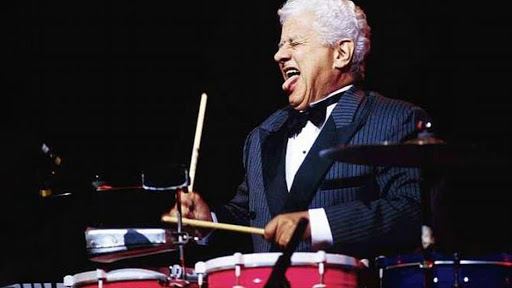
Tito Puente - Nobody will have his wonderful character
Tito Puente ‘s grimaces while performing

Cuba y Puerto Rico son…, 1966.
The career of the remembered Cuban singer Celia Cruz was on the rise. In 1966, Tito Puente decided to contact her to work together. They established a kind of association that was maintained through the years. In addition, they became very close friends, a bond that went beyond the musical realm.

Cruz appreciated him and was saddened after his death. In her autobiography “Celia, mi vida” she recalled the day she received the terrible news. She considered him an authority on Cuban music and admired his career.“Tito was always in charge of the arrangements, and he liked to work at dawn. We would go out to dinner, and when we returned, Tito would stay until four in the morning composing arrangements for what we were going to record the next day.

Although we were not very lucky with our recordings, Tito and I did very well with the tours. Together we travel to many countries. It was during those trips that we developed that great friendship that we had, ”said La Guarachera del Mundo.

In addition to “Cuba y Puerto Rico Son”, they recorded five more albums: Quimbo Quimbumbia (1969), Etc., Etc., Etc. (1970), Alma con alma (1971), En España (1971) and Algo especial para memoria (1972).

Timbalero Tropical (1998)
One of the last works of the artist and that featured fifteen songs. He worked hand in hand with the RCA label. The album stood out with works such as: El Timbal, Mi Guaguancó, Lo Dicen Todo, Mambo Macoco, Mambo and Preparen Candela. Topics that were very popular at the time and that today continue to sound at family gatherings. They are classic salseros that do not go out of style.

“Oye como va” was a song written by Puente in 1963. However, it was rock guitarist Carlos Santana who popularized it. The song went international and was positioned on the Billboard Hot 100, a list that ranks the best-selling hits in the United States. However, he was not the only one to cover it: Celia Cruz, rapper Gerardo Mejía, Bobby Hutcherson, Joe Cuba Sextette and Cheo Feliciano. When he presented the theme on stage he affectionately presented Santana as its author.

This 2020 marks the 20th anniversary of the physical disappearance of the great: Tito Puente. He passed away on May 31, 2000. His Caribbean flavor, his big smile and his white hair left a great void in the entertainment world. Puente left a great legacy. He contributed to the expansion of Latin music in the United States and served as a composer, percussionist, conductor, and performer.

His exaggerated grimaces, his style, energy, and his skill with the instrument earned him worldwide recognition. In addition to positioning him as an admirable figure among colleagues and young people who want to follow in his footsteps. Simply unforgettable!


Home

“Orquesta Bomplenea” with ISM

Meet the ” Orquesta Bomplenea “

Let’s start this month of November presenting a musical group that emerged in the year two thousand ( 2000 ), created with the sole purpose and intention of taking Puerto Rican culture to the top, it is nothing less than the “Orquesta Bomplenea”, who will be with us thanks to Mrs. Jimena Verano León from the company “Verano Producciones Latinoamérica” from Bogotá, Colombia; so that the public and fans of International Salsa Magazine can meet this great Latin music orchestra.

Mr. Gary Vera is the founder and member of the “ Orquesta Bomplenea ”, who has been an outstanding musician in the musical genre of Salsa, Merengue and Latin Jazz for about thirty-five (35) years, the past twenty (20) years in the genre of the Bomba (which is the first indigenous music of Puerto Rico, created in the sugar estates by slaves more than four hundred (400) years ago, where African slaves were brought to Puerto Rico by the Spanish and French in the year one thousand six hundred (1600)) and Plena (it is the native music of Puerto Rico, which has the history of miscegenation in the aforementioned country “the Puerto Rican culture”, its birth is located at the beginning of the twentieth century “XX ”). He has also traveled to Europe, the US (United States), and the Caribbean representing our music and culture.

Bomplenea Orquest
Bomplenea members

They knew that the “Plena” together with the “Bomba”, the “Trova Jíbara” and the “Danza” make up the four pillars of indigenous Puerto Rican music. The purpose of the “Orquesta Bomplenea” is always to maintain the culture of its island (Puerto Rico), of the greatest possible interest to Puerto Ricans inside and outside of Puerto Rico.

Trying to reach the hearts of everyone with flavor around the world all tastes. With this assignment in mind, they have adopted a different style of playing the “Plena” (Puerto Rican popular dance and song that is characterized by its musical simplicity and the repetition of its phrases, especially the choirs).

The lyrics and the aggressiveness of the piano together with the combination of the vocal tone (timbre) give a salsa touch to our Plena, but without forgetting the most essential purpose of the composition, which is to transmit to its audience the “Bomba” and the “Plenas ” .

At the beginning of January 2000, Gary Vera organized the musical group Bomplenéa and made his first recording entitled “Ritmo Caliente”. The CD includes eight (8) musical themes. La Mulata, which is a mix of (Bomba – Sicá – Plenas), Jazz A La Bomplenéa is the alloy of (Plena – Latin Jazz), and María Rumbón, La Carta, El Meneíto, Ritmo Caliente, Remembering Papá, and Bells De Christmas (Plenas).

They recently started a new proposal that includes Salsa, Bomba and full songs. Some themes are: El Pan (Bomba), Mi Parranda (Christmas Sauce) and Déjate Amar (Sauce).

Dejate Amar new music - Bomplenea
Bomplenea Orquest

Members: Gary Vera – composition, drummer, congas, Güícharo and direction; José Cheo Arce – arrangement; Luis Discípulo Cuevas, Jan Meléndez – vocals; Carlene Vera and Jan Meléndez – backing vocals; Omar Maldonado – piano; Carlene Vera – flute; Tito Degracia – timbal and bongo; Coamito Martínez – trumpet; Toñito Vásquez – Trombone; Efraín Hernández – bass; Juan Rivera – piano; Celso José Clemente – percussion and minor percussion, recording director, timpani, tambourine; Rafael “Bodo” Torres – piano; Papo Clemente – congas; Cándido Reyes – güícharo; Luis Jungo Ortiz – bass and arrangements; Orlando Ortiz – members; Danny Fuentes – Trombone; Carlos Torres – bass; José Rodríguez – Trumpet; Doel González – vocals

For more information contact you through:

Facebook @ Bomplenea

Home

Marco Toro y su Ensamble Leave Venezuela on high

Marco Toro – How it all began

Music knows no barriers in cultural and linguistic terms. Proof of this is drummer and percussionist Marco Toro’s amazing trajectory, who was born in Caracas, Venezuela, and whose musical roots are embedded in the rhythms and culture of that country.

Five years ago, the artist launched his latest music work based on what we know as Latin jazz, which is a blend of rhythms and sounds that transport its hearers to certain parts of Africa and South America.

Marco Toro in the netherlands
Marco Toro with one his instruments

This percussionist always flaunts his versatility by interacting with first-class musicians from all latitudes, with whom he has created certain musical productions. In addition to that, he can play the drums, timbales, the conga, the big drum, the maracas, among others.

In 2004, Toro released his solo project called Marco Toro y su Ensamble, with which he began to venture into rhythms such as joropo, salsa and rock.

We were pleased to converse with him on his musical history told by himself.

You have a very interesting musical and personal story. We would like to know a little more about your beginnings. When did you decide you wanted to make a career out of this? How were your first steps into the musical world and what inspired you to accomplish what you have done today?

Well, my beginnings were with my dad, may he rest in peace. I started by playing the maracas with him. He sang and played the cuatro. I sang llanera music in bands and trios like Los Panchos. I sang serenades, I was a serenader within the Guarenas blocks and played llanera music with a hat Pelo É Guama since I was 9, which I did not like when I was little kid, but anyway I did it.

After that, I began taking drum lessons when I was 14 or 15 years old with a drummer friend named Ildemaro, and afterwards in Caracas, I also took a couple of classes with the Daiquiri band’s drummer in Hemisferio Musical, which was a school with music store in Sabana Grande (area of Caracas) with a teacher named José Matos.

Finally, I also took lessons with Willy Diaz who is a drummer in Caracas and with whom I made recordings and other things.

Then from there, I was hitting on rock. Let’s say, I knew much about salsa from my mother and I don’t know if the new generation is aware, but there was what we used to call matinees, where I danced salsa while at home, I listened to rock. That’s where this mix comes from, but overall I have always liked those musical styles and it shows at what I do.

In Guarenas there was a group called Estandard and we started playing original music with musicians from Caracas and Guarenas, with whom we used to mix these two styles (salsa and rock). We mixed heavy metal with Latin music and rehearsed in a studio in Caño Amarillo (another area in Caracas), which was equipped with many Latin instruments such as the conga or the timbales, and that was how the whole mixing of the Latin with rock began.

We started doing very well, so much so that we recorded a demo and ended up playing with Desorden Público, which at the time was one of the best bands.

We played with them in Mata de Coco and the Poliedro of Caracas. The band was getting a lot of swing until, like every young man with dreams, the time came when we felt we had to head to new directions, so we decided to go to the Old Continent and bring our savings here.

When we finally got to Europe, many doors were opened for us because this was a style that was not being done anywhere in the world at the time. So, through the Dutch ministry of culture, began to appear the first recording deals and we got a chance to play on local television networks.

A lot of people did not even know where Venezuela was, so we did really well and started touring Europe. I got a little off track there (laugh), but that is what the emotion of talking is about.

It is a very interesting mix of rhythms without a doubt. You commented to us that you started a rock band, took salsa classes and listened to rock at home.

From here arises what is known as Latin jazz or sambojazz, could you tell us a bit about this interesting mix made in your career? How do you think your Venezuelan roots influenced your music along with all that you have learned abroad?

The Venezuelan roots have always been in me. Also, I have a regionalist family. My parents and my uncles always bet on Venezuela, so I grew up with this picture in my mind even though I listened to foreign music. Thankfully I have always been open to any kind of rhythms, but my roots became to grow when I played Christmas bonuses, aguinaldos and Afro-Venezuelan drums in the block where I lived. By the way, I lived very close to Curiepe (a Venezuelan town in the state of Miranda where drums and Afro-Caribbean music are very common).

More than once, I went to Curiepe (another Venezuelan town in the State of Miranda) rumbas to celebrate the festival San Juan, so this Afro-Venezuelan part was always very present.

When I got to Europe, I wanted to learn more about Afro-Venezuelan and Afro-Caribbean drums in general. In Venezuela, drums were a mere pastime, but here we had to explain the origin of our music, so we had to learn many more about these instruments.

After that, I realized that our music was different and very original to each other’s ears. When there was talk of Caribbean music, you just heard the names of Cuba and Brazil, but things have changed because Europeans have become much more open to new rhythms and the large number of Venezuelan musicians who have left the country and brought Venezuelan culture to a new level. That has made Venezuelan music more present and many musicians, artists, dancing painters have been in this. Everyone doing their bit.

Musician Marco Toro next to his drum
Marco Toro poses next to his drum

Everything what you told us is very interesting. In that case, can you tell us about the change in attitude of Europeans toward all those Venezuelan rhythms and the vision they have of Latin talent compared to a few years ago?

If you want to enter, you need to get it nice and slow. Venezuelan music have been accepted immediately by Europeans, but they feel like it is something new by listening.

That does make them pay a little more attention. That is like saying that arepa vendors should make them thinner for the European, since they don’t like it too thick. Thus, you should turn this around to introduce our music so people can enjoy it, but we have only been able to form music groups in December and the majority of attendees are Venezuelans and their Dutch partners.

Our music has not become as internationalized as much as salsa. When you go to a place where you dance salsa, the band can come from anywhere and people will always dance it. We have not yet succeeded in making people dance to Venezuelan drums in the same way. We have only participated in festivals where all kinds of music are played, but we are working on it.

And so we go on little by little. The important thing about Venezuelan musicians is that we have always been influenced by all kinds of Afro-Caribbean music, which makes a big difference. The other countries do not play our music, which makes make a big difference. In addition, there are always Venezuelan musicians in almost all orchestras. I mean, we have entered our music thanks to our musical aperture and our participation in any genre.

I personally don’t like labels, I’m a musician and if there is anything I can do in any genre I will do so without any problem. I am not one to take salsa or any musical style as a religion. I am very open to playing with the Dutch, the gringos and whoever. I love participating with different nationalities because that is where learning occurs.

Everything you have told us is very interesting. Certainly, This set of mixtures you use is what has made your work so interesting, you are not afraid of anything. You also told us that you have to adapt your rhythms to the European’s ear to make it more enjoyable.

Could you tell us how you have made Europeans to get interested in Venezuelan music and what arrangements have you made at instrumental level to make it more enjoyable to their ears the first time they hear them?

I’m going to give you an example. I am performing with a group called Drums United with which I have toured the world. With them I included Curiepe’s drums culo e´puya and have a show where I play that instrument. What do I do? I play that instrument first for people to hear it and at the same time one of the members explains to them how these drums sound, where they come from, their roots, how they got there, among other things.

After playing them, I sing the most popular music with those drums in the background and people really get into it. My way of singing is so easy for the European who come to party with those drums. I also sing with the attendees and throw a party with them, I think it is the best way to interact with the public when they do not know our music.

Also, I have made compositions in which we do not use the drums that are typical in Venezuela. We use a grenadier and a snare drum that are known around these parts. One of my own compositions is called Reina Pepiada (arepa with chicken and avocado salad which name means ¨curvy queen¨ in honor of Susana Dujim, the first Venezuelan international beauty queen) and the other is Guasacaca (savory sauce very similar to guacamole).

When our songs come up, people ask the meaning of the names mean, and that is where we need to explain this. In my case, music is closely linked to food, and so you start to raise public interest.

In that case, in what way has music helped to put Venezuela and other Latin American countries on the map after listening to these rhythms?

Venezuela has become known for all the Venezuelan musicians who are in these parts. Each of us, within his style, has done that. La India came here and we joined her. We were rehearsing without her and when she came in she said she knows that there are Venezuelans on the team and asked who they are.

We were six Venezuelans and she said she had nothing to worry about because everything will be fine. That is the explanation of how Venezuelans in Europe and elsewhere have earned a reputation for discipline and effort. That has helped us turn the attention of the European public to what we are doing.

For instance, in New York there is a group of Venezuelans who are an emblem. I can name Luisito Quintero, Roberto Quintero, Raúl Agrá, and some others. Here is also a tremendous crowd putting on the table their best effort. There is Orlando Poleo in France, Javier Plaza in Germany, and many others. Here’s a crowd doing his best.

What we do have is a short break for the pandemic. Well, in my case, I had a tour with some saxophonists, but all of this year was cancelled. We are all waiting for things to go back to normal to move forward. Meanwhile, I wrote two new songs during the pandemic. Everyone has been recording material at home and sending us their files. There was even a song that Marcial Isturiz sang from Colombia and sent me the files, so I worked on the mixes and turned this around.

Marco Toro smiling
Marco Toro willing to play his music

Covid-19 and adaptation to the new normal

In view of the fact that all artists had to reinvent themselves because of all this situation caused by COVID-19, in what way have you been impacted, both professionally and personally?

I have been touring, playing in all places, and suddenly the front door gets slammed in your face. And it happens to be, like, what now? Not just for myself, but for many people as the world was surprised by this and now we have to learn to live with it.

What else are we going to do? You have to look after yourself and turn this around. In spite of everything, I am not complaining because I have noticed that I have sold many records. I have sent records from here to the United States and other parts. At a certain point, the live shows have been cancelled, but music is still sold. Additionally, there is a couple of interview there and over there.

In that case, what would you recommend to all new generations of musicians?

What I recommend is that the new generations is that they should have discipline. I bethink that this is the most indispensable in the music world and when I talk about discipline I mean the study of your instrument to try to be better. For example, you have to be on time or earlier for the band plays or practices. Please call if you have a problem. Everything that has to do with discipline is important because I have seen many excellent musicians who have failed as they have not had discipline. So these is paramount to succeed.

So, as we confront this new normal, what advice can you give to these new generations at the suspension of concerts are going to be canceled for a long time? Given this new scenario, what would you advise those who are starting in the music world?

Well, I recommend them remain positive and use the brain to get what they want. If one door has closed on us, one will be open up. However bad the situation is, one can always invent things. There are many musicians who are doing online concerts. So they have their account, and if people like their music, they can put some money in their accounts. I think it is fabulous. Other people are doing other things. There are people that play in front of their homes and those who walk around can give them some money too. A lot is happening here until then, you have to be positive.

When a person is complaining all the time, he is just adding negativity upon himself, making doors harder to open. In my case, I just made two new songs, one is called Mi casa (My house in Spanish), which is a parrandón (musical genre typical in Christmas) with Afro-Venezuelan drums and is dedicated to Venezuela. The other is called Sólo un poco. I have a little studio and from where I record and send material to other places. That is how I held mi own and made my productions here from the house.

My message is that. We have to move forward. When I came to Europe, I arrived with a small suitcase without knowing where to go and my English was so bad that I could not make myself clear. I got in touch with the culture of this country and met people. However, I have not lost touch with Venezuela, and what is more, I go every year. In 2018, I was playing at La Casa del Artista, La Rumba Latina in Guatire and elsewhere.

A final message to the public of International Salsa Magazine and your social networks.

My website is www.toro-ensamble.com, you can follow me on my Facebook Marco Toro y su Ensamble and you can follow me on Instagram as @Sambojazz

As a final message, we have to be positive and think about the good times to come. We have to be patient, wear a mask and take care of ourself because this is not a game. And most of all, we have to take care of elders.

I tell young people to listen to your elders. Listen to old music that is very important and then listen to modern music because everything has its roots and starts at a certain point.

Home

Choco Orta The Queen of Flavor

Choco Orta: “The Queen of Flavor and the Diva of Puerto Rico”

Virgen Milagros Orta Rodríguez is the first name of “La Reina Del Sabor”: Choco Orta, as this Puerto Rican actress, percussionist and singer-songwriter is internationally known. She was born in Santurce, a traditional neighborhood in San Juan, the capital city of La Isla Del Encanto.

Choco Orta The Queen of Flavor and the Diva of Puerto Rico
Choco Orta Diva of Puerto Rico

Choco is the only female daughter in a home formed by the brothers Tomás Jr., Jaime, Gilberto (her twin) and Ismael; fruits of the union of don Tomás Orta Abad and doña Andrea Rodríguez Rivera. By the way, the brothers are mostly percussionists, among amateurs and professionals.

The father, Don Tomás, is an excellent guitarist and Mrs. Andrea, the mother, has a privileged voice. We could say, then, that Choco Orta’s talents are “purebred”.

In Santurce, specifically in the area known as El Chícharo, Choco’s childhood, adolescence, and youth are present.

The blackness of this neighborhood cradled and nursed her, imprinting on her a deep imprint that she knew how to capitalize on and externalize in her artistic development.

Choco still remembers and celebrates the improvised musical meetings in her neighborhood with neighbors and friends, in which to the rhythm of percussion instruments they recreated the famous rumbas that blacks and blacks of the Caribbean turned into one of the most recognized standards of their culture.

This activity led her to become interested in her musical training, which she did in a self-taught manner first and then alongside renowned musicians from the patio such as Giovanni “Mañenguito” Hidalgo, Anthony Carrillo, and Angel “Cachete” Maldonado.

Recognized teachers of the Conservatory of Music of Puerto Rico offered him knowledge of Theory and Solfeggio, and great cultivators (men and women) of classical and popular dance also contributed to mold the artist that we know today.

In the academic field Choco Orta, she is a graduate of the University of Puerto Rico.

She has a Bachelor of Arts degree after graduating with honors (Cum Laude) from the Theater Education Program of the Rio Piedras campus of this prestigious University.

Choco’s academic formation, oriented to the teaching of Theater in schools, was not capitalized as such; however, it allowed her to venture into the stage by staging diverse plays in Puerto Rico such as “La Verdadera Historia De Pedro Navaja”, “El Bombón De Elena”, etc.; she even mounted her own show: “Choco, Mambo Y Algo Más” (at the end of the ’80s), through which she musically recreated the golden ages of the ’40s and ’50s.

We finish the current appearance of this brilliant artistic career of Choco Orta with the celebration of its 30 years in music
She was born in Santurce, a traditional neighborhood in San Juan, the capital city of La Isla Del Encanto

Television programs such as “La Tiendita De La Esquina” (comedy) and “Latino” (musical program), also record Choco’s talent. As if that weren’t enough, the seventh art: the cinema, also knew about the talent of this complete artist. “Bala Perdida”, “Dios Los Cria” and “Assassins 1995” are proof of Choco Orta’s talent and versatility.

Her entrance to the recording rooms is produced by the hand of the famous trombonist and conductor Julio “Gunda” Merced, who on one occasion enjoyed an improvised presentation of Choco with the Giants of the South.

That night, Gunda Merced made the approach to Choco, and some months later the musical production AND SOMETHING MORE! (Gunda Merced Y Su Salsa Fever) included the songs “Huracán” in Choco Orta’s voice and “El Baile Del Buey Cansao” (Choco Orta in duet with Raquel Velázquez). The year was 1987.

The first years of the 90’s present us with a multifaceted Choco Orta: always in music and accompanied by diverse formations: trios, quartets, etc.; also doing jingles and commercials for radio and television, but also internationalizing her work with various participations in the Club Hammou (southeast of France known as French Riviera or Costa Azul) and as it corresponds in an artist avid of knowledge: nourishing herself with the people and their culture.

By 1997 -always under the guidance of Julio “Gunda” Merced- with the support of the record label Musical Productions (MP) of the late but always remembered Tony Moreno, Choco Orta published his debut album. It was titled SENTIMIENTO Y SABOR (Feeling and Flavor) and presented us with 10 very well achieved cuts that quickly placed themselves at the top of the Latin music charts (Basta, Y Qué De MI, Yo Perdí El Corazón, El Hombre Que Yo Amo, etc.).

By the way, this production was presented at the MIDEM Convention for Latin America, which is why Choco Orta recorded an official video clip of the song “El Hombre Que Yo Amo”. MIDEM is the chapter for music professionals of Reed MIDEM: a professional market organizer founded back in 1963.

SENTIMIENTO Y SABOR was also featured in PULSE Magazine! (USA) and Choco would later be invested as Ambassador of Puerto Rican Culture in Tampa, Florida. He also obtained the Farándula Award (Puerto Rico) as best salsa singer and made an extensive and acclaimed tour in the Dominican Republic, performing in various Dominican stages including television sets.

She is remembered -also- until today, her ovation and applause with La Universidad De La Salsa, El Gran Combo de Puerto Rico, for the 16th edition of the National Salsa Day (1999) in the Juan Loubriel Stadium in Bayamón.

In 2001, Choco Orta received an invitation from Banco Popular de Puerto Rico to be part of their famous annual production entitled RAÍCES. Here Choco performs two songs with the accompaniment of two important musical institutions from the patio, the Orchestra of Maestro Lito Peña (Para Los Boricuas Ausentes) and the Orchestra of Maestro William Cepeda (Melitón Tombé).

That same year, it was part of the production of the Borinquen quartet player José Antonio Rivera Colón, better known as “Tony Mapeyé”, with the title VIEQUES, TIERRA PARA LA PAZ. Here he prints his vocal record in the songs Ni Bala Inerte Ni Viva and Plegaria Por Vieques.

Then to round off a great year, the release of his second production is made official: this one would be titled LA REINA DEL SABOR and from that record label, we continue enjoying the quality and flavor of songs like La Nueva Reina Del Sabor, Que Pague, Se Acabó Y Punto, etc. In this production, the tribute paid to “El Rey Del Timbal” stands out: Ernesto “Tito” Puente, who was the one who nicknamed Choco as “La Nueva Reina Del Sabor” (The New Queen of Flavor), a theme that is also Choco’s incursion into composing.

The repercussion of the song was such that Choco Orta briefly established himself in New York where he performed in renowned venues such as the Copacabana, to offer successful presentations, accompanied by orchestras such as that of the famous Dominican pianist and arranger Ricky González.

At this time of year, we also highlight her journey through various cities of the Major Island: Cuba, where she was loudly applauded during her participation in the Fifteenth International Festival of Golden Boleros and distinguished as the Favorite Daughter of Christ, a community near Santiago (Cuba).

The years between 2001 and 2009, allowed Choco to record in three recognized collaborations:

– HIJOS DE LA SALSA GORDA: published in 2004 under the concept of La Mundial De La Salsa with the direction of the pianist and arranger Willie Sotelo. Here Choco Orta performs the song “Me Saludas A La Tuya”.

– Cuando Hay Amor” is another of Choco’s well-achieved songs that includes his profuse record of collaborations. This number is part of the production EL CORTE PERFECTO (2004) with the Orquesta Sueño Del Caribe.

– In 2006, Mr. Afinque Willie Rosario publishes his production LA BANDA QUE DELEITA in which he invites Choco to bring to life with his voice the song “Lo Que Más Yo Quiero”, a song -by the way- that is a must in Choco’s personal presentations.

We arrive to the year 2009, musically speaking, and Choco Orta of the hand of “El Caballero De La Salsa” Gilberto Santa Rosa, as well as of Charlie Donato (both in the executive production and choirs) and Rei Peña (in the musical direction), publishes its third discographical plate. This one is entitled AHORA MISMO, a production of nine successful songs among which “Ahora Mismo”, “Por Accidente”, “Marido Majadero”, etc. stand out. We highlight in this production the duet with Moncho Rivera -his guest on the album- to evoke and pay tribute to the remembered union between Celia Cruz & Ismael Rivera for the song “Cúcala”.

Choco Orta
Choco Orta What’s Yours is a Lie

In 2011, Choco delighted us with a new production entitled CHOCO SWING. This work was considered among the 20 Best Productions of 2011 by the National Foundation for Popular Culture. On this plate we find again Rei Peña as a musical producer, Choco’s pen stands out represented by the excellent theme Homenaje A Las Soneras, a tribute made a song with which Choco highlights the presence of women in the musical world; additionally, you can enjoy compositions of Gino Meléndez and Raúl Marrero, among others; having magnificent arrangements of musicians of the height of Ricky Zayas, Guillermo Calderón, Ernesto “Tito” Rivera, Carlos Torres, etc.

The next seven years (2011 – 2018) have been prolific in collaborations and here is a synthesis of these:

– Ralphy Santi y Su Conjunto (2012): The Puerto Rican musician (Ponce) invites Choco Orta to be part of his extensive discography. The musical production is entitled HOMAGE TO THE DANCER and there he performs the song “Sin Clave Y Bongó No Hay Son”.

– Orquesta Guayacan (2013): The popular Colombian group celebrated at that time its 25 years of institutional musical trajectory, for which they publish the production 25 YEARS, 25 SUCCESSES, 25 ARTISTS, in which Choco is responsible for the theme “Como Una Hoguera”.

– Kambalache Negro (2014): Group led by Peruvian percussionist Robert “El Chino” Bolaños, an “old” acquaintance of Choco as he integrated and is part of Choco’s musical staff for his presentations at the Iron Babel: New York. In this production titled POR FINAL EN LA CALLE, Choco performs the song “Añoranzas”.

– La Orquesta Del Solar (2017): Orchestra whose musical epicenter is the Spanish capital: Madrid and is composed of musicians of various nationalities (Peruvian, Colombian, Venezuelan, Spanish, etc.) and led by Ecuadorian Julio Mena. In this production entitled BACK TO MY ROOTS, several of the singers that the group usually accompanies when they perform in Spain are invited. Choco Orta is the voice of the song “No Insistas Más”.

– Medley Soledad Bravo” song that will be part of the production LEGACY OF WORLD SALSA of the outstanding Venezuelan musician and arranger Mauricio Silva. In this medley, Choco Orta participates with Marianella (Venezuela) and Mélida Trujillo (Panama). Choco interprets the song “Son Desangrado” by Silvio Rodríguez and his colleagues the song “Déjala Bailar” by Chico Buarque.

– Noel Quintana & The Latin Crew (2018): Recent musical work by percussionist Noel Quintana who has invited a series of renowned singers to this production. Choco Orta gives life to Pedro Jesús’ composition “Qué Viva La Salsa”, a tribute this time to the dancer, an important element of this artistic binomial: dance-music. The production is entitled NOEL QUINTANA & THE LATN CREW VOL. 1.

– Abran Paso Orchestra: The Abran Paso Orchestra is getting ready to launch its new musical production soon. For this musical work, Choco has been invited to interpret a theme of the French musician and composer Paul Mauriat that, for the Latin environment, decades ago La Lupe adapted and interpreted (in Spanish) for our enjoyment. Its title: “Si Vuelves Tu”.

We should also refer to some singles that were recorded by Choco Orta, as is the case here:

– Chico Is The Man (2010): Adaptation of the song that José Feliciano (Chico And The Man) popularized, aimed at celebrating the arrival of the young Mexican soccer player Javier Hernández Balcázar known as “Chicharito” to England when he was hired by the English soccer team Manchester United.

– Killing Me Softly (2013): Crossover of the theme “Killing Me Softly With His Song” by Charles Fox and Norman Gimbel, based on Lori Lieberman’s poem “Killing Me Softly With His Blues”. Lori was his first performer but became notorious in the early ’70s with Roberta Flack. Choco gives this song a characteristic feeling when performed in its original language.

– Bomba Lamento Para Oscar López Rivera (2015): Interpreted to the rhythm of bomba, this song by Choco Orta demanded the immediate release of the now free Oscar López Rivera: a Puerto Rican politician who defended the independence of the island and who served 35 years in prison in the United States.

– Tofu Sin Lechón (2016): This song is based on the lifestyle of its composer and performer who has had a vegan lifestyle for approximately 30 years.

We round up and finish the present semblance of this brilliant artistic career of Choco Orta with the celebration of her 30 years in music. An event also marked by the publication of the musical production entitled CHOCO ORTA: 30 AÑOS REPARTIENDO SABOR.

At the beginning of 2017, he published the song “Te Perdí La Fe” by the notable Elizabethan composer (Puerto Rico) Johnny Ortiz, with which he began the recordings of his fifth personal musical work. He then recorded in Colombia an inspiration of the late poet Petronio Álvarez, “Mi Buenaventura”.

It continues with a theme of the also disappeared composer Palenque, that made very popular Ismael Rivera with Cortijo y Su Combo: “Severa”, here Choco Orta correctly “improvises” vindicating in first person Severa as a black woman and although humble, beautiful and intellectual.

It was March of that year when Puerto Rico received waves of media and fans of the salsa movement and their representatives, who from different parts of the planet attended the “National Salsa Day” organized by the Z-93 radio company.

The festivities begin in the days before the central (usually the third Sunday of the month) and for the past year, Choco Orta took advantage of the occasion and captivated the attendance of the dance of its 30th Anniversary in The Latin Roots, a local located in El Viejo San Juan.

The presence in Puerto Rico of José Alberto “El Canario”, one of the guests of the National Day, made possible the recording in the studios of Maestro Ángel “Cucco” Peña of the song “Sé Que Tú”, an event to which a good part of the international press had access.

Lino Iglesias, Choco’s friend and ad honorem advisor, composed the song “Choco Orta: 30 Años De Sentimiento Y Sabor”, a musical portrait of The Queen of Flavor is recorded before her trip to Cuba with the purpose of recording the songs “Canta Choco Canta” by the Cuban singer-songwriter living in Puerto Rico Juan José “Juanchi” Hernández and the bolero “Miénteme” (“Chamaco” Domínguez) under the arrangements of the Cuban guitarist and composer Reinaldo “Rey” Montesinos Muñoz and a pleiad of musicians from La Isla Mayor.

He includes in this production a theme of his own authorship and that he interprets together with Ismael “Maelo” Ruiz; by the way, a theme of the daily life and of necessary listening and analysis. Finally, he closes his production with the invitation of his musical brother, the great Herman Olivera, with whom he performs the song “Otro Amor”.

The production, although it should have been published at the end of last year, only saw the light in March of this year due to the circumstances that were lived after the passage of the hurricanes Irma and Maria (of this last one especially), that paralyzed all type of activity in Puerto Rico.

Weeks prior to this natural phenomenon, Choco Orta performed under the concept of The Last Fania Legends, which brought together in a much-applauded concert the still existing and former members of the Fania Machinery with a group of renowned guest musicians and singers, a concert of approximately four hours made the Rubén Rodríguez Coliseum in Bayamón vibrate. For this show, Choco Orta paid a well-deserved tribute to Queen Rumba Celia Cruz, through three of her popular songs: Kimbara, Yerbero Moderno, and Bemba Colorá, whose performance brought the respectable audience to its feet.

To round out the faena, cutting “tail and ear”, Choco Orta joined the legendary duo Richie Ray & Bobby Cruz, interpreting with them in a majestic way the theme “Cuando Me Digas Si”.

We return then to the launch of their recent production, the same one that is of great acceptance in Puerto Rico; Colombia, Peru, New York, and other countries and cities that pride themselves in being salsa musicians. He has been positioning himself with several of the themes that integrate this production, especially “Choco Orta: 30 Años De Sentimiento Y Sabor”, “Te Perdí La Fe” and “Otro Amor”.

It is also necessary to highlight the facet of Choco Orta as a woman who fights for the interests of her country and for a greater presence of women in the music industry; this through panels and talks in academic spaces and by sponsoring and promoting attendance at vegetarian and vegan restaurants, as well as diverse businesses.

We celebrate the trajectory of this great representative of Puerto Rican culture and her musical trail, which has been captured in acclaimed productions of her own and prestigious collaborations. The maturity is notorious and the feeling and flavor has also aged. Congratulations because we need and will have Choco for a while, we are sure of that.

Choco Orta, virtual concert, Saturday November 21st 7pm. From My Home to the World 3
Choco Orta of my House to the World

Home

  • « Go to Previous Page
  • Page 1
  • Interim pages omitted …
  • Page 132
  • Page 133
  • Page 134
  • Page 135
  • Page 136
  • Interim pages omitted …
  • Page 241
  • Go to Next Page »

International Salsa Magazine (ISM) is a monthly publication about Salsa activities around the world, that has been publishing since 2007. It is a world network of volunteers coordinated by ISM Magazine. We are working to strengthen all the events by working together.