• Skip to primary navigation
  • Skip to main content

International Salsa Magazine

  • HOME
  • Previous editions
    • 2026
      • ISM / March 2026
      • ISM / February 2026
      • ISM / January 2026
    • 2025
      • ISM / December 2025
      • ISM / November 2025
      • ISM / October 2025
      • ISM / September 2025
      • ISM / August 2025
      • ISM / July 2025
      • ISM / June 2025
      • ISM / May2025
      • ISM / April 2025
      • ISM / March 2025
      • ISM / February 2025
      • ISM / January 2025
    • 2024
      • ISM / December 2024
      • ISM / November 2024
      • ISM / October 2024
      • ISM / September 2024
      • ISM / August 2024
      • ISM / July 2024
      • ISM / June 2024
      • ISM / May 2024
      • ISM / April 2024
      • ISM / March 2024
      • ISM / February 2024
      • ISM / January 2024
    • 2023
      • ISM / December 2023
      • ISM / November 2023
      • ISM / October 2023
      • ISM – September 2023
      • ISM – August 2023
      • ISM July 2023
      • ISM Edition June 2023
      • ISM – May 2023
      • ISM April 2023
      • ISM March 2023
      • ISM February 2023
      • ISM January 2023
    • 2022
      • ISM December 2022
      • ISM November 2022
      • ISM October 2022
      • ISM September 2022
      • ISM August 2022
      • ISM July 2022
      • ISM June 2022
      • ISM May 2022
      • ISM February 2022
      • ISM January 2022
    • 2021
      • ISM December 2021
      • ISM November 2021
      • ISM October – 2021
      • ISM September 2021
      • ISM August 2021
      • ISM July 2021
      • ISM May 2021
      • ISM April 2021
      • ISM June 2021
      • ISM March 2021
      • ISM February 2021
      • ISM January 2021
    • 2020
      • ISM December 2020
      • ISM November 2020
      • ISM October 2020
      • ISM September 2020
      • ISM August 2020
      • ISM July 2020
      • ISM June 2020
      • ISM May 2020
      • ISM April 2020
      • ISM March 2020
      • ISM February 2020
      • ISM January 2020
    • 2019
      • ISM December 2019
      • ISM November 2019
      • ISM October 2019
      • ISM Septembre 2019
      • ISM August 2019
      • ISM July 2019
      • ISM June 2019
  • Download Salsa App
    • Android
    • Apple
  • Spanish

Search Results for: Latin Music

Samuel del Real was an excellent pianist, orchestra conductor, arranger and educator

Born on August 22, 1953 in Barranquilla, Colombia, he was a well-known pianist, orchestra conductor, arranger and educator.
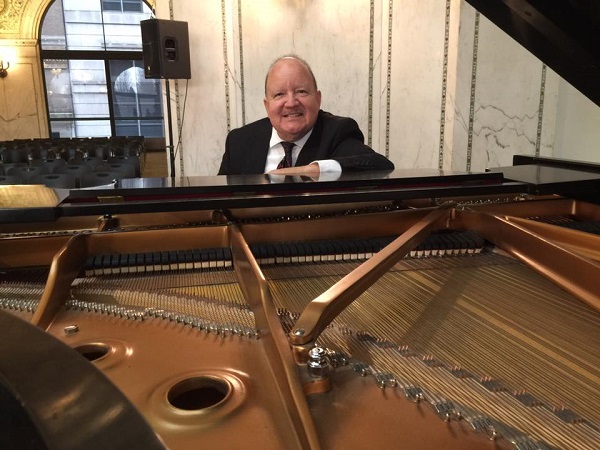
Samuel del Real was an excellent pianist, conductor, arranger and educator.Samuel del Real was an excellent pianist, conductor, arranger and educator.
Samuel del Real was an excellent pianist, conductor, arranger and educator.

He was part of renowned orchestras such as Pacho Galán, La Dimensión Latina and El Trabuco Venezolano and participated in a series of record productions in Caracas, Venezuela.

In 1983 he recorded his first album with his own band. His first hit “Ella No Baila Sola” became the theme song in every night club in Colombia, Venezuela, Peru, Panama, USA among other countries.

In 1985, Samuel moved to Chicago, USA, where he quickly formed his orchestra with members of different nationalities resulting in a mixed sound for his music.

Since then Samuel del Real and his orchestra participated in many festivals, concerts, private events in cities such as Chicago, London, New York, Minneapolis, St. Paul, Detroit, Indianapolis, Miami and more. “Piano Caliente”, ‘Piano Jamboree’ and ‘Piano Navideño’ are the most recent albums that include selections from his extensive Latin jazz repertoire, as well as new interpretations of Afro-Cuban classics from his album entitled Piano Caliente.
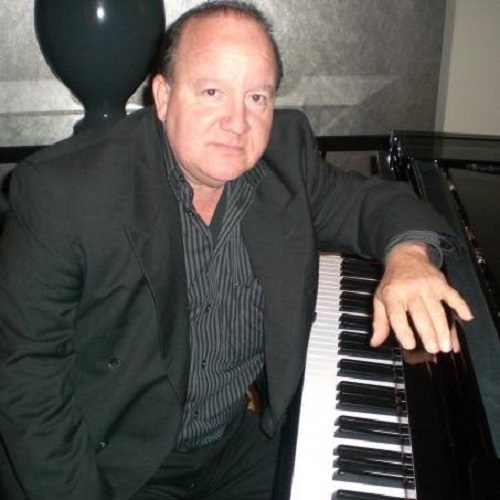
Samuel In 1985, Samuel moved to Chicago, U.S.A.

Samuel has ventured not only into the salsa genre, but also into Latin jazz that surprises even those who don’t know him.

It doesn’t take much to realize that Samuel was “El Maestro del Buen Ritmo” and that his music is here to stay.

Samuel del Real: the artist from Barranquilla who triumphed in the United States.

He trained musically and academically, open to the idea of expanding his artistic horizons.

“I began my musical studies in Fine Arts, among my teachers I remember Günther Renz.

In Venezuela I attended the Juan José Landaeta Conservatory and the Caracas Philharmonic Conservatory with the pianist Paul Rosenbloo.

I studied harmony and counterpoint. With maestro Antonio Lauro, composer and guitarist, I completed my academic training”.

At the age of 15 he began his professional career as a pianist in the Pacho Galán Orchestra. There he learned the tricks of popular dance music of the Colombian Caribbean, and the possibilities of sharing with national musicians opened up for him.

DiegoDel Real, my first piano teacher, my advisor, my partner in producing, arranging and recording music.

With him I learned the routine of Caribbean music, he had a very positive attitude towards me. He would summon me before rehearsals to teach me how to play, he would take the score and sit with me at the piano: ‘Play like this’, he would tell me, and ‘play the acor-des this way, this is the tumbao, this is the phrasing’, all with a lot of patience”, he recounted.

“There was Pi¬chirilo on bass, Jorge Pérez on timbales and drums; and Joaquín Pérez on congas. Chicho Sarmiento, Clí¬maco Sarmiento’s son, played the alto saxophone; Pacho Aragón played the tenor saxophone. On trumpets Armando Galán, Raúl Lastra and Chino Acosta.

Rosendo on trombone. Maestro Pacho Galán would arrive to conduct the first set and then he would leave, Armando would be in charge of the orchestra. That’s when my interest in Caribbean folklore began.

I did not record with Pacho’s orchestra because he did not record in that period, but I played a lot of his music and I still play it in Latin jazz.

“For me it was a great school,” he said.

Although he has lived outside the country for many years, when he returns to Barranquilla it is as if he had never left.

It shows in his confidence to walk the streets, to visit places, to call friends, to exchange anecdotes with people he barely knows.

He is a man who lives for music, to which he has dedicated a contagious enthusiasm. That is why when he comes, it is a pleasure to review his career.

“I come to take a little hot temperature and to bring my latest albums for the local public to get to know them,” he said.

In 1975 he formed an orchestra in Venezuela with which he worked at the Hotel Tamana¬co Internacional, while at the same time he was a pianist, administrator and producer of various musical projects in the recording industry of that country.

In 1979 he joined Dimensión Latina, an aggregation with which he recorded Di¬mensión desconocida (1979), el número uno con la núme¬ro uno (1980), Para siempre (1980), Combinación latina Nº 4 (1980), and Cuerda para rato (1981).

“In Dimensión Latina I spent three years with Andy Montañez, Argenis Carruyo and Gustavo Carmona, then I started the orchestra project with my name.

I also recorded with Andy Montañez as a soloist, and made arrangements in recordings for Velvet de Venezuela”.

Samuel also participated in the extraordinary Trabuco Venezolano, led by drummer Alberto Naranjo.

“With Trabuco Venezolano I participated in many concerts in Venezuela.

With them I recorded Irakere and Trabuco, in a live performance at the Poliedro de Caracas. I also recorded Imágenes Latinas.

The Flor y Nata, themes: No me engañes, Rosa de la Noche, Brujería, Almas Blues, Desilusión, (there I do a piano solo that has been highly praised), a pesar de Usted, Orquesta de moda, No quiero Confusión. Retrospectiva del Trabuco Venezolano Vol. 2 (1977- 1984)”.

El Trabuco Venezolano – La Flor y Nata 1984

In 1983 he recorded his first album with his orchestra, the hit was the song Ella no baila sola, which became his letter of introduction.

In 1984 he recorded his second album, repeating his success with the song Cara de Domingo, by the niuyorrican flautist Lou Perez.

The third album with his orchestra was produced in 1987, when he was already living in Chicago.

“When I left Dimensión Latina, Gustavo Cardona, Oscar D’León’s bass player, encouraged me to start my own orchestra.

One of the numbers was Ella no baila so¬la, and when it was played, people stopped to dance. That is why we decided to record that song.

I brought Frankie Paz, a boy from Maracaibo who had auditioned with Dimensión Latina as a replacement for Argenis Carruyo, but César Monje didn’t like it.

I told the boy, I’m going to have my orchestra soon and I’m going to bring you with me”.

Referring to his piano influences, Samuel recalls Noro Morales, Eddie and Charlie Palmieri, Richie Ray and Lino Frias.

Others such as Bud Powell, Thelonious Monk and Oscar Peterson, shaped his vision.

“I liked Noro Morales a lot, I had only one record of his, ‘Maria Cervantes’, which caught my attention since I was a child. One day I decided to arrange it a little differently. I still play it in my Latin concerts.

Del Real took up residence in Chicago in 1985. There he has continued his work moving between Latin dance music and Latin jazz.

I’ve been living there for 32 years, I have my orchestra, I give Latin jazz concerts, and I’ve also worked for other organizations in other cities like Minneapolis and Cleveland.

We do salsa and different Latin American rhythms. The music business has changed, it’s a big investment to make a record, and you have to project it to the singer, limiting the possibility of moving.

That’s why I decided to make Caribbean Latin jazz instrumentals; with that I expose my music without the need to write ten arrangements for a singer with whom you run the risk of him leaving”.

His recent recordings include the Pianos del Caribe series, which includes the discs Piano caliente, Piano jamboree and Piano navideño.

“The first disc of the series, Piano Caliente, brings songs from the 50’s such as Mata Siguaraya, El que siembre su maíz, Besitos de coco…. I made the themes a little more progressive with jazz, but preserving their essence.

I subtly changed the harmonic structures, without distorting them. There the singer is the piano.

Then came Pia¬no Jamboree, with some of my own themes. I do more complex things, trying to penetrate Latin jazz, looking for a space for my musical identity.

It is an interesting work that I would like music lovers from Barranquilla to listen to.

The third album also in the same series is entitled Piano Navideño,

“The first album in the series, Piano Caliente, brings songs from the 50’s like Mata Siguaraya, El que siembre su maíz, Besitos de coco…. I made the themes a little more progressive with jazz, but preserving their essence.

I subtly changed the harmonic structures, without distorting them. There the singer is the piano.

Then came Pia¬no Jamboree, with some of my own themes. I do more complex things, trying to penetrate Latin jazz, looking for a space for my musical identity.

It is an interesting work that I would like music lovers from Barranquilla to listen to.

The third album also in the same series is entitled Piano Navideño, I took as a reference the themes of Christmas. Christmas is very important to me. I am a lover of that celebration.

I took several themes from the international Christmas repertoire and put them in Latin jazz”.

No one doubts that Barranqui jazz or the International Carnival of the Arts would be the perfect setting for his work. Plus, it would be a homecoming in style.

“I think it would be a great opportunity to showcase my music in my city. I am glad that in Barranquilla they are creating spaces like the Carnival of the Arts and the Caribbean Cultural Park, so that people have access to that part of the culture that is music”.

He passed away at the age of 67 on December 10, 2020.

Samuel del Real, who suffered from diabetes, died in Chicago, United States, where he had settled 35 years ago.

Also Read: Thank you Rafael for all you have done for Salsa. Without you many of us would not be salseros


Source and Collaboration By: Marino de Jesus (15889 of Historia Salsera
Republica Dominicana

Asia / September 2024

Calibrated maracasBill Martinez

Japan circular flag
JAPAN
DIRECTORY OF NIGHTCLUBS

Bar Mirage
Bar Mirage
5F VORT Roppongi Briller, 3-14-14 Roppongi, Minato-ku
Tokyo 106-0032, Japan
+03-5860-6946

Fiesta
Fiesta Latin Spot Bar
3F, 1 Chome-14-6 Kabukicho, Shinjuku City
Tokyo 160-0021, Japan
+81 90-1086-2878

El Cafe Latino Tokyo
El Cafe Latino
3 Chome-15-24 Roppongi, Minato City
Tokyo 106-0032, Japan
+81 3-3402-8989

JBA
Studio JBA
11-8 HAT Chuo-ku
Chuo City, Tokio 103-0011, Japan
+81 3 62310638

jsdc
Japan Social Dance Club
1-19-5-705 Shibuya-ku
Tokyo 150-0042, Japan
+81 3 5939-7262

Studio Pepe
Studio Pepe
7-17-12 Minato-ku
Tokyo106-0032, Japan
+81 090-4705-715

La Tropi Azabu
La Tropi Azabu
3F Roppongi Azelea Bldf. 1-3-6 Nishi-Azabu, Minato-ku
Tokyo1060031, Japan
+81 3 6804-5776

Latin Club Leon
Latin Club Leon
5-17-6 B1 Shinjuku, Shinjuku-ku
Tokyo 160-0022, Japan
+81 90-6474-5638

Hong Kong `circular flag
HONG KONG
DIRECTORY OF NIGHTCLUBS

PCL
Petticoat Lane
8F, California Tower, 30-32 D’Aguilar Street, Central
Hong Kong, Hong Kong
+852 2808 2893

DANCETRINITY
Dancetrinity
8/F, Fung Woo Centre, 279-281 Des Voeux Road Central
Hong Kong, Hong Kong
+852 9634 9770

Sole Mio Restaurant
Sole Mio
Upper Ground Floor, 51 Elgin Street, Soho. Central
Hong Kong, Hong Kong
+852 5508 8244

Solar LKF
Solar LKF
+2F, Ho Lee Commercial Building, 38-44 D’Aguilar Street
+Central District, Hong Kong 0000
+852 65467339

After Work Salsa Party
Pong, 1st Floor, Ho Lee Commercial Building, 38-44 D’Aquilar Street, Lan Kwai
Fong Central & Western District, Hong Kong
+852 6389 6213

ISRAEL
DIRECTORY OF NIGHTCLUBS

Havana Music Club
Havana Music Club
Yigal Alon St 126
Tel Aviv-Yafo, Israel
+972 3-562-3456

Thailand circular flag
THAILAND
DIRECTORY OF NIGHTCLUBS

bAFROS lOUNGE
Bafros
Sugar Club Complex Sukhumvit Soi 11
Bangkok 10110, Thailand
+66 63 039 8700

Havana Social Cocktail Bar
Havana Social
1/1 Sukhumvit Rd. Soi 11
Bangkok, Thailand
+66 2 821 6111

MillionSpace
MillionSpace Rooftop Bar & Bristro
Soi Sukhumvit 32, Khlong Tan, Khlong Toei
Bangkok 10110, Thailand
+66 83 898 9939
ASIA SEPTEMBER 2024 FESTIVAL by Karina Bernales

Israel circle flag
ISRAEL
Caramelo Festival 2024

CARAMELO FESTIVAL

Sep 19 / 22 2024

‎Leonardo Club Eilat
Kampen St
Eila, Israel
Nis 999

My mother sang tango

One of the Latin genres that is currently on the rise is tango, so it is common to find more and more people linked to it. There are even many who have made tango one of the most important passions of their lives, as in the case of Carlos Álvarez Guevara, with whom we have had the fortune to talk exclusively about this and other interesting topics.   

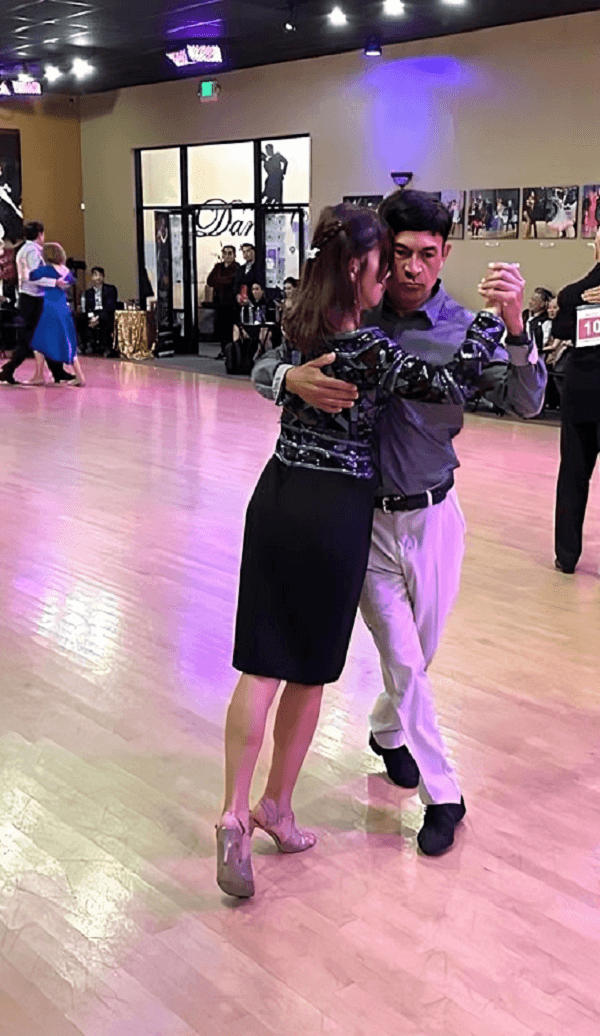
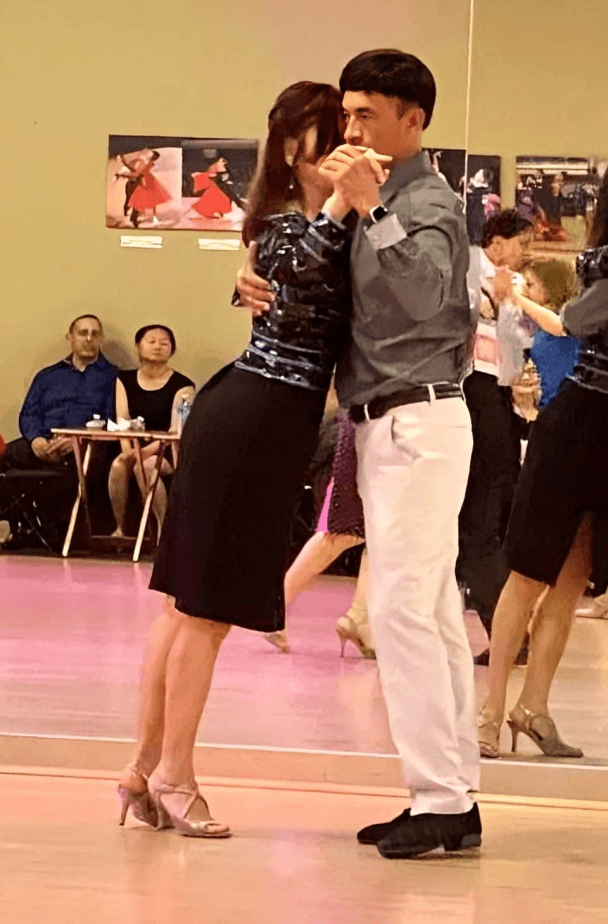
Carlos dancing tango
Carlos dancing with his dance partners in tango classes

Childhood with a tango singer mother   

Carlos’ contact with tango began during his early childhood thanks to his mother, who was a tango singer and dancer.   

Carlos describes his early live in El Salvador and points out that, back then, there were no cassettes or CD players with which to listen to music, so people had to make do with what they heard on the radio. His mother went to a well-known radio station to take part in singing competitions.   

It is then that the boy would listen to his mother rehearse for the competitions with old tango songs, which made him memorize them perfectly and be able to sing them in full. The rest is history.   

How Carlos sees tango today   

Today Carlos is a tango and salsa dancer, a genre that has also been important in his musical journey. However, he sings the songs he dances to at amateur level.   

For many years, he left aside music to devote himself to become a mechanic, a job from which he recently retired after more than 40 years of hard work. It was when he turned 45 that he fully resumed his love for tango and enrolled in dance classes to remember everything he had learned with his mother. 

This is why Carlos says that he is much more professional in dancing than in singing, since he dedicated much more time and effort to the former to become an expert in the field. Dancing, of course, is accompanied by singing, but it has less hierarchy in terms of the artist’s priorities.   

He has reached such a level of excellence in these disciplines that some friends of his put him in touch with Eduardo Guilarte, director of International Salsa Magazine, so that he could talk to us and his talents would become better known.    

Carlos was a mechanic
Carlos was a mechanic during a great part of his life, but tango is his biggest passion

Time dedicated to mechanics and dance   

Regarding the time dedicated to his formal work and dancing, Carlos claims he never had any problems, since he knew how to organize very well in this aspect. 

He always devotes his time to dance on weekends, days where he frequented, and still frequents, nightclubs with friends with whom he dances and spends very pleasant moments that clear his mind of everyday life.   

In addition to that, he also has a karaoke machine at home with which he also sings and practices his repertoire to delight anyone who wants to hear him on any nightclub stage.   

What Carlos has learned from tango   

Just as Carlos has been dedicated to singing and dancing tango, he has also invested time in learning about its history to give more depth to the knowledge he has about this genre and he wanted to share with us a little of what he has learned.  

He told us that one of the things he was most fascinated to learn is that tango has roots from many places and times around the world, although nowadays it is seen as an Argentine genre. Something that many do not know is that it has its origins in the arrival of Africans in the ”New World”, which played a fundamental role in the emergence of tango in Argentina and Uruguay, which were under Spanish rule.    

Both countries were transit ports for slave traffic, so the new inhabitants of these places brought with the their music and customs, which were mixed with the local music and customs to give rise to what is known today as tango. 

A very interesting detail he told us is that, when European sailors stopped in these countries and went to bars to look for drinks and some company, so the ladys in these places danced tango to seduce and provoke them. At that time, this kind of music was perceived as the lowest level of society to the point that the Catholic Church demanded its parishioners not to dance tango, but it turns out that the genre was pleasing to the people and nothing could be done about it.    

In the end, puritans had no choice but to embrace this wonderful dance and, today, people of all social classes, ages and races enjoy it without any complex.   

Carlos with his family
Carlos with his mothers, brothers and dog Mozote

The lyrics and references of tango    

Since Carlos has very extensive knowledge of everything about the genre and its lyrics, we wanted to know what he has studied about it.    

‘‘Tango can be many things at the same time. It can touch on issues related to the moral conduct of the individuals and, like many Latin genres, it also serves to mock and criticize politicians. It can also be an ode to love, spite and regret for having lost the loved one” Carlos shared with us on the subject.    

‘‘This genre can deal with many subjects at the same time, but one of the most recurrent is frustration with failed love and I don’t think that will change in a long time” said Carlos.   

Regarding the issue of the greatest artists who have inspired him to dance and sing tango, he mentioned Carlos di Sarli, Carlos Gardel, Oswaldo Pugliese and Enrique Rodríguez.   

What Carlos feels at singing and dancing tango   

Carlos describes listening to any tango song as ”listening to your own national anthem in a foreign country”. For him, listening to any piece sung by his parents in the past is a source of pride and takes him back to the most beautiful moments of his childhood. 

Carlos pointed out that ”when you are driven by loving emotions and some thoughts are trapped, you can express them through singing and dancing, which is what I always do”.    

The artist pointed out that he loves this world and it is one of the things that fills him the most in life, so he is grateful to be able to talk about it in International Salsa Magazine and express what it makes him feel to the world. 

Read also: Bolivian guitarist Gabriel Navia and his love for music 

Yova Rodríguez

Latin America / Puerto Rico

Yova Rodríguez. The jibarito of Mayagüez.

Giovanni Yova Rodríguez Ruiz, was born in Mayagüez, being the youngest of six siblings, raised alone by his mother Doña Delia Ruiz Crespo. At the age of 7 he started in music singing Christmas bonuses and influenced by his maternal uncle José Ruiz Crespo ¨Pipo El Indio¨ and his great-uncle Antonio ¨Toño Ruiz who played Puerto Rican cuatro.

Yova Rodríguez
Yova Rodríguez

At the age of fifteen, he began his studies at the Ernesto Ramos Antonini Free School of Music in Mayagüez, Puerto Rico.

It is here that he began his singing career and minor percussion and at the age of 16 he became the singer of the school band. In 2004 the project ¨Yova Rodríguez & his group Sakao – Akà, Homage to Polo Montañez¨ began.

Since the release of her musical work, Yova Rodríguez, the ensemble Sakao – Akà, has become one of the most sought-after ensembles in Puerto Rico, Colombia, Venezuela and New York, since 2010 she has resided in The Big Apple, La Babel de Hierro N.Y. working on the musical composition for singers of the stature, Danny Rivera, Herman Olivera, Marcial Isturiz, Orquesta Boricua Legends, and the great Andy Montañez among others and to mention a few and traveling through several Latin American countries along with most of the artists already mentioned.

Yova Rodríguez - Photo
Yova Rodríguez – Photo

In 2016 he starts with his promotional song ¨Me Quedaré¨ with arrangements by trumpeter Nelson Jaime Gazu, a song dedicated to the thousands of Boricuas who have left their beloved Puerto Rico.

In 2017 he composes the song ¨Mi Barrio¨ dedicated to his native neighborhood and was presented in Mayagüez, at the same time Mayor José Guillermo Rodríguez gives him the keys to the city and a recognition, in the same year he composes the song ¨ Borinquén se Rivanta¨ where great luminaries of La Salsa participated in New York such as:

El Pulpo Colon, Jhon Benítez, Luis Mangual, José Dávila among others and by the hand of the Cuban trumpeter and arranger Agustín Someillan Garcia, in January 2018 it is presented in Medellín-Colombia in the prominent venue Son-Habana, returns to New York and composes the theme Medellín, it is presented on June 23 with a resounding total success in the event one day of Salsa for Medellín.

Yova Rodríguez himself informs me that he is already preparing his fourth record production by the hand of the pianist, arranger Arturo Ortiz. And at the same time he belongs to the board of directors of the Galería de La Salsa in Spanish Harlem in New York.

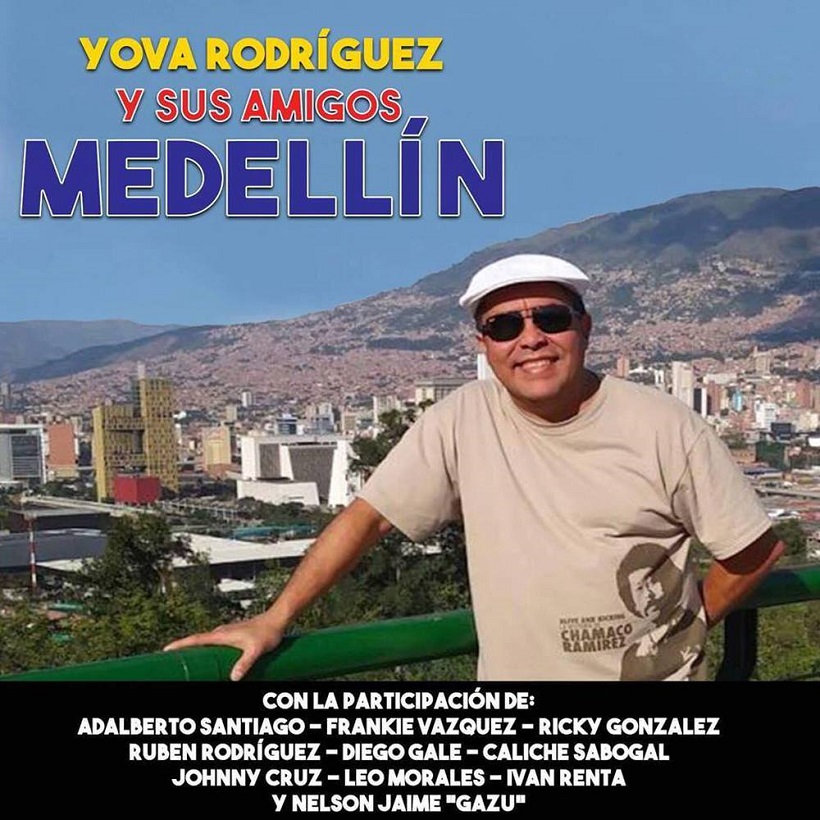
Yova Rodríguez - flyer
Yova Rodríguez – flyer

Cubanoson

Northeast – Middle Atlantic- New Jersey 

Cubanoson is a traditional Cuban dance orchestra as created by pianist and composer, Leonel “Papo” Ortega. This Orchestra unites the “Punto Cubano” and the “Son Montuno” bringing danceable Cuban music to any public or private event.

In 2006, Cubanoson released their debut album “Recordando a Cuba” which contain 10 tracks. Four years after, this NY’s Cuban orchestra presented their second album “Rumba Nueva” with 13 singles including 7 originals in Spanish, English and French. Likewise, Cubanoson has the purpose to unite the talent and dedication of excellent contemporary musicians, (true exponents of Latin roots), to offer and express the traditional Cuban music to all cultural venues! Please, visit them in https://www.facebook.com/cubanoson

Cubanoson
Cubanoson

Next Event: Tuesday, August 7th

Time: 7:00 PM

Venue: National Night Out Festival. Bergenline Ave and 43rd St, Union City, 07087.

Come and dance with Cubanoson for the 13th straight year LIVE!

This is a great festival free to all over a span of 3blocks.

Support of the Police.

  • « Go to Previous Page
  • Page 1
  • Interim pages omitted …
  • Page 163
  • Page 164
  • Page 165
  • Page 166
  • Page 167
  • Interim pages omitted …
  • Page 241
  • Go to Next Page »

International Salsa Magazine (ISM) is a monthly publication about Salsa activities around the world, that has been publishing since 2007. It is a world network of volunteers coordinated by ISM Magazine. We are working to strengthen all the events by working together.