• Skip to primary navigation
  • Skip to main content

International Salsa Magazine

  • HOME
  • Previous editions
    • 2026
      • ISM / March 2026
      • ISM / February 2026
      • ISM / January 2026
    • 2025
      • ISM / December 2025
      • ISM / November 2025
      • ISM / October 2025
      • ISM / September 2025
      • ISM / August 2025
      • ISM / July 2025
      • ISM / June 2025
      • ISM / May2025
      • ISM / April 2025
      • ISM / March 2025
      • ISM / February 2025
      • ISM / January 2025
    • 2024
      • ISM / December 2024
      • ISM / November 2024
      • ISM / October 2024
      • ISM / September 2024
      • ISM / August 2024
      • ISM / July 2024
      • ISM / June 2024
      • ISM / May 2024
      • ISM / April 2024
      • ISM / March 2024
      • ISM / February 2024
      • ISM / January 2024
    • 2023
      • ISM / December 2023
      • ISM / November 2023
      • ISM / October 2023
      • ISM – September 2023
      • ISM – August 2023
      • ISM July 2023
      • ISM Edition June 2023
      • ISM – May 2023
      • ISM April 2023
      • ISM March 2023
      • ISM February 2023
      • ISM January 2023
    • 2022
      • ISM December 2022
      • ISM November 2022
      • ISM October 2022
      • ISM September 2022
      • ISM August 2022
      • ISM July 2022
      • ISM June 2022
      • ISM May 2022
      • ISM February 2022
      • ISM January 2022
    • 2021
      • ISM December 2021
      • ISM November 2021
      • ISM October – 2021
      • ISM September 2021
      • ISM August 2021
      • ISM July 2021
      • ISM May 2021
      • ISM April 2021
      • ISM June 2021
      • ISM March 2021
      • ISM February 2021
      • ISM January 2021
    • 2020
      • ISM December 2020
      • ISM November 2020
      • ISM October 2020
      • ISM September 2020
      • ISM August 2020
      • ISM July 2020
      • ISM June 2020
      • ISM May 2020
      • ISM April 2020
      • ISM March 2020
      • ISM February 2020
      • ISM January 2020
    • 2019
      • ISM December 2019
      • ISM November 2019
      • ISM October 2019
      • ISM Septembre 2019
      • ISM August 2019
      • ISM July 2019
      • ISM June 2019
  • Download Salsa App
    • Android
    • Apple
  • Spanish

Search Results for: Legacy of Salsa

Armando Manzanero “The King of Romanticism” left us this morning

Master Armando Manzanero said goodbye to us due to covid-19 complications

The morning of December 28, Mexico and the rest of Latin America woke up to the sad news of the death of another of its great artists: Maestro Armando Manzanero. A few days ago it was announced that the singer-songwriter had tested positive for covid-19, the virus that has the world paralyzed and on edge, he was hospitalized on December 17 for complications associated with it.

Despite informing that Armando was improving at respiratory level after being intubated, it was reported that he would remain under observation for some kidney problems. This morning the Society of Authors and Composers of Mexico, of which he was the president, announced his death due to a heart attack associated with his complications.

With his 86 years, the maestro always remained active, contributing a lot to the history of Latin music and his native Mexico. Nobody would have thought that we will not only say goodbye to 2020 but also to the great musician, his ashes will be delivered to his family during this Monday, which will be transferred to his born city Mérida, where at the beginning of the month he had inaugurated the Casa Manzanero museum where the best milestones of his career of more than 60 years are exhibited.

Armando Manzanero was one of the greatest
The master Armando Manzanero.

The incredible long career of Armando Manzanero

Armando Manzanero passed away at the age of 86, leaving a legacy of golden years on stage with his favorite instrument: the piano, demonstrating the great talent that exists in Latin America. In 1950 he composed what would be his first tune “Never in the world”, this was only the beginning of his great career.

There are more than 400 songs that the maestro composed, which are divided between those used for his own discography and those that many artists have had the honor of singing, among which we can name: Elvis Presley, Andrea Bocelli, Angélica María, Luis Fonsi, Belinda, Joan Sebastian, La Arrolladora Banda El Limón, Roberto Carlos, Andrés Calamaro, Ana Torroja, Ana Gabriel, Daniela Romo, Laura Pausini, Cristian Castro, Alejandro Fernández, Lucero, Paulina Rubio, Ricardo Montaner, Miguel Bosé, Rocío Dúrcal, Raphael, David Bisbal, Pedro Fernández, José José, Luis Miguel, Vicente Fernández and many more.

Armando Manzanero died last December
The King of Romanticism is no longer with us.

Not only did he participate in songwriting for albums and artists, but he also participated in the composition of many songs for movies and soap operas. Among all his great awards are several Grammys including the Award for Musical Excellence for his great contributions to music.

The Recording Academy posted on its Twitter account: “Armando Manzanero, recipient of the Award for Musical Excellence and winner of the Latin GRAMMY, as well as a great friend of the Academy, has left us. We celebrate his life and work. Irreparable loss for the world of Latin music. We accompany the Manzanero family in their deep pain.”

We must remember that the maestro was honored this year in many ways, the most memorable were those made at the Billboard Latin Music Awards and the Latin Grammy, no one thought that they would be the last tributes in life for Mr. Manzanero. During this week more posthumous tributes, and many words from different Latin artists are expected.

Rest in peace Armando Manzanero, may heaven be filled with his romantic words and great tunes!


Home

Renowned pianist and producer Sony Ovalles died

The news was released on Sunday 13

On Sunday, December 13, Latin music mourned the death of the great pianist and music producer Sony Ovalles, who was a key piece of the merengue and music in his native Dominican Republic. It was known that the cause of death was a heart attack, many industry figures spoke about it:

“Dominican Music is still mourning, the teacher, producer, arranger, pianist Sony Ovalles has just died of a heart attack! Responsible for many hits of Wilfrido Vargas, Jhonny Ventura, Sergio Vargas, Monchy Capricho, Rubby Perez among other great orchestras and Dominican artists! My condolences to his family and friends! Another great musician who becomes part of the Celestial Orchestra! Rest in peace Sony Ovalles’ soul!”, expressed Alejandro Henríquez through his Instagram account.

Ovalles has left a very huge position to fill, since his contribution to Latin music is very great. There are many outstanding artists who owe many of their successes to this genius, whose favorite instrument was the piano. But his talent went beyond the black and white keys, his gift for producing, composing, and arranging the songs with which so many artists and groups became known, could be considered magic. Heaven is now celebrating to the rhythm of the Dominican Sony Ovalles!

Sony Ovalles falleció
Sony Ovalles left a great legacy,

Learn more about the great musician Sony Ovalles

His real name was Rafael Ovalles Amaro, but it was through Sony Ovalles that the industry knew him. He was born in Salcedo, part of the Hermanas Mirabal province, in the always beautiful Dominican Republic, back in the 40s, being the proud son of Carlos Ovalles and Nidia Amaro. His initiation in music did not occur until he was 14, under the tutelage of the great musician Cuto Estévez, who managed to see a future with music for Sony.

He was the pianist of choice of Wlfrido Vargas, Félix del Rosario, Runny Pérez, and many more artists, despite not being in front of the stage, his presence was very powerful alongside the other musicians in the orchestra. Apart from collaborating with solo artists, Sony also lent its talents to great groups such as Joseíto Mateo’s, Los Hermanos Rosario, Las Chicas del Can, along with many more.

In addition to collaborating with great artists, he formed different groups, such as the salsa group El Complot that had Mike Peguero as its interpreter, as well as an orchestra with Vicente Pacheco as singer. Despite standing out in the merengue, he put his touch to several salsa compositions, recorded a complete album with the salsero Michel, highlighting the song Esa mujer.

Sony Ovalles álbum
One of his albums.

There were many hits where he collaborated but the following are some of the most important: Wilfrido Vargas’ Atrevida, 13 años and Bachata merengue; Sergio Vargas’ Noche, La tierra tembló and Por ella; Vicente Pacheco’s El atracador, The New York Band y Tus 20 años. But his repertoire was infinite, demonstrating once again the great talent that exists in the Dominican Republic, one of the Caribbean jewels.


Home

6 artists who helped make Latin Music successful in the United States

The success of Latin Music in the United States

Some artists have taken Latin music to another level. They fell in love with the public on American borders and helped shape the market as we know it today. We will tell you more details!

Latino immigrants who made their way into the United States gave way to Hispanic music as it is known today.

The Argentine tango, for example, was a success in the US in 1930 and is considered the first Latin genre to have participation on American soil. As you can imagine, from then on a movement was born that is here to stay. At the end of the 90s, this musical boom finished exploding. The numbers were increasing and more and more artists were honoring their Latin roots.

Currently, the industry numbers give prominence to Latin artists, having a greater incidence when they present their songs in Spanish. Also, there are a large number of versions that have been translated into English and are heard in renowned venues. In fact, it is enough to go to a nightclub or a Latin concert in iconic venues such as Madison Square Garden, located in New York or American Airlines Arena in Miami to check acceptance by the public. How much ground have they gained to have a leading role in the most powerful country in the world?

La Guarachera del Mundo - Latin America
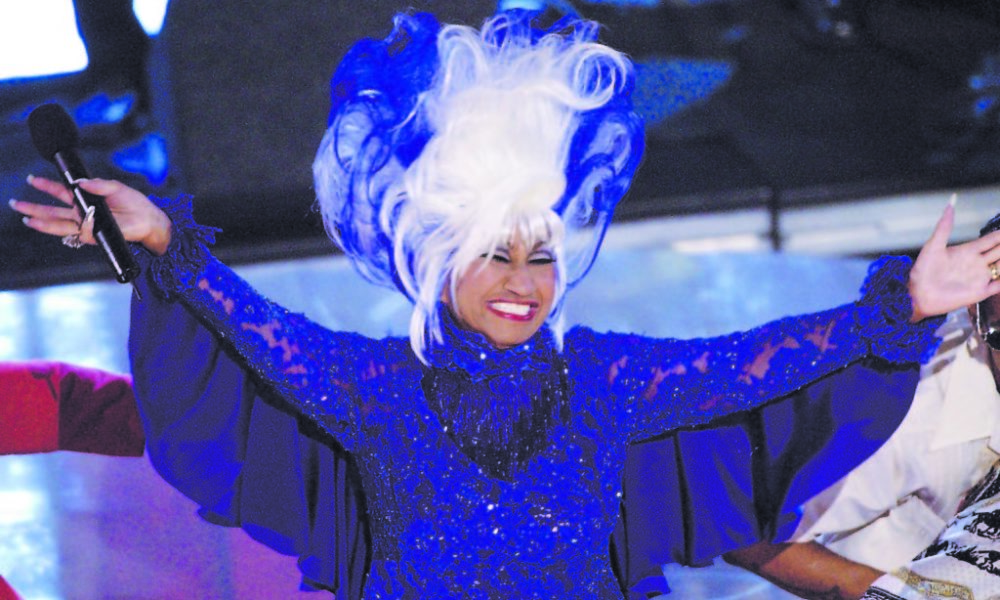
Celia Cruz is well known all around the latin world

The road has not been easy, it has been marked by countless artists who, little by little, were making known the rhythms of Caribbean countries. Salsa, for example, was one of the most popular rhythms at the time. Starting in 1960, it was catapulted into the United States, paving the way for Latina artists who are now considered legends of the genre. Celia Cruz, Willie Colón, Héctor Lavoe, Rubén Blades, Johnny Pacheco, among others, marked a before and after in the industry.

Today we want to talk about some famous singers who set the tone and promoted the careers of other Hispanics.

6 Latino artists who paved the way for new generations

Emilio Estefan, Cuba

The Cuban was born in 1953 and arrived in the United States at the end of 1960, from Spain. Estefan always had musical interests. Although, in principle he had to work in other areas. He formed the band “Miami Latin Boys”, which would later be called “Miami Sound Machine”. Thanks to his different presentations, he met Gloria Fajardo, today known as Gloria Estefan, who accompanied them as vocal reinforcement. No one imagined that this singer would become their life partner.

Despite the success of the group, it is other achievements of the artist that place him in this category. Emilio Estefan soon established himself as a producer for Latin American artists and contributed to Gloria Estefan’s success as a soloist. He quickly became known within the industry, working with artists such as Charliee Zaa, Cristian Castro, and Carlos Vives.

In 2002, Estefan became a producer for the Latin Grammy Awards, an annual event that awards artistic excellence for productions in Spanish, Portuguese or other languages ​​of Hispanic countries.

Emilio Estefan and his wife have been awarded the Presidential Medal of Freedom from the United States, the highest honor in the country, due to their work in the training of artists and projection of Latin music in the world.

Celia Cruz, Cuba

Celia Cruz, began her career in her native Cuba. She excelled in tropical music and was known as “The queen of salsa.” During her first years of career, she stood out in her country, and later ventured into Mexico and the United States. She moved to the US and at the end of the 70s she joined the Fania All-Stars, along with other artists, fully joining salsa. In 1987, her star was debuted on the Hollywood Walk of Fame.

Cruz is part of a legacy that will continue throughout history. Her songs remain current and are part of the heritage of Latin America. She was nominated for two Grammys and three Latin Grammys.

The Postal Service of the United States included it in a selected group of five stamps, destined to the greats of Latin music; together with Selena, Tito Puente, Carmen Miranda and Carlos Gardel.

Selena, Mexico

The singer was born in the United States and was of Mexican descent. Her genre leaned toward ranchera, Mexican cumbia, and ballads. Selena is known as “the queen of Latin music” and has exceeded 70 million records worldwide.

In the 1990s, the US Billboard magazine named her “the most influential and best-selling Latin artist.” In addition, she is credited with catapulting Latin music in the United States and the world. Selena featured five albums ranked on the Billboard 200 at the same time. Her album Live (1993) won a Grammy for best Mexican-American music album, leaving behind the paradigms of those who considered the Tejano musical style as exclusive to men.

Selena was murdered in 1995. A great loss to show business. Her fans still regret her departure and imagine what she could achieve thanks to your talent. However, it leaves a very broad legacy for Latinos. After her death, she continues to be an example and inspiration for those who want to enter the market.

Juan Luis Guerra, Dominican Republic

The Billboard Winner Juan Luis Guerra
An Artist who help the genre in USA

Juan Luis Guerra is one of the most recognized Latin artists in the world. In the United States, he has been the recipient of 24 Latin Grammys, three Latin Billboard Awards and two American Grammys. He has recorded in Portuguese, English and, of course, in Spanish.

She trained at the largest private music college in the world, Berklee College of Music, in Boston. Earning a degree in jazz composition.

Guerra has made different tours of the US obtaining a box office record. He is a recognized exponent in the genre of merengue and bachata. In 2015, he collaborated with the financing of the Juan Luis Guerra Scholarship, presented by the Latin GRAMMY Cultural Foundation for a low-income student.

The singer is of Dominican origin and today he works as a composer, arranger, musician and producer.

Héctor Lavoe, Puerto Rico

Considered one of the best salseros of all time. He is credited with helping to bring about the genre’s golden age in New York. In addition, to expand the popularity of salsa in the 60’s, 70’s and 80’s.

In New York City, he takes his first steps as a bolero vocalist to make his way in what would be a great musical career. The Puerto Rican’s success kept on rising, he sang with the famous Willie Colón and together they toured different stages. Lavoe was also part of the Fania All Stars, a salsa and Latin music group. The Singer, as he was also baptized, died on June 29, 1993. He left an unforgettable musical legacy in the United States and the world; his songs and style are inspiration for many salsa performers today.

Marc Anthony, United States

For many, it could come as a great surprise that an American artist has such a marked and extraordinary Latin musical rhythm. However, his parents are Puerto Rican and he grew up with part of this culture. Marc Anthony is a singer of ballads, pop, salsa and bolero; ambassador of Latin music and culture.

When he began his career, many doubted whether he would be successful in Latin music.

“My career was not easy at first, because I neither looked nor sounded like the ‘typical salsero’. My sound was not considered usual for purists, ”he told The Associated Press.

The singer and actor has sponsored young talents such as Luis Figueroa, a Latino who was just beginning his career in the artistic medium. In addition, it has sold more than 30 million records around the world. Received 2 Grammys and 7 Latin Grammys. Marc Anthony has many fans worldwide. However, Latinos have a very special appreciation for him. In 2012, he started the Maestro Cares Foundation, to raise funds to build orphanages in Latin America.

If we wanted to mention those musicians to whom the expansion of Latin music is due, the list would be endless. Infinity of people who overcame cultural barriers to carry the name of their country, its rhythms and culture high. Currently, the city of Miami is considered as the starting point. The first contact of the young musicians, before venturing to the rest of the country. In addition, the same experts call it “the epicenter of the Latin industry.” This is due to the number of media, producers, multinationals and locals that are willing to open their doors to them and boost their talent.

Latin music represents an industry that does not stop, is profitable and is taking more and more space in the United States. Therefore, a decline is not expected in the coming years.


Home

Selena: the series The New Netflix Show

Selena Quintanilla Perez

Also known as the queen of tex-mex, Selena was undoubtedly one of the greatest exponents of Latin music, her songs continue to be played on many radios around the world, and keeping in mind the legacy that the singer has left, this is not surprising. If you don’t know who this extremely talented artist was, right now it’s a good time to find out about her story, the new Netflix series called “Selena: the series” shows her artistic career in detail, and it also let us watch an important part of her Personal life.

Selena: the series
Image by: Netflix

Selena was not only an icon of the genre she pioneered, but she also greatly facilitated the exposure of many Latin artists that emerged after her tragic death; All this has only made the expectations of the fans who adore the artist continually grow, but is this show just a gift from Netflix for the Selena fans, or is it also capable of pleasing the general public?

How good is the series?

It is important to mention that, as mentioned before, the show does not focus exclusively on Selena’s artistic career, but shows what the life of the Quintanilla family was like, always in a smooth way, without trying to be too dramatic. We constantly observe how what reigns in the family is the union, despite all the adversities that they go through; However, as the series continues, we observe how the tone changes little by little until we reach the last episode, where the approach is clearly cruder than that of the rest of the series.

Despite being a biographical series, the way it is told can be very entertaining, it is a show that seeks not only to tell what the artist’s life was but also to entertain the viewers, even those who watch it without knowing the singer’s story.

Another important aspect to mention is the fact that this series is authorized by the Quintanilla family, which means that the events we see on the screen are very similar to those that have taken place in real life. On the other hand, unlike what many may think when hearing about the series, the first season does not tell the whole story of Selena until the day of her unfortunate death, but focuses on her first steps as an artist, as well as at the beginning of his rise to stardom; However, season two will focus on the artist’s legacy, what it meant to her fans, and how painful and heartbreaking her death was.

The show is highly recommended for all those who want to see a new version of the story, although it is true that what we see on it may not surprise those who are very familiar with the singer’s life, it is definitely worth seeing a different version with the Netflix production in between, plus, it may turn out to be very interesting for those who do not know the history of this iconic artist.

Home

Jimmie Morales a conguero for the history of Afro-Caribbean music

Jimmie Morales was born in Bridgeport, Connecticut to Puerto Rican parents

Jimmie Morales was born in Bridgeport, Connecticut to Puerto Rican parents.

He spent his early childhood listening to American popular music on the radio, and it wasn’t until 1967, when his family moved to Puerto Rico, that he became fascinated with Caribbean music, especially the salsa genre.

Jimmie’s first foray into music was with the guitar, but his father gave him a bell and, later, a conga drum that would become his main artistic fascination.

He learned of his interest by listening to Cuban, Puerto Rican and New York salsa records; also to congueros such as Milton Cardona, Eddie Montalvo, Patato Valdés, Cándido Camero, Mongo Santamaría, Johnny Rodríguez and his favorite: the late Ray Barretto.

In a very short time, he found himself making inroads with local bands, and sharing his talent with the renowned singer Tito Allen.

Jimmie Morales' memoirs Mr. Slap
Jimmie Morales Mr. Slap

Jimmie Morales and his experience with Willie Rosario

In 1978, Jimmie joined the popular rhythmic band of maestro Willie Rosario, and for eight years obtained what he considers his best formal training in the music industry.

Concurrently, he began an impressive career as a top-level studio musician, achieving outstanding participation in performances by the most important artists of the salsa genre, including Marc Anthony, Gilberto Santa Rosa, Roberto Roena, Oscar D’León, Lalo Rodríguez, Eddie Santiago and Frankie Ruiz, with whom he collaborated on each and every one of his solo recordings.

The sound of this great percussionist, his impeccable rhythm and his solid accompaniment defined him and have placed him convincingly as one of the most influential congueros of the last 30 years.

As if that were not enough, this talented conguero enjoys the genuine respect and appreciation of the Puerto Rican people and salsa connoisseurs worldwide
Jimmie has also accompanied great artists such as Willie Colón, Ismael Miranda, Tito Nieves, Juan Luis Guerra, Grupo Niche and Jerry Rivera

Trajectory with Gilberto Santa Rosa

In 1986, he joined a young Gilberto Santa Rosa, who had left Mr. Willie Rosario’s band to become the most prolific salsa singer in the last 25 years.

Since then he has traveled throughout the Americas, Europe, Japan, Taiwan and South America offering percussion workshops and accompanying different artists in a consistent and successful career as a percussionist. Jimmie Morales has also accompanied great artists such as Willie Colón, Ismael Miranda, Tito Nieves, Juan Luis Guerra, Grupo Niche and Jerry Rivera, among others.

He is currently promoting his line of congas sponsored by the Remo Company. As if that were not enough, this talented conguero enjoys the genuine respect and appreciation of the Puerto Rican and Latin American people. His humility, his affable treatment and his charisma, together with his musical virtuosity, make him worthy of an indisputable place in the history of salsa.

In 1986, he joined a young Gilberto Santa Rosa, who had left Mr. Willie Rosario's band to become the most prolific salsa singer in the last 25 years.
Jimmie Morales is currently promoting his conga line sponsored by the Remo Company

Since then, he has traveled throughout the American continent, Europe, Japan, Taiwan and South America offering percussion workshops and accompanying different artists in a consistent and successful career as a percussionist.

Jimmie has also accompanied great artists such as Willie Colón, Ismael Miranda, Tito Nieves, Juan Luis Guerra, Grupo Niche and Jerry Rivera, among others. He is currently promoting his line of congas sponsored by the Remo Company.

As if that were not enough, this talented conguero enjoys the genuine respect and appreciation of the Puerto Rican people and of salsa connoisseurs worldwide. His humility, his affable treatment and his charisma, together with his musical virtuosity, make him worthy of an indisputable place in the history of salsa.

A conguero for history Jimmie Morales’ memoirs

“Mr. Slap”       

Bella Martínez (Author)

That originality of Willie Rosario must have influenced Jimmie's impeccable style.
Jimmie paid for the luck that accompanied him at that crucial moment with an immense dose of vocation.

When all the congueros were imitating the king of the hard hands, Ray Barreto, Jimmie manages without intending to be the one chosen by the master Willie Rosario to accompany with the conga the tuning that Rosario had already established.

That Willie Rosario originality must have influenced Jimmie’s impeccable style.

Let’s not forget that when all timbaleros were imitating maestro Tito Puente, that irreverent coameño – maestro of maestros Willie Rosario knew how to be original.

Jimmie repaid the fate that accompanied him at that crucial moment with an immense dose of vocation.

And that stroke of luck in the leather didn’t manage to erase the humility of his being.

I invite you to read what I have managed to compile about Jimmie Morales, whom, with your authorization, I show in this work that pretends to be a summary of the life and work of this incredible musician.

Here you will also see that in spite of his perennial shy smile, his hands of stone do not give a break nor allow tropical music to ignore his monumental influence.

Jimmie, the human being who communicates through the leather of his conga, presents us with the musical strength he continues to share with the world. I am deeply grateful for the introspection and candor of his testimony.

I recognize that I am fortunate that Jimmie has agreed to give me part of his voice and to perpetuate this story. I insist that it was a sin not to share this legacy before, but now it was Mister Slap who beat the drum.


Home

  • « Go to Previous Page
  • Page 1
  • Interim pages omitted …
  • Page 27
  • Page 28
  • Page 29
  • Page 30
  • Go to Next Page »

International Salsa Magazine (ISM) is a monthly publication about Salsa activities around the world, that has been publishing since 2007. It is a world network of volunteers coordinated by ISM Magazine. We are working to strengthen all the events by working together.