• Skip to primary navigation
  • Skip to main content

International Salsa Magazine

  • HOME
  • Previous editions
    • 2026
      • ISM / March 2026
      • ISM / February 2026
      • ISM / January 2026
    • 2025
      • ISM / December 2025
      • ISM / November 2025
      • ISM / October 2025
      • ISM / September 2025
      • ISM / August 2025
      • ISM / July 2025
      • ISM / June 2025
      • ISM / May2025
      • ISM / April 2025
      • ISM / March 2025
      • ISM / February 2025
      • ISM / January 2025
    • 2024
      • ISM / December 2024
      • ISM / November 2024
      • ISM / October 2024
      • ISM / September 2024
      • ISM / August 2024
      • ISM / July 2024
      • ISM / June 2024
      • ISM / May 2024
      • ISM / April 2024
      • ISM / March 2024
      • ISM / February 2024
      • ISM / January 2024
    • 2023
      • ISM / December 2023
      • ISM / November 2023
      • ISM / October 2023
      • ISM – September 2023
      • ISM – August 2023
      • ISM July 2023
      • ISM Edition June 2023
      • ISM – May 2023
      • ISM April 2023
      • ISM March 2023
      • ISM February 2023
      • ISM January 2023
    • 2022
      • ISM December 2022
      • ISM November 2022
      • ISM October 2022
      • ISM September 2022
      • ISM August 2022
      • ISM July 2022
      • ISM June 2022
      • ISM May 2022
      • ISM February 2022
      • ISM January 2022
    • 2021
      • ISM December 2021
      • ISM November 2021
      • ISM October – 2021
      • ISM September 2021
      • ISM August 2021
      • ISM July 2021
      • ISM May 2021
      • ISM April 2021
      • ISM June 2021
      • ISM March 2021
      • ISM February 2021
      • ISM January 2021
    • 2020
      • ISM December 2020
      • ISM November 2020
      • ISM October 2020
      • ISM September 2020
      • ISM August 2020
      • ISM July 2020
      • ISM June 2020
      • ISM May 2020
      • ISM April 2020
      • ISM March 2020
      • ISM February 2020
      • ISM January 2020
    • 2019
      • ISM December 2019
      • ISM November 2019
      • ISM October 2019
      • ISM Septembre 2019
      • ISM August 2019
      • ISM July 2019
      • ISM June 2019
  • Download Salsa App
    • Android
    • Apple
  • Spanish

Search Results for: Legacy of Salsa

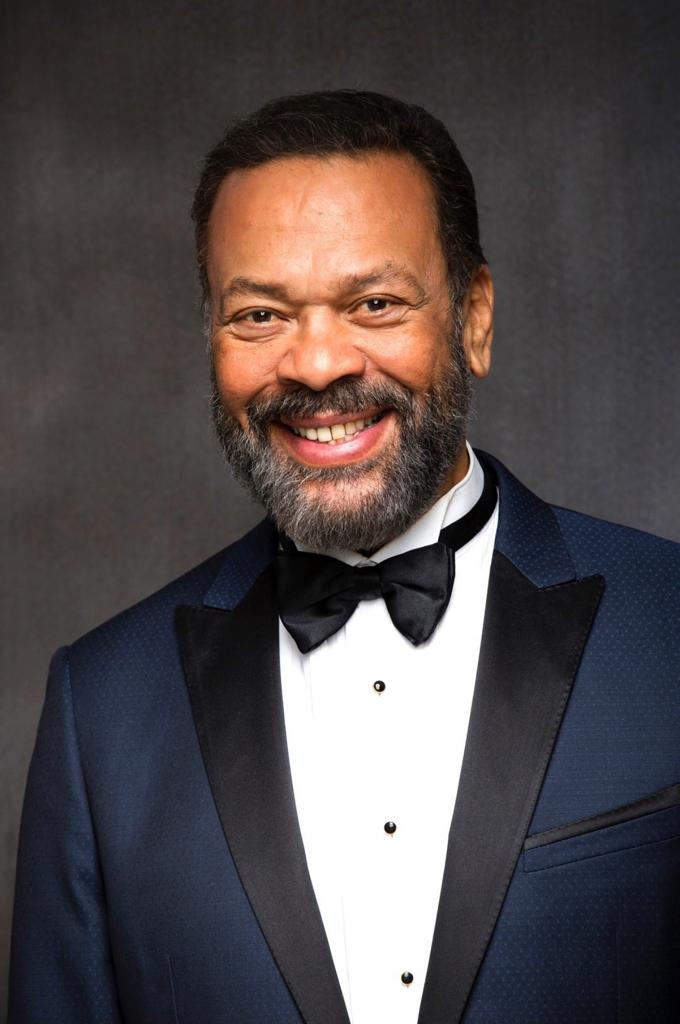
Ángel “Cucco” Peña and a great legacy

Cucco Peña has donated his emblematic tuxedo to the Spanish Harlem Salsa Gallery Museum

By Johnny Cruz

News from NY City

Who is Cucco Peña

The emblematic tuxedo
Ángel “Cucco” Peña

On September 1, 1948, Angel ‘Cucco’ Peña was born, someone who from elementary school showed his interest in music and as the years passed, showed that there were little flashes of that brilliant talent he had. His talent and passion were aligned, so he always spent his life surrounded by music. Today he could be considered an icon of Latin music thanks to his achievements as an artist and thanks to everything he offered to the industry; he has managed to trace a career full of successes, one that today continues to inspire many people.

Peña’s talent led him to interact in many music-related activities, not only did he graduate from the Puerto Rico Music Conservatory, but also, after graduation, he joined the Pan-American Orchestra, starting with what would be a career full of reached goals. In the orchestra, he would familiarize himself with many different styles that would help him as a musician, since in the orchestra he played a wide variety of music, from bolero, blues and jazz, to pop and even rock.

Cucco Peña’s path

Cucco Peña is a great artist

Cucco left the band and began to trace his own path with everything he learned, he didn’t just become a music director, but a producer, composer, and arranger for many internationally famous artists such as: Ricky Martin, Chayanne, Ricardo Arjona, Olga Tañon, Gilberto Santa Rosa, Luis Fonsi, Franco de Vita and many other artists; despite each artist’s very different styles, Peña’s talent has allowed him to understand perfectly what all of them needed. In his own words, “it is important to see that music has three perspectives: the artist perspective, the company’s perspective, and my own.” Finding a perfect harmony between these three perspectives, Peña has participated in the creation of great themes.

Achievements

The North American has not only managed to collaborate with a large number of renowned artists, but has also achieved a lot of recognition for his work, he is a two times Grammy winner, the first is the Grammy for the best tropical album contra la corriente, Marc Anthony’s album (1999), the second is Latin Grammy for best musical production, this thanks to Olga Tañón’s album, Yo por ti. Grammy is not the only award he has won, he also received a total of 60 Cuspide awards and 40 Addy awards, plus 20 awards from the New York Theater Festival and an “Agüeybaná de Oro” for Director of the Year.

The awards are not everything, he has been both the director and the composer of the Central American games’ opening and closing ceremonies, and the composer of two movie soundtracks (“La Gran Fiesta” and “Nicolás y Los Demás”); Plus, he has produced more than 100 compositions, not to mention that he also worked as a producer for important figures in the industry, such as Lunna, Jerry Rivera, Chayanne, and many others.

Without a doubt, Ángel “Cucco” Peña is a very important figure for the industry, and after a long career dedicated to music, he has shown that his talent is worthy of being recognized.

The new piece of Spanish Harlem Salsa Museum

The invitation to tune in to the new Fm / Internet radio station on Live365.com: Salsagallery continues. Great music, artist interviews and much more.

At the Spanish Harlem Salsa Gallery Museum we are happy to affirm that New York City is preparing to resume its activities little by little. We hope to have more news soon and that we can return to normal soon.

The Museum is open free to the public. We wait for you!

Villariny Salsa Project from Puerto Rico

Committed to continuing the legacy of the greats in Salsa

Villariny Salsa Project made its debut on July 25th, 2009, at an international event held in Puerto Rico called “Puerto Rico Salsa Congress” where it was presented twice in the same year, as a prelude to Roberto Rohena and later, to the Gran Combo de Puerto Rico.

Villariny Salsa Project
Committed to continuing the legacy of the greats in Salsa

In the summer of 2010, Oscar Villariny (founder of the group) after working as a professional musician with salsa artists such as Gilberto Santa Rosa, Jerry Rivera, Puerto Rican Power, Viti Ruiz, Rey Ruiz, Anthony Cruz, Jose Alberto “El Canario”, Luigi Texidor, Tito Nieves, Michael Stuart, David Pabon, Johnny Rivera among others; began recording the first musical production which was entitled “En tu tiempo”.

Before making the “relayase” of the musical production, Villariny Salsa Project recorded the Christmas song “Trulla Caliente” to the rhythm of full, being a total success occupying the first positions in the radio lists.

In 2011, the first musical production of the band comes out with 8 songs, which has the hits “Que bien me va”, “Estoy Enamorao”, “Bendita la luz (salsa version)”, “A punto de Caramelo” and “Amigo es un peso en el bolsillo”.

This musical production was in charge of Mr. Tommy Villariny (arranger, musical producer, and trumpet player) who is Oscar Villariny’s father.

Within this production, he had the vocal coaching of Gilberto Santa Rosa, Victor Manuelle, Tony Rivas, Jerry Rivas (singer of the Gran Combo).

Villariny Salsa Project debuted on July 25th 2009 at an international event held in Puerto Rico called "Puerto Rico Salsa Congress".
Music Producer: Tommy Villariny & Oscar Villariny

At the time, it had a great acceptance from salseros and managed to be present in massive concerts such as Luisito Carrión (Roberto Clemente Coliseum), José Alberto El Canario (Tito Puente Theater), and the 2012 National Salsa Day. In 2014, VSP presented its second musical production entitled “De tu mano”.

This production has 10 songs and includes guest artists such as: Manny Trinidad (four Puerto Rican), Prodigio Claudio (four Puerto Rican), Camilo Azuquita, Luisito Carrión, José Alberto “El Canario (We were born in Salsa) and Medina Carrión.

The songs “De tu mano”, “Color Esperanza”, “Nacimos en salsa “and “Con computadora no feat NG2”, occupied the first positions in the radio waves.

In the year 2019, Villariny Salsa Project released a new music single entitled “Homenaje”, in honor of his father’s career and some of his successes by bringing together the same singers who originally recorded them such as Andy Montañez, Eddie Santiago, Rey Ruiz, and Viti Ruiz. “Many artists in the salsa genre have been hand in hand with my father Tommy Villariny to create what are successes today,” said Oscar Villariny.

Villariny Salsa Project released a new musical single entitled "Homenaje", in honor of his father's
Tribute to his father’s career

Our vision at Villariny Salsa Project is to make way for the New Generation and offer new opportunities, which is why Oscar Villariny (Founder of Villariny Salsa Project) is recording his first album with talented young people from the patio, produced by veteran musician Tommy Villariny.

Recently Villariny Salsa Project launched “Agua” available on all digital platforms.

Villariny Salsa Project presenta "Agua" feat. Mari Picorelli
Villariny Salsa Project presenta “Agua” feat. Mari Picorelli

The Villariny Salsa Project orchestra is a group with a lot of projection and refreshing for the industry.


Home

The “Caballero de la salsa” delights us with his new album

North America / United States

The story of an artist

Gilberto Santa Rosa, known as “El Caballero de la salsa”, was born in 1962 in Puerto Rico.

The singer has excelled at performing romantic ballads, boleros, and salsa. His first steps in music were at a very young age. Before reaching adolescence he was already forming youth groups within the tropical genre. For about two years, he was part of the band La Grande, from the hand of greats of the genre.

Colegas is the new album of Gilberto Santa Rosa
Gilberto Santa Rosa has a new album

Elías Lopés, famous Puerto Rican trumpet player, became his teacher and tutor. At the age of 14 he traveled to New York to take his first steps in the musical field and his father entrusted him to Lopés. Santa Rosa is very pleased to have received his teachings.

“The greatest legacy for me was discipline, knowledge of the work you are doing and the challenges; He gave me musical challenges that developed the talent I had at that time, “said the salsa singer.

Gilberto participated in the “Homenaje a Eddie Palmieri” with the Puerto Rico All Star, a great opportunity for his career that was on the rise. In addition, he was in the ranks of the Willie Rosario orchestra.

First steps

In 1986, he got his first opportunity as a soloist. Combo Records allowed him to record four albums; giving it a further boost in the salsa genre. Good Vibrations (1986), Keeping Cool! (1987), De Amor y Salsa (1988) and Salsa en Movimiento (1989) were his first record works.

In 1990, he had the opportunity to change record labels. On this occasion, CBS today is known worldwide as Sony Discos. Company with which he has recorded approximately 24 albums and continues to this day.

Sony Discos trusted him and saw him succeed through the years. Punto de vista, the first production made with the label, received a gold and platinum record. The Man and His Music was quite a special production. It was held in 1995 and reflected a presentation held at Carnegie Hall in New York.

Acting is another of the roles that he has developed with great skill. In 1990, he participated in “La pareja dispareja” with Rafo Muñiz and Luis Vigoreaux, Jr.

In the 2000s he was in other theatrical pieces. He starred in the revival of “La verdadera historia de Pedro Navaja”, a musical that demanded a lot from him on a professional level; and with Cuban comedian Alexis Valdés in the play “Atrácame más”.

“Returning to the theater, this time to comedy, fills me with great enthusiasm and even more so to be able to share the stage with one of the greats of comedy in the United States and Latin America. The truth is that “Atrácame más” takes me out of my comfort zone which is music and challenges me professionally. I’m really enjoying this story and I hope people enjoy it a lot more ”, commented Gilberto Santa Rosa, about “Atrácame más”.

Gilberto Santa Rosa is one of the artists who broke paradigms in the United States and in the rest of the world. From the beginning, the Latin public did not hesitate to follow his career and, of course, attend his meetings. He also had the opportunity to travel to Japan.

He presented himself as a worthy representative of his country and surprised the audience by performing “De cara al viento” in Japanese. A feat that surprised critics due to the difficulty of the language. In addition, it was his beginning in the international market, until today he is acclaimed incessantly.

Gilberto had great acceptance and a box office record in his presentations at the First President Festival in the Dominican Republic, the Lincoln Center in New York with Andy Montañez; at the Anayansi Theater in Panama and at the Universal Studios Amphitheater in Hollywood with Olga Tañón.

The accompaniment by the Symphony Orchestra ended up catapulting him among his followers. They considered it an unprecedented presentation and brimming with talent. It was presented under this format in the United States and broke box office records at the Teresa Carreño Theater in Caracas, Venezuela.

Expresión, 1999

It was one of his most popular albums. The album marked the singer’s career as it was nominated for a Latin Grammy Award, for Best Salsa Album, in its first installment. “Que alguien me diga”, original Omar Alfanno, Panamanian composer positioned him for several weeks on the Billboard. The production featured 13 songs with a total of 55 minutes in length.

The album had great renown in the Central American market, giving it a gold record for sales. In addition, he was chosen by the National Foundation for Popular Culture among the most outstanding of the year 1999.

Gilberto, continued to count successes and praise the work of the greats in the industry. He made several tributes such as the concert “Viva Rodríguez” in tribute to Tito Rodríguez; Tribute that the Orquesta Estrellas de la Fania, to Don Tite Curet Alonso and La Guarachera, Celia Cruz, in New York.

40 … y contando, it was released in 2019. It was a live album, with which he commemorated his 40-year career. The idea was born from his concert at the Coliseo José Miguel Agrelot in San Juan, Puerto Rico. 40… y contando it ranked second in sales of Tropical Albums in the United States and first in sales in Puerto Rico.

The Puerto Rican celebrated his 2020 birthday with the launch of a new collectible album.

Colegas, 2020

Gilberto Santa Rosa - New album cover
The album cover was designed for the Venezuelan artist Gilberto Santa Rosa

In this work, he had sixteen collaborations, bringing together “colegas” known to the audience. The first single is “La Familia”, a duet with the singer Tito Nieves, a Puerto Rican recognized within the genre as well as: Tito Rojas, Luisito Carrion, Pirulo, Nino Segarra, Choco Orta, Jose Alberto “El Canario”, Isaac Delgado and Juan Jose Hernandez.

The arrangements are attributed to Ocana Sordi, (El Guateque De Chombo), James Hernandez (La Fonda De Bienvenido), Jose Madera (Bailadores), Rene Gonzalez (Estoy como nunca), Dino Nugent (Apaga la luz), Ricky Gonzalez (Vamos A Bailar El Son, Eque Tumba), Manolito Rodriguez (Medley Boleros), Marty Sheller (Ban Ban Quere, Caminalo), Ramon Sanchez (Que se sepa), Javier Fernández (Masacote, Tremendo Coco), Louis García (Por la Calle Del Medio , Isidro Infante (El Mejor Sonero, Mario Ague, Sonerito),

Singing with Tito Nieves was a pleasure for him because they share a friendship relationship:

“Tito and I have a friendship that transcends the stage and the day to day. He is my dear brother. His sense of humor is incredible. With him everything is very easy. In fact, it only took 45 minutes for us to have the song ready”, said the salsa singer.

Santa Rosa wanted this album to be a very special tribute to his companions of so many years. He looked for the numbers to fit in some way with the relationship with each colleague.

The 58-year-old singer is a winner of a Grammy and five Latin Grammys. He is in his best moment and it appeared that “Colegas” could have a continuation.

“These things excite me and motivate me to do a second part, because other “colegas” were left out,” he said.

Will it be the beginning of your new musical project? We’ll see!

Home

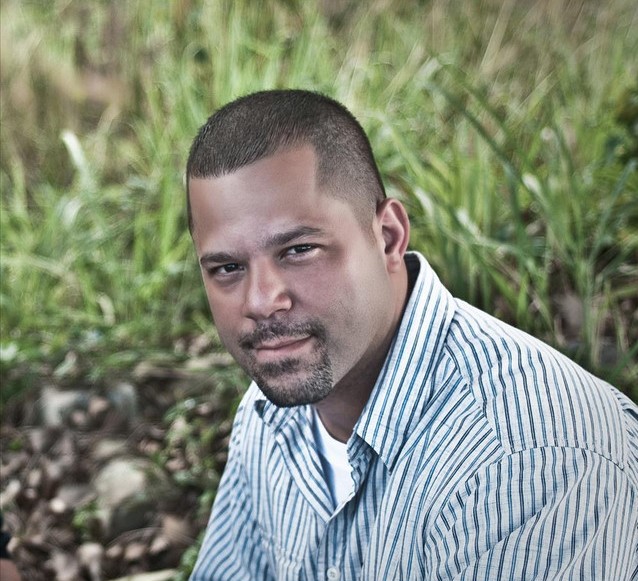
Redames (Randy) Plaza

Latino America / Puerto Rico / Carolina

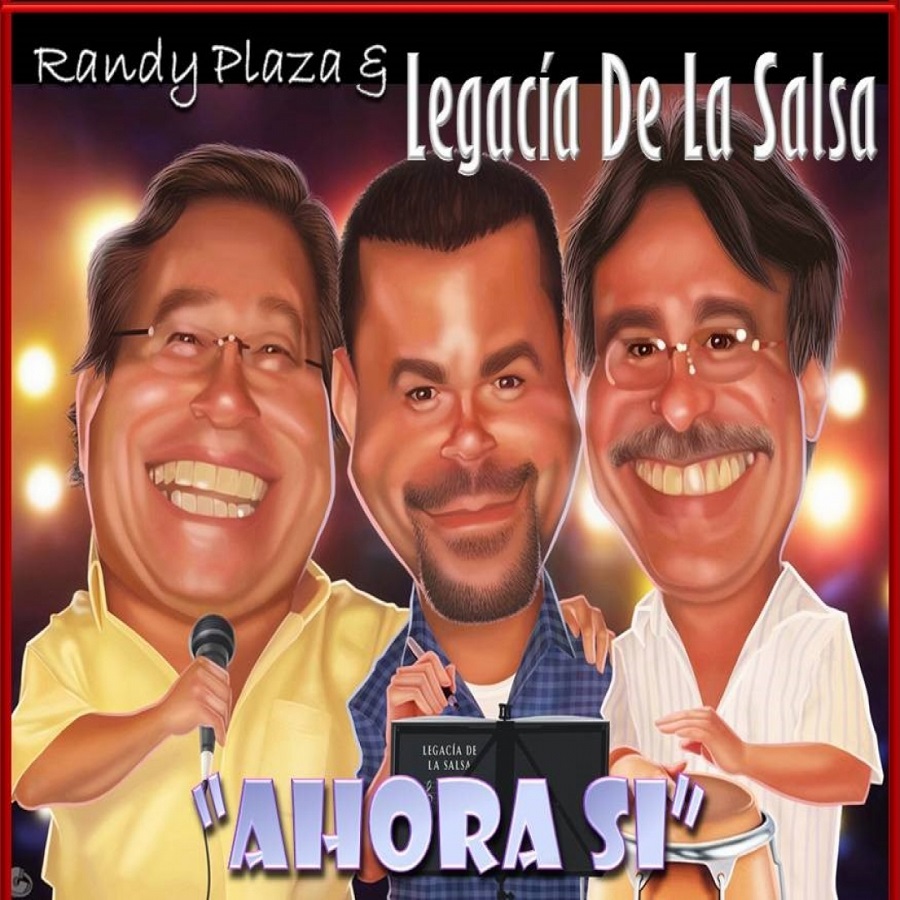
Redames Randy Plaza. Salsa Legacy

“It is salsa from yesterday and today for the dancer and the romantic salsero”.

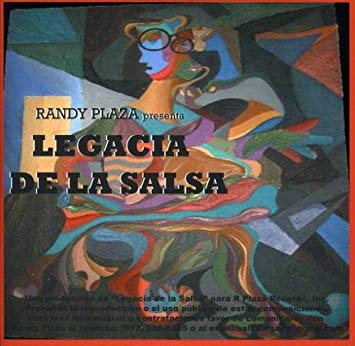
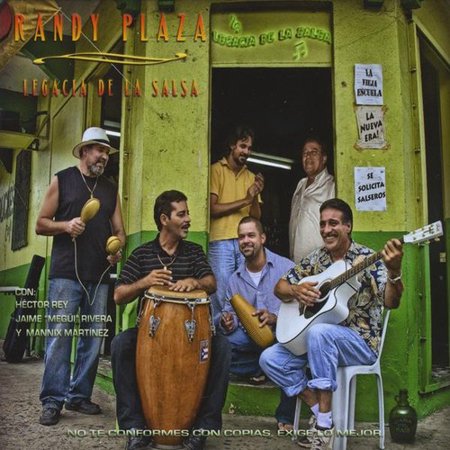
Randy Plaza, a native of Carolina, Puerto Rico, is the producer, composer, publisher and independent label of Legacía de la Salsa. Created in 2007, LS arises under a constant concern of seeing and feeling how the salsa genre has been musically devalued over the years.

Legacy of Salsa is an invention, a concept, a movement, an experiment, which tries firstly to raise the musical quality of salsa to another level, to keep the tradition alive, to demonstrate that if we work together and without interest, everything can be achieved. and proclaim to everyone that the sauce is not over.

That it is not in extinction, that it has not gone out of fashion, nor has it lost its style.

“That all these are tales of the boring.”

Legacy of Salsa is the legacy and teaching received from the great masters of salsa, who have captivated us in various ways and to whom we owe everything that was the development and fusion of this genre to the point of establishing it as a root in the heart of every Latino.

“It is salsa from yesterday and today for the dancer and the romantic salsero”.

Legacy of Salsa manages to incorporate the feeling of some of the greatest salsa institutions in this project, whether it be for the musical sound, for the style, for the arrangements, for the romantic, the singers, etc.

Randy Plaza
Randy Plaza

In this way we can recover a little of what has been lost today, please the entire salsa market, and fill that empty space; orphan of style and rhythm, and musically instructing and educating the disoriented and those who got lost along the way.

“The essence of yesterday in today’s day, traditional sauce without monotony and without fillers. For you salsero, cocolo, rumbero, with flavor and feeling”.

The unexpected, unfortunate and tragic death of Humberto Gómez leaves a huge void in the formation of Legacía de la Salsa.

A week before leaving Tito Gómez was already part of this musical concept.

Due to such loss, it was decided to cancel the first Legacía de la Salsa concert in New York City on July 21, 2007, where he would have participated as a guest star.

At that moment we entered the recording studio insecure and with the enormous concern of wanting to do the best possible on his behalf, never forgetting the person he was and will continue to be for us and without leaving aside his musical legacy.

Randy Plaza - Legacia de la Salsa
Randy Plaza – Legacia de la Salsa

https://www.legaciadelasalsa.com/

Professor MSc. Carlos Colmenárez

Mauricio Silva with ¡fury!

Composer, arranger, producer, pianist, trombonist, vocalist and conductor he participated in the recording of more than 200 productions.

It is a great honor and the pleasant satisfaction of having one of the most prolific, successful and recognized Venezuelan musicians who works as a composer, arranger, producer, pianist, trombonist, vocalist and conductor as a special guest; who is also recognized by all salsa fans at home and internationally.

We refer to Mauricio Silva, who has a musical lineage inherited from his grandfather Manuel Silva Linares and his father Miguel Angel Silva; the latter stood out as the jazz bassist for Gerry Weil, Billo’s Caracas Boys, Los Melódicos and Orquesta de Porfi Jiménez, among others; his uncle Rafael Silva was considered one of the best and most experienced trombonists in Venezuela.

Composer, arranger, producer, pianist, trombonist, vocalist and conductor He participated in the recording of more than 200 productions
Mauricio Silva with ¡fury!

Some of his brothers are also musicians and include: Josué Miguel Silva (now deceased) and Daniel Silva, an outstanding bassist and singer in diverse orchestras nationally and internationally. His son Briant Silva and his nephew Harold Silva are part of the new generation.

Mauricio Silva was born in Caracas on December 30th and became interested in training very well in his profession from a very young age which is why he studied with great Venezuelan and foreign musicians.

He has participated in the recording of more than 200 productions. Some of them with: Sexteto Juventud, La Crítica de Oscar D’León, Wladimir y su Constelación, Dimensión Latina, Los Satélites, La Salsa Mayor, Arabella y su banda, Los Melódicos, Billo’s Caracas Boys, Silva y Guerra, Mauricio Silva y su orquesta, Oscar D’León, Cheo Valenzuela, Caribbean Magic, Porfi Jiménez, Salserín, Erick Franchesky, Guaco, El Trabuco Venezolano, Wílmer Lozano, Legacy of Venezuelan Salsa, Legacy of World Salsa, among others. His compositions include Se Necesita rumbero (recorded by Oscar D’León), Te haré feliz, Debe ser el amor and Canto al Madera.

To start this interesting interview, we want to welcome to Mauricio to “Salsa Escrita” the salsa column in which we support musical talent and promote the event of our Latin music nationally and globally through International Salsa Magazine www.salsagoogle.com.

Thank you very much Professor Carlos, the truth is that I am very happy to appera as a guest in your widely-read column and I want to send my greetings to your readers and followers, I am very happy to share with you.

Master Mauricio for us it is a pleasure to interact through this prestige means of communication, let me tell you that we consider you a great idol of our Afro-Caribbean music and want to know how you started liking music. Carlos, music means everything to me, it is my formula of life and I am in it as long as I can remember. Through many studies and divine support for everything I have done and although I am not the most successful in the world, I feel very satisfied with it.

Well Mauricio, by the way, by the time you were in the orchestra “La Crítica”, were you influenced by any musician?

Yes, when I was in La Crítica, I was very much influenced by Oscar D’León as the main factor, when I saw him playing and singing with that incredible swing, that definitely left its mark and listening to artists of the time such as Andy Montañez, El Gran Combo, Ismael Rivera, Héctor Lavoe, Celia Cruz and note that life allowed me to work with all of them;

because I worked with Hector, Celia, Oscar and many others from Puerto Rico, Cuba and my training was routed to tropical music by accompanying Daniel Santos, Celio Gonzalez, Alberto Beltran and the commitment was greater to know that they came from the Sonora Matancera and that is how my taste for music was cultivated.

And to start this interesting interview, we want to welcome you Mauricio to "Salsa Escrita" the salsa column, where we project the musical talent and make known the events of our Latin music nationally and globally through International Salsa Magazine www.salsagoogle.com.
Mauricio Silva has participated in the recording of more than 200 productions

When was the idea of singing born, Mauricio? Really, the idea of singing was not one of my goals, it dit not crossed my mind to be a singer, and moreover, being in front of an orchestra got me so nervous, since being behind made feel like a duck to water, conducting, playing, but not facing the public. I did not consider myself a singer, I simply have a normal ear to have a guide to melodies of the songs, the fact that I started singing was with “Salsa, Silva y Guerra”.

Manuel Guerra had asked me for some musical arrangements for one of his projects, which was going to be recorded in Puerto Rico with arrangers from there such as Ray Santos and Máximo Torres.

Manuel Guerra had asked me for some musical arrangements for a project of his, which was going to be recorded in Puerto Rico with arrangers from there, with Ray Santos and Máximo Torres.
“Salsa, Silva y Guerra”

I made arrangements to two of my compositions for him: “Qué linda es la vida”, “Se va el amor”, and well, it was recorded on the island of Puerto Rico, that was spectacular, but the “Black Friday” occurred and costs doubled, so Manuel had to finish the production in Venezuela and then he asked me to help him finish it, we set up the trombone, chorus and I took him to ride the voice, but Manuel had tone problems with the songs, he did not get the tones in the right way, I recorded all the guides to the songs, I learned them and I recorded them for him.

Well, we have been trying to get him to record for 3 months, but he could never record that and the sound guy said that I was doing well without being a singer and he wasn’t.

And yet, at the end, I ended up recording that album, which was called “Salsa, Silva y Guerra”, because I got involved with Manuel Guerra and the label Rodven decided to call it that, and there the singer Mauricio Silva was born without wanting to. I never intended to be a singer, so when it is for you, it is like you do not even take off and so begins my career as a vocalist. Mauricio, we understand that you participated in more than two hundred productions and that shows that you are a very active musician in the music industry due to your professionalism.

When was the idea of singing born, Mauricio? Really, the idea of singing was not one of my goals, it dit not crossed my mind to be a singer, and moreover, being in front of an orchestra got me so nervous, since being behind made feel like a duck to water, conducting, playing, but not facing the public. I did not consider myself a singer, I simply have a normal ear to have a guide to melodies of the songs, the fact that I started singing was with “Salsa, Silva y Guerra”.

Manuel Guerra had asked me for some musical arrangements for one of his projects, which was going to be recorded in Puerto Rico with arrangers from there such as Ray Santos and Máximo Torres.

I made arrangements to two of my compositions for him: “Qué linda es la vida”, “Se va el amor”, and well, it was recorded on the island of Puerto Rico, that was spectacular, but the “Black Friday” occurred and costs doubled, so Manuel had to finish the production in Venezuela and then he asked me to help him finish it, we set up the trombone, chorus and I took him to ride the voice, but Manuel had tone problems with the songs.

He did not get the tones in the right way, I recorded all the guides to the songs, I learned them and I recorded them for him. Well, we have been trying to get him to record for 3 months, but he could never record that and the sound guy said that I was doing well without being a singer and he wasn’t.

And yet, at the end, I ended up recording that album, which was called “Salsa, Silva y Guerra”, because I got involved with Manuel Guerra and the label Rodven decided to call it that, and there the singer Mauricio Silva was born without wanting to. I never intended to be a singer, so when it is for you, it is like you do not even take off and so begins my career as a vocalist. Mauricio, we understand that you participated in more than two hundred productions and that shows that you are a very active musician in the music industry due to your professionalism.

Tell us: look, I had about 200 albums I had them computed, but I don’t know, I lost count.

For example, these days I met again with a musician from Barranquilla, we had already worked together in 1987 during a musical tour of the United States, me as a pianist in an orchestra and him as a timbalero, who is very famous in his city and I made an arrangement for him at that time and he brought back to that work and told me it was on Youtube.

So my participation has been as an arranger, musician, pianist, trombonist, choirboy, apart from the records I have served as a singer or as a guest.

I remember that I worked with “El Trabuco Venezolano”, artists from Panama, Puerto Rico, Colombia, naturally Venezuela, the United States, and Cuba.

I have done many things, both with salsa, boleros, bagpipes and much more, what happens is that I am more known in the salsa style, Venezuelan music, jazz, Bosanova, merengue, the Billo’s music, Los Melodicos, actively participating with them and salsa I have done work with Choco Orta from Puerto Rico, El Canario, Oscar D’León, Arabella, with the song’s arrangement I made of “Callejón” by Tite Curet Alonso; the truth is that I’m not complaining. Mauricio, by the way, an almost obligatory question, what have you made in such confinement by the pandemic there in Miami and how has Covid-19 affected you?

Tell us: well, the year 2020 was very difficult for all of us and the main thing that can never stop is the food and medicines supply; but entertainment and recreation is paralyzed and has timidly begun to move a little bit, but they have even stopped it again because the pandemic is still going on and here vaccination began here but the first to receive them will be the doctors, the nurses, elderly people, children and the general public, which, hopefully, will be the solution by 2021 and so artists will return to the stage.

I was affected by the coronavirus, it really hit me, solitary confinement for 15 days with many symptoms, but it detected with the exam, I did all medical treatment, I went through a lot of depression, but thank goodness I woke up much better one Sunsay and I said, am I cured? (laughter) then I had another test and it was negative, but it is an experience that has killed colleagues, friends and family; here in Florida, more than 2000 people are infected daily and 3000 people die every day in the whole country, but we remain optimistic with respect to work out airy.

Mauricio, do you have any upcoming project? Yes, there are always projects, I am producing new artists that will be know later on, but the global legacy of salsa is the most recent thing I put on the market, it is a tribute to salsa, so that the new generations can get to know that salsa that falled us in love in the 70s, 80s and 90s.

This is on all digital platforms and there is also the legacy of Venezuelan salsa. Likewise, the album “Billo’s Legendarios” in which I got the chance to be the arranger and in charge of the musical part of that production with the participation of: Carlos Vives, Oscar D’León, Charlie Aponte, Wilfrido Vargas, Sergio Vargas, Alex Bueno, Eddie Herrera, Don Fulano and Mily Quesada; in addition, the Venezuelan singer Karina and the vocalists of Billo’s Caracas Boys are special guests.

This is on all digital platforms and there is also the legacy of Venezuelan salsa
The legacy of Venezuelan Salsa.

I am also working with the new from “Adolescentes” in its new phase from the hand of El Negro Mendoza.

I am doing the “Legendary Billo’s No. 2” and in talks with Gilberto Santa Rosa, Tito Nieves, Silvestre Dangon, Carlos Vives, who wants to sing the theme “La Casa de Fernando”, and also I am helping many colleagues because the world of the record has changed a lot, there are no longer record companies that support, so stay tuned to 2021 because very good productions are coming.
“Billo’s Legendary” – Mauricio Silva

Mauricio, tell us, which singers have you accompanied in your successful career? Well, I had the honor of learning and playing with Alberto Beltrán, Celio González, Daniel Santos, those three singers from “Sonora Matancera”, we accompanied them with “La Crítica”, but even then, I accompanied Ruddy Márquez, José Luis Rodríguez, Oscar D’León, Celia Cruz, Héctor Lavoe, Justo Betancourt, Ismael Miranda, Eddie Santiago, Vity Ruiz, Maelo Ruiz, Tito Rojas (QEPD), Pedro Arroyo, Luisito Carrión, Rafu Warner, most of those artists from the 80s and 90s, and many more with whom I had the opportunity to be formed, musically speaking.

Mauricio, to finish, we have a friend in common, Nelson García “Nelsonero” in Barquisimeto, how was your work with him? Speaking of Nelson, is to talk about a great musician, a great person, from the first time I knew him, we were connected, we made a record with very few resources, but there was a magic of a talented boy who looked for a musician that is me and he put himself in his hands, and let them take him, although the songs are mostly from him or almost all the songs were from Nelson and I made those arrangements looking for a style with trombones and baritone sax, resulting in an album with a lot of heart, and from then on.

Many doors have been opened to Nelson for his way of being and he has traveled to many places in the world, and I really love him very much, I ask you to support him because he is one of those real talents, he is not made up, he is not manufactured, he is natural, that is Nelson de Jesus “Nelsonero”.

Dear Salsa fans, regular Salsa Escrita readers, we are very grateful to Mauricio Silva for the interaction we have had, give us a final message: Thank you Professor Carlos, of course, very grateful for allowing me to share in your widely read salsa column in which you promote and support the talent from my country and the rest of Latin America; I hope we can meet up again soon; I have a little bit of Barquisimeto, because I have an aunt who lives in the urbanization El Obelisco, I have cousins, godparents, Rafael Ure and a very big big greeting to all of them.

I love that city a lot, the “Musical City of Venezuela”, I have numerous friends there and I participated in orchestras such as: Nino y si Orquesta, La Banda Actual, they are all friends and we share a lot, so I send my greetings to all of them, thank you for this opportunity Professor Carlos Colmenárez “The Friend of the Salseros” and I hope to see you soon, we love you with fury!

after the rehearsal with the Los Angeles Philharmonic with Gustavo Dudamel and Oscar D'Leon - Mauricio Silva
Mauricio Silva after the rehearsal with the Los Angeles Philharmonic with Gustavo Dudamel and Oscar D’Leon

 See you next time and keep dancing  salsa!


  • « Go to Previous Page
  • Page 1
  • Interim pages omitted …
  • Page 6
  • Page 7
  • Page 8
  • Page 9
  • Page 10
  • Interim pages omitted …
  • Page 30
  • Go to Next Page »

International Salsa Magazine (ISM) is a monthly publication about Salsa activities around the world, that has been publishing since 2007. It is a world network of volunteers coordinated by ISM Magazine. We are working to strengthen all the events by working together.