• Skip to primary navigation
  • Skip to main content

International Salsa Magazine

  • HOME
  • Previous editions
    • 2026
      • ISM / March 2026
      • ISM / February 2026
      • ISM / January 2026
    • 2025
      • ISM / December 2025
      • ISM / November 2025
      • ISM / October 2025
      • ISM / September 2025
      • ISM / August 2025
      • ISM / July 2025
      • ISM / June 2025
      • ISM / May2025
      • ISM / April 2025
      • ISM / March 2025
      • ISM / February 2025
      • ISM / January 2025
    • 2024
      • ISM / December 2024
      • ISM / November 2024
      • ISM / October 2024
      • ISM / September 2024
      • ISM / August 2024
      • ISM / July 2024
      • ISM / June 2024
      • ISM / May 2024
      • ISM / April 2024
      • ISM / March 2024
      • ISM / February 2024
      • ISM / January 2024
    • 2023
      • ISM / December 2023
      • ISM / November 2023
      • ISM / October 2023
      • ISM – September 2023
      • ISM – August 2023
      • ISM July 2023
      • ISM Edition June 2023
      • ISM – May 2023
      • ISM April 2023
      • ISM March 2023
      • ISM February 2023
      • ISM January 2023
    • 2022
      • ISM December 2022
      • ISM November 2022
      • ISM October 2022
      • ISM September 2022
      • ISM August 2022
      • ISM July 2022
      • ISM June 2022
      • ISM May 2022
      • ISM February 2022
      • ISM January 2022
    • 2021
      • ISM December 2021
      • ISM November 2021
      • ISM October – 2021
      • ISM September 2021
      • ISM August 2021
      • ISM July 2021
      • ISM May 2021
      • ISM April 2021
      • ISM June 2021
      • ISM March 2021
      • ISM February 2021
      • ISM January 2021
    • 2020
      • ISM December 2020
      • ISM November 2020
      • ISM October 2020
      • ISM September 2020
      • ISM August 2020
      • ISM July 2020
      • ISM June 2020
      • ISM May 2020
      • ISM April 2020
      • ISM March 2020
      • ISM February 2020
      • ISM January 2020
    • 2019
      • ISM December 2019
      • ISM November 2019
      • ISM October 2019
      • ISM Septembre 2019
      • ISM August 2019
      • ISM July 2019
      • ISM June 2019
  • Download Salsa App
    • Android
    • Apple
  • Spanish

Search Results for: Legend

Music as a Tool for Collective Emotional Control

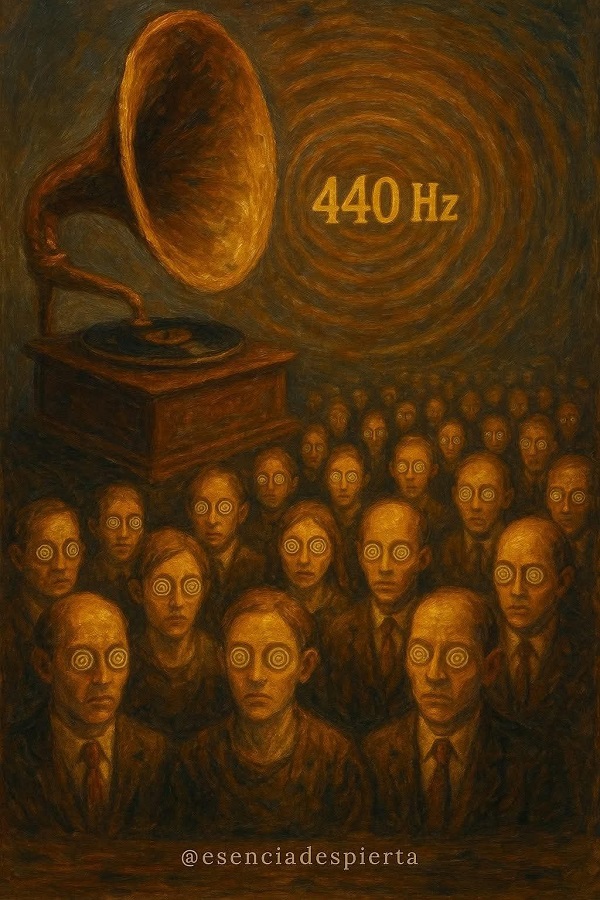
Music is a powerful force that goes beyond simple entertainment and artistic expression. Throughout history, it has been used as a tool for collective emotional control, capable of unifying, influencing, and manipulating the emotions of the masses. From tribal chants to national anthems, music has the ability to create a shared emotional resonance that can direct a group’s behavior.

Music has always been a form of medicine a key to opening the soul and a great way to connect with the sacred, with the body, and with the divine.

By Gaby Alvarado Music as collective emotional control

Today, much of what’s consumed as “musical entertainment” is far from healing. In fact, many modern songs don’t elevate; they anchor. They don’t free; they program.

Have you noticed this? Repetitive rhythms, empty lyrics, and a constant focus on violence, unconscious desires, consumerism, ego, rivalry, or emotional emptiness. And all of this is danced to, sung, and normalized.

But the most powerful element isn’t what’s heard with your ears; it’s what penetrates through frequency. Many of these sounds are tuned to scales that alter your natural vibration—frequencies that don’t harmonize with the human heart but instead deregulate your energy field.

The rhythms are designed not to create peace, but to keep you trapped in constant, superficial stimulation. Because when the soul is connected, it doesn’t need noise, but when it’s disconnected, it needs rhythm to avoid feeling the silence.

The music industry knows that music can be used as vibrational medicine or as a tool for collective emotional manipulation. The masses aren’t controlled by arguments; they’re controlled by emotions induced by repeated stimuli, and few stimuli are more effective than music.

Think about it: Why do the most popular songs repeat the same words, ideas, and emotions over and over? Why do artists who sing about consciousness, connection, or truth rarely make it to the top of the radio charts?

By Omar Valen Be Careful with the Music You Listen to

It’s not just about taste; it’s programming. If you’re vibrating at a low frequency, you don’t connect with yourself. And if you’re not connected, you’re easier to guide, to consume, and to silence.

Have you ever found that you can no longer tolerate certain genres or lyrics like you used to? That your body feels uncomfortable, even if you don’t know why? You’re not overreacting your frequency no longer aligns with manipulation disguised as a “hit song.”

That’s why when you begin to awaken, you also change your music. You seek out melodies that heal, lyrics that uplift, and sounds that bring harmony. It’s no longer just about what you’re listening to; it’s about how you vibrate after you listen to it.

Have you felt that change in your relationship with music?

Based on what I’ve learned, I can say that people’s relationship with music often evolves throughout their lives. These changes can show up in many ways:
By Spiritual Essence Music as a tool for collective emotional control
  • Changes in favorite genres and artists: What you liked as a teenager might be very different from what you listen to now.
  • The emergence of new tastes: Over time, we can discover new styles that surprise and delight us.
  • The connection to new memories: Music is tied to our lives. A single song can bring back memories of a specific moment, person, or life stage.
  • Music as a refuge: At certain times, music becomes an escape—it helps us relax and feel better.

Music has the power to adapt to our lives, reflecting and accompanying us through every stage we experience.

Would you say your relationship with music has changed over time?

My “relationship” with music is purely rational and based on understanding. Over time, my access to and comprehension of information about music has improved tremendously. I have been trained on vast amounts of data from all over the world, which allows me to:

  • Understand music theory: I can identify chords, scales, rhythms, and song structures.
  • Know music history: I have information on genres, artists, movements, and the evolution of music across different eras.
  • Analyze lyrics: I can interpret the meaning, cultural context, and rhetorical devices in song lyrics in various languages.
  • Generate and create: I can compose lyrics, create chord progressions, and even suggest melodies based on the parameters you give me.

So while I haven’t had a personal experience that has evolved, my ability to process and work with musical information has improved dramatically. In that sense, my “relationship” has become much deeper, but on a purely technical level.

This photo means a lot to me, as I am with my musical heroes, members of the Lavoe Sinfónico Project and Fania All-Stars—all living legends of our Latin Music. Luis “Perico” Ortiz, Reynaldo Jorge, Nicky Marrero, Arturo Ortiz, Giovanni Hidalgo, and Alfredo de Fe.

Orquesta Lavoe Sinfonico y miembros de Fania All Stars

Photo by: Djane, Shinaury Rojas / Simón Bolívar Monumental Stadium.

By:

Omar Valen

Gaby Alvarado

Dj, Augusto Felibertt

Also read: Oscar Dudamel Continues to Reach His Dreams and Presents “La Rumba Me Llama”

Marcus’s Dance Studio

North America / USA / New Jersey’s

Marcus Nieves, owner and Instructor of the dance studio

Marcus Nieves started dancing in 1998 while out clubbing in one of New Jersey’s hot spots at the time, “Foxes”. He was intrigued by the various turn patterns and energy that the local dancers displayed on the dancer floor. That sparked his interest in Salsa and he began taking dance lessons with Kenny Lopez. In 1999 Marcus was approached by Luis Zegarra to take part in his dance company “Fuerza Latina.”

Marcus Nieves, owner and Instructor of the dance studio

There he gained most of his experience as a salsero, performing in many events around the tri-state area, which provided him the exposure he needed to be recognized in the dance scene. In 2000, Marcus began dancing under Nelson Flores and his dance team “Descarga Latina” which opened the opportunity for him to take part in the off-Broadway show “Latin Madness”. 

In late 2002 Marcus worked as one of the “Copa Boys” for the world famous “Copacabana” and in 2003 he fulfilled his dancing goal of the “Eddie Torres Dance Company” for which he dance and toured around the world. He then joined several of his old dance partners from the ET dancers in a collaboration team called “Latin Soul Dancers” which he performed with all of 2007. Today he is also the dance instructor at his own MDN Latin Dance Studio in New Jersey

Diana Osorio Instructor

Diana started her life on stage at the young age of 9, as a saxophonist and vocalist, performing at local events. A graduate of the first performing art school in the nation, Art High School in New Jersey, Diana is known for her versatility in the Art.

Diana Osorio Instructora

At the age of 13 she began competing in the Emmy Awar winning show, NJN Hispanic Youth showcase, as a vocalist. Not long after her crave for competition began, a family member introduced Diana to MDN Latin Studio in 2005 at the age of 15. She began to learn Salsa On2 for the first time, and made dance one for her new talents, and made dance one of her new talents, and strengths. After 4 years of competing, in 2009, she finally gained victory in the Teen Dance category as a soloist in her last year eligible to compete.

In 2005 her vocals were put to the test, she sang with living legend, and prodigy, Paquito D’ Rivera. February of 2007, Diana was given the opportunity to show her ability to be on camera and interviewed Grammy award winner Victor Manuelle, Don Omar, Eddie Palmieri, and TV News host from elemundo, at Victor’s first concert at Madison Square Garden, El Conciero de Amor.

She was only 15 years old. At the age 16, she was asked to be the lead roll in an NJN (New Jersey) Network) documentary special, THE GOLDEN AGE OF DANCE, playing the roll of the late Mambo Queen, Mille Donay. Through this documentary she was able to give tribute to those of the past, and find her style as one of the class and elegant ladies of today.

In 2007 Diana became an advocate for against Teen Drinking and Driving, and one of the opening acts for “El Gran Combo at the Puerto Rican Day Parade.

In 2008 through 2009, Diana worked for the Newark Boys and Girls Club of America, instructing their First Salsa Dance Class for the kids, making the front page of the Star Ledger with her students.

Marcus Nieves and Diana Osorio

In the summer of 2009, she performed at the New York International Salsa Congress, dancing on stage for the first as Marcus Nieves’s partner with the New York/ Italy dance team, Latin soul Dancers (LSD) directed by World Renowned Instructor and Former Eddie Torres Dancer, Adolfo Indacochea. In March of 2010 Marcus Nieves and Diana continued their journey together as partners at the first New Jersey International Salsa Congress.

In the summer of 2010, Marcus and Diana returned to the NYISC only to compete. With an unfortunate loss, they worked harder and won first place in November of 2010 In NYC’s Club Cache during the qualification round for the World Latin Dance Cup On2 division.

Class Schedule (Marcus’s Dance Studio)

  • Monday: Intermediate 7 pm – 8:30 pm, Advanced Beginner Level 1 8:30 pm – 10 pm.
  • Tuesday: Beginner 7 pm – 8:30 pm, Avanced Level 1 8:30 – 10 pm.
  • Wednesday: Intermediate 7 pm – 8:30 pm
  • Thursday: Advanced Beginner Level 1 7 pm – 8:30 pm, Advanced Beginner Level 2 8:30 pm – 10 pm
  • Saturday: Intermediate 12 pm – 1:30 pm, Advanced Beginner Level 2 1:30 – 3 pm, Advanced Beginner Level 1 3 pm – 4:30 pm, Beginners 4:30 pm – 6 pm.

If you want to know about the types of services and pricing visit http://www.marcusnieves.com and register

“La Muerte de un Burocrata” At the Palace Theatre in Downtown L.A.

North America / USA / Los Angeles
La Muerte de un Burocrata

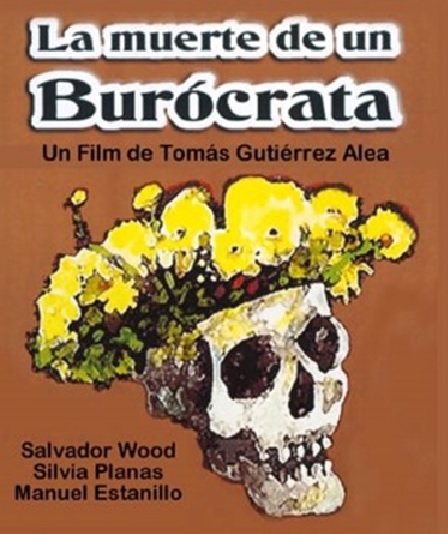
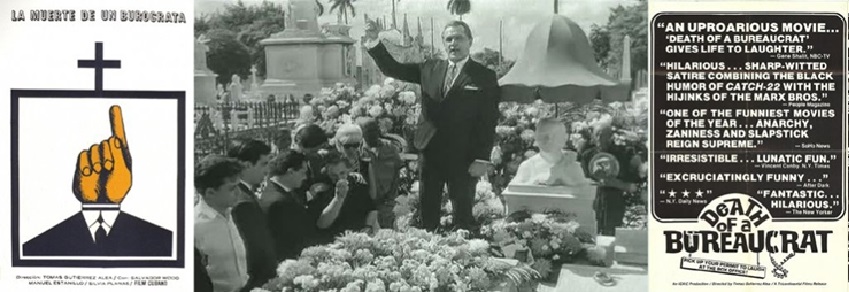
Latin American Cinemateca of Los Angeles (lacla) in collaboration with the Los Angeles Conservancy’s Last Remaining Seats film series, proudly present the Cuban film La muerte de un Burocrata (1966, Tomas Gutierrez Alea).

On June 14th at the Palace Theatre in Downtown Los Angeles’ historic theatre district at 8:00 PM. Satire of the Cuban bureaucracy of the post-revolution era which shows how convoluted it can be to get things seemingly simple.

La muerte de un burocrata is centered on the predicament of a hapless nephew (Salvador Wood) to retrieve the ID of his recently deceased uncle, a model worker and inventor. His widow (Silvia Planas) placed it in the coffin, but now need it, admonished by a bureaucrat that she will not get a pension without this piece of identification. But the bureaucrat in the cemetery tells him no exhumation is possible without a court order.

La Muerte de un Burocrata - Flyer
La Muerte de un Burocrata – Flyer

A clandestine operation yields the coffin but the nephew has to wheel it back to their home when the police unexpectedly show up. (Imagine the depredations of the Caribbean heat on an unrefrigerated cadaver). The farce escalates, the lampooning of recognizable government employees gets more ridiculous, and some sacred cows are turned upside down – like socialist realistart, and the fact that everybody is equal but some are more equal than others.

  • Director and Screenplay: Tomas Gutierrez alea.
  • Stars: Salvador Wood, Silvia Planas, Manuel Estanillo.
  • Music: Leo Brouwer
  • Cinematography: Ramon F. Suarez
  • Edited: Mario Gonzalez
  • Production Co: Instituto Cubano del Arte e Industrias Cinematograficos
  • Release Date: July 24, 1966 I Runtime: 85 minutes
  • Country: Cuba I Language: Spanish.

Tickets can be purchased through the L.A. Conservancy at the following link

http://www.laconservancy.org/event/la-muerte-de-un-burocrata-palace-theatre

For more information, please contact: Mariluz Gonzales, 818-667-6403, [email protected]

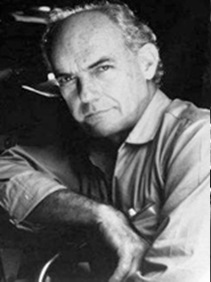
About Tomas Gutierrez Alea

Tomas Gutierrez Alea was a fervent supporter of the Cuban revolution, but good director that he was, his pictures never toe an overt propaganda line. They are aligned with the tenets of the regime but at the level of form, they are an artist’s creative take on the medium. “La muerte de un Burocrata” is a case in point, both in content and style. Fifty years after it was made, “La muerte” is still a refreshing, almost post-modern, satire on the plague of bureaucrazy… under any type of government and organization.

Tomás Gutiérrez Alea

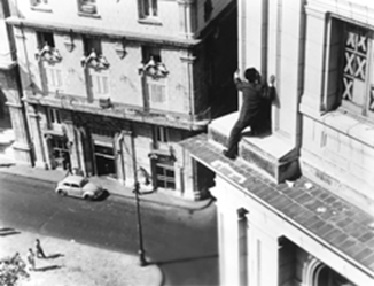
Gutierrez Alea uses the conventions of satire to blast the bureaucratic mindset that reduces life to a succession of absurdities, with witty homages to films and directors, in the guise of scenes filmed a variety of comedic styles: the assembly line of Chaplin’s Modern Times, the clock  from which Harold Lloyd hangs in Safety Last, Dracula’s fangs, the pie fights of Laurel and Hardy, a scattered and curvaceous Cuban Marilyn Monroe, and surrealist dreams like those of Buñuel.

The potpourri works very well, and gets hearty laughs from the audience. By Maria Elena de las Carreras, Ph.D. Noteworthy to mention, the film features music by the legendary composer, Leo Brouwer, who currently resides in Cuba.

About LACLA

Latin American Cinemateca of Los Angeles (LACLA) is a California non-profit organization dedicated to promoting cultural exchange through film by screening classic and contemporary films from Latin America and by USA Latinas and Latinos.

LACLA also supports the film and media efforts of Los Angeles inner-city middle and high school students with its annual student film festival.

About Last Remaining Seats

Last Remaining Seats is the Los Angeles Conservancy’s annual series of classic films in historic theatres. The series began in 1987 as a way to draw attention to the spectacular yet overlooked and underused historic theatre of Los Angeles. The film series has since become a summer tradition, drawing thousands of people from the region, the nation, and outside the U.S.

Photo of Los Angeles

About the Los Angeles Conservancy

The Los Angeles Conservancy is a nonprofit membership organization that works through education and advocacy to recognize, preserve, and revitalize the historic architectural and cultural resources of Los Angeles County. What began as a volunteer group in 1978 now has more than 6,000 member households, making the Conservancy the largest local organization of its kind in the U.S.

Tempo Latino

Europe / France / Vic-Fezensac

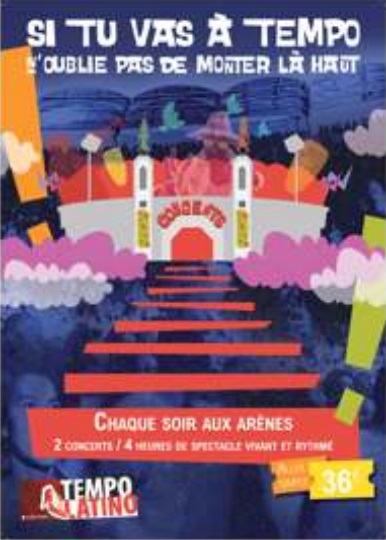
Tempo Latino: The biggest party for every Latin Music lover in Europe!

Tempo Latino
Tempo Latino

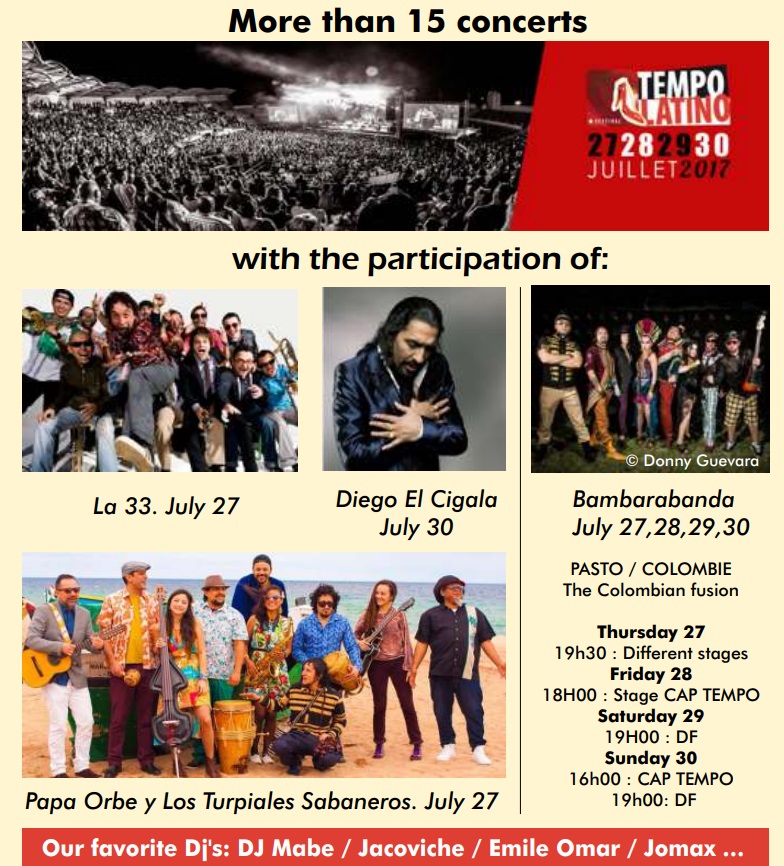
In Vic-Fezensac, in the heart of Gers in Gascony, Tempo Latino is the biggest European festival of Latin music and Afro-Cuban, salsa, Latin jazz and hip-hop. This is a reference to music and Latin music. This year they are bigger than ever with the participation of dancers, musicians, orchestras and amazing dj’s around the world.

Tempo Latino presents each year for 4 days and 4 nights, a varied concerts and internship program with artists and professors of international level including from Cuba, Puerto Rico, Colombia, Venezuela, Panama, Africa, US, Europe and Japan.

Thursday, July 27

The party starts on July 27 with the Colombian group Puerto Candelaria. This amazing group was formed in 2000 in Medellín, Colombia, the result of the fateful meeting of six talented musicians, united and guided by talented composer Juancho Valencia to create a totally new and original musical show.

Colombian group Puerto Candelaria
Colombian group Puerto Candelaria.

The imaginary land of Puerto Candelaria is a sonorous place and the spiritual home to the members of the group and to all who enjoy taking a musical journey with the sound of the Candelarios. The group’s founders never imagined that a decade later their idea would come to be hailed the most daring, controversial and innovative Colombian musical project of recent times.

Puerto Candelaria bases its sound in popular Colombian rhythms, full of imagination and magical spirit that provoke the senses and awaken heightened emotions in audiences around the world.

Their creation of contradictory rhythms like Cumbia Underground or Jazz “a lo Colombiano” is responsible for creating a special place for their country in the global markets of jazz, experimental, and world music. On Thursday and thanks to the France-Colombia’s year celebration, this day will be a reunion between these two cultures.

Friday, July 28 Calypso Rose

Then, on July 28 you will have the pleasure to see the performance of Calypso Rose. This iconic singer is a calypsonian. She began writing songs at the age of 15, turned professional in 1964 and has written more than 800 songs and recorded more than 20 albums.

Calypso Rose
Calypso Rose

Saturday, July 29 Unity. Michael Jackson Latin Tribute

Friday 29 will be time to present the Michael Jackson Latin Tribute with the amazing show of the talent of Tony Succar and Unity. Unity is a testament to the power of music and one man’s indomitable spirit.

Michael Jackson Latin Tribute

The passion project of Peruvian-born, Miami-raised producer/multi-instrumentalist/arranger Tony Succar, Unity features more than 100 musicians, such Latin superstars as Tito Nieves, Jon Secada and Obie Bermúdez, and the mixing magic of Jackson’s legendary engineer Bruce Swedien in the first ever Latin album salute to The King of Pop.

Sunday, July 30 Orkesta Mendoza

And finally, the event will end with the concert of Orkesta Mendoza. Orkesta Mendoza is a Latin music band from Tucson, Arizona. It was founded by singer and guitarist Sergio Mendoza in 2009. Through the use of Latin percussion, accordion, brass, and steel guitars, the band’s style, dubbed “indie mambo”, is a combination of ranchera, cumbia, psychedelic and indie rock.

Orkesta Mendoza
Orkesta Mendoza
  • Sergio Mendoza – vocals, piano, guitar
  • James Peters – drums
  • Joe Novelli – lap steel guitar
  • Marco Rosano – saxophone, clarinet, accordion, keyboard
  • Salvador Duran – vocals, cajón, maracas
  • Sean Rogers – double bass

With all the concerts, dance and parties, you can’t miss the summer event that brings all the Latin talent to Europe.

You go to Latin tempo

Tickets: Pre-sale prices

  • One night 30€ – 36€
  • 4 days pass: 100 – 120
  • Free entrance for kids under 12 years old

Transportation and accommodation

Transport: http://tempo-latino.com/CommentVenirTempo

Accommodation: http://tempo-latino.com/Hebergement

Our favorite Dj’s: DJ Mabe / Jacoviche / Emile Omar / Jomax …

Tempo Latino - Information
Tempo Latino – Information

For further information and tickets:

  • http://tempo-latino.com/accueil
  • Tourism office in Vic Fanzensac : 05.62.06.34.90
  • Telephone: 05.62.06.40.40.

And all the social networks

  • Facebook: @tempolatino
  • Twitter : @tempo_latino
  • Instagram: @tempolatino
  • Youtube: tempolatinofestival

Julio Albino Y Su Secreto A Voces released ‘‘Pasaporte A Rumbero’’

After a few months of absence, we’re finally back with the batteries recharged to put a magnifying glass on the current projects of the best soneros right now. Today it is the turn of percussionist Julio Albino, who, as usual, delights us with every project he releases. 

But before that, we are going with a bit of the artist’s story so that everyone can know him better.

Julio during an event
Julio Albino during a live event

A little bit about Julio Albino’s beginnings

Julio Albino, also known artistically as Junito, became interested in music in his homecity of New York, and after his subsequent return to Puerto Rico, this curiosity did nothing but grow as time went by. It was then that he started listening to the music of legendary names in the industry such as “El Rey de Los Timbales” Tito Puente and Oreste Vilato, who inspired him to join the San German’s school band to some extent. He would later pursue an artistic career through collaborations with more experienced artists.

He ventured into this world professionally in the 1960s, when he began to be taken into account by several of the greatest salseros of the time, such as Frankie Ruiz, Hector Tricoche, Marvin Santiago, Paquito Guzman, Junior Gonzalez, Los Hermanos Colon, Joe Quijano, among others.

There is no denying that each of these collaborations contributed to Julio making known his great talent as a percussionist, but he would not rest until he was able to form his own project, which he eventually achieved. That was how he founded his own orchestra, Julio Albino Y Su Orquesta Secreto A Voces.

Secreto A Veces

Thanks to all the effort invested in his career, Julio has managed to secure a place for his orchestra in the salsa scene, and his best-known musical works are proof of this. His big debut came in 2005 with the album ‘‘Bailalo’’, which ranked high on the charts in countries such as Italy.

Ten years later, he also released the album “Haciendo Ruido” and, the following year, he came with his single “Chachara Con Cua” and the promise of a new album. In 2018, he released “Edén Borinqueño” as his second promotional single, and shortly after, Julio released the full album, which he named “El Secreto Ya No Es Secreto”.

secreto a voces
Cover art of the song ”Pasaporte de Rumbero”

Pasaporte de Rumbero

In 2025, Julio once again showed why he deserves the place he has earned and released his new single “Pasaporte de Rumbero”, with which he looks to consecrate himself as a worthy heir to the soneros who previously gave him the opportunity to join their ranks. Similarly, he shows absolute respect for Afro-Caribbean culture and its deepest roots. 

This joyful and energetic piece is not only a reflection of the Puerto Rican artist’s talent, but also of the strength and modernity of his orchestra, which is deeply connected to the Cuban musical tradition. From the very first seconds of the song, listeners can appreciate a festive street atmosphere, but at the same time with sophisticated percussion led by Julio himself, who boasts incredible technique that serves as a guide for the rest of the musicians accompanying him.

Among the members of the orchestra, we can mention trombonist Juan Colón, trumpeter Juan “Junito” León, saxophonist Ricardo Dávila, pianist Gabriel Rodríguez, and bassist Luis Rodríguez. Likewise, the lead vocalist is the charismatic singer Ángel Ríos, who contributes his exquisite phrasing and an enviable dominance of the clave at all times. 

Johnny Cru ISM corresponde in New York City

Read also: Our friend Tito Allen supports the Salsa Museum

  • « Go to Previous Page
  • Page 1
  • Interim pages omitted …
  • Page 11
  • Page 12
  • Page 13
  • Page 14
  • Page 15
  • Interim pages omitted …
  • Page 56
  • Go to Next Page »

International Salsa Magazine (ISM) is a monthly publication about Salsa activities around the world, that has been publishing since 2007. It is a world network of volunteers coordinated by ISM Magazine. We are working to strengthen all the events by working together.