• Skip to primary navigation
  • Skip to main content

International Salsa Magazine

  • HOME
  • Previous editions
    • 2026
      • ISM / March 2026
      • ISM / February 2026
      • ISM / January 2026
    • 2025
      • ISM / December 2025
      • ISM / November 2025
      • ISM / October 2025
      • ISM / September 2025
      • ISM / August 2025
      • ISM / July 2025
      • ISM / June 2025
      • ISM / May2025
      • ISM / April 2025
      • ISM / March 2025
      • ISM / February 2025
      • ISM / January 2025
    • 2024
      • ISM / December 2024
      • ISM / November 2024
      • ISM / October 2024
      • ISM / September 2024
      • ISM / August 2024
      • ISM / July 2024
      • ISM / June 2024
      • ISM / May 2024
      • ISM / April 2024
      • ISM / March 2024
      • ISM / February 2024
      • ISM / January 2024
    • 2023
      • ISM / December 2023
      • ISM / November 2023
      • ISM / October 2023
      • ISM – September 2023
      • ISM – August 2023
      • ISM July 2023
      • ISM Edition June 2023
      • ISM – May 2023
      • ISM April 2023
      • ISM March 2023
      • ISM February 2023
      • ISM January 2023
    • 2022
      • ISM December 2022
      • ISM November 2022
      • ISM October 2022
      • ISM September 2022
      • ISM August 2022
      • ISM July 2022
      • ISM June 2022
      • ISM May 2022
      • ISM February 2022
      • ISM January 2022
    • 2021
      • ISM December 2021
      • ISM November 2021
      • ISM October – 2021
      • ISM September 2021
      • ISM August 2021
      • ISM July 2021
      • ISM May 2021
      • ISM April 2021
      • ISM June 2021
      • ISM March 2021
      • ISM February 2021
      • ISM January 2021
    • 2020
      • ISM December 2020
      • ISM November 2020
      • ISM October 2020
      • ISM September 2020
      • ISM August 2020
      • ISM July 2020
      • ISM June 2020
      • ISM May 2020
      • ISM April 2020
      • ISM March 2020
      • ISM February 2020
      • ISM January 2020
    • 2019
      • ISM December 2019
      • ISM November 2019
      • ISM October 2019
      • ISM Septembre 2019
      • ISM August 2019
      • ISM July 2019
      • ISM June 2019
  • Download Salsa App
    • Android
    • Apple
  • Spanish

Search Results for: Legend

Adalberto Santiago celebrates his 70th Anniversary next March

In this space, we have always worked to pay tribute to the greatest salsa legends and we consider it important that these luminaries feel the love of the public in life. That is why we want to pay homage to the man who has been a great pillar of Puerto Rican salsa as we know today. We are talking about the great singer from Ciales, Adalberto Santiago, who is celebrating the 70th anniversary of his artistic career. Here is a summary of his brilliant career.
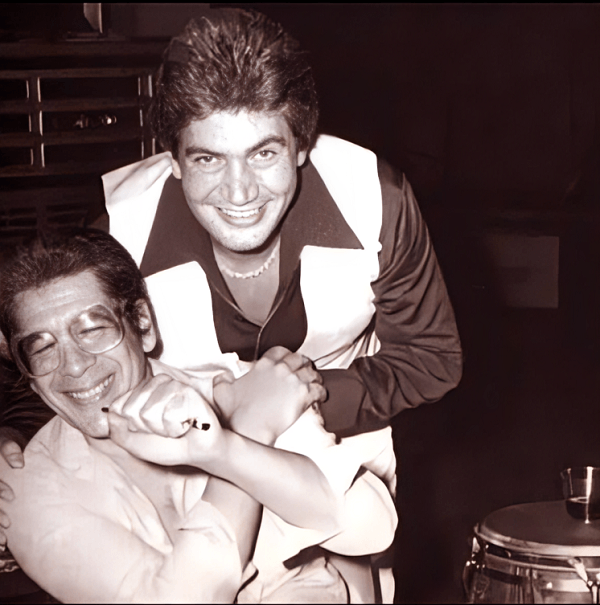
Adalberto and Ray
Adalberto Santiago and Ray Barretto in the 1960s

Adalberto’s beginnings in music

The sonero began his career by participating in trios, which he accompanied with his voice, guitar, bass and even his dance moves. This was something very few artists did at the time, which is why this young man drew a lot of attention at that time. 

He got to play with Chuíto Vélez and Willie Rosario, but his career really took off when he was given a chance to join the orchestra of Ray Barreto, which is when he managed to internationalize thanks to several albums that continue to be chanted by salsa fans until today such as ‘’Acid’’ or ‘’Rican Struction’’. Then, together with several members of this orchestra, he founded La Tipica 73, which revived Cuban son. 

Adalberto as an established artist

In the 1980s, he became part of the orchestra of Roberto Roena and got to perform famous songs such as ‘’Yo tenía una mujer’’. He is also known for co-producing the album ‘’Calidad’’ with his compatriot Papo Lucca, who arranged one of the tracks and was responsible for all the musical direction.

Some time later, he made a new version of the famous album ‘’Sex Symbol’’, becoming successful in countries such as Colombia, Peru and Venezuela. For this recording, the artist had the support of Isidro Infante in the area of production and arrangements. This is considered one of the most legendary musical works of the singer’s extensive career, to the point that many salseros around the world remember it fondly. 

Adalberto posing
Adalberto Santiago posing for the camera

During all these years, Adalberto has been the author of a great number of songs for many world-famous albums in which he has participated, either as a bandleader or lead singer. Despite the worldwide fame he has achieved, he always maintains loyalty for his Latin roots and, in his own words, the structure of Latin music is the most appropriate for his voice and singing style. 

In addition to that, the artist has always had the capability and experience to move through many Latin genres such as salsa, merengue, pachanga, cumbia, bomba, plena, boogaloo, guaracha, pachanga, among many others. 

He has always tried to maintain his physical and vocal discipline to continue giving the best of himself to his audience despite the years.

Celebrating his anniversary

As we said at the beginning, the great Adalberto Santiago is about to celebrate his 70th anniversary as an artist, an event that of course is to be celebrated big.

As a way of celebrating and thanking his public for all the support he has received, the singer has decided to hold a concert at the Lehman University of Performing Arts in New York City, more specifically in the Bronx, on Saturday, March 22 at 8PM. 

His fans have remained loyal all this time, so we have no doubt that he and his special guests will make everyone dance, making this event an unforgettable evening.

Read also: Milonga’s contribution to Latin music in general

Johnny Cru ISM corresponde in New York City

Tony Succar Releases “Me Enamoro Mas De Ti” Featuring Jean Rodriguez

Europe / France / Bahrain

Miami, Florida February 20, 2018: Tony Succar announces the release of “Me Enamoro Mas De Ti “ (I Fall More In Love With You) featuring Jean Rodriguez, adding another song to his ever-growing list of new flavors that are defining salsa-infused pop music.

Jean Rodriguez - Unity by Tony Succar - Concert Arenes Fes Tempo Latino
Jean Rodriguez – Unity by Tony Succar – Concert Arenes Fes Tempo Latino

The powerful combination created when these two work together has been a consistent formula for viral success. When Tony Succar and Rodriguez combine their talents, it’s a concoction of tropical goodness that has their fans loving their groove. The single is available now on iTunes, Amazon, and Spotify. And, you can view Tony’s infectious “Me Enamoro Mas De Ti“ music video here.

“Me Enamoro Mas De Ti” is part of a follow-up project to Succar’s UNITY album, The Latin Tribute to Michael Jackson that hit #1 on the Billboard Tropical Album Music Chart, iTunes’ #1 World Latin Chart, and Amazon’s #1 Latin Pop Music Chart.

It was that collaboration of Universal Classics and Universal Music Latin Entertainment that landed Succar a nationally televised primetime PBS special. Inspired by what Succar refers to as the “Unity Sound,” his production of “Me Enamoro Mas De Ti” merges the unmistakable driving elements of Salsa with Pop.

It’s a blend of multi-cultural roots that results in a characteristic, retro sound with a full horn section, Latin rhythms and inspired vocals. This is Succar’s always-fresh approach of cleverly combining pure Salsa with super hip, funky and pop musical elements.

Tony Succar escalated to the top of the charts with Unity, but now it’s clear that Unity was only the foundation of his full vision.

Tony Succar
Tony Succar

“Many people have been asking me what would come after ‘Unity,’ or ‘when is Unity 2 going to be released?’ Fans have also asked when I would release some of my original compositions. The success of Unity really took my career to another level, and from that was born a new sound that I wanted to stick with.”

“So, I decided now is the time to hit the refresh button and surprise people with brand new material. This track is just the beginning. I won’t stop writing new arrangements of the amazing songs of Michael Jackson and other legendary artists I admire, but I love to create, captivate, and innovate new music.”

With that, “Me Enamoro Mas De Ti” is just a taste of what Tony Succar has on the horizon. Make no mistake, Succar is committed to the essence of tropical music that catapulted him to how far he has come. It runs in his veins and he is devoted to creating new sounds without losing the very core of what the great Salsa artists who came before him produced.

Tony Succar’s production of “Me Enamoro Mas De Ti” was co-written with Jorge Luis Piloto. Piloto has written hits for great artists such as Gilberto Santa Rosa, Victor Manuelle, Tito Nieves, Celia Cruz, Christina Aguilera, Olga Tañon, and many others. His prolific career also includes having led Sony’s Latin division and winning ASCAP’s Latin Songwriter of the Year award.

Tony Succar has been traveling a lot and performed at the Tempo Latino Festival Scène des Arènes in Vic-Fezensac, France and was a part of the amazing lineup of featured artists at the Desert Beats Music Festival in Bahrain. Succar and Unity; The Latin Tribute To Michael Jackson, shared the stage with Kool and The Gang and UB40, among others. You can see where Succar is headed next on his calendar.

Me Enamoro más de ti - Tony Succar
Me Enamoro más de ti – Tony Succar

Tony Succar has also collaborated with Latin Percussion (LP) Music to develop a “Tony Succar Signature ‘Unity’ Peruvian Cajon,” available in stores beginning in April. Just another indication of where the Peruvian-born musical talent’s heart lives.

Download “Me Enamoro Mas De Ti” here: http://smarturl.it/MeEnamoroMasDeTi

WEBSITE: http://tonysuccar.com/

Contact: Nurby Lopez – Mixtura Productions 305-771-1014 [email protected]

Video For Single “Me Enamoro Mas De Ti” Click to watch: https://youtu.be/qQkS-1DDcJM

Marcial Isturiz. The Versatile of Salsa

Latinoamerica / Venezuela / Caracas

Martial Isturiz. The Versatile Salsa 28 Years In Music

Marcial Istúriz
Marcial Istúriz

“28 years in Music. It is said easy. Very easy”

But *ALL* that path of dirt and grime that has been walked, is now a flowery field. I thank those who have supported me and those who have not, because they make the perfect balance.

To my brothers in life that I have cultivated in music, old and new.

Photo - Marcial Istúriz and his drums
Photo – Marcial Istúriz and his drums

To my ancestors for bringing the Drum and its color and making me the Negro Congo that I am.

To *my mother*, for life and for giving me love in her own way.

To *my father*, for the seed and the iron upbringing that many young people currently lack. Bad or good, I had it next to me, and that’s more than enough.

To my musical influences, foreign and national, with whom I have largely had the blessing of working with them.

Photo 2 - Marcial Istúriz and his drums
Photo 2 – Marcial Istúriz and his drums

To those who reached out to me at specific moments in life: Tomás, Jimmy, Manuel, the Calatayud García. They are in my heart.

Thanks to music, which saved me from being the best *Pran* in the world. Because my grandfather told me that if he wanted to be the best at something, he’d pigeon him. Whether he was a sweeper, or a bricklayer, or a salesman, but he must be the best.

Thanks to my brothers Ángel and Armando, and to my cousins ​​Manuelito and William, inveterate music lovers, who fed my soul and ears, and opened my brain musically.

To my teachers and brothers of the Latin Dimension, because our anniversary dates coincide, and for allowing me to be One more DIMENSIONER, when they require #Eteketakí. They carry 46 by the chest, today too!

I am not what I am without any of you.

Marcial Istúriz singing

Thanks.

There are 28. And those that are missing, Dad!

#AmberWedding

WATER FOR THE ROOSTERS!

Photo of Marcial Istúriz singing

Recommend

#ISM #ISMRecommneds #ISMLovers #Salsa #Dance #Fun #Happy #Love

Dj Augusto Rafael Felibertt I

Asocosalsa Mundial

#InternationalSalsaMagazine

www.salsamundi.com

Marcial Istúriz singing on stage

Tu Programa #PorLaMaceta 101.1 fm

Section

Legends of La Salsa By

International Salsa Magazine

SalsaIsCulture


Logo - Marcial Istúriz
Logo – Marcial Istúriz


Federico Betancourt “Pioneer of Salsa in Venezuela”

Latin America / Venezuela / Carabobo

Jesús Federico Betancourt was born in the city of Valencia, Carabobo state, on March 22, 1940. He was always attracted to music from a very young age.

Photo of Federico Betancourt on stage

In his adolescence, he liked Cuban rhythms, being influenced by Sonora Matancera, Mon Rivera, Eddie Palmieri and Joe Cotto. Before entering the entertainment world, he works at the Bank of Venezuela.

He affirms that he has not carried out formal studies at the musical level, learning the necessary theory to be able to perform as an orchestra conductor, but without interest in interpreting any instrument, but with a well-tuned ear, which has allowed him to remain in the music business for decades. , in fact on certain occasions he is named as the King of the Güiro.

Photo by Federico Betancourt

His career began when he entered the Los Selectos Orchestra, where they played songs by the Billos Caracas Boy’s and the Los Melodicos Orchestra, which were at their peak in the 1960s, all this in a particular way, said Orchestra did not go beyond that.

In 1965, Federico Betancourt decides to satisfy his artistic restlessness and founds a band called Federico y su Combo Latino. The members that made up this band were chosen from among the founder and together with Roberto Monserrat.

But it was not until the middle of 1966, when the twenty-six (26) year old undertook the recording of the LP that would make him famous forever. This record production entitled LLEGO LA SALSA, would mark an important stage in Venezuelan Salsa, because it was the first LP that made use of the word SALSA in the country.

Federico Betancourt
Federico Betancourt

Federico Betancourt himself recounts that the Venezuelan announcer Phidias Danilo Escalona had a Radio Program called LA HORA DE LA SALSA, EL SABOR Y EL BEMBÉ, where all the Cuban and Puerto Rican Caribbean rhythms that were fashionable at the time were placed, among those who highlighted La Sonora Matancera with Celia Cruz, Tito Puente, Joe Cuba, Tito Rodríguez among others, and who was the one who supported them the most in terms of recording the album.

The production was recorded under the Palacio label, and the LP was titled LLEGÓ LA SALSA, he affirms that the title was chosen without taking into account the importance that it would revert in the future, he also affirms that it was not the name that gave him success , the album was a “bump” in sales, since all the songs were the most requested at the time, using his words: “The album sold like hot cakes”.

The music lovers of the time requested it on specialized sites such as the LA SALSA album. Federico says: “The father of the word SALSA was Phidias Danilo Escalona, ​​he used it for the first time in his radio program, and I, humbly, with the success of my LP, gave him the push for its mass use.”

Federico Betancourt - Photo
Federico Betancourt – Photo

In Venezuela, the word SALSA was welcomed by the public willingly, since it suggested a mixture of flavors, which was exactly what happened in the Phidias program, but at the level of rhythms. After the appearance of Federico’s album, all the shows that were performed at the level of Caribbean and Cuban rhythms, carried the name of SALSA.

It is important to name the musicians who took part in this historic production: The musicians are: Ali Rojas Bongo and Cencerro, Roberto Monserrat Music Director and Timbal, Pedro Medina Congas, Alfredo Arcas Trombone, César Pinto Trumpet, Enrique Iriarte Piano, Rafael Prado Bass, Carlín Rodríguez Singer and maracas, Dimas Pedroza Singer, Federico Betancourt Güiro and Director of the Orchestra. The musical arrangements were by the famous trumpeter Eduvigis Carrillo (RIP). Production themes:

Llego la Salsa CD - Federico su Combo Latino
Llego la Salsa CD – Federico su Combo Latino
1.- Cocolía

2.- Conmigo
3.- El Pachanguero

4.- Sancocho Caliente
5.- Guaguancó Manía

6.- Celosa

7.- Despierta Rumbero

8.- No Critiquen
9.- Saoco

10.- Baila Yemaya
11.- Café Y Pan

12.- Que Me Querías

After the success obtained with the record work, the time came for the first international outing, which was to Colombia, in 1969. It happened because the singer of Los Melodicos, Víctor Piñero, informed Betancourt that he was stuck in Cartagena and Barranquilla with the themes El Cobrador and Federico Boogaloo. After the information, the young musician went to the neighboring country and got a contract for the famous Reina del Mar parties, in Cartagena, on November 11, 1969.

The experience of the band was so good, that in 1970 they returned to visit the country. From then until our days Federico y su Combo continues to be an emblematic and legendary band in Venezuela, for this reason the WEB of the classy salsero SALSA BRAVA, offers its respects to such an important salsa figure.

Discography
1966 Llegó La Salsa Palacio (LPS-6171)
1966 Salsa y Sabor Palacio (LPS-6185)
1967 Más Salsa Palacio (LPS-6205)
1967 Durísimo – Vol. 4 Palacio (LPS-6216)
1968 Federico Boogaloo Palacio (LPS-6228)
1968 Psicodélico Con Salsa Gilmar (LPG-110)
1969 Mejor Que Nunca Gilmar (LPG-111)
1969 Vibración y Ritmo Sonus (102-17080)
1970 Dos Sets Velvet (LPV-1539)
1970 La Machaca Velvet (LPV-1539)
1973 Federico Si Te Pone A Bailar Palacio (LPS-6332)
1975 Derrape De Salsa BASF (10.068)
1976 Siguelo Ahí…. a Lo Cortico BASF (10.070)
1977 Ayer y Hoy BASF (10.076)
1977 Esto Es Lo Mejor Palacio (LPS-6372)
1978 Mis Exitos y Más BASF (10.079)
1978 Sabor Foca (LPF-10.037)
1979 Federico y Su Combo Foca (LPF-10.120)
1979 Federico y Su Orq. – El Maestro Discomoda (DCM-1128)
1980 Federico y Su Orq. con Memo Morales Discomoda (DCM-1148)
1982 No Le Digan Integra (PF-14.075)
1983 Nuevamente Palacio (LPS-66.541)
1984 SaaaBroooSo! Palacio (LPS-66.552)
Compilation
1996 Mis Exitos y Más…Vol.1 Sonograma
1996 Mis Exitos y Más…Vol.2 Sonograma
1996 Mis Exitos y Más…Vol.3 Sonograma
2005 El Pionero De La Salsa Palacio
2008 Salsa De Oro Gilmar


Larry Harlow and Ismael Miranda: beginning of the so-called “Salsa Arseniana” in honor of the music of Arsenio Rodriguez, the creator of Son Montuno and “King of Guaguanco”

Extracted from the book called: “El origen y la creación de la Salsa”; creator: Mon Rivera, promoter: Al Santiago.

For sale on Amazon kdp, by clicking on the following link:

With which is attached a complete summary of the musical work of Larry Harlow with Ismael Miranda from its creation in 1966 to 71.

At the end is the original song of Arsenio: “Oiga mi Guaguanco”, with the fabulous musical arrangement of Harlow himself in “Salsa Clasica”, with the exquisite singing of the “Niño Bonito de Puerto Rico” Ismael Miranda.

Larry Harlow and Ismael Miranda: 1966 – 1971 with trombones.

Julio Cesar Galindo Alarcón Diplomático de Peru Ministro (R), Historiador Musical. Autor de Libro sobre Creacion de la Salsa

Lawrence Ira Khan, better known in the music scene as Larry Harlow, affectionately known as “The Wonderful Jew”, was born in Brooklyn, New York, on March 20, 1939 and died in New York on August 20, 2021, American musician, orchestra conductor, pianist, composer, musical arranger, producer, creator of the so-called “Latin Opera”, in 73 he was one of the most important disseminators of Afro-Cuban Jazz, “Arseniana” Salsa and Classical Salsa, confirming at the highest level the use of the trombone and the USA instrumental technique, corroborated as the two most important characteristics that identify the new American Musical Movement.

The beginning of Larry’s musical work must be analyzed from his return from Cuba in 1959, after having traveled to the island in the mid 50’s, to know and study Cuban music in its different rhythms, but because of the Revolution he had to return to New York; finding the boom and enthusiasm produced by the Pachanga spread by Charlie Palmieri, Pacheco, Quijano, Orlando Marin, Mon, Eddie Palmieri, Ray Barretto, Richie, among others.

At the end of 65 he forms his orchestra with trombones and application of the instrumental technique of Jazz; he signs a contract with the “Fania” label and plans to record his first album.

In 1966 he recorded his first album called “Heavy Smokin” with Felo Brito’s vocals; L.P. little known, in which stand out: “Tu Tu Ratan”, “Maria la O”, “Rica Combinación”, “Mi Guaguancó”, “Orchestra Harlow” and “Adios Mamá”.

In the same year he recorded his second album called “Gettin’ Off” or “Bajándote”, sung by Ramón Quian: “Monguito” el Unico, an excellent full-length album that was a great success.

Some of the highlights are “Bajandote”, “Guarachita”, sung by Vickie; “Tu no lo creas”, “Meta y Guaguancó”, “Coco May May” and “Cienfuegos”.

In ’66, a young teenager appears singing in Andy Harlow y su Sexteto’s group.

Andy gave him to his friend Joey Pastrana at the beginning of 67 to record the album “Let’s Ball”, in which the young singer Ismael Miranda had his first hit with the song “Rumbón Melón”.

Larry Harlow who lacked a good singer, offered the job to Ismael, who without hesitation accepted it immediately; and debuted with Larry on his third album in 67 called “El Exigente” and thus began the WONDERFUL DUPLE OF LARRY HARLOW AND ISMAEL MIRANDA, who together formed a sensational duet, amazing and impressive, in the History of Classical Salsa.

In “El Exigente” with the debut of the “Niño Bonito de Puerto Rico”, the songs “El Exigente”, “Las luces”, “Rumba me llaman” and “El Mejor” stand out.  The following year, in 1968, he recorded the album, “Orchestra Harlow presenta a Ismael Miranda”.  With this unsurpassable combination, the Classic, Brava and Hard Niuyorquina Salsa begins in the unique style of the “Judío Maravilloso” with the singing of the fabulous Ismael Miranda, one of the most attractive, fine and sharp voices in the history of Salsa, in which stand out the songs: “La Contra- ria”, “Jaguey”, “Yo me voy”, “Lamento Cubano”, “Bobby’s Boo-galoo, ‘Rumba a la vida’ and ‘Mi Guajira si’.

In 1969 he recorded his fifth album and third with Ismael Miranda, called “Mi Mono y Yo”, in which he continues the teaching of Classical Salsa with Afro-Cuban Jazz fusion, in which almost all the songs stand out: “El Malecón”, “Voy para la luna”, “Amorcito Ven”, “Jovenes del Muelle”, “Ven Rumbero Ven”, “Para donde tu vas”, “Mi Madre” and “Traigo Guajira”.  With these last two albums, Larry with Ismael had achieved the expected success; and they had become the favorite orchestra in all the Salsa Concerts that had already become customary in the weekends of the Big Apple.   In ’69, the author witnessed for a month these Salsa Dance Concerts that were usually given in the halls of the Hotels of the New York districts.

DIPLOMATICO DE PERU, MINISTRO (R); HISTORIADOR MUSICAL; AUTOR DE LIBRO SOBRE CREACION DE LA SALSA.

In 1970, Larry introduces the electric piano in his orchestral format; this motivates him to title his album of the same year: “Electric Harlow”.  With the recording of this album really begins the so-called “Salsa Arseniana” of Larry, coinciding with the last year of life of the great Cuban musician Arsenio Rodriguez, the father of Son Montuno and “King of Guaguancó”, Legend and undisputed genius of the development of Cuban music; but, however, having been the most important Cuban musician of the twentieth century, for his contribution of having created the Son Montuno and the modernization of Guaguancó, has NOTHING TO DO WITH THE CREATION OF SALSA:  BUT YES; FOR HIS VALUABLE CONTRIBUTION, WITH THE DEVELOPMENT OF THE MOVEMENT CREATED BY MON.

In “Electric Harlow” stand out: “La Revolution”, the wonderful Salsa arrangement of “Oiga mi Guaguancó”, by Arsenio Rodríguez, “Guasasa”, “Con Dulzura”, “Donde va Chichi” and “Tu Cosita Mami”. In 71 he recorded his album “Abran Paso”, and here we have to refer to Ismael Miranda as a singer-songwriter; because if from his first album recorded with Larry: “El Exigente”; he had already shown his composer’s fiber, having composed some songs together with Harlow; in this 71 album:  “Abran Paso”, he confirms and ratifies his conditions as a singer-songwriter, composing five themes of his authorship, successfully distinguishing the theme of the same name of the album: ‘Abran Paso’, ‘Donde lle- vas el Son’, ‘Abandonada fue’, ‘Oigan bien mi Guaguancó’ and ‘Dolor y Amor’.  Other highlights include: “Se casa la Rumba” and ‘Vengo Virao’, by Tite Curet Alonso.

Orchestra Harlow Vocal Ismael Miranda – Electric Harlow

Having died the penultimate day of 70 Arsenio Rodriguez, Larry Harlow, a few months later had the idea of offering him a posthumous tribute, which materialized with the recording in 71 of an album “Homenaje Póstumo”, which was called “Tribute to Arsenio Rodriguez”, including four hit songs by Arsenio:  “Tumba y Bongo”, ‘No me llores’, ‘Sueltala’ and ‘El Terror’; ‘Arsenio’, Harlow’s theme with Ismael Miranda and ‘Saludos a todos los Barrios’, by Lázaro Prieto.  The Harlow Orchestra in the last two albums was integrated with:  Conductor and piano: Larry Harlow; Singer: Ismael Miranda; Trumpets: Larry Spencer and Ralph Castrello; Trombones:  Lewis Khan, Leopoldo Pineda and Sam Burtis; Bass: Lydio Fuentes; Congas: Frankie Rodríguez; Bongó: Manny Oquendo; Timbal: Phil Newsum; and Tres y Cuatro: Yomo Toro, in “Abran Paso”.

Finally, Larry Harlow participated as pianist in “Red Garter”; and also as pianist and producer in “Chee-tah”.  Ismael Miranda did it as a singer in the two concerts of the “Fania All Stars” in ’68 and ’71.

Julio Cesar Galindo Alarcón

Diplomat of Peru Minister (R), Musical Historian. Author of a book on the Creation of Salsa.

Also Read: Larry Harlow ”El Judío de la Salsa”: innovative and irreverent

  • « Go to Previous Page
  • Page 1
  • Interim pages omitted …
  • Page 15
  • Page 16
  • Page 17
  • Page 18
  • Page 19
  • Interim pages omitted …
  • Page 56
  • Go to Next Page »

International Salsa Magazine (ISM) is a monthly publication about Salsa activities around the world, that has been publishing since 2007. It is a world network of volunteers coordinated by ISM Magazine. We are working to strengthen all the events by working together.