• Skip to primary navigation
  • Skip to main content

International Salsa Magazine

  • HOME
  • Previous editions
    • 2026
      • ISM / March 2026
      • ISM / February 2026
      • ISM / January 2026
    • 2025
      • ISM / December 2025
      • ISM / November 2025
      • ISM / October 2025
      • ISM / September 2025
      • ISM / August 2025
      • ISM / July 2025
      • ISM / June 2025
      • ISM / May2025
      • ISM / April 2025
      • ISM / March 2025
      • ISM / February 2025
      • ISM / January 2025
    • 2024
      • ISM / December 2024
      • ISM / November 2024
      • ISM / October 2024
      • ISM / September 2024
      • ISM / August 2024
      • ISM / July 2024
      • ISM / June 2024
      • ISM / May 2024
      • ISM / April 2024
      • ISM / March 2024
      • ISM / February 2024
      • ISM / January 2024
    • 2023
      • ISM / December 2023
      • ISM / November 2023
      • ISM / October 2023
      • ISM – September 2023
      • ISM – August 2023
      • ISM July 2023
      • ISM Edition June 2023
      • ISM – May 2023
      • ISM April 2023
      • ISM March 2023
      • ISM February 2023
      • ISM January 2023
    • 2022
      • ISM December 2022
      • ISM November 2022
      • ISM October 2022
      • ISM September 2022
      • ISM August 2022
      • ISM July 2022
      • ISM June 2022
      • ISM May 2022
      • ISM February 2022
      • ISM January 2022
    • 2021
      • ISM December 2021
      • ISM November 2021
      • ISM October – 2021
      • ISM September 2021
      • ISM August 2021
      • ISM July 2021
      • ISM May 2021
      • ISM April 2021
      • ISM June 2021
      • ISM March 2021
      • ISM February 2021
      • ISM January 2021
    • 2020
      • ISM December 2020
      • ISM November 2020
      • ISM October 2020
      • ISM September 2020
      • ISM August 2020
      • ISM July 2020
      • ISM June 2020
      • ISM May 2020
      • ISM April 2020
      • ISM March 2020
      • ISM February 2020
      • ISM January 2020
    • 2019
      • ISM December 2019
      • ISM November 2019
      • ISM October 2019
      • ISM Septembre 2019
      • ISM August 2019
      • ISM July 2019
      • ISM June 2019
  • Download Salsa App
    • Android
    • Apple
  • Spanish

Search Results for: Legend

Benny More

Latin America / Cuba

Benny More. The story of the biggest crowd idol that Cuba has given.

Benny More. He is not just another musician, he is unanimously the greatest popular artist that has ever existed in Cuba. It is the symbol, the myth, the legend, as the summary of Cuban popular music that is very rich and abundant. Benny symbolizes the peasant party, the sarao, the bohemia, the download, the coffee, the bar, the theater, the party, the carnivals, the show. El Bárbaro del Ritmo is the best of popular music.
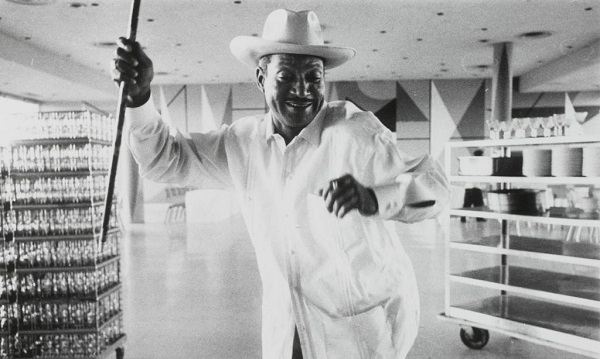
Benny More
Benny More

Born on August 24, 1919 at 7:00 a.m. m. in the Pueblo Nuevo neighborhood of the town of Santa Isabel de las Lajas, belonging to the Cienfuegos province. His parents were named Virginia Moré and Silvestre Gutiérrez, and Benny was the oldest of 18 siblings. His surname Moré came from Ta Ramón Gundo Moré (a slave of Count Moré), who according to the tradition of the Congos, was their first king in Santa Isabel de las Lajas.

He was gifted with a flowing tenor voice that he colored and phrased with great expressiveness.

This context was definitive for his future career in music, he learned to play the insundi, the yuka drums, those of Makuta and Bembé, invokers of deities, with whom he sang and danced perfectly, but also to interpret the son, the guaracha and the rumba.

Since he was a child he manifested his great vocation for music, as he would spend all day humming a popular song or improvising and directing ensembles made up of machetes, bongos made from milk cans, guitars made from a board and nails made from strings of string. sew, two sticks as keys, etc. And when he was ten years old, he “grated” a “real” three that had been lent to him, with which he would escape from his mother to the parties near his house.
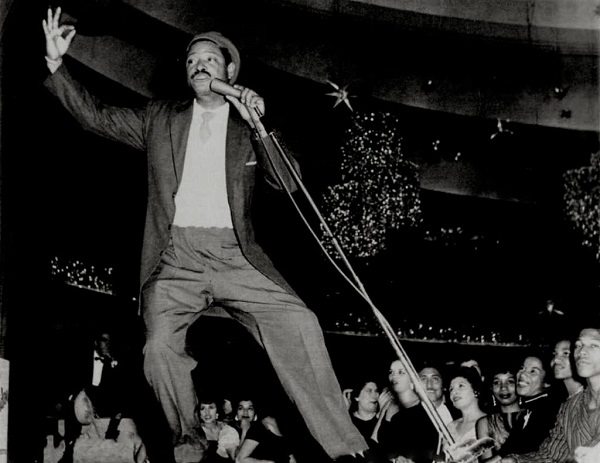
Benny More in concert

Moré was a master in all genres of Cuban music.

He could always be found standing on a table singing and reciting a son manigüero, surrounded by listeners. He spent his childhood and adolescence as Bartolomé, without the opportunity to study or get a permanent job. Like his brother Teodoro, Bartolomé was enrolled in the José de la Luz y Caballero School of Public Instruction, where he always stood out for his conduct and application.

He was gifted with a flowing tenor voice that he colored and phrased with great expressiveness.

This context was definitive for his future career in music, he learned to play the insundi, the yuka drums, those of Makuta and Bembé, invokers of deities, with whom he sang and danced perfectly, but also to interpret the son, the guaracha and the rumba.

Since he was a child he manifested his great vocation for music, since he would spend all day humming a popular song or improvising and directing ensembles made up of machetes, bongos made with milk cans, guitars made with a board and nails with strings of thread. cook, two sticks as keys, etc. And when he was ten years old, he “grated” a “real” three that had been lent to him, with which he would escape from his mother to the parties near his house.

Why is the Bacardi symbol a bat?

Moré was a master in all genres of Cuban music.
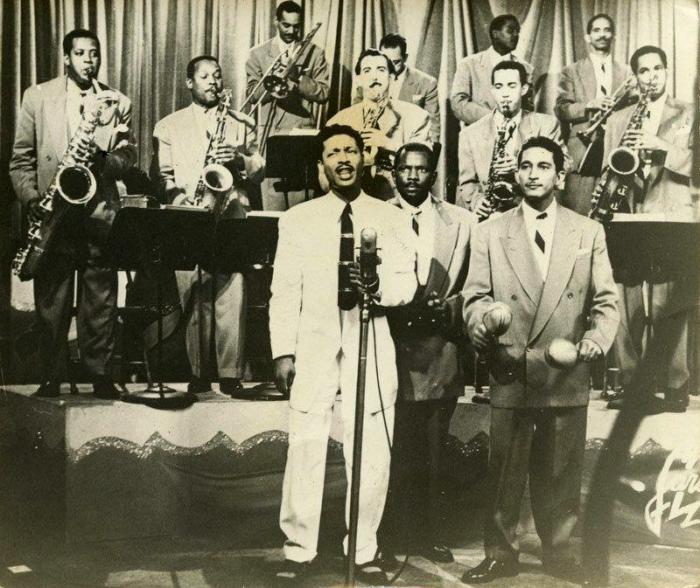
Benny More with the orchestra

He could always be found standing on a table singing and reciting a son manigüero, surrounded by listeners. He spent his childhood and adolescence as Bartolomé, without the opportunity to study or get a permanent job. Like his brother Teodoro, Bartolomé was enrolled in the José de la Luz y Caballero School of Public Instruction, where he always stood out for his conduct and application.

His voice particularly stood out in the son montuno, the mambo, and the bolero.

Since he was a child, his aptitude for singing and improvisation stood out, which he demonstrated when, barely seven years old, he escaped to entertain Guateques and parties nearby and stayed singing notes with his mother to prevent him from sleeping while ironing until late at night. .

Benny went through a complicated life, but he was willing to do anything to achieve his dreams of success. With almost twenty years of age, in 1940 Bartolomé said goodbye to his mother at the Ritz Hotel in Central Vertientes, where she worked, and traveled hidden, indistinctly, on a train and in a truck, to the City of Havana. He was definitely coming to try his luck in the bustling city. Since then he would be seen in the famous neighborhood of Belén, with a guitar acquired in a pawnshop, wandering through cafes, bars, hotels, restaurants, and even brothels.

That same year he told his cousin, a fellow downloader: “I’ll stay in Havana, here I get up or I sink.” From then on the saga of the downloads began in the bars on the avenue of the port. Once, recalling those times, he confessed: “I went out into the street with a guitar on my shoulder to sing to the tourists. I am not ashamed of it; Carlos Gardel also did it in Argentina and he is the king of tango”

At that time, the Supreme Court of Art began to be broadcast on the CMQ station. Bartolomé Maximiliano Moré appeared on that program animated by Germán Pinelli and José Antonio Alonso. After presenting it and at the moment of starting his presentation, the bell rang for him. Later Bartolomé returned to Monte y Prado to the Supreme Court and on this second occasion he won the first prize. Possessor of a fresh voice, with a beautiful timbre, sensual and evocative, of a black peasant, despite his misery, Bartolo continued to sing with all the inner strength that Cuban rhythms demanded of him.

One of his escapades Siro Rodríguez, a member of the famous Trio Matamoros, heard him sing in the bar of El Templete restaurant, on Avenida del Puerto, and was very impressed by the boy’s voice and tuning. Bartolomé’s entry into the group led by Miguel Matamoros can be considered his true debut as a professional singer, since with said group he had a stable job for the first time as a musician and made his first recordings on 78 revolutions per minute records.

Benny knew he had a voice, an atche (luck), and a destiny. Perhaps he sensed it, intuited it, or simply trusted in his triumph. When he started with Miguel Matamoros and his group, he already wanted to make changes to the picket line. In Mexico, when Miguel got sick, he was able to direct the group, took command and made the friends enjoy themselves at the El Patio cabaret.

When the contract ended, the Matamoros group returned to Havana, but without Bartolomé, who decided to try his luck alone in Mexico. When communicating his decision to the famous author of the son El que sowing his corn, Miguel Matamoros would reply: “It’s very good, but you have to change your name from Bartolo, which is very ugly. You’re not going anywhere with him. You’re right, Bartolo replied, from today I’ll be called Benny, yes, Benny Moré.

The owner of the business was hypnotized by the tasty atmosphere that Benny created as a manager. After singing with several leading orchestras in Mexico, he stood up nicely with the most famous band of the 20th century: Pérez Prado and the Cuban mambo.

With this meeting, two geniuses came together: in Benny Moré there was talent and natural intuition; in Pérez Prado, in addition to all that, mastery of technique and an enormous facility for making music.
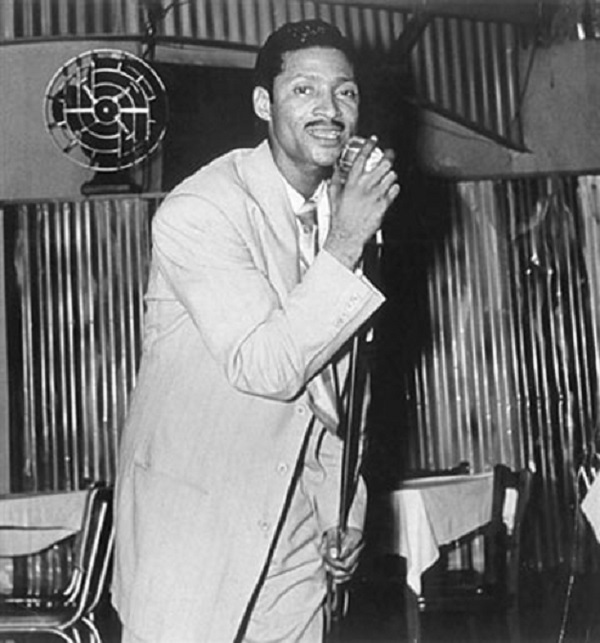
Benny More singing
Benny More singing

With Pérez Prado he conquered the noble Aztec people on tours of different states of that sister country. Due to the success achieved by Benny, the town awarded him the title of “Prince of the mambo” and Pérez Prado that of “King of the mambo”. He sang like no one else in the world and began his international rise.

By that time Benny’s voice was already known in Panama, Colombia, Brazil, Puerto Rico, Haiti, Venezuela, and of course, in his native Cuba. In the lively world of nightlife in Mexico City, the Cuban singer performed in countless theaters, among others the Margo, the Blanquita, the Folliers and the Cabaret Waikiki, alternating with renowned artists such as the legendary vedette Yolanda Montes (Tongolele ), the Mexican Toña la Negra, and the prominent Cuban pianist and composer Juan Bruno Tarraza, for whom Benny sang the bolero Ya son las doce. He participates in many films and upon his return to Cuba, he was already sure that he had to be counted on.

Nostalgia for his family, friends, for the Homeland, and the desire to obtain laurels on his Island, where he considered that he was not well known, made him return to his beloved Lajas at the end of 1950. The older sonero was definitely in Cuba, he had left behind comforts, material and spiritual satisfactions, friends and even the loves that winners usually do not lack.
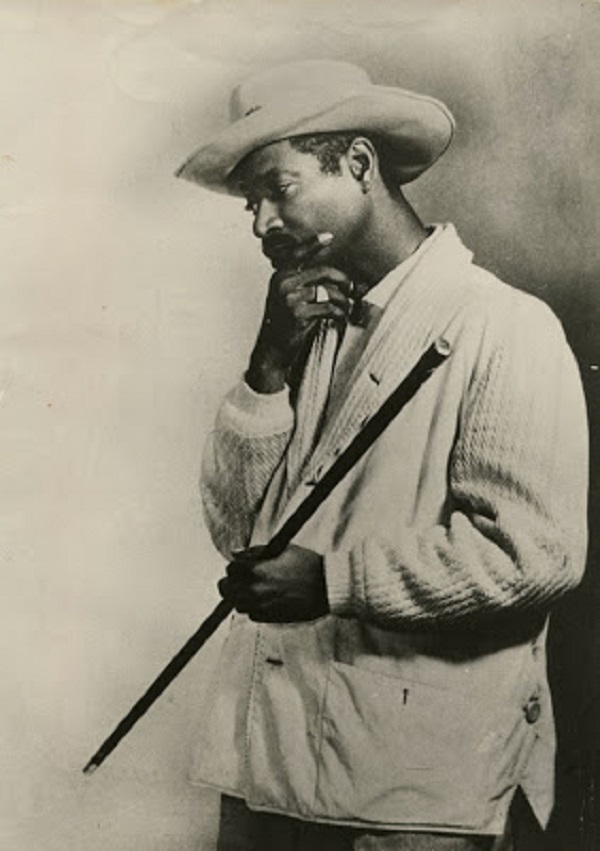
Benny More Photo
Benny More Photo

For the next two years, he performed by contract for a program called “De fiesta con Bacardi”, which aired on the Cadena Oriental radio station with the Mariano Mercerón orchestra, and the singers Fernando Álvarez and Pacho Alonso.

As Benny Moré was an exclusive artist for RCA Víctor, this firm demanded his presence in Havana to make different recordings. To fulfill this commitment, he made alternate trips to Havana and thus maintained his commitment to the eastern radio network. After the engagement at Casa Bacardí and master Mercerón, in 1952 Benny Moré returned to Havana.

Certainly Benny concluded an era, closed a chapter of Cuban musical life, that stage of nightlife that was already declining. Benny’s life was related to a world that has already disappeared. Then everything became myths and legends. Benny kept singing, but now it would be on scratch records, which were digitized.

Today’s “oidores” (listeners) must travel back in time, abstract themselves, imagine those seedy bars in the Havana port full of curious tourists. Of Chinese inns that sold “complete” for poor people who passed the hat, after singing through the streets of Havana.
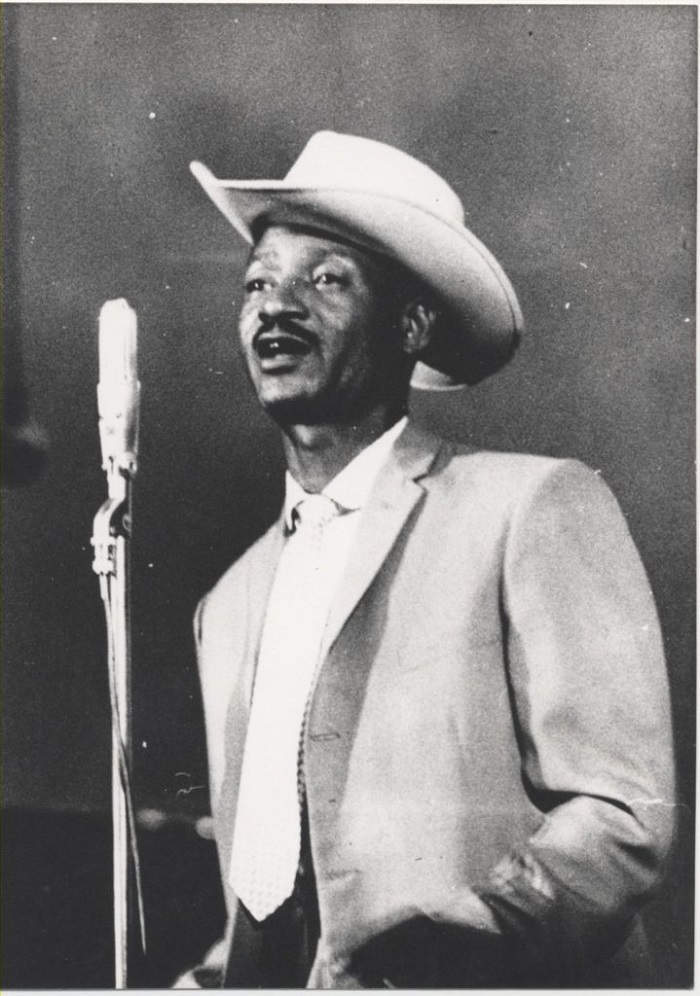
Benny More
Benny More

Son Cubano is one of the most popular musical styles in Cuba and Kiki Valera is one of its leading exponents

Over the last century, this style of traditional Cuban music has contributed to many other musical genres, including jazz, cha cha cha, mambo, salsa, songo and timba.

Cuban Son is one of the most popular musical styles in Cuba and Kiki Valera is one of its greatest exponents.

Cuban son is the music that made the Buena Vista Social Club worldwide stars in the late 1990s, but Kiki Valera comes from a family of musicians whose involvement with Cuban son predates BVSC by decades.

Kiki Valera is the eldest son of the famous septet La Familia Valera Miranda, a multi-generational traditional music group from Santiago de Cuba.

Since the 19th century, La Familia Valera Miranda has played an important role in Cuban culture by collecting and preserving the deep-rooted traditions of the legendary Sierra Maestra mountain region.

Their debut album, “Antología Integral Del Son”, released in 1982, helped initiate the explosion of interest in traditional Cuban music.

Kiki, like most of her family, is a virtuoso. A multi-instrumentalist, composer, arranger, sound engineer and producer, he is best known as one of the world’s best players of the Cuban cuatro, a medium-sized guitar with 8 strings grouped in sets of 2.

Kiki Valera is the eldest son of the famous septet La Familia Valera Miranda, a multigenerational group of traditional music from Santiago de Cuba.

Kiki learned the Cuban tres under the guidance of his father Felix as a child.

He later attended one of Cuba’s most prestigious music schools, the Esteban Salas Conservatory, in Santiago de Cuba and by the age of 15 was touring internationally.

Kiki continues to conduct, compose, arrange and perform internationally. She also performs and teaches in Seattle, Washington, where she contributes to the vibrant Pacific Northwest music scene.

His current project features several other internationally renowned artists, including Coco Freeman (former singer for Adalberto Alvarez y su Son and NG La Banda), vocalist Carlos Cascante (three-time Grammy Award winning vocalist for the Spanish Harlem Orchestra), trumpeter Alexis Baró (Cubanismo and Omara Portuondo) and bongocero Pedro Vargas (Barbarito Torres’ band). (Kiki Valera)

“Vacilón Santiaguero” is Kiki Valera’s second solo release in the United States after many distinguished years as the director of La Familia Valera Miranda in Santiago de Cuba.

He goes beyond his core group to present collaborations with some Grammy® award winning musicians and features his favorite trumpet players, some born in Cuba, some born in the U.S., but all with reputations jus????ficadas for playing Cuban music for love, if not DNA.

Son Cubano is one of the most popular musical styles in the world.

“Vacilón” is one of those words that doesn’t have a perfect English equivalent to Cuban Spanish, but something that’s a really good time (a little rum or aguardiente always helps).

So what sets this project apart from the vast mountain of excellent traditional albums already out there? Not only is there Kiki’s custom-made Cuban cuatro, which brings a unique texture to the sound, rather than a tres, but, in his jazz-influenced hands, you’ll occasionally hear twists and turns in his improvisations that you probably weren’t expecting when you first glanced at the song titles, which are mostly Cuban evergreens.

Thanks to Kiki’s creative arrangements, this is no mere recycling of covers of these classic songs.

Kiki is as exacting with the recording, mixing and mastering work as he is with the arrangements.

Much of the recording and mixing was done in Kiki’s custom home studio, and Grammy® winner Michael Lazarus mastered the project.

The result will be an audiophile’s delight, a reason, I might add, to want the physical product for your collection (Kiki Valera).

Kiki Valera – Vacilón Santiaguero (2024).

Tracks:

  1. Este Vacilón (Felix Valera Miranda)
  2. El Ají de Cocina (Felix Valera Miranda)
  3. Sobre una Tumba una Rumba (Ignacio Piñeiro)
  4. El Penquito e’ Coleto (Francisco Repilado “Compay Segundo”)
  5. Funfuñando (Arsenio Rodriguez)
  6. La Guajira (Olga de Blanck)
  7. Mari-Juana (Juana María Casas)
  8. Muñequita Feliz (DR)
  9. El Empanadillero (Teodoro Benemelis)
  10. Pájaro Lindo (Felipe Neri Cabrera)
  11. Dos Gardenias (Isolina Carrillo)
  12. El Cuarto de Tula (Sergio Gonzales Siaba)

Musicians:

Kiki Valera (Cuban cuatro, guitar, bass, harpsichord, maracas and backing vocals).

Pedro Vargas (congas, bongos and backing vocals)

Steve Guasch (Backing vocals)

Carlos Cascante (Lead vocals on tracks #1,#4,#5,#7,#9,#10,#12)

Francisco “Coco” Freeman (Lead vocals on tracks #2,#11)

Joshuah de Jesus (Lead vocal on tracks #3,#8)

Raquel Zozaya (Lead vocals on track #6).

Special guests:

Alexis Baró (Trumpet on tracks #1, #3, #4, #6, #9, #11).

Steve Mostovoy (Trumpet on tracks #1, #3, #3, #6, #11)

Michael Rodríguez & Jonathan Powell (Trumpet on track #8)

Pete Nater & Dennis Hernández (Trumpet on tracks #2, #5, #7, #12)

Brian Lynch & Thomas Marriott (Trumpet on tracks #1#0)

Leon Q Allen (Trumpet on track #4)

https://www.kikivalera.com/

Also Read: Yilian Cañizares, an excellent Cuban musician, studied in her hometown in the strictest tradition of the Russian school of violin

The Rumbón of Caracas! Oscar D’ León, Víctor Manuelle, Grupo Niche, Jerry Rivera and Lion Lázaro unite in a show with Invershow!

The city of Caracas is getting ready for a night of pure salsa and joy! Invershow is pleased to announce an unprecedented event that will make the Simón Bolívar Monumental Stadium vibrate on June 20, 2024.

¡El Rumbón de Caracas! Invershow

An all-star cast of Latin music stars will come together to offer an experience full of rhythm and flavor.

Oscar D’ León: The legendary “Sonero del Mundo” arrives in Caracas to share his passion and music with all attendees.

With decades of experience on the international stage, Oscar D’ León is an undisputed icon of salsa music. His incomparable charisma and talent ensure a night full of emotion and rhythm.

Victor Manuelle: Known as the “Sonero de la Juventud”, Victor Manuelle is a true master of romantic salsa.

His songs, full of feeling and passion, have conquered the hearts of millions around the world. Get ready to enjoy hits such as “Tengo Ganas”, “Que Suenen los Tambores” and many more, in an unparalleled performance.

¡El Rumbón de Caracas!

Grupo Niche: Directly from Colombia with their characteristic style and contagious energy.

Known for their fusion of salsa, cumbia and tropical sounds, Grupo Niche promises a memorable party.

Songs such as “Cali Pachanguero”, “Gotas de Lluvia” and “Una Aventura” will be just some of the gems that will delight the audience.

Lion Lázaro: One of the best known emerging artists at national level, with his unmatched talent he will make the audience dance with hits such as: “Que levante la mano”, “Pa’ mi gente”, “Muevelao” and of course his most recent promotional single “Súmbate”.

Salsa takes Caracas in one night. An event that only Invershow makes possible. For more information, visit mitickera.com and find out the details.

Tickets on sale at:

Mitickera (CCCT, Level C2)

Camil Deli (Los Palos Grades)

Cashea APP

Valeven

Join the biggest rumba of the year and let yourself be carried away by the rhythm of salsa!

Naelyn Avila: Communications Department

Invershow has established itself as a leader in the organization and production of events, offering the most advanced technology, innovation, qualified and committed staff to meet the highest standards of quality for its realization.

¡El Rumbón de Caracas! Invershow

Extensive experience in the world of events!

Our experience has allowed us to produce numerous events of diverse categories such as: concerts, exhibitions, fairs, press conferences, conventions, seminars.

PRODUCTION: We are a leading company in the entertainment market, specialized in pre-production, production and post-production.

SCENOGRAPHY: We offer art and technique of design and decoration of scenic spaces, visual elements that realistically constitute…

ADVERTISING: We have a team of professionals capable of understanding the needs of the consumer, analyzing

AUDIOVISUAL: We help you to create mass communication mechanisms that transmit your message through traditional channels…

PROTOCOL: We have qualified personnel to provide a reception service, personalized attention and can handle…

LIGHTING: We have the best technology in lighting for stages, concerts, effects and architectural ambience.

BULLETIN: We are a leading company in the sale of tickets and access control for all types of events nationwide.

CO-PRODUCTION: Our experience allows us to provide support to production companies, in order to produce quality events.

We are the leading company in the organization and production of events. Our main strength is based on taking care of every detail with the greatest commitment to service, from the organization, production, infrastructure and advertising.

ADDRESS: California de las Mercedes Street, Torre Avila Building. 5th floor

CONTACT: [email protected] [email protected] 0212-505.39.90

Also Read: Gilberto Santa Rosa is a Puerto Rican singer, songwriter and sonero better known as “El Caballero de la Salsa” (The Gentleman of Salsa)

Veruska Verdú woman full of Barloventeña roots currently doing artistic work in Peru

On January 26, 1993 was born in the city of Caracas Venezuela, Cristina Veruska Verdú Mendoza, a woman full of Barloventeña roots.

Currently doing artistic work in Peru,

Veruska Verdú woman full of Barloventeñas

Premiering the songs “ME CANSE DE TI, LA NEGRITA, Y PASITO A PASITO” This is the first advance of “Caminando”, solo album that the Venezuelan artist plans to release this year and which will include songs of her authorship.

Third finalist of “LA VOZ PERU” season 2022, a program of great artistic relevance, where for the first time in the program a participant arrives as a foreign singer to the final.

Singer in Tonny Succar’s orchestra in Peru with Mimy Succar.

Special participation in the video clip, QUIMBARA of the producer Tonny Succar.

Participates hand in hand with the great musician and international producer Tito Manrique creator of the Salsa criolla, nominated to the Latin Grammy and winner of VIÑA DEL MAR. Participating in a solo track on his album Abriendo Caminos with the song and video of the song Taita Bilongo (Peruvian salsa/afro fusion).

From the production of Puerto Rican composer Eduardo Zayas and his project ¨EZ la Banda¨ sings with another legend of salsa singer Rafy Andino singer of the MULENZE Orchestra the song ¨Sabor y Sandunga¨, also recorded a song with Luchito Muños “Dos puntos de vista”.

Veruska fue invitada especial en dos temas de la producción llamada “Huerta de Soneros” con el tema ¨Yo soy la Rumba¨ y otro junto al legendario cantante Johnny Vega (cantante de Cortijo y su Combo) ¨Nació para cantar¨, igual del compositor Eduardo Zayas.

Veruska Verdú, a woman full of Barloventeño roots, is currently doing artistic work in Peru.

Also invited to the production of producer Gerson Zayas, performing the song “Cuando deje de amarte”.

Works with producer and pianist Kike Purizaga, Mario Cuba, singer Carlos Mosquera, with Juan Medrano “Cotito” known as the voice of the cajo of Peru and many more.

Along with producer Alberto Crespo and Daniel Espinoza, recording choirs for the film of Ricardo Rey and Bobby Cruz with Rodrigo Mendoza and Wilmer Lozano.

She is invited to work with international musician Alfredo Naranjo in his project “El Guageo” with singer Edgar Dolor Quijada.

Later they work together with the great Venezuelan musician Nene Quintero in the “Be Jazz Sessions” project also winner of the Pepsi Awards 2019 which sold out all their concerts during the framework of its activities which had international reach.

She sings as a special guest with the classic Sonero del Caribe.

She shares the stage as a duo with Rodrigo Mendoza, singer of Dimensión Latina and of great worldwide trajectory.

She is part of the project “Salsa Master” with the participation of Edgar dolor Quijada, Marcial Isturiz, Rodrigo Mendoza and percussionist Cheo Navarro.

Veruzska was also a special guest in the orchestra “RUMBEROS DEL CALLEJON” of Carlos Padron in which she participates in its production along with the staff of artists such as Wilmer Lozano, Rodrigo Mendoza, Gonzalo Diaz, Memo Arroyave, and international artists such as Tito Nieves, Gilberto Santa Rosa, Maelo Ruiz and Domingo Quiñonez.

He began his musical career when he was only eight years old in the Afro-Venezuelan genre (traditional Venezuelan Afro music). Where he participated in various festivals being in first place in each of them.

Later he joined the ranks of the prestigious “Orquesta Latino Caribeña” of the orchestra system which is directed at that time by the great maestro Alberto Vergara, orchestra with great projection and impact in the country (Venezuela), participating in major festivals in countries like the United States and Colombia captivating the public with his voice.

Pasito a Pasito · Veruska Verdú

All the power of her voice, the flavor and the feeling.

Songs from the album that she is recently finishing the recording of

La Negrita

Pasito a Pasito

Me Canse de ti

It is a great joy for me to share this event with you. My dear friend Veruska Verdu does not stop growing and now she is going all out with the help of Takina Records to make a Celia Cruz Tribute in style.
By: Alberto Valles Salazar.

Also Read: Virginia Ramirez is the artist of the XXI century, the Princess of Piano and Voice, the hope that will save the new generations of anti-music

Jimmy Bosch. The Creole Trombone of New York.

Norteamerica / USA / Nueva York

Jimmy Bosch was born on October 18, 1959 to a Puerto Rican family in the city of Hoboken in the state of New Jersey.

At the elementary school of his hometown, at the age of eleven Jimmy Bosch was offered a trombone which would give the starting point in his career. According to him, that metallic, valveless, long instrument (which was taller than him) was not necessarily what a child dreamed of; Perhaps, at that time, children dreamed of traveling to the moon, or with an electric guitar that would make them look like The Beatles or, failing that, the Rolling Stones. It didn’t take long for that 11-year-old boy to transform this instrument into an expression of his already visible creativity.

Jimmy Bosch
Jimmy Bosch

At the age of 13, the talented Jimmy was rehearsing with local bands and making his first foray onto the public stage a year or two later. His determination, the Latin blood that ran through his veins and the taste for the genre that had captivated him on so many occasions, led him to play with the most recognized band in the city: Manny Oquendo & Conjunto Libre. His dexterity and ingenuity in playing “moñas” (a section of trombone solos that enrich the melody) helped him to work with them since 1978, which is why it was alongside the Mythical Free Ensemble that Jimmy experienced the freedom to express himself musically with the trombone

On March 11, 1996, Jimmy Bosch debuted with his band at the internationally known S.O.B.’s nightclub. The result was immediate: Publications in the most prestigious newspapers in the Big Apple such as the “New York Times”, praising his excellence and a house full of loyal fans began to crown the dream of this tropical music worker. In this way he becomes a remarkably respected musician and an icon of Latin culture in New York.

His compositions reflect the creativity and depth of who Jimmy Bosch is. He takes his audience on a journey from Bronx-style “funk” to “hot” guajiras, melodious cha-cha-chás, and clearly poetic lyrics awash with feeling. Thus, Jimmy pays tribute to the other teachers who share their presentations generating remembrance and posterity in each one of them.

Jimmy Bosch playing trumpet

In 1998, under the Ryko Latino label, his first solo album, “Soneando trombone”, was released. Jimmy included a “Big Band” with renowned Latin virtuoso artists, such as trumpeter Alfredo “Chocolate” Armenteros, bassist Andy González, and singers like Jimmy Sabater and Pete “El Conde” Rodríguez. They played a mix of Latin styles, including “hard sauce,” of which Bosch is one of its greatest exponents. Bosch not only played a virtuoso trombone, but was also the musical director on that recording.

With his recording debut as a solo artist, Bosch scored a definite success on the international scene. In Europe critics welcomed his musical creations. And in the United States, newspapers such as the Los Angeles Times and The New York Times were full of praise for their brilliant performances.

Jimmy Bosch in concert

At the beginning of 1999, the popular musician returns to the charts with a new production: “Salsa dura“. In this production, including musicians like Steve Turre and Chucho Valdés, it was as diverse, strong, and tough as his first production. The recording also included songs like I’m Still Changing. For the release of “Salsa dura” the Creole trombonist traveled to Europe and performed on countless stages of the Old Continent.

Persevering in his creativity, in 2004 Bosch received new applause in Puerto Rico, presenting his musical proposal at jazz festivals. His bows have accompanied such important figures in the salsa industry around the planet as the aforementioned Free Ensemble of Manny Oquendo and Andy González, Eddie Palmieri, Ray Barretto, Rubén Blades, India, the Lebron Brothers, La Combinación Perfecta, Cachao, Spanish Harlem Orchestra and Celia Cruz among others. He was the musical director of the outstanding Puerto Rican performer Marc Anthony.

The late creator of the Mambo, Israel “Cachao” López, composed for him the song “Lluvia, viento y caña”. The legendary trombone solo can be heard on the Grammy-winning recording, “Master Sessions Vol. 1” produced by Emilio Estefan and Andy García.

This talented musician stamps his signature with his particular way of playing the trombone, becoming his personal stamp in the music industry. Today, Jimmy Bosch is famous for his explosive solos, full of melody, vibration and funk.

Jimmy Bosch live
Jimmy Bosch live

Known by many as “El Trombón Criollo” for the strength of his improvisations, Jimmy radiates his energy to any musical challenge. Jimmy brings us El airplane de la salsa, his latest production, surrounded by high-voltage musicians and soneros.

  • « Go to Previous Page
  • Page 1
  • Interim pages omitted …
  • Page 20
  • Page 21
  • Page 22
  • Page 23
  • Page 24
  • Interim pages omitted …
  • Page 56
  • Go to Next Page »

International Salsa Magazine (ISM) is a monthly publication about Salsa activities around the world, that has been publishing since 2007. It is a world network of volunteers coordinated by ISM Magazine. We are working to strengthen all the events by working together.