• Skip to primary navigation
  • Skip to main content

International Salsa Magazine

  • HOME
  • Previous editions
    • 2026
      • ISM / March 2026
      • ISM / February 2026
      • ISM / January 2026
    • 2025
      • ISM / December 2025
      • ISM / November 2025
      • ISM / October 2025
      • ISM / September 2025
      • ISM / August 2025
      • ISM / July 2025
      • ISM / June 2025
      • ISM / May2025
      • ISM / April 2025
      • ISM / March 2025
      • ISM / February 2025
      • ISM / January 2025
    • 2024
      • ISM / December 2024
      • ISM / November 2024
      • ISM / October 2024
      • ISM / September 2024
      • ISM / August 2024
      • ISM / July 2024
      • ISM / June 2024
      • ISM / May 2024
      • ISM / April 2024
      • ISM / March 2024
      • ISM / February 2024
      • ISM / January 2024
    • 2023
      • ISM / December 2023
      • ISM / November 2023
      • ISM / October 2023
      • ISM – September 2023
      • ISM – August 2023
      • ISM July 2023
      • ISM Edition June 2023
      • ISM – May 2023
      • ISM April 2023
      • ISM March 2023
      • ISM February 2023
      • ISM January 2023
    • 2022
      • ISM December 2022
      • ISM November 2022
      • ISM October 2022
      • ISM September 2022
      • ISM August 2022
      • ISM July 2022
      • ISM June 2022
      • ISM May 2022
      • ISM February 2022
      • ISM January 2022
    • 2021
      • ISM December 2021
      • ISM November 2021
      • ISM October – 2021
      • ISM September 2021
      • ISM August 2021
      • ISM July 2021
      • ISM May 2021
      • ISM April 2021
      • ISM June 2021
      • ISM March 2021
      • ISM February 2021
      • ISM January 2021
    • 2020
      • ISM December 2020
      • ISM November 2020
      • ISM October 2020
      • ISM September 2020
      • ISM August 2020
      • ISM July 2020
      • ISM June 2020
      • ISM May 2020
      • ISM April 2020
      • ISM March 2020
      • ISM February 2020
      • ISM January 2020
    • 2019
      • ISM December 2019
      • ISM November 2019
      • ISM October 2019
      • ISM Septembre 2019
      • ISM August 2019
      • ISM July 2019
      • ISM June 2019
  • Download Salsa App
    • Android
    • Apple
  • Spanish

Search Results for: Legend

Carlos “Patato” Valdés one of the best percussionists in the history of Latin Jazz.

On November 4, 1926 in the Los Sitios neighborhood of Havana, Cuba, Carlos “Patato” Valdés was born. Known as Patato, he is, quite simply, one of the best percussionists in the history of music.

Patato was born into a very santera and very musical family, his father was a tres player of Los Apaches, the port germ of two illustrious sonera groups: the Sexteto Habanero and the Sexteto Nacional.

He learned to play the tres and the botijuela before turning to percussion, first on the cajones and finally on the congas.

He was an extraordinary percussionist of outstanding participation with the “Conjunto Kubavana”, “La Sonora Matancera”, “Conjunto Casino” and the “Orquesta de Tito Puente”, among other groups, both Son and Latin Jazz.

Formed in rumbero gatherings and carnival groups, Valdés became a professional in the early forties, after trying his luck as a boxer and dancer.
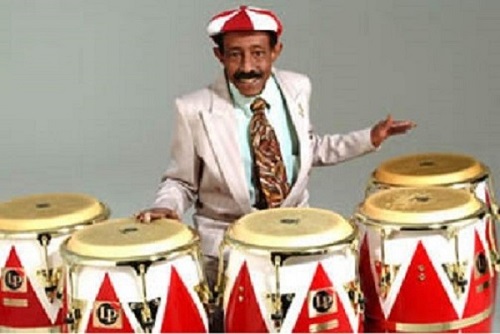
Carlos “Patato” Valdés uno de los mejores percusionistas en la historia del Jazz Latino

He played with Conjunto Kubavana, La Sonora Matancera and El Conjunto Casino. He accumulated nicknames: Zumbito (for his performances at the Zombie Club), Pingüino (for a dance he did on television) and Patato (for his small size), and in those days, dedicating oneself to music in Cuba guaranteed hardship. Besides, Patato wanted to experiment and that was not possible playing for dancers or tourists.

In 1954, he emigrated to New York, like his leather friends: Cándido Camero, Armando Peraza, Mongo Santamaría and the pioneer Chano Pozo (murdered there in 1948).

He immediately began working with Tito Puente. His first recording in the United States was the album Afro-cuban, by trumpeter Kenny Dorham, which opened with the intoxicating Afrodisia. Those were good times for tropical music.

He was the first percussionist to improvise “Solos” with 3 or more Congas at the same time. In addition, he was the creator of the “Congas Afinables”, instruments on which he would ride to dance making them sound rhythmically.

Patato Valdes was an excellent musician, an unforgettable person. Nervous and diminutive, he spoke with an impenetrable Cuban accent; he dressed elegantly, hiding the necklaces and bracelets of Changó and other “orishas”. He looked like a living caricature, but when he hit the percussions he became a divine creature: he had power, spectacularity, sense of melody.

Those skills made him an ambassador of Afro-Cuban rhythms in the jazz world, although he will also go down in history for his extraordinary rumba recordings.

In 1956, Patato appeared in the film Y Dios creó a la mujer, teaching the dances of his homeland to Brigitte Bardot. A great moment, although an implacable Guillermo Cabrera Infante criticized the actress’s movements: “she seems to commit suicide by dancing a cross between mambo and chachachá, a really toxic cross between mambo and chachachá”.

A flexible musician, Valdés sounded as comfortable playing with Machito’s big band as with Herbie Mann’s group. However, he felt indebted to the “rumba de solar” and in 1968 he recorded a revolutionary album with his friend Eugenio Arango, alias Totico.

The exuberant Patato & Totico had genuine Havana flavor, but enriched the basic percussion instrumentation with Cachao’s contrabass and Arsenio Rodriguez’s tres.Patato expanded the creative possibilities for percussionists by playing with three or more congas.

He also made their lives easier by developing a tunable conga: fed up with the traditional method (heating the leather over fire), he installed a metal hoop and keys for tensioning.
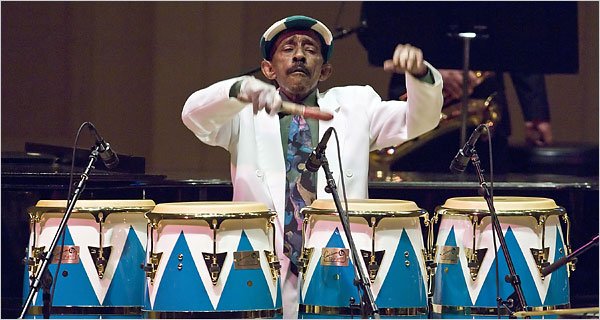
Carlos "Patato" Valdés
Carlos “Patato” Valdés

The LP company mass-produced his model, which was to become the standard for conga players. To promote it, he formed the Latin Percussion Jazz Ensemble with Tito Puente, Jorge Dalto and Alfredo de la Fé, among others, an orchestra that would end up becoming Puente’s big band in the early 80s.

It was during this period with Dalto that the album we have chosen for today began to take shape. It was titled “Patato, Master Piece” and it synthesizes all of Patato’s genius.

“Masterpiece” is an album that travels first class through tango, jazz, descarga, guaguancó and bolero, always in a masterful way and with a luxury crew made up of names like Jorge Dalto, Artie Webb, Michel Camilo, Jerry and Andy González, Nicky Marrero, Ignacio Berroa, Joe Santiago, Néstor Sánchez, Vicentino Valdés, and Sabú Martínez, among others.

The Art of Flavor.

Unfortunately Dalto had already passed away when in 1993 the project was released by the venerable German label Messidor, the same label that had already financed some impressive sessions of Patato with Mario Bauzá or Bebo Valdés, with whom he would later record the famous El Arte del Sabor.
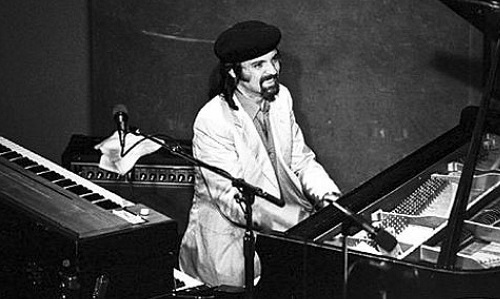
Jorge Dalton
Jorge Dalton

In fact, the great Argentine pianist had to be replaced for the last recording sessions that were made 6 years ago since his illness was too advanced, but he left us some incredible arrangements that were kept in the great majority of the themes.

Dalto left us in 1987 when he was only 39 years old. His replacement was nothing more and nothing less than a very young Michel Camilo.formed by 9 cuts among which we especially want to highlight the huge versions of Cute and Nica’s Dream, Masterpiece is an essential album for all lovers of Latin-jazz with capital letters and that is why we wanted to share it on a day as special as today.

Already recognized as a legend, Patato became more visible in the last 25 years: he had his own band, Afrojazzia, although The Conga Kings, with Cándido and Giovanni Hidalgo, turned out to be more popular.
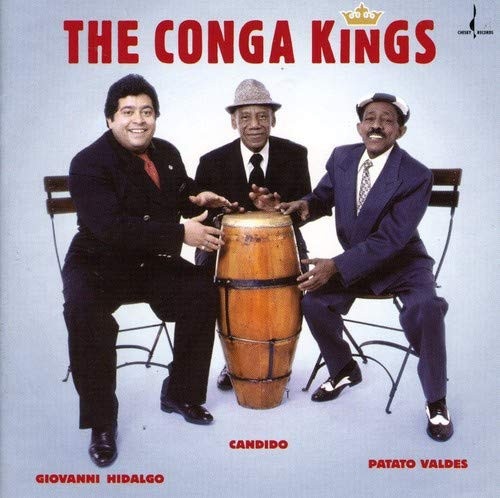
The Conga Kings Giovanni Hidalgo, Cándido Camero y Patato Valdez

He even made his way onto the modern dance floors, with a remix of San Francisco tiene su propio son. Just as he was returning from playing in California with the Conga Kings, his breathing began to fail.

The plane he was on had to make an emergency landing in Ohio to admit him to a hospital. The 81-year-old percussionist, a heavy smoker, was on his way to his beloved New York, but he would never get there. According to his relatives, he held out until December 4, the day of Santa Barbara, the Afro-Cuban equivalent of Changó, when the cables and tubes that kept him alive were removed.

Valdés died in Cleveland, USA, on December 4, 2007.

Fuentes: http://www.herencialatina.com/Patato/Patato_Valdes.htm

Imágenes: Martin Cohen de Congahead.com

Carlos “Patato” Valdés

You can read: Irakere was a Cuban group that developed an important work in Cuban popular music and Latin Jazz under the direction of Chucho Valdés

Latin America – January 2023

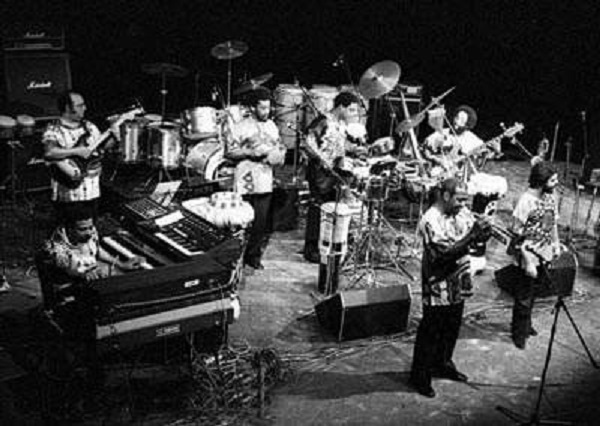
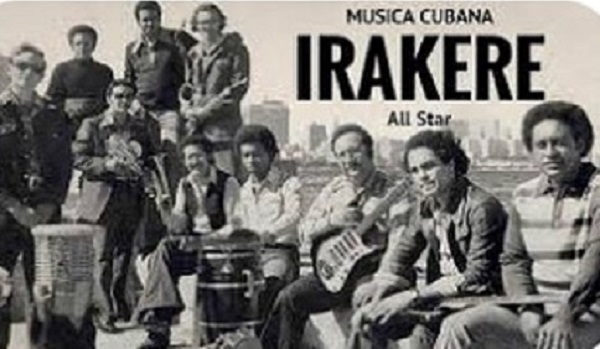
Irakere was a Cuban group that developed an important work in Cuban popular music and Latin Jazz under the direction of Chucho Valdés

Irakere was formed as such in 1967 but had begun to work much earlier; in that year precisely they went to a selection called in Havana to organize with the best musicians of that time the Cuban Orchestra of Modern Music; already in 1972 they were approaching to what they currently produce deciding in 1973 to call it Irakere, which in Yoruba language means Vegetation and that is how, starting from its name, they work based on the Afro-Cuban musical roots.

In this way, through the combination, mixture and interrelation of classical, impressionism, jazz, rock and various compositional techniques they managed to walk through all styles such as dance music, concert, traditional and popular Cuban music.

Thanks to the impulse of pianist Chucho Valdés, the Cuban group Irakere took off in 1973, nourished by Thelonious Monk’s bop.

Founders

Grupo Irakere: It was founded in Havana in 1973, by:

Jesús Valdés(Chucho) composer, director and pianist;

Paquito D’Rivera (Paquito), alto and tenor saxophone, flute and clarinet;

Carlos Averhoff, tenor saxophone, soprano, flute and bass clarinet;

Jorge Varona, trumpet, trombone and percussion;

Carlos del Puerto, bass, bass guitar and tuba;

Carlos Emilio Morales, guitar;

Bernardo García, drums and batá drums;

Jorge Alfonso, batá drums;

Enrique Plá, drums;

Carlos Barbón, güiro, chekeré and tambourine; and

Oscar Valdés, singer, tumbadora (conga), batá drums and bongo.

Irakere, fue un grupo cubano que desarrolló un importante trabajo en la música popular cubana y el Jazz Latino

On the founding of Irakere, Chucho Valdés expressed:

“For us the group always existed, it was present at all times; it was like something pending. At the beginning it had no name, it was just an idea we were working on: to use Cuban folkloric percussion in dance music, and to look for different timbres with a common characteristic: “ours”.

Then Oscar Valdés came up with the idea of combining the not easy and little known batá drum with the tumbadora, güiro and cowbell and so, step by step we arrived at the current group…”.

About Irakere’s first stage, the musicologist Leonardo Acosta points out: “one of the successes of Irakere had been not to try to invent and identify itself with a “new rhythm”, according to the old guidelines of advertising so much used from the forties to the sixties.

The slogan about the “new rhythm” was until recently the “open sesame” on which the musicians counted to become famous overnight, and by that way sometimes quite commercial results were achieved.

Apart from the fact that no “new rhythm” is so new, they all come from the alteration or amalgamation of pre-existing rhythms.

Irakere’s only alchemy comes from the spontaneous creativity of its members. Since there is no commercial endeavor, laboratory practices are unnecessary, and the group can perform a contradanza, a danzón, a son montuno or a cha cha chá without fear of seeming “old-fashioned”, since they are in fact playing something else at the same time. And without setting themselves the goal, nor having to invent a “pega” name, almost by an imperative of the material they are working on, new rhythmic combinations are emerging, to the point that Irakere’s rhythm is unmistakable among Cuban listeners or dancers.

Grupo cubano Irakere

Certainly, and in spite of their triumphs in international jazz festivals, Irakere is not a jazz group. But these successes are not gratuitous either, because as we have seen, they have formidable musicians with great experience in the jazz field, especially in the aspect of improvisation, the great discovery of jazz and perhaps its greatest contribution to the music of the 20th century.

“Paquito D’Rivera: Irakere was born against the will of the Cuban authorities”.

When talking about Cuban music, the name of one of the most emblematic groups in the country’s musical history comes to mind, Irakere, which in Yoruba language means vegetation, jungle.

Irakere became the seed that would germinate a lush forest of rhythms and sounds, a school through which many of the great stars of Cuban music have paraded.

Founded more than four decades ago, this legendary band has been a pioneer of Afro-Cuban jazz and the initiator of the musical revolution in the seventies.

Gracias al impulso del pianista Chucho Valdés, el grupo cubano Irakere levantó vuelo en 1973

Irakere emerged at a time when, due to political demands on the island, music and culture were treated as an instrument of revolutionary identification and jazz was branded as imperialist music.

It was at this time, in the late sixties and early seventies, that a group of great musicians founded a band whose main goal was to enrich Cuban popular dance music with Latin jazz as essential elements.

Under the direction of the outstanding pianist Jesús “Chucho” Valdés, excellent musicians came together in search of a different sonority, based on the use of Afro-Cuban folkloric percussion together with the renewed timbres of the popular rhythms of the time that fused jazz, rock, funk and popular Cuban rhythms such as son, mambo or cha cha chá, together with classical or concert music.

“Irakere was the Musical Generation of change”.

Sources:

https://www.ecured.cu/Irakere

Leonardo Acosta

Radio Televisión Marti

Mirna Guerra

Irakere

You can read: Israel Kantor was an excellent bassist, arranger and composer who achieved great popularity in Cuba for his vocal technique and original “Sonear” style

Chevy El Pitirre De La Salsa and his interesting career

José Flores Pérez

Jose Flores Perez, better known as Chevy El Pitirre De La Salsa, is a salsa singer who was born in the town of Cidra, Puerto Rico, but currently resides in Georgia. We have had a very pleasant conversation with the salsa exponent, in which we have touched on certain various professional and personal tissues never mentioned before. It is a real pleasure for us that he has agreed to talk with us and tell a little more of his personal story on this platform, which is International Salsa Magazine.

Chevy El Pitirre De La Salsa was born in Puerto Rico, but now lives in Georgia, United States

Origin of his artistic name

”Chevy” is a nickname his parents and friends always gave him and ”pitirre” refers to a Puerto Rican bird with very short dize, but a very strong character. Maestro Felix Ortiz name him ”El Pitirre” because of the way he sings and improvise in the stage and the trust between them was such that he even became the music director of his orchestra. This combination of nicknames was what made Flores start to become known by that way during the last four years of his career.

Influences and predilection for salsa music

The reason Chevy opted for salsa was the great influence from his family. His father was a salsa singer for local orchestras in Chicago, which made him listen to various Puerto Rican genres such as salsa, bolero, jibaro music and trova throughout his childhood.

There were years when he really enjoyed listening to hip hop and rap in the late 80’s and early 90’s, but it didn’t take long for him to reconnect with salsa when he started listening to Héctor Lavoe, Ismael Rivera, Sammy Marrero, Bobby Valentín, Cano Estremera, among others. Listening to all these idols and what they achieved led him to take salsa much more seriously.

Chevy El Pitirre De La Salsa performing on stage

His time in the military and formal beginnings in music

During his time in the military, he performed in different orchestras and accompanied various artists throughout Atlanta. Although this was a demanding career, he organized himself to pursue his interest in music. When he leaves the armed forces, he went to Puerto Rico, where he lived for a great deal of time until he moved to Georgia in 2016.

His current residence is still in this state for professional reasons totally unrelated to music, but he had been there around the time he served in the army, so this part of the United States was not unknown to him. It is there that he resumesd his musical career after so many years.

In 2017, he began to compose, but it was not until two years later when he decided to launch as a soloist, make his first single ”Instrumento de amor” and carry out his first independent musical project entitled ”Entre el amor y el vacilón”.

In this same year 2019, he took advantage of the internet and social networks to become known at an international level and released his second record production during the pandemic, but the singer does not think this situation has hurt his carrer. On the contrary, he believes that social media and digital platforms gave him the push he needed to promote his artistic proposal.

Chevy El Pitirre De La Salsa recording in the studio

Recent projects

One of his most recent projects was carried out in 2019, is titled ”Atacando en Navidad” and was born from the songs ”Arbolito de Navidad” and ”Compay no se me raje”. The first is written by Chevy, but the latter was composed by the legend Johnny Vega. At some point, the artist decided that these two singles were not enough, so he created a full album based on the Puerto Rican parranda he always enjoyed as a child. The result is a mix of nostalgia, sadness, love and joy. He tells how Christmas was celebrated at home, his childhood dreams, what this time meant to his family and the sadness when a loved one dies that year.

One of the most significant songs is ”Navidad Sin Parranda”, which was written a year before Chevy’s mother died. She was so ill at the time that the whole family thought she suddenly would lose her life, but fortunately she did not. Back then, the salsero was beginning to imagine a life and a Christmas without his mother, as she kept the family together and her house was the meeting place for all the important dates.

It just so happens that Venezuelan musical arranger Willy Melo lost his father within a few days of receiving the song, so he was very connected to that same pain around the same time.

Read also: Isaac and Esteban Hernández, two brothers making history

Marco Bermúdez extraordinary Musician, Percussionist, Singer, Composer

On october 19, 1961 in Portoviejo, Ecuador, Marco Bermudez Brito was born. Extraordinary Musician, Percussionist, Singer, Composer.

Nobody is a prophet in his own land. At the age of 23 he traveled to the United States as a singer. And in 2004, being a member of the Spanish Harlem Orchestra (SHO), he won the Grammy in the category Best Salsa Album for the album Across 110th street.

On a day like today, October 20, Marco Bermudez was born in Portoviejo, Ecuador. He is an excellent performer, composer and studio musician in all styles of Latin music.

Marco Bermúdez
Marco Bermúdez

He was born into a family with a rich musical heritage and has resided in New York for the past thirty-four years. Marco has toured the world with Latin music greats: Tito Puente, Celia Cruz, Cheo Feliciano, Oscar D’ Leon, Tito Nieves, Domingo Quiñones, Jose Alberto and all the artists on the RMM Records label.

Marco’s discography includes: RMM All Stars 10th Anniversary CD/DVD Live at the Continental Arena New Jersey; Recorded a Selena (RMM) and Tropical Tribute to the Beatles CD/DVD recorded live at Radio City Music Hall in New York.

Marco is currently one of the singers of the Spanish Harlem Orchestra. As a performer and composer, Bermudez has collaborated in the record productions of the SHO, writing the lyrics of the songs Son de Corazón, Regalo de Dios, Qué Bonito, La Fiesta began.

(One more year of life for this Ecuadorian performer, composer and musician who has performed in different variations of Latin music.

Marco Berudesz en Mi Voz

Experiences with Isidro Infante y La Élite, Conjunto Clásico, Tito Puente, Celia Cruz, Cheo Feliciano, Oscar D’León, Tito Nieves, Domingo Quiñones, José Alberto “El canario”, and Ralph Mercado’s RMM Records family in which he participated in productions such as “RMM All Stars 10th Anniversary – Live in Continental Arena of New Jersey”, “Recorded a Selena”, “Recorded a Selena”, “Recorded a Selena”, “Recorded a Selena”, “Recorded a Selena”, “Recorded a Selena”, “Recorded a Selena”, “Recorded a Selena”, and “Recorded a Selena”; the album “Recorded a Selena” (RMM) and “Tropical Tribute to the Beatles”, a CD/DVD recorded live at Radio City Music Hall in New York.

The pinnacle of his career came when he became part of the Spanish Harlem Orchestra’s line-up of singers, collaborating in different record productions and strengthening his facet as a composer through titles such as “Son de corazón”, “Qué bonito”, “Regalo de Dios” and “La fiesta empezó”.

He has also been part of The Mambo Legends project sharing microphones with Frankie Vázquez and Jorge Maldonado.His story is told to us when he was in Ecuador on vacation with his wife.

“From a very young age, I was always surrounded by music,” she says proudly. He refers to his parents, siblings and most of all to his uncle, the great singer Eduardo Brito.

Eddie Palmieri y Marco Bermudez

Marco, at the age of 9, together with his brother Eduardo formed the duo Hermanos Bermúdez Brito, being the first to record the pasillo Romance de la tejedora manabita, lyrics by Paco del Casty and music by Filemón Macías, Marco’s uncle: “Con horma de esperanzas/y encajes de clavellina/ va tejiendo su sombrero/ la manabita más linda” (With a last of hopes/and lace of carnation/ she weaves her hat/ the prettiest manabita).

In the early eighties, brothers Mariano and Venancio Larrea invited him to join the Marfil group, from Guayaquil. That was when the group turned to salsa music, which was just becoming popular in these parts.

But his life and stage changed in 1984, when he and his brother joined the Manabita orchestra Los Profetas, which would perform in Los Angeles, Miami and Chicago.

With the illusion of succeeding in the north, Bermúdez stayed and formed El Combo de Nueva York, which was the staff orchestra of a chain of nightclubs in Queens.

Roberto Roena y Marco Bermudez

At that time, Marco was concerned about his musical training, besides being a singer and composer, he was also a percussionist. His entry into the big leagues of salsa came when he was part of La Élite, led by maestro Isidro Infante, for 6 years.

There he achieved fame as the interpreter of the songs Santo, Militar and Montuno and for the album Tributo Tropical a Los Beatles.

He was also part of La Charanga de Johnny Almendra and Los Jóvenes del Barrio, and was one of the singers of the legendary Conjunto Clásico orchestra. “Even when there is a tour they call me because I know the repertoire and I know the routine”.

At the beginning of 2003 he made a great leap when he joined the SHO, an orchestra that besides winning the Grammy and achieving nominations for two of its albums, is considered “the best salsa orchestra in the world”, according to the Puerto Rican critic Jaime Torres Torres, who in referring to Bermúdez affirms: “He is the only recognized Ecuadorian salsa singer who dominates the difficult art of soneo and clave”.

Spanish Harlem Orchestra

About the renowned SHO, Bermúdez says that in reality this orchestra “is the sound of the Harlem neighborhood, where urban salsa was born.

We are inspired by masters like Tito Puente and Mario Bauza, who left us that legacy”. And although every salsa singer is mistakenly called a sonero, very few are.

The soneo is an improvisation by the singer when the percussionist solos on the drums, he explains.

The next SHO album will feature three songs by Bermúdez: Son de corazón, Regalo de Dios and La fiesta empezó. “I like to write everything, romantic, jocular, nature and rumba songs,” says Marco who is currently selecting songs for his solo album which he hopes will be released this year. It will include a recording with Las Leyendas del Mambo, Tito Puente’s legendary orchestra.

These are his plans. His dream: “to come to Ecuador as a soloist or with SHO because I have had recognition abroad, but it must be nice to be recognized in your country”. Although they say that no one is a prophet in his own land, Bermúdez, the sonero, will surely be.

At the age of 9, together with his brother Eduardo, he formed the duo Hermanos Bermúdez Brito, being the first to record the pasillo Romance de la tejedora manabita.

In the early eighties, the brothers Mariano and Venancio Larrea invited him to join the Marfil group, from Guayaquil.

In 1984, together with his brother, he joined the Manabita orchestra Los Profetas, which would perform in the United States. He stayed in New York and formed El Combo de Nueva York, which was the staff orchestra of a chain of nightclubs in Queens.

Later he was part of La Élite, led by maestro Isidro Infante, for 6 years.

He was also part of La Charanga de Johnny Almendra and Los Jóvenes del Barrio, and was one of the singers of the Conjunto Clásico orchestra.

At the beginning of 2003 he joined the “Spanish Harlem Orquestra” of Maestro Oscar Hernandez. He has collaborated, among others, with the band of “Mister Moña” Jimmy Bosch and “La Mambo Legends.

You can read: Héctor “Bomberito” Zarzuela Calidad y Tuning en la Maquinaria Fania All-Star

Marco Bermudez

  • « Go to Previous Page
  • Page 1
  • Interim pages omitted …
  • Page 34
  • Page 35
  • Page 36
  • Page 37
  • Page 38
  • Interim pages omitted …
  • Page 56
  • Go to Next Page »

International Salsa Magazine (ISM) is a monthly publication about Salsa activities around the world, that has been publishing since 2007. It is a world network of volunteers coordinated by ISM Magazine. We are working to strengthen all the events by working together.