• Skip to primary navigation
  • Skip to main content

International Salsa Magazine

  • HOME
  • Previous editions
    • 2026
      • ISM / March 2026
      • ISM / February 2026
      • ISM / January 2026
    • 2025
      • ISM / December 2025
      • ISM / November 2025
      • ISM / October 2025
      • ISM / September 2025
      • ISM / August 2025
      • ISM / July 2025
      • ISM / June 2025
      • ISM / May2025
      • ISM / April 2025
      • ISM / March 2025
      • ISM / February 2025
      • ISM / January 2025
    • 2024
      • ISM / December 2024
      • ISM / November 2024
      • ISM / October 2024
      • ISM / September 2024
      • ISM / August 2024
      • ISM / July 2024
      • ISM / June 2024
      • ISM / May 2024
      • ISM / April 2024
      • ISM / March 2024
      • ISM / February 2024
      • ISM / January 2024
    • 2023
      • ISM / December 2023
      • ISM / November 2023
      • ISM / October 2023
      • ISM – September 2023
      • ISM – August 2023
      • ISM July 2023
      • ISM Edition June 2023
      • ISM – May 2023
      • ISM April 2023
      • ISM March 2023
      • ISM February 2023
      • ISM January 2023
    • 2022
      • ISM December 2022
      • ISM November 2022
      • ISM October 2022
      • ISM September 2022
      • ISM August 2022
      • ISM July 2022
      • ISM June 2022
      • ISM May 2022
      • ISM February 2022
      • ISM January 2022
    • 2021
      • ISM December 2021
      • ISM November 2021
      • ISM October – 2021
      • ISM September 2021
      • ISM August 2021
      • ISM July 2021
      • ISM May 2021
      • ISM April 2021
      • ISM June 2021
      • ISM March 2021
      • ISM February 2021
      • ISM January 2021
    • 2020
      • ISM December 2020
      • ISM November 2020
      • ISM October 2020
      • ISM September 2020
      • ISM August 2020
      • ISM July 2020
      • ISM June 2020
      • ISM May 2020
      • ISM April 2020
      • ISM March 2020
      • ISM February 2020
      • ISM January 2020
    • 2019
      • ISM December 2019
      • ISM November 2019
      • ISM October 2019
      • ISM Septembre 2019
      • ISM August 2019
      • ISM July 2019
      • ISM June 2019
  • Download Salsa App
    • Android
    • Apple
  • Spanish

Search Results for: Legend

Spanish Harlem Salsa Gallery and its role towards salsa

Spanish Harlem Salsa Gallery and Latin music

The Spanish Harlem Salsa Gallery  is one of those places where every salsa lover in New York should visit since there is plenty to see here. This museum has all kinds of items donated by many renowned artists or relatives of some who had passed away. This collection of valuable possessions has resulted in a set of priceless objects that will bow anyone visiting the facilities of such a special institution out of water.

The Spanish Harlem Salsa Gallery, also known as Spaha Salsa Gallery, can be defined as an institution of a cultural nature whose main purpose is to serve as a reminder of how great our culture is, especially our music. Both residents and visitors of East Harlem, New York, can learn about the salsa genre and its roots as long as they desire. All thanks to a lot of tools, information and many initiatives with which those interested will know all kinds of interesting facts about salsa first hand.

Another of the great objectives pursued by this place is the quest for knowledge about Latin music and the artists involved to offer it to anyone who decides to visit its facilities. That is why both its president Johnny Cruz and the team that helps him have been responsible for creating an inclusive and diverse gallery in which you can appreciate how far Hispanic talent has come by the hand of its top stars.

Johnny Cruz and Rubio Boris presenting their show

Role of the Spaha Salsa Gallery in the dissemination of Latin culture

The role played by the Spaha Salsa Gallery in the dissemination of Latin culture is very important, since these institutions are the ones that manage to arouse the interest of the inhabitants of Harlem and other nearby sectors towards one of the most representative musical genres of Latinity. This has made many other cultural institutions to use this gallery in order to awaken a higher interest in its own activities, which shows extensive cooperation between those who seek to promote anything Latin-related at all costs.

Fortunately, our work is not that complicated to carry out because too many tourists visit New York every day and many of them know that this city was the birthplace of the biggest salsa movement in history, so they are always looking for cultural sports in which you can find information about this set of rhythms and how it emerges in the public arena.
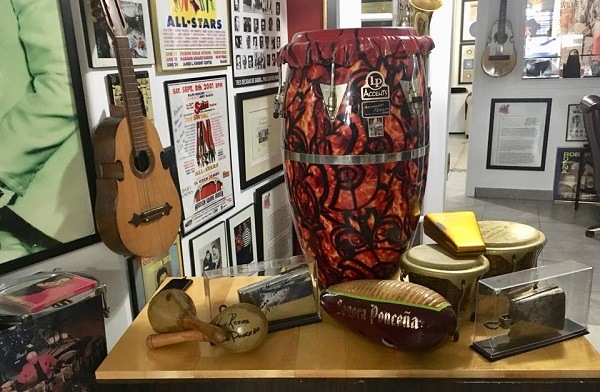
Some instruments donated by La Sonora Ponceña

Who Johnny Cruz is

Johnny Cruz is the founder of the Spaha Salsa Gallery, but there are many other facets by which this talented Puerto Rican is known in the entertainment industry. Cruz is a famous musician and record producer who has worked and make friends with a wide number of artists from all genres, by providing him with the platform to create a true sanctuary for Latin music lovers.

One interesting fact about the museum is that it is located on the plot where a hardware business owned by Johnny’s father used to function, which was made into something completely different thanks to the genius of his son long after. Today, that place contains several of the most invaluable objects in the history of salsa and whose relationship with some of the greatest figures of the genre is legendary.

Link to the official website of the Spaha Salsa gallery: spahasalsagallery.com

By: Johnny Cruz correspondent of International Salsa Magazine in New York City, New York


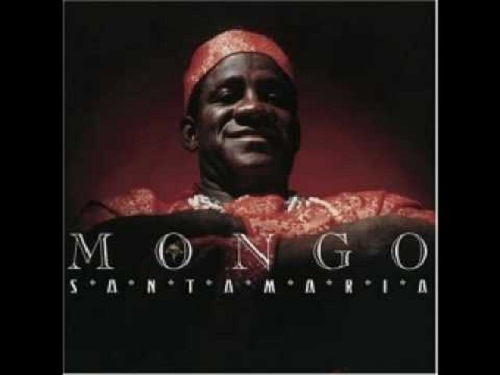
Ramón “Mongo” Santamaría “I wanted to do something that sounded like home”.

April 7, 1917, Mongo Santamaría was born in the Jesús María neighborhood of Havana, Cuba.

Exceptional percussionist of Latin Jazz and related rhythms, whose first name was Ramón Santamaría.

Mongo left to continue playing his Congas hard in the sky on February 1st, 2003.

“I wanted to do something that sounded like home”. With these simple words, Ramón Santamaría Rodríguez “Mongo Santamaría” spoke of his essence.

The purpose of his music pursued a sonority and a memory, possibly located in Cuba, in Jesús María, a marginal neighborhood where he grew up and enjoyed a tradition attached to the drum, to religion, to the street and from where this great Cuban percussionist drank infinitely.

But surely those drums also came to him from far away, from the Congo, where his grandfather came from to be a slave on the island and who also filled his head with sounds full of meanings and colors, which he later masterfully spread around the world.

The name of Mongo Santamaría (Havana, April 7/1917 – Miami, Feb. 1/2003) is, for the glory of all music, an inevitable reference of Cuban percussion.

Since he was a child he knew that his thing was to play the drum and he was lucky enough to belong to a family of empirical musicians, singers and drummers who supported him in the learning and mastery of these instruments.

During his time in Cuba, already a professional musician, he participated in numerous groups that little by little gave him a place among the most outstanding percussionists of the time. Some names of these groups are El Conjunto Boloña, Lecuona Cuban Boys, with whom he was able to participate in the recording of his first album, Conjunto Matamoros, Segundo Grupo de Arsenio Rodríguez, among others.

Each group had its own style and stamp, but in each of them Santamaría put his personal “touch”.

At the prestigious Tropicana cabaret he played with Chano Pozo as a member of Armando Romeu’s orchestra.

From that moment on, his career would not stop. Conjuntos, Septetos de Son were the perfect selection to complete the sap from which he would draw all his style and technique.

Later, from carnival to carnival, he would gather with other percussionists to play in the comparsas and experience the festive musical atmosphere par excellence of those years.

Alongside him played other friends who soon became a Cuban reference in the United States: Patato Valdés and Armando Peraza.

As part of the Tropicana orchestra and located in a show in Mexico, he decided to settle there as did many musicians of his time and came to play with Pérez Prado and Benny Moré.

It was precisely in the latter orchestra where he met Clemente Piquero “Chicho”, another Cuban percussionist whose style made him rethink the role of percussion in Cuban popular orchestras.

Mongo Santamaría belongs to the second wave of Cuban percussionists who arrived in New York in 1950.

His new idea of restructuring and designing his own style in the use of Cuban percussion was perfectly in tune with the reality that a few years earlier was being experienced in the music produced and sold in New York, after the arrival of the Cuban rumbero Chano Pozo.

“The rhythm produced by the conga organizes all the percussion of a band, from which melodies and counter-melodies can be experimented with.”

“I think percussion is the base from which things come out.”

Already in the United States, Mongo plays with Gilberto Valdés, again he is part of Pérez Prado’s orchestra and finally with Tito Puente’s, where he stayed for 7 years. Once in the line of Afro-Cuban jazz, so popular at the time, he joined George Shearing’s group and later the vibraphonist Cal Tjader.

With his own orchestra, he accompanied La Lupe, one of his favorite singers, and undertook projects of novel formats for the time, such as small formations of brass trio, piano, bass, percussion and drums, at a time when jazz bands predominated.

Mongo Santamaría, perhaps without the theatricality to which Chano had accustomed the New York public, focused all his strength on achieving his own sonority, with a fusion of Cuban styles and genres, perfected and deepened in the introduction of Afro-Cuban rhythms with a naturalness and using colorful timbre elements by using several tumbadoras in his set.

His creativity is highly demonstrated in the great amount of music that is part of his catalog of works and the quality becomes indisputable when seeing the amount of outstanding jazz interpreters that version and recreate his work.

In 1959 he recorded Tambores y cantos, which contains the song Afro blue, which over the years became “a jazz anthem of all times”, according to Nat Chediak, author of the Latin Jazz Dictionary.

His long recording career (50 albums), testifies to the musical activity that this great percussionist carried out throughout his professional career. He worked with American jazz legends such as Chick Corea, Herbie Hancock, flutist Hubert Maws, Dizzy Gillespie, trumpeter Marty Seller, among other musicians who today still pay tribute to this Cuban conguero who was the architect of the fusion of rhythm & blues rhythms and Afro-Cuban music, recognized the connection of Cuban music to African roots and placed the congas in an indispensable instrument for the determination of Latin jazz.

In 1977 Mongo Santamaría received the American Grammy Award for “Best Latin Recording” for the work Dawn.

In 1999, Rhyno Record Company, based in Los Angeles, California, recognizing his contribution to Latin Jazz, released the “box set” (CD) Skin On Skin: The Mongo Santamaría Anthology (1958-1995), which includes 34 of his most successful pieces (from his rumba albums, his LP with La Lupe and his projects in the fusion of Jazz and Latin) and an extraordinary literature about his career written by actor Andy García, musician Poncho Sánchez and other connoisseurs of the Latin Jazz genre such as José Rizo, Luis Tamargo, Joel Dorn and Miles Pelich.

The legendary musician was extremely honored and grateful for the distinction Rhyno gave him by introducing this historic anthology to the world. As stated in the conversation with Jaime Torres, Mongo said:

“This is the fruit of many years of work, music made with taste and love.”

May he rest in peace and eternal glory to him.

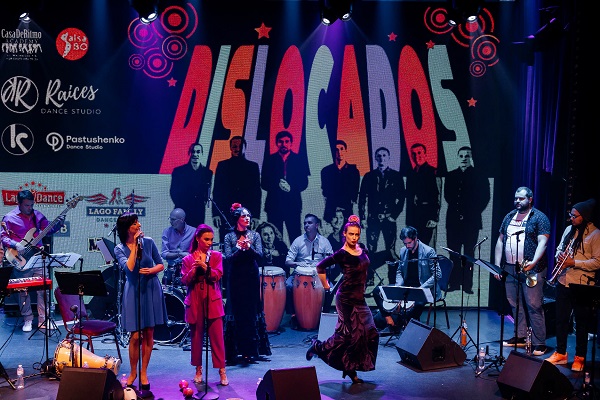
Dislocados is a group from Ukraine that is taking Salsa to the whole world.

Dislocados Ukrainian Latin American band, exploded onto the Kyiv music scene as the Kiev Salsa Kings in November 2005.

Led by Ilya Yeresko, one of Ukraine’s most respected young pianists and composers, with – among others – Dennis Adu (named best jazz musician in Ukraine at the Dodj Competition 2009) they started playing in Kyiv’s best live music bars.

This first salsa band in Ukraine was soon joined by Karolina Patocki and Lesya Zdorovetskaya, finalizing the group’s vocal flavor, and now the 10-piece band has become a force to be reckoned with in the country.

Dislocados’ new name, literally translated as “dislocated”, plays on the crazy personality of the band, and the idea that the birth country of the musicians does not dictate their musical direction and expertise.

While continuing to perform three times a week to live audiences around Ukraine, on February 10th 2008, Dislocados made its world debut by being the first international Hard Salsa band aired on Hard Salsa Radio and on WHUT 91.9 FM in New York City with their promotional song “Resaca.”

Minutes after “Resaca” aired, emails poured in like wildfire from worldwide listeners asking for more information on this particular band from an unknown land, which led to Dislocados’ inclusion in Salsa Dura Mundial, a worldwide salsa compilation album out of New York from Latin Soul Records.

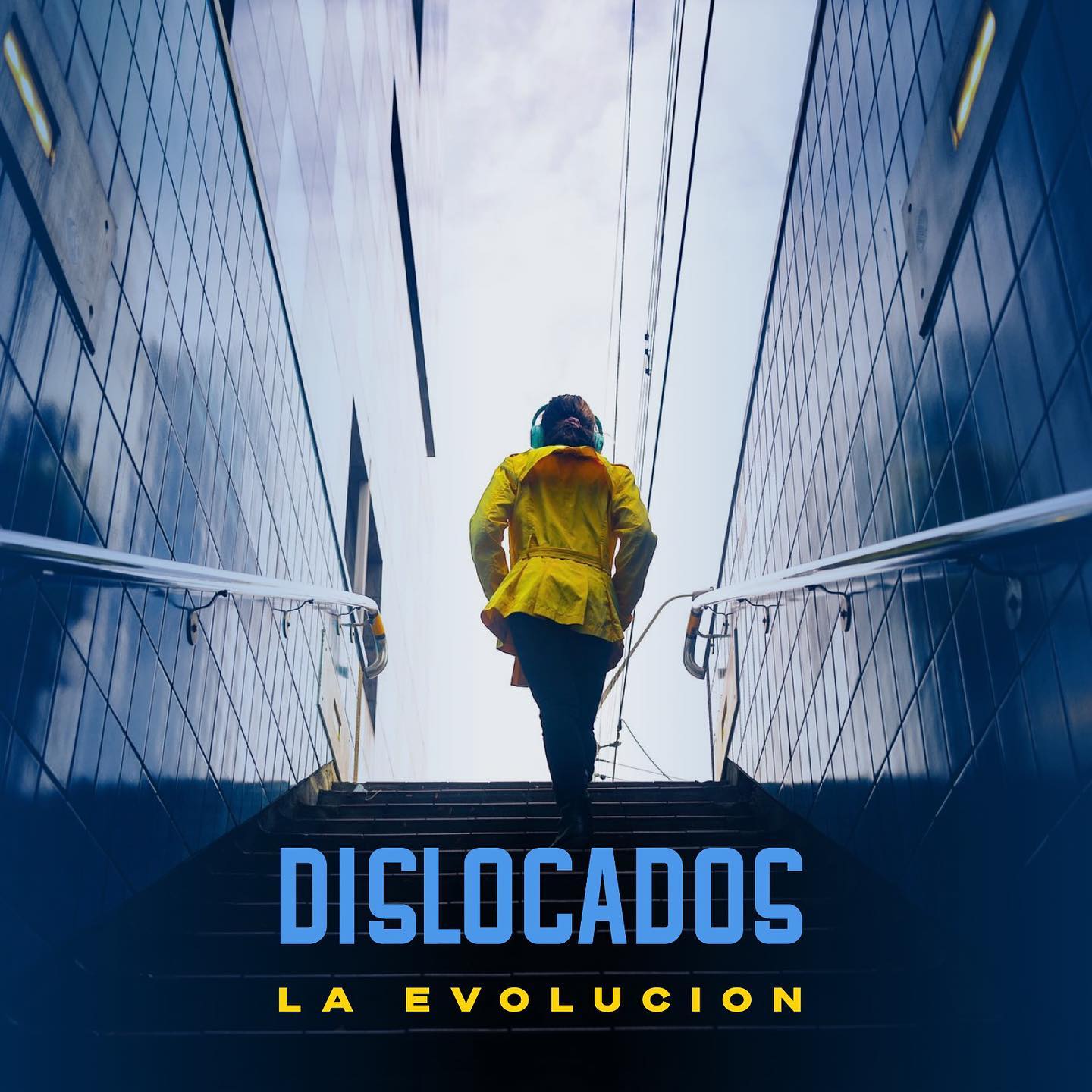
After gaining popularity in New York and Western Europe, Dislocados released the first salsa album to come out of Ukraine, with an intro written by salsa legend Andy Harlow, featuring ten original salsa tracks, inspired from Puerto Rico, New York, and Cuba.

Since its release, La Salida has enjoyed overwhelming international praise from top musicians such as Jimmy Bosch and Andy Harlow, promotion from top respected salsa review sites such as descarga.com and has led to the band’s inclusion in international salsa projects, such as the Summer Salsa Festival in Stockholm where the band played with Huey Dunbar, of DLG fame.

Dislocados’ internationally recognized top musicianship is now the vehicle by which they try to popularize the musical style of Hard Salsa in Ukraine in order to include their country among the list of top contenders for worldwide attention in the genre.

Awards:

Winner of the Independent Music Awards 2012 with Best Latin Song, ¨Como Tú¨.

Winner of the Independent Music Awards’ Vox Pop Award for Best Latin Album 2012, ¨Pasaporte Universal¨.

Winner of the Independent Music Awards’ Vox Pop Award for Best Holiday Song 2012, ¨Navidad en Heathrow¨.

Winner of the Independent Music Awards’ Vox Pop Award for Best Latin Song 2012, ¨Como Tú¨.

Winner of the Independent Music Awards’ Vox Pop Award for Best Latin Album 2011, ¨La Salida¨.

Facebook: Dislocados

The Tempo Latino Festival is Back

The major European festival of Latin and Afro-Cuban music will present Los Van Van, Pacific Mambo Orquestra, Interactivo, and Minyo Crusaders (H2)

The benchmark Festival of Latin and Afro-Cuban music in Europe, Tempo Latino, resumes its activities after the forced cessation of its activities for two years due to the Pandemic.

From Thursday, July 28th to Sunday, July 31st, on the main stage Les Arènes, the whole family, heterogeneous public, and inveterate traveler will enjoy the performances of Los Van Van, Pacific Mambo Orquestra, and Interactivo, as well as an exceptional set & exclusive presentation on Saturday, July 30th  at 11 PM of “Con Tumbao All Stars” with the winners of Best Traditional Tropical Album at the Latin Grammy 2021 for their album “Chachachá…Homenaje a lo Tradicional”, Issac Delgado and Alain Pérez, as well as Oscar Hernández, Robby Ameen, Tony Succar, and many more.

Minyo Crusaders rediscovered the songs associated with the working classes.

The festival to be held in Vic-Fezensac, the heart of the Gers de Gascony department (France), will open its doors on Thursday, July 28th, with Tempo Latino Social Club on the stage of its satellite “Geo-rhythmic” Conga with a special performance by the Tokyo band, Minyo Crusaders.

This Cumbia band with a Japanese identity aims to make reversals between the traditional and foreign rhythms. Guitarist Katsumi Tanaka was in charge of bringing together the twelve musicians to perform these magnificent melodies with a fusion of the Caribbean (Reggae, Cumbia, and Cuban Salsa), Africa (Afro-Blues, Afro-Funk, Ethiopian rhythm), and Asia (Thai Pop) after of the Fukushima accident in 2011. The ticket for this show costs €15.80, and the opening is at 6 PM.

Pacific Mambo Orchestra is the only active Latin Big Band on the West Coast of the United States.

Continue on Friday, July 29th with the concerts of the Pacific Mambo Orchestra and Los Van Van together with the Cuban trumpeter, composer, singer, and leader of the band Havana D’Primera, Alexander Abreu.

The first orchestra to perform at the festival in its twenty-eighth edition at 9 PM will be the Pacific Mambo Orchestra. This North American band, a winner of the Grammy Award in the category “Best Tropical Album” in 2014, is the revival of the Latin sound of the Big Bands of the 40s with the combination of Mambo, Pop, Cha Cha, Timba, and Bolero. Pacific Mambo Orchestra founded 12 years ago by the Mexican pianist Christian Tumalan and the German trumpeter Steffen Kuehn has collaborated with renowned artists such as Carlos Santana, Poncho Sánchez, Pete Escovedo, and Arturo Sandoval.

Currently, this Latin Big Band performs on the West Coast of the United States with elite musicians from the Bay Area, and their repertoire is in English and Spanish. Their third album “The III Side” (2020) fuses the traditions of the Mambo of the 50s with the musicality of the moment. This Latin Big Ban considered one of the best in the United States will also is at the prestigious San Francisco Annual Jazz Festival on Wednesday, June 8th from 7:30 PM to 9 PM. Address: Miner Auditorium, 201 Franklin Street, San Francisco (EEUU).

“Legado” is an album in homage to the legacy left by maestro Samuel Formell.

The second orchestra is to take the stage on Friday at 11 PM and will be Los Van Van with their special guest Alexander Abreu. The emblematic Cuban music orchestra will celebrate its more than 5 decades of history.

Los Van Van known by many as the “Rolling Stones of Salsa” was founded in 1969 by bassist and composer Juan Formell, a legend of Cuban music, who accompanied by José Luis Quintana, known as “Changuito” and César “Pupy ” Pedroso, invented the “Songo”, a Cuban rhythm predecessor of the “Timba” or “Salsa Cubana”, which generated the “Salsa – Son” with a Cuban sound that has made generations dance.

In 2018, they recorded their first record production “Legado” since the physical departure of Juan Formell in 2014. This tribute album has 14 songs with 3 new versions of the international singles Te extraño, Por qué lo haces y Amiga mía.

On the third day of the Festival, Saturday, July 30th, the Latin sound will be awakened by the performances of the Interactivo group and the exclusive presentation of “Con Tumbao All Stars”. On Sunday, July 31st, Tempo Latino will close its doors on the Les Arènes stage with London Afrobeat Collective and Alain Pérez & La Orquesta Bassiste.

Most of the members of Interactive are representatives of currents such as Nueva Trova, son, and Cuban jazz.

The avant-garde collective, Interactivo, is one of the most representative bands of the current Cuban generation and will take to the Tempo Latino stage at 9 PM.

This emerging orchestra of international stages brings together the most brilliant and eclectic composers and producers in Havana. Each member contributes their specialty: Timba, Funk, Jazz, Hip Hop, Rock, Rumba, traditional Cuban music, and Soul for a result of great richness, where individual originality, musical creativity, and avant-garde ideas enrich the group.

London Afrobeat Collective has hypnotic flashes and powerful percussive beats.

Similarly, the addictive London Afrobeat Collective has been offering festive music based on Jazz, Funk, Rock, Dumb, and African Vibes for ten years. Its international DNA made up of nine members from England, Italy, France, Congo, Argentina, and New Zealand with the powerful voice of the Congolese singer Juanita Euka has made its rhythm addictive music with powerful and committed messages. The London-based band will open the night of concerts on Sunday, July 31st at 9 PM.

Alain Perez and the Bassiste Orchestra will offer a mixed show of Salsa, Son, Timba, and Latin Jazz

This musical evening ends with Alain Perez, bassist, singer, arranger, and who composes his orchestra of 13 young musicians on stage to offer a mixed show of contemporary Cuban Salsa, Timba, and Latin Jazz. His talent has given him wonderful experiences with internationally famous orchestras and musicians such as Los Van Van, Irakere, Issac Delgado, Paquito D’Rivera, and Celia Cruz. Always accompanied by his elephant-headed cane, in homage to Cuban musician Benny Moré, Alain has been influenced by flamenco through his work with Cuban artist Paco de Lucía.

The versatile artist born in Havana was twice-nominated for the Latin Grammy Awards in the category of Best Traditional Tropical Music Album with “El alma del Son, tribute to Matamoros” (2015) and “ADN” as Best Salsa Album. (2017).

El Cuento de la Buena Pipa (2020) is his most recent record production, and you can enjoy it on the main stage of the festival at 11 PM.

You can get the tickets for Tempo Latino 2022 on their official site http://www.tempo-latino.com/ for a four-beat tempo. The Tickets for the four nights of concerts are €86.70.

And while you wait for the Tempo Latino Festival (28th edition) you can enjoy its free predecessor event Clutcho at La Grainerie this May 4th. This place is emblematic of the circus and itinerant disciplines that take place with a large space that involves a large open-air square, and a performance hall with a capacity for 230 people through an “interior street” that serves for creative studios and workshops.

La Sonora Ponceña Returns To Salsa County

The only performance with Yolanda Rivera & Mario “Mayito” Rivera will be at the Lehman Center

The name “La Sonora Ponceña” is in honor of the Cuban band La Sonora Matancera and its hometown (Ponce – Puerto Rico)

La Sonora Ponceña “National Treasure of Puerto Rico” together with its leader Enrique Arsenio “Papo” Lucca returns to Salsa County (The Bronx) with the special guests Yolanda Rivera and the Cuban singer Mario “Mayito” Rivera (former member of Los Van Van) onstage at one of New York’s leading non-profit performing arts centers, Lehman Center.

This unique presentation, long-awaited by its fans, will be on Saturday, May 14th at 8 PM at the Lehman Center for the Performing Arts located at 250 Bedford Park Blvd West, Bronx, New York 10468 and the online price per ticket ranges from between $45 – $100. https://www.lehmancenter.org/sonora-poncena

La Sonora Ponceña gained popularity in 1960 during its trip to New York City to give a series of presentations and established itself as one of the most demanded orchestras among Hispanics.

The legendary band, for more than 65 years, has made uninterrupted performances and has been recognized as one of the best Salsa orchestras for its fusion of traditional Cuban sounds with the modern style of Latin Jazz.

In 1967, under the direction of Papo Lucca, they released the first LP Hachero Pa’ Un Palo with the Inca label (a subsidiary of Fania). This album was an overwhelming success in New York as well as its second record production Fuego en el 23 (1969). The famous band from Puerto Rico recorded 29 more albums for this record label, including eight with the singer Yolanda Rivera, La Ceiba with Cuban singer Celia Cruz (1979), and in 1980 New Heights from which they began to establish the internationalization of the orchestra.

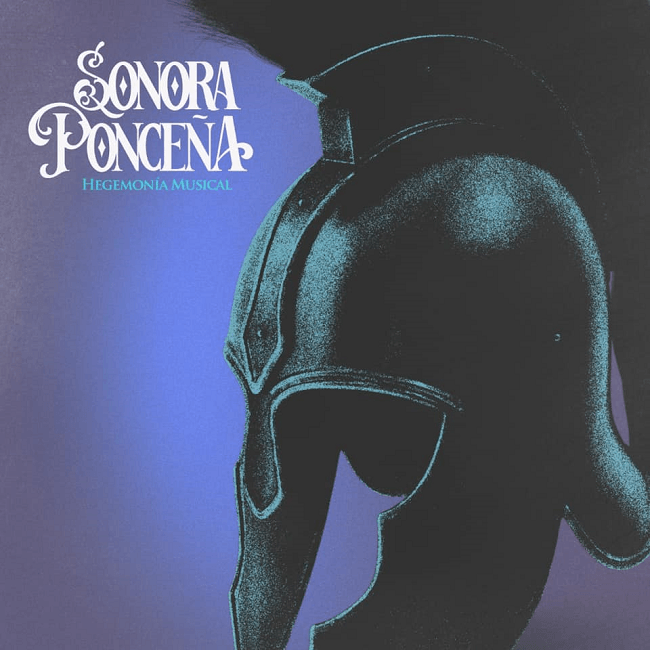
Musical Hegemony consists of 8 tracks including Caminando Con Mi Padre, Nadie Toca Como Yo, and Borrachera

This last year (2021), during the pandemic period, La Sonora Ponceña launched two new record productions: Hegemonía Musical (June 2021) and Christmas Star (November 2021).

The last one is the fourth Christmas-themed album in his career. “Thirteen years after our last Christmas production, we seek to present a record work that is a true reflection of the sound and musical quality that we always want to offer our audience”, Papo Lucca told digital media.

While “Salsa Que Cura To” is the first single taken from their most recent album Hegemonía Musical and whose authorship and interpretation is by Jorge Nicolai Avilés (vocalist of the band) with musical arrangements by Papo. Musical Hegemony, nominated in the Tropical Album of the Year category at the Billboard 2021 awards, was made with great dedication and professionalism as indicated on its official social media. “…We thank the public for the support they have been giving to this latest album that was worked with much love and dedication to the memory of our always remembered Enrique “Quique” Lucca Caraballo (RIP) and all our dear followers… And we will continue working as we have been doing for 67 years to place in your consideration what best of our music, soul, perseverance, and professionalism that seek to bring joy and enjoyment to all our dancers… Thank you very much!”

The song “Borinquen” (1980) with Sonora Ponceña becomes her a famous Salsa star

Yolanda Rivera will also perform at this event. She was born in Ponce (Puerto Rico) and moved to New York City with her family during her childhood. Her first opportunity as a singer was in 1969 in Willie Rosario’s band. In 1975 she returned to Puerto Rico and performed in several orchestras, including Joe Rodríguez’s La Terrifica. Her career reached its peak when she joined La Sonora Ponceña in 1977. The song “Borinquen” from the album Unchained Forcede (1980), a musical tribute to her native country (Puerto Rico), made her a Salsa star. Yolanda Rivera is considered one of the main and most famous singers of La Sonora Ponceña with songs like “Rumba en el Patio” and “Madrugador”. Her repertoire includes Salsa, Plena, Bolero, Guaguancó, Son Montuno, and Guaracha.

Mario “Mayito” Rivera (El Poeta de La Rumba)

The second special guest tonight will be Mario “Mayito” Rivera. His vocal skill and masterful interpretation of Cuban music in modern and traditional styles earned him the nickname “El Poeta de La Rumba”. Mayito was born in Pinar del Río (Cuba) and has training degrees from the National School of Art and the Higher Institute of Art. After his educational training in Cuba, he joined the band of the Cuban singer Albita Rodríguez and played bass in the Moncada group. From 1992 to 2011, Mayito was the lead voice and face of the successful Cuban band, Los Van Van, earning a Latin GRAMMY® and two nominations with them.

  • « Go to Previous Page
  • Page 1
  • Interim pages omitted …
  • Page 38
  • Page 39
  • Page 40
  • Page 41
  • Page 42
  • Interim pages omitted …
  • Page 56
  • Go to Next Page »

International Salsa Magazine (ISM) is a monthly publication about Salsa activities around the world, that has been publishing since 2007. It is a world network of volunteers coordinated by ISM Magazine. We are working to strengthen all the events by working together.