• Skip to primary navigation
  • Skip to main content

International Salsa Magazine

  • HOME
  • Previous editions
    • 2026
      • ISM / March 2026
      • ISM / February 2026
      • ISM / January 2026
    • 2025
      • ISM / December 2025
      • ISM / November 2025
      • ISM / October 2025
      • ISM / September 2025
      • ISM / August 2025
      • ISM / July 2025
      • ISM / June 2025
      • ISM / May2025
      • ISM / April 2025
      • ISM / March 2025
      • ISM / February 2025
      • ISM / January 2025
    • 2024
      • ISM / December 2024
      • ISM / November 2024
      • ISM / October 2024
      • ISM / September 2024
      • ISM / August 2024
      • ISM / July 2024
      • ISM / June 2024
      • ISM / May 2024
      • ISM / April 2024
      • ISM / March 2024
      • ISM / February 2024
      • ISM / January 2024
    • 2023
      • ISM / December 2023
      • ISM / November 2023
      • ISM / October 2023
      • ISM – September 2023
      • ISM – August 2023
      • ISM July 2023
      • ISM Edition June 2023
      • ISM – May 2023
      • ISM April 2023
      • ISM March 2023
      • ISM February 2023
      • ISM January 2023
    • 2022
      • ISM December 2022
      • ISM November 2022
      • ISM October 2022
      • ISM September 2022
      • ISM August 2022
      • ISM July 2022
      • ISM June 2022
      • ISM May 2022
      • ISM February 2022
      • ISM January 2022
    • 2021
      • ISM December 2021
      • ISM November 2021
      • ISM October – 2021
      • ISM September 2021
      • ISM August 2021
      • ISM July 2021
      • ISM May 2021
      • ISM April 2021
      • ISM June 2021
      • ISM March 2021
      • ISM February 2021
      • ISM January 2021
    • 2020
      • ISM December 2020
      • ISM November 2020
      • ISM October 2020
      • ISM September 2020
      • ISM August 2020
      • ISM July 2020
      • ISM June 2020
      • ISM May 2020
      • ISM April 2020
      • ISM March 2020
      • ISM February 2020
      • ISM January 2020
    • 2019
      • ISM December 2019
      • ISM November 2019
      • ISM October 2019
      • ISM Septembre 2019
      • ISM August 2019
      • ISM July 2019
      • ISM June 2019
  • Download Salsa App
    • Android
    • Apple
  • Spanish

Search Results for: New York

How To Be A Successful Social Dancer

North America / USA / New York

Social dancing is one of my favorite things about the Latin dance world. There’s something magical about going to any social, but especially one in New York City. As I step out of the elevator and into the social, New York’s busy streets fade away and transported to an entirely different time and place. Music vibrates through the room. The air hangs heavy with sweat. Here I am free to feel, to create, to imagine. Here I am safe.

But it didn’t always feel this way. There was a time when the idea of going to any social left me anxious and uncomfortable. I felt nervous asking leaders to dance. I dreaded the part in the dance when he would let me go and leave me on my own for shines––what would I do?! Surely I’d run out of steps and embarrass myself.

The biggest thing that has changed since then and now is my ability to follow. As I’ve become a better follower, I’m able to devote more energy to creating actual movement while I’m social dancing, and spend less time thinking about which foot I step with or which hand I take.

Dancer - Social
Dancer – Social

For me, a lot of the magic of social dancing comes from the movement itself. That dancer’s high comes from the physical exertion itself, the endorphins your body creates as it bends and twists, contracts and lengthens.

Practicing the very fundamentals of leadand-follow will help you get to this state in your own social dancing. Take classes and private lessons too, but don’t forget to spend time practicing on your own. Without dedicated practice, you’ll waste all of the time and money you spend on classes. It doesn’t matter if you practice in a studio space or in your living room, just devote time to practicing.

It’s also helpful to set a goal for yourself each time you go out social dancing and focus on that one particular thing all night. For example, if you just learned a new pattern in class, try to use it at least once during each dance. If you’re working on transferring your weight, pay special attention to your six/seven or your two/three during every dance.

Actively creating a community is another large part of being a successful social dancer. While the salsa scene is an incredibly diverse community, it still has a strong Latin influence, and there are certain Latin cultural norms present throughout any salsa community regardless of city, state, or country. Perhaps the one that took me the longest to figure out is the idea that it’s your responsibility to go around and say hello and goodbye to everyone in the room, whether you know them well or not.

Growing up I was taught that it is rude to ask questions or insert yourself into a conversation with people you don’t know that well. It took me a while to learn and understand that at a salsa social, it’s considered rude not to. Be the person who walks into the room and says hello to everyone with a kiss on the cheek. Say hello to them even if you don’t know their name, or don’t quite recognize their face. Even if doing so feels a bit uncomfortable. Make sure to make the rounds and say goodbye before you leave the event too.
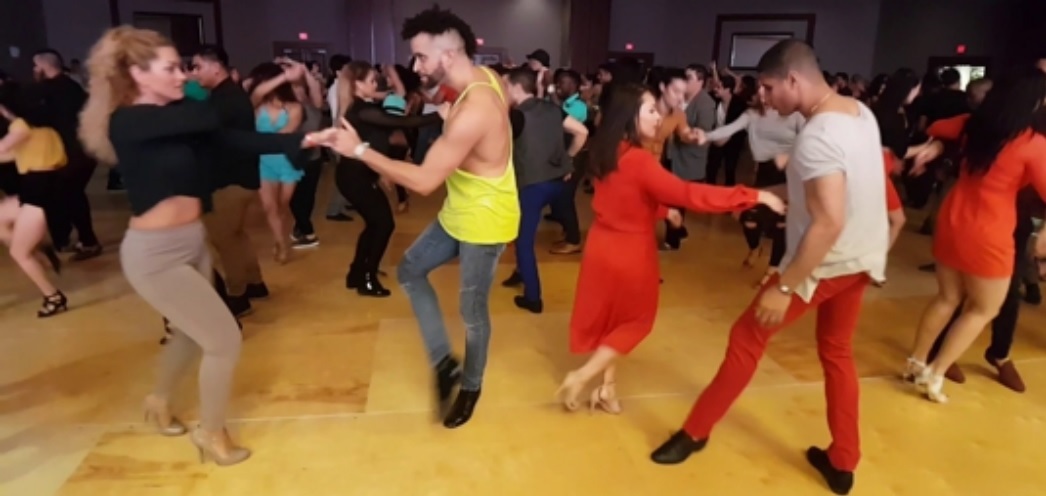
Dancers dancing at the social

Successful social dancers also ask others to dance. Followers, this applies to you as much as it does to leaders! Ask the person you really want to dance with to dance, even if you’re scared to do it. Ask the person you’re not excited about dancing with too. It will make their night. Ask the regulars in the community you see all the time, the newcomers, and out of town visitors.

Finally, a huge part of creating any community is showing up. You don’t have to go out social dancing every weekend, but do make an effort to go out regularly. Show up and show your support for recurring socials, as well as those special events and anniversary parties. The social dancing community only flourishes as much as the people in it and for this global community to grow, we all have to devote energy and time to it.

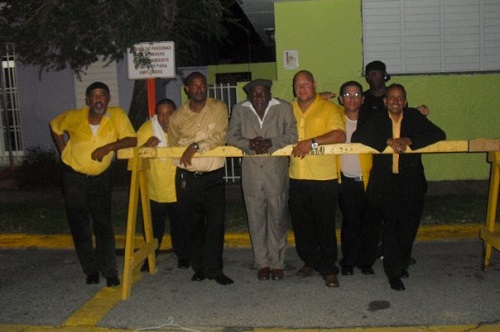
“Orquesta Zodiac” Its name came about due to the fact that in the early 70’s the ‘Walter Mercado’ program and the Zodiacal Signs were all the rage

In June 1971 what we know today as the Zodiac Orchestra was organized in the town of Loíza. Its name came about due to the fact that in the early 1970’s the Walter Mercado and the Zodiacal Signs program, which was broadcast on Channel 2 in Puerto Rico, was in vogue.

Tony Escobar’s uncle (the orchestra’s declamationist) suggested the name because it was an eye-catching and “new” name.

The Zodiac Orchestra was organized with members of a group called Loíza Power directed at that time by Paquito Pérez, who was 14 years old. In addition, it was nurtured with the best musicians of Loíza Sound of Javier Calcaño.

“Orquesta Zodíac” Su nombre surgió debido a que para principios de la década del '70 estaba de moda el programa de “Walter Mercado” y los Signos Zodiacales
“Orquesta Zodíac” Su nombre surgió debido a que para principios de la década del ’70 estaba de moda el programa de “Walter Mercado” y los Signos Zodiacales

The idea of recruiting these musicians was Paquito’s, since he grew up with José Luis Vizcarrondo and Tony Escobar.

Through Loiceño composers Carlos José Cirino (Tata) and Floren Ayala, the recording was achieved, as they approached Dario Gonzalez of Borinquen Record who contributed to make possible the release of the first 45 and LP. Tata’s “El Adiós” and José Feliciano’s “Las Costumbres” (1971) were part of this musical proposal that was very well received by the public.

This album became one of the best selling LPs. Other musical proposals of the group that would become hits were: “Panteón de Amor”  by Angel Laureano (1973), “Sinceridad” by Samuel Cirino, “Mi Guitarra” by Angel Laureano, among others. These great hits are frequently requested today on the Salsa Z-93 radio station.

After the initial success, many of the musicians dedicated themselves to work and to finish their studies, since they were married and were looking for security and economic stability for their respective families.

The Zodiac had the opportunity to travel to different cities in the United States such as: Boston, Connecticut, Philadelphia, New York, among others. They also traveled to other countries such as Colombia and others.

Orquesta Zodiac
Orquesta Zodiac

During these years, several orchestras were at their peak, such as: La Fania, La Selecta, Lebron Brother, La Corporación Latina, El Gran Combo, La Lupe, Chivirico Davila, Bobby Valentín, Tomy Olivencia, Ismael Miranda, Ricardo Rey, Roberto Rohena, Roberto Anglero, Justo Betancourt, among others.

In 1997 Paquito decided to retake and regroup the orchestra, and for some years he dedicated himself to reunite with the musicians and organize them again.

In 1999 he managed to restart La Orquesta Zodiac at the Z-95 festival in Mayagüez. Later they performed at the National Salsa Day dedicated to Cheo Feliciano in 1998.

These two presentations were made at the invitation of Pedro Arroyo (director of Z-93) to Paquito, and were a great success. El Gran Combo, Rubén Blades, Jimmy Zabater, La Solución, among others, also played in the tribute to Cheo.

The members of the current orchestra are young, and most of them were music students of Paquito Pérez, who worked as a music teacher for 30 years in the town of Loíza (before retiring).

José Luis Vizcarrondo, Tony Escobar and Paquito Pérez were schoolmates for years. The director of the orchestra in the beginning was José Luis, also collaborating with him were Tony Escobar (saxophonist and declamation player), Freddy Ayala (conguero) and Paquito Pérez (singer). All of them contributed ideas for the arrangements. Currently Víctor Pérez (Paquito’s brother) is the director of the wind section.

Orquesta Zodiac en el pueblo de Loíza

In 2010 the orchestra played in the National Salsa Day and in 2012 the orchestra played again in the same activity, but this time the activity was dedicated to La Orquesta Zodiac and La Corporación Latina. In which Z-93 gave them a well-deserved recognition and Paquito, José L, Tony, Tata, Laureano, and the rest of the new members of the orchestra were present.

Currently the orchestra meets periodically to practice, and are available for all kinds of activities.

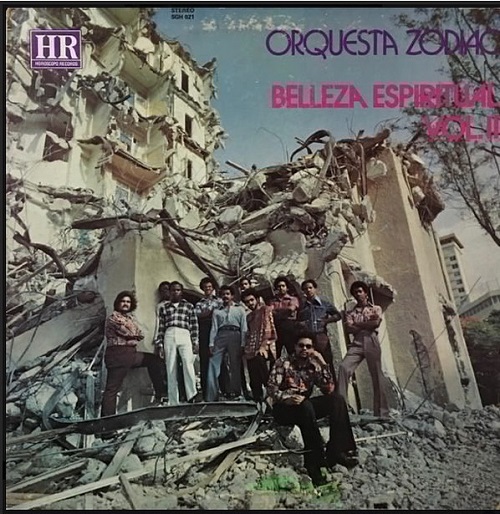
Did you know that…! In June 1971 what we know today as the “Zodiac Orchestra” was organized in the town of Loíza in Puerto Rico. Its name came about due to the fact that in the early 70’s the program “Walter Mercado” and the Zodiacal Signs, which was broadcasted on channel 2 in Puerto Rico, was in fashion. Tony Escobar’s uncle (declamationist of the orchestra) suggested the name because it was a striking and “new” name …Referring to the image of the post belongs to the second production of this Puerto Rican group entitled “Spiritual Beauty Vol. II” published in 1973 under the label “Horóscopo Récord” and directed by the founder, arranger, pianist and saxophonist Mr. José Luis Vizcarrondo. It is worth mentioning that this production includes the classics: Montuno de Oriente, Vicio de Amor and Belleza Espiritual”. Another important fact about the group is that it is still in force with musicians of the new generation, but with the same Swing and musical concept.

Segunda producción de dicha agrupación boricua titulada “Belleza Espiritual Vol. II” publicada para el año 1973

It is worth mentioning that the main responsible for making Orquesta Zodiac publicly known in Venezuela, Latin America and the Caribbean was Mr. Ali Delgado. Mr. Ali Delgado, for the year 1985 under the record label Performance Records, Delgado comments in detail that for the date of publication of this production the only popular sector (neighborhood) of Caracas where the Zodiac Orchestra was known was in Pinto Salinas.

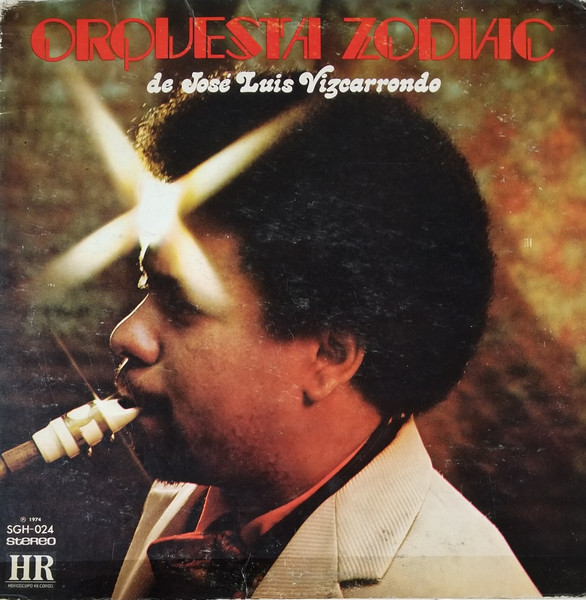
Orquesta Zodiac De José Luis Vizcarrondo

Delgado is a music producer, music lover, collector, director and founder of the projects Salsa de La Mata and Jazz con Clave in Caracas.

Dj. Augusto Felibertt y Ali Delgado

Also Read: Sessions from La Loma brings together salsa fans from all over the world in Puerto Rico

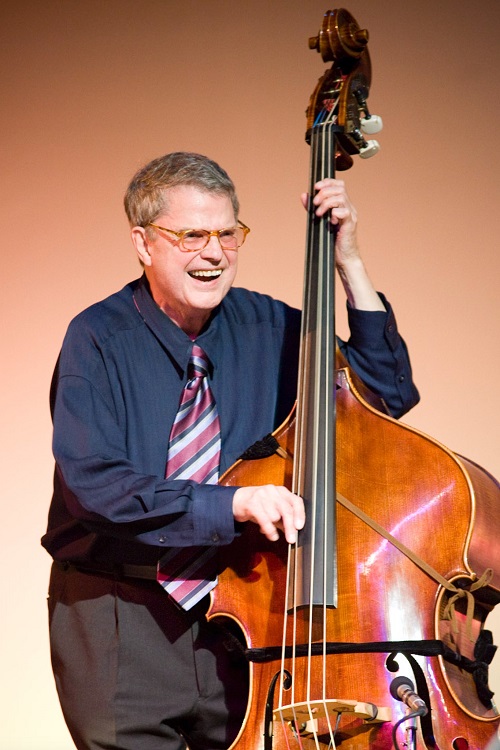
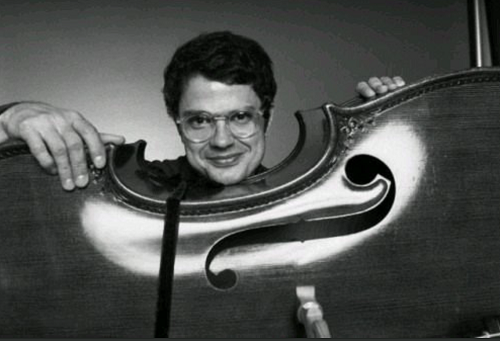
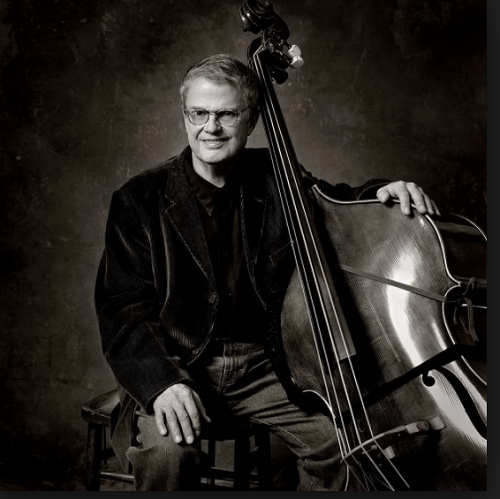
Charlie Haden was an extraordinary double bassist and composer who was a key figure in the history of modern jazz.

Double bassist and composer extraordinaire, Charlie Haden (Shenandoah, Iowa, August 6, 1937 – Los Angeles, California, July 11, 2014).

Charlie Haden began his professional activity in 1959 with Ornette Coleman’s quartet, a key figure in the history of modern jazz, and very soon began to investigate in that direction that Coleman initiated known as free jazz.

In that context, Charlie Haden participated in the recording baptism of that movement with the album recorded on May 22, 1959 for the Atlantic label and entitled: “The Shape of Jazz to Come” with the invaluable collaboration of Don Cherry, another incomparable musician and leader together with Coleman of that revolutionary musical movement that still lasts today.

Charlie Haden (August 6, 1937- July 11, 2014)

Charlie Haden in 1960 participated with another double bass player, Scott LaFaro in an operatic manifesto entitled: “Free Jazz” of whom both were distinguished representatives in their instrument.

In 1964 he worked with Denny Zeitin’s trio and in 1966 he returned with Ornette Coleman while expanding his performance area with collaborations left and right.

In these areas he stood out for his participation in the work, studio and recording meetings of the “Jazz Composer’s Orchestra” and in 1969 he was finally able to realize a wish he had been pursuing for years: to record his first album under his own name with the Liberation Music Orchestra.

With original arrangements by Carla Bley, the music of the Liberation also stood out for the political character of the songs, being the first time that, in that context, a jazz group echoed the popular songs alluding to the Republican side of the Spanish Civil War.

After the album recorded by Impulse in 1976 entitled: “Song for Che” in homage to Ernesto Che Guevara, Charlie Haden formed with Don Cherry, the quartet “Old and New Dreams” with which he toured throughout Europe, Asia and North America. At the end of the eighties, Charlie Haden elaborates a new musical discourse within the framework of his new formation entitled “Quartet West”.

The founding album of this new discourse was an extraordinary album generically entitled “Quartet West”, a musical manifesto of great beauty and one of the essential albums of contemporary jazz. From 1990 onwards, Charlie Haden explores more intimate jazz universes, introducing the duo format into his discourse.

Charlie Haden
Charlie Haden

In this context, the musician explores himself in the composition and his relaxation together with the other protagonist discovers us a music of great inventiveness, clean in the execution and approached from a purely instrumental point of view.

This is how on Thursday, November 14, 2002, Charlie Haden appears in Seville at the Central Theater with the master of the guitar, Jim Hall to offer a portentous concert, full of sensitivity, art and talent.

Fortunately Apoloybaco was present that magical night in Seville and Charlie Haden is still making music of the highest level. ~ (apoloybaco)

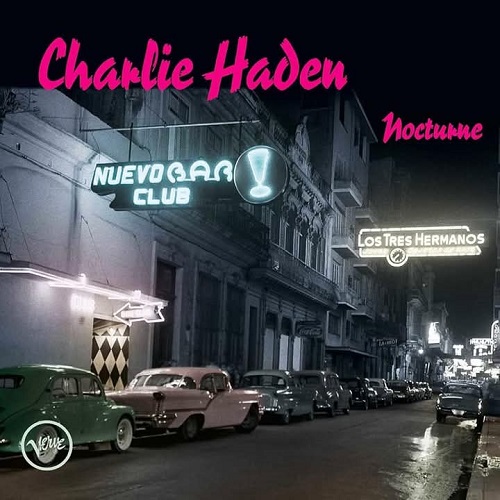
Charlie Haden teams up again with the young Cuban pianist Gonzalo Rubalcaba in this melancholic and relaxing album. Ignacio Berroa on drums and percussion completes the main trio.

Special guests include tenor saxophonists Joe Lovano and David Sánchez, violinist Federico Britos Ruiz and guitarist Pat Metheny (one track only).

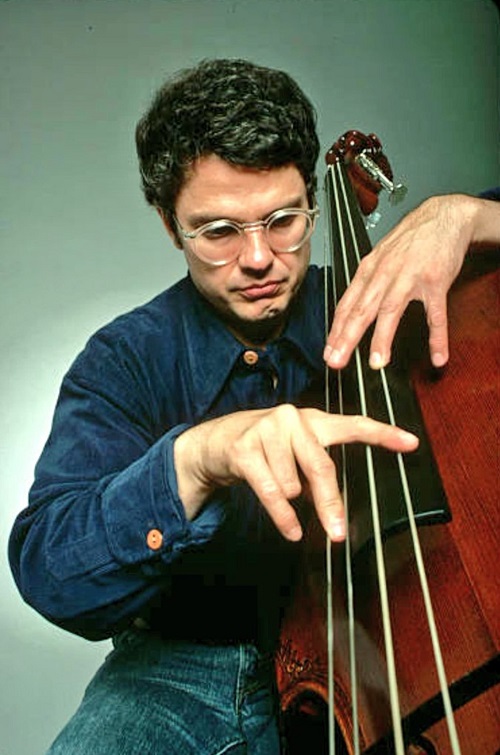
Charlie Haden photo 1978 Roger Ressmeyer

Rubalcaba contributes orchestrations on two tracks, both of which omit drums and percussion. Haden’s intention is to explore the bolero, a distinctive Latin dance rhythm that Ignacio Berroa accentuates with a soft, subtle snare drum roll, played with brushes, that begins on the “y” of the first beat of the measure and ends on the second.

This rhythm is perfect for a slow dance and, in fact, the whole album is very romantic, with bittersweet melodies and lilting cadences.

The only problem is that Berroa’s bolero figure is present on almost every track, perhaps what you would expect from a bolero album, but there is no getting around the fact that the music sounds pretty much the same on every track.

 (To be fair, Berroa is not the only one guilty of uniformity.) Most of the songs, except for two Haden originals and one by Rubalcaba, are Cuban and Mexican standards, and they are beauties. Haden’s reluctance to mess with them is understandable.

Charlie Haden fue un gran padre.

But the arrangements, always straightforward, fade too easily into the background.

Nocturne may be the best music for a candlelit dinner party, but Haden and his guests are capable of much more.  David R. Adler.

Charlie Haden – Nocturne (2001)
Temas:
01. En La Orilla Del Mundo (At The Edge Of The World) (Martin Rojas)
02. Noche De Ronda (Night Of Wandering) (Maria Teresa Lara)
03. Nocturnal (Sabre Marroquin/José Mojica)
04. Moonlight (Claro De Luna) (Charlie Haden)
05. Yo Sin Ti (Me Without You) (Arturo Castro)
06. No Te Empeñes Mas (Don’t Try Anymore) (Marta Valdès)
07. Transparence (Gonzalo Rubalcaba)
08. El Ciego (The Blind) (Armando Manzanero)
09. Nightfall (Charlie Haden)
10. Tres Palabras (Three Words) (Osvaldo Farrès)
11. Contigo En La Distancia·En Nosotros (With You In The Distance·In Us) (Cèsar Portillo De La Luz/Tania Castellanos)

Músicos:
Charlie Haden (Bajo)
Gonzalo Rubalcaba (Piano, Orquestación)
Ignacio Berroa (Percusión, Batería)
Joe Lovano (Saxo tenor en temas #1, #4, #7, #11)
David Sánchez (Saxo tenor en temas #6, #10)
Pat Metheny (Guitarra acústica en tema #2)
Federico Ruiz (Violín en temas #1, #5, #8)

Grabado del 27 al 31 de agosto de 2000 en Criteria / The Hit Factory Studios, Miami, FL.

Charlie Haden - Nocturne (2001)
Charlie Haden – Nocturne (2001)

Research Sources:

L’Òstia Latin Jazz

Dj, Augusto Felibertt

Also Read: Andy Gonzalez started as a musician at the age of 13 in the Latin Jazz Quintet in New York

15 Panama Jazz Festival

Latin America / Panama / Panama

Once again, Panama makes its appearance beginning the year at the City of Knowledge and Casco Antiguo – Panama Jazz Festival in its 15th edition, thanks to the “Danilo Pérez” Foundation, where it gives us the opportunity to enjoy music in a healthy way, once again becoming the The largest Jazz stage in the Region, where musicians and fans from different countries such as Costa Rica, Colombia, Chile, USA, Mexico, among others, will participate from January 15 to 20.

15 Panama Jazz Festival

Its director Danilo Pérez mentions “From the heart of America to the world” giving us a message, which is not just to make and carry out a festival but to show everyone his dedication worldwide by showing us his cultural project that consolidates creativity, exchange and talent. , with a strong commitment to Panamanian education and social welfare, returns with a strong artistic billboard.

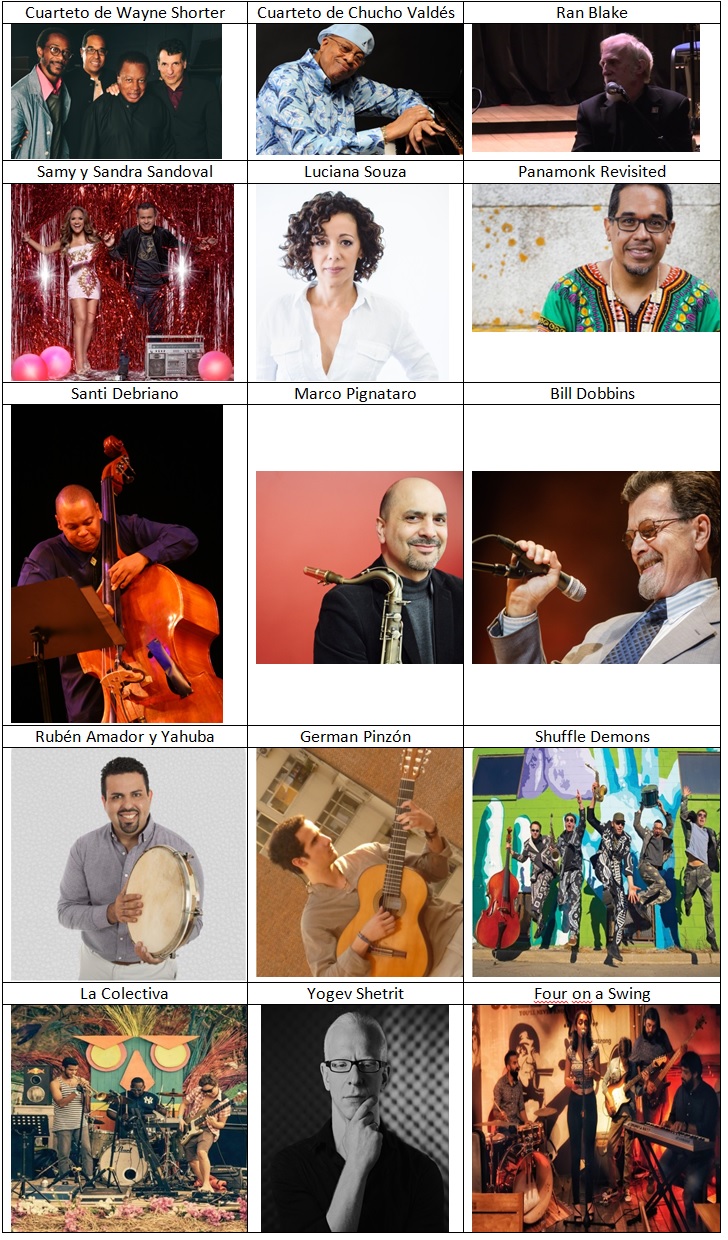
Performing artists include the Wayne Shorter Quartet; Latin jazz legend Chucho Valdés; the Brazilian singer, Luciana Souza; the legendary American pianist, Ran Blake, the master composer and pianist, Bill Dobbins accompanied on stage by the Global Jazz Big Band and the Panamanian cumbia patrons, Samy and Sandra Sandoval. Not to mention that the musical billboard is also strengthened with the participation of Panamanian bassist Santi Debriano along with saxophonist Craig Handy, pianist Bill O’Connell and drummer Will Calhoun, as core members of this musical banquet.

Others that will perform are the Panamonk Revisited trio, made up of maestro Pérez together with the Grammy-winning percussionist, Terri Lyne Carrington and bassist Ben Street, who will share this celebration with other renowned ones such as the Italian saxophonist Marco Pignataro and his Almas Antiguas quartet, with the Panamanian saxophonist Carlos Agrazal as a special guest; the Panamanian saxophonist Luis Carlos Pérez, and the famous Pan-African Jazz Project, made up of the Chilean saxophonist Patricia.

Collash of the 15th Panama Jazz Festival

Zárate Pérez, the Panamanian Luz Acosta (voice and bass) and Graciela Núñez (violin) and the Egyptian musicians Hesham Galal and Balquei.

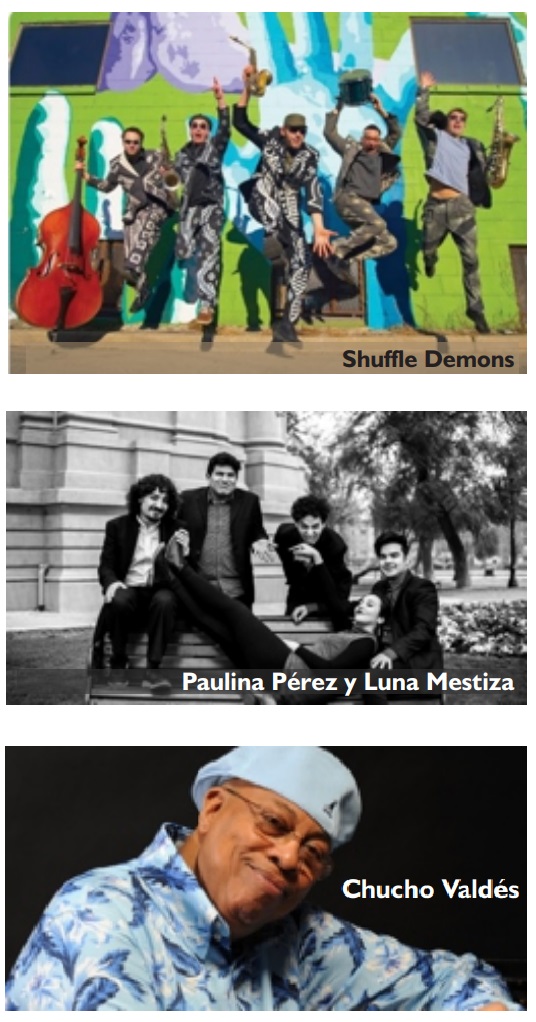
The Global Stage will be back this year, which will be a stage to enjoy in style with bands from different latitudes such as Rubén Amador and Yahuba (Puerto Rico), The Shuffle Demons (Canada), Paulina Pérez and Luna Mestiza (Chile), Josean Jacobo & Tumbao (Dominican Republic), Marco Pignataro (Italy), Yogev Shetrit Trio (Israel), Fundación Armonía Colectiva (Costa Rica), Four On a Swing (India) and Shea Welsh (United States); and Panamanian talents German Pinzón Jiménez, Tambo Jazz Collective, Digger Descendants Calypso Band, Proyecto Shuruca and Pureza Natural.

In addition, there will be highly prestigious educational institutions, Berklee College of Music, Berklee Global Jazz Institute, New England Conservatory, Thelonious Monk Institute of Jazz, New York Jazz Academy and Crossroads High School, which offer great support every year.

And of the institutes that will be: Berklee Global Jazz Institute, New England Conservatory, Thelonious Monk Institute Of Jazz and New Yorl Jazz Academy.

Artists of the 15th Panama Jazz Festival

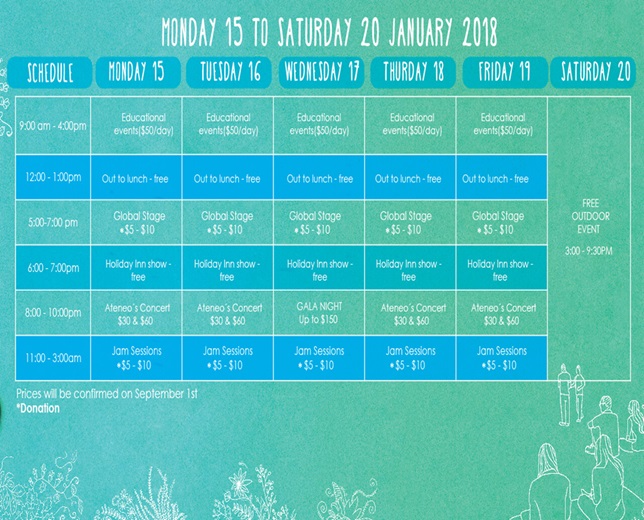
And the schedule of activities to be carried out are:

Schedule of the 15th Panama Jazz Festival

One of the most important details of the festival is that auditions, countless educational clinics, as well as the VI Latin American Music Therapy Symposium, the I Classical Music Exchange Program and the II Symposium of Musical, Artistic and Cultural Expressions will be held. of Afro-descendants in Panama with the main theme El Calypso:

A unique Latin rhythm being known as an African and Afro-American music that began in Trinidad and Tobago, later being very popular in the highlands of Venezuela, San Andrés and Providencia in Colombia, Trinidad and Tobago, Puerto Rico and others from the Antilles, where they use instruments such as the stellpan (steel drums), trumpet, trombone, flute, Spanish guitar, electric bass, saxophone, congas, bongos, maracas. This rhythm varies depending on the country where it is performed, giving a unique touch to studying Calypso to all fans or interested in it.

For more information about the Festival, you can contact them through:

  • WebSite: http://panamajazzfestival.com/
  • Facebook: https://www.facebook.com/PanamaJazzFest/
  • Instagram: https://www.instagram.com/panamajazzfestival/
  • Twitter: https://twitter.com/PanamaJazzFesti
  • Email: [email protected]
  • Phone: +507 317-1466


Rick Arroyo

North America / USA / Las Vegas

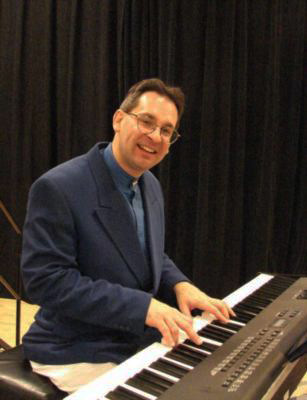
Meet the 2008 Las Vegas Latin Music Awards Winner in two categories Best Latin Jazz Band and Best Latin Jazz Performer, Rick Arroyo. Him and the Latin Percussion Ensemble provides the very best in Steel Drums, Jazz, Latin Jazz ( Afro-Cuban and Brazilian ), Salsa for Dancing and contemporary Jazz.

Rick Arroyo
Rick Arroyo

Born in the Bronx, New York, Rick started playing professionally music when he was 15 years old. Began playing piano at the age of 9, drums at age 11, congas and vibraphone at the age of 14.

Composer, Arranger and Las Vegas Latin Awards Winner in 2 categories, Rick Arroyo appeared in The Coral Reef Lounge at Mandalay Bay every Monday night for four years with his 10 piece Latin dance band, The Latin Percussion Ensemble.

He has played at The Blue Note, The House Of Blues, The Rio, Aladdin, Wynn, Tropicana, Bally’s, Venetian, Stardust, Sahara, Circus Circus, Harrah’s, Imperial Palace, Monte Carlo, Gordon Biersch Brewery, The MGM Grand & MGM Grand Garden Arena, Bellagio’s, Caesar’s Palace, Mirage, Treasure Island, Orleans, Flamingo Hilton, Las Vegas Hilton, Paris Hotel, Rancho Santa Fe Station, The Stardust, New York, N.Y. ( in the George Hamilton Cigar Lounge) Green Valley Station, Boulder Station, Sam’s Town, Alexis Park Resort, Stratosphere, Fremont Street, Riviera, Primadonna, Lady Luck, Avi Casino, Red Rock Casino, Renaissance Hotel, Suncoast Casino, Furnace Creek Inn, Four Seasons and many other locations in Los Angeles, Denver and in Las Vegas.

Rick has performed at several of The City Of Lights Jazz Festivals, The Clark County Amphitheatre, The Reed Whipple Community Center and other venues including radio and television Simulcast.

Rick has recorded and played with Esteban, Tito Puente Jr. Poncho Sanchez, Steve Rossi, Luis Conte, Bill Laster, Karen Briggs, Dick Mitchell, Dan St. Marsais, Artie Webb, Francisco Aguabella, Papo Conga, Dan Weinstein, David Romero, Joe Torres, Poncho Roman, Johnny Conga, Papo Rodriguez, Tata Palau, Johnny “Dandy” Rodriguez, Ghalib Ghallab, Luis Miranda, Bobby Matos, Johnny Polanco, Pachito Alonso, Eddie Resto, Larry White, Hector Casanova, Dick Berk, Ramon Flores, Art Velasco… Shared the stage with The Yellow Jackets, Fatburger, The Rippingtons, Gerald Albright, Richard Elliot, Carl Fontana Everrett Harp, Gilberto Santa Rosa and many others.

Rick Arroyo - Collash
Rick Arroyo – Collash

He has opened for Tito Puente, Willie Chirino, Gilberto Santa Rosa, Jesus Alemany, Cubanismo, President Barack Obama, David Benoit, Richard Elliott, Michael McDonald, Donna Summers, The Beach Boys, Sammy Hagar and many others.

Rick Has performed for Jenny Jones, Maurie Povich, Oscar Goodman, Shelly Berkley, Chip Maxfield, Senator Harry Reid, Barack Obama, Monte Rock, Joe Cortez, Robin Leach, Oscar De La hoya and many other celebrities.

  • « Go to Previous Page
  • Page 1
  • Interim pages omitted …
  • Page 28
  • Page 29
  • Page 30
  • Page 31
  • Page 32
  • Interim pages omitted …
  • Page 116
  • Go to Next Page »

International Salsa Magazine (ISM) is a monthly publication about Salsa activities around the world, that has been publishing since 2007. It is a world network of volunteers coordinated by ISM Magazine. We are working to strengthen all the events by working together.