• Skip to primary navigation
  • Skip to main content

International Salsa Magazine

  • HOME
  • Previous editions
    • 2026
      • ISM / March 2026
      • ISM / February 2026
      • ISM / January 2026
    • 2025
      • ISM / December 2025
      • ISM / November 2025
      • ISM / October 2025
      • ISM / September 2025
      • ISM / August 2025
      • ISM / July 2025
      • ISM / June 2025
      • ISM / May2025
      • ISM / April 2025
      • ISM / March 2025
      • ISM / February 2025
      • ISM / January 2025
    • 2024
      • ISM / December 2024
      • ISM / November 2024
      • ISM / October 2024
      • ISM / September 2024
      • ISM / August 2024
      • ISM / July 2024
      • ISM / June 2024
      • ISM / May 2024
      • ISM / April 2024
      • ISM / March 2024
      • ISM / February 2024
      • ISM / January 2024
    • 2023
      • ISM / December 2023
      • ISM / November 2023
      • ISM / October 2023
      • ISM – September 2023
      • ISM – August 2023
      • ISM July 2023
      • ISM Edition June 2023
      • ISM – May 2023
      • ISM April 2023
      • ISM March 2023
      • ISM February 2023
      • ISM January 2023
    • 2022
      • ISM December 2022
      • ISM November 2022
      • ISM October 2022
      • ISM September 2022
      • ISM August 2022
      • ISM July 2022
      • ISM June 2022
      • ISM May 2022
      • ISM February 2022
      • ISM January 2022
    • 2021
      • ISM December 2021
      • ISM November 2021
      • ISM October – 2021
      • ISM September 2021
      • ISM August 2021
      • ISM July 2021
      • ISM May 2021
      • ISM April 2021
      • ISM June 2021
      • ISM March 2021
      • ISM February 2021
      • ISM January 2021
    • 2020
      • ISM December 2020
      • ISM November 2020
      • ISM October 2020
      • ISM September 2020
      • ISM August 2020
      • ISM July 2020
      • ISM June 2020
      • ISM May 2020
      • ISM April 2020
      • ISM March 2020
      • ISM February 2020
      • ISM January 2020
    • 2019
      • ISM December 2019
      • ISM November 2019
      • ISM October 2019
      • ISM Septembre 2019
      • ISM August 2019
      • ISM July 2019
      • ISM June 2019
  • Download Salsa App
    • Android
    • Apple
  • Spanish

Search Results for: New York

The King of Bass Mr. Bobby Valentin

North America / USA / Nueva York

One step away from the Latin Grammy. The King of Bass Mr. Bobby Valentin

The Latin Grammy nomination of the experienced Bobby Valentin in the category of Latin jazz with the production “Mind of a Master” is another recognition of honor for his half-century musical career as an arranger and conductor.

“Mind of a Master” is the production with which Bobby Valentín enters the competition on the nineteenth day of the Latin Grammy. (Archive National Foundation for Popular Culture). Bobby, nominated last year in the category of salsa with “My rhythm is good”, is one of the five contenders for the Latin Grammy in the “Best Latin Jazz Album” section.

The other finalists are also Puerto Rican Néstor Torres (“Jazz Flute Traditions”), Adrian Laies (“The house of a jazz pianist”), Dafnis Prieto (“Back To The Sunset”) and Hermeto Pascoal (“Universal Nature”). . In a conversation with this medium, Bobby said that he will immediately capitalize on the nomination to promote the album at international festivals.

“We have sent to several festivals in the United States a report of what the album is and my career. We are waiting for answers. Right now I have a presentation at the Interamericana on Wednesday, October 17, which celebrates the 20th anniversary of the Music Department and there is a person interested in going to Costa Rica. It’s slow, but I have a lot of faith that little things will continue to appear. Latin jazz is another audience, although I know that many people who like salsa like it”.

Bobby Valentin
Bobby Valentin

The King of the Bass added that he feels as if he has won the precious golden phonograph. “The nomination of what is a salsa album is another style. This is another corner. What I’m saying is that after one is competing, even if you don’t win, the competition is good, as is being nominated among so many productions. For me the competition in Latin jazz is stronger than in salsa”. Bobby presents “Mind Of A Master” alongside The Latin Jazzists, who are mostly the musicians from his salsa orchestra, like Angie Machado and Eliud Cintrón. Bobby isn’t worried about purists arguing that they’re not jazz soloists.

“The musicians are happy. It is a genre that they like. Here they have been more concerned with projecting their styles and expressions”, Bobby reacts. A salsa musician can play jazz. This is how history supports it. Mongo, Puente, Machito, Mario Bauzá, Mario Rivera, Eddie Palmieri, Hilton Ruiz and Jerry González, among others, began in mambo and Afro-Caribbean dance music, prior to their foray into jazz.

“Like Ray Barretto, who was also linked to jazz. Finally, we all look for that corner. The same Néstor Torres, who started with Batacumbele. After one has done so many things in the tropical genre, one seeks satisfaction as a musician by looking for another corner”.

Jazz, however, is not new to Bobby Valentín. “Latín Gravy”, “Codazos”, “Shinny Stockins” and “Maiden Voyage” are several of the works recorded on his salsa albums. “It always caught my attention. When I was in New York, Latin jazz was mambo jazz. Later the name changed, but before it was done for the dancer, although there were solos. It’s no longer for the dancer. Now people sit down to listen to him. It was a good change.”

Bobby has not decided if he will travel to Las Vegas to be present at the awards ceremony, to be held in November. “I still don’t think so. It’s not because I’m going to win or not. To be competing even if I don’t win is reason for joy. I feel very happy. I have no plans yet”.

Next Wednesday the 17th he will perform with The Latin Jazzists at the INTER Metro Jazz Festival. That night he will perform the “Mind Of A Master” sequence. “I feel very happy. This record is like a baby to me. Although we have played tropical music, this is a new baby and that it is nominated for a Latin Grammy makes me feel very happy”.

Eukaris Figeroa

Latin American / Venezuela / Caracas

Eukaris Figeroa. I don’t imitate Celia Cruz

Five years ago, Eukaris Figueroa dared to initiate an investigation into Celia Cruz. A work came out of that work, La guarachera del mundo.

Eukaris Figeroa
Eukaris Figeroa

Figueroa is also in charge of directing and producing the play. It explores from Cruz’s beginnings, in 1950, until his death, in 2003; addressing his personal life and ailments.

Where did that idea of ​​presenting the life of the sauce boat come from?

When I decided to launch myself as a singer 10 years ago, I visited his grave in New York and asked his permission, not to take his place, but to perpetuate the salsa genre. Later, I began to investigate his life and this montage emerged, which I am very proud of. This is the second season and we hope it will be as well received as the first.

Was it easy to interpret a character as mediatic as she?

Eukaris Figeroa Photo

There is no imitation here. There is, yes, a lot of admiration. And the public will realize this in the monologue of the piece, where they will discover things that she wanted to do, but could not and that she did not see on a stage either. Impersonators always make her old and fat. And no. Celia was also a very beautiful young woman.

Doesn’t her nickname “The sexy salsa babe” pigeonhole her and distance her from the image of Celia?

The fact that I have made myself known like this does not imply that I do not have training and that I do not worry about studying. It was the way I got them to notice me, and I did it.

But behind these curves there are many hours of work. An orchestra of 14 musicians. This montage that I am passionate about does not separate me from my career as a salsa singer. Everything is complemented to offer the best to the public.

Eukaris Figeroa Flyer

Gilberto Santa Rosa

Latin America/ Puerto Rico / Puerto Rico

Gilberto Santa Rosa – The Salsa Knight

Gilberto Santa Rosa (Santurce, 1962) Puerto Rican singer. Nicknamed El Caballero de la Salsa, he has been one of the most prominent performers of the genre, particularly since the 1990s. From an early age his love of music manifested itself, which led him to organize his first amateur ensemble.

Gilberto Santa Rosa
Gilberto Santa Rosa

At only fourteen years old, he already recorded his first songs, thanks to the trumpeter and orchestra director Mario Ortiz. His first group as a professional singer was the Orquesta Grande; Later, as a result of a performance in 1980 in homage to Eddie Palmieri, he joined Tommy Olivencia’s band. Later he sang for a time with Willie Rosario’s orchestra, with which he would record six albums.

Gilberto Santa Rosa

In 1986 he began his solo career at the head of his own orchestra within the Combo Records record company, owned by producer Ralph Cartagena. His first solo album was titled Good Vibrations. This was followed by three more jobs with the same label, which he left in 1990 to sign with CBS Records (later Sony Records).

Gilberto Santa Rosa in concert

That same year, Punto de vista was published, a romantic salsa album that went platinum and number one on the Latin charts thanks to its successful songs Vivir sin ella and Perdóname. The album also earned him the award for best Latin singer awarded by Billboard.

Photo by Gilberto Santa Rosa

In 1991 his album Perspectiva confirmed a brilliant artistic career and opened up new markets for him. In May of this year he made his debut in Spain in a series of concerts in which he shared the stage with Pete Rodríguez, Johnny Pacheco and Roberto Torres, also from the Caribbean, and in September he made an equally successful Central European tour.

Gilberto Santa Rosa singing at the concert

In 1992 he recorded an album in tribute to the singer Tito Rodríguez entitled A dos tiempo de un tiempo. This work was followed by Born Here (1993) and Facing the Wind (1994), which would be his business card in Japan, a country he visited in 1995.

Photo of Gilberto Santa Rosa in concert

After the publication of Esencia, in 1996, and De corazón, the following year , in 1999 came his successful Expresion, an album that consolidated his position in the international Latin music market and that included hits like Déjate Quiero and especially Que somebody dice me, number one on Billboard for several weeks.

Santa Rosa was one of the first performers to fuse salsa music with classical music, with results such as his well-known work Salsa Sinfónica, which he presented at the Center for Fine Arts on his native island accompanied by the Puerto Rican Symphony Orchestra.

Gilberto Santa Rosa live

In addition to this historic performance, the concerts given by Santa Rosa at New York’s Carnegie Hall in 1995 (which would be included on the live album The Man and His Music) are well remembered; his performance at the I President Festival of Latin Music (Santo Domingo, June 1997); or the presentation at the Lincoln Center in New York with his compatriot Andy Montañez in July 1997.

Also of note are his performances at the Anayansi Theater in Panama in September 1997; at the Teresa Carreño Theater in Caracas, in February 1998; the concert at the Roberto Clemente Coliseum in San Juan; and his 1998 European tour with performances in London, Milan and Rome. Apart from his facet as a singer, he showed his qualities as an actor in the play The Uneven Couple (1990), together with Luis Vigoreaux Jr. and Rafo Muñiz.

Gilberto Santa Rosa
Gilberto Santa Rosa
Gilberto Santa Rosa
Gilberto Santa Rosa

Ralph Rivera’s rol in the promotion of Latin Culture

Just as we have talked about musicians and singers who have left to the Puerto Rican culture in the highest in the rest of the world, it is also time to highlight the role of other figures who have contributed immensely to the way in which the Island of Enchantment is perceived by others: the cradle of several of the best artistic exponents from Latin America. One of them is Ralph Rivera.

From the Spaha Salsa Harlem Museum, we have always sought to promote Latin culture by giving space to figures who do their part in making sure we are respected on an artistic level. Such is the case of writer, producer and financial executive Rafael J. Rivera-Viruet, better known as Ralph Rivera, to whom we will dedicate the next lines of this article.   

Financial Executive Ralph Rivera
Puerto Rican financial executive and writer Ralph Rivera

Who is Ralph Rivera?   

Ralph Rivera was born in a coffee farm in the municipality of Utuado, the third largest municipality in Puerto Rico, which is located behind Ponce and Arecibo and is part of the mountainous region known as La Cordillera Central.   

Like many other Puerto Ricans of the time, his parents were seeking a better future for themselves and their child, so they made the decision to move to New York City, United States, thus becoming part of ”The Great Migration” in the 1940s, which consisted of a massive exodus of Puerto Ricans to Uncle Sam’s country as a result of its growing dominance over the island and the devastation caused by ”The Great Depression”, with which Puerto Rico was greatly affected.   

Once in the United States, the family settled in the South Bronx, where little Ralph spent his childhood and youth being part of New York’s public school system. It was full of children who wanted to get out of poverty through education and hard work. Ralph was certainly no exception, as he wanted the same thing and would do what he could to make it happen.   

Over the years, the young man acquired all the knowledge he could in the area he was most passionate about: business. Of course it was not an easy road, but Ralph managed to reach important positions in this field. When he worked for the auditing firm Price Waterhouse, he was hired by the talent agency Ashley Famous to handle the company’s financial affairs.  

Ralph’s beginnings were not easy
Ralph’s beginnings were not easy, but at the end he achieved all his goals

When he gained enough experience, he went for bigger challenges in his career. That was when he met his greatest mentor, fellow executive Marvin Josephson, with whom he created mergers and acquisitions in order to found International Creative Management (ICM) the Behemoth Talent Agency. 

Moving to Los Angeles 

At this point, Ralph had already fulfilled many of the dreams he had set out to achieve professionally, but he still has plenty to prove in the field. It turns out that, in the 1980s, he was given the opportunity to move to Los Angeles to work closely with Martin Starger, former president of ABC television, and Sir Lew Grade, who at the time was the head of Marble Arch Productions, a famous entertainment company in England. 

‘‘Sophie’s choice” and ”On Golden Pond” are among the projects the entrepreneur took on with the company, but his aspirations just kept growing and led him to work with Marvel Comics and Stan Lee himself on the television animation production side. Some of the Marvel titles Ralph worked on include ”Iron Man”, ”Spider Man”, ”The Fantastic Four” and many others.   

In the mid-1990s, he returned to his native island of Puerto Rico and settled in its capital, San Juan, to focus on producing documentaries about Hispanic American culture, including politics, cinema and, of course, music.   

Ralph’s book
Cover of the book ”HOLLYWOOD Se Habla Español

Ralph as a writer   

The multifaceted executive is not limited to the aforementioned facets, but is also a writer and author of the acclaimed book ”HOLLYWOOD: Se Habla Español”, which has won multiple awards since its release. 

In the text, Ralph describes some of the most important achievements of Hispanics in Hollywood films over the last century, stories that should make all of us Latinos who read them proud. They are proof that all the effort we have put into being recognized worldwide has finally paid off despite the obstacles.

Johnny Cru ISM corresponde in New York City


Read also: Pedro »Pacholo» Segundo apoya al Spaha Harlem Salsa Museum 

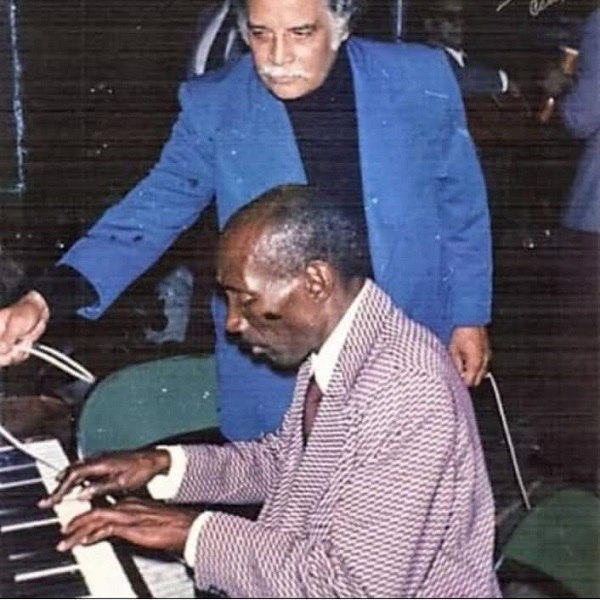
Ezequiel Lino Frías Gómez was an excellent musician, pianist, arranger and composer.

Ezequiel Lino Frías Gómez was born on April 10, 1915 in Havana, Cuba.

Lino Frías y Daniel Santos

Musician, Pianist, Arranger, Composer. He began his artistic career in the early 30’s, working with singer and composer Joseito Fernandez, in the orchestra of Raimundo Pla.

Later he became part of the Fantasía Orchestra.

At the end of the decade he worked with the Septeto Carabina de Ases.

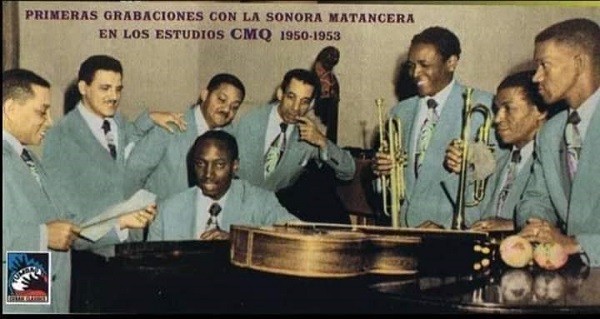
Some time later he joined Arsenio Rodríguez’s Conjunto Todos Estrellas in September 1940, remaining in it until November 1943, leaving his place to Adolfo Oreilly Panacea, to join the Sonora Matancera in 1944, until 1976, where he contributed in an important way both in the composition and musical arrangements, imposing his particular piano solos.

In 1974 he helped found with Armando Sánchez the Conjunto Son de la Loma.

Upon his retirement from La Sonora Matancera, the Puerto Rican producer René López invited Lino, together with Israel “Cachao” López, to revive the descargas he had already recorded in the fifties, assembling a Típica together with “Cachao”.

Sonora Matancea
Sonora Matancea

In his independent years Lino worked with Johnny Pacheco and Carlos “Caito” Diaz.

He accompanied great artists in recordings, in that period in New York, such as La Lupe, Olga Guillot, Daniel Santos, Carmen Delia Dipini, Bobby Capo, among others.

He died on May 22, 1983 in New York, USA.

Lino Frías, who for twenty-two years was the pianist of the Sonora Matancera, composed the very popular Mata Siguaraya in 1951.

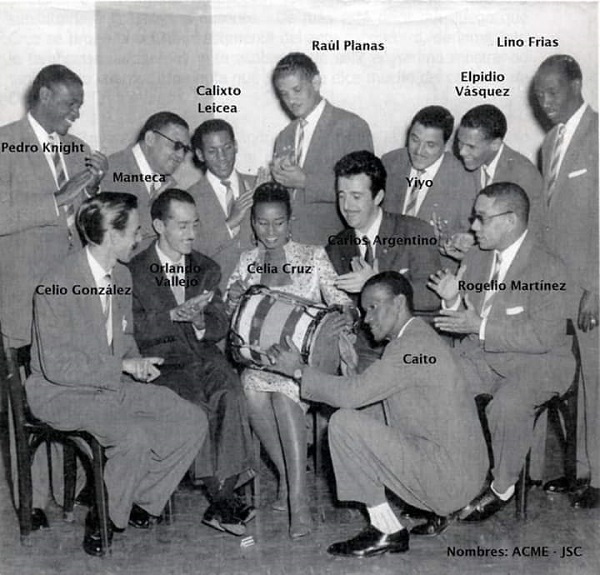
One of the most popular photos of the Sonora Matancera.

In it we can see Lino Frías from his piano looking at Celia Cruz, great interpreter of Mata Siguaraya, together with Benny Moré and Oscar D’León.

Ezequiel Lino Frías Gómez was born in Havana and died in New York in 1983.

Lino studied piano at the Havana Conservatory. For a time, in the 1930s, he played in the Raimundo Pia y Rivero Orchestra, whose singer was Joseito Fernandez. He would later play in the Orquesta Fantasía.

In 1939 he joined the Septeto Carabina de Ases, led by Mariano Oxamendi, guitarist and second voice, and with Bienvenido Grande, singer and harpsichord player, Nilo Alfonso, double bass, José Bergerey, maracas and third voice, Ramón Liviano Cisneros, tres player, Florencio Coco Morejón, bongos player, and Félix Chappotín, trumpet player.

In 1944, Lino joined the Sonora Matancera as a pianist, where he remained until 1976.

In the 1960s, Frías joined the movement that created the so-called salsa music, alongside Fania All Stars, Johny Pacheco, Bobby Rodríguez, Carlos Patato Valdés y Caíto, Carlos Manuel Díaz (Matanzas 1905-New York 1990), among others.

Don Adolfo, a Puerto Rican timbalero, worked with Lino Frías in a group that included some of the most renowned musicians and singers of the 1950s and 60s: Olga Guillot, Daniel Santos, Lucecita Benítez, Bobby Capó, Marco Antonio Múñiz, Carmen Delia Depiní, Chucho Avellaneda, Sergio González Siaba and La Lupe, among others.

In 1974, parallel to his work as a pianist in the Sonora Matancera, Lino Frías created the ensemble Son de la Loma, with the participation of Cuban-Niuyorquinos such as Marcelino Guerra, Rapindey (Cienfuegos 1914-Spain 1996), author of Convergencia, and Pedro Rudy Calzado (Santiago de Cuba 1929-New York 2002).

Celia Cruz y La Sonora Matancera

Due to arthritis, in 1976 Lino left the Sonora. His place is taken by Javier Vázquez, (Matanzas 1936), son of the double bass player Pablo Vázquez.

It is said that the death of Lino Frías, in 1983, was a hard blow for his great and faithful friend Celia Cruz (Havana 1925-New Jersey 2003).

In addition to Mata Siguaraya, Lino Frías composed Pan de piquito, Óyela, gózala, Vamos todos de panchanga, Cañonazo, Vive la vida hoy, Suena mi bajo, Convencida, Afecto y cariño, Has vuelto a mí, Baila Yemayá.

Also Read: Israel “Cachao” López Sobrado en fama y respeto en los años setenta se dedicó a mantener la tradición a nivel supremo

  • « Go to Previous Page
  • Page 1
  • Interim pages omitted …
  • Page 42
  • Page 43
  • Page 44
  • Page 45
  • Page 46
  • Interim pages omitted …
  • Page 116
  • Go to Next Page »

International Salsa Magazine (ISM) is a monthly publication about Salsa activities around the world, that has been publishing since 2007. It is a world network of volunteers coordinated by ISM Magazine. We are working to strengthen all the events by working together.