• Skip to primary navigation
  • Skip to main content

International Salsa Magazine

  • HOME
  • Previous editions
    • 2026
      • ISM / March 2026
      • ISM / February 2026
      • ISM / January 2026
    • 2025
      • ISM / December 2025
      • ISM / November 2025
      • ISM / October 2025
      • ISM / September 2025
      • ISM / August 2025
      • ISM / July 2025
      • ISM / June 2025
      • ISM / May2025
      • ISM / April 2025
      • ISM / March 2025
      • ISM / February 2025
      • ISM / January 2025
    • 2024
      • ISM / December 2024
      • ISM / November 2024
      • ISM / October 2024
      • ISM / September 2024
      • ISM / August 2024
      • ISM / July 2024
      • ISM / June 2024
      • ISM / May 2024
      • ISM / April 2024
      • ISM / March 2024
      • ISM / February 2024
      • ISM / January 2024
    • 2023
      • ISM / December 2023
      • ISM / November 2023
      • ISM / October 2023
      • ISM – September 2023
      • ISM – August 2023
      • ISM July 2023
      • ISM Edition June 2023
      • ISM – May 2023
      • ISM April 2023
      • ISM March 2023
      • ISM February 2023
      • ISM January 2023
    • 2022
      • ISM December 2022
      • ISM November 2022
      • ISM October 2022
      • ISM September 2022
      • ISM August 2022
      • ISM July 2022
      • ISM June 2022
      • ISM May 2022
      • ISM February 2022
      • ISM January 2022
    • 2021
      • ISM December 2021
      • ISM November 2021
      • ISM October – 2021
      • ISM September 2021
      • ISM August 2021
      • ISM July 2021
      • ISM May 2021
      • ISM April 2021
      • ISM June 2021
      • ISM March 2021
      • ISM February 2021
      • ISM January 2021
    • 2020
      • ISM December 2020
      • ISM November 2020
      • ISM October 2020
      • ISM September 2020
      • ISM August 2020
      • ISM July 2020
      • ISM June 2020
      • ISM May 2020
      • ISM April 2020
      • ISM March 2020
      • ISM February 2020
      • ISM January 2020
    • 2019
      • ISM December 2019
      • ISM November 2019
      • ISM October 2019
      • ISM Septembre 2019
      • ISM August 2019
      • ISM July 2019
      • ISM June 2019
  • Download Salsa App
    • Android
    • Apple
  • Spanish

Search Results for: New York

Julio Vilchez and his orchestra conquer Miami

Peru continues to give us something to talk about thanks to all the salsa talent coming out that country in recent years and today we had the opportunity to talk with one of them, which is the producer, composer and singer Julio Vilchez. 

After we communicated with Vilchez via email and WhatsApp to schedule an interview, we have managed to have a great conversation in which we knew a little more about the artist’s beginnings in this fascinating world that is music.   

singer Julio Vilchez
This is Peruvian producer, composer and singer Julio Vilchez

Childhood and musical roots in the Vilchez family 

It is not surprising that Vilchez took that parth of life considering that his father, Juan José Vilchez Sanchez, was a talented actor, comedian and professional dancer who carried music in the blood and ran some of the most famous salsa clubs in the city of Lima, which served as a stage for important national and international groups and singers of all genres.   

Having referred with admiration to his father because of all that he achieved in life thanks to music, he assured that music definitely ran through the veins of his family and had always been a very important part of his childhood and youth. 

Seeing all this, the years were not many when Vilchez became interested in musical instruments such as maracas, the bongo bell and the güiro, which led him to participate in groups such as Raíces, La Fragua and Soy Calidad.   

Salsa and other genres 

A large majority of Peruvian artists whom we had the honor to interview have typically ventured in Peruvian Creole music before getting involved in salsa, but not Vilchez. In fact, he pointed out to us that his country was heavily influenced by Cuba musically speaking and there used to be a time when groups from the island visited Peru such as La Sonora Matancera and Los Compadres. Peru also received influence from Colombia, Venezuela and Puerto Rico, although to a lesser extent. 

The artist also remembers that, at home, he and his family always used to listen to Venezuelan singers and orchestras such as La Dimensión Latina, Oscar D’ León, Luisito Quintero, Nati Y Su Orquesta, among others. In the case of Puerto Rico, of course Vilchez and his family used to listen to La Fania All Stars.  

Vilchez was part of Raíces, La Fragua and Soy Calidad
Julio Vilchez was part of groups such as Raíces, La Fragua and Soy Calidad

Formal beginnings of Julio Vilchez in music 

In the neighborhood Vilchez and his family lived in, the singer made friends with other local boys and met up with them to sing in a completely amateur way. In addition to that, he liked to participate in school talent shows, in which he delighted the crowd performing songs from Oscar D’León, Rubén Blades and Willie Colón. 

After attaining the age of 17, he began working alongside his father in the business of running clubs, which gave him the opportunity to spend time with the members of the orchestra La Progresiva del Callao, who performed on Tuesdays, Wednesdays and Thursdays in one of those places.   

Since Vilchez loved to dance and the orchestra focused a lot on its choreographies, the young man identified himself a lot with the group and began to learn the steps the singers performed on stage. One day, the boys saw him dancing and invited him to sing with them in one of their shows, in which he danced very well, but he did not sing in the best way. For this reason, he got the opportunity to stay permanently in the orchestra, but only as a dancer for the moment.   

Over time, he was grabbing experience on stage and getting over stage fright until he managed to keep up with the rest of his orchestra fellows with the passing of days.  

Julio Vilchez with Cano Estremera
Julio Vilchez with Puerto Rican salsa singer Cano Estremera

Vilchez’s time in Venezuela 

Vilchez made friends with a group of Venezuelan musicians who accompanied Oscar D’ León in one of his concerts and invited him to travel with them to Venezuela because they wanted him to be part of the sextet they were going to create, which was meant to perform at a tavern in Caracas. 

Seeing that things were going well in Venezuela at that time, Vílchez decided to accept the invitation and immigrate to the South American country to try his luck. Once there, he spent a lot of time alone because the boys from the sextet traveled a lot, something which took advantage to get to know other groups, one of them being La Selecta de Cúa. One day, Vilchez was walking down the street and heard this orchestra rehearsing, but it needed a singer. That is when Vilchez proposed himself as an option, was admitted and worked for about two years in this orchestra. 

Although he did well in Venezuela, he ended up returning to his native country because he missed his homeland and his father could not get used to having him away, so he packed suitcases and decided to return.   
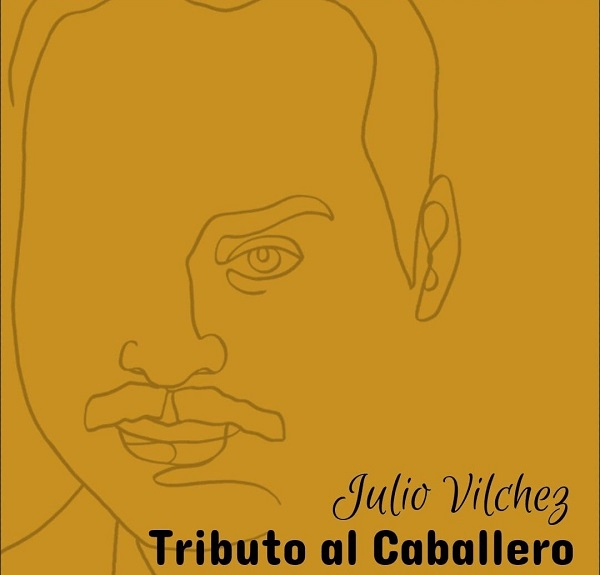
Tributo al Caballero by Julio Vilchez
Cover of the album Tributo al Caballero by Julio Vilchez

Life in the United States 

One of the songs he released in 1995 led him to make a video clip, which started to become very popular on music channels and shows, giving him the recognition Vilchez aimed for so long.  

Since things were not going as he expected on his solo career, he joined the Orquesta La Novel to continue working on music for the next two years. Although his name was not as well known as Vilchez needed it to be, his song was still sounding loud internationally for quite some time, which led him to receive a proposal to perform eight shows with his orchestra in the United States in 2000. 

When Vilchez and the rest of the musicians traveled to Miami, about nine members of the orchestra received proposals to stay in the country and decided to accept. It was there where the artist gathered his courage and says to himself ”I’m staying too”. That was over 24 years ago now.   

At that point, the Peruvian had to look for other musicians to replace the others in order to finish the concert tour they had scheduled. It was then when he contacted José Alberto ”El Canario” through a Peruvian colleague of his to use his band for the remainder of the tour and so he did. Vilchez did two or three shows with this band and stayed in Miami from 2001 to 2004.   

Given the lack of musical proposals, he spent a few years in New York, but returned to Miami some time later to work both with music and with a business sector linked to gastronomy, since living only from music is complicated. In addition to that, his children live in Miami and he wanted to spend more time with them, so this was also a powerful reason to return.   

Read also: Argentine-American composer and guitarrist Alejandro Meola kindly talked to us 

Nolita Golding Soulful Latin

Europe / Reino Unido/ Londres

Nolita Golding has a new single & video with the amazing collaboration of Latin Grammy-nominated Tony Succar & LUKAS winner Alex Wilson

With her powerful, compelling voice, to kick off 2019 Nolita Golding launches her new single “There Must Be An Angel”  This single release is a step-change up in her career, cementing her reputation as a world class vocalist who can seamlessly weave between Soul and Latin in both English and Spanish.

The 80’s hit “There Must Be An Angel” (penned by Annie Lennox & David A. Stewart) has been deliciously arranged by Alex Wilson into a Soulful Latin version full of Caribbean flavour and laced with Gospel. Driven by Nolita’s power vocals and personality, she sets the scene for a definite hit in 2019! Soulful Latin… the new wave to hit the dance floors!

At present there is a musical trend focussed on the wonderful cultural revolution of the 60s in New York, when Latin America’s sounds were fused with jazz, soul and rock. This gave birth to fresh new styles such as boogaloo, spearheaded by luminaries such as Pete Rodriguez, Ricardo Ray, Joe Bataan and Joe Cuba.

Nolita Golding
Nolita Golding

Nolita Golding carries the soul of those pioneers and her unmistakable style proves it.  In her constant search for excellence, Nolita completed this new single at Wincraft Music Studios, owned by Steve Winwood. The production was masterminded by award-winning producer Alex Wilson and features special guest and Latin Grammy-nominated Tony Succar on timbales. In addition, Venezuelan percussion master Edwin Sanz and Cuban rock guitar powerhouse, Dany Labana, have added their magic … this band is simply smoking!

The creative process has been a unique and magical experience, resulting in a track fully loaded with rhythm, positive energy, Caribbean flavor and mucho sabor!

As ever, the impressive power of Nolita Golding’s voice combined with her bilingual skills has her in continuing high demand as the session vocalist who consistently delivers the goods!


We invite you to enjoy this new single, which comes out at the beginning of this month…
It was created just for you and we guaranteed you will fall in love with it!

Don’t miss the opportunity to experience Nolita Golding Soulful Latin live concerts during her Europe Tour 2019.


Nixmotion begins to mid- February 2019 in the Vermont State

North America / USA / Burlington

The major Salsa experience together to the pleasures of the winter in this creative Latin event similar to a Salsa Congress

Date: From Friday, February 22th to Sunday, February 24th

Nixpass (All -Access): $195 + $6.87 FEE (Sales end on February 22nd)

Venue: Hilton Burlington Lake Champlain. 60 Battery Street, Burlington, Vermont 05401

Nixmotion
Nixmotion

Nixmotion is something truly unconventional! This creative and unique Latin entertainment is designed for learning, so they have crafted workshops of one hour and 15 minute, with the last 15 minutes exclusively dedicated to practice and questions to the instructors. Also, 11 DJs will keep you dancing as early as 8PM, all the way until 5AM. As if this wasn’t enough, in addition to their Salsa room and Bachata room, they now will have a separate Kizomba chamber!

The refreshing experience NIXMOTION includes:

  • GRAMMY-NOMINATED NEW SWING SEXTET LIVE
  • 1HR SHOWCASE PER NIGHT
  • 3 NIGHTS OF PERFORMANCES
  • SALSA & BACHATA ROOM
  • NEW: KIZOMBA CHAMBER
  • ENHANCED WORKSHOPS
  • ICEBLOCK OUTDOOR SOCIAL
  • 23 HOURS OF SOCIAL DANCING
  • AFTER PARTY THEMATIC
  • AND MUCH MORE!

LIVE BAND

New Swing Sextet on February 23rd:

The band has been a popular and innovative exponent of Latin Jazz and Salsa with a long history of making music on the streets of Latin New York through harmonized vocals, piano, vibes, bass and Latin percussion for over five decades.


New Swing Sextet (NSS) had their professional debut performing in the Singer Bowl at the last New York World’s Fair in 1965 and recorded the last of 4 albums, all under the “Cotique” Label in 1970 and broke up in the late seventies.


The band offers the classic Latin New York sound of another era, perfectly preserved and bottled for today’s global Salsa enthusiasts. Their recent performances to large audiences all over the North America, South America, Europe, Russia, Asia and the Middle East have proven that NSS is better than ever.


Today, New Swing Sextet celebrates their 50th Anniversary preparing to release their new CD “50 Years of Swing” early next year, following up their “Back on the Streets…a taste of Spanish Harlem Vol 2” which was nominated for a Grammy Award in 2009 by the Recording Academy, and “Yesterday Today & Tomorrow,” released in January 2013. Please, visit: https://nixmotion.com/new-swing-sextet


The Unique Salsa Experience That You Don’t Miss Out!

Reserve your TICKETS Today:
https://www.nixmotion.com


Event Details:

FB Page: https://www.facebook.com/nixmotion

Young Puerto Rican singer Jeremy Bosch supports the Spanish Harlem Salsa Museum

There are many people who believe that salsa is a genre of past generations that does not have worthy youth representatives who stick up for this set of rhythms that has been keeping so many people dancing for so long, but fortunately they are wrong. Jeremy Bosch, whom we had the opportunity to interview at The Johnny Cruz Shw a few weeks ago is a god example of this.   

We are honored to know that one of the new sensations of Latin music, specifically salsa, supports one of the most important institutions dedicated to the genre such as the Spanish Harlem Salsa Museum, so we want to take advantage to talk a little about the career of this young singer and everything he has achieved so far.   

Jeremy playing the flute
Jeremy Bosch playing the flute live

Jeremy’s beginnings in this world 

Jeremy Bosch is a singer and flutist born in the city of Ponce, Puerto Rico, who began his journey in the world of music singing and playing percussion in the church on his block while growing up listening to a great variety of artists including Hector Lavoe to Chicago and Tonny Bennett, so he had influences of all kinds.   

Not much time would past before Jeremy took achevable steps towards the direction he was meant to take. At only 17 years old, he won a scholarship to study at Berklee College of Music in the city of Boston, United States, and graduated in 2023, specializing in jazz composition. From then on, what followed for the young artist have been successes and great proposals he could seize.   

One of thse things he is best known for is having been the vocalist and flutist of the acclaimed group Spanish Harlem Orchestra, but that has not stopped him from collaborating with great figures in the industry such as musical director and Grammy-winning percussionist Pete Perignon, with whom he recorded the social short called ”Sería Una Pena”.   

Johnny and Jeremy
Johnny Cruz and Jeremy Bosch posing for the camera

Jeremy’s professional career 

Sometime later, he would have the opportunity to realize one of the most important works of his career, which is the tribute to the late Cheo Feliciano, which was recorded live at the Dizzy Club in New York City and was titled ”The Music of Cheo Feliciano. In addition, the project included Nelson Gonzalez, Johnny ”Dandy” Rodriguez and Spanish Harlem Orchestra leader Oscar Hernandez.   

With regard to this great night for his career, Jeremy commented that since his debut both he and arranger and vibraphonist Felipe Fourniel had long time wanting to work on something about Cheo Feliciano and his legacy for a long time until they finally made it. This show was the sign that Jeremy has everything to become an icon of salsa and Afro-Caribbean music in general.   

As for his solo career, he has made a few remarkable recordings and one of them was ”Prologo Hoy”, which included the participation of Nicaraguan singer Luis Enrique and Cuban vocalist and guitarist Alain Perez. It is a five-song EP that focuses a lot on Afro-Colombian and tropical music, while including some covers in English such as ”Love Holiday”, which gives a distinct flavor to the material as a whole. 

Jeremy and Johnny on the set
Jeremy Bosch and Johnny Cruz on the set of The Johnny Cruz Show

Later on, Jeremy released ”Epilogo: la clave del tiempo”, which includes 11 tracks and is basically a mix of Afro-Cuban rhythms, soneo, urban genres, modern synthesizers, among other elements. The album starts with ”Locura” and continues with singles such as ”Try Again”, ”La Mala”, ”Autopsia” and a few more.   

Support for the Spanish Harlem Salsa Museum 

In the social networks of the director of the Spanish Harlem Salsa Museum, Johnny Cruz, there is a clip in which the The Johnny Cruz Show host introduces Jeremy as his special guest on that occasion, promotes the interview with him and describes him as the sensation of the moment. Then, the camera goes n Jeremy’s face, who thanks the invitation with a smile and assures that they both will have a good time talking about his life and career. 

We are honred to support young talents like Jeremy and, at the same time, to get the same support and love back because that is what salsa and the Latin music scene in general needs, that all those involved join together around it to keep it alive. 

Johnny Cru ISM corresponde in New York City


Read also: Paquito D’Rivera supports the salsa museum 

Bamboleo de Lázaro Valdés is another of those exquisite Cuban products, as well as sweet rum and mild cigars

Like the sweet rum and mild cigars, bamboleo is another one of those exquisite Cuban products that, once tasted, can’t get enough.

The 14-member timba group is a fiery number, from its music and choreography to its well-dressed singers and musicians.

Lazaro Valdes leads the group, plays piano, arranges, composes and writes songs. Born in Havana, he studied at the Alejandro García Caturla Academy in the 1970s.

Lazarito Valdés & Bamboleo

He created Bamboleo after spending time performing with artists such as Pachito Alonso, Bobby Carcasses and Héctor Téllez.

He selected the best musicians and incorporated into his new company many who had been trained at the Escuela Nacional de Arte de La Habana.

He added sparkle with vocalist Haila Mompie, who in turn recruited vocalist Vannia Borges. Another Havana native, Borges began studying music at the age of five, and first sang professionally with an all-female group known as D’capo in the early 1990s. Four years later, she became part of the band D’capo.

Four years later, she moved on to Pachito Alonso y su Kini Kini, which she left in 1997 to add her talents to Bamboleo.

Lazarito Valdés.
Lazarito Valdés.

Guantanamera Yordamis Megret joined the group in 1998, a year after Mompie’s departure. She began her musical training at the age of 10 and took up the guitar.

Like Borges, she is also a student at the Escuela Nacional de Arte. After graduating, she began singing professionally with Ricacha. Before joining

Bamboleo, Megret sang in José Luis Cortés’ salsa group PG. Bamboleo began touring outside Cuba in 1996, the same year the group debuted with Te Gusto o Te Caigo Bien.

The group has performed in major U.S. cities from Chicago to Miami, and from New York to Los Angeles. Following the release of Yo No Me Parezco A Nadie and Ya No Hace Falta, the group toured the world, with stops in Europe, the United States and Japan, as well as the Heineken 2000 World Music Festival in China.

Bamboleo also collaborated on the Temptations’ Grammy-winning album Ear-Resistable.

Lazarito Valdés
Lazarito Valdés

In addition, the group has appeared on MTV’s Road Rules and has worked with artists such as James Brown, Femi Kuti and George Benson.

Bamboleo, one of the best-known groups on the crest of the timba wave, a new style that blends salsa with funk and jazz elements and emanates from the streets of Cuba, remains at the forefront with 1999’s Ya No Hace Falta.

After leaping to international notoriety with 1997’s Yo No Me Parezco a Nadie, the pressure was on to deliver for his newfound fan base.

With smooth arrangements and a band with a tight drum kit, Bamboleo had no trouble making good on their reputation and, if anything, raised the bar for the entire genre.

Both the horn section and the vocalists have a cool, smooth approach that contrasts with the energetic sound of similar groups like Charanga Habanera or NG la Banda.

This smoky, jazzy sensibility juxtaposed with the sharp corners of the superfunky rhythm section makes for easy and enjoyable listening.

The group doesn’t lack for warmth, with salty montunos from pianist/arranger Lazaro Valdes and plenty of time changes from a percussion section as good as any operating today.

Sonically, the ears rejoice in listening to a timba album that lacks neither fidelity nor modern production sensibilities.

With its balanced overall sound, unique approach and expert musicianship, Bamboleo will set trends and erase boundaries for decades to come.

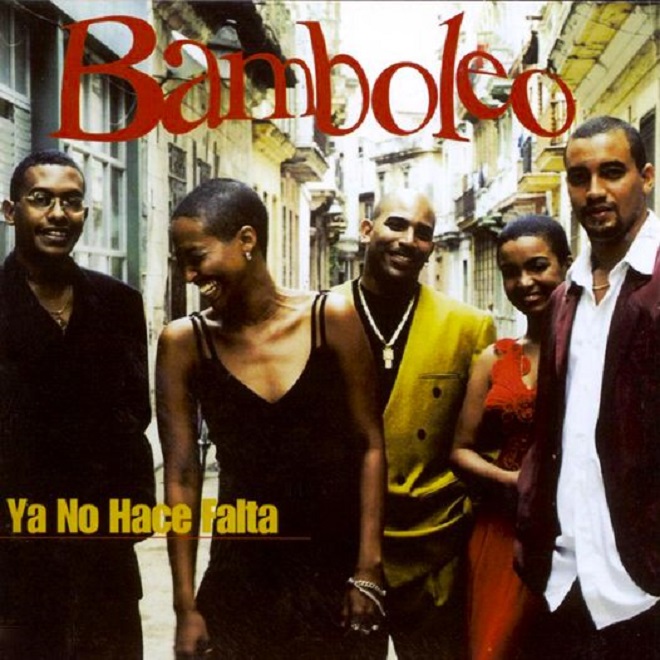
Bamboleo - Ya No Hace Falta (1999)
Bamboleo – Ya No Hace Falta (1999)

Evan C. Gutierrez

Bamboleo – Ya No Hace Falta (1999).

Musicians:

Lázaro M. Valdés Rodríguez (Director, piano, composer).

Abel Fernández Arana (Alto Saxophone)

Carlos Valdés Machado (Tenor saxophone)

Anselmo “Carmelo” Torres (trumpet)

Dunesky Barreto Pozo (Congas)

Alberto Para (Maracas)

Herlon Sarior (Timbales)

Jorge David Rodríguez (Voice)

Yordamis M. Mergret Planes (Vocals)

  1. Frank Cintra Cruz (Trumpet)

Alejandro Borrero Ramírez (Vocals)

Vannia Borges Hernández (Vocals)

José Antonio Pérez Fuentes (Violin)

Maylin de la Caridad González Aldama (Cello)

Ludwig Nunez Pastoriza (Drums)

Rafael P. Pacerio Monzón (Banjo)

Ulises Texidor Pascual (Bongos)

Sources:

Información realizada ( 27 de enero de 2024)

L’Òstia Latin Jazz 

Also Read: Irakere was a Cuban group that developed an important work in Cuban popular music and Latin Jazz under the direction of Chucho Valdés

  • « Go to Previous Page
  • Page 1
  • Interim pages omitted …
  • Page 45
  • Page 46
  • Page 47
  • Page 48
  • Page 49
  • Interim pages omitted …
  • Page 116
  • Go to Next Page »

International Salsa Magazine (ISM) is a monthly publication about Salsa activities around the world, that has been publishing since 2007. It is a world network of volunteers coordinated by ISM Magazine. We are working to strengthen all the events by working together.