• Skip to primary navigation
  • Skip to main content

International Salsa Magazine

  • HOME
  • Previous editions
    • 2026
      • ISM / March 2026
      • ISM / February 2026
      • ISM / January 2026
    • 2025
      • ISM / December 2025
      • ISM / November 2025
      • ISM / October 2025
      • ISM / September 2025
      • ISM / August 2025
      • ISM / July 2025
      • ISM / June 2025
      • ISM / May2025
      • ISM / April 2025
      • ISM / March 2025
      • ISM / February 2025
      • ISM / January 2025
    • 2024
      • ISM / December 2024
      • ISM / November 2024
      • ISM / October 2024
      • ISM / September 2024
      • ISM / August 2024
      • ISM / July 2024
      • ISM / June 2024
      • ISM / May 2024
      • ISM / April 2024
      • ISM / March 2024
      • ISM / February 2024
      • ISM / January 2024
    • 2023
      • ISM / December 2023
      • ISM / November 2023
      • ISM / October 2023
      • ISM – September 2023
      • ISM – August 2023
      • ISM July 2023
      • ISM Edition June 2023
      • ISM – May 2023
      • ISM April 2023
      • ISM March 2023
      • ISM February 2023
      • ISM January 2023
    • 2022
      • ISM December 2022
      • ISM November 2022
      • ISM October 2022
      • ISM September 2022
      • ISM August 2022
      • ISM July 2022
      • ISM June 2022
      • ISM May 2022
      • ISM February 2022
      • ISM January 2022
    • 2021
      • ISM December 2021
      • ISM November 2021
      • ISM October – 2021
      • ISM September 2021
      • ISM August 2021
      • ISM July 2021
      • ISM May 2021
      • ISM April 2021
      • ISM June 2021
      • ISM March 2021
      • ISM February 2021
      • ISM January 2021
    • 2020
      • ISM December 2020
      • ISM November 2020
      • ISM October 2020
      • ISM September 2020
      • ISM August 2020
      • ISM July 2020
      • ISM June 2020
      • ISM May 2020
      • ISM April 2020
      • ISM March 2020
      • ISM February 2020
      • ISM January 2020
    • 2019
      • ISM December 2019
      • ISM November 2019
      • ISM October 2019
      • ISM Septembre 2019
      • ISM August 2019
      • ISM July 2019
      • ISM June 2019
  • Download Salsa App
    • Android
    • Apple
  • Spanish

Search Results for: New York

Where To Go Dancing Salsa In Africa During September

Latest news from the Salsero movement in Morocco, Ghana, and Ivory Coast

In September, we came with more force and recharged. In this edition, we offer you the compilation of the best Salsa and Bachata events so that you don’t stay without being part of the Latin scene of the African continent during the last month of summer.

World Salsa Congress Marrakech 2022

Leyenda: James Torres (Organizer and DJ of World Salsa Congress Marrakech)

After the cessation of the event for a year due to the pandemic in Morocco, the World Salsa Congress Marrakech 2022 returns from Wednesday, August 31st to Tuesday, September 6th with four dance floors for the enjoyment of Salsa in the NY and LA style, Cuban Salsa, Bachata, and Kizomba.

A six-day event of Salsa parties, total relaxation, entertainment, workshops, and international live shows with the participation of 2,000 people from 48 countries around the world at the Palmeraie Resorts hotel located in Circuit de la Palmeraie 40000 Marrakesh, Morocco.

In this eighth edition, every day in the Atlas Room will be a pool party with special guests and international DJs. On Friday, September 2nd, the shows will begin (10 PM – 11:30 PM), on Saturday, September 3rd, five hours of lessons will be held at different levels simultaneously in five rooms (10:30 AM – 3:50 PM), and On Sunday, September 4th, classes will begin at 11 AM and will end this day with the closing party at Nikki Beach with international DJs (Dress code: White).

The DJs that will be entertaining the World Salsa Congress Marrakech 2022 https://www.salsacongress-marrakech.com/programme.php?lang=en are DJ Tronky (Rome), DJ Mascalzone (Rome), DJ Mauri (Amsterdam), DJ Kamal “Salsa Dura” (NRW/Germany), DJ Juan (New York), DJ Babacar (Porto/London), DJ Marco Polo (Helsinki/Finland), DJ Miguel (Miami), DJ “El Loco” Hicham (Nantes/ France), DJ Giorgio Rod (Paris), DJ Ale “El Cubano” (Cuba), DJ Kito Et Jal’s (Rabat/Morocco), and DJ Myster’Youss (Montreal).

The secret party 1001 Night with international DJs will be on Monday, September 5th starting at 9 PM. €10 must be paid for the cost of the transport service. The price of tickets for the six days of Salsa Immersion, Pool Parties, and 33° Sun is €260.

Salsa Dance Night 

Leyenda: Salsa Dance Night (Wednesday 7th, 14th, 21st, and 28th September)

The entertainment company Vienna City Limited offers Salsa every Wednesday night from 6 PM to 11:30 PM at the Vienna City Hotel located on Emmanuel Quist Rd, Tema, Ghana (West African country).

This business chain with more than 20 years of experience maintains the quality standard in Salsa dance nights with regular training.

This nightclub in the Vienna City Hotel https://viennacity.com.gh/ has established itself as one of the most influential in the seaside city of Tema over the years. Here, you can enjoy a variety of drinks and exotic cocktails, as well as resident and guest DJs that will keep you dancing the night away.

The Meridian Lounge Bar is the soul of the hotel. It has an elegant style and a beautiful panoramic view of the neighborhood. The lounge bar lounge is also dedicated to game nights, comedy, and live Jazz on the weekends. So, don’t miss the opportunity to enjoy Salsa in Ghana every Wednesday in September.

Baila Conmigo – Soirée Latino
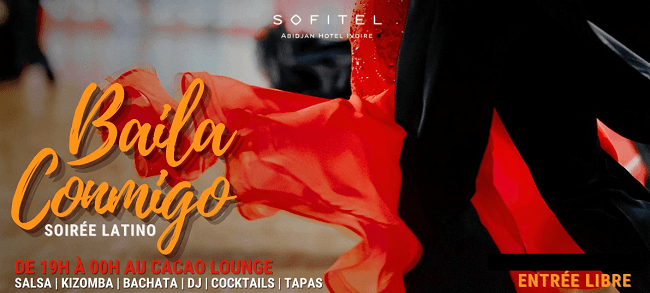
Leyenda: Salsa, Kizomba, Bachata – (Free Entry) 

On Friday, September 16th, you can attend the 100% Latin evening (Salsa, Kizomba, and Bachata) with resident DJs at the Cacao Lounge located inside the Sofitel Abidjan Hôtel Ivoire https://www.facebook.com/SofitelAbidjan (5 stars) located at Boulevard Hassan II 08 Bp 01, Abidjan, Ivory Coast (country in West Africa) starting at 7 PM.

Admission is free, you must use the Mask at all times, and there will be a Hydroalcoholic Gel available.

And if you are a beginner, it does not matter because the professionals of Social Dance Abidjan will be there to support you in your immersion in the dance of Latin rhythms.

Unique Latin atmosphere, Tapas, DJ, and a majestic environment of water and vegetation you will find at the Sofitel Abidjan Hotel Ivoire, a combination of French luxury and African charm on the Ivory Coast.

Papo Rosario with his “Salsa de La Buena” at the Spanish Harlem Salsa Gallery Museum

Papo Rosario and his “Salsa de La Buena”

We are incredibly pleased to talk about Luis Alberto Rosario, better known as Papo Rosario, who can be considered one of the most beloved salseros by people who have enjoyed his music for decades. In addition to being a very cloase and kind man to everyone around him, his musical and acting talent is undeniable.

Isidro Infante next to Papo Rosario

After having sung along with El Gran Combo de Puerto Rico for more than 40 years, Rosario makes his debut as a soloist with his first recording work “Salsa de La Buena”, in which he receives the full support of maestro Isidro Infante. Both Rosario and Infante are part of Salsaneo Records, which is close to becoming one of the most important music labels thanks to its contemporary salsa. Thanks to the counselling and advice received from Isidro, Papo has managed to create one of the most important and interesting albums in 2002.

One of the things that makes the album stand out is the great amount of danceable rhythms, positive lyrics, good vocals and fresh sonority. It is evident that the essence of the artist always stands out and he does not let himself be dragged along by what he learned during his time in El Gran Combo. While it is true that there are some traits learned from his friend and former colleague Jerry Vivas, Rosario seems pretty determined to distance hemself from the past and focus on a vastly different future.

Rosario and Infante recording in the studio

What “Salsa de La Buena” is 

“Salsa de La Buena” has many tracks that can perfectly mark a before and after in current Latin music. It starts with a beautiful hymn to optimism and perseverance called “Gracias”, which is one of the four songs composed by the pen of maestro Infante. In the case of “Salsa de La Buena”, the song that gives its name to the entire album, speaks of the connection the singer has with his people as an exponent of the salsa genre. The arrangements and piano melodies are reminiscent of what Richie Ray and Bobby Valentín did when they sang “Los Reyes de La Salsa”.

Isidro also shows his great talent with “Los refranes de Don Yeyo”, a beautiful piano solo where you can see how important the Caribbean collection of proverbs is for the culture at large.

Johnny Cruz with Papo Rosario

Promotion for Papo Rosario’s album 

In a conversation between Papo Rosario and Johnny Cruz, director of the Spanish Harlem Salsa Gallery Museum, the two talk about this recording work and the artist tells how did the whole process go.

Rosario has said that both he and Infante had studied together, but had built their careers separately until they met again recently. That’s when he proposed him to make some arrangements to his songs, but they ended up collaborating to make the album in full. The main objective of the record production was to bring a positive message to the peoples and do what God has put on their shoulders.

In the same way, he pointed out that the salsa museum was quite empty the last time he went, but he was surprised to see that all those spaces have been filling up with truly valuable objects for salsa and its fans.

From there, they gave their regards to Isidro Infante and invited him to the museum to join them and talk about “Salsa de La Buena” and other issues that arise.

Johnny Cruz, Papo Rosario and Rubio Boris

        By Johnny Cruz, ISM Correspondents, New York, New York City

Carlos Molina Jr. presents his book El Legado, 100% real salsa stories

Carlos Molina and El Museo de La Salsa

It makes us very happy to talk today about Carlos Molina Jr. and El Museo de La Salsa in Colombia, place that has become a salsa library with all the information the Latin public wants to get about their favorite artists. The popularity that this proposed reading has achieved is no coincidence, as it compiles the old, the new and the best of our Latin roots to raise anyone interested awareness of it.

Carlos Molina Jr., director of El Museo de la Salsa

Carlos Molina Jr., director of El Museo de La Salsa, knows everything that a proper salsero should know about this beautiful musical genre, since much of his life has been tied to this kind of music and the biggest stars who have excelled in it. Let us not forget that Daniel Santos himself had a chance to hold him when he was just a baby, which says a lot about the path taken by Molina growing up.

This man has so many things to say and stories to tell that he has written a book in which all this data can be read in great detail.

“El Legado”

Molina explained recently that the book arose due to his intention in paying tribute to his father, Carlos Alfredo Molina. He said that he had already worked on a documentary in his honor and wanted to use that same script for a text in which the most important stories of both his progenitor and himself could be read.

Carlos Molina Jr. next to Oscar D’ León

Molina Jr.’s father became known as “El Fotógrafo de La Salsa” in the middle and maintained a close relationship with several of the most famous artists of the genre. Such was his closeness that he even managed to attend many of their rehearsals and forged bonds of friendship that many can only dream of.

It was Molina Sr.’s work as a photographer that allowed his son to create El Museo de La Salsa and turn it into a place of pilgrimage where all lovers of the genre should visit at least once. The room has approximately 700 photographs, which are part of an archive of 300,000 negatives.

Childhood and adulthood surrounded by artists

Molina Jr.’s childhood was definitely not common, as his father’s profession allowed him to stay in constant contact with many big names in the industry. He got to witness a very important number of rehearsals and grew up forming a very special relationship with music.

Johnny Pacheco and Carlos Molina Jr.

He also managed to form the same relationship with several well-known singers, some of whom write the foreword for El Legado such as Willie Rosario, Andy Montañez and Papo Lucca. From the very beginning, the three luminaries maintained a very close relationship with the museum and did not hesitate to participate in the text when asked to do so.

“El Legado” tells completely true stories

The book is already on sale at the Museo de La Salsa, but it can also be found on Amazon, so anyone who wishes to read some of the most important salsa stories ust has to order their copy and enjoy everything the material has to offer.

Molina Jr. also commented that he still expects many more copies of the book to be printed and made available at “la Red de Bibliotecas Públicas de Cali”.

Celia Cruz and Carlos Molina Jr.

        By Johnny Cruz, ISM Correspondents, New York, New York City

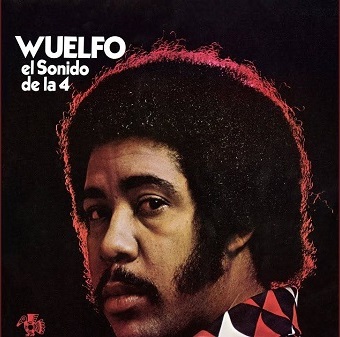
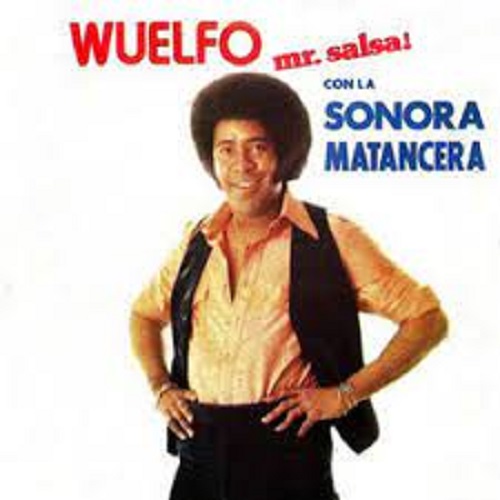
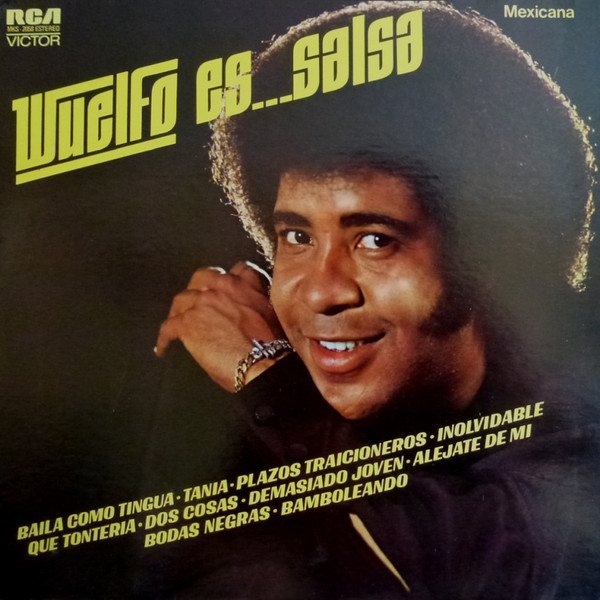
Wuelfo Gutiérrez López was a brilliant Sonero, “El Ultimo de los Matanceros”

Wuelfo Huergo Gutiérrez López, son of Wuelfo the sailor, was born in Santiago de Las Vegas, Cuba on September 23, 1942.

The eldest of three brothers, he was from a very young age an enthusiast of dancing, music and singing.

On May 31, 2005, Wuelfo Gutiérrez López “El Ultimo de los Matanceros” passed away.

He was a brilliant Sonero of outstanding participation with “La Sonora Matancera”, Orquesta de Javier Vásquez, “Orquesta Harlow”, and his own group, which he founded in Mexico after settling in this country.

He gave as much luster to his small homeland as to the big one: in the 70’s he was the singer of the famous “Sonora Matancera”, the pioneer of the Cuban ensembles.

At the end of the 50’s he organized together with three other coterráneos, Juan Luis Cobo, Manolito Santos, and Rolando (Rolo, E.P.D.) González, a quartet called “The Fraterns” (Los Fraternos), in the style of the American school of famous quartets like “The Platters”, “The Drifters”, “Frankie Lymon and the Teenagers”, and others that marked a guideline in the history of “Rock and Roll” and the so-called “Doo Wop”, which is a choral sound characteristic of these groups of the decades of the 50s and 60s.

Around 1958, the group appeared in the well-known José Antonio Alonso’s program of the then powerful Cuban television, which was a continuity of “La Corte Suprema del Arte” of the Cuban radio, initiated in 1938, from where great figures of the Cuban music came out. Substantial changes took place in our country and soon after “Rock and Roll”, at least in Cuba, fell into silence.

Wuelfo left Cuba in mid-1961. I did not see him again (although I always knew about him through his brothers Juan and Gabriel) until 1979, when he returned to visit his native land.

Always with the same sympathy and friendly and popular simplicity that characterized him.

At that time he had already been with “La Sonora Matancera”; the great singer Roberto Torres, “El Güinero Mayor”, who was leaving his place in the Sonora to form his own group, introduced him to the director Rogelio Martinez, who accepted him immediately.

He remained with La Sonora from 1973 to 1976, with which he visited the U.S.A., Mexico and most of Latin America. He recorded, among sones and guarachas, 20 numbers of diverse musical authors, among them: “Anacaona”, by Tite Curet Alonso; “A Burujón Puñao”, by José Carbó Menéndez; “Así Se Compone Un Son”, by Ismael Miranda; “Muñeco Viajero”, by Carlos and Mario Rigual; and “El Chivo”, by our late compoblano Vinicio Gonzaléz, one of our santiagueras glories, among other authors.

When he left La Sonora due to disagreements with Don Rogelio, he settled definitively in Mexico, which became his second homeland.

In Mexico City he formed his own group, which he named “Sonora Las Vegas”, alluding to the person who made him known as a singer and gave him celebrity, and to his hometown, therefore Las Vegas.

He began to be called “Mister Salsa” working in radio, television and cabarets. He loved Mexico very much; in an interview he said: “because the people are tasty and because I feel at home here”.

In Mexico he married Miss Araceli Zoreda Pérez, from whose marriage there were no children; the union was interrupted by Araceli’s death several years later.

The year 1989 marked the 65th anniversary of the founding of “La Tuna Liberal”, among other names, which achieved notoriety in Cuba and internationally under the name of Sonora Matancera. So that this date would not be overlooked, the notable Puerto Rican journalist, broadcaster and producer Gilda Mirós had the happy initiative to gather all the singers alive at that time who had left their art with La Sonora Matancera.

The event was to be held in New York City. Wuelfo was there singing “Anacaona”, together with a true constellation of stars: Vicentico Valdés, Yayo El Indio, Celio Gonzaléz, Nelson Pinedo, Carlos Argentino, Bobby Capó, Alberto Beltrán, Leo Marini, Albertico Pérez, Roberto Torres, Jorge Maldonado, Daniel Santos, and the greatest female voice Cuba has ever produced: Celia Cruz.

In July 1995 I met my friend again, when Wuelfo arrived from Mexico invited to the celebration of our patron saint, Santiago Apostle, in the halls of the former Radisson Hotel in Miami. Among those present sang Amado Herrera (Maninito), José Antonio García (Chamaco), and Wuelfo. All the santiagueros present recognized our values; among them were Wuelfo Sr. and other close relatives.

I did not see him again until 1999, when a group of santiagueros friends welcomed him to Miami, where he intended to settle down. It was not possible.

Wuelfo’s last recording?

He had spoken to me about sending me his recordings with the idea of getting them to some radio stations so that they would know him, and in turn, to some places where records were sold to see if I would have the opportunity to play his recordings, among them the 14 LPs he had recorded and possibly his last recording, a CD called “Wuelfo Cumbia Del Gato Volador”, which he kindly sent me from Mexico.

He spent long periods of time in Veracruz, where he felt at home and his performances were strongly applauded. To such an extent that the government of the state of Veracruz, in November 2003, offered him a just tribute in the framework of the Festival del Son (first photo, above right). On that occasion he performed with his “Sonora Las Vegas” at the La Reforma Theater and the Atarazanas Cultural Center.

Wuelfo, Lázaro Reutilio Domínguez (son of Celina González and Reutilio Domínguez), and the author meet by chance at the “Palacio de los Jugos” on 8th Street and 143rd Avenue in Southwest Miami.

Like many other singers, he dreamed of spending the rest of his life singing; he wanted to die on the stage. Apparently an oversight in his health was complicated by prostate cancer. We would talk on the phone from time to time and he would show me that he was very optimistic, but he was not. In 2004 he underwent intensive treatment at the Oncology Hospital of the Centro Medico Nacional Siglo XXI in Mexico City, but the initial illness led to pulmonary complications which in turn caused a stroke that took his life on May 31, 2005.

According to a friend who assisted him until the last hour, it was very sad to see how his life was passing away.

The Sindicato Único de Trabajadores de la Música had been carrying out activities to collect funds to help him financially.

He was buried in the American Pantheon at 11:00 a.m. on June 1, 2005.

It seems to me very fair to remember this value of ours six years after his departure, remaining in our local history along with other celebrities that also in due time it will be necessary to give them the merit they deserve, not only for future generations to know them, but at present there are coterráneos that for lack of the required information, and against our will, do not know anything about them.

This small biography is not even remotely all that can be known and said of Wuelfo, because there are stages unknown by the writer, who urges those who know and wish, to make their contribution to know much more of our singer friend, who had the honor of going down in posterity, perhaps without him thinking about it, for having sung with that great musical group that was and is La Sonora Matancera.

This work would not have been possible if he had not had the help of Dr. Héctor Ramírez Bedoya. Héctor Ramírez Bedoya, Colombian anesthesiologist who helps many to mitigate their ills through surgery in his native Medellín, but who as a musicographer, and from the presidency of the Corporación Club Sonora Matancera de Antioquia, has had the merit of having written the “Historia de la Sonora Matancera y sus Estrellas”, a book of the same title published in 1996, which is considered the greatest work ever written about the dean of the Cuban ensembles.


Home

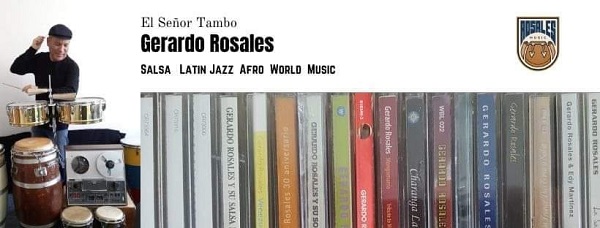
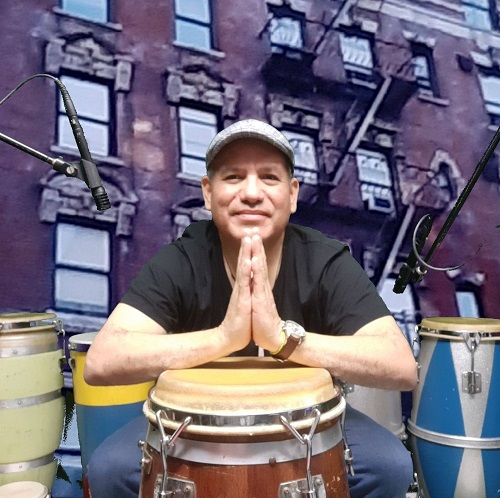
Gerardo Rosales is the creator and producer of Combo Mundial, Venezuela Masters and Charanga La Crisis

Gerardo Rosales was born in Caracas Venezuela on July 6, 1964. At the beginning of his musical career he was a percussionist for important figures of his country.

He has been living in Europe since 1992, and has taken up residence in Holland, a country that has served as a base for him to project his music around the world.

He has recorded 20 albums under his own name and more than 70 productions with other artists.

Gerardo Rosales’ specialty is creating musical projects in the styles of salsa and Latin jazz.

Gerardo Rosales is the creator and producer of El Combo Mundial, Venezuela Masters, Charanga La Crisis, Our Latin Groove, La Gran Charanga, Son del Sofá, Rítmico y Pianístico, Cachao Sounds and many more.

In his beginnings in his country Venezuela he performed with:  Orquesta Café, Orlando Poleo, José Rosario, Canelita, Soledad Bravo, Adrenalina Caribe, Ilan Chester, Cecilia Todd, Víctor Cuica, Alberto Naranjo, El Trabuco Venezolano, Joe Ruiz, Tabaco, Los Satélites, Nancy Ramos, Wilmer Lozano,Watussi, Trina Medina etc.

In Europe he has performed with: The Rosenberg Trio, Saskia Laroo, Hans Dulfer, Benjamin Herman, Peter Beets, Tango Extremo, Drums United, Nueva Manteca, New Cool Collective, Fra Fra Sound, Denisse Jannah, Laura Fygi, Izaline Calister, Metropole Orchestra, Holanda Big Band, Cubop City Big Band, Lilian Vieira, Rolf Sanchez, ChaChaChalina y Maite Hontelé etc.

Gerardo Rosales has accompanied on tours, recordings and performances in Europe artists such as Dee Dee Bridgewater, Benny Bailey, Paquito D Rivera, Bebo Valdés, Toots Thielemans, Jimmy Bosch, Juan Pablo Torres, Herman Olivera, Oscar D León, José Alberto El Canario “, Andy Montañéz, Meñique, Edy Martínez, Carlos” Patato “Valdés, Conexión Latina, Orlando Valle” Maraca “, Alfredo Rodríguez, Armando Peraza, Luisito Quintero, Ramón Valle, Larry Harlow, Adalberto Santiago, Frankie Vázquez, Oscar Hernandez, Africando, Chamaco Rivera, Luisito Carrion, Jorge Herrera, Edgar Dolor, Dorance Lorza, Luisito Rosario, Watussi, David Cada, and Tito Allen, etc.

The Records of Gerardo Rosales:

2016 Gerardo Rosales “Salsa Vintage” (Download – CD – LP)

2014 Gerardo Rosales “Son Del Sofa” (Single) ITunes

2013 Gerardo Rosales “Síguelo” (CD).

2011 Gerardo Rosales “Chano Pozo’s Music” (CD).

2011 Gerardo Rosales “30 Aniversario” (CD).

2010 Cachao Sounds “La Descarga Continúa” (CD).

2010 Gerardo Rosales “Buscando Chamba” (CD).

2009 Venezuelan Masters Orchestra “Toros y Salsa” (CD).

2008 Gerardo Rosales “Salsa Mundial” (CD).

2007 Our Latin Groove “Bringin’ it All On Back” (CD).

2005 Gerardo Rosales “Mongomanía” (CD).

2005 Charanga La Crisis “Salsa Antigua” (CD).

2004 Gerardo Rosales “Tribute to Fania” (CD).

2001 Gerardo Rosales “La Salsa es mi Vida” (CD).

2001 Gerardo Rosales & Edy Martínez “Rítmico y Pianístico” (CD).

1999 Gerardo Rosales “El Venezolano” (CD).

1998 Gerardo Rosales “Señor Tambó” (CD).

1996 Gerardo Rosales “Venezuela Sonora” (CD).

1992 Gerardo Rosales “Salsa Pa’lante de Venezuela” (CD).

1991 Gerardo Rosales “Salsa Pa’Lante de Venezuela” (33 RPM Vinyl).

Algunos discos grabados por Gerardo Rosales con otros Artista:

Orquesta Cafe “Criollisima” 1987 (Fama) Venezuela ( Salsa )

Joe Ruiz – Javier Plaza – Jose Torres – Gerardo Rosales

Bebo Valdes “Rides Again” 1994 ( Messidor) Germany ( Latin Jazz )

Paquito D Rivera – Patato Valdes – Amadito Valdes – Gerardo Rosales

Conexion Latina – “La Conexion” 1996 (Enja) Germany ( Salsa )

Rudi Fuesers – Leslie Lopez- Anthony Martinez – Nicky Marrero – Gerardo Rosales

David Rohschild “Looking Up” 1997 (Via) The Netherlands ( Salsa )

Adalberto Santiago – Banjamin Herman – Gerardo Rosales

Leslie Lopez “Bomba Moderna” 1999 (Buitenkunst) The Netherlands (Latin Jazz)

Ramon Valle – Joe Rivera – Nils Fischer – Gerardo Rosales

The Rosemberg Trio “Suenos Gitanos” 2001 (Polydor) The Netherlands ( Latin )

Toots Thielemans – Leonardo Amuedo – Gerardo Rosales

Ronal Snijders “Bijlmerjazz 2004 (Independent) The Netherlands (Jazz)

Randal Corsen – Jesse van Ruller – Gerardo Rosales

Cubop City Big Band “Arsenio 2004 (Tam Tam) 2004 The Netherlands (Cuban)

Lucas van Merwijjk – Edy Martinez – Nelson Gonzalez – Gerardo Rosales

Drums United “World of Rhythm” 2006 (Tam Tam) 2004 The Netherlands (World Music)

Lucas van Merwijk – Nils Fischer – Aly N ‘ Diaye Rose – Gerardo Rosales

Samba Salad – Metropol Orkest “Live Vredenburg” 2006 The Netherlands (World Music)

Herman Link – Dick Bakker – Maurice Luttikhuis – Rita Iny – Gerardo Rosales

Aquilez Baez “ La Patilla” 2007 (Cacao) Venezuela (Latin Jazz)

Anat Cochen – Huascar Barradas – Diego Alvarez – Gerardo Rosales

Maria Catharina “Obsecion” 2010 (Independent) The Netherlands (Jazz)

Adinda Meertins – Thomas Bottcher – Marc Bischoff – Gerardo Rosales

Masalsa “Resurreccion” 2012 (Independent) The Netherlands (Salsa)

Soeshiel Sharma – Ray de La Paz – Marcos Bermudez – Gerardo Rosales

Izaline Calister “Kandela” 2012 (Coast to Coast) The Netherlands (Latin)

Yumarya – Vernon Chatlein – Larc Alban Lotz – Gerardo Rosales

Africando “Viva Africando” 2013 (Sterms Music) France (Salsa)

Boncana Maiga – Oscar Hernandez – Doug Beavers – Luisito Quintero – Gerardo Rosales

Mezcolanza “Headbanger” 2015 (O.A.P Records) The Netherlands (Jazz)

Peter Wenk – Chistof May – David Barker – Mick Paauwe – Gerardo Rosales

Tango Extremo “ Havana” 2015 (JWA) The Netherlands (Latin)

Ben van den Dungen – Rob van Kreeveld – Tanya Schaap – Gerardo Rosales

Orquesta La Potente “ Potente “ 2018 (Independent) Colombia (Salsa)

Coco Ramirez – Guarnizo – Gerardo Rosales

Barry Hay & JB Meijers (Universal Music Group) 2019 The Netherlands ( Pop)

Barry Hay – JB Meijers – Gerardo Rosales

Estrella Acosta “Noche Cubana” 2020 (Independent) ( Cuban) Grammy Nominated

Carlitos Irarragorri – Pedro Luis Pardo – Gerardo Rosales

ChaChaChalina “Mira Antes de Saltar” 2021 (Independent) (Salsa)

Chalina Smit – Dani Brands – Gerardo Rosales

Actuaciones realizadas por Gerardo Rosales en diversos lugares del mundo:

Concerts & Events of Gerardo Rosales:

Poliedro de Caracas: Caracas – Venezuela

Centro Cultural BOD: Caracas – Venezuela

Feria de Cali: Cali -Colombia

North Sea Jazz: Rotterdam – The Netherlands

Toros y Salsa: Dax – France

SOBS: New York – USA

Club Babalu: New York – USA

Expo Sevilla 1992 : Sevilla – España

Festival Latinoamericando: Milano-Italia

Accessible Art Festival: Turquia – Mersin

Bimhuis: Amsterdam – The Netherlands

Melkweg: Amsterdam – The Netherlands

Concertgebouw: Amsterdam – The Netherlands

Paradiso: Amsterdam – The Netherlands

Oosterpoort: Groningen – The Netherlands

Glastonbury Festival: Glastonbury – England

Tabarka Jazz Festival: Tunesia

Music Haal: Berlin – Germany

Las Leyendas Vivas de la Salsa: Medellin – Colombia

Exit Festival: Serbia

La Topa Tolondra: Cali – Colombia

Punto Bare: Cali – Colombia

Cafe Libro: Bogota – Colombia

Bird: Rotterdam – The Netherlands

De Doelen: Rotterdam – The Netherlands

Paard van Troje: Den Haag – The Netherlands

Amazonico:Emiratos Arabes-Dubai

Home

  • « Go to Previous Page
  • Page 1
  • Interim pages omitted …
  • Page 76
  • Page 77
  • Page 78
  • Page 79
  • Page 80
  • Interim pages omitted …
  • Page 116
  • Go to Next Page »

International Salsa Magazine (ISM) is a monthly publication about Salsa activities around the world, that has been publishing since 2007. It is a world network of volunteers coordinated by ISM Magazine. We are working to strengthen all the events by working together.