• Skip to primary navigation
  • Skip to main content

International Salsa Magazine

  • HOME
  • Previous editions
    • 2026
      • ISM / March 2026
      • ISM / February 2026
      • ISM / January 2026
    • 2025
      • ISM / December 2025
      • ISM / November 2025
      • ISM / October 2025
      • ISM / September 2025
      • ISM / August 2025
      • ISM / July 2025
      • ISM / June 2025
      • ISM / May2025
      • ISM / April 2025
      • ISM / March 2025
      • ISM / February 2025
      • ISM / January 2025
    • 2024
      • ISM / December 2024
      • ISM / November 2024
      • ISM / October 2024
      • ISM / September 2024
      • ISM / August 2024
      • ISM / July 2024
      • ISM / June 2024
      • ISM / May 2024
      • ISM / April 2024
      • ISM / March 2024
      • ISM / February 2024
      • ISM / January 2024
    • 2023
      • ISM / December 2023
      • ISM / November 2023
      • ISM / October 2023
      • ISM – September 2023
      • ISM – August 2023
      • ISM July 2023
      • ISM Edition June 2023
      • ISM – May 2023
      • ISM April 2023
      • ISM March 2023
      • ISM February 2023
      • ISM January 2023
    • 2022
      • ISM December 2022
      • ISM November 2022
      • ISM October 2022
      • ISM September 2022
      • ISM August 2022
      • ISM July 2022
      • ISM June 2022
      • ISM May 2022
      • ISM February 2022
      • ISM January 2022
    • 2021
      • ISM December 2021
      • ISM November 2021
      • ISM October – 2021
      • ISM September 2021
      • ISM August 2021
      • ISM July 2021
      • ISM May 2021
      • ISM April 2021
      • ISM June 2021
      • ISM March 2021
      • ISM February 2021
      • ISM January 2021
    • 2020
      • ISM December 2020
      • ISM November 2020
      • ISM October 2020
      • ISM September 2020
      • ISM August 2020
      • ISM July 2020
      • ISM June 2020
      • ISM May 2020
      • ISM April 2020
      • ISM March 2020
      • ISM February 2020
      • ISM January 2020
    • 2019
      • ISM December 2019
      • ISM November 2019
      • ISM October 2019
      • ISM Septembre 2019
      • ISM August 2019
      • ISM July 2019
      • ISM June 2019
  • Download Salsa App
    • Android
    • Apple
  • Spanish

Search Results for: New York

Spanish Harlem Salsa Gallery and its role towards salsa

Spanish Harlem Salsa Gallery and Latin music

The Spanish Harlem Salsa Gallery  is one of those places where every salsa lover in New York should visit since there is plenty to see here. This museum has all kinds of items donated by many renowned artists or relatives of some who had passed away. This collection of valuable possessions has resulted in a set of priceless objects that will bow anyone visiting the facilities of such a special institution out of water.

The Spanish Harlem Salsa Gallery, also known as Spaha Salsa Gallery, can be defined as an institution of a cultural nature whose main purpose is to serve as a reminder of how great our culture is, especially our music. Both residents and visitors of East Harlem, New York, can learn about the salsa genre and its roots as long as they desire. All thanks to a lot of tools, information and many initiatives with which those interested will know all kinds of interesting facts about salsa first hand.

Another of the great objectives pursued by this place is the quest for knowledge about Latin music and the artists involved to offer it to anyone who decides to visit its facilities. That is why both its president Johnny Cruz and the team that helps him have been responsible for creating an inclusive and diverse gallery in which you can appreciate how far Hispanic talent has come by the hand of its top stars.

Johnny Cruz and Rubio Boris presenting their show

Role of the Spaha Salsa Gallery in the dissemination of Latin culture

The role played by the Spaha Salsa Gallery in the dissemination of Latin culture is very important, since these institutions are the ones that manage to arouse the interest of the inhabitants of Harlem and other nearby sectors towards one of the most representative musical genres of Latinity. This has made many other cultural institutions to use this gallery in order to awaken a higher interest in its own activities, which shows extensive cooperation between those who seek to promote anything Latin-related at all costs.

Fortunately, our work is not that complicated to carry out because too many tourists visit New York every day and many of them know that this city was the birthplace of the biggest salsa movement in history, so they are always looking for cultural sports in which you can find information about this set of rhythms and how it emerges in the public arena.
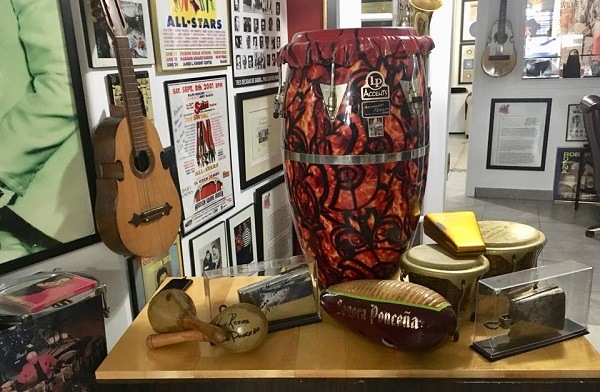
Some instruments donated by La Sonora Ponceña

Who Johnny Cruz is

Johnny Cruz is the founder of the Spaha Salsa Gallery, but there are many other facets by which this talented Puerto Rican is known in the entertainment industry. Cruz is a famous musician and record producer who has worked and make friends with a wide number of artists from all genres, by providing him with the platform to create a true sanctuary for Latin music lovers.

One interesting fact about the museum is that it is located on the plot where a hardware business owned by Johnny’s father used to function, which was made into something completely different thanks to the genius of his son long after. Today, that place contains several of the most invaluable objects in the history of salsa and whose relationship with some of the greatest figures of the genre is legendary.

Link to the official website of the Spaha Salsa gallery: spahasalsagallery.com

By: Johnny Cruz correspondent of International Salsa Magazine in New York City, New York



Frankie Vázquez “El Sonero de todos los Barrios and still going strong” Guatacando

Efrain is a Puerto Rican Sonero Excélsior, he was born in Salinas in La Isla del Encanto.

His father gave him his first conga at the age of 10, and another one two years later, which allowed him to practice to the rhythm of his mother’s records: El Gran Combo, Cortijo and Eddie Palmieri.

His parents helped him to create his own band at the age of 16 “Los Generales” where he played congas; the band played concerts in his father’s restaurant. Suddenly replacing the singer of the orchestra, he becomes better and more popular. He then dedicated himself to singing, without giving up instruments such as congas, timbales, clave, maracas, güiro and bell.

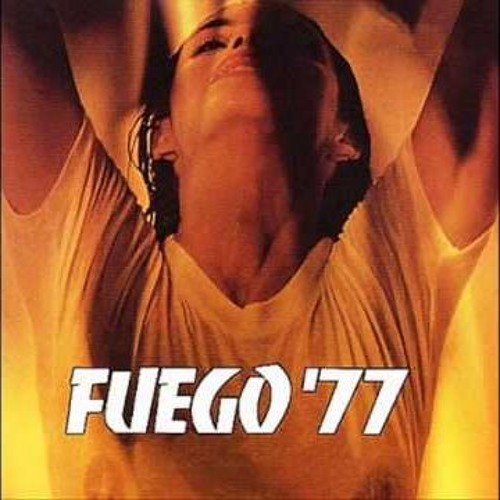
He moved to New York ’77, debuted recording on Al Santiago’s production Fuego ’77 to Alegre by the young band of the same name; Al liner note Frankie described as “enthusiastic, energetic and full of life”, he always chorused and sang lead vocals on the cut “Nueva York”, his cousin David Sanchez handled the remaining lead vocals. Fuego ’77 lasted two years.

Frankie performs: “New York”, where his very young voice is barely recognizable:

“New York site of opportunity

New York the city I love the most

I have a feeling that one day I would make it big”.


In the others, David Sanchez sings and Frankie is on backing vocals. Both are thanked in the credits for having contributed to the sounds.

This album is a wonderful little one, no song disappoints, on the contrary there is a communicative energy from the first to the last song.

“Fuego 77” was a band of young people in their early 20s.

He then spent two years with Sonido Taiborí (Sánchez sang in chorus with Johnny Ortiz and Taiborí ’79 in Fania with lead singer Tito Nieves, founder Ortiz, an outstanding Puerto Rican composer, later left), a year and a half with Orquesta Calidad and intermittently worked for three years with Orquesta Metropolitana.

He joined the “Conjunto Wayne Gorbea Salsa” for five years, providing lead vocals and güiro, accompanying one of the highlights of the Montuno sessions. He replaced Herman Olivera as singer with Manny Oquendo and his “Conjunto Libre” in December 1990, making his debut.

He partnered with pianist Martin Martin, bandleader of the magnificent “Los Soneros del Barrio” Orchestra in 1999.

He has sung with the Lebron Brothers for more than three years, as well as other spectacular company such as New swing Sextet, Leña Moncho, Tony Gonzalez, La Sonora Matancera, Frankie Morales, Delgado Jimmy, Joe Cuba, Jimmy Bosch, Spanish Harlem Orchestra and stop counting with his great success characterized.

He is currently one of the artists who has participated in countless recordings all over the world and even participated as a special guest in the group Dislocados de Ucrania.

His career is very rich and the list of his collaborations that we have just mentioned is not exhaustive.

We hope that the list will grow because we love his way of modulating his voice in each song, with a perfect diction, and his inspirations that enchant us in concert.

Facebook: Frankie Vázquez

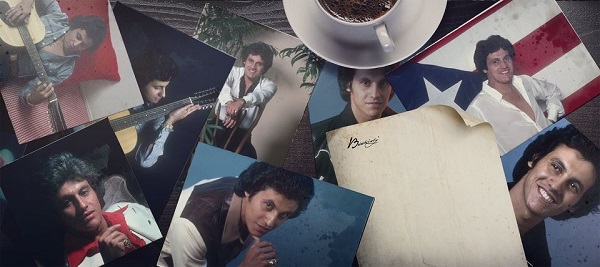
Ismael Miranda Carrero “El Niño Bonito of the Fania All Stars”

Where did Ismael Miranda’s artistic nickname “El Niño Bonito de la Salsa” (The Pretty Boy of Salsa), with which he became known, come from?

I liked to dress up and look nice for the presentations on one occasion I went to the hairdresser’s and bought a suit for the show when I arrived at the hotel, Johnny Pacheco said to me: ‘How nice, the pretty boy is late! As always.

And from that day on they called me “El niño bonito de la salsa” (the pretty boy of salsa). Pacheco gave the nicknames to everyone in the Fania All Stars.

Johnny Pacheco had a lot of faith when he came up with the idea of making this movie and it was a success.

People vibrated with our songs and we took advantage of 4 emblematic concerts to record it.

That’s how we have to walk through life. It is enough to know that we are doing things right to reap triumphs. Said the trumpet player and composer.

Perico also took the opportunity to tell where all that tasty Caribbean rhythm comes from, of which they are such good exponents. “The folklore of Latin American music was born in Africa”. He recalled the first time he arrived with La Fania to this continent. He still has in his mind the gesture of the Africans when he saw people from other parts of the world playing the congas like masters. We all felt proud, he said.

Miranda also recalled that on August 6, 1980, he arrived for the first time in Barranquilla to present a concert with Héctor Lavoe.

“We were used to performing on huge stages and singing with a well achieved sound; in Barranquilla there was nothing like that, but something magical happened, the affection and joy of the people infected us.

Hector and I gave a show of height, at the end we realized that we enjoyed it completely with all the people of Barranquilla.

During the conference, Perico Ortiz explained why he never recorded an album with Las Estrella de la Fania.

“I never recorded an album, but I participated in many concerts. At that moment I felt in my heart that it was time to sing and I told Jerry Masucci to give me the opportunity, but he did not see me as an artist, but as a trumpet player and arranger, so I decided to retire from La Fania and concentrated on recording my first album as a soloist in 1977 titled My Own Image”.

Ismael was born in Aguada, in western Puerto Rico, but as a child his family settled in New York. He began singing in English in school plays when he was only eight years old, and was even part of a children’s group called “Little Junior in the Class Mate”.

Soon after, he began taking singing lessons at a music school at 46th and Broadway, and then to improve his singing skills he studied with a music teacher recommended to him by Tito Rodriguez.

The environment in which he grew up helped him cultivate his love for music. First he wanted to be a percussionist and not a vocalist. That is why at the age of 10 he told his mother of his desire to buy a conga. Later he acquired a bongo, which resounded throughout the neighborhood. He got to play the conga in Andy Harlow’s sextet, and was part of the Sexteto Pipo y su Combo. But he finally turned to singing, for which he was assisted by Ismael Rivera.

He made his first recording in 1967 with José Luis Pastrana Santos, a musician, composer and timbalero from Santurce, known as Joey Pastrana, on the album Let’s Ball.

This album, recorded for the Cotique label, contains Ismael Miranda’s first big hit, the song “Rumbón melón”.

Facebook: Ismael Miranda

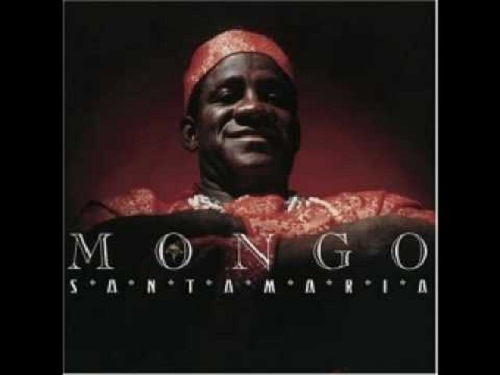
Ramón “Mongo” Santamaría “I wanted to do something that sounded like home”.

April 7, 1917, Mongo Santamaría was born in the Jesús María neighborhood of Havana, Cuba.

Exceptional percussionist of Latin Jazz and related rhythms, whose first name was Ramón Santamaría.

Mongo left to continue playing his Congas hard in the sky on February 1st, 2003.

“I wanted to do something that sounded like home”. With these simple words, Ramón Santamaría Rodríguez “Mongo Santamaría” spoke of his essence.

The purpose of his music pursued a sonority and a memory, possibly located in Cuba, in Jesús María, a marginal neighborhood where he grew up and enjoyed a tradition attached to the drum, to religion, to the street and from where this great Cuban percussionist drank infinitely.

But surely those drums also came to him from far away, from the Congo, where his grandfather came from to be a slave on the island and who also filled his head with sounds full of meanings and colors, which he later masterfully spread around the world.

The name of Mongo Santamaría (Havana, April 7/1917 – Miami, Feb. 1/2003) is, for the glory of all music, an inevitable reference of Cuban percussion.

Since he was a child he knew that his thing was to play the drum and he was lucky enough to belong to a family of empirical musicians, singers and drummers who supported him in the learning and mastery of these instruments.

During his time in Cuba, already a professional musician, he participated in numerous groups that little by little gave him a place among the most outstanding percussionists of the time. Some names of these groups are El Conjunto Boloña, Lecuona Cuban Boys, with whom he was able to participate in the recording of his first album, Conjunto Matamoros, Segundo Grupo de Arsenio Rodríguez, among others.

Each group had its own style and stamp, but in each of them Santamaría put his personal “touch”.

At the prestigious Tropicana cabaret he played with Chano Pozo as a member of Armando Romeu’s orchestra.

From that moment on, his career would not stop. Conjuntos, Septetos de Son were the perfect selection to complete the sap from which he would draw all his style and technique.

Later, from carnival to carnival, he would gather with other percussionists to play in the comparsas and experience the festive musical atmosphere par excellence of those years.

Alongside him played other friends who soon became a Cuban reference in the United States: Patato Valdés and Armando Peraza.

As part of the Tropicana orchestra and located in a show in Mexico, he decided to settle there as did many musicians of his time and came to play with Pérez Prado and Benny Moré.

It was precisely in the latter orchestra where he met Clemente Piquero “Chicho”, another Cuban percussionist whose style made him rethink the role of percussion in Cuban popular orchestras.

Mongo Santamaría belongs to the second wave of Cuban percussionists who arrived in New York in 1950.

His new idea of restructuring and designing his own style in the use of Cuban percussion was perfectly in tune with the reality that a few years earlier was being experienced in the music produced and sold in New York, after the arrival of the Cuban rumbero Chano Pozo.

“The rhythm produced by the conga organizes all the percussion of a band, from which melodies and counter-melodies can be experimented with.”

“I think percussion is the base from which things come out.”

Already in the United States, Mongo plays with Gilberto Valdés, again he is part of Pérez Prado’s orchestra and finally with Tito Puente’s, where he stayed for 7 years. Once in the line of Afro-Cuban jazz, so popular at the time, he joined George Shearing’s group and later the vibraphonist Cal Tjader.

With his own orchestra, he accompanied La Lupe, one of his favorite singers, and undertook projects of novel formats for the time, such as small formations of brass trio, piano, bass, percussion and drums, at a time when jazz bands predominated.

Mongo Santamaría, perhaps without the theatricality to which Chano had accustomed the New York public, focused all his strength on achieving his own sonority, with a fusion of Cuban styles and genres, perfected and deepened in the introduction of Afro-Cuban rhythms with a naturalness and using colorful timbre elements by using several tumbadoras in his set.

His creativity is highly demonstrated in the great amount of music that is part of his catalog of works and the quality becomes indisputable when seeing the amount of outstanding jazz interpreters that version and recreate his work.

In 1959 he recorded Tambores y cantos, which contains the song Afro blue, which over the years became “a jazz anthem of all times”, according to Nat Chediak, author of the Latin Jazz Dictionary.

His long recording career (50 albums), testifies to the musical activity that this great percussionist carried out throughout his professional career. He worked with American jazz legends such as Chick Corea, Herbie Hancock, flutist Hubert Maws, Dizzy Gillespie, trumpeter Marty Seller, among other musicians who today still pay tribute to this Cuban conguero who was the architect of the fusion of rhythm & blues rhythms and Afro-Cuban music, recognized the connection of Cuban music to African roots and placed the congas in an indispensable instrument for the determination of Latin jazz.

In 1977 Mongo Santamaría received the American Grammy Award for “Best Latin Recording” for the work Dawn.

In 1999, Rhyno Record Company, based in Los Angeles, California, recognizing his contribution to Latin Jazz, released the “box set” (CD) Skin On Skin: The Mongo Santamaría Anthology (1958-1995), which includes 34 of his most successful pieces (from his rumba albums, his LP with La Lupe and his projects in the fusion of Jazz and Latin) and an extraordinary literature about his career written by actor Andy García, musician Poncho Sánchez and other connoisseurs of the Latin Jazz genre such as José Rizo, Luis Tamargo, Joel Dorn and Miles Pelich.

The legendary musician was extremely honored and grateful for the distinction Rhyno gave him by introducing this historic anthology to the world. As stated in the conversation with Jaime Torres, Mongo said:

“This is the fruit of many years of work, music made with taste and love.”

May he rest in peace and eternal glory to him.

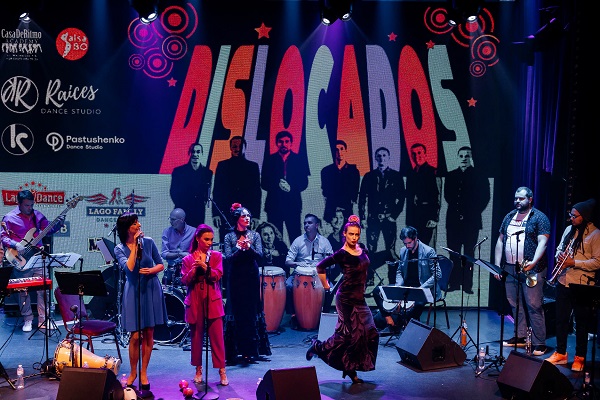
Dislocados is a group from Ukraine that is taking Salsa to the whole world.

Dislocados Ukrainian Latin American band, exploded onto the Kyiv music scene as the Kiev Salsa Kings in November 2005.

Led by Ilya Yeresko, one of Ukraine’s most respected young pianists and composers, with – among others – Dennis Adu (named best jazz musician in Ukraine at the Dodj Competition 2009) they started playing in Kyiv’s best live music bars.

This first salsa band in Ukraine was soon joined by Karolina Patocki and Lesya Zdorovetskaya, finalizing the group’s vocal flavor, and now the 10-piece band has become a force to be reckoned with in the country.

Dislocados’ new name, literally translated as “dislocated”, plays on the crazy personality of the band, and the idea that the birth country of the musicians does not dictate their musical direction and expertise.

While continuing to perform three times a week to live audiences around Ukraine, on February 10th 2008, Dislocados made its world debut by being the first international Hard Salsa band aired on Hard Salsa Radio and on WHUT 91.9 FM in New York City with their promotional song “Resaca.”

Minutes after “Resaca” aired, emails poured in like wildfire from worldwide listeners asking for more information on this particular band from an unknown land, which led to Dislocados’ inclusion in Salsa Dura Mundial, a worldwide salsa compilation album out of New York from Latin Soul Records.

After gaining popularity in New York and Western Europe, Dislocados released the first salsa album to come out of Ukraine, with an intro written by salsa legend Andy Harlow, featuring ten original salsa tracks, inspired from Puerto Rico, New York, and Cuba.

Since its release, La Salida has enjoyed overwhelming international praise from top musicians such as Jimmy Bosch and Andy Harlow, promotion from top respected salsa review sites such as descarga.com and has led to the band’s inclusion in international salsa projects, such as the Summer Salsa Festival in Stockholm where the band played with Huey Dunbar, of DLG fame.

Dislocados’ internationally recognized top musicianship is now the vehicle by which they try to popularize the musical style of Hard Salsa in Ukraine in order to include their country among the list of top contenders for worldwide attention in the genre.

Awards:

Winner of the Independent Music Awards 2012 with Best Latin Song, ¨Como Tú¨.

Winner of the Independent Music Awards’ Vox Pop Award for Best Latin Album 2012, ¨Pasaporte Universal¨.

Winner of the Independent Music Awards’ Vox Pop Award for Best Holiday Song 2012, ¨Navidad en Heathrow¨.

Winner of the Independent Music Awards’ Vox Pop Award for Best Latin Song 2012, ¨Como Tú¨.

Winner of the Independent Music Awards’ Vox Pop Award for Best Latin Album 2011, ¨La Salida¨.

Facebook: Dislocados

  • « Go to Previous Page
  • Page 1
  • Interim pages omitted …
  • Page 80
  • Page 81
  • Page 82
  • Page 83
  • Page 84
  • Interim pages omitted …
  • Page 116
  • Go to Next Page »

International Salsa Magazine (ISM) is a monthly publication about Salsa activities around the world, that has been publishing since 2007. It is a world network of volunteers coordinated by ISM Magazine. We are working to strengthen all the events by working together.