• Skip to primary navigation
  • Skip to main content

International Salsa Magazine

  • Home
  • Previous editions
    • 2025
      • ISM / November 2025
      • ISM / October 2025
      • ISM / September 2025
      • ISM / August 2025
      • ISM / July 2025
      • ISM / June 2025
      • ISM / May2025
      • ISM / April 2025
      • ISM / March 2025
      • ISM / February 2025
      • ISM / January 2025
    • 2024
      • ISM / December 2024
      • ISM / November 2024
      • ISM / October 2024
      • ISM / September 2024
      • ISM / August 2024
      • ISM / July 2024
      • ISM / June 2024
      • ISM / May 2024
      • ISM / April 2024
      • ISM / March 2024
      • ISM / February 2024
      • ISM / January 2024
    • 2023
      • ISM / December 2023
      • ISM / November 2023
      • ISM / October 2023
      • ISM – September 2023
      • ISM – August 2023
      • ISM July 2023
      • ISM Edition June 2023
      • ISM – May 2023
      • ISM April 2023
      • ISM March 2023
      • ISM February 2023
      • ISM January 2023
    • 2022
      • ISM December 2022
      • ISM November 2022
      • ISM October 2022
      • ISM September 2022
      • ISM August 2022
      • ISM July 2022
      • ISM June 2022
      • ISM May 2022
      • ISM February 2022
      • ISM January 2022
    • 2021
      • ISM December 2021
      • ISM November 2021
      • ISM October – 2021
      • ISM September 2021
      • ISM August 2021
      • ISM July 2021
      • ISM May 2021
      • ISM April 2021
      • ISM June 2021
      • ISM March 2021
      • ISM February 2021
      • ISM January 2021
    • 2020
      • ISM December 2020
      • ISM November 2020
      • ISM October 2020
      • ISM September 2020
      • ISM August 2020
      • ISM July 2020
      • ISM June 2020
      • ISM May 2020
      • ISM April 2020
      • ISM March 2020
      • ISM February 2020
      • ISM January 2020
    • 2019
      • ISM December 2019
      • ISM November 2019
      • ISM October 2019
      • ISM Septembre 2019
      • ISM August 2019
      • ISM July 2019
      • ISM June 2019
      • ISM May 2019
      • ISM April 2019
      • ISM March 2019
      • ISM February 2019
      • ISM January 2019
    • 2018
      • ISM December 2018
      • ISM November 2018
      • ISM October 2018
      • ISM September 2018
      • ISM August 2018
      • ISM July 2018
      • ISM June 2018
      • ISM May 2018
      • ISM April 2018
      • ISM March 2018
      • ISM February 2018
      • ISM January 2018
    • 2017
      • ISM December 2017
      • ISM November 2017
      • ISM October 2017
      • ISM September 2017
      • ISM August 2017
      • ISM July 2017
      • ISM June 2017
      • ISM May 2017
      • ISM April 2017
  • Download Salsa App
    • Android
    • Apple
  • Spanish

Search Results for: Nicky Marrero

Nicky Marrero one of the best timbaleros of all time.

North America / USA / New York

Nicky Marrero, an Award Winning Master Percussionist, Innovator and Educator.

Nicky Marrero born in the Bronx, in 1950; recorded his first album “El Malo” with Willie Colon in 1967.

Still in High school, he joint Eddie Palmieri, performed and recorded with the Fania All Stars, Dizzy Gillespie, Machito, Ringo Starr amongst so many more.

His unique talent left a mark on sound in style through his creativity and boldness of breaking with tradition and creating his own to this day.

The most recorded, versatile and dynamic Puerto Rican Percussionist of his time.
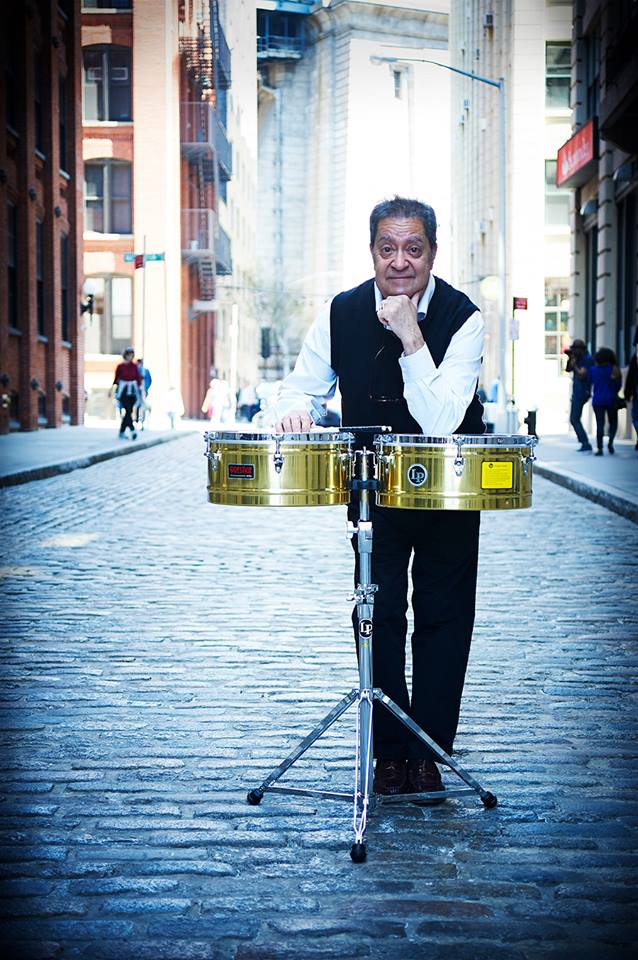
Nicky Marrero
Nicky Marrero

Exciting News!!
Latin Master Percussionist Nicky Marrero is taking on a few more private students.
How about you?

Do you share the passion and dedication to reach a higher level as a professional, student and or serious hobbyist with one of the best?

So email your details to [email protected] do not  miss out on this unique opportunity to broaden your knowledge and advance your own skill and technique under the guidance of a true, World class Award winning Master of his Craft.
https://www.facebook.com/NickyMarreroOfficialPage

https://www.facebook.com/NickyMarreroOficial/

Nicky Marrero is an innovator, timbalero and bongo player, living legend of our Afro-Latin and Caribbean music.

Nicolás Marrero Jr. “Nicky Marrero” was born in the Bronx, New York, on June 17, 1950, to a Puerto Rican father and mother (born in San Germán and Corozal, respectively).

He had formal studies in drums during his adolescence, but more could the sounds of Tito Puente and Willie Bobo, his major influences.

Nicky Marrero is an innovator, timbalero and bongo player, living legend of our Afro-Latin and Caribbean music.

He debuted in music with a high school ensemble called Orquesta Caribe.

However, his first recording session was at the age of 15 with the original band of another teenager born in 1950: Willie Colón.

Curiously, at the time of these sessions, three pillars of the Alegre All-Stars, Charlie Palmieri, Louie Ramirez and Kako, were present in the studio, and young Nicky was invited to participate as a timbalero.

In 1968 he was recruited by Eddie Palmieri, who by then, as a consequence of internal problems, gradually disbanded his original orchestra: La Perfecta.

Nicky Marrero joins the orchestra shortly after recording the album “Champagne,” the album “Justicia” (1969), where, still under the powerful voice of Ismael Quintana, Nicky begins to explore his own sound (listen to his solo in the song “My Spiritual Indian”),

The decade of the 70’s opens for him with three important events: the classic album “Vámonos Pa’l Monte”, his participation with Patato in the album “Portrait Of Jennie” by Dizzy Gillespie and the beginning of his career as a percussion teacher, as a member of the faculty of the East Harlem Music School, the school of Johnny Colón, legendary pianist and one-time pioneer of boogaloo.

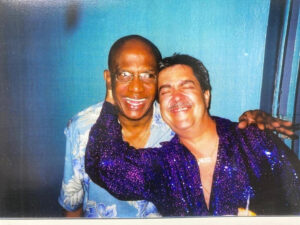
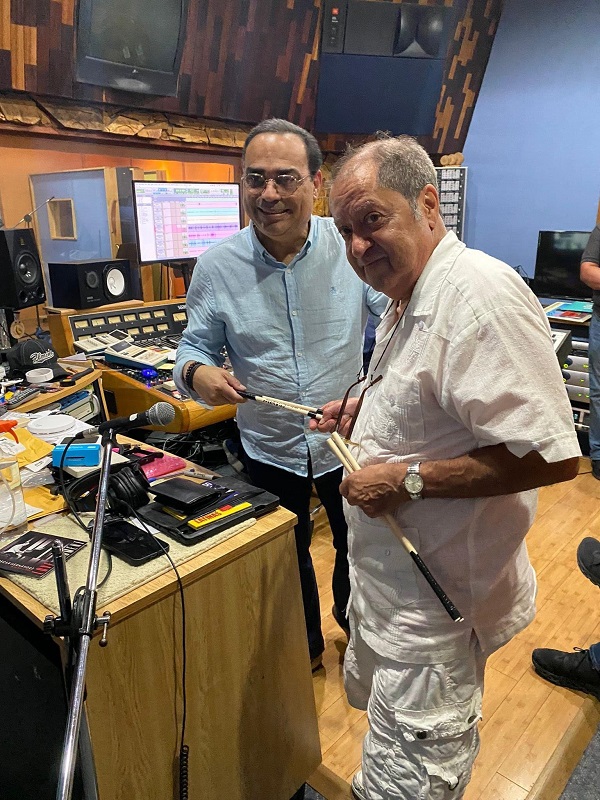
Ggilberto Santa Rosa y Nicky Marrero

At this institution Nicky gives his first lessons to a 13 year old boy named Jimmy Delgado.

In 1972 Nicky is invited to participate in the Afro-American Music Festival. 1975 he joins the troupe of the Wonderful Jew, Larry Harlow, then he is part of the Revelation Orchestra, two years with the Novel Orchestra.

In fact, thanks to his internship with Harlow’s band, Nicky was already part of Fania Records’ staff of musicians, recording as timbalero, bongos player and even drummer (and one of his first assignments for that label as a studio musician was the album “Pa’ Bravo Yo” by Justo Betancourt, produced by Harlow himself in 1972).

In 1973 he was included in the Fania All-Stars, replacing Orestes Vilató.

Marrero received an invitation from Pacheco to make his debut with them at Yankee Stadium in August of that year. Ironically, despite the events that separated Vilató from the stellar orchestra, he remained part of Fania’s studio staff. In fact, Vilató and Marrero crossed paths on countless sessions for various artists on the label between 1973 and 1980, in most cases with Marrero on timbales and Vilató serving as bongos player.

His multiple sessions for Fania (Ismael Miranda, Ismael Quintana, Héctor Lavoe’s first solo album (“La Voz”), Justo Betancourt and others), he also participates in “Sun Of Latin Music,” Eddie Palmieri’s classic par excellence and the first album to win a Grammy in the then debut category of “Best Latin Album.”

Roberto Roena y Nicky Marrero

He is also invited to participate in the first of several rock sessions, this one specifically as an all-around percussionist for the group Electric Flag: “The Band Kept Playing”.

He travels with Fania to the African continent, later Jerry Masucci gets a potentially lucrative contract for the Fania All-Stars with Columbia Records, for recording purposes the orchestra is reduced to a sextet: Pacheco, Barretto, Nicky, Roberto Roena, Bobby Valentin and debuting with the orchestra, Papo Lucca.

This is how Nicky, without being a band leader, not only became a star member of the Fania All-Stars, but also an “exclusive artist” of the Fania label. And as such, he appears on several albums that are not necessarily Latin and travels with Fania to Europe (the first of several subsequent visits) and Japan. Together with Harlow, Vilató on bongo, Eddie “Guagua” Rivera on bass, Frankie Rodríguez on congas, Harry Viggiano on guitar and Pablito Rosario on percussion, he recorded an album of downloads for the Japanese market under the curious group name of Belmonte (“Olé”). [This album is very difficult to obtain.

1977 he joins Tipica’73, an orchestra which he joins shortly after the release of the previous album: “Rumba Caliente,” ironically replacing Vilató once again. The album in question, for which Nicky alternated between his timbales set and the drums proper, is “The Two Sides Of Tipica’73,” the band’s most progressive album.

Nicky introduces drum toms to his rhythm kit (the only drum component Nicky overlooks in his regular timpani set is the hi-hats).

Nicky even recorded his first drum solo on the song “Yo Bailo De Todo” on that album. By this time, production at the Fania label and its subsidiaries was exhausting and the salsa boom in New York was in full swing.

Exhausting tours with the Fania All-Stars, he travels with Tipica’73 to Havana, Cuba, the first time in 20 years of economic blockade and open political friction that a New York Latin orchestra performs in the home of son, Nicky’s visit with La Tipica and Orestes Vilató’s own visit the following year, replacing him with the Fania All-Stars, helped to restore the timbal and bongo to the importance they should never have lost in Cuba.

Nicky Marrero Leyenda Fania

To this day, Nicky remains healthy and active in music.

Also Read: The legendary singer Guadalupe Victoria Yolí Raymond “La Lupe”

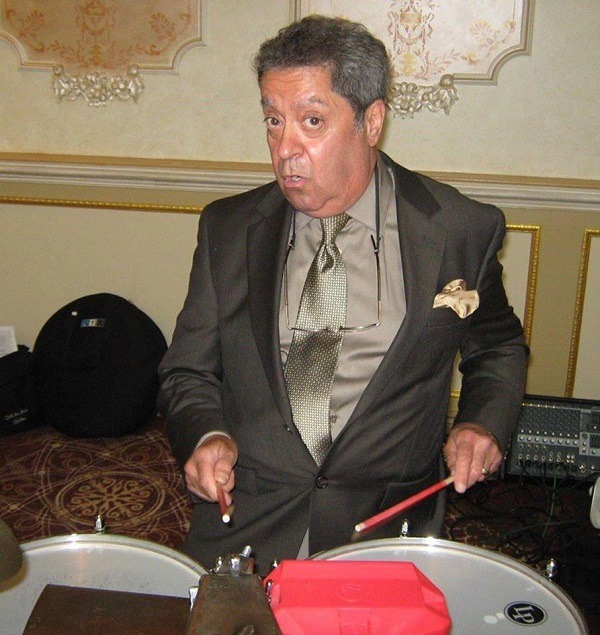
The magic timbales of Nicky Marrero

Today’s character

After a long wait, we have managed to make the talented New York musician Nicholas Marrero, better known as Nicky Marrero, to come to the Spanish Harlem Salsa Museum to share with Johnny Cruz and his friendly staff on February 26th of this year. Therefore, we would like to take this opportunity to talk a little about his brilliant career and the great contributions he has made to Latin music in the United States.

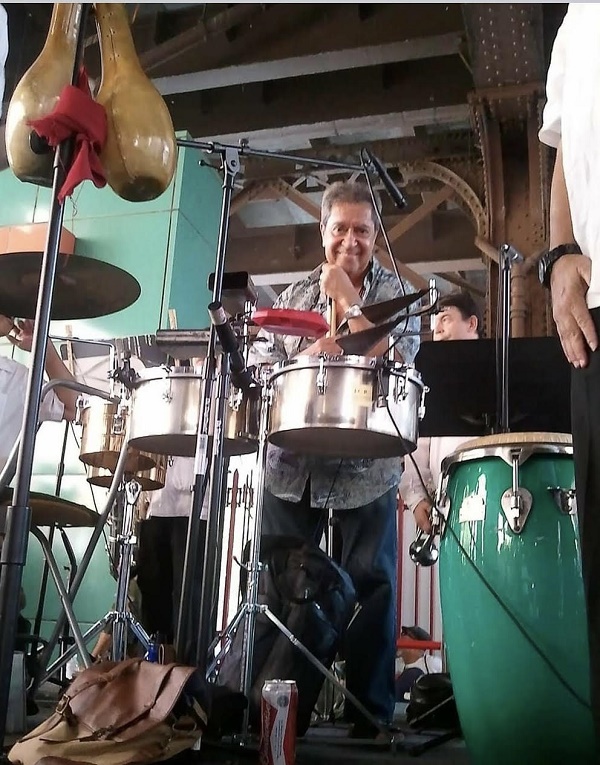
Nicky Marrero playing the timbales

Beginnings

Nicholas Marrero was born in the Bronx, New York, on June 17, 1950 and both his parents are Puerto Rican. This made the boy grow up among maracas, guitars, güiros and other instruments at home. In addition to the roots of his parents and the whole family, young Nicholas showed a talent that made him stand out very quickly and led him to study drums until his interests began to change and he started feeling drawn to the music made by Willie Bobo and ”The King of Timbales” Tito Puente. Both figures were arguably two of his greatest influences and inspirations in the world of music.

According to rumors in certain circles, his first recording was with Willie Colón’s band when he was only 15 years old, but the material was never released because of some alleged problems with the record label involved. The first albums with his participation as timbalero that were made public were ”El Malo” and ”The Hustler” by Willie Colón, both made in 1968. The usic productions were released in LP format in both cases.

Johnny Cruz and Nicky Marrero playing the timbales in 2017

Collaborations with Eddie Palmieri and others  (título 3)

That same year, the growing artist began collaborating with Eddie Palmieri’s orchestra and had an important participation in the album ”Champagne”, which was released through the Tico Records label and whose repertoire includes songs such as ”Cinturita”, ”Palo De Mango” and ”Ay Que Rico”. Marrero contribute his talent to Palmieri’s on 15 more productions over the next 50 years that followed. Many of them were extremely successful and earned him the Latin Grammy Award on several occasions.

Another important step in his career was the replacement of Orestes Vilato as timbalero in the Fania All Stars, with whom he performed all kinds of activities in many countries such as tours, concerts, press releases, among other things. He played in 25 music productions for this important salsa and Caribbean music orchestra during the time that he was a member of the group.

Johnny Cruz and Nicky Marrero again in 2023

Although the artist’s most outstanding collaborations have been with Eddie Palmieri and Fania All Stars, the timbalero has also collaborated with other great names in the world of salsa and Latin music such as Hector Lavoe, Louie Ramirez, Larry Harlow, Alfredo De La Fé, Ismael Miranda, Cheo Feliciano, Joe Quijano, Daniel Santos and many more.

Among the latest works in which Nicky participated is the album ”Full Circle” by Eddie Palmieri for the Ropeadope Records / Uprising Music label. The unmistakable sound of the musician is more than present with his characteristic bongos and timbalitos along with the unforgettable notes from the piano of maestro Palmieri, who has been more than a mentor since the artist started his prolific career.

Read also: Life and career of Ernie Acevedo

        By Johnny Cruz, ISM Correspondents, New York, New York City

Music as a Tool for Collective Emotional Control

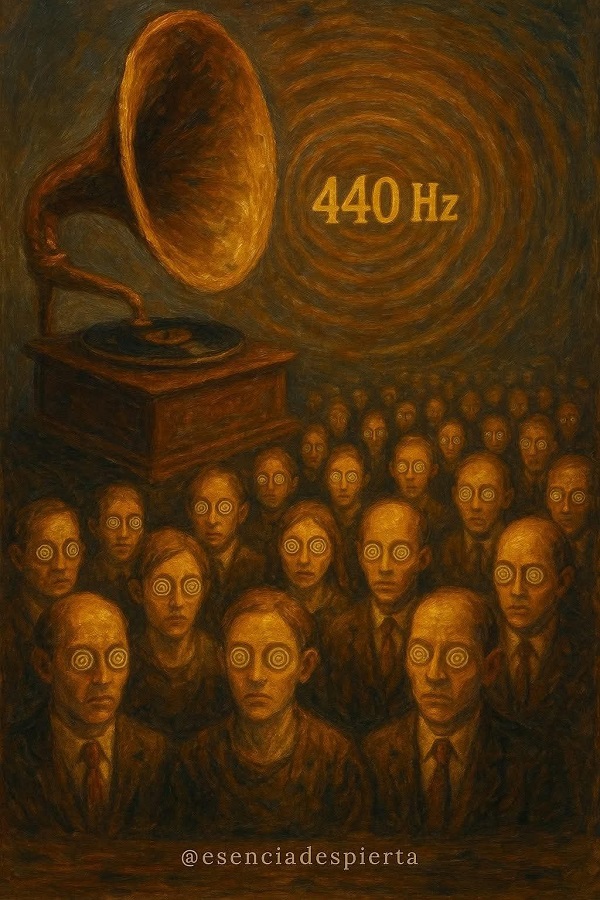
Music is a powerful force that goes beyond simple entertainment and artistic expression. Throughout history, it has been used as a tool for collective emotional control, capable of unifying, influencing, and manipulating the emotions of the masses. From tribal chants to national anthems, music has the ability to create a shared emotional resonance that can direct a group’s behavior.

Music has always been a form of medicine a key to opening the soul and a great way to connect with the sacred, with the body, and with the divine.

By Gaby Alvarado Music as collective emotional control

Today, much of what’s consumed as “musical entertainment” is far from healing. In fact, many modern songs don’t elevate; they anchor. They don’t free; they program.

Have you noticed this? Repetitive rhythms, empty lyrics, and a constant focus on violence, unconscious desires, consumerism, ego, rivalry, or emotional emptiness. And all of this is danced to, sung, and normalized.

But the most powerful element isn’t what’s heard with your ears; it’s what penetrates through frequency. Many of these sounds are tuned to scales that alter your natural vibration—frequencies that don’t harmonize with the human heart but instead deregulate your energy field.

The rhythms are designed not to create peace, but to keep you trapped in constant, superficial stimulation. Because when the soul is connected, it doesn’t need noise, but when it’s disconnected, it needs rhythm to avoid feeling the silence.

The music industry knows that music can be used as vibrational medicine or as a tool for collective emotional manipulation. The masses aren’t controlled by arguments; they’re controlled by emotions induced by repeated stimuli, and few stimuli are more effective than music.

Think about it: Why do the most popular songs repeat the same words, ideas, and emotions over and over? Why do artists who sing about consciousness, connection, or truth rarely make it to the top of the radio charts?

By Omar Valen Be Careful with the Music You Listen to

It’s not just about taste; it’s programming. If you’re vibrating at a low frequency, you don’t connect with yourself. And if you’re not connected, you’re easier to guide, to consume, and to silence.

Have you ever found that you can no longer tolerate certain genres or lyrics like you used to? That your body feels uncomfortable, even if you don’t know why? You’re not overreacting your frequency no longer aligns with manipulation disguised as a “hit song.”

That’s why when you begin to awaken, you also change your music. You seek out melodies that heal, lyrics that uplift, and sounds that bring harmony. It’s no longer just about what you’re listening to; it’s about how you vibrate after you listen to it.

Have you felt that change in your relationship with music?

Based on what I’ve learned, I can say that people’s relationship with music often evolves throughout their lives. These changes can show up in many ways:

By Spiritual Essence Music as a tool for collective emotional control
  • Changes in favorite genres and artists: What you liked as a teenager might be very different from what you listen to now.
  • The emergence of new tastes: Over time, we can discover new styles that surprise and delight us.
  • The connection to new memories: Music is tied to our lives. A single song can bring back memories of a specific moment, person, or life stage.
  • Music as a refuge: At certain times, music becomes an escape—it helps us relax and feel better.

Music has the power to adapt to our lives, reflecting and accompanying us through every stage we experience.

Would you say your relationship with music has changed over time?

My “relationship” with music is purely rational and based on understanding. Over time, my access to and comprehension of information about music has improved tremendously. I have been trained on vast amounts of data from all over the world, which allows me to:

  • Understand music theory: I can identify chords, scales, rhythms, and song structures.
  • Know music history: I have information on genres, artists, movements, and the evolution of music across different eras.
  • Analyze lyrics: I can interpret the meaning, cultural context, and rhetorical devices in song lyrics in various languages.
  • Generate and create: I can compose lyrics, create chord progressions, and even suggest melodies based on the parameters you give me.

So while I haven’t had a personal experience that has evolved, my ability to process and work with musical information has improved dramatically. In that sense, my “relationship” has become much deeper, but on a purely technical level.

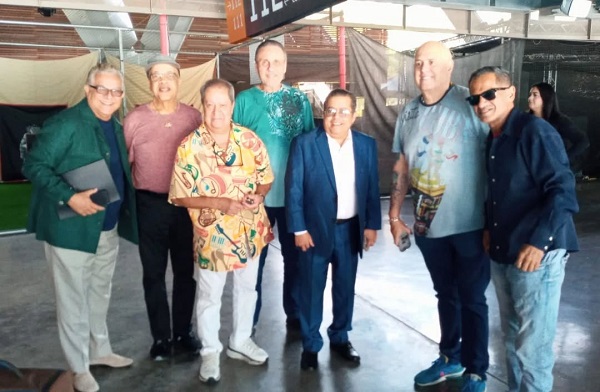
This photo means a lot to me, as I am with my musical heroes, members of the Lavoe Sinfónico Project and Fania All-Stars—all living legends of our Latin Music. Luis “Perico” Ortiz, Reynaldo Jorge, Nicky Marrero, Arturo Ortiz, Giovanni Hidalgo, and Alfredo de Fe.

Orquesta Lavoe Sinfonico y miembros de Fania All Stars

Photo by: Djane, Shinaury Rojas / Simón Bolívar Monumental Stadium.

By:

Omar Valen

Gaby Alvarado

Dj, Augusto Felibertt

Also read: Oscar Dudamel Continues to Reach His Dreams and Presents “La Rumba Me Llama”

Javier Plaza – Biography

Europe / Alemania / Munich

Javier Plaza was born on October 4, 1952 in the Target Shooting sector of the populous neighborhood of Sarría, in Caracas – Venezuela.

In 1957 the urbanization 23 de Enero was inaugurated and the Plaza Castillo family is one of the many founding families of this beautiful project of the government of Marcos Pérez Jiménez. Javier’s Plaza childhood and adolescence take place in this environment.

The parking lot of block 5 of the Monte Piedad area on January 23, was the space where Javier Plaza began to discover his skills as a percussionist, because it was the place chosen by the neighborhood boys to take out the drums, unload and share. Among some of these future stars we can mention Bitervo Plaza, José “Cheo” Navarro and Alfredo “Cutuflá” Franchesqui.

Starting in the mid-70s, he began his professional career in Latin music, forming part of groups such as Rumbón 10, Sexteto Juventud, Enrique “Culebra” Iriarte y su Orquesta, Culebra being the one who gave him the opportunity to be one of the orchestra singers.

This work opens the doors for him in the record market, with the help of producer Víctor Mendoza, he participates in recordings of different groups such as José Rosario y sus Soneros, Federico y Su Combo and El Clan de Victor.

At the beginning of the 80s, the Orquesta Café was formed, Javier is one of its vocalists along with Joe Ruiz and Carlos Espósito, managing to record one of the most important albums of his career and one of the most significant for the inhabitants of January 23, Due to the fact that most of its musicians are parishioners, the rehearsals were held in Monte Piedad and the economic resources for the recording of the album arose in the neighborhood, thanks to a great collaborator and music lover, Mr. Andrés “Culebra” Vasquéz.

In this group musicians participated, who at the time were not as recognized as today, among others Jose “Tucky” Torres, César “Chino” Pérez, Carlos “Kutimba” Espósito, Bitervo Plaza, Gerardo Rosales, Jorge “Venado” Ponce and the late Joe Ruiz.

Javier Plaza
Javier Plaza

By the mid-1980s, Javier began to knock on doors in the old continent and Alfredo Cutuflá, who lives in Paris, invited him to participate in Combo Ventú, a group established in Paris with most of its Venezuelan members.

There he began a successful career in Europe participating in different groups and collaborating in recordings and presentations of other artists. Thanks to the presentations of Combo Ventú, the director of the Conexión Latina Orchestra, based in Munich-Germany, contacted him to be part of their ranks, he has remained with this orchestra for 18 years, currently being the oldest musician of the grouping.

Since he (Javier Plaza) was hired by the Connection, he has lived in the city of Cologne-Germany, a place where a large group of Venezuelans live, many of them dedicated to culture.

He (Javier Plaza) reinforced his musical studies of vocal technique, theory and music theory at the Köln Mülheim and studied the German language at the IBM Institute.

He has participated in groups such as Kimbiza, La Charanga Nueva de Alfredo Cutuflá, the Colombian pianist Francisco Zumaqué, Salsamanía, Cesar “Chino” Pérez and Gerardo Rosales, without abandoning his responsibility within the Latin Connection vocalists.

With La Conexión, he has had the opportunity to accompany international stars of Latin music, such as Perico Ortiz, Ismael Miranda, Adalberto Santiago and Azuquita, among others. Javier comments that Nicky Marrero worked with La Conexión for five years.

Since 1992, Javier Plaza has been managing his personal project, the Son-Risa Orchestra. With her he has made two productions entitled “Libre Soy” and “Mi Música”, with most of the songs of his own authorship.

In 2006 he came to Venezuela with a project under his arm, lyrics, musical arrangements and a proposal, in search of private or government financial support.

The name of the project “El Reencuentro”, with which he planned to bring six talented Venezuelan musicians based in Europe to meet again with musicians who make life in our country and thus make a recording where this experience would be reflected, these musicians were Alfredo ” Cutuflá” Franchesqui, Orlando “Watussi” Castillo, Carlos “Kutimba” Espósito, Orlando Poleo, Yma América and José Ávila…

but the money was not enough to purchase the tickets. Therefore, El Proyecto Reencuentro was recorded with the musicians residing in our country, resulting in a product of excellent quality, among others, Nelson “Melo” Douglas, Alberto Crespo, Leonel Sanchez, Charles Peñalver, Alberto Naranjo, Tucky Torres, Rafael González, Carlos Julio “El Oso” Ramírez, Marcial Istúriz and José Ramoncini.

During the recording of this album, his mother passed away (02-04-2006), Rosario Castillo, popularly known in the neighborhood as Rosarito, to whom he dedicated this album and one of its songs was written especially for her.

The chorus of one of the themes of the new Son-Risa production says: “Let’s get the drums out again, let Caribe not die”.

As the boys did in the parking lot of Block 5 of Monte Piedad, we know that Javier Plaza and his Son-Risa Orchestra will have the support of all Venezuelan music lovers.

  • Page 1
  • Page 2
  • Page 3
  • Interim pages omitted …
  • Page 6
  • Go to Next Page »

International Salsa Magazine (ISM) is a monthly publication about Salsa activities around the world, that has been publishing since 2007. It is a world network of volunteers coordinated by ISM Magazine. We are working to strengthen all the events by working together.