• Skip to primary navigation
  • Skip to main content

International Salsa Magazine

  • HOME
  • Previous editions
    • 2026
      • ISM / March 2026
      • ISM / February 2026
      • ISM / January 2026
    • 2025
      • ISM / December 2025
      • ISM / November 2025
      • ISM / October 2025
      • ISM / September 2025
      • ISM / August 2025
      • ISM / July 2025
      • ISM / June 2025
      • ISM / May2025
      • ISM / April 2025
      • ISM / March 2025
      • ISM / February 2025
      • ISM / January 2025
    • 2024
      • ISM / December 2024
      • ISM / November 2024
      • ISM / October 2024
      • ISM / September 2024
      • ISM / August 2024
      • ISM / July 2024
      • ISM / June 2024
      • ISM / May 2024
      • ISM / April 2024
      • ISM / March 2024
      • ISM / February 2024
      • ISM / January 2024
    • 2023
      • ISM / December 2023
      • ISM / November 2023
      • ISM / October 2023
      • ISM – September 2023
      • ISM – August 2023
      • ISM July 2023
      • ISM Edition June 2023
      • ISM – May 2023
      • ISM April 2023
      • ISM March 2023
      • ISM February 2023
      • ISM January 2023
    • 2022
      • ISM December 2022
      • ISM November 2022
      • ISM October 2022
      • ISM September 2022
      • ISM August 2022
      • ISM July 2022
      • ISM June 2022
      • ISM May 2022
      • ISM February 2022
      • ISM January 2022
    • 2021
      • ISM December 2021
      • ISM November 2021
      • ISM October – 2021
      • ISM September 2021
      • ISM August 2021
      • ISM July 2021
      • ISM May 2021
      • ISM April 2021
      • ISM June 2021
      • ISM March 2021
      • ISM February 2021
      • ISM January 2021
    • 2020
      • ISM December 2020
      • ISM November 2020
      • ISM October 2020
      • ISM September 2020
      • ISM August 2020
      • ISM July 2020
      • ISM June 2020
      • ISM May 2020
      • ISM April 2020
      • ISM March 2020
      • ISM February 2020
      • ISM January 2020
    • 2019
      • ISM December 2019
      • ISM November 2019
      • ISM October 2019
      • ISM Septembre 2019
      • ISM August 2019
      • ISM July 2019
      • ISM June 2019
  • Download Salsa App
    • Android
    • Apple
  • Spanish

Search Results for: Orchestra

Pancho Quinto is considered one of Cuba’s great rumberos

On April 23, 1933, in the Havana neighborhood of Belen, Francisco Hernandez Mora, known as “Pancho Quinto”, was born.

Remembered man of the Cuban rumba to which he imprinted his own styles.
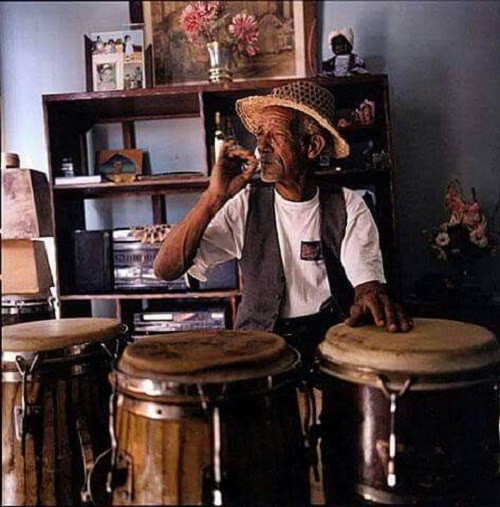
Pancho Quinto es considerado como uno de los grandes rumberos de Cuba

He accompanied for a long time with his percussion the Las D’Aida Quartet and the Canadian artist Jane Bunnett.

Considered as one of the great rumberos of Cuba by introducing new styles in the Cuban rumba whose artistic baptism was given in the famous comparsa of Los Dandys.

He performed in several groups such as Los Componentes de Batea, Los Guaracheros de Regla and other groups whose banner was the tambor bata, he had a brief stint with the Sonora Matancera and played in the orchestra that accompanied the Cuarteto Las D’Aida at the Tropicana Club.

Later he founded the Guaguancó Marítimo Portuario, a group that became the popular Yoruba group Andaba, which performed with the Canadian artist Jane Bunnett, with whom Pancho Quinto collaborated in other productions, and in the twilight of his career he had three productions as a soloist. This rumbero percussionist lived 71 years.

He was preceded by the sonorous echo of Pablo Roche’s bata lucumí juramentados. Such was the heritage that little Pancho gathered when he arrived in this world in the arms of his great-grandmother Camila, with no other identity than his African blood and his diagonal marks on his face, as was the ancestral custom of his family Ilé in the Gold Coast.

That night the conch shells spoke, and from that moment the child was consecrated to the deity of Shangó, god of music and drums.

He received on his right wrist a leather strap with fine bells, which, according to custom, would protect him and his drums from the bad influences of destiny.

Perhaps that is the reason why Pancho Kinto, when he played, knew that his music reached his ancestors in Oyó, beyond time, light and the Atlantic.

This man, a port man for most of his life, inherited the natural wisdom of those princes who came as slaves to Cuba.

In Pancho’s veins runs the blood of Añadí, a respectable warrior in his tribe who adopted the name of Año Juan in the Cuban sugar mills, that of Atandá, olú batá and drum sculptor in the Yoruba people. He was known here as ño Filomeno.

Both built and endowed with religious foundations the first set of bata drum that was born in the island, and from that remote time the sacred song of the orchestra consecrated to the lucumí altar was heard.
Un 23 de abril de 1933 en el habanero barrio de Belén, nació Francisco Hernández Mora, conocido como Pancho Quinto.

It could be said that they were the survivors of the total of slaves that arrived to America, there is an estimate of fifteen million according to data that I heard the Cuban investigator Leovigildo Lopez say when the first Yoruba congress, celebrated in the Palace of the Conventions in Havana.

But to that fantasy that leads men to the inspiration of that mysterious and mythical love towards life, to that renewed and novel way of singing, dancing, playing, turning the palpable into spiritual and the intangible into vital, men like Francisco Hernández Mora pay tribute, exponent of those traditions that merged in our continent and whose result is none other than the embrace between blacks and whites, although there are groups or castes that do not assimilate it as it is.

I learned a lot with Pablo,” said Pancho in this interview in 1994, when he was just beginning to play with flutist Janet Brunet, with whom he toured internationally, recorded and filmed in Canada.

Pablo was called Akilakua, powerful arm, he was a big black man, he goes on talking, with all gold teeth, ugly as his mother’s pussy, but with something special in his personality.

Of the historical drums he commented that they passed from the hands of the olú batá Andrés Roche to those of his son, later considered one of the greatest bataleros of these times.

Pablo’s father was called the Sublime, because of the way he played the original African bata, he did whatever he wanted with those hands. he added.

Paradoxically, the life of both has always been an unknown for those who try to unravel it or look for a chronological order, as it has almost always happened with many rumberos and composers, I am thinking now of Tío Tom or Chavalonga, but that is not the subject now, What I want to say is that these musicians have been teachers and inspiration for a pleiad of Cuban artists and of other nationalities that with luck have heard of the touches of those drums that officiated in the sacred ceremonies of the orisha pantheons.

From those drums, he commented, were born all the drum sets of secret foundation, because from one is born another, like children.

Among the batá there are two forms, the religious and the aberikula or Jewish, which can even be played by women. Of the old consecrated batá aña there are a few games left in Cuba, but many Jews have emerged, and have lost their orthodox character to serve in many cases for secular parties or to accompany orchestras in public.
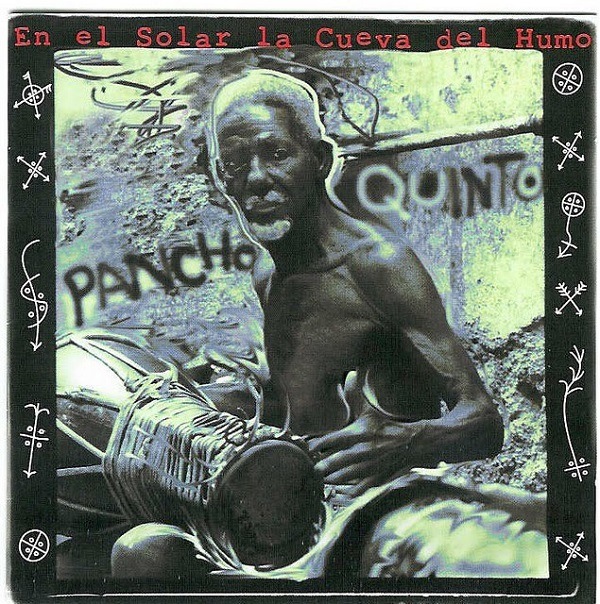
Recordado hombre de la rumba cubana a la cuál le imprimió sus propios estilos

Pancho kinto played with those sworn drums when in the town council of Regla they took out the procession of the virgin, although it was Jesus Perez, another of Roche’s students, to whom it corresponded to offer the first public concert with a robe orchestra, a sacrilege for many at that time, and much more if it was an act in the Aula Magna of the University of Havana.

However, five decades after the writer and ethnologist Fernando Ortiz sponsored that concert, Pancho Kinto played the bata in the same university campus to pay homage to the memory of his ancestors with his sonority.

Pancho was a Cuban musician who learned to play quintiar from a very young age and along with this he made his drums and cajones in his own way, his own inventions, as he said, playing the tumbador with a spoon in his left hand, he was just a party of bata and cajon, I saw him do that many times in the fabulous rumbas that were celebrated in a lot in Campanario, where the group Yoruba Andabo used to meet in its beginnings.

There he became known for being a member of the Cayo Hueso group, but Pancho had been playing with them since they were Guaguancó Marítimo Portuario in the port of Havana.

Originally they were Geovani del Pino, Chang, el Chori, Palito, Fariñas, Callava, Marino, Pancho and others, many are gone forever like Pancho, whose unexpected death surprised everyone on February 11, 2005.

Of those anthological sarayeyeos remains the pleasure of the memory, the pleasant memory of the controversies of the quinto and the columbia dancer, the fraternal brawls between the guanguancó improvisers and the masterful recital of Pancho Kinto with the batá and the cajón.

Also Read: Yilian Cañizares, an excellent Cuban musician, studied in her hometown in the strictest tradition of the Russian school of violin

Pedro ”Pocholo” Segundo supports the Spaha Harlem Salsa Museum

At the Spanish Harlem Spaha Museum we always welcome the best of Latin music and, on this occasion, we could not stay behind, so we are glad to have had the opportunity to share with one of the best percussionists of the moment, Pedro Pocholo, who has a very interesting career that we will review below.   

Pocholo signing his album
Pedro ”Pocholo” Segundo signing a copy of his album ”A Guapetear” in 2022

Who is Pedro ”Pocholo” Segundo? How were his beginnings in music like?   

Pedro ”Pocholo” Segundo is an important producer and percussionist who has made a recognizable name in the Latin music industry thanks to his participation in some of the most critically acclaimed salsa and jazz orchestras.   

In music, it all started for him at the young age of 13, which is when he began playing with Ismael Miranda, representing the formal beginning of his professional career as a teenager. His efforts fortunately paid off, since a few years later, he was playing with Andy Montañez.   

In 1988, he joined Johnny and Ray’s group, causing him move to New York City, a place that gave him the greatest opportunities he would ever have in the artistic area. He became so well known for his skills as a percussionist that he was sought after by many artists to play with them such as Celia Cruz, Héctor Lavoe, Andy Montañez, Tito Rojas, Tito Nieves, José Alberto ”El Canario”, David Pabón, among many others.  

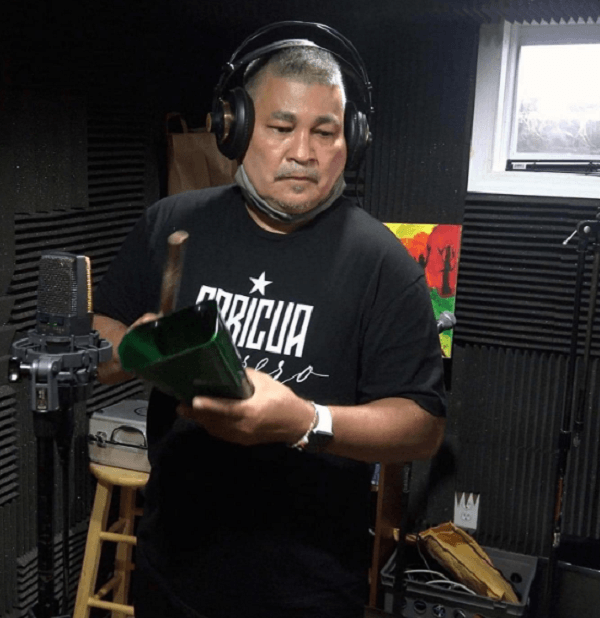
Pocholo playing the cowbell
Pedro ”Pocholo” Segundo playing the cowbell in his studio

Important things Pedro ”Pocholo” Segundo has done in his career 

Pedro ”Pocholo” lived many peak moments in the musical aspect, but without a doubt, the possibility to play to former presidents Bill Clinton and Al Gore with Celia Cruz and ”El Rey de Los Timbales” Tito Puente has been extremely important to his prestige as an artist, so he just went for more and more.    

This performance would not be the only collaboration he would have with Puente, as he also joined his talent to that of the timbalero in the DVD entitled ”Live at Manhattan Center” and traveled with him, The Big 3 Orchestra and Jimmy Bosch’s group to several countries in South America, Central America and Europe.   

Sometime later, in partnership with vocalists Carlos Santos and José Peña, Pocholo formed the group Madera Fina, with which he and his two fellow musicians managed to place some hits such as ”Guarimbo”, ”Palo de Son”, ”Desde Que Te Casaste”in very good places on the charts. They also went to Puerto Rico to promote the group and seek the support of local media such as La Mega 97.9 FM, being this radio station very important in the dissemination of these musicians’ work.   

Thanks to the experience gained from belonging to Madera Fina, Pocholo was more than ready to face bigger musical challenges, which led him to take on the creation, production and percussion of Boricua Legends, which has become one of the most popular New York orchestras of the moment.   

One of the best years of Boricua Legends was undoubtedly 2015, which was when it released its own version of ”Si Por Mi Llueve”, a song that was part of the world-renowned Cheo Feliciano’s repertory.  He also took second place in the GenGenSalsa Top 70 chart and eighth in the LatinosUnidosOnline chart.   

Pocholo performing live
Pedro ”Pocholo” Segundo during a live performance

Pocholo supports the Salsa Museum   

As many other Latin artists, Pocholo also supported the Spaha Harlem Salsa Museum and was a special guest on The Johnny Cruz Show to talk with the host and director of the museum, who was very pleased to welcome him on his show.   

In a video uploaded to Johnny Cruz’s social networks, the host can be seen introducing his guest and saying that they would talk about a number of very interesting topics, such as the beginning of his career, the founding of Boricua Legends and much more. Then, Cruz asks Pocholo to greet the audience and the musician, who was decked in a grayish suit and pink shirt, invites people to tune in to the show and assures them that they will talk about important things such as Latin music in New York and Puerto Rico.   

Finally, Johnny closes by saying that viewers can enjoy the show from 3:30pm to 4:30 every Saturday on channel 67 and says goodbye with the song ”La Fama” by Héctor Lavoe playing in the background. 

Johnny Cru ISM corresponde in New York City

Read also: Here we have Brazilian bandleader and composer Paula Maya 

Nicaraguan singer and guitarist Yelba Heaton in an exclusive interview

Yelba Heaton is a Nicaraguan-born bandleader, singer and guitarist whose strong musical heritage coming from her family has made her have close contact with music since before she could say her first words. 

The artist based in The Woodlands, Texas has been kind enough to answer a few questions for us in order to know more about her musical beginnings, the creation of her band, her projects outside of music, among other topics.    

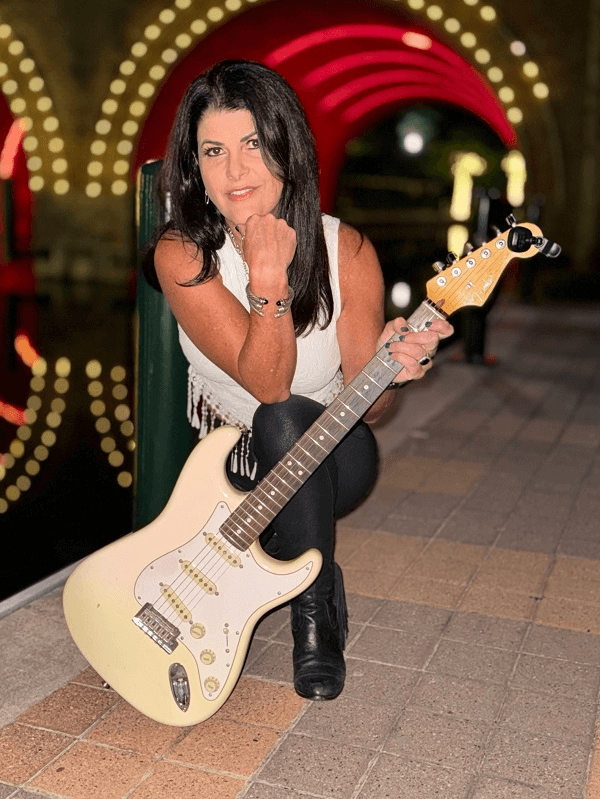
Yelba posing for pics
Singer and guitarist Yelba Heaton posing for pictures with her instrument

Yelba’s musical family   

For many generations, Yelba’s family had become very popular among her acquaintances for knowing how to carry a tune properly and having some guitarists and pianists in this melodic family tree.   

In her case, as she grew older, she and her siblings saw their father constantly serenading their mother and playing romantic boleros on his guitar, so this instrument was a day to day affair for the children. This is how the couple’s children began to experiment with music both together and separately, which little by little sparked Yelba’s interest in this branch of the arts.   

This interest reached such a point that both she and her sister Thelma began to compete in every talent show that was held at the school they attended, Yelba played the bandurria and Thelma played the guitar. Both of them were very good with each other on stage and their voices joined together in a very harmonious and pleasant way for the audience that heard them.   

When she turned nine, she participated in the tv show ”Junior Patherns”, which was very popular in her country at that time. Already at that time, she showed her great skill as an performer and the way she would follow later on.    

As she got older, she began to sing in the church she was attending at the time, but could not start her career formally until she became an adult after her divorce in the United States. This was a very stormy phase of life for Yelba, as she had recently separated from her husband and father of her five young children, leading her to suffer from depression and believe that her life was over. However, it was just beginning.    

At the same church, she met another guitarist, who when saw the bad stuff that she had gone through, decided to invite her to participate in an open mic night at a nightclub, which Yelba did not even know what it was at the time. Although she confesses to being extremely intimidated by the great artists with whom she shared that night, it was an experience that she is grateful to have had, as it gave her the opportunity to put aside her sadness for one night and experiment with music like she had never done before.   

After sitting down with her guitar and performing ”Besame mucho” to the audience that night, having heard those present applause and ask for more songs made her be truly happy and blissful. Immediately, she knew she wanted to experience that feeling again and again.   

music brought Yelba back to life
After her divorce, music brought Yelba back to life

Formal beginning of Yelba in music

That same night that Yelba performed at that venue, Jeremy Garcia, a flamenco guitarist accompanied her with his instrument and resulted in a beautiful combination of melodies that left all those present delighted, including the owner of the place, who proposed to both of them to make a paying gig for next Saturday, to which they replied ”of course”. That was how Yelba, Jeremy and bongo player Benny Rod (Yelba’s friend from church who joined later) started their paid musical careers as a trio.   

Over time, the three artists caught the attention of critically acclaimed guitarist Mark Towns, who invited Yelba to sing with him at an event in Clear Lake and also gave him some copies of their CDs. Towns was a key piece in the formal creation of the band and the trust that she was gaining to sing in public. 

Over the next few years, she was performing at larger and larger events and learning all she could about clave, song forms of various genres, stage presence and other important aspects of her nascent career.   

Creation of Yelba Variety’s Band and Latin Fire  

Although Yelba, Jeremy and Benny were already a trio, they still could not find a name that perfectly defined what they stood for, but that changed when one day they performed songs Yelba had learned to sing on her father’s knee when she was little. That night, everything went great and they received very positive feedback from the audience and the media who covered the concert.   

As a result of this performance, a reporter from the Houston Chronicle wrote an article about the band in which he was very complimentary about their show and described what he saw that day as ”Latin fire”. The first line of the article said that: ”Latino fire is what I heard last night…”. Yelba liked this opinion so much that she decided to baptize her band as ”Latin Fire”.   

Such was the impact this report had on her career that the Nicaraguan still keeps a copy of it and can be found on her website to this day. This was undoubtedly a very important event for her and her band mates.   

 Yelba and her husband
Yelba next to her husband and part of her band Roy Heaton

Yelba as a wedding planner and motivational speaker   

Just like Yelba performs very well in music, she has also found time to work as a wedding planner, a hobby for which she found out she is talented. The artist has assisted numerous marriages with minimum budget, but with her help, she was able to achieve great things with very little money. This is how she has made engaged couples ask for her help and she is always happy to collaborate with them.   

Another area in which she works on very well is motivational speaking. She found out she had a talent for this while doing her master’s degree in finance and learned to move in the corporate world, which gave her the necessary experience to address an audience properly. In addition, her career as an artist requires her to sing, play and dance in front of crowds, which also gives her the confidence she needs to speak to all kinds of audiences at a given time.   

Without a doubt, Yelba Heaton is a multifaceted Latina who leaves our culture on high and we are proud to have had her in this edition of International Salsa Magazine. 

Read also: Julio Vilchez and his orchestra conquer Miami 

Grupo Batachá, Houston’s Premier Latin band

Latin talent has been spreading across the United States over the years and every day more salsa bands and orchestras are becoming better known in states where we never would have imagined before. Such is the case of Grupo Batachá, known as ”Houston’s Premier Latin Band”, which is established in the state of Texas and whose director, Oscar Larrañaga, was kind enough to give us some minutes of his time to answer some questions regarding his career and the group lead by him.   

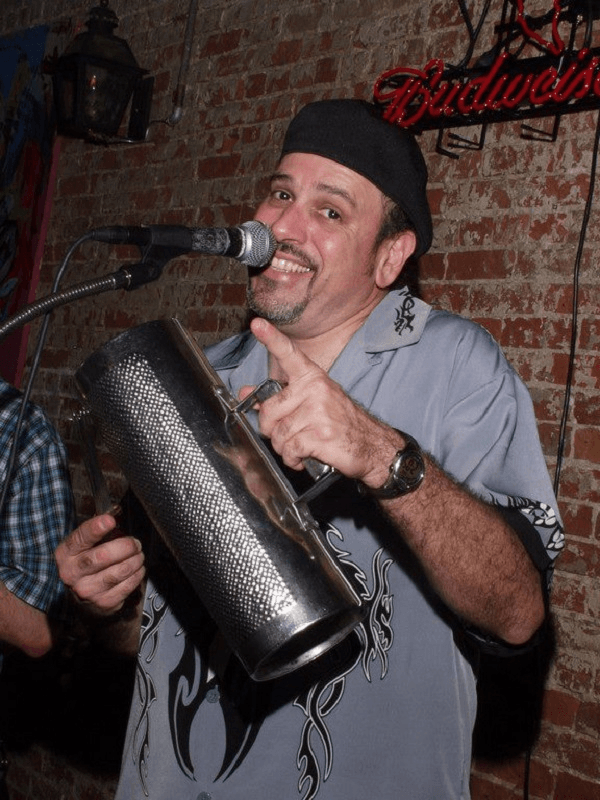
Oscar, Founder of Batachá
Oscar Larrañaga, founder of Grupo Batachá, playing the güiro in a concert

Oscar’s beginnings in the music world 

Oscar has told us that as a child he always knew he was meant to devote himself to music. Even since he was in preschool, he showed signs of how would be his future in music by showing interest in certain instruments and styles.   

The musical figure who has inspired him most in his family was his great-grandfather, who was part of a philharmonic. Oscar heard many stories about the musician, the way he played and how good he was at what he did, which led his great-grandson to want to be like him someday.    

It should be noted that, at all stages of his formation, he never obtained any academic training related to music. Everything he knows about the job he has learned on his own through constant practice and attention to everything he wanted to emulate.    

However, it was in 1990 that his career officially began many years later in the United States. It was there when he finally decided to create a project with a few musicians he began to perform at Latino family events such as weddings, quinceañeras, birthdays, among other events. This gave him the necessary experience to know how an orchestra works on stage and, of course, fitted for what was to come next in his career.   

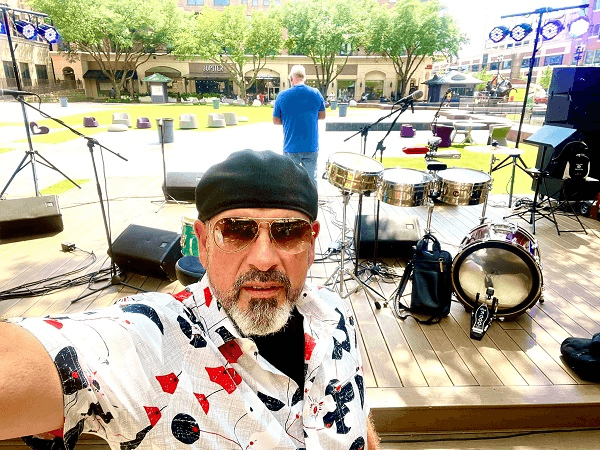
Oscar in a performance with Batachá
Oscar Larrañaga showing the stage where Grupo Batachá would perform that day

How Grupo Batachá began   

Oscar revealed to us that Grupo Batachá was founded in 1997 in Houston, Texas, and made up of the artist and four other members who joined him at that time. They all decided together that Oscar was the best choice to lead the band and chose him as their director, a position he still holds today. Many members have come and gone, but he has always managed to ”keep the ship afloat” at all times despite the changes.   

He explained to us that the name ”batachá” is a term that comes from Cuba and its literal meaning is ”fun times”. In addition, when he was in his early twenties, Oscar met the members of a group with the same name in Guatemala and liked it very much from the first time he heard it. For him, ”batachà” is synonymous with fun and having a good time, things he sees represented in his work with the band. That is why his album is called ”Batachando” and would be something like ”disfrutando” in Spanish.   

Languages played by Grupo Batachá   

While it is true that Grupo Batachá makes music in several languages such as Spanish, English and Portuguese, Oscar wanted to make it very clear that everything he and his bandmates do is aimed at salsa influenced by the typical Cuban flavor that comes from drums and Yoruba culture, elements that are primarily handled in Spanish. This is why the main language of the group is and will continue to be Spanish.   

In terms of clave, it is much easier for the group to get into the correct rhythm in Spanish for what we have explained above. For the same reason, English, Portuguese and any other language are not a priority for Batachá at this time.    

Batachá is influenced by the Cuban Flavor
Grupo Batachá’s music is influenced by the typical Cuban flavor that comes from drums and Yoruba culture

How Grupo Batachá manages its performances 

During the band’s 15-year trajectory, Grupo Batachá has performed at more than a hundred weddings, quinceañeras, birthday parties, anniversaries, corporate events, among others. In each and every one of these performances, Oscar and his bandmates have always stood out for their professionalism and great musical quality, so they have no problem to obtain contracts and clients of this kind very often.   

As for the method the band uses to select their clients, there is not much to explain. Oscar simply gives priority to the client who agrees on a date first and then tries to reach an agreement with the one who makes his request later, although he emphasized that this does not happen very often.   

About this, he said he feels very lucky to bring joy to different types of public with what he likes more than anything in the world, which is music. It makes him really happy to be able to live from what he loves and, by extension, to transmit that same happiness to those who have the opportunity to attend one of his shows. 

Read also: Don Perignon and La Puertorriqueña are prides of Puerto Rico 

Venezuelan businesswoman Joanna Torres is an example to follow

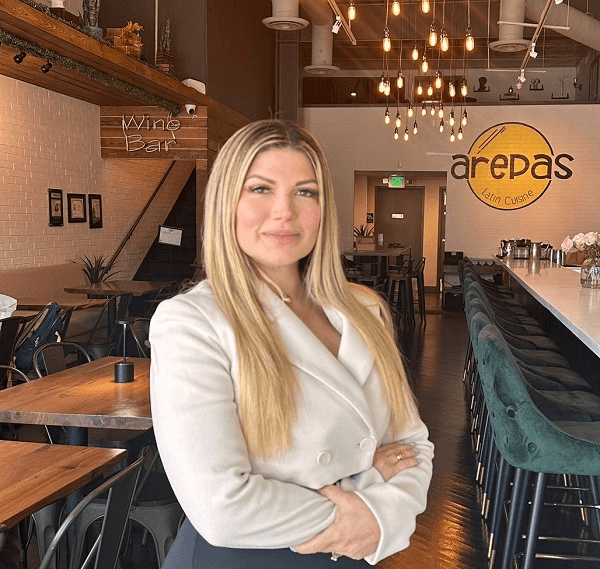
There are many Venezuelans who, due to the economic and political crisis that has affected their country in recent years, have had to set off for new horizons and leave their homeland to look for a better future for themselves and their family. Such is the case of the businesswoman and founder of Arepas Latin Cuisine Joanna Torres, with whom we had the pleasure of conversing with recently. 

This talented young woman has a fascinating history of success and is a true inspiration to any Latino wanting to open paths in the United States or anywhere else in the world. That is why, from International Salsa Magazine, we decided to contact her and share her journey in the land of opportunities.  

Businesswoman Joanna Torres
Venezuelan businesswoman and founder of Arepas Latin Cuisine Joanna Torres

Arrival in San Jose   

The first American city where Joanna arrived was Miami and her goal was to do a master’s degree, since she had studied her undergraduate career in Venezuela. Once there, she realized that she had a lot of trouble learning to speak English and there were few opportunities to practice it, since all with whom she interacted with spoke Spanish. 

It was then when a friend suggested the idea of moving with her to the city of San Jose, where it would make it easier for her to learn the language and spend time with people who spoke it all the time.  

How Joanna began to conceive the idea of becoming a businesswoman 

Two years after Joanna arrived in San Jose, she began working in a clinic and, together with her experience in administration and accounting, she learned everything she could about medical coding and the way medical procedures were coded. This gave her enough experience to dare to open his own medical consulting firm which has more than 22 years of operation and a total of 150 employees in Venezuela. 

The entire staff of the consulting firm residing in the South American country speaks English and takes care of serving all customers in the United States. Joanna even took it upon herself to provide her workers with their own fiber optic internet by contacting some telecommunications engineers, since this service in Venezuela is extremely poor. 

Since the medical consulting firm gave her the necessary experience as a businesswoman, she decided to expand into another area she was very passionate about: cooking. Joanna had been wanting to start a food truck in parallel to her current company for some time and saw the opportunity to do so through a friend and former college classmate who owned restaurants and food businesses. She proposed to Joanna to buy one of her restaurants and partner with her, which she finally accepted and that is how the first Arepa Latin Cuisine restaurant was born.   

Joanna and her team
Joanna Torres and part of her team in San Jose

Reducing failure possibilities for Arepas Latin Cuisine 

Joanna was aware that the possibilities of failure of her idea were high, but she told us that her extensive knowledge of finance was fundamental to overcome all obstacles. 

She was always clear that she had to look for ways to generate more income within the same company. That is why she and her staff have been responsible for providing lunch to employees from technology companies, making food for events such as birthdays or weddings, organizing pop-ups (temporary restaurants created to promote new menus and specific events) in order to innovate and always earn a stable income in the corporation. 

The businesswoman points out that she always tries to innovate, and with regard to this, she said ”I have invented some taco-arepas with which I use arepa flour to make the tacos and give them a different touch, so it would be a combination of both dishes. I always try to innovate and do different things to surprise people and keep them from getting bored”. 

”At the San Francisco headquarters, we have chosen the strong liquor license to start offering Venezuelan typical drinks and rum such as Diplomático or Ron Santa Teresa. We are also doing some remodeling in the place to make it much more pleasing to the eye” she continued. 

In addition, both the San Jose and San Francisco headquarters offer live music for diners to enjoy good Latin music while tasting their food. There is also a dance floor for those who wish to move to the rhythm of the orchestra of that day.   

Joana’s grandmother as an inspiration to create Arepas Latin Cuisine 

After taking the required steps, the first Arepas Latin Cuisine restaurant headquarters were opened in October 2021, but it was not easy. This was an effort made over many years in which Joanna did her best to be able to reach that point. 

The beginning of everything was her grandmother, with whom the Venezuelan learned everything she knows about cooking. She was a cook, a cooking teacher and taught cookery courses and workshops to support her 12 children because she was widowed at a very young age. Joanna tells us that, at that time, she and her children made ground corn arepas to sell to markets and restaurants. 

All this made her an inspiration to Joanna and led her to learn to cook since she was just nine. As a child, she knew that cooking would be important in her life. 

Lots of secrets that Joanna learned from her, such as the way in which the dough has to be kneaded, the difference between making homemade arepas and arepas to sell, the amounts of ingredients to be used, the way to prepare the fillings for the dishes, among other things.   

Joanna and her grandmother
Joanna Torres posing next to her grandmother, who sadly passed away on April 1, 2023

Reception to Venezuelan food in San Jose 

Joanna ensures that her recipes have been a boom in California, since there was no authentic Venezuelan food in San Jose, so her project was a pioneer in this area.   

The reception her food has got with Americans, Chinese, Indians, Vietnamese and many other nationalities has been truly amazing because dishes from Arepas Latin Cuisine, besides being extremely delicious, were something that has never been seen before.   

The taste for food at Arepas reached such a point that the restaurant provides lunch to more than 300 employees in several technology companies such as Netflix, Snapchat and Tinder. It is worth noting that workers who are benefited greatly appreciate being able to enjoy a rich and varied menu every day.   

The biggest challenges Joanna faces as a businesswoman  

One of the biggest challenges Joanna has faced is to find employees who know the Venezuelan and Colombian cuisine (there are also several Colombian dishes on the menu) as it should be. ”Finding cooks with great experience has been complicated, but with the arrival of Venezuelan and Colombian migrants in California, we have been able to find staff with knowledge in the culinary arena” said the businesswoman on this topic. 

For her, it is vitally important to employ people who are very clear about how to cook the main Colombian and Venezuelan dishes, so she takes this into account when recruiting her talents.   

In addition to that, Joanna also sells Venezuelan products and has a hard time finding them in San Jose, so she has to bring them directly from Florida in order to sell them in California.  

Joanna’s restaurant inside
That is what Arepas Latin Cuisine looks like on the inside

Advice for Latino migrants 

When Joanna was asked to give advice to future Latino migrants who wish to move to the United States, the first thing that she pointed out was that they must work very hard in that country to get ahead. In her particular case, she claims to have had three jobs at the same time, since she was alone in the United States and lived only from what she earned. 

She also added that ”you have to make sacrifices to succeed in life and always do things well according to the laws of the country that welcomes you. I think that there are many Venezuelans who confuse ‘native cunning’ (taking advantage or others and the economic, political and judicial system failures to do whatever you want without consequences) with intelligence, which makes them believe that they are above others and make serious mistakes. You have to do things well and eventually the much-desired success will come,” said Joanna on such an important issue. 

Read also: Young Puerto Rican singer Jeremy Bosch supports the Spanish Harlem Salsa Museum 

  • « Go to Previous Page
  • Page 1
  • Interim pages omitted …
  • Page 56
  • Page 57
  • Page 58
  • Page 59
  • Page 60
  • Interim pages omitted …
  • Page 155
  • Go to Next Page »

International Salsa Magazine (ISM) is a monthly publication about Salsa activities around the world, that has been publishing since 2007. It is a world network of volunteers coordinated by ISM Magazine. We are working to strengthen all the events by working together.