• Skip to primary navigation
  • Skip to main content

International Salsa Magazine

  • Home
  • Previous editions
    • 2025
      • ISM / November 2025
      • ISM / October 2025
      • ISM / September 2025
      • ISM / August 2025
      • ISM / July 2025
      • ISM / June 2025
      • ISM / May2025
      • ISM / April 2025
      • ISM / March 2025
      • ISM / February 2025
      • ISM / January 2025
    • 2024
      • ISM / December 2024
      • ISM / November 2024
      • ISM / October 2024
      • ISM / September 2024
      • ISM / August 2024
      • ISM / July 2024
      • ISM / June 2024
      • ISM / May 2024
      • ISM / April 2024
      • ISM / March 2024
      • ISM / February 2024
      • ISM / January 2024
    • 2023
      • ISM / December 2023
      • ISM / November 2023
      • ISM / October 2023
      • ISM – September 2023
      • ISM – August 2023
      • ISM July 2023
      • ISM Edition June 2023
      • ISM – May 2023
      • ISM April 2023
      • ISM March 2023
      • ISM February 2023
      • ISM January 2023
    • 2022
      • ISM December 2022
      • ISM November 2022
      • ISM October 2022
      • ISM September 2022
      • ISM August 2022
      • ISM July 2022
      • ISM June 2022
      • ISM May 2022
      • ISM February 2022
      • ISM January 2022
    • 2021
      • ISM December 2021
      • ISM November 2021
      • ISM October – 2021
      • ISM September 2021
      • ISM August 2021
      • ISM July 2021
      • ISM May 2021
      • ISM April 2021
      • ISM June 2021
      • ISM March 2021
      • ISM February 2021
      • ISM January 2021
    • 2020
      • ISM December 2020
      • ISM November 2020
      • ISM October 2020
      • ISM September 2020
      • ISM August 2020
      • ISM July 2020
      • ISM June 2020
      • ISM May 2020
      • ISM April 2020
      • ISM March 2020
      • ISM February 2020
      • ISM January 2020
    • 2019
      • ISM December 2019
      • ISM November 2019
      • ISM October 2019
      • ISM Septembre 2019
      • ISM August 2019
      • ISM July 2019
      • ISM June 2019
      • ISM May 2019
      • ISM April 2019
      • ISM March 2019
      • ISM February 2019
      • ISM January 2019
    • 2018
      • ISM December 2018
      • ISM November 2018
      • ISM October 2018
      • ISM September 2018
      • ISM August 2018
      • ISM July 2018
      • ISM June 2018
      • ISM May 2018
      • ISM April 2018
      • ISM March 2018
      • ISM February 2018
      • ISM January 2018
    • 2017
      • ISM December 2017
      • ISM November 2017
      • ISM October 2017
      • ISM September 2017
      • ISM August 2017
      • ISM July 2017
      • ISM June 2017
      • ISM May 2017
      • ISM April 2017
  • Download Salsa App
    • Android
    • Apple
  • Spanish

Search Results for: Oscar D´ León

Let’s meet the Pharaoh of Salsa, who is he? Oscar D ‘Leon .

Biography of Oscar D ‘Leon

Óscar Emilio León Simosa, was born in the populous Antimano parish in Caracas -Venezuela, on July 11, 1943, known in the artistic world Óscar d ‘León, son of Carmen Dionisia Simoza and Florentino Padrón. However, he did not recognize him at the time of birth, so the marriage of Carmen Simoza and Justo León decided to take care of the child.

From an early age, little Oscar enjoyed the popular parties that were held in Antímano and listened to the music of great orchestras such as La Sonora Matancera, the Billo’s Caracas Boys Orchestra, the Matamoros Trio, and two of his greatest musical inspirations, Celia Cruz. and Benny Moré.

He began his musical career relatively late, at 28 years of age, after having carried out two jobs totally unrelated to music, such as taxi driver and mechanic; He was educated academically as a surveyor, but never practiced that profession.

Oscar D' Leon
Oscar D’ Leon Photo

Oscar learned to play bass empirically, his innate talent for music was so extraordinary that it allowed him to earn a position in one of the orchestras that played in a renowned nightclub in the city of Caracas. There Oscar also did the choirs, but he did not interpret any song as a soloist.

His life changed when the lead singer of the orchestra was absent from one of the presentations and Oscar proposed to fill that vacancy and he did it in a great way, so much so that he received the approval of all those present.

In 1972, the owner of “La Distinción” told him that he would dispense with his services, since he would require an orchestra of higher quality and experience. Oscar offered his group to the owner of the premises, although he did not have it. It was here that D ’León went, together with the trombonist César Monges, from door to door looking for some musicians with whom he considered he could put together a group with which the venue could get out of trouble. It is there where they meet the percussionists Elio Pacheco and José Rodríguez, the trombonist José Antonio Rojas (Rojita) and the pianist Enrique “Culebra” Iriarte (who would later be replaced by Jesús Narváez). At this moment the project to create the Latin Dimension is accelerating.

They premiered on March 15, 1972, in a rehearsal at the home of “Culebra” Iriarte in La Guaira and debuted in “La Distinción”. In that same 1972 the orchestra recorded their first full-length album and obtained their first hit, the song “Pensando en ti”. This first success led them to be hired to participate in the Maracaibo carnival festivities. We must emphasize that Víctor Mendoza was the one who suggested using his stage name as “Oscar D´León”. There were many songs that Oscar hit with the Latin Dimension, “Llorarás”, “Taboga”, “El Frutero”, “Mi Tierra”, among many more.

In 1976, at the highest point of popularity, Oscar D’León confronted differences with the rest of the members of the group, for which he separated from the Latin Dimension and formed his own orchestra; “La Salsa Mayor” recording his first LP titled “Con Bajo y Todo”.

After some legal problems that momentarily led him to remain briefly detained and deprived of liberty and to be questioned in the media, he decided to change his image and presence, dispensing with the qualifier “El Diablo de la salsa” that had been given to him in Panama.

In 1986 he relapsed into acting, this time in the Venezuelan film “Hell is sure.” Later, he began his international leap, taking his music to countries such as Japan and to stages such as Madison Square Garden in New York, the Poliedro de Caracas and the Teresa Carreño Theater. At this stage, he alternates and records with those who had been his youth idols: Celia Cruz, Eddie Palmieri and Tito Puente.

He also presented himself as the companion for singers of the new salsa generation who was part, like him, of the label belonging to Ralph Mercado “RMM”: La India with whom he would record the song “Hazme el amor” or José Alberto “El Canario” with who would record “The flavor arrived.”

Oscar D' Leon Photo
Oscar D ‘Leon smiling for the photo

Oscar D´León has received numerous awards and honors. In 1996, with the album “Sonero del Mundo” in collaboration with the Cuban musician Willy Chirino makes him obtain the nomination for the Grammy.

On March 15, 1998, the city of New York honored him by naming that date as Oscar D’León Day.

On December 20, 2009, he was admitted to the Intensive Care Unit of a Caracas clinic after suffering a heart attack in Martinique, from which he recovered after undergoing catheterization.

On November 21, 2013 he received the Latin Grammy Award for Excellence for his musical career, thus recognizing the impact of his performance in the world, also that same year he would receive the Grammy Award.

Today, Oscar continues to delight us with his wonderful musical talent …

Maite Hontele

Europe / Holland

Maite Hontele. The perfect mix between Latin flavor and European roots

Maite Hontele
Maite Hontele

A girl with passion and talent, nominated for a Latin Grammy Award in the category Best Salsa Album, trumpeter Maite Hontelé is transforming the role of women in music. People in America, Europe and Asia have witnessed her magical talent and the way she performs on stage. Born in Holland, but Colombian in her heart, Maite’s music is a perfect mix of European elegance and tropical joy, which is reflected in her 4 albums:

Llegó la Mona, Mujer Sonora, Déjame Así, and Te Voy a Querer, the last two edited in vinyl.

Maite Hontele in concert

Also known as ‘Mujer Sonora, Maite has collaborated with artists such as Rubén Blades, Buena Vista Social Club, Chocquibtown, Oscar D´ León, among others, all of them lured by her style. Immersed in Latin American music from her earliest years, she went on to study at the conservatory in Rotterdam, specializing in jazz, salsa, flamenco and Brazilian music.

She was also invited to take part in Buena Vista Social Club’s European tour.

She arrived in Medellín following her heart and her trumpet, releasing one record after another and touring internationally with her salsa band. Perhaps inevitably, she quickly made a name for herself in Colombia through her exploration of salsa in its many forms.

Maite Hontele - Flyers
Maite Hontele – Flyers

Oscar D´ León says “She is the best in the world, what a delight! The ways she plays is extraordinary, outstanding!”

Her next step in Europe: Fiestas de la Virgen del Pino TEROR, SPAIN – 5TH OF SEPTEMBER Stay with us four further information about the European tour! For further information https://www.facebook.com/fansmaitehontele/

Ronald Borjas is a Venezuelan singer, musician and composer

Ronald Borjas is currently considered one of the greatest exponents of salsa in Venezuela with an international projection that grows every year.

He is a Venezuelan singer, musician and composer, born in Maracaibo, the capital of the state of Zulia, on November 19, 1981.

Ronald Borjas is a Venezuelan singer, musician and composer

At the age of 10, his love for the timbal was born, a few years later, at the age of 14, he began singing as a soloist in the Bochinche Orchestra. Throughout his adolescence he stood out as a soloist in bands such as: Caribe, Asterisco, VHG and Bacanos.

He completed higher education at the Cecilio Acosta University (UNICA) where he obtained the degree of Bachelor of Music – Musical Education in 2002. In the same year he went on stage with the Venezuelan Super Band GUACO, where he debuted as a soloist and composer with the song “Te vas” from the album “El Sonido de Venezuela”.

Not only did he develop as a composer, Ronald also plays other percussion instruments such as the bass, the guitar and also the trumpet.

After 11 years as one of the main voices of Guaco, in 2014, Ronald decided to take another path and that is when the great project of his life began, developing his career as a soloist in genres such as Salsa, Bachata and Pop.

Ronald debuted as a soloist with the song “Te Doy Mi Voz” dedicated to his fans, with which he received the nomination for the Latin Grammy for “Best Tropical Song”. That same year, his musical godfather, Salsa legend Oscar D´ León invited him to his show at Madison Square Garden in New York, where he introduced him to thousands of people and baptized him as his “godson”.

That same year, he released “Te Encuentraré” a song that reached #1 on the Venezuelan radio charts Record Report and its video clip, filmed in New York, managed to enter the ranking of the most viewed videos on the HTV channel.

In 2015 he began his musical expansion to other borders, achieving success in countries such as Ecuador and Colombia where his third single titled “Dame Tu Amor” was positioned in the first places of the radio stations as well as in his native Venezuela, while in Peru, it was named the “tropical song of the summer”.

Ronald Borjas is currently considered one of the greatest exponents of salsa in Venezuela with an international projection.

At the end of that year he officially released his first album “Da Capo” with an event that brought together in Caracas, Venezuela a hundred figures of the national show, as well as the press, radio and TV of the country in an unprecedented event. This release in its first weeks, managed to accumulate more than 10,000 digital downloads on his official website www.ronaldborjas.com.

“Da Capo” had valuable collaborations and a first featuring with his godfather Oscar D´León, with whom he recorded “La Quiero Para Mi”. In addition, this album has songs by Amaury Gutierrez, Robert Vilera and his uncle Neguito Borjas, among others.

In 2016 he began releasing his song “Cántalo” which quickly became an anthem of joy and managed to position itself in the first place on Venezuelan radio. That year he won several national awards of great importance such as “Mara de Oro Internacional”, “Cacique De Oro”, Explosión Creativa and Supremacy, all of which recognized him as the “Salsa Singer of the Year”.

That same year he signed a contract with Sony Music as an artist from the Andean Region and embarked on his first international concert tour entitled “Da Capo tour” with which he visited Aruba, Panama and several cities in the United States.

In 2018, he released “Loco por Volverte a Ver” a song he wrote with Nacho Mendoza, Cáceres and Sharo Torres. He also made his second featuring with the “Caballero de la Salsa” Gilberto Santarosa with whom he released “Ellas te van lleva” the first collaboration with an international artist that also managed to position itself as number one on the radio charts.

Ronald Borjas is currently considered one of the greatest exponents of salsa in Venezuela

Shortly after, in 2019, he received a double nomination for “Album of the Year” with the song “Lo que pase aquí” as one of the songs on Tonny Succar’s album titled “Más de Mi” and “Salsa of the Year” with the song “No Queda Nada”. In addition to the collaboration he did with “Quintero´s Salsa Proyect” which was nominated for “Salsa Album of the Year”.

Also in 2019 he released his second album entitled “Bailamos Otra Vez” where he recorded songs of his own, as well as those of Servando Primera, Oscarcito and Amaury Gutiérrez. From this album come hits such as “Amor Demente” “Estoy Dispuesto” “Tu y Yo Tenemos” “Te Quiero para Mi” among others.

Shortly after he announced his collaboration with another former Guaco partner, Nelson Arrieta with whom he released the song “Sobran Los Momentos” which also gives name to the tour they would do together where they traveled through countries such as Argentina, Chile, Ecuador, Mexico, Colombia, Spain, Peru, Panama and the United States achieving great acceptance by the public.

He started the year 2020 with several collaborative releases. “Para Ustedes” from the album origenes where he participated as a guest and achieved #1 on the radio in Venezuela, then he released the song “Juegos Eróticos” with Victor Muñoz and promoted it in his country with great acceptance.

The “pandemic” stage begins and confinement did not stop him. In March he releases the version of the song “María Antonia” by the Venezuelan singer Gualberto Ibarreto, in April he releases “Aunque Parezca Extraño” with Manuel Petit who invites him to this collaboration. In May, together with his uncle Neguito Borjas, Jorge Luis Chacín and Nelson Arrieta they join in a project entitled “Los Mágicos”. In June “Ahora Me Llama” comes out, a song he had recorded for Rumberos del Callejón.

As if that were not enough, in July he records an intimate concert where he invites Victor Muñoz, his uncle Neguito Borjas and Nelson Arrieta to release it as a gift to his fans through his YouTube channel.

He closes the last months of 2020 with the song “Mía” written by Ronald and Salvador Solano that became the anthem of the ´Zumba´ reaching several places in the world. After this, he released one of his songs, “Ya Lo Decidí,” with which he again achieved first place on the radio and was accepted by the entire public.

He started 2021 as a special guest at Gilberto Santarosa’s concert at the Filmore Theater in Miami, where they performed the song “Ellas Te Van Llevando” together. Months later, he released the song he recorded as a duet with José Alberto “El Canario” entitled “A Mi Me Gusta” which quickly managed to position itself on the main playlists of digital platforms in the world. He closed that year with the song “Dime Cómo Hago” which he recorded with Nelson Arrieta and Oscarcito, a salsa that took over the public’s taste and today is one of the most chanted in his concerts.

2022 started with another important collaboration with Motiff, a song titled “Me Descontrola” which quickly entered the top spots on radio billboards and digital platform listings, and was also the song chosen by the renowned company Zumba to use as the official song at its world events.

In 2022, he also launched a very ambitious musical project that he carried out with his friends and fellow countrymen Adelmo Gauna and Nando De La Gente called “Los Pikis” with which they released a series of videos where they compiled erotic salsa hits from the 80s and 90s. Such was the success that in just two months they achieved more than a million views on YouTube.

In May 2022, the live concert titled “Sobran Los Momentos” premieres where Nelson Arrieta and Ronald Borjas invite the founder and lead voice of Guaco, Gustavo Aguado, and together perform several of the hits of the Venezuelan super band, such as “Vivo” “Pídeme” “Eres Más” and “Lo Eres Todo”. Oscarcito was also there performing his hit “Si Tu Me Besas” and the one he has with Arrieta and Borjas “Dime Cómo Hago”. All this incredible material can be enjoyed on the official YouTube channel of Ronald Borjas and Nelson Arrieta.

To close the year, he released the song “Se prende el Parampampan” with his musical friend, Acosta, a fun salsa that unites their musical styles, which together with a video recorded in Puerto Rico, managed to enter the public’s taste, turning this song into an anthem for Venezuelan parties. For his part, Ronald Borjas released a solo single titled “Los Vecinos” which is accompanied by a humorous video directed by Alex Galán.

2023 began for Ronald Borjas with his third featuring with an international artist, this time with the Puerto Rican legend, Tito Nieves. A romantic salsa titled “Te Busqué” that was accompanied by a video where the two singers can be seen in a performance and story. The video currently has more than half a million views on Ronald’s official YouTube channel.

Ronald Borjas
Ronald Borjas

Months later, Ronald reunited with his cousin Luis Fernando Borjas and recorded the song “Cuestión de Tiempo”, which was widely accepted by the public, surpassing two and a half million views of the video and positioned itself as one of the most listened to songs by “Lo Borjas” on digital platforms. This name gave rise to a joint tour with which they have traveled to the main cities of Venezuela, achieving sold out in each one of them.

He closed the year with a great concert “Live in Miami” where he reunited several of his musical colleagues and friends, such as Oscarcito, Victor Muñoz, Motiff, Los Pikis and for the first time since their separation, Toto and Beet from the group Caibo joined together with Ronald, performing the hits “La Despedida” and “La Promesa”. This great reunion of artists can be found on Borjas’ YouTube channel and has also surpassed more than 600,000 views in less than a year.

2024 began with his fourth song in a duet with an international artist, this time with the Nicaraguan, “the prince of salsa” Luis Enrique with whom he recorded “Y Si Mañana”. A great launch was made through the media in Venezuela and it has been a song that quickly became the favorite of the public of both singers and in a few weeks it was positioned in the main salsa lists on Spotify.

After this success, Ronald begins his “Tour LATAM 2024” through Colombia, Chile, Argentina, Peru, Panama and Uruguay, countries where he managed to sell out all his performances and reunite with his public after several years. The success of this tour will soon take him to Europe where he will be performing several shows in Spain and other countries that have not yet been announced.

Also Read: Tribute to Johnny “Dandy” Rodríguez Jr. His first recording was professionally with Tito Puente in 1964 and was titled “Exciting Rhythm of Tito Puente”

Nahití Ortega. Dance is her Passion and Life

Latin America / Venezuela / Caracas

Nahiti Ortega, is a Venezuelan with exceptional talent, more than 25 years as a performer of traditional Venezuelan dances, this time International Salsa Magazine has the privilege of conversing with this artist of international stature.

She began her Dance studies in the Popular Culture workshops of the Bigott Foundation, taking classes in different regions of the country.

Nahiti Ortega
Nahiti Ortega

It also conducts courses in other international dances such as: African, Colombian, Cuban, Argentine, Dominican, Bolivian, Brazilian, Chilean, among others.

She expands her knowledge by taking other workshops on dance accessories, body expression, rhythm, dance analysis, theory of popular culture, anti-stress elements of music and singing, vocal technique, artistic makeup, stage costume design, organization of special events, corporate image, online tradition, training of teletrainers, pedagogical resources of a virtual classroom: moodle among others.

Augusto: What does dance mean to you personally?

Nahití: Dance is life…

Life begins with a dance, since we are conceived, we dance when a child is inside his mother’s womb, when the earth turns on its own axis, when the waves of the sea reach the shore, when the wind blows and moves the leaves of the trees… in all those movements a beautiful dance is produced, as well as life itself.

“The Dance is so important that the celestial heroes created the world with the power of the dance, and the whole earth is the magical work of the first dancers. The very existence of human beings is the result of the dance. Therefore, dancing is ensuring the continuation of existence” (Morela Maneiro)

For me, dance is a way of life that connects me with the depths of my being and allows me to undress and show myself as I am. My movements are the physical expression of everything intangible that happens to me. By moving I highlight the relationship I have with myself and with my surroundings.

Augusto : Is there or was there any guide that inspired you to this art?

Nahití : My father has always been my inspiration and my guide; Since I was little I always wanted to dance, one day he asked me, do you really want to dance? and I said yes, it was then he who took me by the hand to study dance and introduce me to this wonderful world.

Throughout my career I have had incredible teachers, which I must mention Professor Freddy Medina who, due to his discipline, demand and dedication, I learned to differentiate and perform a large part of our traditional dances and Omar Orozco who taught me that dance, beyond if interpreted, it serves us for life itself.

Augusto: Name me the best anecdote in your career, nationally and internationally

Nahiti: Hahaha… Woow! Throughout my career I have had many anecdotes, I can tell you a few:

One of the ones I remember right now was in a presentation with Master Cheo Hurtado where I had to show the difference in the execution of the Venezuelan Joropos, when I got to the dressing room and took out the costumes I realized that I had two shoes on the same foot, namely; I had two right shoes, you can imagine my frightened face, after this I had a fit of laughter and my friend Rossmary Rondón, also a dancer, seeing the situation and my reaction, asked me if I was crazy, why was I laughing?…

? and I replied “because I still have to solve it and I don’t do anything to bother myself”. Finally I danced with my two identical shoes and nobody noticed that detail, only she and I knew. And everything went well.

Another was on a long tour of Asia, we were in Korea and we did 3 shows a day, I remember that on the third of the day we did the monkey dance, in this piece we invited the public to join in, in the performance we threw ourselves on the ground and then we couldn’t stop quickly due to fatigue and it made us laugh a lot, the public had to act by imitation and since they didn’t know what was happening, they ended up getting our laughter.

Augusto : Was your father an influence on your work?

Nahití : Undoubtedly yes, I greatly admire my father, he is a great artist one of the best in his style, he has always been a reference in the musical field, I have learned that with discipline, perseverance, dedication and love for what you do you can achieve the proposed goals, my father currently has more than 50 years of uninterrupted artistic career, which shows that his formula works.

Augusto : Tell us a little about your career as a teacher

Nahití : In my classes I usually teach the origin of the dance to be worked on, the main body movements, basic steps and choreographic sequences, depending on the level, as well as breathing and physical preparation for each dance. I also introduce the student to the personal search so that he can achieve his own style and projection.

Augusto : We express, how was your work as Artistic Director of Vasallos de Venezuela?

Nahití : I like to stimulate the members mentally, we create a world together with some characteristics and rules. For me, each body has a story to tell, each one has particular movements acquired through their experiences that they can contribute, so I try to find ways in which the members can identify with the motivation, get involved and feel willing to propose. What I seek is to find during the process, movements that adapt to what I propose.

I also like to work a lot on muscle memory through repetition, to make the movements non-robotic. We work deeply, the gestures and the staging is important for each one to take out and project their personal style.

Nahiti Ortega
Nahiti Ortega

Augusto: Do ​​you have future projects?

Nahití: Many projects, tours, concert that I won’t tell you details for cabal hahaha…

Augusto : Explain your experience as manager of Coco y su Sabor Matancero

Nahití : It is really wonderful, seeing how successful my father’s career has been and now his Manager, it is a great commitment, all the years of experience in the artistic world made me worthy of this responsibility. In this short time we managed to record his new record production entitled “Con Todo” in which we managed to bring together great artists such as: Mariana “La Sonera”, Wilmer Lozano, Rodrigo Mendoza and El moreno Michael, and we have already visited several countries for its promotion. , United States, Chile, Peru and Panama, we have just performed a concert in one of the best venues in Venezuela, just as we performed its baptism.

Nahití Ortega, has a long history at the National and International level, has an extraordinary personality that transmits joy, good vibes, harmony, feeling for what she does that comes straight from the heart, taking into account her particularity and professionalism of the teachings of her dad.

He began his activities in the field of Popular Culture by participating in the Agrupación la Patria y su Gente led by Professor Freddy Medina for three years; In 1994, she participated as a special guest of the Agrupación Autochthono de la Vega in the “Barcelos Festival”, belonging to the CIOF – UNESCO circuit, in the countries of Portugal and Spain.

In 1995 he joined the group with Venezuela directed by Professor Oswaldo Lares in which he worked for four years, participating in the “Caribbean Festival 95” in the cities of Cancun, Cuzumel, Playa El Carmen, State of Quintana Roo – Mexico, in 1996, he carried out the Afro-Venezuelan percussion workshop in the Popular Culture workshops of the Bigott Foundation, dictated by Professor Jesús Paiva, with a duration of three years.

She participated as a dancer in the Oscar D´ León video clip “Mírala Como se Menea”, as well as in the Venezuelan film “Juegos Bajo la Luna”, directed by Mauricio Walerstein.

In 1995 he joined the group with Venezuela directed by Professor Oswaldo Lares in which he worked for four years, participating in the “Caribbean Festival 95” in the cities of Cancun, Cuzumel, Playa El Carmen, State of Quintana Roo – Mexico, in 1996, he carried out the Afro-Venezuelan percussion workshop in the Popular Culture workshops of the Bigott Foundation, dictated by Professor Jesús Paiva, with a duration of three years.

She participated as a dancer in the Oscar D´ León video clip “Mírala Como se Menea”, as well as in the Venezuelan film “Juegos Bajo la Luna”, directed by Mauricio Walerstein.

In the teaching area, he has taught traditional dance workshops at a national and international level.

As well as accessories for dance, body language, dance therapy, clothing, basic stage makeup, artistic makeup, staging, among others.

Among the institutions in which he has given workshops we can mention some such as: Popular Culture Workshops of the Bigott Foundation – Venezuela University of the Arts in Lima – Peru.

Simon Rodriguez University. Nucleus Barquisimeto -Venezuela

She has done work as a dancer, choreographer, image consultant and producer for various groups.

In 1993, he joined the group “Vasallos del Sol” of the Bigott Foundation under the direction of Professor Omar Orozco.

In 2000 she joined Danzas Itanera, as a dancer, costume designer and image consultant for the group.

He has shared the stage with artists such as: Serenata Guayanesa, Un Solo Pueblo, Francisco Pacheco y su pueblo, Simón Díaz, Cruz Tenepe, Vidal Colmenares, Cristóbal Jiménez, Gurrufio, El cuarteto, Caracas Youth Symphony Orchestra, Chamber Orchestra of the Armed Forces , Coco y Su Sabor Matancero, Oscar de León, Guaco, Invisible Friends, Aquiles Báez among others.

He has toured the entire national territory, appearing on countless stages with participation in international festivals. In 2009, she participated as a dancer and workshop facilitator at the X Meeting for the promotion and dissemination of the intangible heritage of Ibero-American countries “Fiestas and Rituals” in Lima, Peru. Currently Manager of Coco y Su Sabor Matancero and dance and artistic director of the Vasallos de Venezuela group.

Nahiti Ortega
Nahiti Ortega

Photos courtesy of Nahití Ortega

Joel Uriola

Latino America / Venezuela / Caracas

Joel Uriola “I am the best, because I surpass myself”

Very soon the theme will be released, Cuidadillo there ok

This Venezuelan pianist, arranger and musical producer was born on January 4, 1963 in Caracas, in the popular parish of Antímano, the same one that saw the birth of Sonero del Mundo Oscar D´ León, by chance or his destiny was already written and en route. towards a dream that over the years would come true; be the best and that your work is recognized both nationally and internationally.

In our gathering, Joel tells us that when he is classified as the best, he has nothing to do with competing with others or with airs of greatness, but with surpassing himself in everything he proposes, he tells us that “my path is longer, but I came as Joel Uriola”, his name is a seal that ensures quality work.

With 38 years of musical career, Joel Uriola has plenty of talent, level and experience, in each production he uses the best group of Venezuelan musicians and continues to be at the forefront of music, all this is demonstrated in the more than 1000 musical productions in which he has participated as a performer, director or musical producer, with national and international artists.

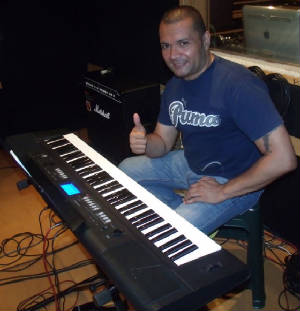
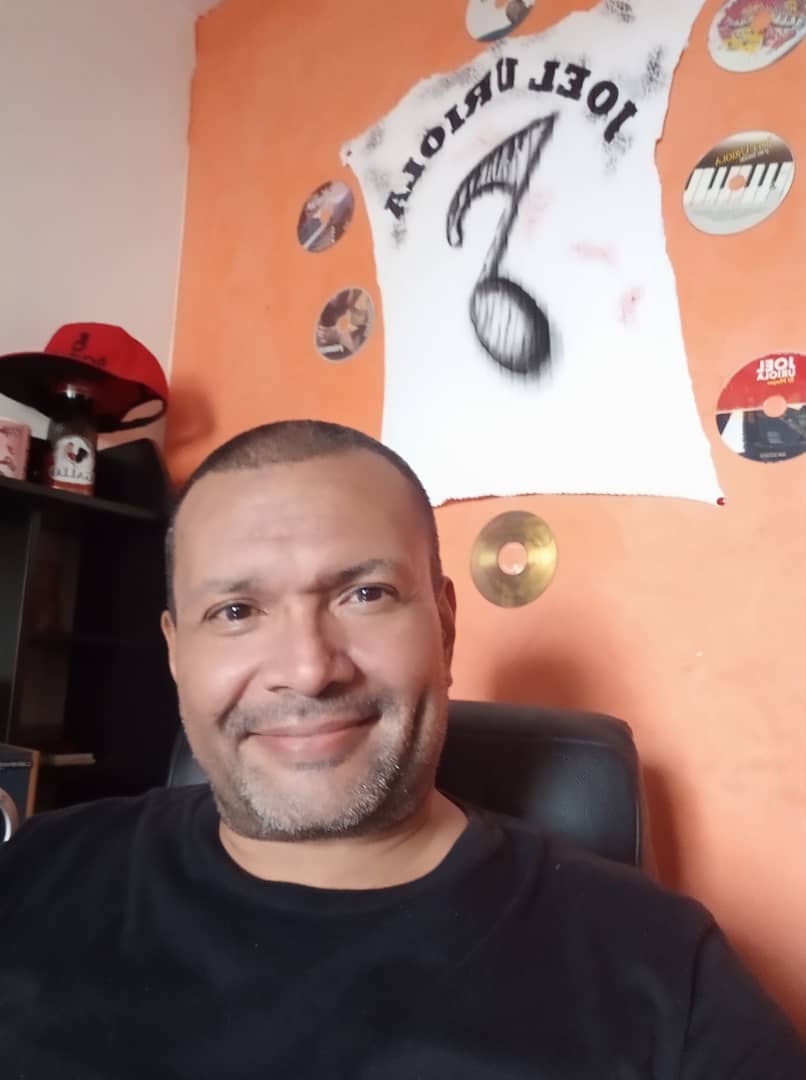
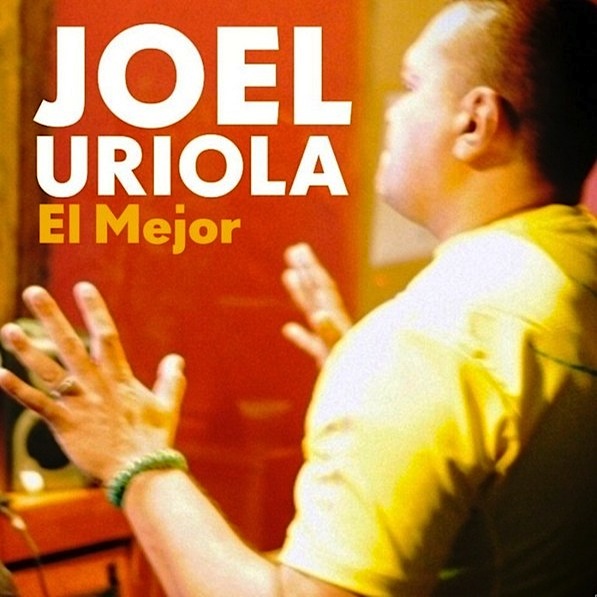
Joel Uriola
Joel Uriola

Joel Uriola The best?

“That’s right, metaphysics says that you can’t talk about yourself in a negative way, you can’t sell a product if you don’t have good marketing, you must see beyond, be your own manager, most record companies are in the hands of ignorant people. the music that drive the artist’s work”. “Artists have the obligation to cultivate themselves, learn and not only be musicians, we must project ourselves in a big way”.

How did your childhood develop and what was the atmosphere of the time like?

“I had a good education in my home, with values, a grandmother with character, who told me that no matter where you lived, your behavior would make a difference, she always motivated me, just like my mother who also instilled in me to prepare myself, my grandmother was an enterprising woman, my father was a rumba guitarist and a professor at the Católica”. “I remember that I saw the debut of the Trabuco Venezolano in the CC Propatria, as fate would have it, my mother had an office there, as did the people of the Latin Dimension.”

At what age did you start in music and with which orchestras did you take your first steps?

“My musical beginnings took place at the “Prudencio Esáa” School of Music, starting professionally at the age of 17 with a group called Galaxia, I was the conga player, it was a Son group and we rehearsed at the observatory”. “Then I became part of the Caracuchos of Joseito Rodríguez from 1977 to 1979, whom I met thanks to Jesús “Totin” Rebolledo, later with the Latin Dimension from 1979 to 1980, from Cesar Monges I learned a great deal, and from 83 to 87 with Oscar D´ León.

And why is there that change from the conga to the piano?

“Due to the noise I made in the house when I was rehearsing and the equipment turned on at full volume, my mother subliminally gave me an organ, it was less noise, and then I began to imitate what the pianists did in a self-taught way, I remember the theme of Pete Rodríguez… What things life has, life, life”. “Then my mother bought me a piano and took me to audition at the School of Music and I stayed, I was a student of teacher Tiero Pezzuti, Gerry Well and Samuel del Real”. “In the nightclubs of El Rosal I did many substitutions, there I polished myself, I had a good preparation and some great teachers who are my friends”.

Joel Uriola - piano
Joel Uriola – piano

What anecdotes do you have about your experience of working alongside Oscar D´ León, and about that piano solo on the song “Cuídate bien”, did you ever think that being so young, almost 20 years old, your name would remain forever on the mind of the salsero?

“The time with Oscar was glorious, I got to know many places, we toured for 3 and 4 months, we enjoyed ourselves but we also had a lot of fun, I learned a great deal and disciplined.” “I had the blessing of meeting many musicians that I admired such as Eddie Palmieri, Salvador Cuevas, Barry Rogers, among others, with Domingo Quiñones I made a great friendship.” “As for improvisation, I feel great pride, it was something that came out at that time, I don’t know if it will come out again -laughs-“.

Which musician has been your biggest influence?

Markolino Diamond, Eddie Palmieri, Papo Lucca.

A pianist you admire?

“Markolino Diamond is my idol, a lot of what I do has to do with this guy, if he were alive he wouldn’t exist…”. “He was irreverent, crazy, he broke the schemes.”

How do you see the response of the salsa audience with your productions?

“There will always be admirers and detractors, with the level of awareness that you gain, it doesn’t bother you that there are people who don’t like your work, I make music for everyone”. “Public opinion can kill you if you are not prepared for it, but you must believe in what you do.”

How do you see the support of the media to spread your music?

“Thank God the record companies disappeared, those who knew the least about music controlled them, they decided that it was commercial and that it was not, in the alternative media there is response and support, however, social networks allow you to reach in a matter of seconds many places and you can do your own marketing”.

What do you think about the fusions that you are doing with salsa, for example, salsa and reggaeton?

“It works perfectly, it’s urban salsa, reggaeton with its lyrical content has improved a lot, they’ve softened it, reggaeton artists have great economic and communication support.” “The good things are guaranteed, reggaeton is seen as Salsa was seen in its beginnings, with bad eyes, but you see, Salsa is worldwide even the Chinese dance it, people consume what the radio puts on it, even if it’s bad, there’s room for everyone”.

As a music teacher, what have you contributed to the country?

“Train the next generation, in values ​​and discipline, and that seed continues to germinate, help people regardless of how they sometimes pay you.”

Why musician and not another profession?

“I wanted to be Disip (Venezuela’s intelligence corps), but when one is born marked for something, that’s what goes… My destiny is music.”

How do you see the music industry right now?

“Everyone is recording with their own effort, you make a song, you upload it to the networks, we have that powerful tool in our favor; the record companies limited you, hardly any albums are recorded anymore”.

Can you live from music?

“Well… Thank God I can do it, every day I get up like a conuquero to work, I can live from music.”

Of the 9 productions under your belt, which do you think is the best or the most important for you?

“Babalawo (2009), the best achieved, the best worked in all aspects, was sold in all religious houses.”

What motivated you to form your own orchestra?

“I’ve always been a leader, that’s why I decided to form my own orchestra, everyone has their moment”.

Isn’t it a difficult job to compose and arrange?

“You are born for this, it is not difficult, you must study and prepare yourself, my muse can arrive at 3 a.m., I get up and add or season my music in my own way, I listen to traditional Cuban music, jazz that inspire me.”

What is Joel Uriola doing right now?

“Currently I dedicate myself to producing for other artists of the Salsero genre, always offering quality, the most recent is the work with the Mercadonegro Orchestra with the theme Rumba Negrito”.

You are the arranger of the 3 songs that made the Bailatino orchestra known internationally, you have been the Producer and arranger in five songs of “Rumberos del callejón”, among other Venezuelan artists. What does it feel like to contribute so that other Venezuelans are successful?

“At the moment you do things, you do it with the best intention, and that is the greatest satisfaction, helping others grow regardless of how they pay.”

Do you feel that unity and camaraderie are lacking in the salsa guild?

“Totally, without unity nothing is achieved.”

What do you think of copying, imitating and not creating?

“He who imitates is destined to fail, one must have personality, you must not cling to something foreign to survive, what you do has more value, you must have creative capacity”.

Future plans or present?

“I am recording two songs, Cuidadillo there ok composition by Maurice Melo, a salsa with tasty rhythmic elements, timba and hard sauce, and the second song You are the teacher has a Christian connotation, with the Praise Orchestra, the song is my own. , a cool sauce with Christian sauce”.

Joel reaffirms us “My road is long, but I arrive as Joel Uriola, I am who I am, I am the best”.

  • Page 1
  • Page 2
  • Page 3
  • Go to Next Page »

International Salsa Magazine (ISM) is a monthly publication about Salsa activities around the world, that has been publishing since 2007. It is a world network of volunteers coordinated by ISM Magazine. We are working to strengthen all the events by working together.