• Skip to primary navigation
  • Skip to main content

International Salsa Magazine

  • Home
  • Previous editions
    • 2025
      • ISM / November 2025
      • ISM / October 2025
      • ISM / September 2025
      • ISM / August 2025
      • ISM / July 2025
      • ISM / June 2025
      • ISM / May2025
      • ISM / April 2025
      • ISM / March 2025
      • ISM / February 2025
      • ISM / January 2025
    • 2024
      • ISM / December 2024
      • ISM / November 2024
      • ISM / October 2024
      • ISM / September 2024
      • ISM / August 2024
      • ISM / July 2024
      • ISM / June 2024
      • ISM / May 2024
      • ISM / April 2024
      • ISM / March 2024
      • ISM / February 2024
      • ISM / January 2024
    • 2023
      • ISM / December 2023
      • ISM / November 2023
      • ISM / October 2023
      • ISM – September 2023
      • ISM – August 2023
      • ISM July 2023
      • ISM Edition June 2023
      • ISM – May 2023
      • ISM April 2023
      • ISM March 2023
      • ISM February 2023
      • ISM January 2023
    • 2022
      • ISM December 2022
      • ISM November 2022
      • ISM October 2022
      • ISM September 2022
      • ISM August 2022
      • ISM July 2022
      • ISM June 2022
      • ISM May 2022
      • ISM February 2022
      • ISM January 2022
    • 2021
      • ISM December 2021
      • ISM November 2021
      • ISM October – 2021
      • ISM September 2021
      • ISM August 2021
      • ISM July 2021
      • ISM May 2021
      • ISM April 2021
      • ISM June 2021
      • ISM March 2021
      • ISM February 2021
      • ISM January 2021
    • 2020
      • ISM December 2020
      • ISM November 2020
      • ISM October 2020
      • ISM September 2020
      • ISM August 2020
      • ISM July 2020
      • ISM June 2020
      • ISM May 2020
      • ISM April 2020
      • ISM March 2020
      • ISM February 2020
      • ISM January 2020
    • 2019
      • ISM December 2019
      • ISM November 2019
      • ISM October 2019
      • ISM Septembre 2019
      • ISM August 2019
      • ISM July 2019
      • ISM June 2019
      • ISM May 2019
      • ISM April 2019
      • ISM March 2019
      • ISM February 2019
      • ISM January 2019
    • 2018
      • ISM December 2018
      • ISM November 2018
      • ISM October 2018
      • ISM September 2018
      • ISM August 2018
      • ISM July 2018
      • ISM June 2018
      • ISM May 2018
      • ISM April 2018
      • ISM March 2018
      • ISM February 2018
      • ISM January 2018
    • 2017
      • ISM December 2017
      • ISM November 2017
      • ISM October 2017
      • ISM September 2017
      • ISM August 2017
      • ISM July 2017
      • ISM June 2017
      • ISM May 2017
      • ISM April 2017
  • Download Salsa App
    • Android
    • Apple
  • Spanish

Search Results for: Oscar D´ León

The world’s sonero returns to dance with the bass, this time from the Coca Cola Music Hall in Puerto Rico

On October 26, 2024, the Sonero of the World, Óscar D’León, arrived at the Coca Cola Music Hall in San Juan, Puerto Rico. The concert, scheduled for 6:00 p.m., began an hour late. However, attendees waited patiently until Óscar made his energetic entrance onto the colorful stage that was dressed in salsa for the occasion.

The world's greatest singer returns to dance with the bass, this time from the Coca Cola Music Hall in Puerto Rico
The world’s greatest singer returns to dance with the bass, this time from the Coca Cola Music Hall in Puerto Rico

For approximately two hours, the bassist was accompanied by his own orchestra, whose musicians traveled from Miami, Florida, USA. Between soneo and soneo, the Oscar of Salsa informed us that the inconvenience causing the delay had to do with a musician, who having stayed in Miami did not have the possibility of reaching Puerto Rican soil on time.

D´León, with more than half a century of musical career and a long list of hits, delighted the audience with the songs that have made him one of the favorite salsa singers of the Island of Enchantment. He started the evening with “Llorarás”, which ignited the passion of the audience gathered at the Coca Cola Music Hall, and who sang the hit at the top of their lungs alongside the bassist. This was followed by the songs “Bravo de verdad”, “Yo quisiera”, “Hechicera”, “Taboga” -from Dimensión Latina-, accompanied by his backing singer, Johnny Silva, “La murga”, “Detalles”, “La cadenita”, “Idilio” -also a duet with Johnny Silva- and “Mi bajo y yo”. During the interpretation of the latter he was accompanied by the instrument with which he achieved fame to recall his beginnings as a bassist, vocalist and dancer.

The world's sonero dances again with the bass
The world’s sonero dances again with the bass

The historic concert with the bass was followed by ‘Irimó’, ‘Sigue tu camino’, ‘La piragua’, ‘Que buen baila usted’, ‘En mi Viejo San Juan’, ‘La Mazucamba’, ‘El frutero’, ‘El manicero’, ‘Esa mujer’, ‘Juanita Morell’ and ‘Matasiguaraya’.

As usual, the concert was characterized by the energy of El León de la Salsa and the affection he receives every time he visits Borinquen. Rosalis Torres’ production team took care of every detail, making sure that everything flowed with the same impeccability as always. Once again, the salsa audience was pleased and waiting for the next concert.


Oscar D' Leon The Return
Oscar D’ Leon The Return

Bella Martinez Puerto Rico


Also Read: Willie Rosario, El Rey del ritmo by journalist and music researcher Robert Téllez M.

Luis “Papo” Marquez, Musician, singer, songwriter and producer

North America / Miami / Florida

This son of music, born on December 18, 1972, in the Pinar del Río Cuba Province, was raised between notes and chords that led him to be the artist he is today, known as Luis “Papo” Marquez, and considered a complete musician: trumpeter, composer, arranger, singer and music producer.

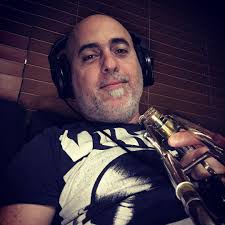
Luis Papo Márquez in the studio

As a child, he contemplated music as his environment, profession and way of life, thanks to his family who instilled in him all the passion for art and provided him with the tools to develop his knowledge. He began his trumpet studies at the age of 8 (eight) and, at 15 (fifteen), he already practiced professionally as a trumpet player in groups such as the Bella Mar Orchestra, Grupo Cumbre, musical grouping Los Trimmers, Grupo Íreme and Ricardo Hechemendía, in Pinar del Río and Havana.

Luis Papo Márquez
Luis Papo Márquez

At 19 (nineteen) he emigrated with his family to Venezuela, a country that opened the doors for his artistic consolidation, where he managed to make art on a large scale with the execution of his instrument and took the first steps within the world of composition and production.

“In Cuba, love and passion for music through the trumpet was born from me, but it was in Venezuela where I had, for the first time, the opportunity to look closely at how the art of composition worked. Suddenly, I was sitting in front of a piano and reading music sheet, trying to understand how they worked and falling in love with the trade. ” LPM

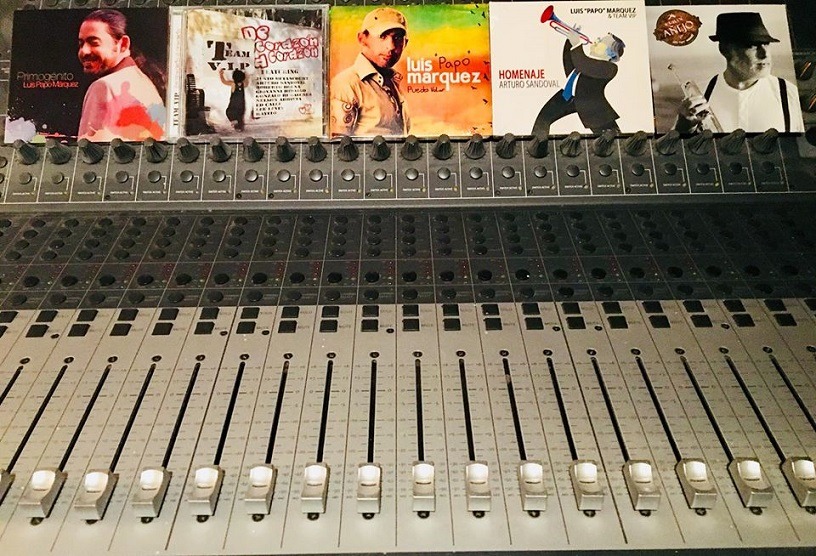
the equalizer equipment

This is how he started a successful career, thanks to his perseverance and permanent study, having the opportunity to play his trumpet with Venezuelan orchestras such as Mauricio Silva, Erick Franchesky, Naty and his Orchestra, Biella Da Costa, Ilan Chester, Sergio Pérez, Porfi Jimenez , Alfredo Naranjo, Orlando Poleo, Los Incorregibles, Mulato, Repicao and Guaco.

He continues forging his path and arrives in Miami, where he expands his international path with artists such as Jon Secada, Bacilos, Willy Chirino, Oscar D ‘León, Juan Gabriel, Gilberto Santa Rosa, Jerry Rivera, Celia Cruz, Cheo Feliciano, Chayanne, José Luís Quintana “Changuito”, Jose Alberto “El Canario”, Víctor Manuel, among others, with whom he has the opportunity to present himself as a trumpeter and in some cases, as arranger and producer.

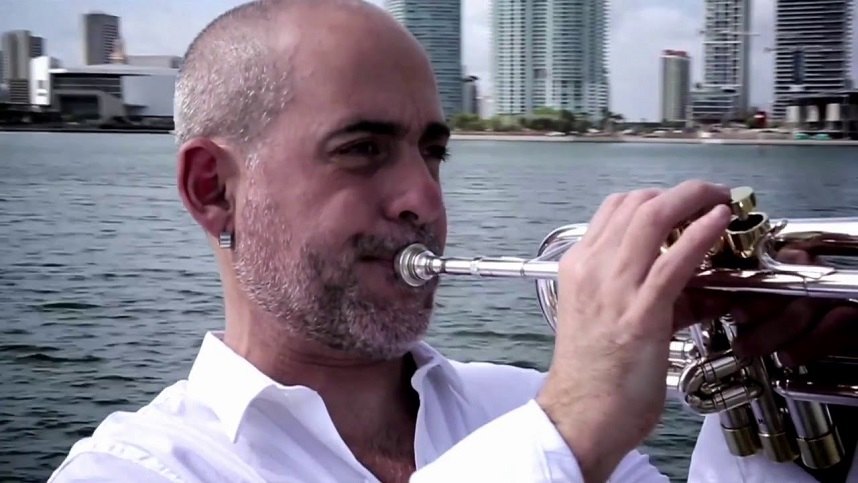
Luis Papo Márquez playing trumpet

One of his biggest recognitions has been the delivery of an American Grammy Award for best music producer with the album “Son del Alma” by Willy Chirino; however, for LPM, the recognitions come day by day with the opportunity to make the music that moves and elevates them in their personal and artistic satisfaction.

Luis Papo Márquez defines himself as a “citizen of the world” born in Cuba and with a Cuban-Venezuelan heart. Work and discipline are his pillars to get ahead and his greatest passion will always be “creating music that makes the world move”.

Participation as Trumpeter and Arranger: Jon Secada, Bacilos, Willy Chirino, Juan Gabriel, Gilberto Santa Rosa, Jerry Rivera, Celia Cruz, Guaco, Cheo Feliciano, Chayanne, Edwin Bonilla, Luis Enrique, Victor Manuel, Rafael “El Pollo” Brito, Oscar D´León.

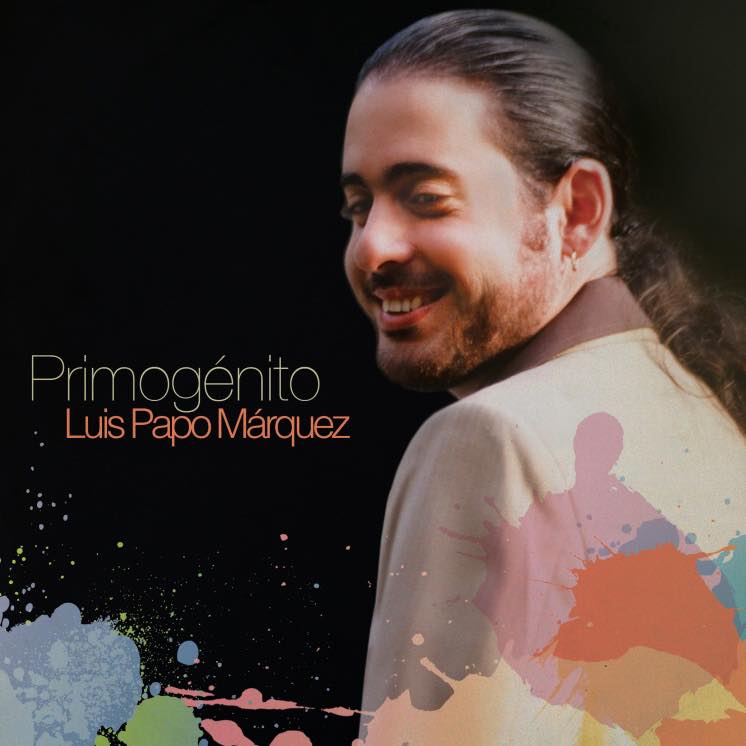
Primogénito Luis Papo Márquez

Record Productions:

  • Son del Alma (The rhythm of the soul). Willy Chirino. 2004. Grammy winner.
  • De corazon a corazon (From heart to heart). Team VIP. Luis Papo Marquez. 2007
  • Wireless Telegraphy. José Luis Quintana “Changuito”. 2007
  • Puedes volar (You can fly). Luis Papo Marquez. 2011
  • Arturo Sandoval tribute. 2016
  • Cuban Añejo. 2017
  • Firstborn. 2019

Maelo y su Klan want to bring tropical rhythms to the whole world

Maelo y su Klan is the latest project, and one of the dreams, of the producer with more than twenty years of experience, Johnny Ysmael Salaverria Dicurú. The popular “Maelo” as his dearest friends call him, continues his career by working and pouring his heart into this project. With them the first genre fusion between Son and Kizomba is known. In the following lines we will talk about Maelo and his most beloved project.

Who is Maelo?

Johnny Ysmael Salaverria Dicurú was born in San Juan parish, in Caracas, capital city of Venezuela, where he spent his childhood surrounded by the joy of the Caribbean “soneros and salseros”. He was a child when he first expressed his interest in one of the most popular tropical Caribbean rhythms, salsa. Part of his influences came from his uncle, Héctor Bruno Dicurú.

Ysmael D´La O, is his artistic name on stage and producing, but his closest friends call him “El Tiburón de la Salsa”. He left with $80, and a luggage full of dreams, to look out for adventures abroad. His destiny was Tenerife, where he quickly earned the love and respect of the natives, and was embraced as an adopted son.

Maelo as a producer has worked with renowned soloists and groups, from all over the world. To name a few: Nicky Jam, El Binomio de Oro, Tito Rojas, Oscar D’León, Porfi Baloa, Tony Vega, La Dimensión Latina, Ray Sepúlveda, Guayacán, El Grupo Niche. As a promoter and producer of events, one of his greatest achievements was El Gran Combo De Puerto Rico who celebrated their 50th anniversary, and visited Europe hand in hand with him.

We can call Maelo, the cultural ambassador of Caribbean rhythms, making more than 30 countries listen and enjoy them. He was the first Latin American to have 100 continuous virtual conversations during the pandemic, a time when creativity was the escape of many artists.

Among his awards and recognitions is being nominated as International Producer of the Year in 2020, Producer and Promoter of the Virtual Euro Festival in the 20/21 edition. But soon more will come, since Maelo’s talent is infinite.

Defining Maelo and his Klan

The band stands out in danceable rhythms such as: Son, Charanga, Guaguancó, Salsa, Tropical, Latin Jazz and a lot of fusion with an original sound, which is inspired by African rhythms. Of course, with the influences of great masters of the old tropical school. In this way, a combination is created that generates a modern sound, worthy of the new generation. But what most characterizes this Klan is the creation of the fusion of the genres between Son and Kizomba.

The works of Maelo y su Klan have the collaboration of the renowned arranger and director of Billo’s Caracas Boys, the Venezuelan Julio Cesar Estrada. Also by Paquito Barón, ex-member of the Orquesta Bronco of Venezuela, in the musical production.

The Klan has all the merits and the support of the Anglo-Saxon and Asian public. One of his productions entitled ¡Cultura viva! Fusion is positioned as the new sound in Afro-Caribbean music. Maelo not only puts his talent for the band, but also puts all his knowledge of the tropical rhythms of Latin America, as well as its movements through Europe and Asia. Let’s hope that the journey of Maelo y su Klan will be a very long one, full of great successes, so that they can continue to please the public that loves these tropical rhythms.

AQUILES BÁEZ

Swing And Tradition Of A Distinguished Venezuelan Artist

Chapter I: Aquiles’ Farewell

Aquiles Báez
Aquiles Báez began to flow within the Jazz and Latin American rhythm during his stay in New York (USA).

“With all the pain in my soul, I must publicly communicate that my friend, my brother, my accomplice Aquiles Báez passed away this morning at 5 in the morning in the city of Aachen, Germany. Aquiles was in the middle of a concert tour here in Europe. He flies high gordito.” Ramón Arturo Aular (Báez’s friend, musician, and professor at the Aachen Conservatory of Music) informed the community through his Twitter account the Monday, September 12th.

The virtuoso musician, noble guitarist, arranger, and excellent composer died of a sudden heart attack at the residence of his friend Ramón Aular. His last concert was held in the city of Cologne located in western Germany as part of his 2022 European tour, the first he did after the cessation of activities due to the Covid-19 pandemic.

The noble 58-year-old artist had already performed in Spain and was preparing to present his music in some German cities such as Berlin, Tubingen, and Hamburg, before finishing his tour in France and Portugal.

“I think it is important to project the work that one has been developing in other latitudes. This is very interesting because I realize that the music I make is universal, it is not limited only to playing for the Venezuelan diaspora, which of course also provides an audience”. Báez expressed this to an international media.

During his artistic career, he recorded 17 albums and collaborated on more than 150 recordings with other artists. Báez was a professor at the Berklee College of Music (Boston, Massachusetts) and was recognized for his mastery of the guitar with “elements of mixed Caribbean and Afro-Venezuelan cultures with classical music and Jazz.” Fragment extracted from his biography.

In life, he shared stages with artists such as Paquito D´ Rivera, John Patitucci, Romero Lubambo, C4 Trío, Ilan Chester, Simón Díaz, Huáscar Barradas, Worlds of Guitars, Aquiles Machado, Serenata Guayanesa, Iván Pérez Rossi, Fareed Haque, Dawn Upshaw, Richard Bona, Luisito Quintero, Solo Razaf, Marco Pereira, Oscar Stagnaro, and Ensamble Gurrufío.

Before passed away, Aquiles Báez was preparing the publication of two studio albums and the creation of five more. He was also in charge of making the music for the Venezuelan play Mi último delirio, which premiered on September 2nd with the lead role of his friend Héctor Manrique and with great reception from the public and specialized critics.

Chapter II: Getting to know the musicians’ Master to the rhythm of the compass

Julio, was the one who instilled in him a love for music by giving him his first instrument, the Cuatro.
His older brother, Julio, was the one who instilled in him a love for music by giving him his first instrument, the Cuatro.

Aquiles Báez was always an irreverent musician who made the type of music that he felt. “It is important to make music from what one feels it is, from that forceful energy that is the act of creating…Lately, I have been respected. It was hard to get that position. They have not always respected me, perhaps because of my way of being, irreverent. The people who manage cultural spaces have always taken me as an anarchist… I consider myself someone accessible, the teacher thing hasn’t gotten to me, seeing everyone below me, that seems pathetic to me…” Aquiles expressed this to a Venezuelan media.

“Throughout his career, Aquiles has received various awards and recognitions. These include Pepsi music awards and the William Leavitt award given by the Berklee College of Music; In addition, he has stood out with more than a dozen awards as a composer of music for film, theater, and dance. Extracted from his biography.

In 1996, at the age of 32, Aquiles decided to move to the United States to study at the Berklee College of Music in Boston. After two semesters he dropped out, considering that he was “learning the same thing but in another language.” And that was not only his thinking, but also what he demonstrated during his stay as a student at the academic campus, so shortly after he entered the Berklee College of Music again, but this time as a professor.

On this academic campus, he gave “clinics, workshops, and seminars at different universities and musical institutions such as Indiana University, Temple University, Queen College, Krems Summer camp, Curitiba Music Office, The Jazz School in San Francisco, among others, in Europe and the United States”, according to his biography.

Shortly after, he participated as a guest musician on the albums of Panamanian artist Danilo Pérez: Central Avenue (1998) and Motherland (2000), both albums nominated for Grammys.

Aquiles Báez was a founder and member of the board of directors of Guataca productions. In this space, they continue to support emerging Venezuelan artists. Báez’s methodology for finding new talent was to research, listen to them live and contact them. “Why not support those guys who come after you? Why not make life more pleasant for them? Or a lighter path than one had. This road is not easy at all, it has been very hard, and it continues to be hard. And one continues and believes that he has acquired a certain reputation…” Báez expressed this in an interview conducted by a Venezuelan media outlet.

Chapter III: Anecdotes of a famous life

Last night sharing with the beloved Maestro Carlos Cruz Diez (Panama. October 29, 2016)

Countless artists expressed their affection and grief for Aquiles’ departure, expressing testimonies of a life full of joy, love, and passion for musical colors.

“One of the artists who has inspired me the most and a great human being. He made it possible for us to make our first album, the tour of the United States and opened the doors of his home for us. We made a lot of beautiful friends with Aquiles. D.E.P, Maestro,  compaíto Aquiles Báez”. Jorge Glem (Cuatrista and member of the group C4 Trio).

“The wonderful Aquiles Báez was a musician capable of playing all Venezuelan music of all genres“. Alfredo Naranjo (Vibraphonist)

“Dismayed by the sudden death of my dear friend Aquiles Báez, one of the great musicians of our country, guitar teacher, and eternal officiant of humor and simplicity”. Leonardo Padron (Writer)

“Today we are less. I have just been informed that our admired and beloved musician and my dear friend, Aquiles Baez, has passed away. This news is heartbreaking and unfair. Aquiles is one of the most creative and generous people I have ever met”. Héctor Manrique (Director and theater actor)

“Thank you for being an inspiration in music and a big brother in life. Without your unconditional support, I would not have even reached the corner”. Álvaro Paiva Bimbo (Guitarist and 2022 Oscar nominee for the soundtrack of the Disney movie “Encanto”)

“How can we forget this great friend and fellow adventurer”. Claudio Nazoa (Comedian)

“I was left with the desire to carry out the project we had to record an album together. What profound sadness!” Miguel Delgado Estévez (Musician, arranger, and producer)

Finally, the Venezuelan percussionist Omar Ledezma Jr. expressed his sorrow for the death of Báez.

LENTEJAS. That’s what the gordo called me. 7 years of my life I played and toured the world with Aquiles Báez. We met at one of his concerts at the Bellas Artes thanks to my dear Carlos Reyes, another great guitarist from our country, at the time I worked at the MACCSI. Years later, arriving in Boston, he called me to be in his group and I couldn’t believe it. The gordo was my musical hero thanks to his Platabanda and the number of times I saw him accompanying great singers. He was the one who told me to grab El Cajón and start putting in the merengue and the gaitas. I knew his bad jokes by heart: “Vamos a tocar la canción de DC: Di si encontraste…”, with him, I learned to be a person first, then a musician, I learned not to make ugly faces if I made a mistake, with him, I had to press on reading, to be punctual, to put my batteries.

Anyway… with the gordo I learned to be a professional musician, because with his virtues and defects, for me, he was the best.

I love you my gordo, wherever you are. Thanks. #aquilesbaez”.

You can continue reading the article about Omar Ledezma Jr. From The Venezuelan Melody To The Caribbean Rhythm.

Here is a small excerpt from this interview of 2021:

Years later, and with experience acquired in presentations, and groups, Omar Jr. met his first mentor, Aquiles Baez, a famous Venezuelan artist, guitar virtuoso. Together with Aquiles, he made his first international tour of the United States. “With Aquiles, I had the pleasure of playing Venezuelan music. We play with many artists in the United States… Thanks to him I developed percussion (Non-autochthonous element) in Venezuelan music”. Ledezma Jr. commented.

“Fall in NY. How beautiful are the colors of Autumn in NYC. Enjoying that watercolor of nature”. Aquiles Baez (November 8, 2018)

Professor MSc. Carlos Colmenárez and his “WRITTEN SALSA”

By: Professor MSc. Carlos Colmenárez (Barquisimeto, Venezuela)


Hello there, regular Salsa Escrita readers, here is your ever friend, Professor Carlos Colmenárez MSc, greets you from Barquisimeto, the musical city of Venezuela. In this edition, we are introduing three vocalists and an orchestra with a great trajectory at a national and international level, who have done a great job on behalf of Latin music and we want to continue projecting them worldwide on these pages.

Among these names are: Jorge Luis Suárez, Cheo Valenzuela, Gustavo Gerardo and the orchestra “Negramenta”, si I certainly hope the written interaction between you and us is to your liking.

Salsa Escrita, in charge of this server, your friend of always, professor MSc. Carlos Colmenárez
Professor MSc. Carlos Colmenárez (Venezuela)

Jorge Luis Suárez, “Pride and Symbol of Afro-Caribbean Music”

In Venezuela, the musical talent is undoubtedly first line and proven quality on any stage nationally and worldwide. Specifically in the state of Lara and in the city of Barquisimeto, a great number of artists with category and hierarchy have emerged and been born, exalting our Latin rhythms.
Jorge Luis Suárez, “Pride and Symbol of Afro-Caribbean Music”

In Venezuela, musical talent is without a doubt top of the line and of proven quality nationally and globally. A great number of artists with seniority and status have emerged and born in Barquisimeto, Lara, exalting our Latin rhythms.

For this edition of “Salsa Escrita”, we are honored to have as a special guest the vocalist Jorge Luis Suarez, pride and symbol of Afro-Caribbean music and diverse genres, who has showed his class and professionalism for years.

Jorge Luis is a singer, musician and multi-faceted artist; he was born on August 7 in the city of Maracaibo, the son of parents from the city of Carora, where he spent the most of his childhood in the state of Lara, began to lean towards music, and was largely influenced by his father, who played the guitar and sang romantic music.

At the beginning of the 80’s, he moved to Barquisimeto to attend university and was discovered as a singer and bass, cuatro and guitar player. Welcome to “Salsa Escrita”, through International Salsa Magazine, Jorge Luis Suarez.

To start this pleasant, enjoyable and long-awaited meeting, we would like you tell us your experiences about your artistic career, which has been very successful nationally and globally to make everyone who knows you very proud.

Thank you Professor Carlos Colmenárez for inviting me to your widely read and recognized salsa column, unique at a national and international level and in which you project Venezuelan musicians.

Jorge Luis, with which groups did you start your journey of this wonderful art in which you have demonstrated versatility, perseverance, discipline and quality? Well, let me tell you that I started my musical activity professionally, being part of groups of regional standing like “Las Estrellas del Momento”, “Orquesta Alegría” and then “Venezuela en Gaitas”, “Sason Latino” and at the end of the 80’s and beginning of the 90’s, I joined the staff of the orchestra “La Banda Actual”, a salsa icon in the state of Lara.

By the way, Jorge, we remember your beginnings with “La Banda Actual” and it was an obligatory reference for private parties, night places and of course sharing stage with great artists and Latin and Caribbean music luminaries.

In which groups did you have the joy and the pleasure to sign with national and international stars? In fact, Professor, when I was part of La Banda Actual, we performed with Héctor Lavoe, Wilfrido Vargas, Las Chicas del Can, Porfi Jiménez, Guaco, Los Melódicos, Hermanos Carruyo, Billos Caracas Boys, Orquesta La Crítica and many more during their visits to Barquisimeto, having the Bolivarian Dome and the Trade Fait Complex as locations.

In fact, Jorge Luis, due to your outstanding vocal capacity, gave rise to the call of Luis Frómeta, Billo Frómeta’s son, to join the ranks of Billo’s Caracas Boys. With them I learned to have more artistic discipline and gain experience during 4 years, managing to record three musical productions and traveling through Latin America, the US and Europe; precisely in the Tenerife carnivals we achieved the Güines Record related to public attendance to a dancer, sharing the stage with Celia Cruz and Oscar D’León.

 Jorge, tell us about your entry into the orchestra of the world’s leading sonero Oscar D’León. Professor Carlos, precisely as a result of that event in the Canary Islands, Oscar called me and told me that he needed a vocalist of my characteristics to accompany him in his shows and international tours and honestly, it was a difficult decision because with Billo’s Caracas Boys, I was well established along with other Barquisimeto artists: Ely Mendez and Wolfang Perdomo, integrating the line of vocalists for that time, it was all “guaros” (nickname received by the Barquisimeto people).

Jorge Luis is a singer, musician and multifaceted artist, born on August 7 in the city of Maracaibo, son of parents from the city of Carora, where he spent part of his childhood in that entity larense and began to lean towards music, having as main influence his father, who played the guitar and sang romantic music.
Jorge Luis Suárez, “Pride and Presidium of Afro-Caribbean Music”.

But I found Oscar’s offer interesting and finally I said yes. With the Word’s Leading Sonero, to whom I owe a lot, because thanks to him I established myself even more as a performer and especially in salsa, bearing in mind his recommendations to the letter and of course it was an unforgettable experience, since with his orchestra we traveled many countries and performed on stages such as: Carnegie Hall, Madison Square Garden, House off Blue in Los Angeles, Orange Ball, jazz festivals in Europe, sharing with established artists.

Professor, while I worked with Oscar’s orchestra, I recorded my production “Una Tercera Persona”, in mid 1992, which spawned the hit single “Niegalo Todo”, obtaining the first places in the hit parade.

In that production, I was accompanied by renowned musicians, such as Luisito Quintero, Roberto Quintero, Robert Vilera, Raúl Agraz, Yorman León and the Nicaraguan Luis Enrique.

Jorge, how many years did you work with Oscar and why did you decide to leave his orchestra? I worked with Oscar for approximately four years and I decided to leave the group due to force majeure such as business and commercial commitments that I had and still maintain to this day in Barquisimeto.

For those who do not know, Jorge Luis is a multifaceted artist and has managed to enter in different musical genres as a vocalist, from salsa, bagpipes, tropical dance, guaracha, merengue, Venezuelan and boleros; becoming the musical arranger and producer of the trio Carora International at the end of 2014 in the last one.

At the same time, he produced and performed 19 Venezuelan music songs with arrangements by Jean Piero González, which will be released soon.

Jorge Luis, when you settled again in the musical capital of Venezuela, who did you record with? Professor, in Barquisimeto I have been invited to record with the following groups: Venezuela Somos Gaita, Nikitao, Amantes de la Gaita, Venezuela en Gaitas, Unión Gaitera, Rafa y sus Diamantes, Grupo Colorama, Con Klase, Orquesta Variación, Orquesta la Mayor, Orquesta la Gran Premiere, Venezuela Rumba, La Orquesta Raza Caribe, recording 8 songs with this last one in the production that is also about to be released.

Likewise, I was invited to record with the Son Colón Orchestra from Maracay and the Latin Grammy nominees, our Grupo Santoral from Barquisimeto, participating with them as a special guest in the show “El Amor se Canta” during Valentine’s Day, touring and starting in Juares Theater and other cities in the country, and private presentations.

Regarding current projects, what can you tell Salsa Escrita readers? Currently, my second solo production in the gender of salsa is about to be released with arrangements by Barquisimeto multi-instrumentalist Taylor Aranguren and myself.

We are releasing the album this June with the promotional track “No lo beses”, a song that was interpreted by Alejandro Fernández and by Mexican composer José Luis Roma. The production is called “Jorge Luis Suarez Covers”, which includes songs that have been hits around the world, such as: Cobarde cobarde, Escándalo, La bomba, Cuatro rosas, Darte un beso, El amor más grande del planeta, Bailando, No lo beses, among others.

In this production, I am accompanied by my nephew Taylor Aranguren and the musicians: Carlos Giménez, Rómulo Paiva, Jeison Marchán, Wílner Navas, Freddy Adrián, in the master and mixes: Latin Récods Digital.

Sound engineer: René Zerpa and in the general production: Jorge Luis Suárez. Jorge Luis, what are your social networks or digital platforms to interact with your followers? My contacts are, Instagram: @jorgeluissuarezoficial, Youtube: Jorge Luis Suárez Oficial, [email protected].

Jorge Luis, finally, we want to congratulate you for your consistency in music and wish you continue to fresh triumphs, because you have quality and to spare. Salsa Escrita “La Columna Salsera”, will be at your disposal to support you in your present and future projects, at a good time… Thank you professor and personal friend, Carlos Colmenárez, for offering me your support in your salsa column, allowing me to reach your regular readers all over the world; once again a thousand thanks, blessings and long live Venezuela!.

Cheo Valenzuela, “El Sonero de la Dulzura”

At the age of 7 he moved with his family to the city of Caracas, settling in one of the most popular parishes: La Pastora. Welcome Cheo to Salsa Escrita, "La Columna Salsera" and the International Salsa Magazine.
Cheo Valenzuela, “El Sonero de la Dulzura”

We are pleased to have as a special guest in our salsa column one of the vocalists who has a unique, admirable and respected quality of interpretation, which has been highlighted in our country and abroad and took his flavor and swing with great professionalism and hierarchy. We are talking about Cheo Valenzuela, “El Sonero de la Dulzura”, born in Cantaura, Anzoátegui on January 24th.

At the age of 7, he moved with his family to the city of Caracas, specifically in one of the most popular parishes: La Pastora. Welcome Cheo to Salsa Escrita, “La Columna Salsera” and International Salsa Magazine. Thank you, my friend and professor Carlos Colmenárez, for giving me the opportunity to be present in this tribune of our Afro-Caribbean music, which serves us to make known our talents and musical projects and thus be able to interact with its ragular readers in Venezuela and around the world. Cheo, to begin with, we would like you to tell us how your beginnings in music were. Carlos, at the age of 14 I began my career as salsero and eventually I was called to join quite renowned orchestras.

Such as? I belonged to the Latin Dimension, then Oscar D’León called me nd I was at his side with his orchestra; later I joined “Nuestra Orquesta la Salsa Mayor”; later I was called by “La Sonora Antillana”; then I joined the following groups: Rumbero Menor, Venezuelan Master Orchestra, Orquesta los Latinos, among others. Nowadays I have my own salsa orchestra “Cheo Valenzuela y su Orquesta” and also my own bolero group, called “Cheo Valenzuela y su Ensamble”. It is amazing, Cheo, we really admire your work, which has been persevering and constantly on the up over the years with national and international projection. Yes, Carlos, let me tell you, apart from thanking you for inviting me to your salsa column, I was launched as a soloist some time ago and I currently have two musical productions, the first one entitled “Cheo Valenzuela y su Orquesta eres tù”.

I belonged to Dimensión Latina, then Oscar D'León called me and I was at his side with his orchestra; then I joined "Nuestra Orquesta la Salsa Mayor"; later he called me "La Sonora Antillana".
Cheo Valenzuela y su Orquesta

This CD is composed of traditional salsa, romantic salsa, bolero, son and ballads. Dear salsa lovers and consistent readers, let me tell you that Cheo, every time he gets on stage, shows off all his musical talent with total stage control, since he is a sonero backed by multiple experiences acquired in his presentations, both in Venezuela and in the different countries he has visited.

Cheo, what can you tell us about your current musical situation? Professor Carlos, at present I am presenting the new promotional theme to all music lovers, which is part of my second musical production called “Salsa buena”, a theme of my own with musical arrangements by Venezuelan pianist, trombonist and singer Mauricio Silva, which we hope will lead to your full satisfaction.

Of course, it will be a success, my friend Cheo, because your productions always carry an indisputable seal of quality. By the way, what are your digital platforms and contacts? You can get me as Cheo Valenzuela in all social networks, you can also do it by email: [email protected] and [email protected] and for bookings by phone +58 424 1044822 and +58 416 6388420.

At the end of the interview, let me say that it was an honor to have you in Salsa Escrita “La Columna Salsera” and wish you continue to succeed inside and outside our country, so that we all enjoy Cheo Valenzuela “El Sonero de la Dulzura”.

A thousand thanks, Professor Carlos Colmenárez, for your unconditional friendship and for giving me a space in your column through International Salsa Magazine, I also predict successes to bulk and that you continue to support us in order to make our productions and presentations known very soon in the name of the lord. Blessings to you Carlos and count upon the Cheo Valenzuela’s friendship “Con Dulzura” and a lot of salsa…!

Gustavo Gerardo

Gustavo Adolfo Gerardo González, artistically known as Gustavo Gerardo: singer and composer. He was born in Caracas, Venezuela, on September 12, 1972.
Gustavo Gerardo Singer and composer from Venezuela to the World

“Singer and composer from Venezuela to the world”.

Today’s character is the extraordinary vocalist Gustavo Adolfo Gerardo González, artistically known as Gustavo Gerardo: singer and composer. He was born in Caracas, Venezuela, on September 12, 1972.

He began his career in July 1990, studied theory, solfege, and lyrical singing at the José Reyna School (CONAC). He has participated in different orchestras and accompanied more than 90 artists or orchestras of Venezuela, and almost 60 of other countries live and/or in record productions, on backing vocals or as a soloist.

His voice has transcended boundaries of his land, as he has sung on stages in Panama (Chiriqui and Panama City), Colombia (Cali, Bogota, Manizales, Medellin, Quibdó, Apartadó, Barranquilla, Supía, Istmina, Pereira, Necoclí, Marmato), France (Marseille and Dax), and Mexico (DF).

He has already recorded his first album, which will be entitled “Valió la Pena Esperar”, under the musical production of Víctor “Piolín” Gámez, of which 3 songs are already known, and at the same time he is working on what will be his second album, still without a name, produced musically by Irving Manuel, of which 2 releases have also been made: his first single as a soloist, “Volveré a nacer en ti”, to be released in October 2015, with lyrics and music by Sonsireth Perdomo and arrangements by Alexis Sánchez.

His second promo single “Manos Negras” was released in May 2016, a composition by Pedro Linares, and an arrangement by Víctor “Piolín” Gámez. In February 2017 he presented his third proposal, “Lo que me quedó”, a composition by Colombian singer-songwriter Santiago Cruz, with an arrangement by Irving Manuel; all accompanied by video clips made by Montmadfilm and Jam Producciones.

In October 2017, in Medellín, he released his fourth single, “Se me acabó el amor”, whose authors are Karen Loewy and Ricardo Prado, arrangements by Irving Manuel. February 2018 was the month chosen for several Youtube channels (Venezuela, Colombia, Mexico, Ecuador and Peru) to make public their fifth theme, “Me extrañarás”, again with arrangements by Irving Manuel, and authorshipof lyrics and music by Sonsireth Perdomo; both accompanied by audiovisuals in photo format made by Jam Producciones.

There is particular focus on featuring or collaborations in productions by other artists: “Cuando una madre se va”, (Los Andrade ft Gustavo Gerardo / May 2017); “Homenaje a Leo” (Luis Ángel Tovar y su Distrito Salsa ft Gustavo Gerardo / 2017); “Ángel o demonio” (Carlitos Flores ft Gustavo Gerardo / December 2017); “007 Mambo” (Orquesta Siguarajazz ft Gustavo Gerardo / September 2018).

Among the songs recorded as the leading voice in recordings by Venezuelan artists are: “Plazos traicioneros” (Reinaldo Torcatt y su Orq. “La Manzana”), “Mujer sensual” (Pedro Méndez y su Orquesta), “Vuelve” (Pedro Méndez y su Orquesta), “Sueño enamorado” (Pedro Méndez y su Orquesta), “Ahora Dios sabe” (Pedro Méndez y su Orquesta), “Ven tú” (Machado y su Orquesta 210), “Esa mujer” (Machado y su Orquesta 210), “Dudo” (Machado y su Orquesta 210), “Marijuana” (Carlitos Guzmán y su Orquesta), “La lluvia” (Carlitos Guzmán y su Orquesta), “Me falta todo” (Carlitos Guzmán y su Orquesta), “De jean y franela” (Carlitos Guzmán y su Orquesta), “Nunca dejé de amarte” (Frank Márquez y su Orquesta) “Dancing was dancing” (Sabadonga), “At Maria’s house” (Sabadonga), “Thirsty for rumba” (Sabadonga), “Paint your lips Maria” (The Constellation “Wladimir Lozano”), “Llanerísimas 1” Popurri (Los Eléctrikos del Vallenato), “Burial night” (Los Eléctrikos del Vallenato), “Nobody is eternal” (Los Eléctrikos del Vallenato), “The Testament” (Los Eléctrikos del Vallenato), “The Old Men are in charge” (Los Eléctrikos del Vallenato), “Your love is good for me” (Los Eléctrikos del Vallenato), “Back to the Amazon” (Kenny su Orquesta El Trovador de la Salsa / September 2018.

Venezuelan artists or orchestras that has been accompanied by Gustavo Gerardo live and/or in record productions, on background vocals or as a soloist:

His first album, "Valió la Pena Esperar", is already recorded, under the musical production of Víctor "Piolín" Gámez, of which 3 songs are already known, and in parallel he is working on what will be his second album, still unnamed, musically produced by Irving Manuel, of which 2 releases have also been made: his first single as a soloist, "Volveré a nacer en ti", was released in October 2015, with lyrics and music by Sonsireth Perdomo and arrangements by Alexis Sánchez. Her second promotional single, "Manos negras" was released in May 2016, a composition by Pedro Linares, and arrangement by Víctor "Piolín" Gámez. In February 2017 he presented his third proposal, "Lo que me quedó", composed by Colombian singer-songwriter Santiago Cruz, with arrangement by Irving Manuel; all accompanied by video clips made by Montmadfilm and Jam Producciones.
Gustavo Gerardo Singer and composer from Venezuela to the World
  1. Marianella (La Rubia de la Salsa), 2. Salvador Pino, 3. Naty y su Orquesta, 4. Wladimir Lozano, 5. Hildemaro, 6. Erick Franchesky, 7. La Salsa Mayor, 8. Paquito Barón, 9. Mariana (La Sonera de Venezuela), 10. Los Generales de la Salsa, 11. La Dimensión de Siempre, 12. La Constelación, 13. Magia Caribeña, 14. La Orquesta de Franklyn y Alonso, 15. Cheo Valenzuela, 16. El Pavo Frank Hernández, 17. Canelita Medina, 18. Trina medina, 19. Rodrigo Mendoza, 20. Cesar Monges (Albóndiga y su Pandilla), 21. Roxana, 22. Wilmer Cobos, 23. Jimmy (El León), 24. Mundito y su Orquesta Celestial, 25. Edgard Rodríguez (El Abuelo), 26. Orquesta Caché, 27. Pasión Juvenil, 28. Wilmer Lozano, 29. Wiwi Buznego, 30. Orquesta Filarmónica Nacional, 31. Argenis Carruyo, 32. Julio Moreno, 33. Pedro Santana, 34. Reinaldo Torcat (Orquesta la Manzana), 35. Pedro Méndez y su Orquesta, 36. Tommy Mata, 37. Descarga Criolla de Pibo Márquez, 38, Orquesta Los Satélites, 39. Wilman Cano, 40. Bazil Alexander, 41. Oscar D´León, 42. José Madera Niño (3er Mundo), 43. Machado y su Orquesta 210, 44. Orquesta La Negramenta, 45. Carlitos Guzmán y su Orquesta, 46. Frank Márquez (El Ingeniero del Timbal), 47. Los Soneros de La Calle, 48. Orquesta Calle Luna, 49. Lisandro Torres y su Orquesta, 50. Luis Conny, 51. Adrián Marchán, 52. Roberto Antonio, 53. Mireya, 54. Marco Toro y su Ensamble, 55. Orquesta Selecto, 56. Orquesta Puerto Rico es Salsa, 57. Charanga Cien Fuegos, 58. Orquesta Tierra en Trance, 59. Swing Band, 60. Orquesta Camagüey, 61. Tito Gamero y su Orquesta, 62. María José Estrella y su Grupo, 63. Milenio Banda Show, 64. Orquesta Entre Panas, 65. Orquesta La Trayectoria, 66. Orquesta Los Latinos, 67.?Mayito Rivera, 68. Louis Cuellar, 69. Wito Rodríguez, 70. Jairo Andrade y Charlie Andrade (Los Andrade), 71. Siguarajazz Orquesta, 72. Alejo Beltrán, 73. Mauro Mosquera, 74. Sammy Marrero y su Orquesta El Trovador de la Salsa, 75. Mario Kaona y su Orquesta, 76. Diego Velasco (D´Velasco), among others.

Currently, he records songs for his solo record productions, teaches vocal technique classes in Medellin, Colombia: vocal coach and recordings vocals or leading voice for other artists.

He participated in the symphonic Latin concert of radio station Latin Stéreo Medellín, in which he interpreted the work Hommy of master Larry Harlow and the always cheerful theme by Raphy Leavitt, accompanied by the Symphonic Orchestra of the University of Antioquia. Finally, Gustavo Gerardo reiterated the invitation to the Gala Night this Saturday, November 2 at the Santo Juan Nueva Era club in Medellin.

For bookings, please contact him at +57 323 5116736 with his legal representative Sonsireth Perdomo. From “Salsa Escrita” the salsa column and from this servant Carlos Colmenárez, we wish all success to this extraordinary Venezuelan vocalist.

Negramenta Orchestra

One of the Venezuelan salsa bands with greater international projection "La Negramenta", an orchestra formed in 1998 by Pedrito Linares and Willians Castillo, with the idea of highlighting all the contribution that Barlovento has given to salsa. In 2008 they recorded their first production "Cosas de negros". "La Negramenta" has its origin in the "Orquesta Magistral", founded by Pedro "Saba" Linares. The name of the group "Negramenta", is given to highlight the gentilicio, ideals and feelings of its people.
Negramenta from Barlovento and its black guy stuff

 Negramenta from Barlovento and its black guy stuff.

It is the turn of one of the most onternationally recognized Venezuelan salsa bands “La Negramenta”, an orchestra formed in 1998 by Pedrito Linares and Willians Castillo, with the idea of highlighting all the contribution given by Barlovento to salsa. They managed to record in 2008 their first production “Cosas de negros”. “La Negramenta” has its origin in the “Orquesta Magistral”, founded by Pedro “Saba” Linares. The name of the group “Negramenta”, is given to highlight the kindness, ideals and feelings of its people.

They have recorded the following productions: “Cosas de negros volume 2”, “Otra cosa”, “Pa’los cuatro vientos” and “Libre”. The list of their successes includes: Aquí no se rinde nadie, Música negra, No me caso, La ley y Pedrito el lento; by the way, these last two songs reached the top ten brands in the Latin environment of New York, Miami, Peru and Colombia.

The staff of “La Negramenta” is made up of: Wiwi Buznego, Anthoni Ramos and Noel Alexánder Machado (vocalists), Heyzer Cabrera (bongo and chorister), Renzo Hernández (tombales), Mauricio Landaeta (timbales), Willie Melo (piano), Franklin Rodríguez and Joel Brito (trombones), Luis Allen and Ignacio Blanco (trumpets), Wílmer Maestri (sax), Willians Castillo (bass and musical direction), Pedro Linares (composer and general director), Celedonio Martínez (production and animation).

La Negramenta’s contacts for booking are: +58 414 2988874 and +58 426 5132334

Orquesta Negramenta Los Buenos
Negramenta Los Buenos Orchestra


Inicio 

  • « Go to Previous Page
  • Page 1
  • Page 2
  • Page 3
  • Go to Next Page »

International Salsa Magazine (ISM) is a monthly publication about Salsa activities around the world, that has been publishing since 2007. It is a world network of volunteers coordinated by ISM Magazine. We are working to strengthen all the events by working together.