• Skip to primary navigation
  • Skip to main content

International Salsa Magazine

  • HOME
  • Previous editions
    • 2026
      • ISM / March 2026
      • ISM / February 2026
      • ISM / January 2026
    • 2025
      • ISM / December 2025
      • ISM / November 2025
      • ISM / October 2025
      • ISM / September 2025
      • ISM / August 2025
      • ISM / July 2025
      • ISM / June 2025
      • ISM / May2025
      • ISM / April 2025
      • ISM / March 2025
      • ISM / February 2025
      • ISM / January 2025
    • 2024
      • ISM / December 2024
      • ISM / November 2024
      • ISM / October 2024
      • ISM / September 2024
      • ISM / August 2024
      • ISM / July 2024
      • ISM / June 2024
      • ISM / May 2024
      • ISM / April 2024
      • ISM / March 2024
      • ISM / February 2024
      • ISM / January 2024
    • 2023
      • ISM / December 2023
      • ISM / November 2023
      • ISM / October 2023
      • ISM – September 2023
      • ISM – August 2023
      • ISM July 2023
      • ISM Edition June 2023
      • ISM – May 2023
      • ISM April 2023
      • ISM March 2023
      • ISM February 2023
      • ISM January 2023
    • 2022
      • ISM December 2022
      • ISM November 2022
      • ISM October 2022
      • ISM September 2022
      • ISM August 2022
      • ISM July 2022
      • ISM June 2022
      • ISM May 2022
      • ISM February 2022
      • ISM January 2022
    • 2021
      • ISM December 2021
      • ISM November 2021
      • ISM October – 2021
      • ISM September 2021
      • ISM August 2021
      • ISM July 2021
      • ISM May 2021
      • ISM April 2021
      • ISM June 2021
      • ISM March 2021
      • ISM February 2021
      • ISM January 2021
    • 2020
      • ISM December 2020
      • ISM November 2020
      • ISM October 2020
      • ISM September 2020
      • ISM August 2020
      • ISM July 2020
      • ISM June 2020
      • ISM May 2020
      • ISM April 2020
      • ISM March 2020
      • ISM February 2020
      • ISM January 2020
    • 2019
      • ISM December 2019
      • ISM November 2019
      • ISM October 2019
      • ISM Septembre 2019
      • ISM August 2019
      • ISM July 2019
      • ISM June 2019
  • Download Salsa App
    • Android
    • Apple
  • Spanish

Search Results for: Oscar D León

Mura Peringa Orchestra

Europe / France / Strasbourg

Mura Peringa Orchestra, A tribute to Salsa culture, given by 9 crazy musicians of Latin music

Since 2006, the group (Mura Peringa) brings together 9 musicians (20 – 34 years old) united by their passion for Latin music.

Their influences are important musicians and orchestras such as: Sierra Maestra, Mercado Negro, Eddie Palmieri, Oscar D Leon, Maraca Valle, Chaparro y su Orquesta, Orlando Poleo, Fania All stars, Willie Colon and Hector Lavöe.

From the creation of the project, the heart of repertoire focuses on a color Salsa Dura 70’s, embellished with Bolero, Merengue, Chachacha, Son, Cuban Rumba, Timba.  The compositions and rearrangements of Mura Peringa, faithful or transfigured, were able to invite the crowds to dance on the stages of the French grand-est, and during the summer tours in Switzerland and in the south of France.

Mura Peringa’s music, tasty, throbbing, intoxicating, is supported by rich arrangements, and by the solid instrumental and stylistic mastery of her musicians.  The strength of Mura Peringa is her ability to metamorphose. The lead vocals on the front of the stage go from one musician to another, causing so many reversals of point of view.

The staging of the game and the transitions are served by a light creation that finishes training the audience at the rhythm of the clave and syncopations.  Get ready to swing; it will be hard to resist the call of the dance Mura Peringa, a tribute to Salsa culture, given by 9 crazy  musicians of Latin music. 

United in the most vibrant Salsa orchestra of the Great East, songs, brass and percussion invite you to dance to Afro-Caribbean rhythms and music.  Listening to the surprising compositions and rearrangements of Mura Peringa, you will not sit for long.

MusiciansCongas: Paul StengerTimbales: Nicolas SchmidtBass : Theron FuhrmannClavier : Sebastien ValleTrombone : Fabrice ToussaintSaxophone: Adrien LabordeFlute / Percus : Camille EvrardTrompet : Alexandre BrandTrompet: Adrien Arnaud

To enjoy, and to dance
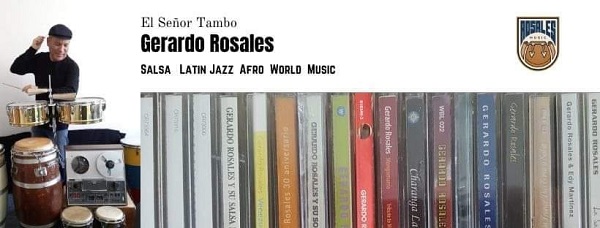
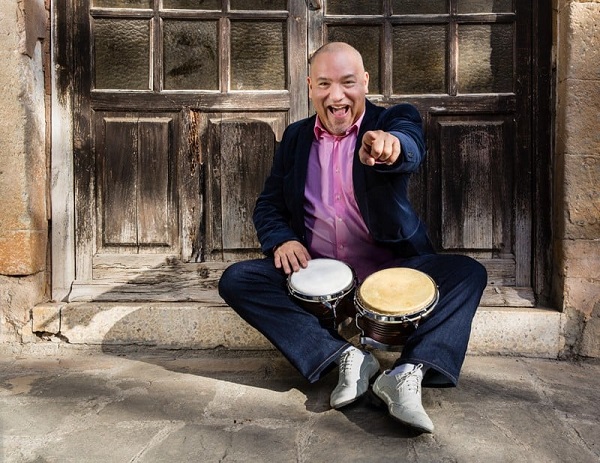
Gerardo Rosales is the creator and producer of Combo Mundial, Venezuela Masters and Charanga La Crisis

Gerardo Rosales was born in Caracas Venezuela on July 6, 1964. At the beginning of his musical career he was a percussionist for important figures of his country.

He has been living in Europe since 1992, and has taken up residence in Holland, a country that has served as a base for him to project his music around the world.

He has recorded 20 albums under his own name and more than 70 productions with other artists.

Gerardo Rosales’ specialty is creating musical projects in the styles of salsa and Latin jazz.

Gerardo Rosales is the creator and producer of El Combo Mundial, Venezuela Masters, Charanga La Crisis, Our Latin Groove, La Gran Charanga, Son del Sofá, Rítmico y Pianístico, Cachao Sounds and many more.

In his beginnings in his country Venezuela he performed with:  Orquesta Café, Orlando Poleo, José Rosario, Canelita, Soledad Bravo, Adrenalina Caribe, Ilan Chester, Cecilia Todd, Víctor Cuica, Alberto Naranjo, El Trabuco Venezolano, Joe Ruiz, Tabaco, Los Satélites, Nancy Ramos, Wilmer Lozano,Watussi, Trina Medina etc.

In Europe he has performed with: The Rosenberg Trio, Saskia Laroo, Hans Dulfer, Benjamin Herman, Peter Beets, Tango Extremo, Drums United, Nueva Manteca, New Cool Collective, Fra Fra Sound, Denisse Jannah, Laura Fygi, Izaline Calister, Metropole Orchestra, Holanda Big Band, Cubop City Big Band, Lilian Vieira, Rolf Sanchez, ChaChaChalina y Maite Hontelé etc.

Gerardo Rosales has accompanied on tours, recordings and performances in Europe artists such as Dee Dee Bridgewater, Benny Bailey, Paquito D Rivera, Bebo Valdés, Toots Thielemans, Jimmy Bosch, Juan Pablo Torres, Herman Olivera, Oscar D León, José Alberto El Canario “, Andy Montañéz, Meñique, Edy Martínez, Carlos” Patato “Valdés, Conexión Latina, Orlando Valle” Maraca “, Alfredo Rodríguez, Armando Peraza, Luisito Quintero, Ramón Valle, Larry Harlow, Adalberto Santiago, Frankie Vázquez, Oscar Hernandez, Africando, Chamaco Rivera, Luisito Carrion, Jorge Herrera, Edgar Dolor, Dorance Lorza, Luisito Rosario, Watussi, David Cada, and Tito Allen, etc.

The Records of Gerardo Rosales:

2016 Gerardo Rosales “Salsa Vintage” (Download – CD – LP)

2014 Gerardo Rosales “Son Del Sofa” (Single) ITunes

2013 Gerardo Rosales “Síguelo” (CD).

2011 Gerardo Rosales “Chano Pozo’s Music” (CD).

2011 Gerardo Rosales “30 Aniversario” (CD).

2010 Cachao Sounds “La Descarga Continúa” (CD).

2010 Gerardo Rosales “Buscando Chamba” (CD).

2009 Venezuelan Masters Orchestra “Toros y Salsa” (CD).

2008 Gerardo Rosales “Salsa Mundial” (CD).

2007 Our Latin Groove “Bringin’ it All On Back” (CD).

2005 Gerardo Rosales “Mongomanía” (CD).

2005 Charanga La Crisis “Salsa Antigua” (CD).

2004 Gerardo Rosales “Tribute to Fania” (CD).

2001 Gerardo Rosales “La Salsa es mi Vida” (CD).

2001 Gerardo Rosales & Edy Martínez “Rítmico y Pianístico” (CD).

1999 Gerardo Rosales “El Venezolano” (CD).

1998 Gerardo Rosales “Señor Tambó” (CD).

1996 Gerardo Rosales “Venezuela Sonora” (CD).

1992 Gerardo Rosales “Salsa Pa’lante de Venezuela” (CD).

1991 Gerardo Rosales “Salsa Pa’Lante de Venezuela” (33 RPM Vinyl).

Algunos discos grabados por Gerardo Rosales con otros Artista:

Orquesta Cafe “Criollisima” 1987 (Fama) Venezuela ( Salsa )

Joe Ruiz – Javier Plaza – Jose Torres – Gerardo Rosales

Bebo Valdes “Rides Again” 1994 ( Messidor) Germany ( Latin Jazz )

Paquito D Rivera – Patato Valdes – Amadito Valdes – Gerardo Rosales

Conexion Latina – “La Conexion” 1996 (Enja) Germany ( Salsa )

Rudi Fuesers – Leslie Lopez- Anthony Martinez – Nicky Marrero – Gerardo Rosales

David Rohschild “Looking Up” 1997 (Via) The Netherlands ( Salsa )

Adalberto Santiago – Banjamin Herman – Gerardo Rosales

Leslie Lopez “Bomba Moderna” 1999 (Buitenkunst) The Netherlands (Latin Jazz)

Ramon Valle – Joe Rivera – Nils Fischer – Gerardo Rosales

The Rosemberg Trio “Suenos Gitanos” 2001 (Polydor) The Netherlands ( Latin )

Toots Thielemans – Leonardo Amuedo – Gerardo Rosales

Ronal Snijders “Bijlmerjazz 2004 (Independent) The Netherlands (Jazz)

Randal Corsen – Jesse van Ruller – Gerardo Rosales

Cubop City Big Band “Arsenio 2004 (Tam Tam) 2004 The Netherlands (Cuban)

Lucas van Merwijjk – Edy Martinez – Nelson Gonzalez – Gerardo Rosales

Drums United “World of Rhythm” 2006 (Tam Tam) 2004 The Netherlands (World Music)

Lucas van Merwijk – Nils Fischer – Aly N ‘ Diaye Rose – Gerardo Rosales

Samba Salad – Metropol Orkest “Live Vredenburg” 2006 The Netherlands (World Music)

Herman Link – Dick Bakker – Maurice Luttikhuis – Rita Iny – Gerardo Rosales

Aquilez Baez “ La Patilla” 2007 (Cacao) Venezuela (Latin Jazz)

Anat Cochen – Huascar Barradas – Diego Alvarez – Gerardo Rosales

Maria Catharina “Obsecion” 2010 (Independent) The Netherlands (Jazz)

Adinda Meertins – Thomas Bottcher – Marc Bischoff – Gerardo Rosales

Masalsa “Resurreccion” 2012 (Independent) The Netherlands (Salsa)

Soeshiel Sharma – Ray de La Paz – Marcos Bermudez – Gerardo Rosales

Izaline Calister “Kandela” 2012 (Coast to Coast) The Netherlands (Latin)

Yumarya – Vernon Chatlein – Larc Alban Lotz – Gerardo Rosales

Africando “Viva Africando” 2013 (Sterms Music) France (Salsa)

Boncana Maiga – Oscar Hernandez – Doug Beavers – Luisito Quintero – Gerardo Rosales

Mezcolanza “Headbanger” 2015 (O.A.P Records) The Netherlands (Jazz)

Peter Wenk – Chistof May – David Barker – Mick Paauwe – Gerardo Rosales

Tango Extremo “ Havana” 2015 (JWA) The Netherlands (Latin)

Ben van den Dungen – Rob van Kreeveld – Tanya Schaap – Gerardo Rosales

Orquesta La Potente “ Potente “ 2018 (Independent) Colombia (Salsa)

Coco Ramirez – Guarnizo – Gerardo Rosales

Barry Hay & JB Meijers (Universal Music Group) 2019 The Netherlands ( Pop)

Barry Hay – JB Meijers – Gerardo Rosales

Estrella Acosta “Noche Cubana” 2020 (Independent) ( Cuban) Grammy Nominated

Carlitos Irarragorri – Pedro Luis Pardo – Gerardo Rosales

ChaChaChalina “Mira Antes de Saltar” 2021 (Independent) (Salsa)

Chalina Smit – Dani Brands – Gerardo Rosales

Actuaciones realizadas por Gerardo Rosales en diversos lugares del mundo:

Concerts & Events of Gerardo Rosales:

Poliedro de Caracas: Caracas – Venezuela

Centro Cultural BOD: Caracas – Venezuela

Feria de Cali: Cali -Colombia

North Sea Jazz: Rotterdam – The Netherlands

Toros y Salsa: Dax – France

SOBS: New York – USA

Club Babalu: New York – USA

Expo Sevilla 1992 : Sevilla – España

Festival Latinoamericando: Milano-Italia

Accessible Art Festival: Turquia – Mersin

Bimhuis: Amsterdam – The Netherlands

Melkweg: Amsterdam – The Netherlands

Concertgebouw: Amsterdam – The Netherlands

Paradiso: Amsterdam – The Netherlands

Oosterpoort: Groningen – The Netherlands

Glastonbury Festival: Glastonbury – England

Tabarka Jazz Festival: Tunesia

Music Haal: Berlin – Germany

Las Leyendas Vivas de la Salsa: Medellin – Colombia

Exit Festival: Serbia

La Topa Tolondra: Cali – Colombia

Punto Bare: Cali – Colombia

Cafe Libro: Bogota – Colombia

Bird: Rotterdam – The Netherlands

De Doelen: Rotterdam – The Netherlands

Paard van Troje: Den Haag – The Netherlands

Amazonico:Emiratos Arabes-Dubai

Home

Freddy de Jesús Ortega Ruiz “Coco & su Sabor Matancero”

Born on December 7 he comes from a very humble family but full of lots of love and flavor.

Roots:

my dad played the guitar and serenaded all the women in the neighborhood, my mom loved to play and sing, she would take a pewter plate and improvise a güiro and start playing and singing hahahaha. I also had an uncle who was a singer of Mexican music (Rancheras) my first recording was in 1965 with the Sexteto Tropical.

That’s where I come from.

Freddy de Jesús Ortega Ruiz
Freddy de Jesús Ortega Ruiz “Coco & su Sabor Matancero” y Dj. Augusto Felibertt

How many productions do you currently have?

In total I have about 45 productions with different groups, but with my Conjunto COCO Y SU SABOR MATANCERO I have 8 productions.

In your musical trajectory, which musicians have left their mark on you?

The first one was my debut in the professional field with Maestro Porfi Jimenez and the stars of Venezuela.

This was in 1974 where I had the joy of being the first Venezuelan singer to perform with Las Estrellas De Fania at the Nuevo Circo de Caracas.

And also to have accompanied great stars of Latin music with my Conjunto COCO Y SU SABOR MATANCERO.

Among them the Queen Celia Cruz, the Inquieto Anacobero Daniel Santos, Celio Gonzalez, Leo Marini, Nelson Pinedo, Lino Borges, Mundito Gonzales, Canelita Medina, Trina Medina Cheo Garcia, Memo Morales, Oscar D Leon and others.

Of the productions you have, which is the most significant?

One of them is the album entitled Coco y Su Sabor Matancero “Sabor Ritmo y Calidad” where the great singer and (sonero) José Alberto el Canario participates as director, chorus and co-producer.

And the other significant one is COCO Y SU SABOR MATANCERO CON “TODO” because there I managed to bring together several artists of the stature of Wilmer Lozano,

Mariana la Sonera de Venezuela, the comedian and singer El Moreno Michael and Rodrigo Mendoza, also the floor singers Luis Muñoz and my son Coco Ortega Jr.

How many productions have you participated in as an independent producer of your own?

Born on December 7th, he comes from a very humble family but full of love and flavor.
“Coco & su Sabor Matancero”

The first was Yo Soy El Son Cubano, Coco y Su Sabor Matancero en Concierto, a Gozar con Mi Son Cubano, Coco y Su Sabor Matancero Original, Coco y Su Sabor Matancero Tremendo Comban and Coco y Su Sabor Matancero “Con todo”.

Where are you currently living and how do you see the music scene there?

At the moment I am in Caracas Venezuela

At present, as in all parts of the world, we musicians have been the most affected since the work has declined too much, but we hope that with God’s favor things will open up little by little and that we will become aware that this is not a game and that we have to take care of each other.

Have you been in the best time of your life and what do you miss the most?

What I miss most is the era of the 70s, 80s, 90s.

When we played in three and four places on the same night.

Tell us about your last production?

As I told you, I had the pleasure of bringing together first class singers and the result was Coco y Su Sabor Matancero “Con Todo” (With Everything).

Coco y Su Sabor Matancero (ft: Rodrigo Mendoza) – Margot, tell us about this song?

Let me tell you that this song Margot is a Venezuelan waltz pasaje of which three versions have been made, the first interpretation was made by a great representative of our Venezuelan Music as it was Don Mario Suarez, then it was made by a great Peruvian musician Don Lucho Macedo.

And the most resent by Coco and its Matancero flavor and the person selected to interpret it was one of the great singer (sonero) Rodrigo Mendoza for his great interpretative quality of our Latin Music.

Do you miss Venezuela, your homeland?

The time I was living in the United States I missed daily my dear and always loved Venezuela, now I am in my homeland Venezuela.

What are we currently expecting from Coco & su Sabor Matancero?

My most recent production titled “Un Guaguancó Páramo” which was released on December 16, 2021.

“Un Guaguancó Pá mi Barrio” by Angel Flores, a song that brings together eight great

manages to bring together eight great exponents of our Latin music.

Freddy de Jesús Ortega Ruiz “Coco & su Sabor Matancero”

Performers:

Coco Ortega Jr.

Coco Ortega

Mariana “La Sonera de Venezuela”.

Angel Flores

Yorjan Cardona

Jimmy El León

Marcial Isturiz

Rodrigo Mendoza

Arrangement and Musical Direction:

Félix Guzmán “Guachafa”

Members Coco y Su Sabor Matancero:

Coco Ortega general director – singer, minor percussion

Andrés Romero “Tapón” – Trumpet

Cesar Guares “El Guaro” – Trumpet

Félix Guzmán “Guachafa” – Bass guitar

Franklin Infante – Piano

Igor Cochyze- Timbalito

José Araujo – Tumbadora – Singer

Coco Ortega Jr. – Singer

Yorjan Cardona – Singer

Backing Vocals:

Carlitos Guzmán

Eloy Blanco

Special guest:

Leo Pérez – Flute

Article of Interest: Fabián Rosales Araos Chilean singer-songwriter, native of the city of Valparaiso

Actress, comedian, and singer Carmen Nydia Velázquez tells us about the best of her career

Through a very kind friend of our editor Eduardo Guilarte, María del Carmen, we have been fortunate to make contact with the extremely talented Puerto Rican actress, comedian, and singer Carmen Nydia Velázquez, with whom we had the opportunity to talk with for our report on Bad Bunny’s Super Bowl halftime show.

It turns out that her career is so fascinating that we obviously had to talk to her and know much more about her artistic journey, both in her native Puerto Rico and abroad. Without further ado, these are the highlights of our conversation.

Carmen Nydia cantando
Carmen Nydia Velázquez singing live

Carmen’s education and start in acting

When it came to her academic background, theater always caught her attention, but she also loved to sing. These tastes led her to study drama at the University of Puerto Rico, where she brought out her histrionic talent and showed just how good she would be at doing comedy in the future.

Even before graduating, she already worked in theater and appeared in Francisco Arrivi’s play *Vejigantes*. At that time, she was in her last academic year, and the play was a tribute to the great Puerto Rican actress Lucy Boscana, who had died back then. For many years, Boscana played the character of Toña, and Carmen did the same when it was her turn in this new version, which had so much impact that it led to a film based about the same story.

Then, in the 1970s, she joined the musical group Moliendo Vidrio, led by Gary Núñez, and was there for about 11 years, while doing theater and television. The group took up a lot of Carmen’s time and was part of the New Song movement in those days.

Kiosko Budweiser and Susa Cruz

In 1983, Carmen first portrayed who is still considered one of her most iconic characters to this day, Susa Cruz. Channel 7, known at the time as Teleluz, first aired the comedy segment Kiosko Budweiser, featuring the beloved Susa alongside other iconic characters such as Epifanio, Johnny El Men, Humberto, and El Negrito.

Carmen Nydia and Victor
Carmen Nydia Velázquez (Susa) and Víctor Alicea (Epifanio)

When Teleluz ceased to exist, Carmen took a break from the character to continue her theatrical activities and start singing professionally. However, later, Channel 4, Guapa Televisión, called the actors back to do the segment again, which is when it became a media phenomenon and gave immense fame to the characters, especially Susa and Epifanio.

The high popularity of the show and its stars made them appear on TeleOnce, which continues to air today, and Telemundo, where they are recurrent figures during the regular programming.

People enjoyed Susa and Epifanio so much that they have even hosted a radio show, and both Carmen and Víctor Alicea (Epifanio) will soon celebrate their 38th anniversary as an artistic couple, though they have not yet decided what to do for that day. 

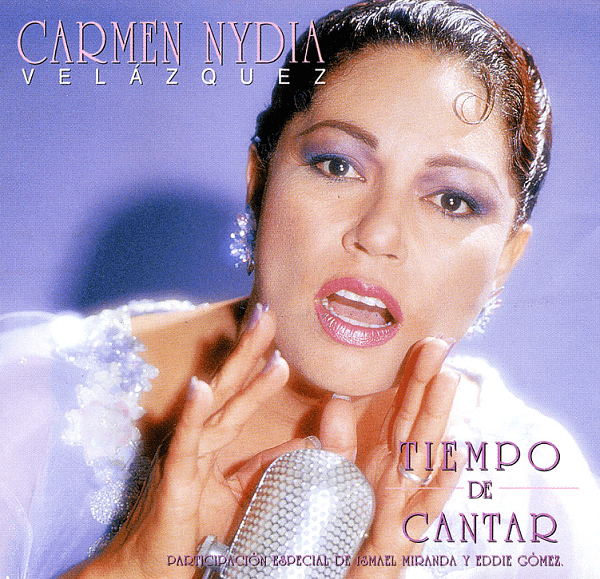
Tiempo de Cantar

By the late 1990s, she released an album of boleros titled “Tiempo de Cantar,” which was her first solo production. It all started with a show by Susa and Epifanio in the south of Puerto Rico, where they met a musician friend of hers named Cacho Montalvo. 

He has spent many years urging her to go back to singing, but she ws not entirely sure due to all the professional commitments she already had, added to the fact that she did not have very fond memories from the time in which she had to promote her own music of the New Song movement which, being so traditional, did not receive the media coverage it deserved. This killed Carmen’s enthusiasm, as she took for granted that she would never sing professionally again.

However, Montalvo and Carmen’s husband “conspired” to some extent to convince her, and they succeeded. On the album, the artist pays tribute to the songs she grew up with and used to hear on the radio as a child, achieving a result she loved. 

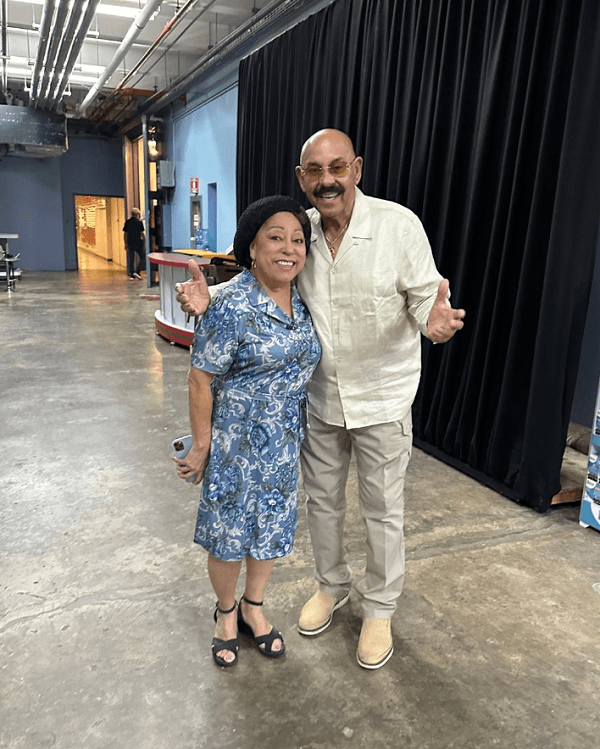
Carmen Nydia and Oscar
Carmen Nydia Velázquez y Oscar D’ León

Her solid background in theater gave her the ability to convey her feelings through her voice and expressions, which made her have a wide acceptance. In fact, she is now a member of the Music Hall of Fame in Puerto Rico, a venue dedicated to romantic and bohemian music that hosts live events featuring artists associated with those genres. 

Hacienda Susa

Among the many projects she was involved in, Carmen also ran a restaurant and activity center called “Hacienda Susa.” She describes this stage of her life as interesting, yet exhausting and demanding at the same time.

Due to the success she had on television, the project did very well, so she and her team were there doing shows for visitors from all over the island practically every day. The problem was that it was too much work for her at the time, and she told us that sometimes, she had to leave the hacienda to perform a show outside, return to meet her commitments there and then close the venue. 

The above, added to the fact that everyday fewer people were coming to the venue and the extremely high rent Carmen had to pay, made her ask herself if it was really worth continuing with the project in exchange for those dividends. That was when she finally got tired of it and decided to close the venue indefinitely to focus on what she was truly passionate about: acting.

Album by Carmen Nydia
Cover of the album ”Tiempo de Cantar” by Carmen Nydia Velázquez

Read also: Background and reactions to Bad Bunny’s halftime show in The Super Bowl

Uruguayan composer and multiinstrumentalist Sebastián Natal and his band Grupo Sensación

After having contact for days and overcoming some pitfalls, we could finally get to talking with producer, composer, and multi-instrumentalist Sebastián Natal, who kindly attended and revealed his views on the path he has followed to become the great artist he is today. 

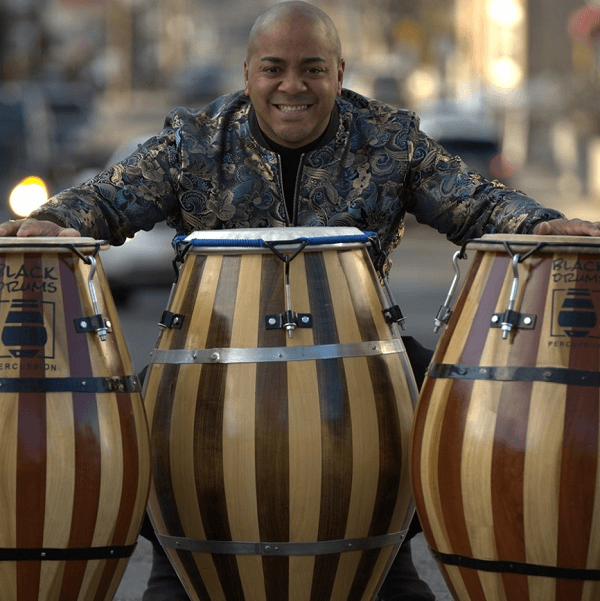
Sebastián Natal posing
Sebastián Natal posing for the camera with his instruments

Sebastián Natal’s beginnings

First, Sebastián appreciated our interest in learning a little more about him and began to describe his native country’s musical and cultural context at the time. First of all, the artist was born in Montevideo, Uruguay, where a tropical music movement was established by then, considering many genres from the tropics and the Caribbean, such as salsa, bachata, merengue, cumbia, guaguancó, and many more.

Obviously, these genres did not originate in Uruguay, as bomba is Puerto Rican, salsa is Cuban, and bachata is Dominican. However, there were quite a few groups and musicians who used these tropical roots to create their own identity. Outside of Montevideo, other provinces listened much more to cumbia and charanga.

The orchestras that played these rhythms were dedicated to developing covers of salsa songs, but by bringing them into other genres that were emerging at the time, such as plena, plena danza, and bomba, among others. Sebastián grew up with this sonority in his country, so the whole musical environment he was exposed to abroad became very familiar to him and easy to assimilate. From the early ‘nineties, as a young boy, he began to absorb all the influence from the dawn of romantic salsa and iconic songs such as “Aquel Viejo Motel,” “Cinco Rosas,” “Sin Sentimiento,” “Amores Como El Nuestro,” and many others of its kind. 

It is worth adding that Sebastián comes from a family of musicians, starting with his own father, Yeneca Natal, who was the musical director and pianist for Grupo Sensación. Music always surrounded him, so it can be said that he was meant to follow this path. 

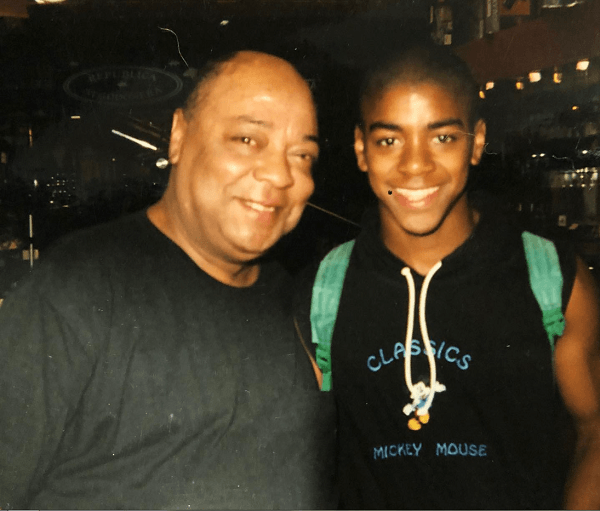
Sebastián and Yeneca Natal
Sebastián Natal next to his father Yeneca Natal

When and why Sebastián left Uruguay and moved to New York

In 2005, at just 21 years old, Sebastián joined the Sonora Borinquen, which was the most popular orchestra at the time. Thanks to them, he had the opportunity to tour the United States and Canada, where he could see environments and ways of working that were completely different from what he was used to. Two years later, he toured the United States again, but by then he already saw the country as a new destination to advance his career.

Unfortunately, Uruguay was becoming too small for the plans he had for his development in salsa, which sparked his curiosity about the Big Apple and all it had to offer him musically speaking.  

By 2008, he decided to move to New York for a few months, but so many doors opened for him that he never left and continues to live there to this very day. 

Sebastián, the multi-instrumentalist

The first instrument Sebastián came in contact with was the piano, which he started playing it at age four and from which he graduated at age 11. Since he had not attended high school yet, he could not study a master’s degree to continue his musical education. In addition, he was a child who wanted to play football and do the usual things for his age, so a few years later, his father made him join an Afro-Uruguayan music group. In that orchestra Sebastián played piano and bass, which allowed him to further develop his skills with those instruments. 

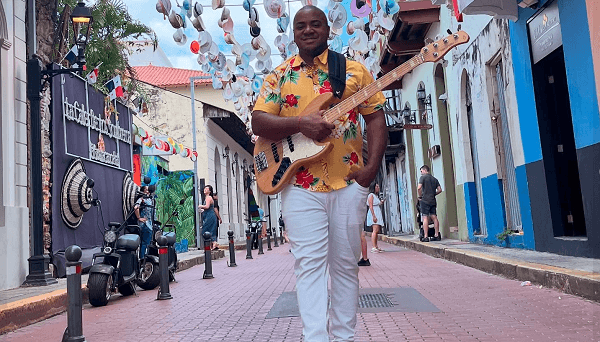
Sebastián in Panama
Sebastián Natal in Panama City

After that, he began to create his own tropical music band, inspired by the Venezuelan orchestra Los Adolescentes. All the members were minors, and, as well as in the previous group, Sebastián also played piano and bass.

Sebastián as a producer and composer

Regarding his role as a producer and composer, Sebastián confessed that he has no idea how he came to learn these areas of music. He did emphasize that he always lets his music and his feelings flow to deliver the message he wants to convey in each of his pieces. After that, he defines the ideas and adds the music.

He says he greatly admires professional lyricists and composers. He admits he is neither the best nor the worst composer, but he always tries to reach his own heart to convey what he feels. 

Sebastián Natal Y Grupo Sensación

The idea of Grupo Sensación started with the orchestra of the same name where his father worked in 1982, but unfortunately the group did not have much impact due to how closed that environment was at the time. There were a number of orchestras that got the best contracts, and it was very difficult for the rest to achieve. Over time, Yeneca left Grupo Sensación and managed to join several of these more established orchestras to gain more reputation.

Soon after, when Sebastián moved to the United States, he almost immediately noted that the Uruguayan community needed a tropical orchestra, but he did not know what name give it. With the passing of his father on October 19, 2010, he chose to use the name “Grupo Sensación” as a way to continue the legacy of his father and the tropical movement born in his country so many years ago. 

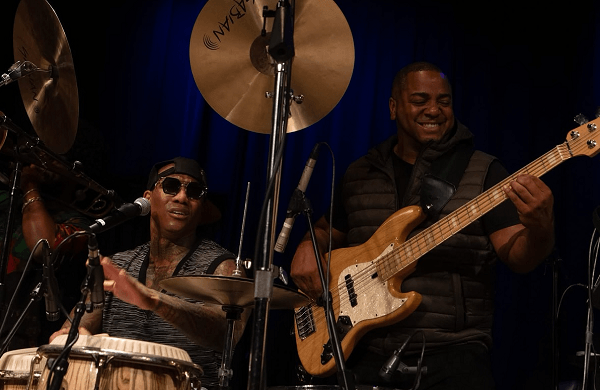
Sebastián and Pedrito
Pedrito Martínez and Sebastián Natal on stage

Artists he has collaborated with

Sebastián has had the opportunity to collaborate with artists of the stature of Nino Cegarra, Oscar D’León, José Alberto “El Canario,” Domingo Quiñones, Tony Vega, Roberto Blades, Cheo Feliciano, Tito Nieves, Viti Ruiz, and many more. However, few were the ones with whom he has truly been able to have a conversation or a close connection beyond purely profesional relationships.

“You can only say you played with someone if you’ve had a connection with that person. I’ve been able to play with great artists, but many times they don’t even know who I am. That’s why I don’t include them on my resume. Now if they call you back, then you can say you did things very well and that there’s someone really interested in you,” said Sebastián on this interesting subject.

The cases of Bill Murray and Camila Cabello were completely different, as he managed to record songs with them through his friend and fellow musician, Pedrito Martínez, whom he describes as “the best percussionist in the world”. It was also Martínez who connected him with the world-famous composer and guitarist Eric Clapton, with whom he performed at the American Airlines Center in Dallas—one of the most beautiful experiences he has had in his career and his life in general.

Read also: Bandleader and conga player Tony Rosa tells us how he built his career

  • « Go to Previous Page
  • Page 1
  • Page 2
  • Page 3
  • Page 4
  • Page 5
  • Page 6
  • Interim pages omitted …
  • Page 33
  • Go to Next Page »

International Salsa Magazine (ISM) is a monthly publication about Salsa activities around the world, that has been publishing since 2007. It is a world network of volunteers coordinated by ISM Magazine. We are working to strengthen all the events by working together.