• Skip to primary navigation
  • Skip to main content

International Salsa Magazine

  • HOME
  • Previous editions
    • 2026
      • ISM / March 2026
      • ISM / February 2026
      • ISM / January 2026
    • 2025
      • ISM / December 2025
      • ISM / November 2025
      • ISM / October 2025
      • ISM / September 2025
      • ISM / August 2025
      • ISM / July 2025
      • ISM / June 2025
      • ISM / May2025
      • ISM / April 2025
      • ISM / March 2025
      • ISM / February 2025
      • ISM / January 2025
    • 2024
      • ISM / December 2024
      • ISM / November 2024
      • ISM / October 2024
      • ISM / September 2024
      • ISM / August 2024
      • ISM / July 2024
      • ISM / June 2024
      • ISM / May 2024
      • ISM / April 2024
      • ISM / March 2024
      • ISM / February 2024
      • ISM / January 2024
    • 2023
      • ISM / December 2023
      • ISM / November 2023
      • ISM / October 2023
      • ISM – September 2023
      • ISM – August 2023
      • ISM July 2023
      • ISM Edition June 2023
      • ISM – May 2023
      • ISM April 2023
      • ISM March 2023
      • ISM February 2023
      • ISM January 2023
    • 2022
      • ISM December 2022
      • ISM November 2022
      • ISM October 2022
      • ISM September 2022
      • ISM August 2022
      • ISM July 2022
      • ISM June 2022
      • ISM May 2022
      • ISM February 2022
      • ISM January 2022
    • 2021
      • ISM December 2021
      • ISM November 2021
      • ISM October – 2021
      • ISM September 2021
      • ISM August 2021
      • ISM July 2021
      • ISM May 2021
      • ISM April 2021
      • ISM June 2021
      • ISM March 2021
      • ISM February 2021
      • ISM January 2021
    • 2020
      • ISM December 2020
      • ISM November 2020
      • ISM October 2020
      • ISM September 2020
      • ISM August 2020
      • ISM July 2020
      • ISM June 2020
      • ISM May 2020
      • ISM April 2020
      • ISM March 2020
      • ISM February 2020
      • ISM January 2020
    • 2019
      • ISM December 2019
      • ISM November 2019
      • ISM October 2019
      • ISM Septembre 2019
      • ISM August 2019
      • ISM July 2019
      • ISM June 2019
  • Download Salsa App
    • Android
    • Apple
  • Spanish

Search Results for: Puerto+Rico

Chevy El Pitirre De La Salsa and his interesting career

José Flores Pérez

Jose Flores Perez, better known as Chevy El Pitirre De La Salsa, is a salsa singer who was born in the town of Cidra, Puerto Rico, but currently resides in Georgia. We have had a very pleasant conversation with the salsa exponent, in which we have touched on certain various professional and personal tissues never mentioned before. It is a real pleasure for us that he has agreed to talk with us and tell a little more of his personal story on this platform, which is International Salsa Magazine.

Chevy El Pitirre De La Salsa was born in Puerto Rico, but now lives in Georgia, United States

Origin of his artistic name

”Chevy” is a nickname his parents and friends always gave him and ”pitirre” refers to a Puerto Rican bird with very short dize, but a very strong character. Maestro Felix Ortiz name him ”El Pitirre” because of the way he sings and improvise in the stage and the trust between them was such that he even became the music director of his orchestra. This combination of nicknames was what made Flores start to become known by that way during the last four years of his career.

Influences and predilection for salsa music

The reason Chevy opted for salsa was the great influence from his family. His father was a salsa singer for local orchestras in Chicago, which made him listen to various Puerto Rican genres such as salsa, bolero, jibaro music and trova throughout his childhood.

There were years when he really enjoyed listening to hip hop and rap in the late 80’s and early 90’s, but it didn’t take long for him to reconnect with salsa when he started listening to Héctor Lavoe, Ismael Rivera, Sammy Marrero, Bobby Valentín, Cano Estremera, among others. Listening to all these idols and what they achieved led him to take salsa much more seriously.

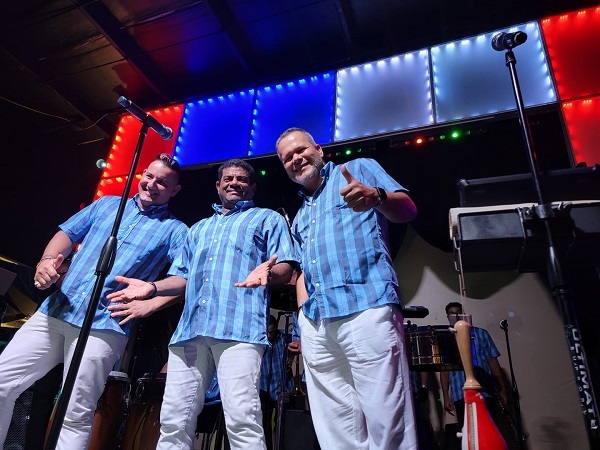
Chevy El Pitirre De La Salsa performing on stage

His time in the military and formal beginnings in music

During his time in the military, he performed in different orchestras and accompanied various artists throughout Atlanta. Although this was a demanding career, he organized himself to pursue his interest in music. When he leaves the armed forces, he went to Puerto Rico, where he lived for a great deal of time until he moved to Georgia in 2016.

His current residence is still in this state for professional reasons totally unrelated to music, but he had been there around the time he served in the army, so this part of the United States was not unknown to him. It is there that he resumesd his musical career after so many years.

In 2017, he began to compose, but it was not until two years later when he decided to launch as a soloist, make his first single ”Instrumento de amor” and carry out his first independent musical project entitled ”Entre el amor y el vacilón”.

In this same year 2019, he took advantage of the internet and social networks to become known at an international level and released his second record production during the pandemic, but the singer does not think this situation has hurt his carrer. On the contrary, he believes that social media and digital platforms gave him the push he needed to promote his artistic proposal.
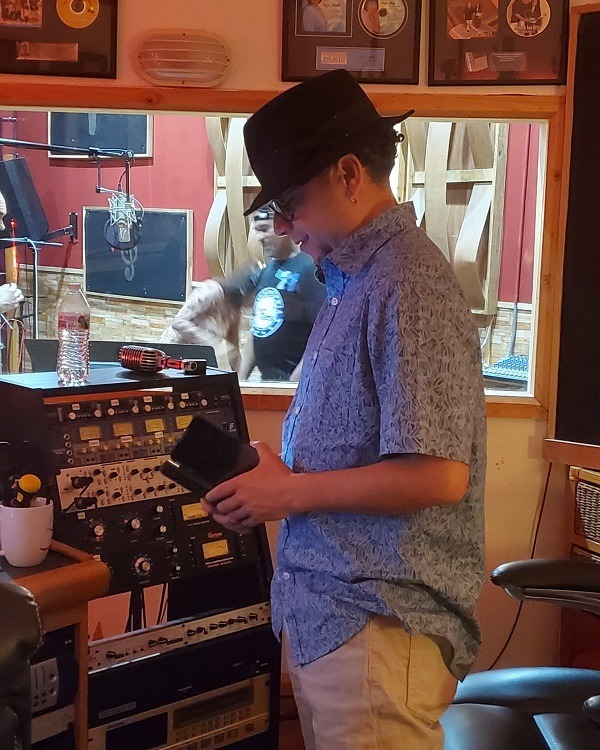
Chevy El Pitirre De La Salsa recording in the studio

Recent projects

One of his most recent projects was carried out in 2019, is titled ”Atacando en Navidad” and was born from the songs ”Arbolito de Navidad” and ”Compay no se me raje”. The first is written by Chevy, but the latter was composed by the legend Johnny Vega. At some point, the artist decided that these two singles were not enough, so he created a full album based on the Puerto Rican parranda he always enjoyed as a child. The result is a mix of nostalgia, sadness, love and joy. He tells how Christmas was celebrated at home, his childhood dreams, what this time meant to his family and the sadness when a loved one dies that year.

One of the most significant songs is ”Navidad Sin Parranda”, which was written a year before Chevy’s mother died. She was so ill at the time that the whole family thought she suddenly would lose her life, but fortunately she did not. Back then, the salsero was beginning to imagine a life and a Christmas without his mother, as she kept the family together and her house was the meeting place for all the important dates.

It just so happens that Venezuelan musical arranger Willy Melo lost his father within a few days of receiving the song, so he was very connected to that same pain around the same time.

Read also: Isaac and Esteban Hernández, two brothers making history
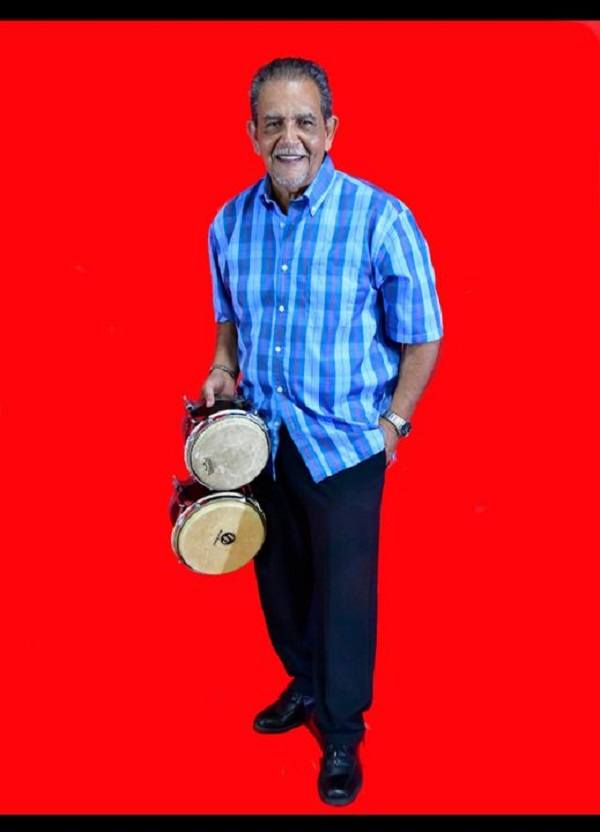
Founder of the Son Latino de Orlando Orchestra Carlos Rodríguez

Who is carlos Rodríguez?

We have been fortunate to talk with founder and bongo player of the Son Latino de Orlando Orchestra, Carlos Rodríguez, who started out with him thanking us for the opportunity to talk a little about the group he leads and how has the process of reaching more and more audiences been.

Founder of Son Latino De Orlando and bongo player Carlos Rodríguez

Rodriguez started in the world of music in the 70’s in his native Puerto Rico, where he was part of a few orchestras. His first group was Imperial Orchestra and later he played percussion with Conjunto Secas in the town of Sábana Seca, but it was not long before he created the Sabrosona Orchestra. He started making vocals with Tony Vega and very small performances until he decided to retire for a while and go to Florida.

While in the United States, he realized that his love for music was still intact and decided to form another orchestra in the city of Orlando about eight years ago, which he decided to name ”Son Latino de Orlando ”. It was Carlos himself who decided to name his group that way while he was at home one day, which was when he thought of ”Son Latino” and decided to add ”de Orlando” in honor of the place where they are living and working.

In addition to being the owner and founder, he also plays the bongo, does vocals and plays minor percussion. Another role he plays in the orchestra is to carefully select the members who will become part of his orchestra, but he confesses that he has been lucky enough to have several of the same collaborators for many years, such as Davin Rojas, Rafael Rico, Luis Soriano, Danny Rojas, Chris Torres and Kevin Figueroa (music director of the orchestra and pianist). All of them have been very important in the group’s growth in recent years from their very specific roles. If there are any changes, they are made known to the fans so that they keep it in mind.

Danny Rojas, Rafael Rico, and Luis Soriano from Son Latino de Orlando

Biggest challenges

Carlos tells us that one of the biggest challenges faced by he and his guys is that those who usually hire their services do not pay what is fair for their work. Club owners are not really interested in paying for a good orchestra that offers a quality show, so they just choose the cheapest.

One of the biggest problems they have had to face is that if contractors consider that those in charge of the orchestra are asking for a very high payment, they will always choose the group that less money demands, no matter its quality is not the best.

Rodríguez makes it clear that at no point does he criticize any colleague for this, since all musicians do what is necessary to survive and excel in the industry through the work they do. However, he thinks that club owners and managers should modify the elements relied upon by them to choose their artists, since the bigger loser is always the audience.

How to balance business affairs with the love for art and music (título 3)

”You have musicians behind you and you have to meet with them. To be able to keep your orchestra, you have to go outside to look for your events and guarantee your work” was the first thing the musician said when we asked him how he balances business with the love for music. It is he himself who is in charge of knocking on the doors of the establishments, making his proposals, waiting for calls, indicating prices, signing contracts and arranging dances. 

He also stated that it is very important to always lay out the terms of each contract so there are no unpleasant surprises such as last minute cancellations or misunderstandings.

Rodríguez performing on stage

How to balance original music with covers

”We always try to have a balance between romantic salsa, melodic salsa and hard salsa,” says Carlos. The orchestra has three singers who take turns on lead vocals depending on the type of salsa to be played, but there are mamy times when they are all combined in one song and adapt to the rhythms.

In all its performances, the orchestra sings both covers with different arrangements and original numbers. Depending on the place and the type of event, they always try to combine the music and build up a whole repertoire based on that specific audience preferences.

Opinion on new talent

On this topic, Rodriguez said that there are very talented new artists, but they must be allowed to grow and be original. ”Just because you have a middleweight name doesn’t mean you have to be arrogant and put aside humility. You have to be willing to listen and learn from the older guys in the business” said the artist.

For the bongo player, the speed of progress in this career makes many talented kids lose the north and get carried away by arrogance and the desire to know everything. He always tries to give advice to the kids who want to devote themselves to music with whom he has the opportunity to talk so that they can do their best.

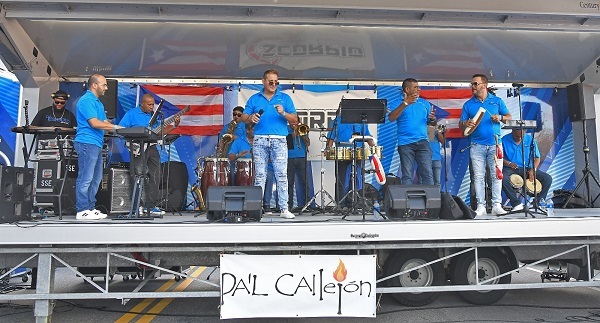
The whole orchestra performing on stage

Read also: Producer, composer, and singer D’ William tells his story

Producer, composer, and singer D’ William tells his story

Who is D’ William?

William Pagán Díaz, artistically known as D’ William, is a talented producer, composer and singer with extensive experience in various tropical genres. He was part of the Oro Negro Orchestra and the Tañón Band before starting his solo career. We were fortunate to talk to him and learn a little more about his history and career.

Producer, composer, and singer William Pagán Díaz

How his career began

The Oro Negro Orchestra represented his first musical experience and he was about 17 years old at the time. In fact, his mother had to sign a contract for him to be part of the group because he was underage. He stayed there for a year until he got asked to audition for the Tañón Band, a group that Olga Tañón was creating at the time.

After auditioning with 300 or 400 candidates, I was chosen as the last missing member for the group because it required four and there were only three. D’ William told us that he felt he had the world in his hands due to work with Olga Tañón, but unfortunately she decided to broke up the band because she had other plans. At that time, Pagan did not know what to do with his life because he thought he had already pursued the ultimate in his career, so he decided to turn his life around, enlist in the army and forget all music.

These years of his life contributed a lot to strengthen his discipline, but he also realized that he did not want to dedicate himself to military life forever. After he retired, he moved to Japan and lived there for about seven years, during that time he was introduced to Puerto Rican salsa thanks to some friends. He started singing salsa, but always saw music as sort of a hobby and not as something he wanted to do professionally.

He toured all over Japan with the Conquistando Orchestra and composed for other artists and various franchises, but nothing for himself. In 2010, he decided that he wanted to change that situation and recorded six salsa songs with the idea of moving to Puerto Rico thinking he was going to find the same country in the musical field. Then, all the songs recorded by him stayed on the hard drive of his computer and he could not do anything with them.

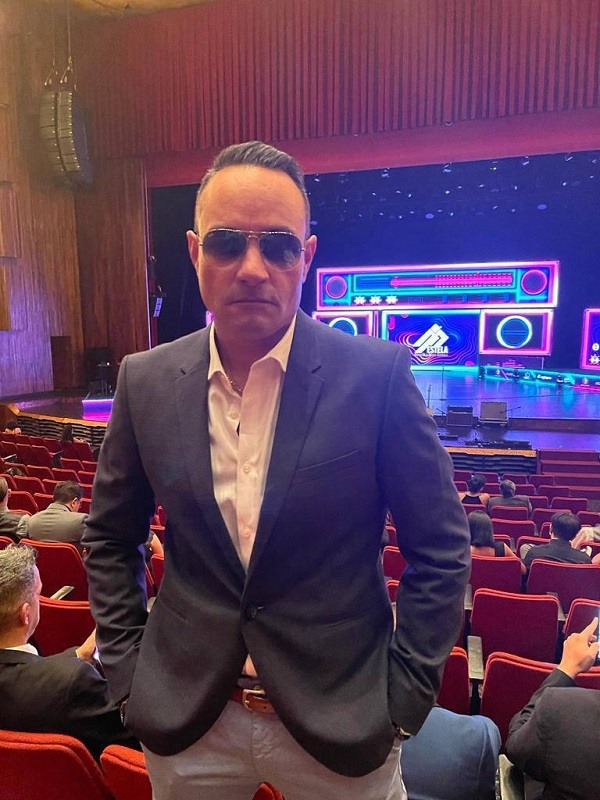
D' William at the Estela Awards
D’ William at the Estela Awards

Unable to get a job, he decides to use his veteran’s benefits to complete his education, which leads him to study criminal justice and law. In 2018, a job opportunity as a lawyer for the federal government in Washington DC arose, so he moves there and meets some people who reconnect him with music thanks to his career in Japan.

When the COVID-19 pandemic arrived, he finally made the decision to start his solo career and choose a stage name that referred to his real name, which led him to use D’ William. In September 2020, he recorded his first song titled “24 horas enteras” giving start to his solo career.

Why use merengue as a base for his music?

Although merengue has not had such a boom in recent years, D’ William is passionate about this genre that he never wanted to leave aside and even said that “a party without merengue is not a party”. The artist wanted to do something that included a tropical genre handled very well by him and he knows he was right about deciding on merengue, since he has observed a renaissance in the popularity of this set of rhythms with the help of artists such as Elvis Crespo, who was again seen in awards recently.

Music for millennial ears

D’ William points out that the most important elements of merengue will always be present in his work, but in his own words, ”the years and generations make the music evolve”. Since the performer did not want to stignate in the same thing, he tries to experiment with a new style of singing merengue and writes some of his lyrics with other genres in mind, such as dembow. He also incorporates kicks, snares, synthesizers and other sounds to reach millenial ears.

This combination of the above elements has made the reception to the artist’s music great.

D' William performing on stage
D’ William performing on stage

Experience in Guatemala

D’ William also told us about the Estela Awards in Guatemala, which he did not knew nothing about until he was invited to attend. Once there, he noticed the importance of these awards for Central America, as they recognize the talent of Guatemala, El Salvador, Costa Rica, Nicaragua, Mexico and many more.

He had the honor of being in its sixth edition and seeing how artists who did not have the opportunity to be in bigger events such as Billboard, Tu Música, Latin Grammy, among others, were awarded. Something very special about this year was the participation of a Puerto Rican delegation of for the first time in its history, in which D’ William was with several of his compatriots.

The reception of the public and press towards this group was great and they really enjoyed the show. They were so well received that they plan to return soon in December to continue delighting Guatemalans with their talent.

What did D’ William do during the pandemic?

D’ William told us that he did a lot of things for himself and other colleagues during the pandemic. He did a great collaboration on a track with Dominique Patrick Noel, a French percussionist with whom we had the pleasure to talk beforehand. They have done several songs together in which the Puerto Rican sings and does some arrangements with Noel.

He also sang with Eduardo Padua, who is a very famous Puerto Rican conguero in Virginia and Peruvian Andy Caseda.

D' William did interesting collaborations during the pandemic
D’ William did interesting collaborations during the pandemic

Read Also: The interesting story of French percussionist Dominique Patrick Noel

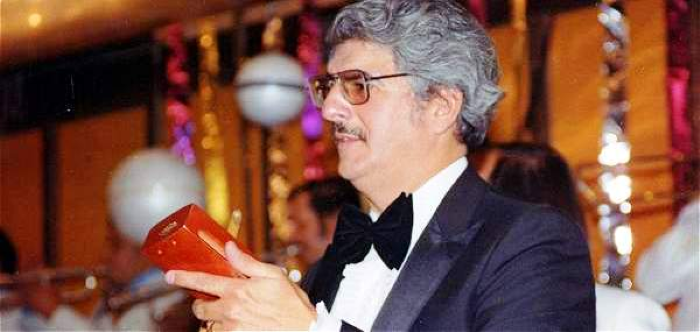
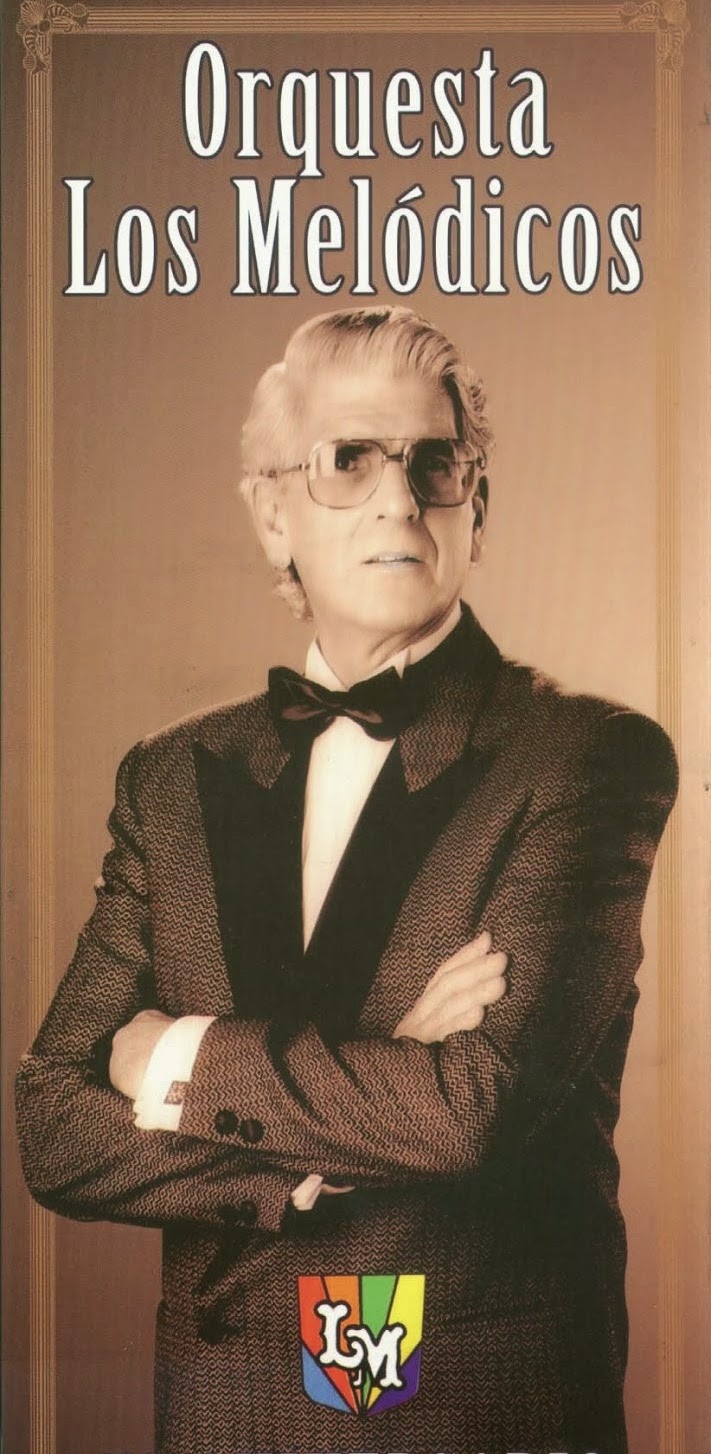
Renato Capriles, the man who imposed the rhythm with “Los Melodicos”

Dance bands have always added flavor and rhythm to parties in the Caribbean, but one of the greatest was born in Venezuela at the hands of Renato Capriles, “Los Melodicos”. An entrepreneur with an interesting vision of music, who knew how to adapt to what the public wanted, throughout the decades that accompanied his great project. In the following lines, we will tell you about his life and what he thought of his experiences.

Early years of Renato Capriles

Contrary to what many believe Renato was not born in Caracas, but in a small town called San Esteban located in Puerto Cabello, Carabobo state on December 28, 1931. In his own words:

“It was a town where only six or seven families lived. The rest of the inhabitants were people who served in those houses. San Esteban is about an hour from Puerto Cabello and it is still a very beautiful area.”

His arrival in Caracas is due to the death of his father, at that time his older brother, Miguel Ángel, decided to move the family to the capital and develop the businesses for which the Capriles family would later be well known in Venezuela. In addition, that is why it is known that he was born into a wealthy family, so business is something that he carried in his blood. They were also a large family, Renato being the 13th sibling of 14, which is why he always considered it his lucky number.

Arriving in Caracas, they settled in La Pastora, where the Capriles spent their childhood and adolescence. Renato himself even commented that he traveled those streets with a velocipede that was given to him for his birthday. During his adolescence he began to be closer to the dance bands of the time, although music always accompanied him, showing an innate ear since he was a child. But it was as a teenager that he went to parties in the main  square and listened to the radio:

“Already a little older – 16, 17 or 18 years old – the programs I listened to were “A Gozar Muchachos”, Billo’s program, of course, and the program that Luís Alfonso Larraín had. Those were the two great orchestras…”

At that time he also began his professional stage, first as an office boy at Inex S.A., owned by the German businessman Gustavo Zingg. Thanks to his friendliness and knowing how to treat people, he met Zingg and his children, who, seeing his hard work, promoted him to store salesman and then itinerant salesman aboard a Land Rover, with which he toured much of the Venezuelan territory selling everything, including power plants.

Then he decided to follow his family’s vein and set up his own business in Valencia, a clothing store that he bought from his brother-in-law who was a travel agent for two clothing factories. However, this only lasted 2 years, this being the only business that Renato failed. His mother asked his brother Miguel Ángel to take him to the company, known at that time as Cadena Capriles, which little by little became a publishing conglomerate.

Renato came to the organization and formed the company’s Public Relations department from scratch, something he was always very proud of and that he kept reminding in every interview. In fact, that vein of public relations is what led him to achieve that impressive success with “Los Melodicos”:

“I think I was born with that. I always make the comment that more than a musician I feel like a born relationist. All my life I have done it and I have applied it…”

The Birth of “Los Melodicos”

Although it may seem like a joke due to the supposed enmity between the two, it was Billo Frómeta’s orchestra that prompted Renato to form “Los Melodicos”. The young Capriles spent his adolescence listening to Billo’s Caracas Boys on his radio program “A Gozar Muchachos”, he also listened to other orchestras that competed with Billo’s for the popularity of Venezuelans and neighboring countries.

In addition to that, Renato Capriles was always linked in one way or another to music, not only did he have rhythm and an innate ear, but also his businessman’s mind led him to give his own orchestra a different organization. In fact, at the time that the Capriles family lived in La Castellana, he and his younger brother Juan Felipe had a small band of 5 musicians. Therefore, Renato already had experience in the formation of bands and orchestras.

In 1958 Renato finally decided to follow his most longed-for dream of having his own orchestra and taking advantage of the problem of the veto given to maestro Billo, Renato looked for him to help him with the composition and arrangements. As he commented in the interview he gave to Alfredo Churión D. and his space “Aquí están todavía”:

“There is a bit of fantasy about the creation of my orchestra. I was a big fan of Billo and always wanted to have an orchestra that sounded like his. I’ve always said it!… (Billo) he had opened a business in Sabana Grande which he baptized El Rincón de Billo in where he played the piano for the large number of friends who visited him there. And there I introduced myself to him one day with Tere, my first wife, to give an outlet for the concern I had had since I was a boy, which was to have an orchestra.

And my words were: ‘Billo, the reason for my visit is not to come and hear you play the piano or have drinks at the bar, but rather to propose that you make arrangements for an orchestra that I’m going to found and I’ll give you 50% of profits’… All in all, after seven months my orchestra appeared with its arrangements. He could not appear anywhere with them because no musician could get close to Billo at that time under penalty of being banned for life too.”

“Los Melodicos” made their debut in a television program that was sponsored by Cadena Capriles, it was called Su Revista Musical. Renato was the producer of the show and there the animator Henry Altuve made his debut, who had only worked on the radio until that moment. The orchestra’s first LP came with arrangements and a composition by Billo. So it had its sound but at the same time it didn’t:

“He arranged very lively with a very commercial sound, but it didn’t sound like him. On my orchestra’s first LP, although it’s his arrangement, it’s not his sound.”

Another important thing to highlight was the way of working and how Renato organized the orchestra, along with his innovative system of paying the musicians:

“I created a form of payment for musicians that did not exist at the time and that caught Billo’s attention when he reappeared with his orchestra in 1960. I invented the rates for musicians and I can prove it to you because I have the contracts saved. A first high earned eight hundred bolivars a month and a good second tenor earned six hundred. It was the first orchestra that earned salaries. It wasn’t like Billo’s where each musician earned a percentage. I created the orchestra as a company. They had, and still have, Social Security, Savings Bank, interest-free loans, etc.”

Renato’s golden age with “Los Melodicos”

The “Los Melodicos” orchestra has been faithful to the motto that has accompanied it throughout its extensive musical career: “The orchestra that imposes rhythm in Venezuela”. They began with the singers Víctor Piñero “Rey del Merecumbé” and Germán Vergara, but they were innovative by having a woman in the ranks of an orchestra for the first time: Emilita Dago.

Since then, singers and musicians like Rafa Pérez, Manolo Monterrey called the “Ciclón Antillano”, Niro Keller, Cherry Navarro, Cheo García, Roberto Antonio and Miguel Moly have passed through its ranks over the decades; while among the girls were Norma López, Diveana, Floriana and Liz.

What differentiated “Los Melodicos” from other orchestras in those decades was the innovation that Renato put into it. One of those great examples is presenting varied rhythms outside of the Latin dance rhythm. They came to play the twist with the singer Teresita Martí, which brought them great problems since it was considered “… a vulgar and ordinary rhythm.” They also came to play songs with touches of rock, but their most significant sound is techno with songs like “Papachongo” and “Que Rico”, where Diveana managed to capture more than one heart.

During all the years that Renato was in charge of the orchestra, there were many rumors of romantic love affairs with his singers, to which he himself replied:

“17 female figures have passed through my orchestra and I have had romantic relationships with 7 of them. Some are stormy and others very beautiful. People think that I’ve gotten involved with all of them, but that’s not the case. Raise fame and go to sleep.”

Renato’s rhythm went off before his time

Renato Capriles left us on the morning of July 8, 2014, he had already been hospitalized for days in a clinic in Caracas, all due to pneumonia. Currently, the direction of the orchestra is led by Iliana Capriles, daughter of Renato, who has been working hard for 11 years to continue contributing to the success of the orchestra as director. But all her life she has been in one way or another linked to the orchestra, and like a good Capriles she has gone through all the positions of the company that her father founded.

“For 30 years I have been part of the musical organization Renato Capriles, I have been the right hand of my father, his producer, promoter, sales, among others, until 2014 when I had to assume it, and it has been an enormous responsibility, and here we are paying tribute, honor to whom honor is due, and maintaining the legacy of great importance in Latin music”.

“Los Melodicos” are a key part of the musical history of Venezuela, with more than 100 productions under their authorship, and it cannot be forgotten that their professional enmity with Billo’s Caracas Boys is what kept the panorama of dance bands interesting. As they have always shown, they keep up to date with new trends and social networks are no exception, so you can find them everywhere like @orquesta_losmelodicos or La Orquesta Los Melodicos, because now they are “the orchestra that imposes the rhythm” in the digital world.

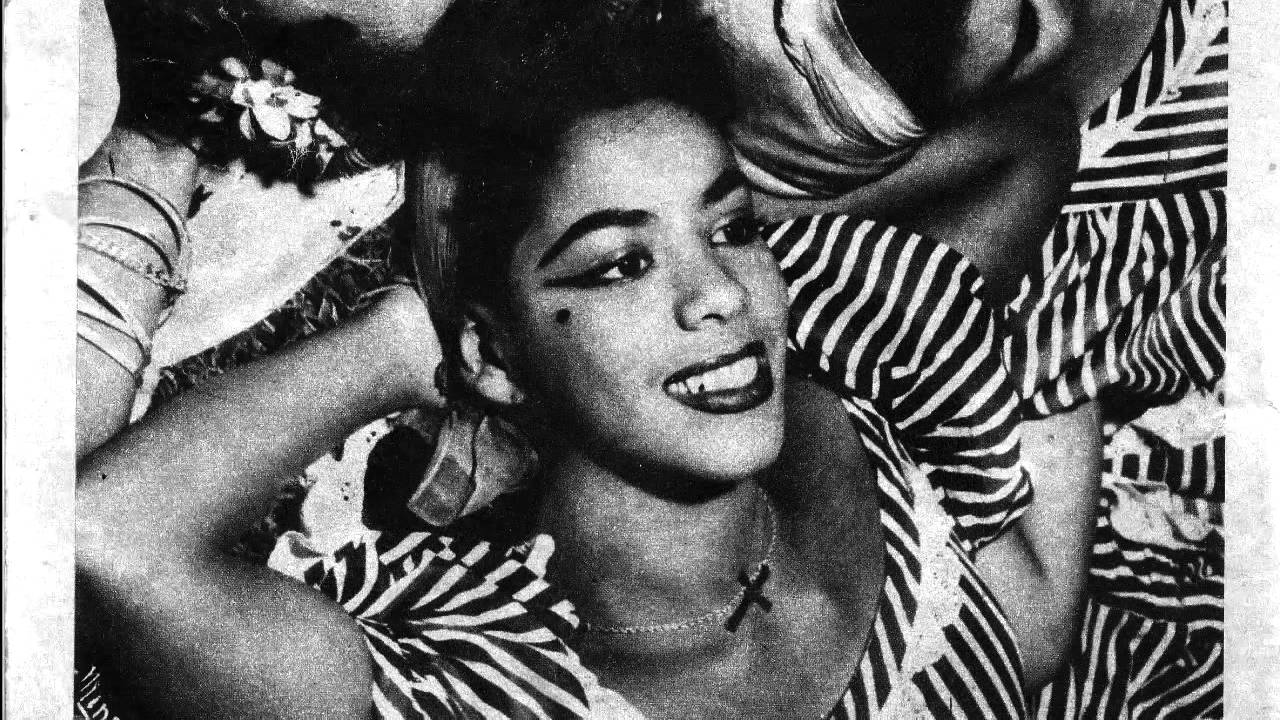
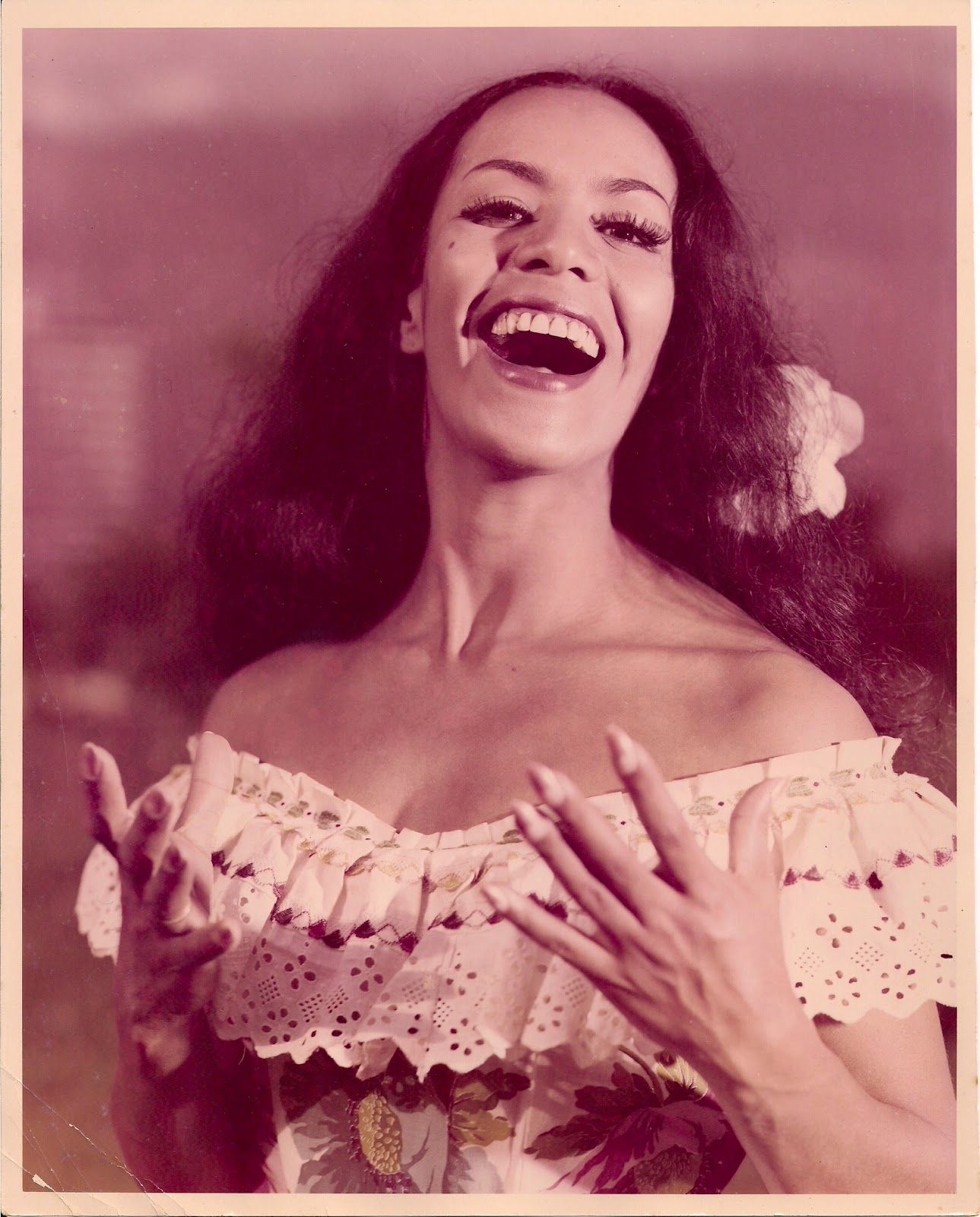
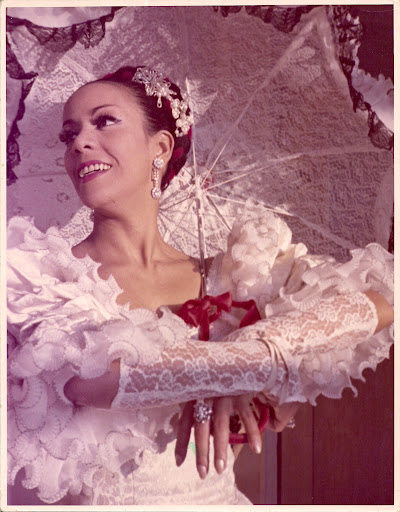
Yolanda Moreno “the People’s Dancer”

Venezuela has been a Caribbean and South American country that has always shown artistic tendencies among its inhabitants. Dance is no exception here, and one of the great representatives of typical Venezuelan dance is Sixta Yolanda Moreno de Rodríguez, better known as Yolanda Moreno the People’s Dancer” In this article we will talk more about her, keep reading.

The beginnings of Yolanda Moreno’s Career

This great Venezuelan dancer was born on August 6, 1936, in El Guarataro neighborhood of San Juan parish, in Caracas. Her parents named her Sixta Yolanda, a fact that few know unless her life is investigated, but she considered that Yolanda was easier to say and pronounce.

She grew up in a low-income family, but that didn’t stop her from pursuing her passion for singing and dancing. At the age of 13, she joined as a chorister in the musical group “Retablo de Maravillas” created by the Ministry of Labor. In this group she demonstrated her talent for music and a wonderful voice, in addition to fulfilling a childhood dream: «As a child I wanted to be a flamenco singer, I listened to the «Gitana de Color». With this group she met her first mentor, the Austrian dancer Margarita Brenner.

During this stage Yolanda met the one who will be the love of her life, her husband Manuel Rodríguez Cárdenas. To whom she also thanks all the support he has given her throughout her career, to the point of assuring that she would not be the dancer and woman she is today without his total trust and company. Although their relationship was a surprise since the marriage took place when she was only 16 years old.

The foundation of “Danzas Venezuela”

Another of her great achievements with her husband Manuel, is the founding of the group “Danzas Venezuela” in 1962. With it Yolanda manages to modernize the dance and folklore of the country, by changing the image of the dancers with very wide skirts and hair collected, that way they look more refined; she also changed the footwear to give more force to the zapateado.

Although at first these changes were not well received, Moreno with her husband achieved public acceptance, and also captivated the international public. Among the places they managed to visit are: China, Japan, Korea, Hawaii, San Francisco, Washington, New York, Canada, the Soviet Union and Latin America, from Mexico to Argentina. One of her special places was Puerto Rico, where she was given her nickname: “La Bailarina del Pueblo” (the People’s Dancer).

She also has great memories of China, especially when she was amazed by the respect for elders and the large number of artistic expressions that exist in this country. «Dance is a permanent job, very pleasant. I work until I am asleep. I got used to hard work, although it hurt, I danced» her words sum up her love for dance and art.

And Yolanda Moreno’s retirement came

Despite the fact that she will always be “The dancer of the Venezuelan people”, Yolanda has accepted that her days on stage are over, this of course does not mean that she won’t continue directing dancers and giving her advice with contributions in choreography. But Yolanda no longer actively follows her career, her big farewell was in 2008 with two performances at the Casa del Artista.

Of course, she has had special appearances like the one she presented in the posthumous tribute to Joaquín Riviera, which was part of the pre-opening of Miss Venezuela 2013. There have been other special events, but none as splendidly as the golden years of his career.

It is more than understandable that Moreno would withdraw from it, at 86 years old she is a woman who since she was a child has given everything to the art and folklore of her country. She also had to bravely face the farewell of her husband Manuel, which occurred in 1991 accompanied by her two sons Manuel Rodrigo and Fernán. It only remains to hope to be able to enjoy a few more years of her great ideas for the preservation, as well as modernization, of the typical dance of Venezuela.

  • « Go to Previous Page
  • Page 1
  • Interim pages omitted …
  • Page 62
  • Page 63
  • Page 64
  • Page 65
  • Page 66
  • Interim pages omitted …
  • Page 97
  • Go to Next Page »

International Salsa Magazine (ISM) is a monthly publication about Salsa activities around the world, that has been publishing since 2007. It is a world network of volunteers coordinated by ISM Magazine. We are working to strengthen all the events by working together.