• Skip to primary navigation
  • Skip to main content

International Salsa Magazine

  • Home
  • Previous editions
    • 2026
      • ISM / January 2026
      • ISM / February 2026
    • 2025
      • ISM / December 2025
      • ISM / November 2025
      • ISM / October 2025
      • ISM / September 2025
      • ISM / August 2025
      • ISM / July 2025
      • ISM / June 2025
      • ISM / May2025
      • ISM / April 2025
      • ISM / March 2025
      • ISM / February 2025
      • ISM / January 2025
    • 2024
      • ISM / December 2024
      • ISM / November 2024
      • ISM / October 2024
      • ISM / September 2024
      • ISM / August 2024
      • ISM / July 2024
      • ISM / June 2024
      • ISM / May 2024
      • ISM / April 2024
      • ISM / March 2024
      • ISM / February 2024
      • ISM / January 2024
    • 2023
      • ISM / December 2023
      • ISM / November 2023
      • ISM / October 2023
      • ISM – September 2023
      • ISM – August 2023
      • ISM July 2023
      • ISM Edition June 2023
      • ISM – May 2023
      • ISM April 2023
      • ISM March 2023
      • ISM February 2023
      • ISM January 2023
    • 2022
      • ISM December 2022
      • ISM November 2022
      • ISM October 2022
      • ISM September 2022
      • ISM August 2022
      • ISM July 2022
      • ISM June 2022
      • ISM May 2022
      • ISM February 2022
      • ISM January 2022
    • 2021
      • ISM December 2021
      • ISM November 2021
      • ISM October – 2021
      • ISM September 2021
      • ISM August 2021
      • ISM July 2021
      • ISM May 2021
      • ISM April 2021
      • ISM June 2021
      • ISM March 2021
      • ISM February 2021
      • ISM January 2021
    • 2020
      • ISM December 2020
      • ISM November 2020
      • ISM October 2020
      • ISM September 2020
      • ISM August 2020
      • ISM July 2020
      • ISM June 2020
      • ISM May 2020
      • ISM April 2020
      • ISM March 2020
      • ISM February 2020
      • ISM January 2020
    • 2019
      • ISM December 2019
      • ISM November 2019
      • ISM October 2019
      • ISM Septembre 2019
      • ISM August 2019
      • ISM July 2019
      • ISM June 2019
      • ISM May 2019
      • ISM April 2019
      • ISM March 2019
      • ISM February 2019
      • ISM January 2019
    • 2018
      • ISM December 2018
      • ISM November 2018
      • ISM October 2018
      • ISM September 2018
      • ISM August 2018
      • ISM July 2018
      • ISM June 2018
      • ISM May 2018
      • ISM April 2018
      • ISM March 2018
      • ISM February 2018
      • ISM January 2018
    • 2017
      • ISM December 2017
      • ISM November 2017
      • ISM October 2017
      • ISM September 2017
      • ISM August 2017
      • ISM July 2017
      • ISM June 2017
      • ISM May 2017
      • ISM April 2017
      • ISM March 2017
      • ISM February 2017
  • Download Salsa App
    • Android
    • Apple
  • Spanish

Search Results for: Radio

Orquesta la Identidad is one of the most nationally and internationally recognized groups in the salsa genre

Winner Identidad Orchestra on several occasions of the Cali fair disc with songs such as MUJERES in 1987, QUIÉREME in 1991 and COMO YO TE AME, the most played song at a historical level in the different Latin FM stereo stations in 2003.

ORQUESTA LA IDENTIDAD

Among other works of recognition such as: LAS COSAS SON COMO SON, TU DESDÉN, GOLPE DE GRACIA, SI ELLA VOLVIERA, DESENGAÑOS, among others.

This group was founded by the Colombian composer and musician Carlos Enrique Navia in 1981 in the capital of salsa in the city of Cali – Colombia, which came to fame in 1987.

Following the release of his first album entitled LA IDENTIDAD, under the Codiscos label, musical production that includes the works, LAS COSAS SON COMO SON, Y ME QUIERES, PARA QUERERTE, CADA CUAL, POR SU LADO, LA FUMA, GENTE CORRIENTE, BRABAJE and MUJERES.

Work that was awarded as the official album of the Cali Fair and gave him the opportunity to make his first international tour of the United States, visiting the states of Florida, New York, California, Texas, Illinois, among others.

This group had a very important boom in Colombia and the whole world for being elected revelation orchestra of the year and gave him the participation in the most important events and fairs throughout the Colombian territory.

Thanks to the success and recognition, the orchestra recorded its second album called LA MÚSICA in 1989, album that expanded its audience in other countries such as: Mexico, Venezuela and Ecuador with the works TU DESDÉN, AMOR ETERNO, TE QUIERO TANTO, LA MÚSICA, SON SABORIONDO, SENTIMIENTOS POR TI and BOMBA NAVIDEÑA, work that occupied the first places in the FM radio stations, preselected as Cali’s fair disc and elected the second most important song of the fair.

Orquesta la Identidad is one of the most nationally and internationally recognized groups in the salsa genre

Identidad Orchestra in 1990 the orchestra recorded its third album entitled UN TOQUE DE MISTERIO, album produced by the renowned Venezuelan musician Cesar Monges “Albondiga” who has participated in countless productions of artists and orchestras of international recognition in the salsa genre.

After a long tour in the United States, the orchestra arrives in Colombia to record their fourth album entitled SALSA CON ENERGÍA, a product produced in the studios of Grupo Niche.

This production included songs such as: LA RETIRADA, ESE SOY YO, BOROJO, AGITACIÓN, SI ELLA VOLVIERA, LLEGASTE A MI VIDA, DESENGAÑOS and COMO YO TE AMÉ, one of the hits of preference of our listeners, occupying the first places and beating the record of the most played song in all salsa genre stations in Colombia, United States, Mexico, Venezuela, Ecuador, Peru, Spain, Italy and many more countries.

ORQUESTA LA IDENTIDAD is an orchestra that has been characterized by its perseverance.

Identidad Orchestra in 1992 they recorded their fifth album titled PROFESIÓN SALSA and ended their relationship with the record label Codiscos to start their independence as a brand under the direction of composer, singer and founder Carlos Enrique Navia to produce their works as an independent record label.

Orquesta la Identidad is one of the most nationally

This album included songs such as: GOLPE DE GRACIA, PECADORA, COCTEL DE AMOR, SI YO PUDIERA, SEÑORA CALI, MUJER AMADA, TE PILLÉ, NO IMPORTA, among others. This product was widely distributed in countries such as Ecuador, Venezuela, Mexico, Peru, United States, among others.

As a record label Identidad Producciones, ORQUESTA LA IDENTIDAD has recorded albums such as A TIEMPO, a production that has captivated the salsa public with songs like: CUANDO EL AMOR SE ACABA, MI NIÑA, LA ESQUINA DEL MOVIMIENTO, LE CANTO AL PACÍFICO, TE QUIERO Y TE AMO, TU DESDÉN, LA FUMA and singles such as: POR SIEMPRE ELLA, FRACASO, DICIEMBRE EN CALI, SON PA EL BAILADOR, COLOMBIA REAL, A MI PADRE, BENDICIÓN DE MADRE, MI GUAGUANCÓ, HOMENAJE A LA SONORA MATANCERA, GUAYAQUIL among others.

Works that are played on Latin radio stations and massively on digital platforms. Orquesta LA IDENTIDAD is a group that has participated in important Latin music events such as: SEBASTIÁN DE BELALCÁZAR awards on two occasions and nominated for best salsa genre orchestra, event organized by FALCON MANAGEMENT BOOKING & ENTERTAINMENT, INDEPENDENCE FESTIVAL OF GUAYAQUIL – ECUADOR, INDEPENDENCE FESTIVALS OF COLOMBIA IN THE UNITED STATES, WORLD SALSA FESTIVAL, BILLBOARD LATIN MUSIC, FESTIVAL OF ORCHESTRAS IN COLOMBIA AND FAIRS THROUGHOUT THE COLOMBIAN TERRITORY.

ORQUESTA LA IDENTIDAD is currently preparing the celebration of 40 years of artistic career, an album that will include the greatest hits such as MUJERES, QUIÉREME, GOLPE DE GRACIA, MUJER AMADA, LAS COSAS SON COMO COMO SON, TU DESDÉN, UN TOQUE DE MISTERIO, COMO YO TE AMÉ and DESENGAÑOS, which will have collaborations with national and international artists of recognition in the salsa genre and is preparing to make its next international tour of the United States year 2024.

CONTACT Carlos Enrique Navia General Manager Contact: 310 822 8068 – 317 642 1031 Email: [email protected]

ORQUESTA LA IDENTIDAD

Also Read: Colombia’s legendary Grupo Niche and its founder Jairo Varela

If you want to listen to Tasty Salsa tune in to Ritmo Sabor y Salsa with Nesmary J. Gómez

Nesmary J. Gómez H. was born in Venezuela, Miranda state, city of Los Teques on January 9, 1995.

If you want to listen to Salsa sabrosa tune in to Ritmo Sabor y Salsa, there's no other way to listen to it
If you want to listen to Salsa sabrosa tune in to Ritmo Sabor y Salsa, there’s no other way to listen to it

Nesmary is a young student of social communication at the Bolivarian University of Venezuela, Announcer of the Ritmo Sabor y Salsa program.

From an early age she felt attracted to the salsa genre and at 3 years old she sang Pedro Simon (dumb things) of the Colón orchestra when she turned 7 she already danced songs by Oscar D’ León and the Latin Dimension.

Afirma Nesmary  Gómez que gracias a su abuela materna y quién ha sido fiel seguidora del sonero del mundo “Mi abuela Gloria Hueck a ella le debo todo lo que soy una mujer inigualable una madre para mi luego de la trágica muerte de mi mama, fue mi abuela quien me crío y crecí a su lado escuchando desde Óscar D León hasta un Ismael Rivera, Henry Fiol”.

With 12 Years she fell in love with the radio by being a very active listener of all the radios of the town making herself known by almost all the announcers earning the heart and affection for being the number 1 listener of different programs.

Being in the first year of basic education he had the experience of airing an educational program on the community radio Urquia 97.5FM being this radio the first to open its doors to him.

Nesmary Gómez y Carlos Marrero en Radio PLENITUD 90.9FM

After 3 years she is taken into account for a new project as co-producer “El baúl de los recuerdos” on the community radio of Carrizal 91.5FM with the physically disappeared Jhonny Tovar, who with his great support was able to highlight the talent of this young woman, said project had a duration of 2 years.

The opportunities remained present and is called by the director of a commercial radio Carlos Daniel Piñango man who fully trusts this young prospect of broadcasting and is included as a second voice in the El Hormiguero RV program where he was nourished every day more when working with The announcer Mario García is a long-distance man who so far is a reference on Altomirandina radio.

When life began to smile at her a hard blow after the death of her second child made that young woman passionate about the voiceover lose the desire to live “I remember that by that moment I felt the desire to die, depression and pain led me to a bad emotional and physical state.

Thanks to our heavenly father who gave me strength to get up” The best way not to be overcome by pain was a radio booth starting as an audio operator in different live programs, in addition to motivating himself to create a project of the salsa genre called Salsa and Control project that lasted 4 years and was interrupted by situations beyond his will.

This talented young woman continues to prepare herself day by day to be an example of overcoming and show that obstacles can be overcome with perseverance and perseverance “There is no pain that separated us from what we like, on the contrary when you have pain the best thing is to take refuge in what we are so passionate about and mainly in God”.

Nesmary Gómez y Rodrigo Medoza

For 1 year and a half has been airing a proposal that is giving something to talk about Ritmo Sabor y Salsa is Nesmary Gómez’s project on Radio PLENITUD 90.9FM Monday Wednesday and Friday between 2:00 – 4:00pm from where this year 2023.

Has been sharing in exclusive interviews with great exponents of the genre such as Mauricio Silva, Viti Ruiz, Pedro Arroyo, Edgar Joel, Lus “Perico” Ortiz, Gus Colón, Fernando Cancel, Antonio Cartagena, among many other artists.

Who appreciate the existence of this program that gives the audience the opportunity to know their musical trajectory in chronological order.

“I am one of the few people who think and feel that artists must be honored in life, let’s not wait for them to leave this earthly plane to pay tribute and place their songs, let’s give him that great satisfaction that You can enjoy it in life” said space recently premiered the segment “La Clave de la Salsa”.

In honor of that percussion instrument, to those two cylindrical wooden sticks on which many of the music of the Caribbean are built and for this case the salsa known as the key, in this segment the story of 2 songs that sounded insistently and that are still kept in the memories and taste of the public is known.

Nesmary Gómez y Elio Pacheco

Nesmary recently received his speech certificate at the Elac of Santa Rosa University. Being one of the few female voices in Los Teques and all the Altos Mirandinos that has the perfect formula to brighten your afternoons in the company of a great audio operator known as Carlos “Lolo” Marrero the duo that is delighting you and dictating catedra quoting those words of the renowned singer Roberto Lugo “If you want to listen to a tasty salsa tune in to Ritmo Sabor y Salsa there is no hay más na”.

Also Read: Lizna Tovar winner in the category Voice Over of the year 2022 in Canary Islands Tenerife

Héctor Martignon has been one of the most sought-after pianists on the Latin jazz scene in New York

New York based-, Colombian born Hector Martignon has composed, orchestrated, produced, performed and recorded music in a wide spectrum of genres, from Classical and Crossover, to Jazz and World Music, to Rock and Pop.

His five albums as a leader, two as co-leader (MOZART’s BLUE FANTASIES and BACH’s SECRET FILES) as well as his work on over a hundred albums, scores for five feature films, three Broadway Musicals and multiple other projects, showcase his wide-ranging area of expertise.

At Mozart Studios recording Carlos Jimenez’ second CD, + Ruben Rodriguez + Vince Cherico. A pleasure!

After several nominations as a sideman, two of his five solo CDs were nominated for a GRAMMY Award (REFUGEE, 2008, and SECOND CHANCE, 2010).

He arranged and performed parts of the score of Ang Lee’s OSCAR-nominated movie EAT, DRINK, MAN, WOMAN.

His first professional recording was at age 18 (Mikis Theodorakis’s “Canto General”) while one of the most recent was on legendary rock band CHICAGO’s latest production, the Latin-tinged “EXITOS”.

He has written symphonic orchestrations, performed and recorded by the Russian Philharmonic Orchestra and compositions like ABRE LOS OJOS, CIERRA LOS OJOS, commissioned and premiered by the MUSICA DE CAMARA STRING ORCHESTRA at St Patrick’s Cathedral in April 2011.

Hector Martignon is currently working on a first CD with his BANDAGRANDE Big Band + String Quartet as well as an album with selections out of a series of  7 solo piano recitals at the Ludwigsburg University of Education (Germany), where he conducts a “compact seminar” on Classic Music-based improvisation every November.

Our trio in Tokyo
Our trio in Tokyo

As a requested sideman he has toured the world with such greats as Paquito D’Rivera, Ray Barretto, Gato Barbieri, Steve Turre, Don Byron, Tito Puente and was featured pianist with Max Roach’s PROJECT AMERICA at the 92 St Y.

His joy of teaching has made him a requested guest-lecturer and performance teacher in music faculties and academies in several countries of Europe, Japan, North- and South America.

Hector wrote an instructional book on Latin piano commissioned and published by Hal Leonard, the SALSA PIANO BOOK.

Martignon’s abilities as a pianist have always been enriched by his interest in varied musical genres.

He paid for his studies of classical piano and composition at the prestigious Freiburger Musikhochschule in Germany by performing with the best Afro-Cuban and Brazilian bands of Europe, backing stars like Celia Cruz and Ismael Quintana on their European tours, and recording with Tata Güiness and Arturo Sandoval.

At the same time he was attending seminars of contemporary composition with masters like Gyorgi Ligetti, Luigi Nono and Karl Heinz Stockhausen.

He also performed classical music in recitals and concerts in Germany, Italy and his native Colombia, specializing in Chopin, Bach and Debussy.

One of his latest endeavors has been a Jazz-Classical crossover  project, co-lead with star virtuoso trumpeter Joe Burgstaller, in which the music of the classics, from Bach to Ellington is re-created in a chamber-jazz setting, to be enjoyed on their two releases, “Mozart’s Blue Fantasies” and “Bach’s Secret Files”.

Living in Brazil for a one-year love affair with that country and its music, Martignon soon became a requested studio musician and worked for star producer Carlinhos Brown.

Luquillo Beach, PR
Luquillo Beach, PR

Since relocating to New York City, Martignon has been one of the most sought-after pianists on the Latin jazz scene.

He’s toured North and South America, Europe, and Asia with the bands of Mongo Santamaría, Gato Barbieri, Steve Turre and Don Byron, who had him record in his latest CD.

He was featured pianist with the bands of Tito Puente, Mario Bauzá, Chico O’Farrill, Paquito D’Rivera, and Max Roach in his “Project America.”
Most notably, Martignon was pianist for the late Ray Barretto’s various ensembles.

During his eight-year association with Barretto, his contributions as pianist, arranger, and composer were fundamental in shaping the sound of the now famous New World Spirit Sextet.

One of his last collaborations with Barretto, “My Summertime,” was a favorite nominee for a Grammy award.
Martignon’s versatility has also made him extremely active in the film and television industries.

Besides playing all piano parts, he arranged and produced many parts of the score for the Oscar-nominated film “Eat, Drink, Man, Woman” by Ang Lee and performed the piano and keyboard parts for many movie scores (i.e., “Gloria”, “Relativity”).

He is composer of the original music of two feature films, one of which, “Septimo Cielo”, won international awards. He also collaborated in the production of many Broadway musicals (“Chronicle of a Death Foretold”, Paul Simon’s “The Capeman”, “Selena Forever”) as conductor, arranger, and co-composer.
In the fall of 2003 Hector visited Slovenia and Russia to collaborate with singer-songwriter Vitaly Osmsçko’s first symphonic CD.

The Russian Philharmonic Orchestra recorded in Moscow the orchestrations written by Hector.

As a composer, producer and arranger of TV and radio music his record is no less impressive. In 2001 he landed two spots for HBO Latino, and one for Coca Cola.

HECTOR” S FOREIGN AFFAIR
In 1998 Martignon performed with his quartet “Foreign Affair”at the Brooklyn Academy of Music’s famed annual festival “The Next Wave” on a triple bill with Tito Puente’s “Top Percussion” and Don Byron’s “Music for six Musicians”.

This proved to be a turning point for him and his ensemble, which evolved from the strictly acoustic trio sound of the first two CDs to a more eclectic and electric quartet sound.

The new configuration that evolved from that memorable concert started a series of concerts and recordings, with guitarist Mark Whitfield, Cameroonian bassist Richard Bona and Cuban drummer Horacio “Negro” Hernández.

This quartet performed and recorded live during a weeklong stint at New York’s famous Birdland.

The group has also performed on BET television festivals, at jazz clubs in Manhattan, and made various appearances in clubs and open-air festivals in his native Colombia and in Europe.

Martignon’s third solo project, to be released in the fall of 2003, is not only a reflection of the group’s new musical direction but also of his interaction with other world class musicians.

Eddie Gomez, Jeff Watts, Mathew Garrison, John Benitez, Dafnis Prieto, Willard Dyson have all made their unique contribution to this, Martignon’s new sound of Jazz.

Hector In Amsterdam with daughter Leticia

Hector Martignon never fails to surprise, challenge and delight us. Stay tuned and get involved in this affair.

Site: Héctor Martignon

Also Read: “El Sol de la Música Latina” el primer premio Grammy para el histórico disco de Salsa Eddie Palmieri

Four nationalities united in Ladama

Talent can come from the most amazing and unexpected origins and more when we are talking about music, a branch of art from which always emerges people with a lot of potential who can completely break our schemes. This leads us to introduce the topic of a group of four young musicians and singers who joined their skills despite their apparent differences. They are the musical group Ladama.

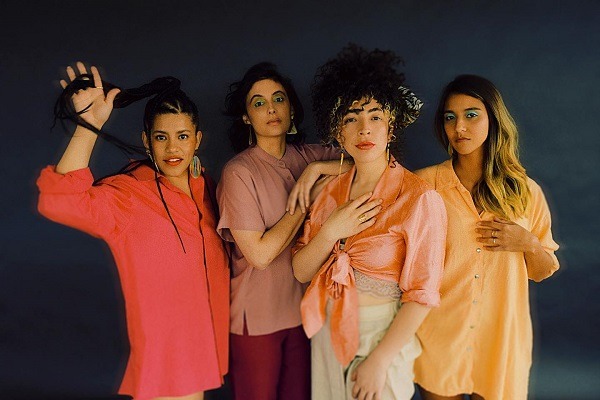
Ladama is an alternative Latin music band composed of four members of different nationalities: Venezuelan Maria Fernanda Gonzalez, Brazilian Lara Klaus, Colombian Daniela Serna and American Sara Lucas. 

Three of the four members of the group spoke exclusively with International Salsa Magazine and this report will show some of the topics covered during this pleasant conversation. 

Sara, María, Lara, and Daniela from Ladama
From right to left, Sara Lucas, María Fernanda González, Lara Klaus and Daniela Serna

Origins of Ladama as a group 

The conversation was started by Lara and Dani, who explained a bit about the rise and concept of the band. The group was created in 2014 while the girls were doing an artistic residency known as OneBeat, which was sponsored by the U.S. Department of State. They were selected to represent their respective countries, which led them to socialize with each other and discover the great chemistry between them because of the language and genres they played. 

Since OneBeat was an initiative towards cultural exchange between artists and offered the necessary technical equipment to record music, they took full advantage of this space to get to know each other’s styles and see what they could do together. 

Once the month-long residency was over, each went their way, but they kept in touch via Skype a year after having met. The motivation to create a project that would encompass a musical band and teaching classes to minority communities remains intact.

They wanted to create an initiative in which community, creativity, social impact and cultural exchange would be the fundamental pillars of Ladama. It was always clear that they not only wanted to make music, but also do something that would positively impact upon society and they think they have succeeded so far. 

As for the name Ladama, it is simply a combination of the first two letters of the names of each one: ”la” comes from Lara, ”da” comes from Dani and ”ma” comes from María Fernanda. At the same time, ”La dama” in Spanish means ”The lady”, which also refers to the fact that it is an all-women group.

Ladama in a residency called OneBeat
They first met in an artistic residency known as OneBeat

How did these different origins coexist in Ladama? 

We were very impressed by the fact that all Ladama members came from different countries, so we wanted to know how this impacted the group. Lara answered that the only thing they needed was the desire to play together and move this initiative forward, which means that the origin of each one was not a problem to found the group.  

Just like every other band, each one had her own ideas and they discussed them together to know which one to choose or not. 

Their major test was given during the Rec-Beat Festival in Brazil. They arrived only a few days before the event, so they could barely rehearse and set up the repertoire. Despite the haste, they feel that everything went very fluidly, as they spent time meeting with each other and writing some songs for an occasion like this.

Given that Lara, Dani and Maria Fernanda come from Latin and tropical countries, there are certain rhythms that sound so much alike, which they took advantage of to unify them and create completely new rhythms that sound good at the same time. Lara also pointed out that these mixes are in constant change and they always try not to get stuck in the same styles.  

In addition to that, Ladama has left traditional music behind a little bit and has focused on alternative music and other genres such as pop, soul and R&B. 

Dani addressed the topic of genres by saying that they do not follow a plan in which they have something specific to play or mix. Any of their songs can go from Dominican merengue and Colombian cumbia to trap and reggaeton without any problems. They do not like to limit themselves and always seek to reach all audiences.   

Ladama live
Ladama performing live

Ladama in a Tiny Desk concert series

Playing on Tiny Desk (a series of live concerts organized by the radio program All Songs Considered in the United States) is always a prestige for any artist or group that performs on that platform, which is inviting Latin singers more frequently every time.  

The girls were at a festival in Albuquerque, New Mexico, where they had the opportunity to meet the curator of Tiny Desk, who would invite Ladama to record their session in Washington D.C. shortly thereafter.

Lara considers that this was a great opportunity to spread their work due to the large number of people who always tune in to Tiny Desk, in addition to the many artists they knew after their appearance on the platform. 

For her part, María Fernanda commented that, on that same occasion, they took the opportunity to bring instruments from their own countries so that the Tiny Desk audience could get to know them. She also stressed that this session will be an important audiovisual document for history that will serve as an inspiration for other musicians in the future.

It was a great achievement after all that hard work.

Ladama on Tiny Desk
Ladama performing on Tiny Desk

Music classes for the community

The members of Ladama have also been focusing on music classes for the community at large, mostly in schools and universities. In their four countries, they have given workshops of all kinds related to music in the languages they speak, which are, English, Spanish and Portuguese. 

the artist emphasized that they always try to do this type of activities together in the very countries where they offer live performances. They have total freedom to do things separately, but they prefer to carry out these activities supporting each other.

Although they offer classes to anyone who is interested, Latino children are a very important group for Ladama, as many of them often have some problems of identity and adaptation to the United States. When they arrive at school in this country, they often disguise or even hide their Latino roots in order to fit in with their peers, so these classes are an opportunity for them to reconnect with that identity they begin to leave behind. 

These workshops and classes also serve as additional income for the group, as they can not only support themselves through tours and festivals. These educational activities are another way to diversify their earnings and have more stable inflows of money.

Read also: Juan Antón ”El Blanco” from La Clave Del Blanco

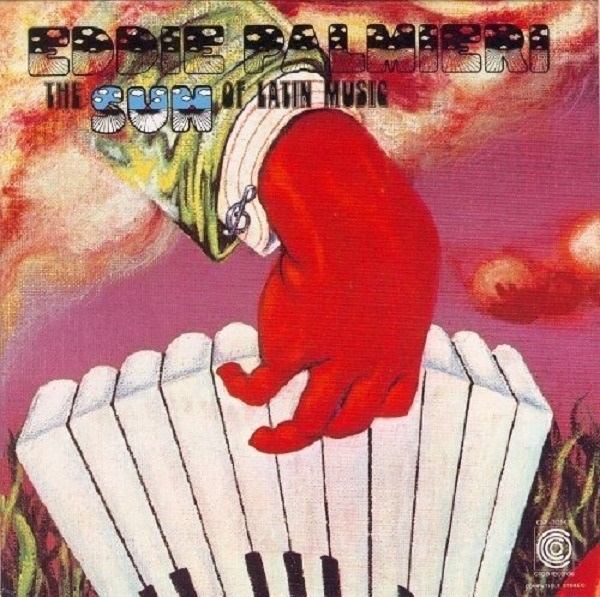
“The Sun of Latin Music” the first Grammy Award for Salsa Eddie Palmieri’s historic album

It has been 49 years since “The Sun of Latin Music”, Eddie Palmieri’s historic album, which marked a fundamental milestone in the history of Latin music by becoming the first production to win a Grammy Award in the category of Best Latin Recording, awarded on February 28, 1976.

"The Sun of Latin Music" the first Grammy of Salsa Eddie Palmieri's historic album
“The Sun of Latin Music” the first Grammy of Salsa Eddie Palmieri’s historic album

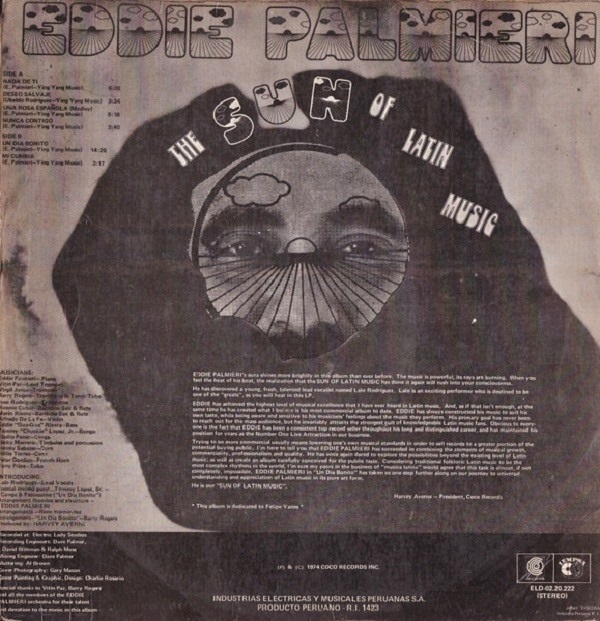
Recorded in New York at Electric Lady Studios, the album was released by Coco Records on Wednesday, September 18, 1974.

The album featured vocals by Lalo Rodríguez, who was only 16 years old at the time.

It includes: ‘Nada De Ti’, ‘Deseo Salvaje’, ‘Una Rosa Española’, ‘Nunca Contigo’, ‘Un Día Bonito’, ‘Mi Cumbia’.

“The Sun of Latin Music” proved to the world that Latin music, especially Salsa, was an honorable art form and opened the doors for many other Latin artists to receive solid recognition for their talent and work.

Eddie Palmieri

The sun of Latin music

MP, 1990. MP-3109 CD

Recorded in 1975

The Sun of Latin Music was a controversial album. It was too far from the easy formula of the middle salsa boom – what César Miguel Rondón calls the “mtancerization of salsa”.

“Ahead of its time” was one of the comments; “a piece like Un día bonito, had to be mutilated” with a 6-minute piano intro just to be able to play it on the radio; a danzón (Una rosa española) with lyrics by the Beatles; a cumbia that is not very Colombian, despite the name (Mi cumbia) and the chorus that says “very Colombian…”.

Nevertheless, this album represents the strength of the spirit of salsa: the encounter between the harshness of the street and the majesty of the most sophisticated musical sound.

One of the best albums of Caribbean music ever released.

Palmieri was always in search of something new. The Sun Of Latin Music is the culmination of a phase that began with an earlier album, Sentido (1974).

This time he chose the Panamanian Vitín Paz for the trumpet solo, Barry Rogers for his trombone and an unusual tuba, which formed a kind of basso continuo, and besides Barry, José Rodrigues, who for a long time was, and despite his absence still is, his most emblematic trombonist.

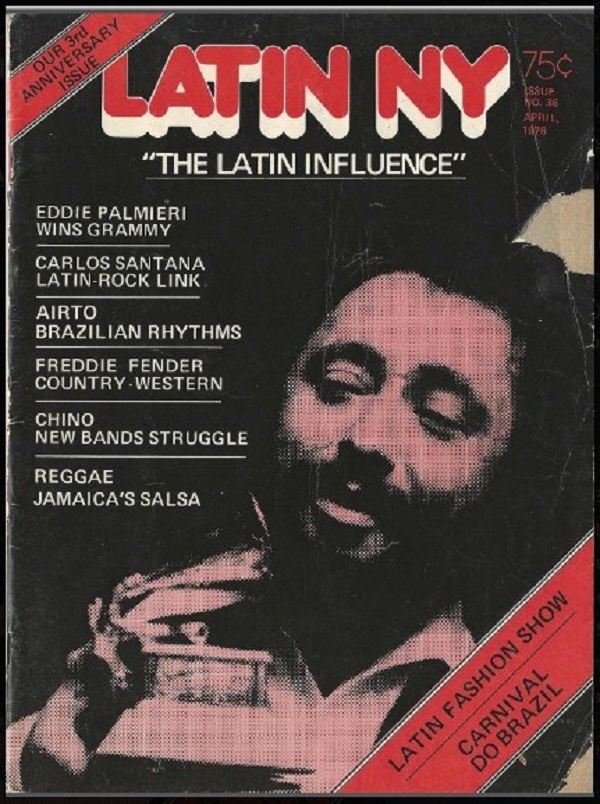
Cover of issue 36 of Latin New York magazine (April 1976) where Eddie Palmieri appears.

Ronnie Cuber and Mario Rivera were chosen as the first saxophonists in a Palmieri orchestra.

For many it is Palmieri’s best album, the most experimental and universal. One that borders on academic music, but without forgetting the dancer.

With spices like the violin of Alfredo de la Fe, who contributes his creativity everywhere, the tuba, the penetrating power of the brass, the overwhelming percussion.

Thus, Una rosa española is a modern danzón that later becomes a montuno that revives the joyful Palmerian game with the dignified uproar of trumpets, saxophones and trombones.

A young man of only 17 years, Lalo Rodríguez, who years later would become the standard-bearer of what was called salsa erotica, was chosen as the singer. Another novelty: the timbre of his voice, with a very high register, and the way he faced the montuno, which did not correspond to his age, caused different reactions.

But the most amazing thing about this 1974 album is the 14:20-minute track Un día bonito, arranged by Barry Rogers, which would keep even the most trained dancers busy. But Palmieri wasn’t just thinking about leg sets or dance floors.

The piece begins with a long piano interlude, the same structure he used in the track Adoración from the album Sentido, which would mark a new musical phase in his career.

It was more than experimental, it had some electro-acoustic music; no one had ever had the audacity to do that on a salsa album. Palmieri made the leap, he could do it, it sounded more like Stravinsky or Milhaud than Puente or Fania.

Suddenly, back in the piece, the orchestra bursts in, harder and heavier than ever, wishing the city of Los Angeles a beautiful day and San Francisco a “warm greeting,” and it is certain that Keruack and Borrough heard the call.

First Eddie Palmieri Grammy

Then Eddie Palmieri was consecrated by the intellectuals and the educated and also by the Grammy.

Eddie Palmieri

The sun of Latin music

Produced by Harvey Averne

Eddie Palmieri: piano

Lalo Rodríguez: vocals

Vitín Paz: trumpet

Virgil Jones: trumpet

Barry Rogers: trombone, tenor tuba

José Rodrigues: trombone

Ronnie Cuber: Baritone Saxophone, Flute

Mario Rivera: Baritone Saxophone, Flute

Alfredo de la Fe: Violin

Eddie Guagua Rivera: Bass

Tommy Chuckie Lopez, Jr.: Bongo

Eladio Pérez: conga

Nicky Marrero: timbales, percussion

Peter Gordon: French Horn

Tony Price: Tuba

Jimmy Sabater: Chorus

Willie Torres: Chorus

Tommy López Sr.: conga

Tracks: Nada de ti; Deseo salvaje; Una rosa española; Nunca contigo; Un día bonito; Mi cumbia

Arrangements by René Hernández and Barry Rogers

One of the most valuable pieces in the exhibition “Rhythm and Power: Salsa in New York”, which will be presented until next November at the Museum of the City of the Big Apple, is the first Grammy in the history of Latin music, awarded in 1976 to Eddie Palmieri for his album “Sun of Latin Music”.

“The Sun of Latin Music”

Sources:

Anapapaya

Salsero Radio

D j. Augusto Felibertt

Also Read: Salsa and its detractors “Caiga quien Caiga”

  • « Go to Previous Page
  • Page 1
  • Interim pages omitted …
  • Page 21
  • Page 22
  • Page 23
  • Page 24
  • Page 25
  • Interim pages omitted …
  • Page 63
  • Go to Next Page »

International Salsa Magazine (ISM) is a monthly publication about Salsa activities around the world, that has been publishing since 2007. It is a world network of volunteers coordinated by ISM Magazine. We are working to strengthen all the events by working together.