• Skip to primary navigation
  • Skip to main content

International Salsa Magazine

  • Home
  • Previous editions
    • 2026
      • ISM / January 2026
      • ISM / February 2026
    • 2025
      • ISM / December 2025
      • ISM / November 2025
      • ISM / October 2025
      • ISM / September 2025
      • ISM / August 2025
      • ISM / July 2025
      • ISM / June 2025
      • ISM / May2025
      • ISM / April 2025
      • ISM / March 2025
      • ISM / February 2025
      • ISM / January 2025
    • 2024
      • ISM / December 2024
      • ISM / November 2024
      • ISM / October 2024
      • ISM / September 2024
      • ISM / August 2024
      • ISM / July 2024
      • ISM / June 2024
      • ISM / May 2024
      • ISM / April 2024
      • ISM / March 2024
      • ISM / February 2024
      • ISM / January 2024
    • 2023
      • ISM / December 2023
      • ISM / November 2023
      • ISM / October 2023
      • ISM – September 2023
      • ISM – August 2023
      • ISM July 2023
      • ISM Edition June 2023
      • ISM – May 2023
      • ISM April 2023
      • ISM March 2023
      • ISM February 2023
      • ISM January 2023
    • 2022
      • ISM December 2022
      • ISM November 2022
      • ISM October 2022
      • ISM September 2022
      • ISM August 2022
      • ISM July 2022
      • ISM June 2022
      • ISM May 2022
      • ISM February 2022
      • ISM January 2022
    • 2021
      • ISM December 2021
      • ISM November 2021
      • ISM October – 2021
      • ISM September 2021
      • ISM August 2021
      • ISM July 2021
      • ISM May 2021
      • ISM April 2021
      • ISM June 2021
      • ISM March 2021
      • ISM February 2021
      • ISM January 2021
    • 2020
      • ISM December 2020
      • ISM November 2020
      • ISM October 2020
      • ISM September 2020
      • ISM August 2020
      • ISM July 2020
      • ISM June 2020
      • ISM May 2020
      • ISM April 2020
      • ISM March 2020
      • ISM February 2020
      • ISM January 2020
    • 2019
      • ISM December 2019
      • ISM November 2019
      • ISM October 2019
      • ISM Septembre 2019
      • ISM August 2019
      • ISM July 2019
      • ISM June 2019
      • ISM May 2019
      • ISM April 2019
      • ISM March 2019
      • ISM February 2019
      • ISM January 2019
    • 2018
      • ISM December 2018
      • ISM November 2018
      • ISM October 2018
      • ISM September 2018
      • ISM August 2018
      • ISM July 2018
      • ISM June 2018
      • ISM May 2018
      • ISM April 2018
      • ISM March 2018
      • ISM February 2018
      • ISM January 2018
    • 2017
      • ISM December 2017
      • ISM November 2017
      • ISM October 2017
      • ISM September 2017
      • ISM August 2017
      • ISM July 2017
      • ISM June 2017
      • ISM May 2017
      • ISM April 2017
      • ISM March 2017
      • ISM February 2017
  • Download Salsa App
    • Android
    • Apple
  • Spanish

Search Results for: Radio

National Zalsa Day 2020

North America / Puerto Rico

In April 2000, the third Sunday of March was instituted as the National Zalsa Day under Law #100 of the Senate of Puerto Rico

National Zalsa Day 2020 - Edicion Platino
National Zalsa Day 2020 – Edicion Platino

History

The National Zalsa Day was created in 1984 by Pedro Arroyo, Z-93 Programming Director, who always had the desire to celebrate an event where the talent of popular salsa music, its composers and performers would be recognized, to present it to the great public that loves this tropical genre.

Since its first year, the great event has seized a public eager to enjoy this live music.
The support was total and it immediately positioned itself as the annual concert of the people of Puerto Rico and visitors from other countries.

Since its inception, the National Day of the Zalsa was dedicated to some figure of this genre, as a recognition of their talent and their roots in the public.

  • 1984 – Dedicated in life to the Sonero Mayor, Ismael Rivera
  • 1985 – Rafael Ithier of the Great Combo of Puerto Rico
  • 1986 – Tito Puente and Santitos Colón
  • 1987 – Hector Lavoe
  • 1988 – Andy Montañez and Gilberto Santa Rosa
  • 1989 – Celia Cruz and the Sonora Ponceña
  • 1990 – Willie Colón and Tite Curet Alonso
  • 1991 – Bobby Valentín, Oscar D’ León and the composer Gloria González.
  • 1992 – For the Best 5 Trumpets of Puerto Rico: Elías Lopés, Charlie Sepúlveda, Juancito Torres, Mario Ortiz and Luis “Perico” Ortiz
  • 1993 – Celebration of the Tenth Anniversary of the National Day of the Zalsa, dedicated to the Salsero People 1994 – Ray Barreto and Adalberto Santiago
  • 1995 – “Sunset Duels”
  • 1996 – Dedicated to reunions: Classic Ensemble, Tito Nieves, Luis “Perico” Ortiz and Rafael De Jesús, El Gran Combo; Andy Montañez and Roberto Rohena; Sonora Ponceña with Luigi Texidor and Yolanda Rivera.
  • 1997 – To the salsa town
  • 1998 – Jerry Masucci
  • 1999 – Cheo Feliciano
  • 2000 – Richie Ray and Bobby Cruz
  • 2001 – Eddie Palmieri
  • 2002 – Ruben Blades
  • 2003 – Johnny Pacheco and Roberto Rohena
  • 2004 – Quique Lucca, Papo Lucca and Willie Rosario
  • 2005 – Tommy Olivencia and Roberto Angleró
  • 2006 – Los Hermanos Lebrón and posthumous tribute to Charlie Palmieri, Tito Rodríguez and Ray Barretto
  • 2007 – Ismael Miranda, Ramón Rodríguez, Raphy Leavitt and Sammy Marrero
  • 2008 – Larry Harlow and Manny Oquendo
  • 2009 – Celebration of the release of Tite Curet Alonso’s work on Puerto Rican radio. Dedicated to Louis Garcia.
  • 2010 – Johnny Ortiz. Special recognition to Héctor Maisonave and Ángel Luis Córdova García “Paleco”.
  • 2011 – Elvin Torres from Costa Brava, Luisito Ayala from Puerto Rican Power, Paquito Guzmán, Tito Allen and Luigi Texidor
  • 2012 – Posthumous tribute to Frankie Ruiz. Dedicated to the Zodiac Orchestra and the Latin Corporation.
  • 2013 – Posthumous tribute to Pedro Arroyo, former director of Z-93. Special recognition to Edwin Morales from La Mulenze, Pedro Brul, Pedro Conga from Orquesta Internacional and Cano Estremera.
  • 2014 – El Gran Combo, Joe Rodríguez de La Terríca, Justo Betancourt and Meñique
  • 2015 – Gilberto Santa Rosa receives the first National Zalsa Day Star Award. Dedicated to Sammy “Rolo” González, Mickey Cora, Nacho Sanabria.
  • 2016 – Eddie Palmieri receives the second National Zalsa Day Star Award. Dedicated to Lalo Rodríguez and Tito Rojas.

National Zalsa Day 2020

On March 8, the 37th edition of the National Salsa Day will be held at the Hiram Bithorn Stadium, in San Juan, Puerto Rico.

National Zalsa Day 2020 outside

We often hear that salsa in Puerto Rico is not having a good time or that the atmosphere is not what it used to be. However, each time before. However, every time National Salsa Day is announced, everything changes.

Those who live on the island rub their hands to wait for the big moment and those who arrive from abroad begin to check plane tickets and schedule a little vacation.

In 2020 it will not be the exception. The station Z93 announced a tremendous salsa billboard with Eddie Palmieri, Sonora Ponceña, Oscar D’ León, Ismael Miranda, Lalo Rodríguez and India.

In addition, Tony Vega, Ray de la Paz, Tito Rojas and NG2 have been confirmed as part of the great salsa party. This has caused fans on social networks to begin to express themselves with different opinions about the chosen artists.

Perhaps the balance tilts favorably towards the more classic salsa and not so much towards the proposals of the youngest (except NG2), but let’s see how this formula works for Zeta.

National Zalsa Day 2020 37 XXXVII

The Crazy Owl, a popular Puerto Rican radio host, announced that tickets can be purchased on the Ticket Center website (tcpr.com/). So you are already warned.

If you want to give yourself the pleasure of enjoying salsa on the Isla del Encanto itself, this may be your chance.
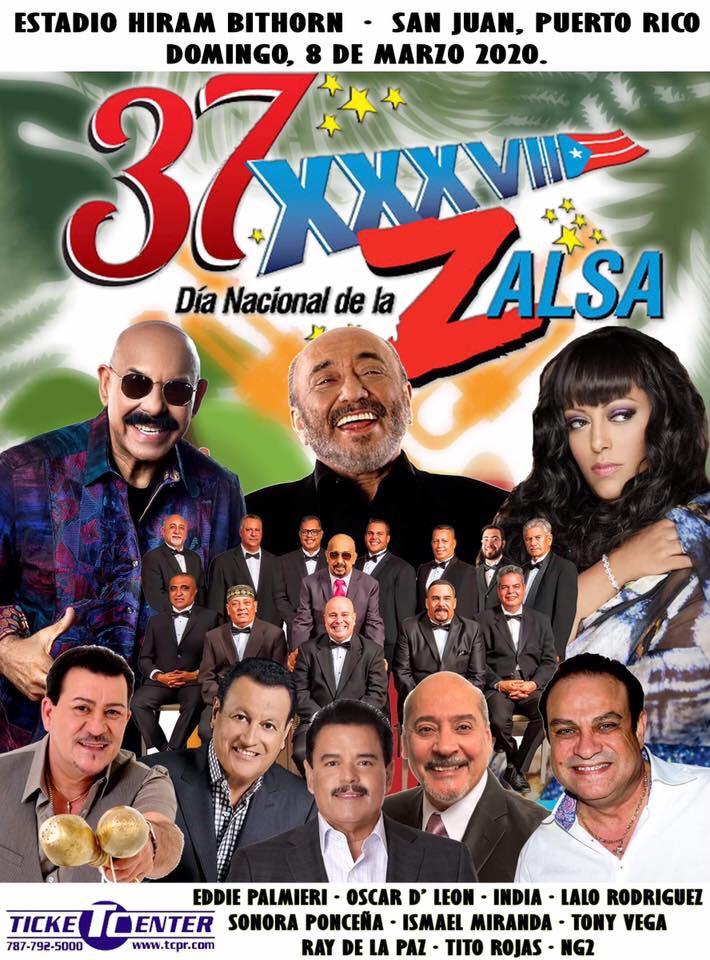
Flyer of National Zalsa Day 2020
  • V.I.P platinum $225.00
  • Area / V.I.P
  • Open bar / open bar
  • Quick access / Fast Pass
  • Private bathrooms / private bathrooms
  • Official T-shirt / official t-shirt
  • V.I.P arena $75.00
  • Numbered seat / reserved seating
  • Quick access / fast pass
  • Private bathrooms / private bathrooms
  • General admission $15.00
  • Christmas offer only 1000 tickets

For more information:

  • https://zeta93.lamusica.com/
  • https://www.facebook.com/zeta93fm/?ref=page_internal

Omar Lugo

North America / Puerto Rico / San Juan

Omar Lugo “Young Promise of the Juvenile and Romantic Salsa of Puerto Rico”

Omar Lugo - Puerto Rico
Omar Lugo – Puerto Rico

With a modern, restorative and very representative style, the talented Puerto Rican Omar Lugo arrived to reinforce Latin music, offering a trend with a youthful and urban touch; who in addition to being a singer and performer of various musical instruments, is a composer.

Lugo, is a native of the beautiful Caribbean municipality of Arroyo, belonging to the free state of Isla del Encanto, Puerto Rico. This promise of salsa, was born on November 23, 1993 and tells us that, from a very young age, he showed interest and ability to vocalize from the age of 15, when he began to educate himself and train musically in the band of his beloved town of Arroyo and later in adolescence, he accompanied artists of various musical genres in Borinquen.

Omar Lugo
Omar Lugo

Let’s see Omar, since when did you start in composition?

“Friend, that was the product of compiling various experiences that I had in love and coincidentally gave me the opportunity to compose my first song “Si supieras”, which I recorded when I was 15 years old, under the arrangement and production of my older brother. Jayson Lugo; serving all this experience to start my artistic career at the age of 17.

That song is a declaration of love, and many identify with it by being able to gather the feelings that a person inspires in you, If you knew, it had, by the way, a lot of radio success, it is a letter that I wrote from the heart”-. This is how he told us for International Salsa Magazine.

The young Puerto Rican, Omar, is characterized by fusing urban and electronic sounds that identify his style for “la salsa”.

Omar Lugo - Mexico Salsa Sabor
Omar Lugo – Mexico Salsa Sabor

In addition, he has shared stages with artists from his country as main singer and musician, such as: Fabián, Juan Vélez, Three Son Salsa, Kimary Carrero, Ricky Luis, Barreto y su Plena, Víctor Manuelle, N’Klabe, Tito Nieves, NG2 , Charlie Cruz, Ken-Y, Keykon, Pirulo, Frankie Negrón, Boni & Kelly, Planéalo, Oscarito, Aníbal de Gracia and many more.

It is noteworthy that Omar has a number 1 on the Billboard Charts (Tropical Charts), with the single “Amor de Verdad” by Charlie Cruz, being Omar Lugo, one of the youngest salseros in history to reach that position. in the musical genre “salsa”.

He adds that, in 2017, he performed at the “El Aniversario de la Salsa” event, at the Paquito Montaner stadium, in Ponce, before more than 15,000 spectators, receiving a standing ovation for his performance. Finally, he told us that he is currently recording his first record production under the direction of his brother Jay, a fundamental and key piece in his musical growth, by the way, winner of the 2018 Latin Grammy.

It was an honor to have in International Salsa Magazine, as a special guest, this talented Puerto Rican Omar Lugo, who has been demonstrating with his music, the interest of attracting young people to salsa with modern touches in his songs.

Omar Lugo Booking contact

Néstor Galan “El Buho” – SAFERRRROOOO!!!

Latin America / Puerto Rico / San Juan

Néstor Rodríguez Búonomo better known as Néstor Galán “El Búho Loco” was born on January 6, 1958, in the state of New York.

Néstor Galan "El Buho"
Néstor Galan “El Buho”

His parents are Mrs. Eufemia Búonomo and Mr. Julio Rodríguez. He is the eldest of three (3) brothers and father of Julixa Rodríguez Ramírez, who they have heard on the radio with his father.

At the early age of five (5) years, he moved with his parents to Cayey, Puerto Rico.

He studied at Benigno Carrión Elementary School, Benigno F. García Middle School, where he studied music and was part of the School Band as a trumpeter.

Néstor Galan "El Buho Loco"
Néstor Galan “El Buho Loco”

Then he goes to the Miguel Meléndez Muñoz High School and the opportunity arises to be part of one of the most important groups of popular music; The Student Tuna of Cayey, in which she remained for five years as a singer, participating in 4 long-playing albums and in trips abroad.

He was part of the dramatic art group participating in several plays as an actor.

Upon graduating in 1976, he went on to study at the Rio Piedras Commercial Technical Institute and then at the Universidad del Sagrado Corazón.

In 1979 the Super 97 radio station specialized in the salsa genre began to work at Radio Musical under the name of Néstor Galán, they called him “Galán” because he always liked to dress well. This is his first experience as a broadcaster.

Néstor Galan
Néstor Galan

In 1981 he went to work at the radio station Z-93 as a technician, operator and in its promotions.

In 1982 he worked as a production assistant on the program “Viva la Salsa” (WAPA-TV) together with Marianito Artau.

In 1983 he began as a night time announcer in this important radio station and that is when the announcers decide to give themselves nicknames after animals, being in the night time they decide to call him “El Búho”.

Logo de Néstor Galan "El Buho Loco"
Logo de Néstor Galan “El Buho Loco”

In 1985 he began to work during the day and since the owls do not go out during the day, the name “El Búho Loco” emerged. He has worked in all the National Salsa days.

Facebook: https://www.facebook.com/NestorGalanZ93/


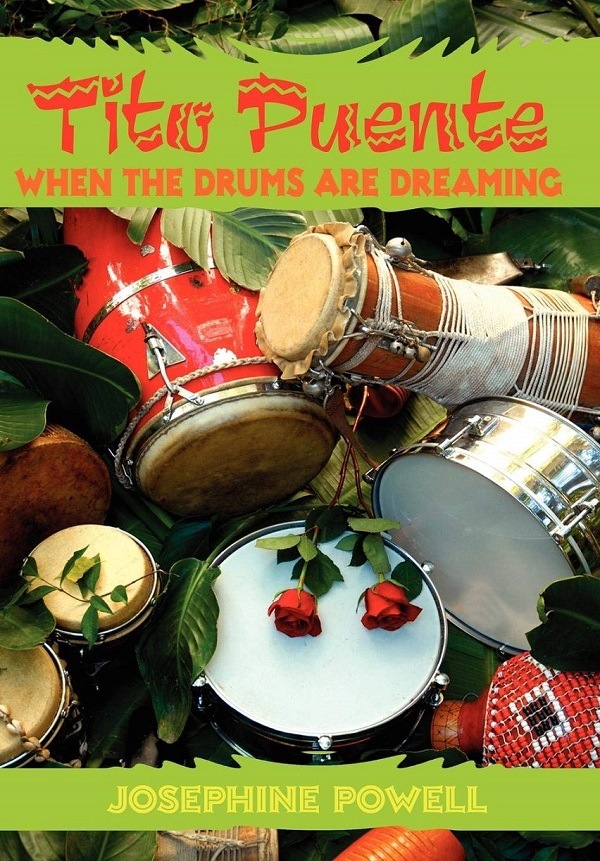
“Tito Puente: When the drums are dreaming” A biography of the King of Latin Percussion by Josephine Powell

North America – USA –CaliTifornia

This month we are sure that you will have time to enjoy an excellent reading at home. So we recommend this book by Josephine Powell. An interesting biography about the legendary Tito Puente, that takes us on a journey through the more than 60 years in which he performed.

Further the life of Tito Puente, you can know his insight into the Latin music industry. With many anecdotes of his encounters, racial discrimination while touring and how that impacted his relationship with other band members. There are also numerous insights into his personality, his temperament, and the many obstacles he had to overcome to achieve legendary status.

Josephine Powell’s book on Tito Puente and his contributions to Latin music and dance is a treasure trove of people, places, facts and history. Because of the author’s place in the history of Latin dance, she takes the reader with her through that fascinating maze of how artists like Puente changed the exposure and tastes of the American public and the world.

The Latin Ballroom world today reflects how we adore – and then neglect and forgets – the people who made us who we are. She mentioned many fascinating dance-related characters in this story that takes place in New York, Los Angeles, Miami, the Catskills and Havana.

It is also a much-needed history of great nightclubs and ballrooms, which are only dim memories for the young – but in their time, were the breeding grounds of Latin music and dance. Tito Puente’s percussion and passion are finally brought to life in a fascinating book.

To remember Tito Puente’s career as accurately as Josephine Powell has done makes this biography a worthwhile read. Tito Puente the man and Tito Puente the musician are blended into the tempo of the times during which the musical man lived. For young musicians seeking success Josephine Powell’s well-written commentary provides a glimpse of what can lie ahead in one’s career; so do read Powell’s take on Tito Puente’s life and perhaps capture a taste of how you too can climb the charts with a dash of spice in your style.

With over 100 albums, several Grammy nominations, 7 Grammys and posthumously awarded The Grammy Lifetime Achievement Award in 2003, his footprint in the world of music will forever be the standard of excellence that others will look to emulate.

Josephine Powell took on the monumental task of writing about his life, the forward was written by Tito Puente 2 months before he died.

Because of their lifelong friendship of many decades, Josephine was the one person who could create this book. Her talent and passion will pulled this off to perfection. He was a man who brought his music to the world, and put the Mambo on the map.

This book never could have been written without her dedication and perseverance and the personal moments she shares. From the very first chapter, the quality of her writing can be seen as she starts with the moments leading up to his death and continues for 16 more, giving you the history of Latin music from its inception to the music of today. Throughout her many archives of pictures from her private collection, your eyes will wide with wonder.

Josie Powell traces the evolution of Afro-Cuban, Puerto Rican and jazz forms from their generally recognized origins through the end of the twentieth century, focusing on Puente’s interactions with professional allies and constant rivals.

Powell documents musical events as an aficionado of the Latin genres, almost religiously avoiding disclosure of Puente’s family life. Those not yet born during the Big Band decades or Mambo mania can imagine the atmosphere from descriptive passages of Manhattan ballrooms, Havana dance halls, LA nightclubs.

About Tito Puente

Ernesto “Tito” Puente was born in 1923 in Spanish Harlem and grew up with the advent of radio and American swing bands. At 10 years old he aspired to be a dancer, like Fred Astaire. An ankle injury gave him the opportunity to explore his talent as a musician. At fourteen he won the coveted Benny Goodman, Gene Krupa drum contest. Tito became a master percussionist. His instrument was the timbales, a pair of cylindrical drums beat upon with sticks. When he joined the dynamic Machito Orchestra at seventeen he saw a promising future, but the Japanese attack on Pearl Harbor December 7, 1941 took him off to war.

He led a makeshift orchestra delivering lovable American wartime tunes when he was not fighting. He returned home wounded, weary and jobless. Puente’s tale should have been the story of every returning American GI, who went off to war, came home to his sweetheart, attended college, raised a family and settled down in an adorable house. Things were not that way.

After the war his obsession for Cuban music drove him to Havana. He attended secret meetings of Santería, an Afro-Cuban religious cult with its roots steeped in mysticism often referred to as black magic. With the lure of the sacred batá drum he discovered a world of rhythms never heard by a white man’s ear. He found himself inside the beat, and thoroughly possessed. Soon Tito became a devotee of Santería and used those drum patterns and calls, which were the mainstay and backbone of his music. Today this hot hypnotic music is known worldwide as Salsa.

About Josephine Powell

Author Josephine Powell – a music historian, lecturer, and consultant on ballroom music and dancing and Latin American music – was a consultant (music, history, and dance) on the motion pictures Salsa, Havana, and The Mambo Kings, and their soundtracks; The Mambo Kings track received a Grammy Nomination. She also consulted on two Golden Eagle television shows; two television documentaries, one Presidential Inaugural Ball, and two Grammy-winning record albums by her mentor Tito Puente.

In 1990, she obtained a star for her mentor on Hollywood’s Walk of Fame, orchestrated his associated live concert on the Boulevard, and organized a gala event at the Hollywood Roosevelt Hotel, with music industry executives, film producers, and celebrities.

Powell’s dance career took her to the South Pacific, the Philippines, Guam, Hong Kong, Thailand – where she performed for the Royal Family – and Vietnam, where she introduced mambo to the troops in a revue she wrote herself. A Gold Medal ballroom dancer, Powell was Tito Puente’s West coast mambo dance partner, and a cast member of the Broadway show Sketchbook in Las Vegas.

Through touring the country for over a decade with stage and lounge shows, along with work in the recording, television, and movie industries, Powell learned wardrobe design, writing, comedy, and choreography. Appeared at the Tropicana, El Rancho Vegas, Flamingo, and Nevada Club in Las Vegas; The Golden Hotel and Mapes Hotel in Reno; The Wagon Wheel in Lake Tahoe, and The President Hotel in Atlantic City, among others.

After an injury forced her to retire from dance, Powell became a real estate agent in Beverly Hills, where she became actively involved in political work with celebrities and later joined Connie Stevens’s organization Les Girls. Powell’s work and charitable activities afforded many opportunities to work with Hollywood producers, directors, writers, and luminaries.

Powell studied the history of ballroom music and dance, ethnomusicology, journalism, and Spanish at UCLA. A regularly featured musicologist on radio stations KXLU and KPFK, Powell receives many requests for lectures and consultations. She has been a presenter and judge at numerous dance competitions, including the Feather Awards and the U.S. Open National Swing Dance Competition. The Mormon Temple Genealogical Library in Los Angeles has made her its expert lecturer on French Colonial Maritime records. Since 1986, she has conducted ten research and study trips to Havana, where she is a curatorial consultant for El Museo Nacional de la Música Cubana.

With information from: https://josephinepowell.com
You can buy this wonderful book in Amazon: https://www.amazon.com/Tito-Puente-When-Drums-Dreaming/dp/1425981585

Jay Ruiz, singer-songwriter, From the Sultana del Oeste, Mayagüez – Puerto Rico

North American / Puerto Rico / Puerto Rico 

Jay Ruiz is the stage name of Jonathan Camacho Ruiz, a singer-songwriter born in La Sultana del Oeste, Mayagüez, but raised in the Pueblo de Rincón neighborhood, the westernmost municipality of La Isla Del Encanto.

Jay Ruiz Photo
Jay Ruiz Photo

Among his ancestors, Jay Ruiz, highlights his paternal grandfather Antonio Camacho who was a musician and troubadour, in his native Rincón.

Jay Ruiz’s musical beginnings date back to his short 5 years, when he sang in the choir of the Presbyterian church he attended. However, he would later become involved in sports, which would keep him away from music until he was 11 years old, when at the middle school where he was studying, the teacher promoted him as a soloist in a 24-member choir group.

Jay Ruiz and his team

He also stands out as a percussionist, performing skillfully on the bongo, the congas and the drums; instruments that he would learn to play by ear when he was 8 years old.

When he turned 12, the guitar and the bass would be the instruments that would captivate him and to which he would dedicate his time.

When he turned 15, he decided to form his own Christian music group: this is how the New Creation group was born, in which he developed as a drummer and singer.

A year later, while he was a member of the baseball team that represented Puerto Rico, he was about to be signed by the University of Cleveland, but in the process he was diagnosed with neck and throat cancer.

Jay Ruiz photo
Jay Ruiz photo

He traveled to Maryland to undergo exhaustive examinations at the John Hopkins Hospital, the same ones that would determine that he would undergo six months of chemotherapy and subsequent radiotherapy, treatments that he would receive at the San Jorge Children’s Hospital (Santurce, Puerto Rico).

Before the radiation treatment he was warned that he would lose 85% of his vocal abilities, however, the story was different: August 12, 2001, he would finish the treatment for his illness and five days later, for his birthday, he meets in his town -Rincón- to the entire community in a musical activity in which he would play, sing and give testimony of his case.

Jay Ruiz
Jay Ruiz

Thinking about his future, he studies at the Interamerican University, San Germán Campus, where he obtains a bachelor’s degree as a Physical Education teacher for children with disabilities.

The illness of his father, who lived in New York, forces him to cross the pond to take care of him, until his death, five years later.

In 2011 he returned to Puerto Rico, and enrolled in the Ponce Paramedical College at the Mayagüez Medical Center, to continue studying Physiotherapy, however, he became involved again in music participating in the famous franchise IDOL PUERTO RICO, ranking among the 32 last finalists. He continues his academic life and at the same time, works as a chef in a restaurant, a situation that would lead him to serve a musical entrepreneur based in New Jersey (United States) who was visiting the island, and with whom he would start a friendly relationship first, that would turn into work a few months later, when the businessman invited him for an audition in the neighboring municipality of Cabo Rojo.

Jay Ruiz boards the flight

After that meeting, in 2014, Jay Ruiz would pack his bags again to settle in Newark (New Jersey, USA) from where he would launch his career as a performer of the bachata genre, and that he would have on the songs “Ven A Mí , Girl” and “Culpables” two singles of wide diffusion and consideration in the international radio circuits, to the point of having disputed with the last mentioned cut, the category of Favorite Tropical Song of the Latin American Music Awards between great personalities of the music like Víctor Manuelle, Prince Royce and Gente de Zona (feat. Marc Anthony).

Jay Ruiz
Jay Ruiz

In 2017 he becomes independent, returns to Puerto Rico and decides to promote his career, but this time as a salsero, recording the single “Lo Sé”, of his own, under the production of maestro Nino Segarra.

Two years later, he brings us this new single, of which he is also the author, both of the lyrics and the melody.

Jay Ruiz
Jay Ruiz

The following staff participate in this single:

Lyrics, Melody & Interpretation: Jay Ruiz

Arrangement: Ceferino Caban

Complete Percussion: Rafael “Tito” de Gracia

Bass: Alexis Perez

Trumpets: Luis Aquino

Trombones: Jorge Dobal

Choirs: Norberto Vélez Curbelo, David Carrero & Ceferino Caban

Piano & Keyboards: Ceferino Caban

Mastering: Esteban Piñero

Jay Ruiz
Jay Ruiz

  • « Go to Previous Page
  • Page 1
  • Interim pages omitted …
  • Page 28
  • Page 29
  • Page 30
  • Page 31
  • Page 32
  • Interim pages omitted …
  • Page 64
  • Go to Next Page »

International Salsa Magazine (ISM) is a monthly publication about Salsa activities around the world, that has been publishing since 2007. It is a world network of volunteers coordinated by ISM Magazine. We are working to strengthen all the events by working together.