• Skip to primary navigation
  • Skip to main content

International Salsa Magazine

  • Home
  • Previous editions
    • 2026
      • ISM / January 2026
      • ISM / February 2026
    • 2025
      • ISM / December 2025
      • ISM / November 2025
      • ISM / October 2025
      • ISM / September 2025
      • ISM / August 2025
      • ISM / July 2025
      • ISM / June 2025
      • ISM / May2025
      • ISM / April 2025
      • ISM / March 2025
      • ISM / February 2025
      • ISM / January 2025
    • 2024
      • ISM / December 2024
      • ISM / November 2024
      • ISM / October 2024
      • ISM / September 2024
      • ISM / August 2024
      • ISM / July 2024
      • ISM / June 2024
      • ISM / May 2024
      • ISM / April 2024
      • ISM / March 2024
      • ISM / February 2024
      • ISM / January 2024
    • 2023
      • ISM / December 2023
      • ISM / November 2023
      • ISM / October 2023
      • ISM – September 2023
      • ISM – August 2023
      • ISM July 2023
      • ISM Edition June 2023
      • ISM – May 2023
      • ISM April 2023
      • ISM March 2023
      • ISM February 2023
      • ISM January 2023
    • 2022
      • ISM December 2022
      • ISM November 2022
      • ISM October 2022
      • ISM September 2022
      • ISM August 2022
      • ISM July 2022
      • ISM June 2022
      • ISM May 2022
      • ISM February 2022
      • ISM January 2022
    • 2021
      • ISM December 2021
      • ISM November 2021
      • ISM October – 2021
      • ISM September 2021
      • ISM August 2021
      • ISM July 2021
      • ISM May 2021
      • ISM April 2021
      • ISM June 2021
      • ISM March 2021
      • ISM February 2021
      • ISM January 2021
    • 2020
      • ISM December 2020
      • ISM November 2020
      • ISM October 2020
      • ISM September 2020
      • ISM August 2020
      • ISM July 2020
      • ISM June 2020
      • ISM May 2020
      • ISM April 2020
      • ISM March 2020
      • ISM February 2020
      • ISM January 2020
    • 2019
      • ISM December 2019
      • ISM November 2019
      • ISM October 2019
      • ISM Septembre 2019
      • ISM August 2019
      • ISM July 2019
      • ISM June 2019
      • ISM May 2019
      • ISM April 2019
      • ISM March 2019
      • ISM February 2019
      • ISM January 2019
    • 2018
      • ISM December 2018
      • ISM November 2018
      • ISM October 2018
      • ISM September 2018
      • ISM August 2018
      • ISM July 2018
      • ISM June 2018
      • ISM May 2018
      • ISM April 2018
      • ISM March 2018
      • ISM February 2018
      • ISM January 2018
    • 2017
      • ISM December 2017
      • ISM November 2017
      • ISM October 2017
      • ISM September 2017
      • ISM August 2017
      • ISM July 2017
      • ISM June 2017
      • ISM May 2017
      • ISM April 2017
      • ISM March 2017
      • ISM February 2017
  • Download Salsa App
    • Android
    • Apple
  • Spanish

Search Results for: Radio

Goodbye to El Canario de Carolina

Music in mourning

The world of music, more specifically salsa, has lost one of its greatest stars later this year 2022 and is none other than the unforgettable Lalo Rodriguez, who leaves a huge void after his unfortunate departure. In view of the unfortunate things that happened to the humanity of the great artist, we want to take this opportunity to remember the most important of his musical work and the importance of the legacy left by him.

A little of his biography

Ubaldo Rodríguez Santos, better known as Lalo Rodríguez, was born in Río Piedras, Puerto Rico on May 16, 1958 in the family formed by his parents José Rodríguez and Magdalena Santos. As a child, he soon started singing in music festivals and radio and television shows, in which he already showed the great talent that would carry him for the rest of his life. So much so that, a few years later, he was already part of his first musical group, the Tempo Moderno Orchestra.

Lalo Rodríguez was found dead on December the 13th

When he was 15 years old, he received the necessary support to move to New York City, a place where some of the biggest salsa stars of the time were located. While there, he joined Eddie Palmieri‘s band and provided vocals for several songs on the album ”Sun of Latin Music”, which became the first salsa album to win a Grammy. The following year, the artists would team up again to create ”Unfinished masterpiece”, which got a nomination for the aforementioned awards. At that time, it was Palmieri himself who named him ”Lalo” for the first time.

After walking away from Palmieri, he participated in the Machito Grillo’s orchestra, with whom he recorded the album ”Fireworks”. Incredibly, this album also got a Grammy nomination, which represented fabulous numbers for Lalo. Upon coming of age, he already had three albums, a Grammy won and two Grammy nominations.

1980s

During these years, Lalo recorded a significant amount of albums and was beginning to be considered as one of the precursors of romantic and erotic salsa, a subgenre that was beginning to gain much more notoriety in those years. One of the biggest hits of his entire career was the song ”Ven devórame otra vez”, which won him a Lo Nuestro Award in the category of Tropical Song Of The Year and reached very good positions in the Latin Music charts.

Lalo Rodríguez and Eddie Palmieri

1990s

In the 1990s, he continued working hard in his career, resulting in the albums ”Nací para cantar” and ”Estoy aquí”, with which he won gold and platinum records due to the large number of copies sold. These were the last record productions of the artist to be released to the public.

Recent years

Lalo never stopped being active on stages of all types, both in his native Puerto Rico and in other countries around the world. In 2020, it was announced that he was going to release a new album and already had a song selection to include in the material, although no further details had been offered.

Unfortunately, fate would not allow him to go forward with his plans and he was found dead near a basketball court in Carolina, Puerto Rico. One of the first relatives to make an appearance was his road manager.

Lalo Rodríguez and Johnny Cruz

After knowing that Lalo was found dead, his road manager Francisco Pérez, who had been working with the artist for several years. He indicated that he had communicated with him that same day and they had agreed to meet, but instead, he received the unfortunate news about his death.

During the following days, many artists expressed their sorrow for the departure of the singer and highlighted his great talent in life, such as Víctor Manuelle, Elvis Crespo, Arnaldo Vallellanes, among many others.

Read also: This is the story of Percussionist Joe González

        By Johnny Cruz, ISM Correspondents, New York, New York City

Salsa and its detractors “Caiga quien Caiga”

International Salsa Magazine through salsagoogle.com presents Crisanto Edecio Romero Carpio from the Pearl of the Caribbean, Margarita Island and the history of our Caribbean musical culture.

A few months ago in conversations with my friend Salvador García Landaeta, a man with a great trajectory in the musical and radio field and a great connoisseur of the world of Salsa, I made a comment about the name of the title of this publication.

The history of our Caribbean musical culture has had a roller coaster of ups and downs in terms of our musical heroes.

La Salsa y sus detractores Caiga quien caiga

But the fact is that since our Caribbean musical identity was baptized with the name of Salsa, the so-called detractors began, an endless number of opinions that yes it was me, that yes it was sultanito, etc.

There began the tejemaneque, opinionators of office, radio inquisitors, professional payoleros, businessmen fascinerosos, and there was no shortage of rolo e vivos who took ownership of issues that were not even theirs to feast.

But I go much further because even in the Mecca of cinema some people got rich with some movies that it is better not to remember them so as not to play the game and not to stain the name of one of the best Salsa interpreters of all history.

Now, are we in the XXI Century or are we still in the Middle Ages? Our Latin Thing called Salsa today resists a demonic onslaught of criticism and a musical advance poor in lyrics and a denigrating theme towards women, our women, our daughters, our mothers. A vulgar and dishonest language and with an advertising, radio and audiovisual apparatus that costs millions of dollars worldwide.

But Salsa is still there, in every corner, in every neighborhood, in the old LPs that we keep as true musical treasures, in every gathering and conversation among friends.

Crisanto Edecio Romero Carpio

It is necessary to point out that all is not lost, people who from their communication trenches make a very important contribution.

It would be mean of me to point out any one in particular but when this “Message” arrives, many will know who I am referring to.

This article was a debt with my Salsera people, and to them I dedicate this reflection a day after learning of the death of one of the best interpreters that Puerto Rico has given, I am referring to Ubaldo “Lalo” Rodriguez.

I admired Lalo since his beginnings with Palmieri, his time with Machito and then with his solo project. A career full of successes, awards, and a situation that led him to face the evils of our society where it is easy to get in but very difficult to get out.

Crisanto Romero, Edgar Dolor Quijada y Salvador Garcia

The musical career of Lalo Rodriguez, a horse that was born among the greats and became Immortal (although some boasted of “killing him” after his death). Sad and painful for those characters.

Salsa does not die and will never die. And I close my commentary with a phrase written more than 2000 thousand years ago; let him who is without sin cast the first stone.

Crisanto Romero.

For the Ataca Quintero Project by Jaime Quintero and Salvador García.

https://www.facebook.com/crisantoedecio.romerocarpio

You can read: Hector Maisonave Manager of the Greatest Salseros in New York

Lizna Tovar winner in the category Voice Over of the year 2022 in Canary Islands Tenerife

Lizna Tovar is based in the city of Charallave, Miranda State in Venezuela.

She begins her steps in the radio in 2015, participating in a health segment for a radio program on 102.5fm in the state of San Carlos Edo. Cojedes, Venezuela.

The following year they change the program to the radio station Plata 105.7 FM, in which the director Gonzalo Playa offers him to dabble in depth in the locution, giving him the opportunity to have his own space to which he gave the name “La buena vibra en radio”, of urban cut inclined towards reggae, ska and rap.

Lizna Tovar
Lizna Tovar

Always with the intention of national support, she managed to be the most sought after program with the new talents in the region, always being the special guest in her different presentations.

Her preparation continued with “Gente de radio” and with the school of the director of the same station which gave the best school for great speakers of the state today.

In 2019 he advances to the Voice Over, managing to become the official voice of countless DJs. nationally and internationally, official voice of different stations such as Fantástica 97.5 FM in Venezuela, Latino FM Web of Canary Islands, Radio Constellation Musical of Arizona, among others.

Voice Over  del año 2022

He had the opportunity to identify the adult entertainment channel Venus.

The latter gave her a boost with the recordings in sensual tone, suggesting to many colleagues of the medium and her slogan was the sensual voice.

Continuing with her participation in radio, she was the female voice in the program Baúl Salsero and from there she moved on to her own production Voltaje Salsero, taking her to be the female voice in the presentations of different singers.

In conjunction with her colleague Deisy Bonett, she arrives to another production called Ni tam Santas ni tam Fiablas, broadcasted in K-ribeña stereo.

In August of this year she is announced her nomination for the Latin Gold Awards 2022 in the category of Voice Over in international mention, being the winner of the award and official voice of the same.

Latin Gold Award 1st Edition.

A well-deserved recognition to the evolving talent of singers, orchestras, DJs and communicators whose effort and dedication to achieve a space in the music industry deserve to be recognized, especially for working every day to provide entertainment, information and much Latin joy to all corners of the planet.

Voice Over  del año 2022 en Islas Canarias Tenerife

Premio Latino de Oro brings together an ecosystem composed of emerging artists and orchestras, as well as those of recognized trajectory and greater projection worldwide, providing a large niche of diversified talent that the entertainment industry requires daily, also concentrates the most representative network of DJs in the Latin world, in addition to the most global online Latin radio circuit that exists whose musical window is the dream of all artists.

Lizna Tovar ganadora en la categoría Voice Over  del año 2022 en Islas Canarias Tenerife

Today also active in social networks, she is part of a project called “Nuestra Visión” transmitted every Tuesday broadcast via instagram live, produced by Carlos Viloria in conjunction with the team formed by professor and historian Jeijal Perez and DJ. Julio the black.

She continues her preparation and constant learning in this medium and support for national talent, dedicated to carry out her projects with her motto “Always working for the positive” And it is that what is done from the heart transmits positive energies.

She does not think about rivalries or competitions, only to do a good job and in order to improve the quality, knowledge and experience.

Lizna Tovar (Voice Over)

 You can read: Saúl Delhom “Esta Salsa me gusta” one of the things I like the most is to learn, create and share

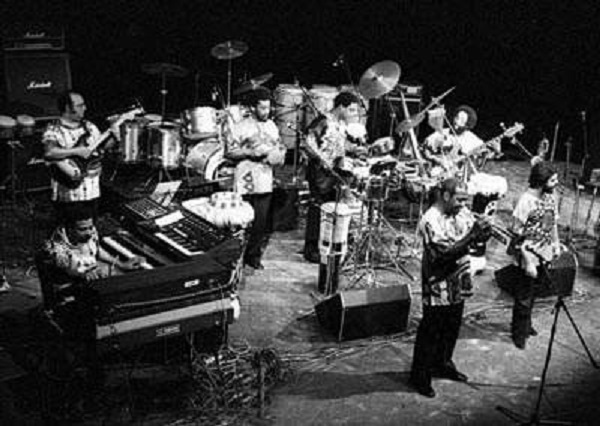
Irakere was a Cuban group that developed an important work in Cuban popular music and Latin Jazz under the direction of Chucho Valdés

Irakere was formed as such in 1967 but had begun to work much earlier; in that year precisely they went to a selection called in Havana to organize with the best musicians of that time the Cuban Orchestra of Modern Music; already in 1972 they were approaching to what they currently produce deciding in 1973 to call it Irakere, which in Yoruba language means Vegetation and that is how, starting from its name, they work based on the Afro-Cuban musical roots.

In this way, through the combination, mixture and interrelation of classical, impressionism, jazz, rock and various compositional techniques they managed to walk through all styles such as dance music, concert, traditional and popular Cuban music.

Thanks to the impulse of pianist Chucho Valdés, the Cuban group Irakere took off in 1973, nourished by Thelonious Monk’s bop.

Founders

Grupo Irakere: It was founded in Havana in 1973, by:

Jesús Valdés(Chucho) composer, director and pianist;

Paquito D’Rivera (Paquito), alto and tenor saxophone, flute and clarinet;

Carlos Averhoff, tenor saxophone, soprano, flute and bass clarinet;

Jorge Varona, trumpet, trombone and percussion;

Carlos del Puerto, bass, bass guitar and tuba;

Carlos Emilio Morales, guitar;

Bernardo García, drums and batá drums;

Jorge Alfonso, batá drums;

Enrique Plá, drums;

Carlos Barbón, güiro, chekeré and tambourine; and

Oscar Valdés, singer, tumbadora (conga), batá drums and bongo.

Irakere, fue un grupo cubano que desarrolló un importante trabajo en la música popular cubana y el Jazz Latino

On the founding of Irakere, Chucho Valdés expressed:

“For us the group always existed, it was present at all times; it was like something pending. At the beginning it had no name, it was just an idea we were working on: to use Cuban folkloric percussion in dance music, and to look for different timbres with a common characteristic: “ours”.

Then Oscar Valdés came up with the idea of combining the not easy and little known batá drum with the tumbadora, güiro and cowbell and so, step by step we arrived at the current group…”.

About Irakere’s first stage, the musicologist Leonardo Acosta points out: “one of the successes of Irakere had been not to try to invent and identify itself with a “new rhythm”, according to the old guidelines of advertising so much used from the forties to the sixties.

The slogan about the “new rhythm” was until recently the “open sesame” on which the musicians counted to become famous overnight, and by that way sometimes quite commercial results were achieved.

Apart from the fact that no “new rhythm” is so new, they all come from the alteration or amalgamation of pre-existing rhythms.

Irakere’s only alchemy comes from the spontaneous creativity of its members. Since there is no commercial endeavor, laboratory practices are unnecessary, and the group can perform a contradanza, a danzón, a son montuno or a cha cha chá without fear of seeming “old-fashioned”, since they are in fact playing something else at the same time. And without setting themselves the goal, nor having to invent a “pega” name, almost by an imperative of the material they are working on, new rhythmic combinations are emerging, to the point that Irakere’s rhythm is unmistakable among Cuban listeners or dancers.

Grupo cubano Irakere

Certainly, and in spite of their triumphs in international jazz festivals, Irakere is not a jazz group. But these successes are not gratuitous either, because as we have seen, they have formidable musicians with great experience in the jazz field, especially in the aspect of improvisation, the great discovery of jazz and perhaps its greatest contribution to the music of the 20th century.

“Paquito D’Rivera: Irakere was born against the will of the Cuban authorities”.

When talking about Cuban music, the name of one of the most emblematic groups in the country’s musical history comes to mind, Irakere, which in Yoruba language means vegetation, jungle.

Irakere became the seed that would germinate a lush forest of rhythms and sounds, a school through which many of the great stars of Cuban music have paraded.

Founded more than four decades ago, this legendary band has been a pioneer of Afro-Cuban jazz and the initiator of the musical revolution in the seventies.

Gracias al impulso del pianista Chucho Valdés, el grupo cubano Irakere levantó vuelo en 1973

Irakere emerged at a time when, due to political demands on the island, music and culture were treated as an instrument of revolutionary identification and jazz was branded as imperialist music.

It was at this time, in the late sixties and early seventies, that a group of great musicians founded a band whose main goal was to enrich Cuban popular dance music with Latin jazz as essential elements.

Under the direction of the outstanding pianist Jesús “Chucho” Valdés, excellent musicians came together in search of a different sonority, based on the use of Afro-Cuban folkloric percussion together with the renewed timbres of the popular rhythms of the time that fused jazz, rock, funk and popular Cuban rhythms such as son, mambo or cha cha chá, together with classical or concert music.

“Irakere was the Musical Generation of change”.

Sources:

https://www.ecured.cu/Irakere

Leonardo Acosta

Radio Televisión Marti

Mirna Guerra

Irakere

You can read: Israel Kantor was an excellent bassist, arranger and composer who achieved great popularity in Cuba for his vocal technique and original “Sonear” style

Carlos Peluzza Del Carpio, the versatile Peruvian musician, was in San Juan Puerto Rico

One of Puerto Rico’s salsa anthems is, without a doubt, ‘Borinquen’. Below, Papo Lucca, leader of the famous salsa group, tells us why he included the Peruvian percussionist in that song.

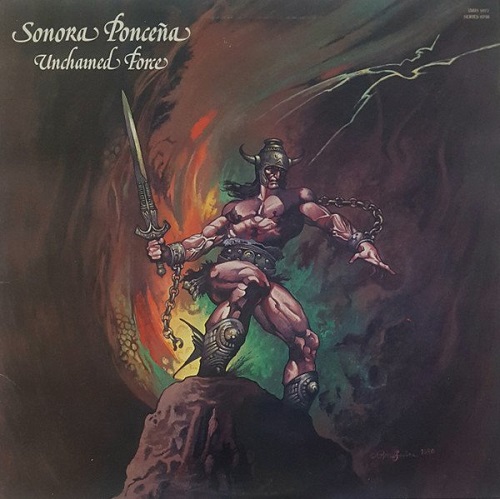
Papo Lucca needed an expert percussionist in Puerto Rican dance for the song ‘Borinquen’, written by Johnny Ortiz, which he would include in the LP ‘Unchained Force’.

It was 1980 and in those days Carlos Peluzza Del Carpio, the versatile Peruvian musician, was in San Juan.

Papo did not hesitate to summon him. “He lived here in Puerto Rico for a long time,” the Sonora Ponceña leader tells us over the phone. “It’s just that in the Sonora I don’t have a redoblante.

Carlos Peluzza Del Carpio

And since Peluzza was here and shared his musical journeys with many artists from Puerto Rico, he did know those secrets of Puerto Rican dance. It was for that reason that I invited him to be on that recording, recalls Papo, 37 years later.

Wison Torres Jr. was in charge of finding the Peruvian musician, who incidentally was in charge of the arrangements of the song (together with Papo). Peluzza’ was only informed that he was needed in a recording room. When he arrived he saw the percussion ready, a bass and a piano.

A few minutes later Papo arrived, greeted him and the memorable session began. The percussionist remembers it as one of the most beautiful moments of his life. Borinquen’, in its 6.56 seconds, was a hit.

The vocals were provided by Yolandita Rivera, one of the greatest soneras ever born on the Island of Enchantment. The choruses were provided by Toñito Ledee, Miguelito Ortiz and Edwin ‘Caneca’ Rosas. Papo was satisfied. And Carlos ‘Peluzza’ treasures the story fondly.

Sonora Ponceña Unchained Force 1980

That is just one of the many anecdotes that the famous pianist has with Peruvians. He remembers that one day on television in his country a girl and her father were singing the song ‘Fina estampa’. He liked it.

That’s why, in 1979, in the album ‘La Ceiba’, in which Celia Cruz sings, he decided to include that famous waltz by Chabuca Granda. “From that moment on, I got to know other pieces of Peruvian Creole music,” he says.

Papo has visited Lima many times. He has already lost count. He has friendships. For example, he is a friend of Carlos Aparicio, the volleyball coach. He assures us that once they even participated in a game of Alianza Lima’s girls. In addition, he reminds us that Edwin Caneca Rosas is also a referee of that sport. So everything was conspiring.

It is a June morning in La Perla, Callao, and the conversation continues under the gaze of Juan Núñez, a Peruvian singer who a few weeks ago was in Ponce, Puerto Rico, fulfilling a dream: rehearsing with the Sonora Ponceña. Papo is generous with Juan, highlights his singing qualities and underlines the friendship that has grown between them.

Carlos Peluzza Del Carpio, el versátil músico peruano

Precisely, we took the opportunity to ask him about the orchestra’s recent hit entitled ‘Canción a mis amigos’. This salsa was born after the terrible natural disasters that Peru and Colombia faced at the beginning of this year with the El Niño Costero phenomenon.

The composition is by Francisco Alvarado, who wrote it in two days. The voices were provided by Jorge Nicolai and Darvel García. What happened to you identified us a lot,” says Papo.

The musician adds that he felt that La Ponceña should make itself felt with a song of solidarity. Now it is time for it to be played on Lima’s radio stations. Will it become popular?

The twenty minutes of chatting come to an end and Papo has many topics left in the pipeline. He is very grateful and Juan Núñez tells us that behind his solemn appearance there is a human being who enjoys, who is passionate about music and who is always observing how to amalgamate sonorities. La Sonora Ponceña is still going strong and hopefully soon we will be able to see it unload in Lima.

We need to chant ‘Canción a mis amigos’. And that Carlos Peluzza, in one of those, returns to redoblar in ‘Borinquen’. Also that Yolandita Rivera sings? Hopefully.

Sources:

Martín Gómez V.

Papo Lucca

Carlos Peluzza

You can read: September 22, 2022 marked the 48th anniversary of the Fania All-Stars concert in Zaire, Africa

  • « Go to Previous Page
  • Page 1
  • Interim pages omitted …
  • Page 37
  • Page 38
  • Page 39
  • Page 40
  • Page 41
  • Interim pages omitted …
  • Page 64
  • Go to Next Page »

International Salsa Magazine (ISM) is a monthly publication about Salsa activities around the world, that has been publishing since 2007. It is a world network of volunteers coordinated by ISM Magazine. We are working to strengthen all the events by working together.