• Skip to primary navigation
  • Skip to main content

International Salsa Magazine

  • Home
  • Previous editions
    • 2026
      • ISM / January 2026
      • ISM / February 2026
    • 2025
      • ISM / December 2025
      • ISM / November 2025
      • ISM / October 2025
      • ISM / September 2025
      • ISM / August 2025
      • ISM / July 2025
      • ISM / June 2025
      • ISM / May2025
      • ISM / April 2025
      • ISM / March 2025
      • ISM / February 2025
      • ISM / January 2025
    • 2024
      • ISM / December 2024
      • ISM / November 2024
      • ISM / October 2024
      • ISM / September 2024
      • ISM / August 2024
      • ISM / July 2024
      • ISM / June 2024
      • ISM / May 2024
      • ISM / April 2024
      • ISM / March 2024
      • ISM / February 2024
      • ISM / January 2024
    • 2023
      • ISM / December 2023
      • ISM / November 2023
      • ISM / October 2023
      • ISM – September 2023
      • ISM – August 2023
      • ISM July 2023
      • ISM Edition June 2023
      • ISM – May 2023
      • ISM April 2023
      • ISM March 2023
      • ISM February 2023
      • ISM January 2023
    • 2022
      • ISM December 2022
      • ISM November 2022
      • ISM October 2022
      • ISM September 2022
      • ISM August 2022
      • ISM July 2022
      • ISM June 2022
      • ISM May 2022
      • ISM February 2022
      • ISM January 2022
    • 2021
      • ISM December 2021
      • ISM November 2021
      • ISM October – 2021
      • ISM September 2021
      • ISM August 2021
      • ISM July 2021
      • ISM May 2021
      • ISM April 2021
      • ISM June 2021
      • ISM March 2021
      • ISM February 2021
      • ISM January 2021
    • 2020
      • ISM December 2020
      • ISM November 2020
      • ISM October 2020
      • ISM September 2020
      • ISM August 2020
      • ISM July 2020
      • ISM June 2020
      • ISM May 2020
      • ISM April 2020
      • ISM March 2020
      • ISM February 2020
      • ISM January 2020
    • 2019
      • ISM December 2019
      • ISM November 2019
      • ISM October 2019
      • ISM Septembre 2019
      • ISM August 2019
      • ISM July 2019
      • ISM June 2019
      • ISM May 2019
      • ISM April 2019
      • ISM March 2019
      • ISM February 2019
      • ISM January 2019
    • 2018
      • ISM December 2018
      • ISM November 2018
      • ISM October 2018
      • ISM September 2018
      • ISM August 2018
      • ISM July 2018
      • ISM June 2018
      • ISM May 2018
      • ISM April 2018
      • ISM March 2018
      • ISM February 2018
      • ISM January 2018
    • 2017
      • ISM December 2017
      • ISM November 2017
      • ISM October 2017
      • ISM September 2017
      • ISM August 2017
      • ISM July 2017
      • ISM June 2017
      • ISM May 2017
      • ISM April 2017
      • ISM March 2017
      • ISM February 2017
  • Download Salsa App
    • Android
    • Apple
  • Spanish

Search Results for: Radio

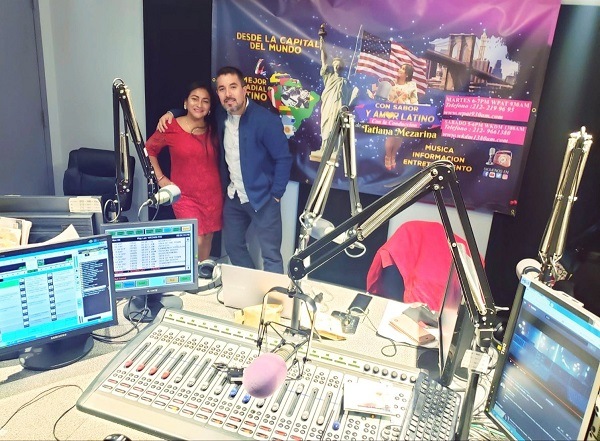
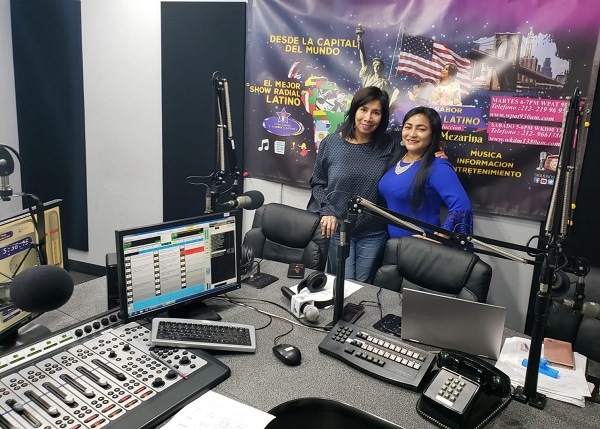
Broadcaster and host of Con Sabor Y Amor Latino Tatiana Mezarina

We talked with announcer Tatiena Mezarina

The world of broadcasting is of utmost importance to the promotion of Latin music and today we are talking to one of its greatest exponents. We are talking about Peruvian broadcaster and host of the show ”Con Sabor Y Amor Latino” Tatiana Mezarina, who very kindly agreed to talk to us about her career and current projects.
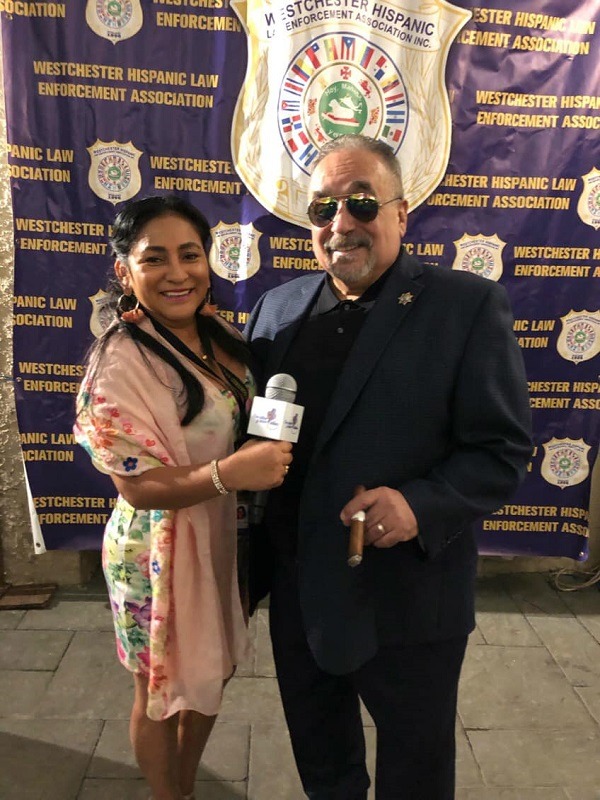
Tatiana Mezarina next to Willie Colón

Tatiana began by thanking us for inviting her and telling us how she became interested in the world of radio. All this enthusiasm for this interesting world of communication began since she was very little in her native Peru, at which time she worked as a school correspondent for one of the most famous newspapers in Latin America, ‘‘El Comercio”. On the radio, she began on the radio station Radio Libertad, specifically in a program show ”Viva Juventud”.

Since a very early age, Mezarina was very involved on all types of media, both print and audiovisual. Then, she had the opportunity to work in television with a show dedicated to music called ”El Mañanero”, which was in charge of broadcasting all kinds of artists and rhythms in her country.

When he started working for ”Canal Global”, he received a scholarship to study Communication Sciences in Germany and worked in German media such as Deutsche Welle and Berlin Channel. Both there and in the United States, she has had many shows linked to social causes and dedicated to informing her listeners about important issues.

Tatiana Mezarina talking to Luis Enrique

How ”Con Sabor Y Amor Latino” started

In the case of her most recent project ”Con Sabor Y Amor Latino”, Tatiana wanted to work on all these issues and give a friendly voice to help Latinos living in the United States so that they know that we are the largest ethnic minority in this country, so we should not be harassed by anyone. At the beginning, this show sought to keep the Latino community informed, but as time went by, it also wanted to offer good music. This is how Tatiana began inviting Latin artists from all over the world and of all musical genres, but she always had a special tendency to salsa because it is her favorite type of music.

In September 2019, the announcer decided to create ”Con Sabor Y Amor Latino”, a name inspired by how delicious Latin food is and how loving much of us Latinos are. This was her first project of this type since arriving in New York and arose from the need for Latinos to have a window through which they could communicate in their native language and feel comfortable to express themselves.

Music has been very important as dancing and joy are part of our identity. Music is part of our DNA and salsa has always identified with the Latino.

Is academic training important for communication?

Mezarina states that she has no problem with communicators without any training long as they do this job responsibly. However, she also argues that a person with training tends to offer a higher quality work, but this is not always the norm.

The communicator confesses that she herself took a radio and television course there in New York, which was aimed at people who had never done radio before, but wanted to learn about this profession. This is how she became interested in this branch of communication and is the one she currently works in.

”There can be all kinds of communicators, but it’s up to to everyone to decide who to follow and what to listen to,” says the announcer.
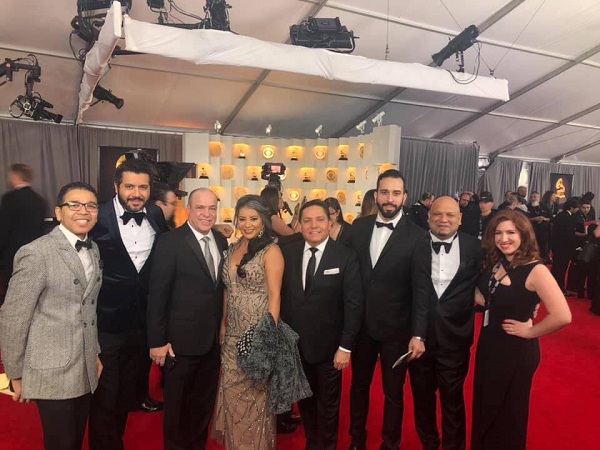
Tatiana Mezarina with Grammy-nominated Colombian percussionist Samuel Torres

Non-recommendable behaviors in communicators

When asked what behaviors which no communicator should have, Tatiana says that ”unverified information should never be disseminated. When we stand at a microphone, we have the responsibility to be careful with what we say because we reach thousands of people in a matter of seconds. If things are not done right, we confuse people and do not honor the truth.”

Future projects

As for her future projects, the communicator has said that she would never want Con Sabor Y Amor Latino to be cancelled, as she considers that much remains to be done from that platform. Unfortunately, she has been unable to dedicate 100% of her time to the radio show, but she hopes to be able to do so in the future. Similarly, he also hopes his content will be broadcast on one of the major television networks in the United States.

Meanwhile, the goal of Mezarina and her team is to keep the community informed on everything a Latino in the United States need to know to avoid inconveniences and to give publicity to artists from all genres who are unable to make their talent public through traditional radio stations and channels.
Tatiana Mezarina with commissioner of the NYC Department of Consumer and Worker Protection Lorelei Salas

Read also: The multifaceted artist Yamila Guerra and all her projects

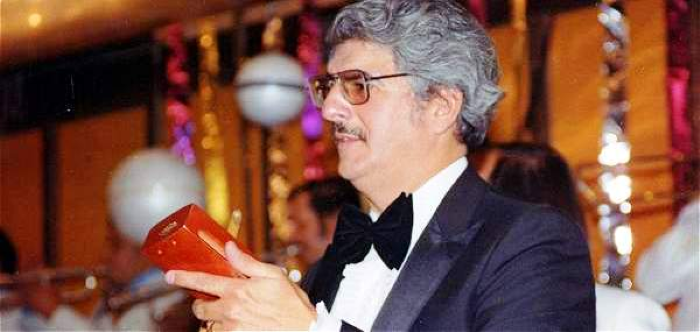
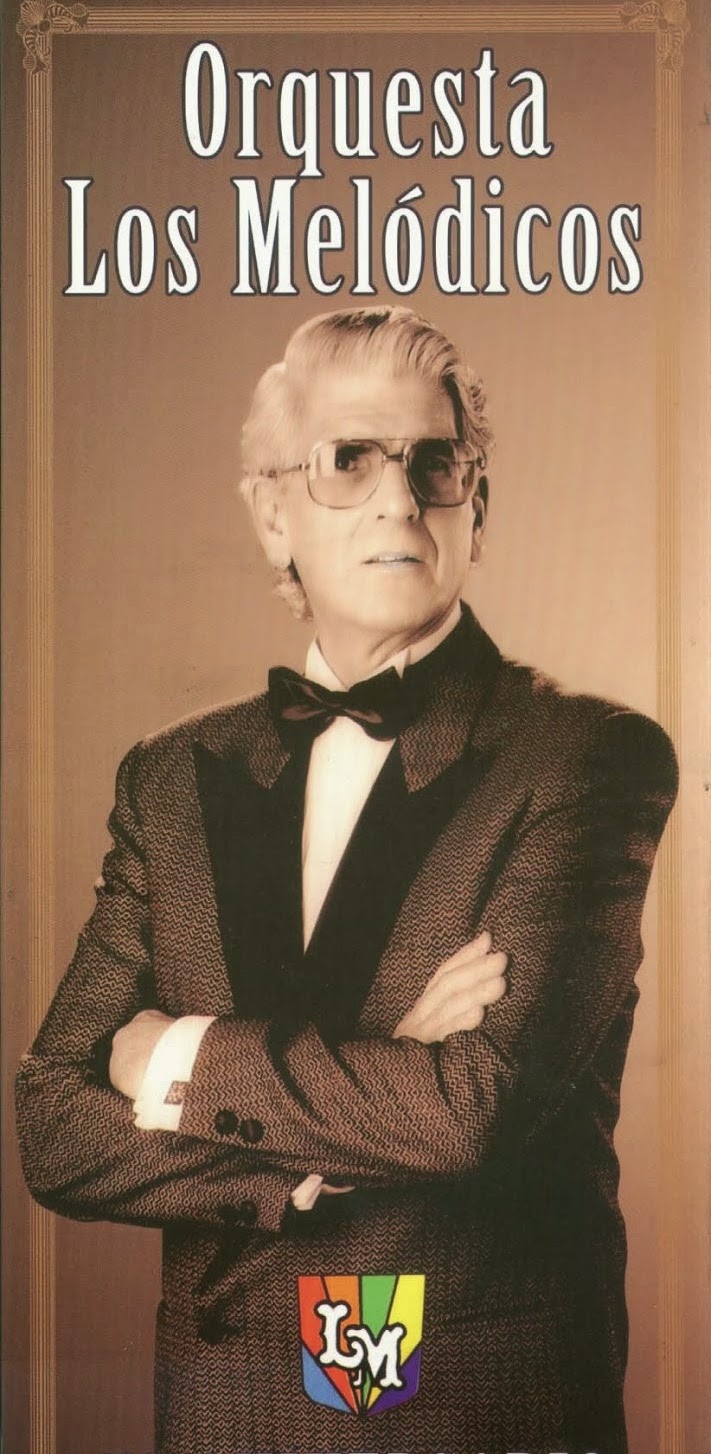
Renato Capriles, the man who imposed the rhythm with “Los Melodicos”

Dance bands have always added flavor and rhythm to parties in the Caribbean, but one of the greatest was born in Venezuela at the hands of Renato Capriles, “Los Melodicos”. An entrepreneur with an interesting vision of music, who knew how to adapt to what the public wanted, throughout the decades that accompanied his great project. In the following lines, we will tell you about his life and what he thought of his experiences.

Early years of Renato Capriles

Contrary to what many believe Renato was not born in Caracas, but in a small town called San Esteban located in Puerto Cabello, Carabobo state on December 28, 1931. In his own words:

“It was a town where only six or seven families lived. The rest of the inhabitants were people who served in those houses. San Esteban is about an hour from Puerto Cabello and it is still a very beautiful area.”

His arrival in Caracas is due to the death of his father, at that time his older brother, Miguel Ángel, decided to move the family to the capital and develop the businesses for which the Capriles family would later be well known in Venezuela. In addition, that is why it is known that he was born into a wealthy family, so business is something that he carried in his blood. They were also a large family, Renato being the 13th sibling of 14, which is why he always considered it his lucky number.

Arriving in Caracas, they settled in La Pastora, where the Capriles spent their childhood and adolescence. Renato himself even commented that he traveled those streets with a velocipede that was given to him for his birthday. During his adolescence he began to be closer to the dance bands of the time, although music always accompanied him, showing an innate ear since he was a child. But it was as a teenager that he went to parties in the main  square and listened to the radio:

“Already a little older – 16, 17 or 18 years old – the programs I listened to were “A Gozar Muchachos”, Billo’s program, of course, and the program that Luís Alfonso Larraín had. Those were the two great orchestras…”

At that time he also began his professional stage, first as an office boy at Inex S.A., owned by the German businessman Gustavo Zingg. Thanks to his friendliness and knowing how to treat people, he met Zingg and his children, who, seeing his hard work, promoted him to store salesman and then itinerant salesman aboard a Land Rover, with which he toured much of the Venezuelan territory selling everything, including power plants.

Then he decided to follow his family’s vein and set up his own business in Valencia, a clothing store that he bought from his brother-in-law who was a travel agent for two clothing factories. However, this only lasted 2 years, this being the only business that Renato failed. His mother asked his brother Miguel Ángel to take him to the company, known at that time as Cadena Capriles, which little by little became a publishing conglomerate.

Renato came to the organization and formed the company’s Public Relations department from scratch, something he was always very proud of and that he kept reminding in every interview. In fact, that vein of public relations is what led him to achieve that impressive success with “Los Melodicos”:

“I think I was born with that. I always make the comment that more than a musician I feel like a born relationist. All my life I have done it and I have applied it…”

The Birth of “Los Melodicos”

Although it may seem like a joke due to the supposed enmity between the two, it was Billo Frómeta’s orchestra that prompted Renato to form “Los Melodicos”. The young Capriles spent his adolescence listening to Billo’s Caracas Boys on his radio program “A Gozar Muchachos”, he also listened to other orchestras that competed with Billo’s for the popularity of Venezuelans and neighboring countries.

In addition to that, Renato Capriles was always linked in one way or another to music, not only did he have rhythm and an innate ear, but also his businessman’s mind led him to give his own orchestra a different organization. In fact, at the time that the Capriles family lived in La Castellana, he and his younger brother Juan Felipe had a small band of 5 musicians. Therefore, Renato already had experience in the formation of bands and orchestras.

In 1958 Renato finally decided to follow his most longed-for dream of having his own orchestra and taking advantage of the problem of the veto given to maestro Billo, Renato looked for him to help him with the composition and arrangements. As he commented in the interview he gave to Alfredo Churión D. and his space “Aquí están todavía”:

“There is a bit of fantasy about the creation of my orchestra. I was a big fan of Billo and always wanted to have an orchestra that sounded like his. I’ve always said it!… (Billo) he had opened a business in Sabana Grande which he baptized El Rincón de Billo in where he played the piano for the large number of friends who visited him there. And there I introduced myself to him one day with Tere, my first wife, to give an outlet for the concern I had had since I was a boy, which was to have an orchestra.

And my words were: ‘Billo, the reason for my visit is not to come and hear you play the piano or have drinks at the bar, but rather to propose that you make arrangements for an orchestra that I’m going to found and I’ll give you 50% of profits’… All in all, after seven months my orchestra appeared with its arrangements. He could not appear anywhere with them because no musician could get close to Billo at that time under penalty of being banned for life too.”

“Los Melodicos” made their debut in a television program that was sponsored by Cadena Capriles, it was called Su Revista Musical. Renato was the producer of the show and there the animator Henry Altuve made his debut, who had only worked on the radio until that moment. The orchestra’s first LP came with arrangements and a composition by Billo. So it had its sound but at the same time it didn’t:

“He arranged very lively with a very commercial sound, but it didn’t sound like him. On my orchestra’s first LP, although it’s his arrangement, it’s not his sound.”

Another important thing to highlight was the way of working and how Renato organized the orchestra, along with his innovative system of paying the musicians:

“I created a form of payment for musicians that did not exist at the time and that caught Billo’s attention when he reappeared with his orchestra in 1960. I invented the rates for musicians and I can prove it to you because I have the contracts saved. A first high earned eight hundred bolivars a month and a good second tenor earned six hundred. It was the first orchestra that earned salaries. It wasn’t like Billo’s where each musician earned a percentage. I created the orchestra as a company. They had, and still have, Social Security, Savings Bank, interest-free loans, etc.”

Renato’s golden age with “Los Melodicos”

The “Los Melodicos” orchestra has been faithful to the motto that has accompanied it throughout its extensive musical career: “The orchestra that imposes rhythm in Venezuela”. They began with the singers Víctor Piñero “Rey del Merecumbé” and Germán Vergara, but they were innovative by having a woman in the ranks of an orchestra for the first time: Emilita Dago.

Since then, singers and musicians like Rafa Pérez, Manolo Monterrey called the “Ciclón Antillano”, Niro Keller, Cherry Navarro, Cheo García, Roberto Antonio and Miguel Moly have passed through its ranks over the decades; while among the girls were Norma López, Diveana, Floriana and Liz.

What differentiated “Los Melodicos” from other orchestras in those decades was the innovation that Renato put into it. One of those great examples is presenting varied rhythms outside of the Latin dance rhythm. They came to play the twist with the singer Teresita Martí, which brought them great problems since it was considered “… a vulgar and ordinary rhythm.” They also came to play songs with touches of rock, but their most significant sound is techno with songs like “Papachongo” and “Que Rico”, where Diveana managed to capture more than one heart.

During all the years that Renato was in charge of the orchestra, there were many rumors of romantic love affairs with his singers, to which he himself replied:

“17 female figures have passed through my orchestra and I have had romantic relationships with 7 of them. Some are stormy and others very beautiful. People think that I’ve gotten involved with all of them, but that’s not the case. Raise fame and go to sleep.”

Renato’s rhythm went off before his time

Renato Capriles left us on the morning of July 8, 2014, he had already been hospitalized for days in a clinic in Caracas, all due to pneumonia. Currently, the direction of the orchestra is led by Iliana Capriles, daughter of Renato, who has been working hard for 11 years to continue contributing to the success of the orchestra as director. But all her life she has been in one way or another linked to the orchestra, and like a good Capriles she has gone through all the positions of the company that her father founded.

“For 30 years I have been part of the musical organization Renato Capriles, I have been the right hand of my father, his producer, promoter, sales, among others, until 2014 when I had to assume it, and it has been an enormous responsibility, and here we are paying tribute, honor to whom honor is due, and maintaining the legacy of great importance in Latin music”.

“Los Melodicos” are a key part of the musical history of Venezuela, with more than 100 productions under their authorship, and it cannot be forgotten that their professional enmity with Billo’s Caracas Boys is what kept the panorama of dance bands interesting. As they have always shown, they keep up to date with new trends and social networks are no exception, so you can find them everywhere like @orquesta_losmelodicos or La Orquesta Los Melodicos, because now they are “the orchestra that imposes the rhythm” in the digital world.

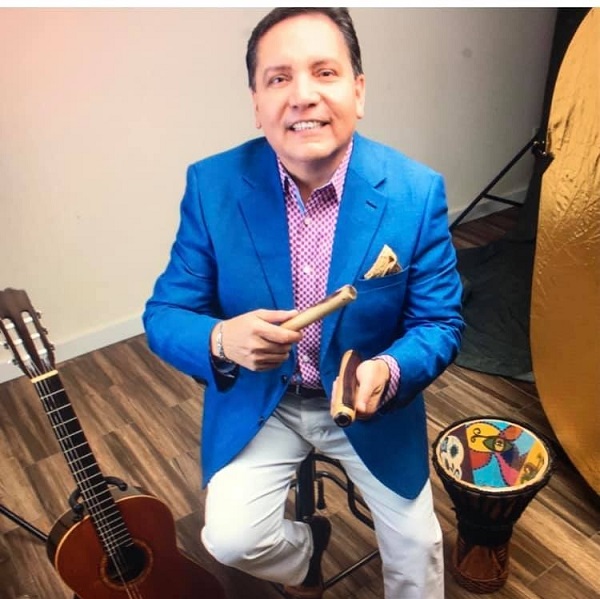
Marco Bermúdez extraordinary Musician, Percussionist, Singer, Composer

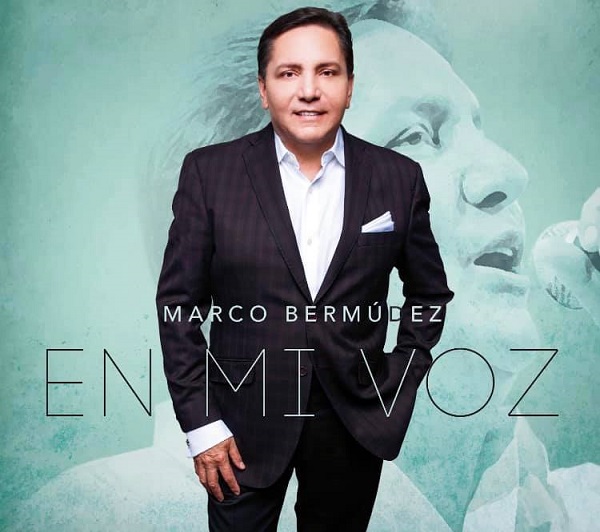
On october 19, 1961 in Portoviejo, Ecuador, Marco Bermudez Brito was born. Extraordinary Musician, Percussionist, Singer, Composer.

Nobody is a prophet in his own land. At the age of 23 he traveled to the United States as a singer. And in 2004, being a member of the Spanish Harlem Orchestra (SHO), he won the Grammy in the category Best Salsa Album for the album Across 110th street.

On a day like today, October 20, Marco Bermudez was born in Portoviejo, Ecuador. He is an excellent performer, composer and studio musician in all styles of Latin music.

Marco Bermúdez
Marco Bermúdez

He was born into a family with a rich musical heritage and has resided in New York for the past thirty-four years. Marco has toured the world with Latin music greats: Tito Puente, Celia Cruz, Cheo Feliciano, Oscar D’ Leon, Tito Nieves, Domingo Quiñones, Jose Alberto and all the artists on the RMM Records label.

Marco’s discography includes: RMM All Stars 10th Anniversary CD/DVD Live at the Continental Arena New Jersey; Recorded a Selena (RMM) and Tropical Tribute to the Beatles CD/DVD recorded live at Radio City Music Hall in New York.

Marco is currently one of the singers of the Spanish Harlem Orchestra. As a performer and composer, Bermudez has collaborated in the record productions of the SHO, writing the lyrics of the songs Son de Corazón, Regalo de Dios, Qué Bonito, La Fiesta began.

(One more year of life for this Ecuadorian performer, composer and musician who has performed in different variations of Latin music.

Marco Berudesz en Mi Voz

Experiences with Isidro Infante y La Élite, Conjunto Clásico, Tito Puente, Celia Cruz, Cheo Feliciano, Oscar D’León, Tito Nieves, Domingo Quiñones, José Alberto “El canario”, and Ralph Mercado’s RMM Records family in which he participated in productions such as “RMM All Stars 10th Anniversary – Live in Continental Arena of New Jersey”, “Recorded a Selena”, “Recorded a Selena”, “Recorded a Selena”, “Recorded a Selena”, “Recorded a Selena”, “Recorded a Selena”, “Recorded a Selena”, “Recorded a Selena”, and “Recorded a Selena”; the album “Recorded a Selena” (RMM) and “Tropical Tribute to the Beatles”, a CD/DVD recorded live at Radio City Music Hall in New York.

The pinnacle of his career came when he became part of the Spanish Harlem Orchestra’s line-up of singers, collaborating in different record productions and strengthening his facet as a composer through titles such as “Son de corazón”, “Qué bonito”, “Regalo de Dios” and “La fiesta empezó”.

He has also been part of The Mambo Legends project sharing microphones with Frankie Vázquez and Jorge Maldonado.His story is told to us when he was in Ecuador on vacation with his wife.

“From a very young age, I was always surrounded by music,” she says proudly. He refers to his parents, siblings and most of all to his uncle, the great singer Eduardo Brito.

Eddie Palmieri y Marco Bermudez

Marco, at the age of 9, together with his brother Eduardo formed the duo Hermanos Bermúdez Brito, being the first to record the pasillo Romance de la tejedora manabita, lyrics by Paco del Casty and music by Filemón Macías, Marco’s uncle: “Con horma de esperanzas/y encajes de clavellina/ va tejiendo su sombrero/ la manabita más linda” (With a last of hopes/and lace of carnation/ she weaves her hat/ the prettiest manabita).

In the early eighties, brothers Mariano and Venancio Larrea invited him to join the Marfil group, from Guayaquil. That was when the group turned to salsa music, which was just becoming popular in these parts.

But his life and stage changed in 1984, when he and his brother joined the Manabita orchestra Los Profetas, which would perform in Los Angeles, Miami and Chicago.

With the illusion of succeeding in the north, Bermúdez stayed and formed El Combo de Nueva York, which was the staff orchestra of a chain of nightclubs in Queens.

Roberto Roena y Marco Bermudez

At that time, Marco was concerned about his musical training, besides being a singer and composer, he was also a percussionist. His entry into the big leagues of salsa came when he was part of La Élite, led by maestro Isidro Infante, for 6 years.

There he achieved fame as the interpreter of the songs Santo, Militar and Montuno and for the album Tributo Tropical a Los Beatles.

He was also part of La Charanga de Johnny Almendra and Los Jóvenes del Barrio, and was one of the singers of the legendary Conjunto Clásico orchestra. “Even when there is a tour they call me because I know the repertoire and I know the routine”.

At the beginning of 2003 he made a great leap when he joined the SHO, an orchestra that besides winning the Grammy and achieving nominations for two of its albums, is considered “the best salsa orchestra in the world”, according to the Puerto Rican critic Jaime Torres Torres, who in referring to Bermúdez affirms: “He is the only recognized Ecuadorian salsa singer who dominates the difficult art of soneo and clave”.

Spanish Harlem Orchestra

About the renowned SHO, Bermúdez says that in reality this orchestra “is the sound of the Harlem neighborhood, where urban salsa was born.

We are inspired by masters like Tito Puente and Mario Bauza, who left us that legacy”. And although every salsa singer is mistakenly called a sonero, very few are.

The soneo is an improvisation by the singer when the percussionist solos on the drums, he explains.

The next SHO album will feature three songs by Bermúdez: Son de corazón, Regalo de Dios and La fiesta empezó. “I like to write everything, romantic, jocular, nature and rumba songs,” says Marco who is currently selecting songs for his solo album which he hopes will be released this year. It will include a recording with Las Leyendas del Mambo, Tito Puente’s legendary orchestra.

These are his plans. His dream: “to come to Ecuador as a soloist or with SHO because I have had recognition abroad, but it must be nice to be recognized in your country”. Although they say that no one is a prophet in his own land, Bermúdez, the sonero, will surely be.

At the age of 9, together with his brother Eduardo, he formed the duo Hermanos Bermúdez Brito, being the first to record the pasillo Romance de la tejedora manabita.

In the early eighties, the brothers Mariano and Venancio Larrea invited him to join the Marfil group, from Guayaquil.

In 1984, together with his brother, he joined the Manabita orchestra Los Profetas, which would perform in the United States. He stayed in New York and formed El Combo de Nueva York, which was the staff orchestra of a chain of nightclubs in Queens.

Later he was part of La Élite, led by maestro Isidro Infante, for 6 years.

He was also part of La Charanga de Johnny Almendra and Los Jóvenes del Barrio, and was one of the singers of the Conjunto Clásico orchestra.

At the beginning of 2003 he joined the “Spanish Harlem Orquestra” of Maestro Oscar Hernandez. He has collaborated, among others, with the band of “Mister Moña” Jimmy Bosch and “La Mambo Legends.

You can read: Héctor “Bomberito” Zarzuela Calidad y Tuning en la Maquinaria Fania All-Star

Marco Bermudez

EFG London Jazz Festival

Commemorates 30 Years With A Display Of International Latin Jazz Artists

The first seasons of the EFG London Jazz Festival took place in May

EFG London Jazz Festival celebrates its 30th birthday with the innovation and musical freedom that has always characterized the London Jazz scene.

This festival, the largest and in constant transition in North London, opens its space from Friday, November 11th to Sunday, November 20th to present a program of live and digital presentations with world-class artists, emerging talents, collaborations specials, avant-garde sounds, and the latest music for a massive audience that has established the EFG London Jazz Festival https://efglondonjazzfestival.org.uk/ as one of the main international Jazz events in Europe.

This emblematic event in the United Kingdom has three outstanding aspects that have characterized it over the years, they are Character, Impulse, and Wealth. The Character is evidenced in each edition with the contribution of special collaborations, discoveries, and exclusive commissions. The second aspect of this festival is the Impulse, being this event the highlight of the Jazz calendar in the capital. Finally, the third aspect is the Wealth that can be easily found in a club or concert hall packed with spectators to enjoy 300 live shows in more than 70 places attracting around 100,000 people daily.

In this 2022 edition, the star lineup is represented by nine international Latin Jazz artists such as Fiona Ross (Friday, November 11th), Katriona Taylor Quintet presenting “La Reina de la Bossa Nova” (Saturday, November 12th), Yuri Hernández (Sunday, November 13th), Colectiva (Thursday, November 17th), Mexico’s Woman of the Year for Arts and Culture, Migdalia Van Der Hoven (Thursday, November 17th), the Jazz/Latin group led by Steve Rubie from the 606 Club, Samara (Friday, November 18th), Trombonist Laura Impallomeni (Saturday, November 19th), Osvaldo Chacón (Sunday, November 20th) and Chucho Valdés (Sunday, November 20th).

L I V E   B A N D S

Fiona Ross

 “Voices celebrate the power, connection, and expression of song, beauty, and aptitude…”

At fourteen she lied about her age to play weekend Jazz clubs in London. Photo: Alexander Barnes-Ross

Vocalist, pianist, songwriter, and producer, Fiona Ross, has become known for having an authentic contemporary Jazz sound obtained by mixing the fast rhythm of Latin Jazz, a brief flirtation with vintage Jazz, a bit of Neo Soul, and a touch of melancholy ballads.

Multi-award-winning Jazz artist, editor-in-chief, journalist, and founder of the award-winning organization Women in Jazz Media Fiona Ross was Director of the British Academy of New Music in London for nearly a decade, where she was responsible for the formation of Ed Sheeran, Rita Ora, among many others. Fiona’s date will be on November 11th at 8:30 PM at the London Polish Jazz Café Posk (238-246 Kings St. W6 0RF), and the ticket is £15.

Yuri Hernández + DJ Flecha

 “…Celebrating unity with the power of music.”

Many describe her album Loco Soñador as “a wild and sensual masterpiece.”

This multifaceted 10-day event brings to its lineup the established singer within the Latin music industry for the last two decades, Yuri Hernández. The establishment that will host it will be Juju’s Bar & Stage (Ely’s Yard, 15 Hanbury St, London E1 6QR) on Sunday, November 13th from 6 PM, and the cost of the ticket doesn’t exceed £9.

Hernández is one of the most sought-after musicians in northern Spain and is introduced to the UK Latin Jazz scene through Loco Soñador, his second studio album released in 2020. Joining this musical genius will be DJ Flecha (Joel Verdecia) with his supporting act promoting Cuban music. This veteran DJ (25 years of career) has been nominated three times as Best Latin Tropical DJ in a European country for his technique and originality when mixing.

Colectiva & Osvaldo Chacón

“Beyond the margins, some of the most innovative artists at the forefront of Jazz are pushing its limits and expanding the definition of the genre while drawing influences from a wide range of other languages.”

Osvaldo Chacón and his band have played at the Royal Festival Hall, among many others.

This Afro-Latin and Jazz music band, Colectiva, reflects on themes of sisterhood and female empowerment. They are rooted in the sounds of Africa, Latin America, and the diaspora, creating a genre that the group has dubbed Jazz Tropicaliente (Hot/Tropical/Jazz). Their debut single is Under The, written in collaboration with pianist María Grapsa and released in April 2021. This track received great support from global radio stations and famous DJs in the music industry.

Colectiva will be presented on November 17th at 8:30 PM at the London Kings Place-Hall Two-(90 York Way, N1 9AG), and tickets have a permanent price of £15.

On the other hand, Osvaldo Chacón’s band is the leading Timba orchestra in the UK and has been nominated multiple times for the prestigious LUKAS awards. Osvaldo Chacón, composer, producer, and singer-songwriter, has shared the stage with great Salsa figures such as Adalberto Santiago, Azuquita, Tito Allen (Fania All Stars), Salsaceltica, Eddie Palmieri, as well as the greatest world-famous stars such as Celia Cruz, Oscar D’León, Rubén Blades, and Alberto “El Canario”. Supporting Osvaldo Chacón will be DJ Javier La Rosa mixing Salsa, Cuban Timba, Reggaeton, Latin Hip-Hop, and R&B. Sunday, November 20th is the date when you can enjoy these presentations. Time: 8 PM. Venue: Juju’s Bar & Stage. Ticket: £10.

Chucho Valdés

 “The Icons are the living legends of Jazz and the leading heroes of the genre who paved the way and continue to create, inspiring artists, and audiences alike.

Valdés, with his valuable contribution, has given direction to Afro-Cuban Jazz

The EFG London Jazz Festival brings the Cuban pianist, composer, and arranger Chucho Valdés, who celebrates his 80th birthday with his extraordinary work La Creación with the Yoruban Orchestra and Hilario Durán & John Beasley.

The winner of six Grammy Awards and three Latin Grammy Awards is the most influential figure in Afro-Cuban Jazz of the 20th and 21st centuries. In an extensive career spanning six decades, Valdés has pushed the boundaries of new expressions in Afro-Cuban music. His influence and inspiration in the genre are immeasurable to the point that his work sets the standard by which new generations are governed and drives their careers. To see Chucho Valdés head to the London Southbank Center (Royal Festival Hall, Belvedere Road SE1 8XX) at 7:30 PM. and tickets range from £30 – £45.

Along with Chucho will be the cellist, vocalist, composer, and niece Ana Carla Maza. Within her discography is the album La Flor (2020) which incorporates Latin rhythms, Pop melodies and Jazz harmonies along with classical techniques. Bahía (June 26, 2022) is her most recent production inspired by Cuban Son, Samba, Bossa Nova, Tango, Jazz, and Chanson with a rich mix of classical cello and voice.

Duo: Yiyo Sarante and Fefita La Grande In Concert

The perfect union of Salsa and Typical Merengue in a night to remember

An evening full of emotions will be lived next Saturday, November 12th at the Masal Deluxe facilities (Küchgarten 21 Küchgarten 21 21073 Hamburg, Germany) with the presentations of the exponent of Salsa Yiyo Sarante and Merenguera Fefita La Grande starting at 9 PM to 5 AM accompanied by DJ Cesar (Hamburg), DJ Miguelin Beatz (Berlin), and DJ Sonrisa (Frankfurt) mixing the best of tropical music. Tickets range from €60 (General) to €120 (Platinum VIP).

Yiyo Sarante debuted as a solo artist in 2010

Eduardo Sarante whose artistic pseudonym is “Yiyo Sarante” exponent of hits like Pirata, Maldita Primavera, Tierra Mala, Nos engañó a los dos and Tres semanas, was born in Baní “La Capital del Sur”, the most important city in the province of Peravia in the Dominican Republic.

He comes from a musical family, the seventh son of nine brothers, five musicians and singers. In 1999 Yiyo performed in Bávaro (Punta Cana, Dominican Republic), and four years later he was a member of the Oro Duro orchestra led by his brother Julián Sarante.

In 2011 Yiyo obtained international recognition thanks to the support obtained from radio stations in the state of Florida and the East Coast of the United States for the single Maldita Primavera from his EP titled Single launched in 2103.

During that same year, Sarante made his first tour outside his native country, taking him to step on the different stages of some Caribbean countries such as the Virgin Islands, Aruba, and Saint Martin.

Yiyo Sarante’s discography https://www.facebook.com/yiyosarante extends from his albums Lo Nuevo de Yiyo Sarante (EP-2013), La Voz de la Salsa (2015), La Voz de la Salsa. Vol 2 (2019), Clásicos (2019) to his most recent singles released this year Quiero Perderme Contigo, Llorarás, Eres Pasado, Demonio, and Prohíbeme Verte.

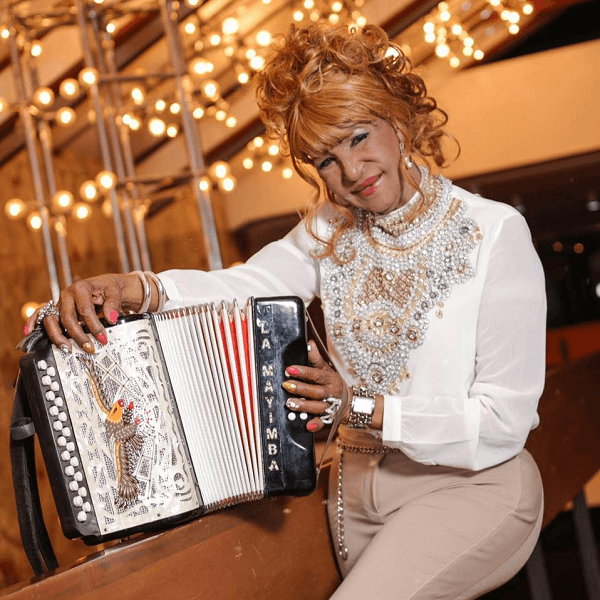
Fefita La Grande is also known as La Vieja Fefa and La Mayimba

On the other hand, the singer, composer, and extraordinaire accordionist, Fefita La Grande (Manuela Josefa Cabrera Taveras) during the last four decades has been an icon of the Dominican Merengue Típico.

This representative of the main musical genre of the Dominican Republic was born on September 18th, 1944, in the municipality of San José de Ocoa. Her father was Eliseo “Seito” Cabrera, an accordionist and owner of a musical instrument repair shop.

Her incursion into the artistic world at a professional level was in 1976 with her first LP Si quiere venir que venga, obtaining great acceptance by the public due to the incorporation of the Saxophone, Congas, and Electric Bass in her melodies when until now there had only been groups of Merengue with traditional instruments: Accordion, Güiro, and Tamboril.

With this new variant of Merengue and with a musical environment dominated by men, Fefita became the first woman to transcend borders and travel to Europe to present this new and authentic style of the Caribbean, in addition to taking her performance to different countries of Latin America thus defining the path for the new generations of Dominican women dedicated to music.

Throughout her artistic career, the performer of La Chiflera (1999), has received various distinctions and has played at Yankee Stadium (New York) with Romeo Santos, and her popularity has led her to participate in major film productions in her country native as Nueba Yol 3: Bajo la nueva ley (1997), Perico Ripiao (2003), and Ponchao (2013) among others.

In 2017, she made the single La Pimienta Es La Que Pica in collaboration with Milly Quezada and Maridalia Hernández, obtaining great support from her followers.

Fefita La Grande https://www.facebook.com/viejafefard has recorded more than 200 songs and her repertoire of greatest hits includes Vamo’ a hablar inglés, O te menea o te apea. Her latest production is La Ciudad Corazón launched in 2021.

  • « Go to Previous Page
  • Page 1
  • Interim pages omitted …
  • Page 38
  • Page 39
  • Page 40
  • Page 41
  • Page 42
  • Interim pages omitted …
  • Page 64
  • Go to Next Page »

International Salsa Magazine (ISM) is a monthly publication about Salsa activities around the world, that has been publishing since 2007. It is a world network of volunteers coordinated by ISM Magazine. We are working to strengthen all the events by working together.