• Skip to primary navigation
  • Skip to main content

International Salsa Magazine

  • Home
  • Previous editions
    • 2025
      • ISM / November 2025
      • ISM / October 2025
      • ISM / September 2025
      • ISM / August 2025
      • ISM / July 2025
      • ISM / June 2025
      • ISM / May2025
      • ISM / April 2025
      • ISM / March 2025
      • ISM / February 2025
      • ISM / January 2025
    • 2024
      • ISM / December 2024
      • ISM / November 2024
      • ISM / October 2024
      • ISM / September 2024
      • ISM / August 2024
      • ISM / July 2024
      • ISM / June 2024
      • ISM / May 2024
      • ISM / April 2024
      • ISM / March 2024
      • ISM / February 2024
      • ISM / January 2024
    • 2023
      • ISM / December 2023
      • ISM / November 2023
      • ISM / October 2023
      • ISM – September 2023
      • ISM – August 2023
      • ISM July 2023
      • ISM Edition June 2023
      • ISM – May 2023
      • ISM April 2023
      • ISM March 2023
      • ISM February 2023
      • ISM January 2023
    • 2022
      • ISM December 2022
      • ISM November 2022
      • ISM October 2022
      • ISM September 2022
      • ISM August 2022
      • ISM July 2022
      • ISM June 2022
      • ISM May 2022
      • ISM February 2022
      • ISM January 2022
    • 2021
      • ISM December 2021
      • ISM November 2021
      • ISM October – 2021
      • ISM September 2021
      • ISM August 2021
      • ISM July 2021
      • ISM May 2021
      • ISM April 2021
      • ISM June 2021
      • ISM March 2021
      • ISM February 2021
      • ISM January 2021
    • 2020
      • ISM December 2020
      • ISM November 2020
      • ISM October 2020
      • ISM September 2020
      • ISM August 2020
      • ISM July 2020
      • ISM June 2020
      • ISM May 2020
      • ISM April 2020
      • ISM March 2020
      • ISM February 2020
      • ISM January 2020
    • 2019
      • ISM December 2019
      • ISM November 2019
      • ISM October 2019
      • ISM Septembre 2019
      • ISM August 2019
      • ISM July 2019
      • ISM June 2019
      • ISM May 2019
      • ISM April 2019
      • ISM March 2019
      • ISM February 2019
      • ISM January 2019
    • 2018
      • ISM December 2018
      • ISM November 2018
      • ISM October 2018
      • ISM September 2018
      • ISM August 2018
      • ISM July 2018
      • ISM June 2018
      • ISM May 2018
      • ISM April 2018
      • ISM March 2018
      • ISM February 2018
      • ISM January 2018
    • 2017
      • ISM December 2017
      • ISM November 2017
      • ISM October 2017
      • ISM September 2017
      • ISM August 2017
      • ISM July 2017
      • ISM June 2017
      • ISM May 2017
      • ISM April 2017
  • Download Salsa App
    • Android
    • Apple
  • Spanish

Search Results for: Rubén Blades

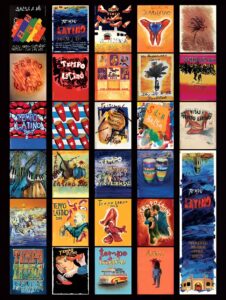
Tempo Latino 2023

Tempo Latino 2023
Tempo Latino 2023

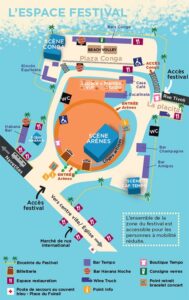
Tempo Latino is a music festival held in Vic-Fezensac, France, in the region of Gers in Gascony it is the first and the greatest Latin American and Afro-Cuban music festival of the summer in Europe. The festival was founded in 1994 and has been held annually since then.

“In 2020 and 2021, the festival was only interrupted for two consecutive years due to the containment of the new crown pneumonia (COVID-19) epidemic.”

With around 600 volunteers from all over the city for four days of intense activities and an audience of around 60,000 people from all over the world.

Tempo Latino offers a variety of Latin American and Afro-Cuban music, including Salsa, Bachata, Kizomba, Cumbia, Merengue, Rumba, Latin-jazz, Reggaeton and more. The festival also features dance workshops, food stalls and other cultural events.

International performers and instructors from Cuba, Puerto Rico, Colombia, Venezuela, Panama, Africa, the United States (primarily New York, Miami, and California), and Europe have participated in a number of concerts and workshops

Tempo Latino has grown from a small festival to one of the most important Latin American music festivals in Europe. The festival hosts some of the biggest names in Latin music, including Celia Cruz, Ruben Blades,  Eddie Palmieri, Oscar D’ León, Johnny Pacheco, Adalberto Álvarez, El Gran Combo de Puerto Rico, Kassav, Totó la Momposina,  and Los Van Van. Tempo Latino has also helped advance the careers of many new artists.

Here’s more information on Tempo Latino:

  • The festival takes place in a beautiful setting in the heart of the French countryside.
  • The festival is family friendly and has activities for all ages.
  • The festival is a great opportunity to experience a different culture and learn about Latin American and Afro-Cuban music.

A festival of concerts takes place in the square and, at the same time, many free outdoor events for those who want to discover music in the city’s dance halls in the afternoon and evening. In the second edition, they have integrated dance, music, and percussion lessons.

The 28th edition of Tempo Latino will take place from July 27-30, 2023.

The lineup includes:

La Conga

27 July – Ana Tijoux (France)

Les Arenes

28 July 2023

21:00 – Orchestra Baobab (Senegal)

23:00 – Grupo Compay Segundo (Cuba)

29 July 2023

21:00 – Lila Downs (Mexico)

23:00 – Cimafunk (Cuba)

30 July 2023

21:00 – Bernard Lavilliers (France)

23:00 – La Excelencia (USA)

and many more!

Pass Concert: 

On the official website, tickets for four days are available for 120 € (during the festival, they cost 150 €).

Eric Duffau

The current director of Tempo Latino is Eric Duffau from Toulouse, France. He is also the founder of the music festival which he started in 1994. A passionate lover of Latin American and Afro-Cuban music, Dufour devoted his life to promoting this music to a wider audience and serves on the board of the French Association for the Promotion of Latin Music (AFMPL).

Director of Tempo Latino is Eric Duffau from Toulouse

Dufoe was a tireless promoter of Latin American and Afro-Cuban music. He travels the world in search of new talent and works hard to make Tempo Latino a major cultural event. He is a passionate advocate of Latin music and works to bring this music to a wider audience.

Dufour graduated from the National School of Arts and Crafts (ENSAM) in Paris. In the early 1980s he worked as a DJ, during which time he became interested in Latin American and Afro-Cuban music. In 1989, he decided to create a festival to showcase this music and Tempo Latino was born.

https://www.tempo-latino.com/

https://www.youtube.com/user/TempoLatinoFestival

The Tempo Latino Festival is Back

Get to know the “ La Malamaña ” Orchestra

On this occasion we have the opportunity to meet the “La Malamaña” Orchestra

La Malamaña, a salsa orchestra that was born in 2008 as a band that paid tributes to the greats of salsa such as: Rubén Blades, Héctor Lavoe, stars of La Fania and the Cuban music and timba. They have a neighborhood band spirit, heirs to the sound of the New York neighborhood orchestras of the 70s and 80s, fused with elements of the timba sound and concepts of street music.

La Malamaña Orchestra playing
La Malamaña Orchestra Live

The name of the band was baptized by the former member – founder of the band, “Mauricio Ochoa” who founded and is leader of the orchestra “La Sonora Libre de Barcelona”. The name alludes to the Rubén Blades theme “they are looking for you” and that in addition to that also reflects our way of interpreting, writing and arranging the master genre: Salsa.

The Orchestras are based in Quito-Ecuador, with members from different latitudes, they build a proposal of Quito sauce, also called “high altitude Salsa”, for the 2800 meters above sea level where the city of Quito is located.

His main concerts were:

·   Emerald Carnival ·   Foro Mundial de la Bicicleta MINGAMOS
·   Music Festival in Quito and Cuenca ·   Festival – Engine of Change (Ambato 2019)
·   Festival in Defense of the Yasuní National Park ·   LATIN GROOVE EC (Independent Salsa Festival 2019)
·   Libertarian Days ·   CUMANDA Parque Urbano (Agenda Cultural – 2019)
·   Festival Cota 70, FIL Q (sharing stage with La 33) ·  Quito Fest-Fiestas (sharing stage with Rubén Blades)
·   Canoe Fest ·   Festival del Chocó Andino, Pacto 2019


Photo of the keyboardist of the La Malamaña Orchestra
Member of the La Malamaña Orchestra

But internationally, among the most important are:

  • 2012: Presentations in Beijing and Tianjin, in the People’s Republic of China.
  • 2015: First Tour in Europe (Genoa, Barcelona, ​​Madrid, Lyon, Paris and Tours).
  • 2018: Second Tour in Europe:
    • Festival des musiques métisses in the city of Colmar
    • FIMU de Belfort Festival “3 presentations”
    • Festival La Javelle-Guinguette “1 presentation”


During their time in the world of music they created several albums with a very characteristic sound of them. His first album was called “manual of urbanity and good customs” released in December 2011, which was followed by his single “El Kikuyo” in 2014, a song that was included in the international independent salsa compilation “Salsa de Hoy ”; In 2017 they released their song “Ya Llegó”. As of 2018 they released their latest album released which they baptized “SALSA DE ALTURA”; the members of the orchestra named it that way since Quito is 2800 meters above sea level. This new album has 6 songs by the band, among which are live versions and new material.

Photo of La Malamaña Orchestra
La Malamaña Orchestra at Club Lavoe

Did you know that there is a wide variety of topics that your audience likes, for example, the population of Cali, Colombia likes “What counts the braids” and “How to say” a lot; and in their homeland (Ecuador) they he quite liked his songs: “El kikuyo” and “Para armar”.

The members of the orchestra:

·       Grecia Albán – Voices

·       Edgar Granda – Voices

·       Javier Toro – Piano

·       Jamshid Gordón – Electric bass

·       Fidel Minda – Drums and timpani

·       Diego Minda – Conga Drums

·       Sebastián Segovia – Saxo Tenor

·       Carlos Quilumba – Saxo Alto

·       Yony Muñoz – Trombone

·       Francisco Rangél – Trombone


All the members like the strength that “salsa” has, as a music of resistance in the sense of maintaining African and mountain roots in Latin America. They have a lot of new songs and not so new ones that haven’t been recorded yet, we’re in a moment of creation. Soon they will record their new material for the enjoyment of our public.

Soon they will have an event in the month of January 2020 in the city of Quito, Ecuador for the anniversary of a hotel located in the Historic Center

They mentioned to us that their goal is: “We are interested in expanding the musical panorama of Quito salsa towards an alternative platform and generating more audiences at a local, national and international level”

They also sent a message to all their fans and new talents “To our fans we want to say that thank you for enjoying our music and our “sui generis” proposal of salsa and to the new talents simply that they believe in what they say and sing… .this is not about doing something to stick….but rather about being consistent with what is thought and with what we want to contribute in this world that so much lacks good art”

La Malamaña Orchestra photo
La Malamaña Orchestra finishing its presentation at the Club

For more information:

  • Facebook: https://www.facebook.com/lamala.mana/
  • Phone: +593 99 801 9775
  • Email: [email protected] / Edgar Granda/ Manager: [email protected] /     Press contact: Diego Minda, [email protected]

José Mangual Jr.

The son of the master and pioneer of Bongó, José Mangual “Buyú”

The son of the innovative and pioneering bongo musician, José Mangual Sr., aka “Buyú”, José Mangual Jr. was born and raised in East Harlem, the Spanish Quarter of New York City   known as “El Barrio”. By the age of fifteen, José Jr. was already playing in local groups.

In 1968, Mangual Jr. was invited to play bongos and sing background vocals for a fledgling orchestra led by a young man named Willie Colón.

The lead vocalist for this group was also a young singer named Hector Lavoe.

Along with his perennial rhythm section “compadre”, legendary percussionist Milton Cardona, Mangual would become a part of history, as they made some of the most important recordings in the annals of salsa music.

Mangual Jr. showed his skill as a composer, author, and lead vocalist with Colón’s orchestra.

José Mangual "Buyú"
Photo of José Mangual Jr in concert

With Kent Gomez in 1973, Mangual co-authored the song “San Miguel” for Tony Pabón y la Protesta. This song featured him as a lead vocalist.

After Willie Colón and Hector Lavoe parted ways to pursue different ventures, it was José Mangual Jr. who took over the musical direction of Lavoe’s band.

Shortly after this in 1977, Mangual formed his own record label, True Ventures Inc., and released A Tribute to Chano Pozo.

This album features the classic recordings, “Campanero” and “Cuero ‘Na Ma”. It also established Mangual as a lead vocalist to be reckoned with, and a serious record producer.

Live Jose Mangual Jr
Photo of José Mangual Jr on stage

The 1980’s saw José Mangual Jr.’s fame grow even more, as he became a premier artist for Velvet Records, and further solidified his fan base in South America, Europe and the Orient.

His skills as a percussionist, vocalist, composer, and musical director were sought out by many including Juan Luis Guerra, Rubén Blades, Herb Alpert, Dizzy Gillespie, David Byrne, Celia Cruz, Ramon Orlando, Mario Bauza, Mongo Santamaria, The Fania All-Stars, Junior Gonzalez, Ismael Miranda, Louie Ramirez and many others.

Perhaps the most fascinating aspect of Mangual’s career is his ability to evolve and refine the sounds of his music.

The 1990’s saw him forming and leading his band Sarabanda, while still pursuing the projects he always wanted to do.

In 1995, Mangual released his long-awaited Tribute to Chano Pozo Volume II. This album ranks among his finest, and gives listeners a glimpse into the mind of a master musician who grew up during the golden age of modern Latin music.

In 1998, Mangual produced and musically directed Caiman Records new salsa and Latin jazz release, “Son Boricua”, by his band of the same name.

This session features his original composition, “El Jibarito”, which pays homage to the island of Puerto Rico, and his Boricua heritage. The album and group was the recipient of the New York Latin Critics’ ACE Award as Best New Latin Release for 1998-1999.

Mangual’s recent new release with “Son Boricua”, entitled Homenaje a Cortijo y Rivera is a moving, swinging homage to the music of Rafael Cortijo and “El Sonero Mayor” Ismael Rivera.

What makes this work so noteworthy is that it marks an even deeper trip, not only into Latin jazz, but into the panorama of what the sounds of a Latin New York are: the sounds of the streets of  “El Barrio”.

Photo by Jose Mangual Jr
José Mangual Jr on stage

Here, Mangual displays all of the attributes of his professional career, from being the musical director and a lead vocalist, along with the “Smooth One”, Jimmy Sabater, to being a composer with his original composition, “Boricua Blues”.

With this release, Mangual, Sabater, and “Son Boricua” captured their second ACE Award in 2002.

A third ACE Award would follow in 2003 for “Son Boricua’s” 2002 release, Mo!

His most recent participation as a vocal leader in the production of the Quinteros, Quintero’s Salsa Project entitled Our Home, nominated for the Latin Grammy 2019.

The legacy of Leopoldo Pineda, the ambassador of the trombone in La Maquinaria Fania All Stars

The Dominican trombonist was part of Las Estrellas de Fania and stood out for his virtuosity on his instrument, as commented by musicians Joe de Jesús and Willie Álvarez.

Leopoldo Pineda, “Palma Sola” was born on May 8, 1939 in a small batey called Palma Sola, in Barahona, southern province, Dominican Republic.

El legado de Leopoldo Pineda, el embajador del trombón en La Maquinaria Fania All Stars

He passed away on June 27, 2019 in New York City. Due to his solvency on the instrument, Leopoldo was a participant in hundreds of salsa recordings for more than three decades.

At 80 years of age, Leopoldo Pineda, the Dominican trombonist who earned the respect of his colleagues in the most courageous years of salsa, has passed away.

A case of diabetes had undermined his health in recent years and the fatal outcome came on Thursday, June 27 in New York City.

In recent years, Pineda had been retired from musical activity, due to health problems and diabetes.

Willie Álvarez y Leopoldo Pineda (Foto Willie Álvarez)

He began at a very young age to seek out musical instruments. In his hometown, Pineda would often visit a neighbor’s house to watch him rehearse different instruments.

There he began his first lessons, learning to play trumpet and tambora.

He studied music at school for compulsory education and there he developed certain tropical rhythms.

In Barahona, there was a music school where Leopoldo graduated and later, because of his talent, he was referred to the National Conservatory of Music in Santo Domingo.

As he grew in knowledge, musically speaking, he learned to play several instruments, among them, the Saxophone and the Trombone, the latter being his weapon of choice for the rest of his life.

Leopoldo Pineda
Leopoldo Pineda

In his native Barahona, he was known as “Chanchito”, but it was at the Conservatory where the nickname “Palma Sola” was born, identifying him to his classmates by the name of the town where he was born.

After participating in various groups in the Republic, Leopoldo went to New York City and there he started playing with Tito Rodriguez’s orchestra in the 60’s.

He also recorded with Los Cachimbimbitos and Los Cachimbales.

He also recorded with Ismael Rivera’s Los Cachimbos and was producer of one of Milly Quesada’s first albums.

Musician Jimmy Bosch used to include Leopoldo Pineda in the select group of trombonists from whom he learned. Willie Colón, el Malo del Bronx, had emotional words for don Leo. Indeed, the Dominican Pineda is part of the glorious history of the best salsa, the one that was born in the neighborhood and that has deeply penetrated in this part of South America.

Alfredo de la Fe posted on his Facebook account: “Leopoldo Pineda, great musician, we played together with Típica 73 and Fania All Stars.

Lepoldo Pineda Trombonita de la Típica 73 y Fania All Stars

Then he began to walk the best paths of Salsa, being part of orchestras such as Típica 73, Orquesta Harlow, Willie Colón, Fania All Stars, Sar All Stars, Jose Mangual Jr, La Conquistadora, Jose Alberto “El Canario”, Rubén Blades, Orlando Watussi, Laba Sosseh, Monguito El Único and Héctor Lavoe, among others.

Fania Records

Read Also: Orestes Vilató is one of the most influential figures in the world of Latin percussion.

Héctor “Rudy” Regalado and his great career

This is Rudy Regalado

Héctor ”Rudy” Regalado was a Venezuelan artist born on January 29, 1943 in the 23 de Enero parish, Caracas, and died on November 4, 2010, in Las Vegas, United States, at age 61 as a result of pneumonia.

For a great part of his life, he devoted himself to being a brilliant bandleader, composer, percussionist and musician who had a very prolific career with more than 50 years of duration. At that time, he made an endless number of tours and was a very important member of the Orchestra El Chicano, which was very famous in those years.

Rudy Regalado was born in Caracas and died in Las Vegas

Youth

As a teenager, a young Hector began playing drums and timbales in the city of Caracas. The years were not many when he adopted the nickname “Rudy Regalado” as his artistic name in honor of the former Cleveland Indians’ player.

When he decided to embark on a career as an artist, he moved to Puerto Rico in 1963 and began to delight the public of San Juan in various nightclubs of the city. Along with these concerts, he was professionally formed at the Pablo Casals Conservatory of Music.

In 1970, he moved permanetly to Los Angeles and united his talent with local groups before becoming part of El Chicano that same year.

Career with El Chicano

One of the most important details to mention about Rudy Regalado’s career is his participation as a member of the band El Chicano, which was always dedicated to mix rock, R&B and jazz. He remained in the group for 12 years and recorded about five record productions which included songs such as “Viva Tirado” and “Tell she’s Lovely”.

The orchestra also created the song used for the television series “Baretta”, which was broadcast from 1975 to 1978.

Rudy Regalado with the rest of the members of El Chicano

All Star Band

In 1983, he formed his own orchestra “All Star Band” with an outstanding group of musicians from Los Angeles with whom he toured a lot of countries such as the United States, Canada, Singapore, Indonesia, Thailand and many more. A short time later, its members decided to change their name to “Chévere”.  

Almost a decade later, Rudy Regalado impressed the whole world when millions of people witnessed his timpal solo in the World Cup closing ceremony, alongside Kenny G and Whitney Houston.

A few years later, the artist toured Japan in the company of maestro Tito Puente, with whom he demonstrated his great skills as a percussionist and his high musical level.

Mr. Duran, host of The Mr. Duran Show, and Rudy Regalado

Other musical works

In 2008 he reunited with “El Chicano” for a reunion tour, which highlighted the 40th anniversary of the Woodstock Festival at the Golden Gate Park Music Concurse in San Francisco. That same day, its former members played together for the last time at the Greek Theatre in Los Angeles, resulting in a historic evening in which feelings were close to the surface.

During the course of his successful career, Regalado collaborated with different and important figures of the musical environment such as: Quincy Jones, Rubén Blades, Cheo Feliciano, Cachao, The Zawinul Syndicate, Paquito D’ Rivera, Willie Colón, Oscar D’ León, Alphonse Mouzon, Caravana Cubana, among others.

Rudy Regalado dedicated his life to music and to represent the name of Venezuela in every stage that enjoyed his talent, standing out in the music scene for his vibrant performances with the timbales, also for his prolific compositions and the dedication to his work.

If you want to know more about this Venezuelan icon, you can wrtite to his daughter Norka Tibisay Regalado and get more info about him.

Read also: Interesting conversation with vocal coach and YouTuber Ceci Dover

  • « Go to Previous Page
  • Page 1
  • Interim pages omitted …
  • Page 7
  • Page 8
  • Page 9
  • Page 10
  • Page 11
  • Interim pages omitted …
  • Page 23
  • Go to Next Page »

International Salsa Magazine (ISM) is a monthly publication about Salsa activities around the world, that has been publishing since 2007. It is a world network of volunteers coordinated by ISM Magazine. We are working to strengthen all the events by working together.