• Skip to primary navigation
  • Skip to main content

International Salsa Magazine

  • Home
  • Previous editions
    • 2026
      • ISM / January 2026
      • ISM / February 2026
    • 2025
      • ISM / December 2025
      • ISM / November 2025
      • ISM / October 2025
      • ISM / September 2025
      • ISM / August 2025
      • ISM / July 2025
      • ISM / June 2025
      • ISM / May2025
      • ISM / April 2025
      • ISM / March 2025
      • ISM / February 2025
      • ISM / January 2025
    • 2024
      • ISM / December 2024
      • ISM / November 2024
      • ISM / October 2024
      • ISM / September 2024
      • ISM / August 2024
      • ISM / July 2024
      • ISM / June 2024
      • ISM / May 2024
      • ISM / April 2024
      • ISM / March 2024
      • ISM / February 2024
      • ISM / January 2024
    • 2023
      • ISM / December 2023
      • ISM / November 2023
      • ISM / October 2023
      • ISM – September 2023
      • ISM – August 2023
      • ISM July 2023
      • ISM Edition June 2023
      • ISM – May 2023
      • ISM April 2023
      • ISM March 2023
      • ISM February 2023
      • ISM January 2023
    • 2022
      • ISM December 2022
      • ISM November 2022
      • ISM October 2022
      • ISM September 2022
      • ISM August 2022
      • ISM July 2022
      • ISM June 2022
      • ISM May 2022
      • ISM February 2022
      • ISM January 2022
    • 2021
      • ISM December 2021
      • ISM November 2021
      • ISM October – 2021
      • ISM September 2021
      • ISM August 2021
      • ISM July 2021
      • ISM May 2021
      • ISM April 2021
      • ISM June 2021
      • ISM March 2021
      • ISM February 2021
      • ISM January 2021
    • 2020
      • ISM December 2020
      • ISM November 2020
      • ISM October 2020
      • ISM September 2020
      • ISM August 2020
      • ISM July 2020
      • ISM June 2020
      • ISM May 2020
      • ISM April 2020
      • ISM March 2020
      • ISM February 2020
      • ISM January 2020
    • 2019
      • ISM December 2019
      • ISM November 2019
      • ISM October 2019
      • ISM Septembre 2019
      • ISM August 2019
      • ISM July 2019
      • ISM June 2019
      • ISM May 2019
      • ISM April 2019
      • ISM March 2019
      • ISM February 2019
      • ISM January 2019
    • 2018
      • ISM December 2018
      • ISM November 2018
      • ISM October 2018
      • ISM September 2018
      • ISM August 2018
      • ISM July 2018
      • ISM June 2018
      • ISM May 2018
      • ISM April 2018
      • ISM March 2018
      • ISM February 2018
      • ISM January 2018
    • 2017
      • ISM December 2017
      • ISM November 2017
      • ISM October 2017
      • ISM September 2017
      • ISM August 2017
      • ISM July 2017
      • ISM June 2017
      • ISM May 2017
      • ISM April 2017
      • ISM March 2017
      • ISM February 2017
  • Download Salsa App
    • Android
    • Apple
  • Spanish

Search Results for: Salsa Congress

John Narváez and Elizabeth Rojas from Salsamania

John and Liz from Salsamania  

Between days 23 and 25 March, 2023, the San Francisco Salsa Festival took place, which brought together some of the cream of The Bay Area Latin music scene. One of those attending this great event was the main editor of International Salsa Magazine, Mr. Eduardo Guilarte.   

On site, he had the opportunity to share with other guests and some of the organizers such as Elizabeth Rojas, affectionately known as Liz, and John Narváez. We had the chance to talk with both dance professionals to know more about their beginnings, festivals and projects. Do not miss it!  

John and Elizabeth
Colombian dancers John Narváez and Elizabeth Rojas

Beginnings   

After several attempts to schedule a meeting with John and Liz, we finally managed to talk with these Colombian dancers and entrepreneurs, who began by thanking us for the contact and the opportunity to promote their passion for salsa and the community they represent.   

This love they have for the aforementioned musical genre has much to do with their roots. Both were born in Colombia and left the country when they were 12 years old (they are the same age) because of the violent situation caused by the guerrilla that existed in those years.   

Although those were hard times, John says these were very nice years from which he has fond memories. He remembers almost all his family members singing or playing an instrument, while he was the only dancer. All this influenced him in such a way that Latin music remains his north after so many years.  

Moving to the United States 

Since the social situation did not allow them to live in their country, they decided to move to the United States and apply for political asylum. At the beginning, it was not easy and the focus was on working hard to get ahead in this new country and to learn English. However, all that changed over time. 

With the arrival of economic and family stability, priorities changed. John comments that his interest in music and dance perked back up due to the family gatherings that his relatives celebrated such as birthdays, quinceañeras, weddings, among others. 

Although at the time dancing was not considered a serious profession, both John and Liz began to practice it at amateur level. Once they turned 21, they started going to the most popular salsa clubs, but it was all for recreational purposes. It was years later before they began to analyze all the technical and historical part of dancing to understand it better and take it more seriously.  

John, Liz, and Barbara
John and Liz with Barbara on Despierta América

Dancing as a profession 

John and Liz started to take dancing seriously in 1999. They both attended a three-day salsa event in Los Angeles, but what they did not know is that this was the first world salsa congress in America.   

This gave them the opportunity to share with the best salsa dancers in the world and they saw such impressive things that they were inspired to return next year with a well-established dance team with which they could participate fully in these activities. 

Being full of motivation, they decided to create Salsamania Dance Company and performed with their team at the festival. They started doing the same thing every year, which helped them gain experience and evolve their styles. 

After earning the trust of the festival organizers thanks to their talent and professionalism, they were given the opportunity to start teaching salsa workshops at the aforementioned congress. This is how little by little John and Liz began to build the reputation and credibility they have today.   

 In 2004, it got to a point where John took the important decision to quit his job to devote himself to dancing and Liz was quick to do the same. His resignation came with the opportunity to take a three-month trip to Hong Kong to teach salsa in a community where people did not dance it. 

They managed to build a community from nothing, since at that time, Hong Kong was not a place where people listened to salsa. However, everything went well and the dancers managed to seamlessly connect with the local audience. As John rightly said, ”salsa is a universal language and you don’t have to speak that language to feel the music”. 

On returning to the Bay Area, they began to practice dancing as a profession in the United States. 

On this point, Liz commented that her parents became very upset with her when she quit her job because of dancing, but today, they admit that it was the right decision and support her totally.  
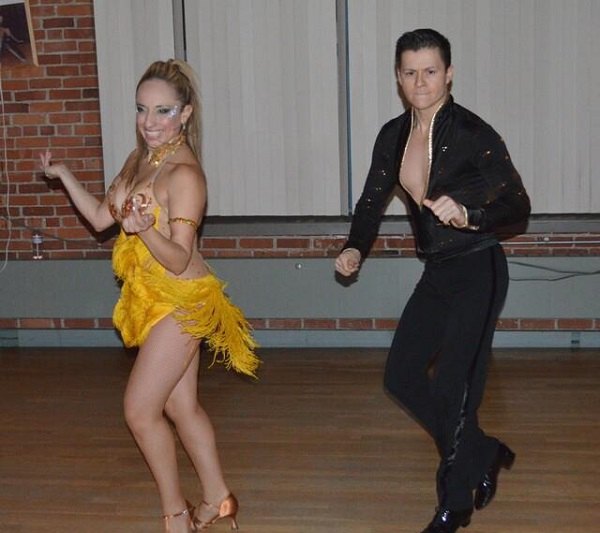
Liz and John dancing
Liz and John during a social dance in Boston

Salsamania Dance Company 

Liz told us that it was difficult to create Salsamania Dance Company because it requires a lot of discipline and healthy coexistance between different types of personalities to create a group like this and keep it together. Fortunately, John is an industrial psychologist, so he helped to prevent these aspects to be a problem. 

Basically, Liz is responsible for the company’s management and John is the one who takes care of the human part of all the staff. 

They started the whole process like any regular company and drew up the contracts for all those who were going to work with them, making Salsamania a much more established, structured and serious project in the eyes of everyone else. Today, it is one of the largest companies in the Bay Area.   

They also took it a step further and built a salsa academic program with a thoroughness and detail that has not been seen in other projects of this kind.   

San Francisco Salsa Festival  

San Francisco Salsa Festival is one of the biggest salsa events in California and the United States in general and we were fortunate to have representation there with our editor Eduardo Guilarte.  

It began to be celebrated in 2008 with the support of international salsa promoter Albert Torres, who was a fundamental piece in the development of the festival and talent recruitment for an event of this size, as there were many things John and Liz had to learn. That is why they are both incredibly grateful for what the congress organizer did for them back then.  

To recruit artists, the dancers only require candidates to be good teachers, to share with the salsa community and to put on a good show for the audience. 

They also often invite colleagues they have known for years and some recommended to whom they give them the opportunity to shine and make themselves known during those days. 

Every year, they look for dancers, dance instructors, DJs and live orchestras. For Liz and John, the thing about live bands is very important, as they are concerned that there are so many clubs and venues that no longer hire these talents. This year, they focused on local bands that play on Thursdays and Fridays in San Francisco and were very happy with the results.  

It is expected that the next San Francisco Salsa Festival is scheduled between days 22 and 24 March, 2024 at the same venue, which is the Marriott Waterfront Hotel.   

The orchestras hired to perform for next year are Cabanijazz, The Latin Rhythm Boys and Orquesta Boyacán. The dancing couples are Alex and Judy from Colombia, Colombians Felipe from Colombia and Kathe and Mauricio and Danny from Mexico.   

John, Liz, and Oscar D’ León
John and Liz with Venezuelan singer Oscar D’ León

Difficulties in the pandemic 

As dancing is an activity with a lot of physical contact and closeness, we were curious to know how they lived the pandemic and what they did to keep their project afloat in this situation. 

Though they admit that those months were not easy, they have always been very disciplined with their money and had enough to resist as long as possible without working.   

They tried to make up for lost time by teaching classes via Zoom as did most of their colleagues and designing new choreographies to apply when they went back to their usual activities. 

In addition to this, both had not spent time with their respective families in a long time, so they also took advantage of the absence of work to reunite with their loved ones and take up those important contacts that were lost due to stress and routine. 

Read also: Here we have Salseros With Attitude 

The world congress you were waiting for is in Spain

Salsa returns to Spain in April, after the successful Congress in 2022, this year it was decided to hold the Salsa Spain World Congress in a new city, Valencia. The entire event will take place very close to the sea, and will be full of great artists in different fields of this tropical genre, along with demonstrations of other genres. Know all the details in the following lines.

Valencia receives the Salsa Spain World Congress

Valencia is a charming and welcoming city with a beautiful Mediterranean climate. Modern architecture mixes with ancient art, the city’s history and culture, to offer visitors a unique destination. The beaches, museums, parks, and festivals contribute to its vibrant cultural scene.

The City of Arts and Sciences is the pride of Valencia. Here, you can explore historic temples or ultra-modern buildings, surrounded by gardens paved with colorful mosaics. This Spanish city also offers numerous culinary options, from traditional tapas to excellent restaurants serving modern Spanish and international cuisine.

And it is precisely this destination that has been chosen to host the Salsa Spain World Congress 2023. The Salsa Spain World Congress is an annual salsa dance festival that is expected to take place every year in Spain. The event highlights the main styles and trends of salsa dedicated to professional dancers, dance enthusiasts, musicians and followers of the genre.

Last year the festival attracted hundreds of attendees who enjoyed spectacular dance shows, master classes, hands-on workshops, musical showcases, and some well-organized competitions. This colorful event will have a program dedicated to salsa and other tropical rhythms.

From April 14 to 16, Valencia will open its doors to all those professionals, and lovers of Latin dance to enjoy everything that the Salsa Spain World Congress will offer. All the events will take place at the Hotel Versus Gandía Palace, a beautiful brand new hotel, whose facilities are only 100 meters from Playa Gandía.

Great artists will highlight each activity

There are many artists confirmed for this great congress and there are still many who are confirming their participation. There will also be incredible performances by the following DJs, who will further elevate the party mood.

Regarding programming, the following information is handled, but is subject to change:

THURSDAY (a pre-party is not included):

  • 23h – 24h Workshop
  • 00h – 04h Part

FRIDAY:

  • 15h – 20h Workshops
  • 11:30h Doors Open
  • 24h – 1:30h Shows
  • 01h – 06h Party

SATURDAY:

  • 11 – 14h Workshops
  • 14h – 20h Workshops
  • Doors Opening 11pm
  • 23:30h – 1h Shows
  • 1:30 – 06h Party

SUNDAY:

  • 11 – 14h Workshops
  • 17h – 20h Pool Party
  • 22h – 23:30h Night workshop
  • 23:30h. – 04h Party

To know the price of the tickets, which will depend on what kind of ticket you are looking for, and in what condition you go, you can check the prices on the LaSalsaDelBaile portal. They also make available a WhatsApp number, and an email for any questions or doubts: [email protected].

Where To Go Dancing Salsa In Africa During September

Latest news from the Salsero movement in Morocco, Ghana, and Ivory Coast

In September, we came with more force and recharged. In this edition, we offer you the compilation of the best Salsa and Bachata events so that you don’t stay without being part of the Latin scene of the African continent during the last month of summer.

World Salsa Congress Marrakech 2022

Leyenda: James Torres (Organizer and DJ of World Salsa Congress Marrakech)

After the cessation of the event for a year due to the pandemic in Morocco, the World Salsa Congress Marrakech 2022 returns from Wednesday, August 31st to Tuesday, September 6th with four dance floors for the enjoyment of Salsa in the NY and LA style, Cuban Salsa, Bachata, and Kizomba.

A six-day event of Salsa parties, total relaxation, entertainment, workshops, and international live shows with the participation of 2,000 people from 48 countries around the world at the Palmeraie Resorts hotel located in Circuit de la Palmeraie 40000 Marrakesh, Morocco.

In this eighth edition, every day in the Atlas Room will be a pool party with special guests and international DJs. On Friday, September 2nd, the shows will begin (10 PM – 11:30 PM), on Saturday, September 3rd, five hours of lessons will be held at different levels simultaneously in five rooms (10:30 AM – 3:50 PM), and On Sunday, September 4th, classes will begin at 11 AM and will end this day with the closing party at Nikki Beach with international DJs (Dress code: White).

The DJs that will be entertaining the World Salsa Congress Marrakech 2022 https://www.salsacongress-marrakech.com/programme.php?lang=en are DJ Tronky (Rome), DJ Mascalzone (Rome), DJ Mauri (Amsterdam), DJ Kamal “Salsa Dura” (NRW/Germany), DJ Juan (New York), DJ Babacar (Porto/London), DJ Marco Polo (Helsinki/Finland), DJ Miguel (Miami), DJ “El Loco” Hicham (Nantes/ France), DJ Giorgio Rod (Paris), DJ Ale “El Cubano” (Cuba), DJ Kito Et Jal’s (Rabat/Morocco), and DJ Myster’Youss (Montreal).

The secret party 1001 Night with international DJs will be on Monday, September 5th starting at 9 PM. €10 must be paid for the cost of the transport service. The price of tickets for the six days of Salsa Immersion, Pool Parties, and 33° Sun is €260.

Salsa Dance Night 

Leyenda: Salsa Dance Night (Wednesday 7th, 14th, 21st, and 28th September)

The entertainment company Vienna City Limited offers Salsa every Wednesday night from 6 PM to 11:30 PM at the Vienna City Hotel located on Emmanuel Quist Rd, Tema, Ghana (West African country).

This business chain with more than 20 years of experience maintains the quality standard in Salsa dance nights with regular training.

This nightclub in the Vienna City Hotel https://viennacity.com.gh/ has established itself as one of the most influential in the seaside city of Tema over the years. Here, you can enjoy a variety of drinks and exotic cocktails, as well as resident and guest DJs that will keep you dancing the night away.

The Meridian Lounge Bar is the soul of the hotel. It has an elegant style and a beautiful panoramic view of the neighborhood. The lounge bar lounge is also dedicated to game nights, comedy, and live Jazz on the weekends. So, don’t miss the opportunity to enjoy Salsa in Ghana every Wednesday in September.

Baila Conmigo – Soirée Latino

Leyenda: Salsa, Kizomba, Bachata – (Free Entry) 

On Friday, September 16th, you can attend the 100% Latin evening (Salsa, Kizomba, and Bachata) with resident DJs at the Cacao Lounge located inside the Sofitel Abidjan Hôtel Ivoire https://www.facebook.com/SofitelAbidjan (5 stars) located at Boulevard Hassan II 08 Bp 01, Abidjan, Ivory Coast (country in West Africa) starting at 7 PM.

Admission is free, you must use the Mask at all times, and there will be a Hydroalcoholic Gel available.

And if you are a beginner, it does not matter because the professionals of Social Dance Abidjan will be there to support you in your immersion in the dance of Latin rhythms.

Unique Latin atmosphere, Tapas, DJ, and a majestic environment of water and vegetation you will find at the Sofitel Abidjan Hotel Ivoire, a combination of French luxury and African charm on the Ivory Coast.

Jesús Algarín is a Puerto Rican bassist who, at the age of 25, landed in the salsa scene


A graduate of Berklee College of Music, with his college degree in hand, the young bassist returned home to make his homeland in salsa time.

Jesús Algarín is a Puerto Rican bassist who, at the age of 25, landed in the salsa scene to make music his life project.  The young musician already walks with a firm step accompanied by the forceful interpretation of his bass, leading his own orchestra with confidence.

From the time he was born, according to what his parents told him, they used to party, so it was not surprising that at the age of 8 he was already the one who was the one who was livening up the parrandas while playing the Puerto Rican cuatro.  Algarín, who was born and raised in the heart of Puerto Rico (Caguas), candidly tells us that as a child, he discovered through our very own parrandera tradition, that music -which he refers to as a wonderful art- had a healing and restorative power.

Well advised by the adults in his family, he recounts that his uncle explained to him early in his life that if he failed to ignite his audience at the Choliseo during a parranda, it would become more difficult for him. Once he understood the advice, he applied it to himself.  Today he concludes that it is necessary to dominate every stage, from a marquee to a public square, and to take it one step at a time.

Through Puerto Rican folk music, studying and interpreting the seis, the aguinaldo, the bomba, and the plena, he was entering into what without planning it became his life project.  Later, playing the Puerto Rican cuatro purely by ear, he was able to enter the “magical” world of music, as he himself describes it.

Already in the sixth grade of elementary school, he began his formal apprenticeship at the Escuela Libre de Música de Caguas.  Before that time, he played the cuatro but did not read music.  Once he learned to read music, he decided to continue growing musically in his instrument.

Six years later, in grade 12, about to finish high school, he took part in the camps that Berklee College of Music brings to Puerto Rico every year. He auditioned for the Puerto Rican cuatro.  However, at the time, he did not achieve his goal of positioning himself. Determined not to give up, the following year he returned to the Berklee camp but changed tactics. He showed up to the workshops with a bass because he understood that the cuatro was not a good fit.  When he filled out the registration form for the workshops, he reported that his bass playing was at the advanced level, even though he knew it wasn’t true.  This adolescent idea, which added a good deal of pressure and stress to his musical performance, helped him get into the ensembles he aspired to qualify for. Today he admits that at that time, which today seems far away, he could not handle the bass because, as an instrument, it was still unknown to him.

In any case, Algarín qualified because, as we know, you have to take your chances with life.  The rest is history. 

With the bass as his main instrument, Algarín got Berklee to give him a scholarship and after four years in Boston, Massachusetts he graduated with a degree in Music Business. In other words, he spent four years making music while learning to see music as a business.

The young bass player confesses that he had not planned to be a musician nor had he thought he would make a living from music.  He did not see music as a possibility, since although it was always an integral part of his life, music was a hobby or a way to serve God in the church.  And that’s what he limited himself to until he came to Berklee’s summer workshops.  Before that, he saw himself as a lawyer and when it was his turn to enter college, he initially enrolled at Ana G. Mendez University.  There he attempted to complete a bachelor’s degree in accounting. However, from the very first accounting class he knew that accounting was not for him.

Algarín capitalized on what he learned, and has been able to stick to music as a way of life; from a more realistic and less idealistic perspective. Of course, all without losing the artistic focus of musical interpretation.  Along with his musical training, he has been preparing himself in legal issues, maintaining business awareness, focusing on the protection of music and copyrights.  He has also been responsible for making other musicians aware of the importance of registering their music with the Library of Congress and thus making the most of their work.  There is no doubt that Algarín knows his worth as a musician and from his space he has decided to serve and guide his counterparts to protect their work.

Before entering the studio to record his project, Algarín had recorded with Manolito Rodríguez.  During his student years in Boston, he was a musician in the Eric German Orchestra, the orchestra that accompanies visiting solo singers in the New England area.

Today, his main instrument is the bass, double bass, baby base or electric bass.

The bassist, a native of Caguas and graduate of Berklee College of Music, class of 2020, returned to Puerto Rico to lead his own musical project.

Two years after Algarín’s return home, the orchestra is already promoting its first production entitled “Dímelo Algarín”, which is part of his project “Jesús Algarín”. The format of the base orchestra of the project is as follows: winds (trumpet, trombone and baritone saxophone), bass, piano, conga, timbal, bongo and bell; backing singers and choirs. This, his first production, contains 5 songs, with contemporary themes in its lyrics. This lyric, however, embraces the nostalgic sonority of the sextet, complementing some of the songs with the Cuban tres. The bassist leader of his project arranged and composed these 5 unreleased tracks, which are merged in a production for which Jesús Algarín is also responsible.

The production is available in digital format on all platforms. The promotional cut is Sigue tu camino performed by Ricardo Colón, who also sings in the Willie Rosario Orchestra. The other four tracks included in the production are:  Playita, Cadencia y sabor and La calle se prendió; performed by vocalist José Luis De Jesús and Caribeña, in the voice of Marisabel Vázquez Varela.

The recording studio musicians who participated in the production are from the Caribbean.  Puerto Ricans, Cubans and Venezuelans merge in a salsa embrace; as is to be expected.

Vocals: José Luis De Jesús, Ricardo Colón and Marisabel Vázquez Varela.

Backing vocals: Jorge Yadiel Santos, Carlos García, Ricardo Colón, José Luis De Jesús, Manolo Ruiz and Carloscar Cepero.

Bass: Jesús Algarín

Piano: Aníbal Cruz and Juan Rivera

Tres: Renesito Avich

Percussion: Miguel Martínez

Trumpets: Luis Arnaldo Ramos, Angel Segarra y Nicolás Benítez

Trombone: Johan Escalante y Carloscar Cepero

Baritone saxophone: Efraín Martínez

Cuatro: Jesús Algarín.

As the son of documentary filmmaker Juan Félix Algarín, Jesús considers himself blessed to have been mentored by a father with first-hand knowledge.  His father always instructed him to be aware of music as a business in the entertainment world. Jesus knows his worth and has kept himself informed as to the costs of production and is clear as to the rates of his work.  He identifies himself as a Puerto Rican and Caribbean musician. He is in every sense of the word, a music worker.

As it is, we are still in salsa.  Yes, salsa lives! The effort, discipline and talent -in that order- of this young bandleader attest to that. Congratulations, and may you continue to “catch the ride”.

For bookings, Ángel Ilarraza: 787-347-4662 or e-mail: [email protected]


By Bella Martinez, ISM Correspondents, San Juan, Puerto Rico


Jesús Algarín is a Puerto Rican bassist who, at the age of 25, landed in the salsa scene

A graduate of Berklee College of Music, with his college degree in hand, the young bassist returned home to make his homeland in salsa time.

Jesús Algarín is a Puerto Rican bassist who, at the age of 25, landed in the salsa scene to make music his life project.  The young musician already walks with a firm step accompanied by the forceful interpretation of his bass, leading his own orchestra with confidence.

From the time he was born, according to what his parents told him, they used to party, so it was not surprising that at the age of 8 he was already the one who was the one who was livening up the parrandas while playing the Puerto Rican cuatro.  Algarín, who was born and raised in the heart of Puerto Rico (Caguas), candidly tells us that as a child, he discovered through our very own parrandera tradition, that music -which he refers to as a wonderful art- had a healing and restorative power.

Well advised by the adults in his family, he recounts that his uncle explained to him early in his life that if he failed to ignite his audience at the Choliseo during a parranda, it would become more difficult for him. Once he understood the advice, he applied it to himself.  Today he concludes that it is necessary to dominate every stage, from a marquee to a public square, and to take it one step at a time.

Through Puerto Rican folk music, studying and interpreting the seis, the aguinaldo, the bomba, and the plena, he was entering into what without planning it became his life project.  Later, playing the Puerto Rican cuatro purely by ear, he was able to enter the “magical” world of music, as he himself describes it.

Already in the sixth grade of elementary school, he began his formal apprenticeship at the Escuela Libre de Música de Caguas.  Before that time, he played the cuatro but did not read music.  Once he learned to read music, he decided to continue growing musically in his instrument.

Six years later, in grade 12, about to finish high school, he took part in the camps that Berklee College of Music brings to Puerto Rico every year. He auditioned for the Puerto Rican cuatro.  However, at the time, he did not achieve his goal of positioning himself. Determined not to give up, the following year he returned to the Berklee camp but changed tactics. He showed up to the workshops with a bass because he understood that the cuatro was not a good fit.  When he filled out the registration form for the workshops, he reported that his bass playing was at the advanced level, even though he knew it wasn’t true.  This adolescent idea, which added a good deal of pressure and stress to his musical performance, helped him get into the ensembles he aspired to qualify for. Today he admits that at that time, which today seems far away, he could not handle the bass because, as an instrument, it was still unknown to him.

In any case, Algarín qualified because, as we know, you have to take your chances with life.  The rest is history. 

With the bass as his main instrument, Algarín got Berklee to give him a scholarship and after four years in Boston, Massachusetts he graduated with a degree in Music Business. In other words, he spent four years making music while learning to see music as a business.

The young bass player confesses that he had not planned to be a musician nor had he thought he would make a living from music.  He did not see music as a possibility, since although it was always an integral part of his life, music was a hobby or a way to serve God in the church.  And that’s what he limited himself to until he came to Berklee’s summer workshops.  Before that, he saw himself as a lawyer and when it was his turn to enter college, he initially enrolled at Ana G. Mendez University.  There he attempted to complete a bachelor’s degree in accounting. However, from the very first accounting class he knew that accounting was not for him.

Algarín capitalized on what he learned, and has been able to stick to music as a way of life; from a more realistic and less idealistic perspective. Of course, all without losing the artistic focus of musical interpretation.  Along with his musical training, he has been preparing himself in legal issues, maintaining business awareness, focusing on the protection of music and copyrights.  He has also been responsible for making other musicians aware of the importance of registering their music with the Library of Congress and thus making the most of their work.  There is no doubt that Algarín knows his worth as a musician and from his space he has decided to serve and guide his counterparts to protect their work.

Before entering the studio to record his project, Algarín had recorded with Manolito Rodríguez.  During his student years in Boston, he was a musician in the Eric German Orchestra, the orchestra that accompanies visiting solo singers in the New England area.

Today, his main instrument is the bass, double bass, baby base or electric bass.

The bassist, a native of Caguas and graduate of Berklee College of Music, class of 2020, returned to Puerto Rico to lead his own musical project.

Two years after Algarín’s return home, the orchestra is already promoting its first production entitled “Dímelo Algarín”, which is part of his project “Jesús Algarín”. The format of the base orchestra of the project is as follows: winds (trumpet, trombone and baritone saxophone), bass, piano, conga, timbal, bongo and bell; backing singers and choirs. This, his first production, contains 5 songs, with contemporary themes in its lyrics. This lyric, however, embraces the nostalgic sonority of the sextet, complementing some of the songs with the Cuban tres. The bassist leader of his project arranged and composed these 5 unreleased tracks, which are merged in a production for which Jesús Algarín is also responsible.

The production is available in digital format on all platforms. The promotional cut is Sigue tu camino performed by Ricardo Colón, who also sings in the Willie Rosario Orchestra. The other four tracks included in the production are:  Playita, Cadencia y sabor and La calle se prendió; performed by vocalist José Luis De Jesús and Caribeña, in the voice of Marisabel Vázquez Varela.

The recording studio musicians who participated in the production are from the Caribbean.  Puerto Ricans, Cubans and Venezuelans merge in a salsa embrace; as is to be expected.

Vocals: José Luis De Jesús, Ricardo Colón and Marisabel Vázquez Varela.

Backing vocals: Jorge Yadiel Santos, Carlos García, Ricardo Colón, José Luis De Jesús, Manolo Ruiz and Carloscar Cepero.

Bass: Jesús Algarín

Piano: Aníbal Cruz and Juan Rivera

Tres: Renesito Avich

Percussion: Miguel Martínez

Trumpets: Luis Arnaldo Ramos, Angel Segarra y Nicolás Benítez

Trombone: Johan Escalante y Carloscar Cepero

Baritone saxophone: Efraín Martínez

Cuatro: Jesús Algarín.

As the son of documentary filmmaker Juan Félix Algarín, Jesús considers himself blessed to have been mentored by a father with first-hand knowledge.  His father always instructed him to be aware of music as a business in the entertainment world. Jesus knows his worth and has kept himself informed as to the costs of production and is clear as to the rates of his work.  He identifies himself as a Puerto Rican and Caribbean musician. He is in every sense of the word, a music worker.

As it is, we are still in salsa.  Yes, salsa lives! The effort, discipline and talent -in that order- of this young bandleader attest to that. Congratulations, and may you continue to “catch the ride”.

For bookings, Ángel Ilarraza: 787-347-4662 or e-mail: [email protected]

  • « Go to Previous Page
  • Page 1
  • Page 2
  • Page 3
  • Page 4
  • Page 5
  • Page 6
  • Interim pages omitted …
  • Page 27
  • Go to Next Page »

International Salsa Magazine (ISM) is a monthly publication about Salsa activities around the world, that has been publishing since 2007. It is a world network of volunteers coordinated by ISM Magazine. We are working to strengthen all the events by working together.