• Skip to primary navigation
  • Skip to main content

International Salsa Magazine

  • Home
  • Previous editions
    • 2026
      • ISM / January 2026
      • ISM / February 2026
    • 2025
      • ISM / December 2025
      • ISM / November 2025
      • ISM / October 2025
      • ISM / September 2025
      • ISM / August 2025
      • ISM / July 2025
      • ISM / June 2025
      • ISM / May2025
      • ISM / April 2025
      • ISM / March 2025
      • ISM / February 2025
      • ISM / January 2025
    • 2024
      • ISM / December 2024
      • ISM / November 2024
      • ISM / October 2024
      • ISM / September 2024
      • ISM / August 2024
      • ISM / July 2024
      • ISM / June 2024
      • ISM / May 2024
      • ISM / April 2024
      • ISM / March 2024
      • ISM / February 2024
      • ISM / January 2024
    • 2023
      • ISM / December 2023
      • ISM / November 2023
      • ISM / October 2023
      • ISM – September 2023
      • ISM – August 2023
      • ISM July 2023
      • ISM Edition June 2023
      • ISM – May 2023
      • ISM April 2023
      • ISM March 2023
      • ISM February 2023
      • ISM January 2023
    • 2022
      • ISM December 2022
      • ISM November 2022
      • ISM October 2022
      • ISM September 2022
      • ISM August 2022
      • ISM July 2022
      • ISM June 2022
      • ISM May 2022
      • ISM February 2022
      • ISM January 2022
    • 2021
      • ISM December 2021
      • ISM November 2021
      • ISM October – 2021
      • ISM September 2021
      • ISM August 2021
      • ISM July 2021
      • ISM May 2021
      • ISM April 2021
      • ISM June 2021
      • ISM March 2021
      • ISM February 2021
      • ISM January 2021
    • 2020
      • ISM December 2020
      • ISM November 2020
      • ISM October 2020
      • ISM September 2020
      • ISM August 2020
      • ISM July 2020
      • ISM June 2020
      • ISM May 2020
      • ISM April 2020
      • ISM March 2020
      • ISM February 2020
      • ISM January 2020
    • 2019
      • ISM December 2019
      • ISM November 2019
      • ISM October 2019
      • ISM Septembre 2019
      • ISM August 2019
      • ISM July 2019
      • ISM June 2019
      • ISM May 2019
      • ISM April 2019
      • ISM March 2019
      • ISM February 2019
      • ISM January 2019
    • 2018
      • ISM December 2018
      • ISM November 2018
      • ISM October 2018
      • ISM September 2018
      • ISM August 2018
      • ISM July 2018
      • ISM June 2018
      • ISM May 2018
      • ISM April 2018
      • ISM March 2018
      • ISM February 2018
      • ISM January 2018
    • 2017
      • ISM December 2017
      • ISM November 2017
      • ISM October 2017
      • ISM September 2017
      • ISM August 2017
      • ISM July 2017
      • ISM June 2017
      • ISM May 2017
      • ISM April 2017
      • ISM March 2017
      • ISM February 2017
  • Download Salsa App
    • Android
    • Apple
  • Spanish

Search Results for: Salsa Fest

We spoke with Andrea Chaparro from Lulada Club

Lulada Club is a group composed entirely of women that plays a good number of Latin music genres such as salsa, bolero, cha cha chá, boogaloo, among others. These girls have a very interesting concept that caught our attention as soon as we checked their social networks, so we decided to get in touch with their director, Andrea Chaparro, who kindly agreed to talk to us and give us more details about the group she leads.   

Andrea Chaparro from Lulada Club
Andrea Chaparro, bandleader of Lulada Club

Name of the orchestra ”Lulada” and how it emerged   

We found the name they chose for the group very curious, so Andrea went on to explain that Lulada is a Colombian drink, specifically Cali (the capital of salsa) that comes from the lulo fruit. She and her partner, who is also part of the orchestra, wanted to pay tribute to this city so important for their careers and for salsa in general.    

The idea came from several sessions and rehearsals in which they were deciding what name to use, but they always knew that they wanted it having to do with Cali. In the end, they thought that ”lulada” sounded very good and mixed the term with ”club”, which originated a result that they all liked.   

Why only girls? 

Andrea recognizes that having a Latin female orchestra is not a novel idea, far from it. In fact, she saw this concept in Cali in several all-female orchestras that have been around for decades, so she wanted to replicate that idea.    

About six or seven years ago, it was when she wanted to create an all-girl group and the opportunity was given to her in the framework of the pandemic. In Colombia, the artist had been playing with other all-male groups, but she began meeting other female musicians and instrumentalists and had the opportunity to organize a group for an event to which she and her saxophonist partner were invited. 

When we wanted to know more about the selection process of the members, Andrea noted that she did a sort of search on Instagram to see their work directly, but several of the girls were brought in and recommended by other members.   

Some of these girls had not had the opportunity to develop their skills because they were always underestimated in the Latin salsa scene for being female or very young, so Lulada Club has been a great opportunity for them to grow and evolve in music.   
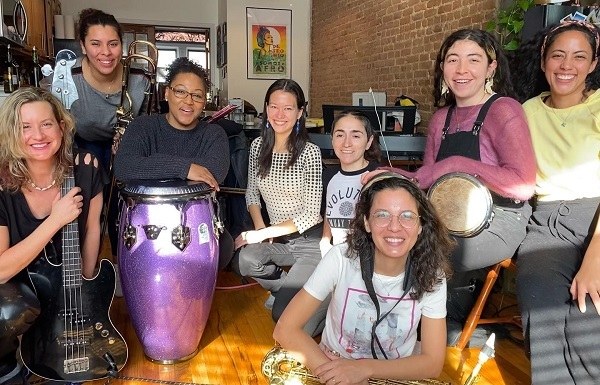
Lulada Club and Andrea Chaparro
This is the whole group, Lulada Club

She considers that they have all fit together very well with the group and understand each other perfectly most of the time, which is why she considers that they have been very fortunate to find each other and join their professional lives.    

Andrea and Lulada Club in New York 

At the moment, all of the members of Lulada Club live in New York and have no plans to move to any other place, since their greatest opportunities have been given to them in this city. 

She does say that they are completely open to the possibility of touring both nationally and internationally whenever they find it possible. Indeed, at present, they already have many invitations to attend concerts and festivals in many other cities in the United States, but they will not base the orchestra anywhere else.   

Both Andrea and the rest of the girls feel that their biggest audience is there and many people in positions of power are seeing what they are doing and taking them into account. People, club owners and event organizers have received them with open arms and have taken them into account for events of all kinds.   

One such event is SummerStage on August 2, whose main attraction will be the maestro Eddie Palmieri, who will be offering one of the last concerts of his career after announcing his retirement. It is a great honor for the girls to be able to open for this world-renowned artist who has contributed so much to salsa and Latin music since his beginnings.    

The news about their participation in the event made them very happy and feel that all their hard work has paid off.    

Andrea Chaparro on stage with Lulada
Andrea Chaparro singing on stage

Genres played by Andrea and Lulada Club   

As we have mentioned at the beginning of this edition, there are several Latin genres played by Lulada Club such as salsa, cha cha chá or boogalo, but each one has its own audience. 

In that sense, Andrea said that they play a lot of hard salsa for dancers and classical music coming from the clubs in Cali. There are certain songs that can never be out of their repertoire such as ”Llorarás” by Oscar D’ León, ”La rebelión” by Joe Arroyo, ”Brujería” by El Gran Combo de Puerto Rico, among others.   

In cases where we get a quieter audience, we can play a bolero or cha cha chá, but everything will depend on the reaction of those present to our performance,” said Andrea on this subject. 

In terms of their original songs, they have two recorded and their names are ”La Palma” ”Lulada ya llegó”, which has been very well received by those who have heard it.    

Undoubtedly, Lulada Club has a lot to offer to the audience and fortunately festival organizers and club owners are realizing the great potential of this group, and every day that passes they are taking more into account in their lineups.    

Read also: Allyson Briggs ”La Rubia de La Salsa” 
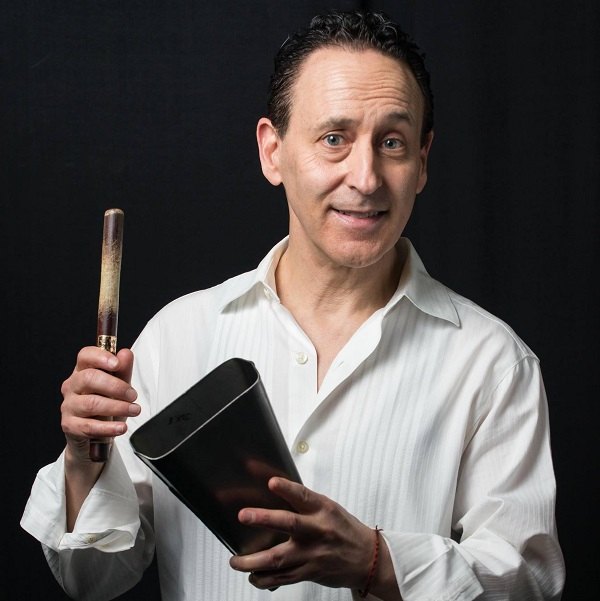
Musical director of VibraSÓN Jake Jacobs is here

VibraSÓN is a musical group that makes life in the state of California, specifically in the San Francisco Bay Area, which has become one of the best options for festivals and nightclubs seeking fresh sounds in terms of salsa, swing and Latin music in general.    

I was pleased to know about this great orchestra, its members and sound thanks to its work at Charley’s LG, Bar and Nightclub where Eduardo Guilarte, our editor, was working and directing everything related to the lineups and musical programming for Latin music nights, more specifically on Tuesdays.   

When I made contact, the person who was kind enough to reply was musical director of VibraSÓN. Jake Jacobs, who at the same time works as a producer, percussionist and backing vocalist.    

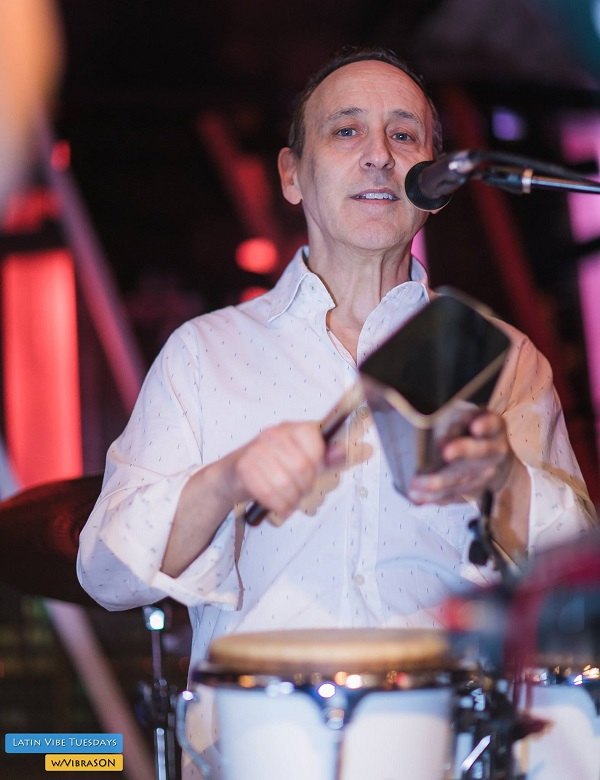
Jake Jacobs from VibraSÓN
Jake Jacobs, musical director of VibraSON

Talk with Jake Jacobs from the group VibraSÓN   

Jake Jacobs comes from a very interesting background. His first contact with music took place with his father and uncle, both of whom were professional musicians, but Jake says he has always been interested in this world.   

He studied classical piano and music theory at the University of Illinois and took some jazz piano lessons in his passage through the University of California. During these years, the musical director spent roughly 13 hours a day practicing with this instrument to master it as well as possible. 

With time, he became interested in Latin music and dance, which also led him to take dance classes at university. With that knowledge acquired up to that moment, he went to visit New York and his trip coincided with the National Puerto Rican Day Parade (an event held annually in New York and other states to celebrate Puerto Rico and its traditions in the United States). 

This event inspired Jake so much that he returned to the Bay Area with the intention to switch his dance classes to salsa classes. He became so good that he began to teach salsa dance classes himself to numerous students interested in learning these rhythms, something he has been done for over 20 years in widely recognized clubs and dance studios.   

He used to provide these classes twice a week at the Cocomo Club, which was very important at the time and attracted more than 600 people every day. When bands performed live, the future leader of VibraSÓN began to know musicians, who, in turn, gave him music lessons and his first opportunities to play in bands.   


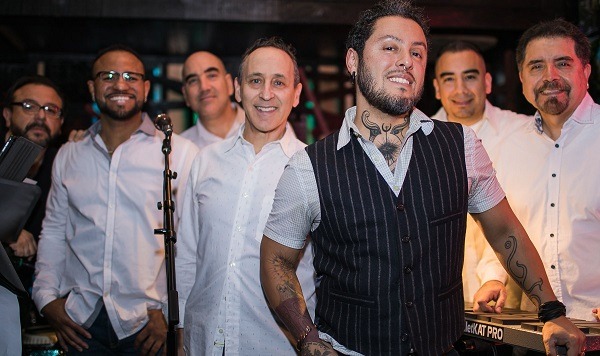
Jake Jacobs with VibraSÓN
Jake Jacobs and the other members of VibraSÓN

Apprenticeships and classes with great musicians 

One of the most impressive credentials that Jake can have is to have studied with some of the best musicians in the San Francisco Bay Area such as Edgardo Cambón, Karl Perazzo, Michael Spiro, Louie Romero, among others. 

Evidently, all these luminaries have taught the producer much of what he knows and applies today, but he ensures that it was not easy to learn from so many ”teachers” at the same time, in both dancing and music performance.   

Ensures that some of the most important things he learned have to do with technique and tips to be applied such as how to play the drums, the notes at the right times, silences and much more. 

He points out that they all taught him valuable and important things, which are still very useful to this day. One of those great lessons was to practice and practice until he achieved the sounds he wanted, especially in Latin music. 

VibraSÓN 

Finally, in 2014, Jake decided it was time to put into practice everything he learned and create his own musical group with his own original details. This is how VibraSÓN came about.    

The origin of his band’s name came from Luis Morales, one of its members. It is based on vibraphone, which is not widely used by the orchestras from the San Francisco Bay Area, but by the dancers and by this new group in their performances. As for the end of the name, it comes from ”son cubano”, a typical genre of the island Jake likes very much.   

Although Club Cocomo unfortunately closed the following year, that didn’t stop VibraSÓN from making its way and becoming one of the most demanded groups in the Bay Area in recent years.   

One of the things that Jake thinks makes his group unique is that there are very few people who use the vibraphone and, due to his training as a dancer, he is always looking to make the most appropriate music for that part of the audience for whom dancing is very important.   

Jake Jacobs in San Francisco
Jake Jacobs performing on stage in San Francisco

How Jake and VibraSÓN read the crowd   

For Jake and the rest of the band, it is very important to read the crowd and see how people react to the music they play at any time. They pay a lot of attention to the dance floor to see what works and what doesn’t with the people they play for that night.   

Having played at clubs such as Charley’s, Bar Fluxus, La Peña Cultural, The Cigar Bar and Space 500, they have prepared a very generous repertoire for each performance. Just as they have written original music, they have also dedicated themselves to perform covers of the most buzzed-about artists in recent times in certain contexts, something that worked out for several orchestras when they need to draw on these resources to entertain the audience.   

This wide repertoire that they now enjoy is what has allowed them to make diverse shows with lots of variety so that those present never get bored, even if they usually go to the same place.   

Another thing they tend to do is add new arrangements and change genres to the covers they do so that they do not sound exactly like the originals and they can inject some of their essence, even if they are not songs written or sung by them originally. ”Even if they are covers, we always try to add our original arrangements so that the dancers enjoy them that much more” said Jake.   

They have also learned to connect with the audience and know what the dancers and the general public want in order to give them exactly what they want. And they did not learn this overnight, but have observed in detail what other orchestras do to imitate what is good and useful.    

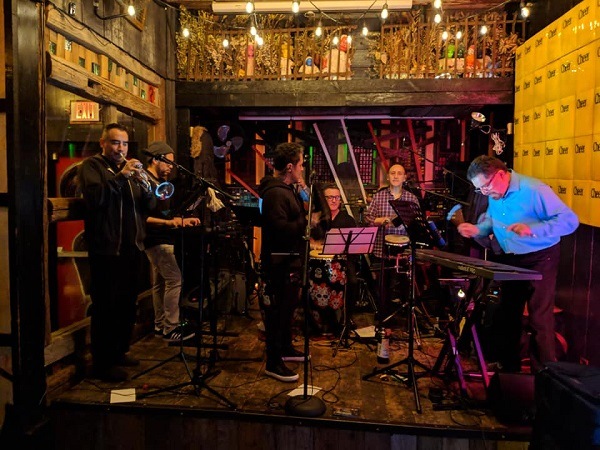
Jake and VibraSÓN on stage
VibraSÓN performing on stage

Tours and future plans of VibraSÓN

At the end of the interesting talk, Jake told us that, for now, they only plan to record new music and other activities that are comfortable for all the members, since many of the musicians are in other orchestras and record for other people, so it is too complicated for them to tour with VibraSÓN. In addition to that, several of them have small children to care for, so it is impossible for them to travel for a long time.   

He is so considerate because he always tries to keep the same members and preserve the unity of the group above all else. It has worked for them, as they have managed to made a name, which will continue to become popular over time. 

Read also: Fausto Cuevas Y La Moderna in International Salsa Magazine 

Europe – July 2023

William T. Martinez immigration attorney

Banner Calibrated Maracas all natural


Tempo Latino 2023

Tempo Latino 2023
Tempo Latino 2023

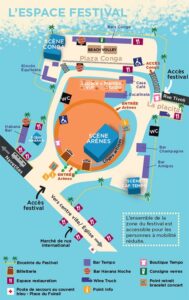
Tempo Latino is a music festival held in Vic-Fezensac, France, in the region of Gers in Gascony it is the first and the greatest Latin American and Afro-Cuban music festival of the summer in Europe. The festival was founded in 1994 and has been held annually since then.

“In 2020 and 2021, the festival was only interrupted for two consecutive years due to the containment of the new crown pneumonia (COVID-19) epidemic.”

With around 600 volunteers from all over the city for four days of intense activities and an audience of around 60,000 people from all over the world.

Tempo Latino offers a variety of Latin American and Afro-Cuban music, including Salsa, Bachata, Kizomba, Cumbia, Merengue, Rumba, Latin-jazz, Reggaeton and more. The festival also features dance workshops, food stalls and other cultural events.

International performers and instructors from Cuba, Puerto Rico, Colombia, Venezuela, Panama, Africa, the United States (primarily New York, Miami, and California), and Europe have participated in a number of concerts and workshops

Tempo Latino has grown from a small festival to one of the most important Latin American music festivals in Europe. The festival hosts some of the biggest names in Latin music, including Celia Cruz, Ruben Blades,  Eddie Palmieri, Oscar D’ León, Johnny Pacheco, Adalberto Álvarez, El Gran Combo de Puerto Rico, Kassav, Totó la Momposina,  and Los Van Van. Tempo Latino has also helped advance the careers of many new artists.

Here’s more information on Tempo Latino:

  • The festival takes place in a beautiful setting in the heart of the French countryside.
  • The festival is family friendly and has activities for all ages.
  • The festival is a great opportunity to experience a different culture and learn about Latin American and Afro-Cuban music.

A festival of concerts takes place in the square and, at the same time, many free outdoor events for those who want to discover music in the city’s dance halls in the afternoon and evening. In the second edition, they have integrated dance, music, and percussion lessons.

The 28th edition of Tempo Latino will take place from July 27-30, 2023.

The lineup includes:

La Conga

27 July – Ana Tijoux (France)

Les Arenes

28 July 2023

21:00 – Orchestra Baobab (Senegal)

23:00 – Grupo Compay Segundo (Cuba)

29 July 2023

21:00 – Lila Downs (Mexico)

23:00 – Cimafunk (Cuba)

30 July 2023

21:00 – Bernard Lavilliers (France)

23:00 – La Excelencia (USA)

and many more!

Pass Concert: 

On the official website, tickets for four days are available for 120 € (during the festival, they cost 150 €).

Eric Duffau

The current director of Tempo Latino is Eric Duffau from Toulouse, France. He is also the founder of the music festival which he started in 1994. A passionate lover of Latin American and Afro-Cuban music, Dufour devoted his life to promoting this music to a wider audience and serves on the board of the French Association for the Promotion of Latin Music (AFMPL).

Director of Tempo Latino is Eric Duffau from Toulouse

Dufoe was a tireless promoter of Latin American and Afro-Cuban music. He travels the world in search of new talent and works hard to make Tempo Latino a major cultural event. He is a passionate advocate of Latin music and works to bring this music to a wider audience.

Dufour graduated from the National School of Arts and Crafts (ENSAM) in Paris. In the early 1980s he worked as a DJ, during which time he became interested in Latin American and Afro-Cuban music. In 1989, he decided to create a festival to showcase this music and Tempo Latino was born.

https://www.tempo-latino.com/

https://www.youtube.com/user/TempoLatinoFestival

The Tempo Latino Festival is Back

Europe – June 2023

Banner Orange and yellow Europe - June 2023

William T. Martinez immigration attorney

Banner Calibrated Maracas all natural

Banner Yellow and Blue directory of salsa clubs in europe

  • « Go to Previous Page
  • Page 1
  • Interim pages omitted …
  • Page 87
  • Page 88
  • Page 89
  • Page 90
  • Page 91
  • Interim pages omitted …
  • Page 126
  • Go to Next Page »

International Salsa Magazine (ISM) is a monthly publication about Salsa activities around the world, that has been publishing since 2007. It is a world network of volunteers coordinated by ISM Magazine. We are working to strengthen all the events by working together.