• Skip to primary navigation
  • Skip to main content

International Salsa Magazine

  • Home
  • Previous editions
    • 2025
      • ISM / November 2025
      • ISM / October 2025
      • ISM / September 2025
      • ISM / August 2025
      • ISM / July 2025
      • ISM / June 2025
      • ISM / May2025
      • ISM / April 2025
      • ISM / March 2025
      • ISM / February 2025
      • ISM / January 2025
    • 2024
      • ISM / December 2024
      • ISM / November 2024
      • ISM / October 2024
      • ISM / September 2024
      • ISM / August 2024
      • ISM / July 2024
      • ISM / June 2024
      • ISM / May 2024
      • ISM / April 2024
      • ISM / March 2024
      • ISM / February 2024
      • ISM / January 2024
    • 2023
      • ISM / December 2023
      • ISM / November 2023
      • ISM / October 2023
      • ISM – September 2023
      • ISM – August 2023
      • ISM July 2023
      • ISM Edition June 2023
      • ISM – May 2023
      • ISM April 2023
      • ISM March 2023
      • ISM February 2023
      • ISM January 2023
    • 2022
      • ISM December 2022
      • ISM November 2022
      • ISM October 2022
      • ISM September 2022
      • ISM August 2022
      • ISM July 2022
      • ISM June 2022
      • ISM May 2022
      • ISM February 2022
      • ISM January 2022
    • 2021
      • ISM December 2021
      • ISM November 2021
      • ISM October – 2021
      • ISM September 2021
      • ISM August 2021
      • ISM July 2021
      • ISM May 2021
      • ISM April 2021
      • ISM June 2021
      • ISM March 2021
      • ISM February 2021
      • ISM January 2021
    • 2020
      • ISM December 2020
      • ISM November 2020
      • ISM October 2020
      • ISM September 2020
      • ISM August 2020
      • ISM July 2020
      • ISM June 2020
      • ISM May 2020
      • ISM April 2020
      • ISM March 2020
      • ISM February 2020
      • ISM January 2020
    • 2019
      • ISM December 2019
      • ISM November 2019
      • ISM October 2019
      • ISM Septembre 2019
      • ISM August 2019
      • ISM July 2019
      • ISM June 2019
      • ISM May 2019
      • ISM April 2019
      • ISM March 2019
      • ISM February 2019
      • ISM January 2019
    • 2018
      • ISM December 2018
      • ISM November 2018
      • ISM October 2018
      • ISM September 2018
      • ISM August 2018
      • ISM July 2018
      • ISM June 2018
      • ISM May 2018
      • ISM April 2018
      • ISM March 2018
      • ISM February 2018
      • ISM January 2018
    • 2017
      • ISM December 2017
      • ISM November 2017
      • ISM October 2017
      • ISM September 2017
      • ISM August 2017
      • ISM July 2017
      • ISM June 2017
      • ISM May 2017
      • ISM April 2017
  • Download Salsa App
    • Android
    • Apple
  • Spanish

Search Results for: Salsa Orchestra

From Cali, Colombia, “La Crítica Orquesta” by Harold Estrada

With a unique, impacting, dynamic sound and with an explosion of musical energy, “La Crítica Orquesta” of Harold Estrada comes to us in this delivery, directly from the city of Cali, Colombia; who presents to the world, a different proposal with a clear and forceful message of much social sense in his interpretations. In a brief conversation we had with its director Harold Estrada, a young musician of great experience with Colombian Orchestras, he shared with us aspects of this successful group from Caleña.

Welcome Harold to International Salsa Magazine “The Only Salsa Magazine in the World”. First of all, tell us: since what date does “La Crítica Orquesta” come out? Thank you Professor Carlos Colmenárez, for the wonderful invitation that you make us from your city Barquisimeto, in our sister Venezuela, with a fraternal greeting and thus let us know a little more through you and this prestigious media; because let me tell you friend, that the Orchestra begins to sound since 2012, with an enterprising, constructive, quality and very professional work, in search of an authentic sound that identifies it and allows it to take its rightful place in the salsa environment here in Colombia and internationally.

De Cali, Colombia, “La Crítica Orquesta” de Harold Estrada

And in these 10 years of trajectory, have you had important participations in events and festivals? Indeed Professor Carlos, we had the honor of being present at the World Salsa Festival 2012 and also in the fairs of Cali, likewise several departments of the country have witnessed this magnificent evolution, seeking to remember the essence and expression of salsa Caleña with that characteristic sound and Orchestras that left their mark on the Afro-Caribbean and Colombian music.

Harold friend I understand that you develop a social and musical work in the city of Cali, tell us… Yes, our orchestra is developing and forming a “Collective of salsa to the street”, which is a program that is ready to rescue the Caleña culture, with the purpose of safeguarding the salsa in the city.

Which international artists have been accompanied so far by “La Crítica Orquesta”. Carlos, we have had the privilege of accompanying here in Colombia salsa artists of the stature of: Rafu Warner, Luigi Texidor, Chamaco Rivera, Ruben Sierra, Julio Lopez, Manny Fuentes, and more, demonstrating the musical support of the group.

What is the mission of “La Crítica Orquesta”? We are convinced that our mission is to make quality music for the enjoyment of the people, for the delight of the dancer and the ear of the music lover, but especially, music to free the spirit and cheer the soul.

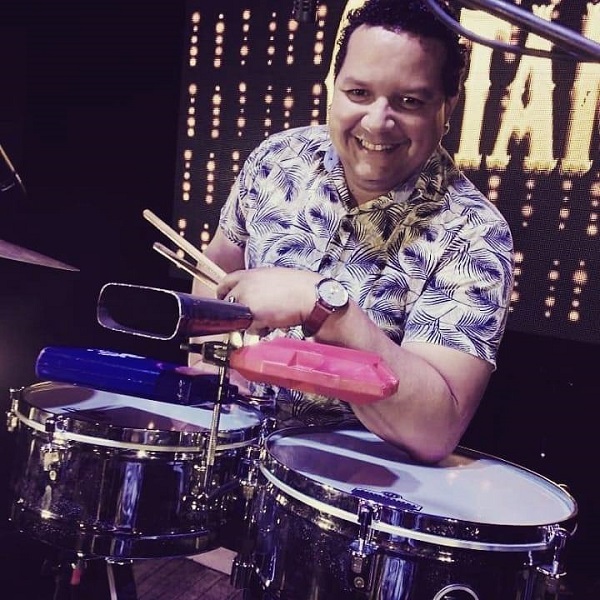
Who are the members of the Orchestra? “La Crítica Orquesta”, is conformed by: Harold Estrada (conductor and conguero), Oscar Eduardo González (Trumpeter), Cruz Ramón Mayora (Bongos player), Andrés Holguín (Trumpeter), Ramiro Lennis (Singer), Leo Bonilla (Trombonist), Andrés Felipe Silva (Bassist), Marco Felipe Ramírez (Timbalero), Carlos Alberto Cruz and Harrison Muñoz (Singers), Mauricio Bastidas (Saxophonist), Jerry Alejandro Figueroa (Pianist), Gregorio Gómez (Singer), by the way our bongos player, is Venezuelan, born in the city of Naiguatá, but since he was a child he lives in the city of Barquisimeto, to which soon will be back, the experienced and excellent musician Cruz Ramón Mayora Medina.
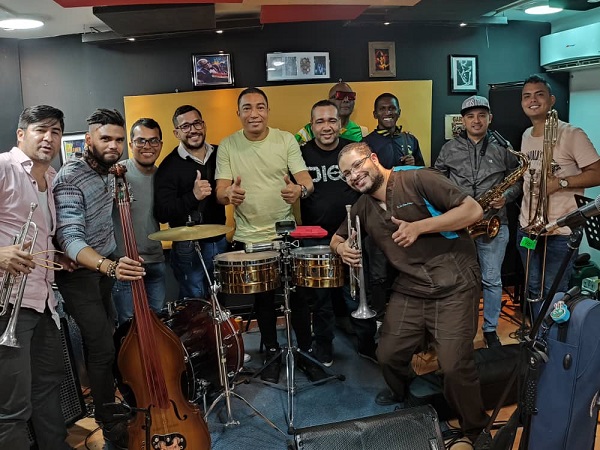
La Critica Orquesta de Harold Silva
La Critica Orquesta de Harold Estrada

As for productions, have you already recorded some? Yes Professor Carlos, we already have several songs and even videos on Youtube for the knowledge of all. And these are the titles, composers, arrangers and performers: “Cannabis”, this is the most recent single recorded just a month ago, with lyrics by: Einar Flores and in the arrangements Andrés Silva, both Colombians. “Canallón”, lyrics by Einar Flores (Colombia) and arrangements by Pedro Cruz, (Dominican Republic). “Dale Duro”, composer and arranger Luis Cabezas (Venezuelan), the interpreters are: Carlos Cruz, Harold Aguirre and Adrián Barragán, respectively.

Excellent friend Harold and the social networks of the Orchestra. On Youtube you can reach us as: Orquesta la Crítica de Harold Estrada, Instagram: lacriticadeharoldestrada and Facebook: lacriticaorquestacali; for bookings you can contact us at: +573147800543.

Upcoming concerts or events? We will be present God willing at the “Concierto Circulación”, on November 26 and also at the Cali Fair.

Thank you for accepting the invitation, brother and friend Harold Estrada and the whole Orchestra, for us it was an honor to have you in International Salsa Magazine salsagoogle.com, and from here we wish the greatest success to “La Crítica” of Colombia, a group that undoubtedly, is putting well in high the Salsa made in Cali.

The privilege is ours, Professor Carlos Colmenárez, and from Colombia, we will transmit you the best wishes of the Orchestra and the whole country, so that you continue to make known the salsa talent of your beloved Venezuela as well as of all the Salseros in the world. Thank you a thousand times for the support you give to “La Crítica Orquesta”, and on behalf of all its members, we send you blessings and wish you many successes and long life. You, the social communicators are a key factor to promote and publicize the musical work for Salsa made with quality and international flavor for the dancers and connoisseurs of the genre.

Until next time and we continue salseando…!

Carlos Colmenarez

You can read: Henry Valladares, a brilliant, versatile, and disciplined percussionist

Lizna Tovar winner in the category Voice Over of the year 2022 in Canary Islands Tenerife

Lizna Tovar is based in the city of Charallave, Miranda State in Venezuela.

She begins her steps in the radio in 2015, participating in a health segment for a radio program on 102.5fm in the state of San Carlos Edo. Cojedes, Venezuela.

The following year they change the program to the radio station Plata 105.7 FM, in which the director Gonzalo Playa offers him to dabble in depth in the locution, giving him the opportunity to have his own space to which he gave the name “La buena vibra en radio”, of urban cut inclined towards reggae, ska and rap.

Lizna Tovar
Lizna Tovar

Always with the intention of national support, she managed to be the most sought after program with the new talents in the region, always being the special guest in her different presentations.

Her preparation continued with “Gente de radio” and with the school of the director of the same station which gave the best school for great speakers of the state today.

In 2019 he advances to the Voice Over, managing to become the official voice of countless DJs. nationally and internationally, official voice of different stations such as Fantástica 97.5 FM in Venezuela, Latino FM Web of Canary Islands, Radio Constellation Musical of Arizona, among others.

Voice Over  del año 2022

He had the opportunity to identify the adult entertainment channel Venus.

The latter gave her a boost with the recordings in sensual tone, suggesting to many colleagues of the medium and her slogan was the sensual voice.

Continuing with her participation in radio, she was the female voice in the program Baúl Salsero and from there she moved on to her own production Voltaje Salsero, taking her to be the female voice in the presentations of different singers.

In conjunction with her colleague Deisy Bonett, she arrives to another production called Ni tam Santas ni tam Fiablas, broadcasted in K-ribeña stereo.

In August of this year she is announced her nomination for the Latin Gold Awards 2022 in the category of Voice Over in international mention, being the winner of the award and official voice of the same.

Latin Gold Award 1st Edition.

A well-deserved recognition to the evolving talent of singers, orchestras, DJs and communicators whose effort and dedication to achieve a space in the music industry deserve to be recognized, especially for working every day to provide entertainment, information and much Latin joy to all corners of the planet.

Voice Over  del año 2022 en Islas Canarias Tenerife

Premio Latino de Oro brings together an ecosystem composed of emerging artists and orchestras, as well as those of recognized trajectory and greater projection worldwide, providing a large niche of diversified talent that the entertainment industry requires daily, also concentrates the most representative network of DJs in the Latin world, in addition to the most global online Latin radio circuit that exists whose musical window is the dream of all artists.

Lizna Tovar ganadora en la categoría Voice Over  del año 2022 en Islas Canarias Tenerife

Today also active in social networks, she is part of a project called “Nuestra Visión” transmitted every Tuesday broadcast via instagram live, produced by Carlos Viloria in conjunction with the team formed by professor and historian Jeijal Perez and DJ. Julio the black.

She continues her preparation and constant learning in this medium and support for national talent, dedicated to carry out her projects with her motto “Always working for the positive” And it is that what is done from the heart transmits positive energies.

She does not think about rivalries or competitions, only to do a good job and in order to improve the quality, knowledge and experience.

Lizna Tovar (Voice Over)

 You can read: Saúl Delhom “Esta Salsa me gusta” one of the things I like the most is to learn, create and share

Irakere was a Cuban group that developed an important work in Cuban popular music and Latin Jazz under the direction of Chucho Valdés

Irakere was formed as such in 1967 but had begun to work much earlier; in that year precisely they went to a selection called in Havana to organize with the best musicians of that time the Cuban Orchestra of Modern Music; already in 1972 they were approaching to what they currently produce deciding in 1973 to call it Irakere, which in Yoruba language means Vegetation and that is how, starting from its name, they work based on the Afro-Cuban musical roots.

In this way, through the combination, mixture and interrelation of classical, impressionism, jazz, rock and various compositional techniques they managed to walk through all styles such as dance music, concert, traditional and popular Cuban music.

Thanks to the impulse of pianist Chucho Valdés, the Cuban group Irakere took off in 1973, nourished by Thelonious Monk’s bop.

Founders

Grupo Irakere: It was founded in Havana in 1973, by:

Jesús Valdés(Chucho) composer, director and pianist;

Paquito D’Rivera (Paquito), alto and tenor saxophone, flute and clarinet;

Carlos Averhoff, tenor saxophone, soprano, flute and bass clarinet;

Jorge Varona, trumpet, trombone and percussion;

Carlos del Puerto, bass, bass guitar and tuba;

Carlos Emilio Morales, guitar;

Bernardo García, drums and batá drums;

Jorge Alfonso, batá drums;

Enrique Plá, drums;

Carlos Barbón, güiro, chekeré and tambourine; and

Oscar Valdés, singer, tumbadora (conga), batá drums and bongo.

Irakere, fue un grupo cubano que desarrolló un importante trabajo en la música popular cubana y el Jazz Latino

On the founding of Irakere, Chucho Valdés expressed:

“For us the group always existed, it was present at all times; it was like something pending. At the beginning it had no name, it was just an idea we were working on: to use Cuban folkloric percussion in dance music, and to look for different timbres with a common characteristic: “ours”.

Then Oscar Valdés came up with the idea of combining the not easy and little known batá drum with the tumbadora, güiro and cowbell and so, step by step we arrived at the current group…”.

About Irakere’s first stage, the musicologist Leonardo Acosta points out: “one of the successes of Irakere had been not to try to invent and identify itself with a “new rhythm”, according to the old guidelines of advertising so much used from the forties to the sixties.

The slogan about the “new rhythm” was until recently the “open sesame” on which the musicians counted to become famous overnight, and by that way sometimes quite commercial results were achieved.

Apart from the fact that no “new rhythm” is so new, they all come from the alteration or amalgamation of pre-existing rhythms.

Irakere’s only alchemy comes from the spontaneous creativity of its members. Since there is no commercial endeavor, laboratory practices are unnecessary, and the group can perform a contradanza, a danzón, a son montuno or a cha cha chá without fear of seeming “old-fashioned”, since they are in fact playing something else at the same time. And without setting themselves the goal, nor having to invent a “pega” name, almost by an imperative of the material they are working on, new rhythmic combinations are emerging, to the point that Irakere’s rhythm is unmistakable among Cuban listeners or dancers.

Grupo cubano Irakere

Certainly, and in spite of their triumphs in international jazz festivals, Irakere is not a jazz group. But these successes are not gratuitous either, because as we have seen, they have formidable musicians with great experience in the jazz field, especially in the aspect of improvisation, the great discovery of jazz and perhaps its greatest contribution to the music of the 20th century.

“Paquito D’Rivera: Irakere was born against the will of the Cuban authorities”.

When talking about Cuban music, the name of one of the most emblematic groups in the country’s musical history comes to mind, Irakere, which in Yoruba language means vegetation, jungle.

Irakere became the seed that would germinate a lush forest of rhythms and sounds, a school through which many of the great stars of Cuban music have paraded.

Founded more than four decades ago, this legendary band has been a pioneer of Afro-Cuban jazz and the initiator of the musical revolution in the seventies.

Gracias al impulso del pianista Chucho Valdés, el grupo cubano Irakere levantó vuelo en 1973

Irakere emerged at a time when, due to political demands on the island, music and culture were treated as an instrument of revolutionary identification and jazz was branded as imperialist music.

It was at this time, in the late sixties and early seventies, that a group of great musicians founded a band whose main goal was to enrich Cuban popular dance music with Latin jazz as essential elements.

Under the direction of the outstanding pianist Jesús “Chucho” Valdés, excellent musicians came together in search of a different sonority, based on the use of Afro-Cuban folkloric percussion together with the renewed timbres of the popular rhythms of the time that fused jazz, rock, funk and popular Cuban rhythms such as son, mambo or cha cha chá, together with classical or concert music.

“Irakere was the Musical Generation of change”.

Sources:

https://www.ecured.cu/Irakere

Leonardo Acosta

Radio Televisión Marti

Mirna Guerra

Irakere

You can read: Israel Kantor was an excellent bassist, arranger and composer who achieved great popularity in Cuba for his vocal technique and original “Sonear” style

Carlos Peluzza Del Carpio, the versatile Peruvian musician, was in San Juan Puerto Rico

One of Puerto Rico’s salsa anthems is, without a doubt, ‘Borinquen’. Below, Papo Lucca, leader of the famous salsa group, tells us why he included the Peruvian percussionist in that song.

Papo Lucca needed an expert percussionist in Puerto Rican dance for the song ‘Borinquen’, written by Johnny Ortiz, which he would include in the LP ‘Unchained Force’.

It was 1980 and in those days Carlos Peluzza Del Carpio, the versatile Peruvian musician, was in San Juan.

Papo did not hesitate to summon him. “He lived here in Puerto Rico for a long time,” the Sonora Ponceña leader tells us over the phone. “It’s just that in the Sonora I don’t have a redoblante.

Carlos Peluzza Del Carpio

And since Peluzza was here and shared his musical journeys with many artists from Puerto Rico, he did know those secrets of Puerto Rican dance. It was for that reason that I invited him to be on that recording, recalls Papo, 37 years later.

Wison Torres Jr. was in charge of finding the Peruvian musician, who incidentally was in charge of the arrangements of the song (together with Papo). Peluzza’ was only informed that he was needed in a recording room. When he arrived he saw the percussion ready, a bass and a piano.

A few minutes later Papo arrived, greeted him and the memorable session began. The percussionist remembers it as one of the most beautiful moments of his life. Borinquen’, in its 6.56 seconds, was a hit.

The vocals were provided by Yolandita Rivera, one of the greatest soneras ever born on the Island of Enchantment. The choruses were provided by Toñito Ledee, Miguelito Ortiz and Edwin ‘Caneca’ Rosas. Papo was satisfied. And Carlos ‘Peluzza’ treasures the story fondly.

Sonora Ponceña Unchained Force 1980

That is just one of the many anecdotes that the famous pianist has with Peruvians. He remembers that one day on television in his country a girl and her father were singing the song ‘Fina estampa’. He liked it.

That’s why, in 1979, in the album ‘La Ceiba’, in which Celia Cruz sings, he decided to include that famous waltz by Chabuca Granda. “From that moment on, I got to know other pieces of Peruvian Creole music,” he says.

Papo has visited Lima many times. He has already lost count. He has friendships. For example, he is a friend of Carlos Aparicio, the volleyball coach. He assures us that once they even participated in a game of Alianza Lima’s girls. In addition, he reminds us that Edwin Caneca Rosas is also a referee of that sport. So everything was conspiring.

It is a June morning in La Perla, Callao, and the conversation continues under the gaze of Juan Núñez, a Peruvian singer who a few weeks ago was in Ponce, Puerto Rico, fulfilling a dream: rehearsing with the Sonora Ponceña. Papo is generous with Juan, highlights his singing qualities and underlines the friendship that has grown between them.

Carlos Peluzza Del Carpio, el versátil músico peruano

Precisely, we took the opportunity to ask him about the orchestra’s recent hit entitled ‘Canción a mis amigos’. This salsa was born after the terrible natural disasters that Peru and Colombia faced at the beginning of this year with the El Niño Costero phenomenon.

The composition is by Francisco Alvarado, who wrote it in two days. The voices were provided by Jorge Nicolai and Darvel García. What happened to you identified us a lot,” says Papo.

The musician adds that he felt that La Ponceña should make itself felt with a song of solidarity. Now it is time for it to be played on Lima’s radio stations. Will it become popular?

The twenty minutes of chatting come to an end and Papo has many topics left in the pipeline. He is very grateful and Juan Núñez tells us that behind his solemn appearance there is a human being who enjoys, who is passionate about music and who is always observing how to amalgamate sonorities. La Sonora Ponceña is still going strong and hopefully soon we will be able to see it unload in Lima.

We need to chant ‘Canción a mis amigos’. And that Carlos Peluzza, in one of those, returns to redoblar in ‘Borinquen’. Also that Yolandita Rivera sings? Hopefully.

Sources:

Martín Gómez V.

Papo Lucca

Carlos Peluzza

You can read: September 22, 2022 marked the 48th anniversary of the Fania All-Stars concert in Zaire, Africa

Edgar “Balín” Ocando Venezuelan percussionist musician based in Mexico

Edgar “Balín” Ocando, Venezuelan musician born in Caracas in the parish of El Recreo, specifically in block 7 and 8 of Simón Rodríguez.

He studied music at the José Reyna school located behind the same building where he lived, he also studied at the Conac de Sarria with maestro Orlando Poleo.

In his childhood he met with friends who had the same restlessness and passion for music, getting together every weekend to make noise as the neighbor said to the one who had to endure the music end after end.

As a result of these rehearsals he ended up in a group with which he began his music career and received his first professional payment at the age of 14 with the group Ases de la Gaita, a group formed by childhood friends in order to get away from drugs, which for the 80s was very strong.

Edgar “Balín” Ocando músico percusionista venezolano radicado en México

In high school he joined the ranks of the Venezuelan Children’s Choir under the direction of maestro Raul Cabrera. During his time in the choir, the son of Professor Cabrera, known as Raulito, formed the salsa group Sabor Latino and became part of it.

Coming from a musical family, he always looked for a way to be close to his uncles Rafael and Yelitza Sivira, who were singers of the Polifónico Rafael Suarez and always looked for a way to be present in the rehearsals.

Yelitza Sivira was the one who took the responsibility to take him and he only sat and watched how they vocalized with the piano with the help of the director Maria Cabrera. It was then when they created the Polifónico Infantil Rafael Suarez and he became a baritone.

Already in adolescence at the age of 17 years old, he started working in a bank through a scholarship granted by the institution Insbanca, and while working, the Coral del Banco Italo Venezolano was created, thus participating in bank choral meetings, it was then that he returned to music as an instrumentalist when he saw in a newspaper advertisement that they requested a drummer to be part of a group of bagpipes, for which he went to the audition where there were countless drummers and of which he was left with the position thus becoming part of Estrellas de la Gaita.

The following year he was invited by a friend to join the group Santoral of Freddy Rangel, arriving to record for the first time in Requena Studios, the following year in full rehearsal with Santoral I was called to join the group Los Caracuchos of Joseito Rodriguez, forming part as a drummer for 2 years and recording in Manoca Studios, it was then where he enters the percussion workshops of the Biggot Foundation with the teachers Alexander Livinali and Williams Troconis.

He was in the ranks of important Venezuelan groups and orchestras such as Los Caracuchos, Catatumbo, Los Casanovas, Melody Gaita, Sabor Latino, Orquesta La Moderna, etc.

Edgar “Balín” Ocando

In 1999 he changed course and moved to Mexico where he has participated as a percussionist and backing vocalist in groups such as Cokodrilos, Kumbia Kings,

Sonora 100% Dinamita, Alicia Villarreal and today he has his own orchestra called Rumba Latina de Venezuela, which he formed in 2005 and has opened concerts for great international figures such as: Oscar D’ León, Willie Colon, Víctor Manuelle, Porfi Baloa y sus Adolescentes, Nigga, etc.

As well as Mexican artists such as Julión Álvarez, Los Tucanes de Tijuana, Mariana Seoane, El Grupo Pesado, Germán Montero, El Poder del Norte, Emilio Navaira among others.

Integrated by musicians of different nationalities from Venezuela, Cuba, Dominican Republic, Mexico and hand in hand with our representation office and record label Indepe Music, we will continue to bring our music to more and more people in every corner of the country.

Edgar Ocando Manager

Phone (52)-8132179324

Email: [email protected]

Edgar Balin Ocando

You can read: Anacaona The Cuban Female Orchestra

  • « Go to Previous Page
  • Page 1
  • Interim pages omitted …
  • Page 109
  • Page 110
  • Page 111
  • Page 112
  • Page 113
  • Interim pages omitted …
  • Page 149
  • Go to Next Page »

International Salsa Magazine (ISM) is a monthly publication about Salsa activities around the world, that has been publishing since 2007. It is a world network of volunteers coordinated by ISM Magazine. We are working to strengthen all the events by working together.