• Skip to primary navigation
  • Skip to main content

International Salsa Magazine

  • HOME
  • Previous editions
    • 2026
      • ISM / March 2026
      • ISM / February 2026
      • ISM / January 2026
    • 2025
      • ISM / December 2025
      • ISM / November 2025
      • ISM / October 2025
      • ISM / September 2025
      • ISM / August 2025
      • ISM / July 2025
      • ISM / June 2025
      • ISM / May2025
      • ISM / April 2025
      • ISM / March 2025
      • ISM / February 2025
      • ISM / January 2025
    • 2024
      • ISM / December 2024
      • ISM / November 2024
      • ISM / October 2024
      • ISM / September 2024
      • ISM / August 2024
      • ISM / July 2024
      • ISM / June 2024
      • ISM / May 2024
      • ISM / April 2024
      • ISM / March 2024
      • ISM / February 2024
      • ISM / January 2024
    • 2023
      • ISM / December 2023
      • ISM / November 2023
      • ISM / October 2023
      • ISM – September 2023
      • ISM – August 2023
      • ISM July 2023
      • ISM Edition June 2023
      • ISM – May 2023
      • ISM April 2023
      • ISM March 2023
      • ISM February 2023
      • ISM January 2023
    • 2022
      • ISM December 2022
      • ISM November 2022
      • ISM October 2022
      • ISM September 2022
      • ISM August 2022
      • ISM July 2022
      • ISM June 2022
      • ISM May 2022
      • ISM February 2022
      • ISM January 2022
    • 2021
      • ISM December 2021
      • ISM November 2021
      • ISM October – 2021
      • ISM September 2021
      • ISM August 2021
      • ISM July 2021
      • ISM May 2021
      • ISM April 2021
      • ISM June 2021
      • ISM March 2021
      • ISM February 2021
      • ISM January 2021
    • 2020
      • ISM December 2020
      • ISM November 2020
      • ISM October 2020
      • ISM September 2020
      • ISM August 2020
      • ISM July 2020
      • ISM June 2020
      • ISM May 2020
      • ISM April 2020
      • ISM March 2020
      • ISM February 2020
      • ISM January 2020
    • 2019
      • ISM December 2019
      • ISM November 2019
      • ISM October 2019
      • ISM Septembre 2019
      • ISM August 2019
      • ISM July 2019
      • ISM June 2019
  • Download Salsa App
    • Android
    • Apple
  • Spanish

Search Results for: Salsa Orchestra

National Zalsa Day in its XXXIX edition a total success

Sunday, March 19, 2023, the 39th edition of National Zalsa Day returned to the date established in 2000 with the approval of Law No. 100, which decrees the third Sunday of March of each year as National Salsa Day.

This edition of the activity of worldwide importance, which has almost reached four decades since its first edition at the José Pepito Bonano Park in Guaynabo, demonstrated Z-93’s support for the proposals of the new generation. That promise, made in its 38th edition, has been fulfilled.

The day began at about eleven in the morning. The Orquesta del Rey de Puerto Rico, winners of the contest held in Panama to select the talent to be presented yesterday on the DNZ stage, was in charge of the ignition.

Orquesta del Rey de Puerto Rico after the performance that kicked off the National Zalsa Day

As soon as this first intervention culminated; the orchestra of Robert Burgos shone in a change of rhythm something more cubaneao. When the sun was at its hottest moment, Maelo Ruiz arrived on stage for the first time as a soloist, accompanied by the musical direction of his nephew, the outstanding percussionist of the so-called nueva cepa: Jean Carlos Camuñas.  Pirulo arrived on stage with his usual urban charisma, stealing the hearts of the new salsa

The fifth intervention marked the arrival of the Orquesta del Día Nacional, led by the multifaceted Isidro Infante.  The orchestra backed Nino Segarra, who enchanted the audience with Entre la espada y la pared and Porque te amo; Yolanda Rivera, who performed Se formó and Hasta que se rompa el cuero as well as a descarga in front of the timbal; Luigui Texidor, who sang Boranda and Moreno soy.

Yolanda Rivera performing a timbal solo

Next, “El Niño Bonito de la Salsa”, Ismael Miranda arrived accompanied by his family and Pastor Alex D’ Castro to receive from Néstor Galán -better known as “el búho loco”- the well-deserved Estrella Award, instituted as part of the annual salsa day.

Ismael Miranda receives Estrella Award from Néstor Galán

Once the Estrella Award was presented to Miranda, Pichie Pérez sang El sonero del bailador and a medley of the songs that consolidated him as a singer when he was part of the giants of the south, the Sonora Ponceña. These were: Hacheros pa’ un palo, Fuego en el 23, El pío pío and Yambeque.

After Pichie finished his performance, Alex D’ Castro took the stage and gave the evening its climax with Te fuiste, Como si nada and Si no fuera por ti. Alex was followed by the new promise of salsa, already recorded, published and released by Sony Music Latin: Luis Figueroa.

As part of the tribute to the 50th anniversary of the establishment of Típica 73, there was a reunion on stage of singers Tito Allen, Adalberto Santiago and José Alberto “El Canario”; backed by the manager of Típica 73, Johnny Dandy Rodríguez. Tito Allen performed Guancona and Guaguancó de los violentos. Adalberto Santiago showed off his voice with Mañoño and La candela. For his part, “El Canario” arrived with his usual scenic mastery with A la hora que me llamen voy, Esta noche pinta bien, Xiomara -a theme in which he was accompanied by Tito Allen and Adalberto Santiago- and Baila que baila.

José Alberto "El Canario", Adalberto Santiago and Tito Allen joined Johnny "Dandy" Rodríguez in tribute to Típica 73
José Alberto “El Canario”, Adalberto Santiago and Tito Allen joined Johnny “Dandy” Rodríguez in tribute to Típica 73

After the segment in which the three singers came together again, bongos player Johnny Dandy received the tribute on behalf of Típica. The first intervention of the DNZ Orchestra closed with Domingo Quiñones in an energetic interpretation of Salsumba, a song with which he participated in the production El número 100 of the “King of the Timbal”, Tito Puente.

Domingo Quiñones performed Salsumba, a song he recorded with El Rey del Timbal for his production 'El número 100'
Domingo Quiñones performed Salsumba, a song he recorded with El Rey del Timbal for his production ‘El número 100’

When the afternoon wanted to give way to the night, Charlie Aponte’s orchestra was in charge of keeping the audience in the necessary mood to continue with salsa. The songs that Charlie kept the audience captive were Arroz con habichuelas, Se nos rompió el amor, Teléfono, Esos ojitos negros, Goyito Sabater and Gracias salsero.

Charlie Aponte and his orchestra

Preceding the tribute to the “King of the Timbal”, on the 100th anniversary of his birth; India showed off her interpretative quality, evidencing her well-earned title. Yes, India is “la más que canta”. Her interpretation of Vivir lo nuestro, Dicen que soy -a song for which she was accompanied by Sergio George on piano shortly after he brought her a birthday cake on stage-, Ese hombre and Mi primera rumba showed her vocal virtuosity.

Sergio George celebrated India's birthday within the framework of DNZ 2023
Sergio George celebrated India’s birthday within the framework of DNZ 2023

The concert was closed by Tito Puente, Jr. surrounded by timbaleros Nicky Marrero, Endel Dueño and Orestes Vilató, under the musical direction of timbalero José Madera.  Tito’s guest singers for the closing were Frankie Figueroa, Frankie Morales and Melina Almodóvar.

Melina Almodóvar fue una de las invitadas de Tito Puente, Jr.


Bella Martinez
Writer, Afro-Caribbean Music Researcher

Women in music: Carmen Laboy tells of a full life, without regrets

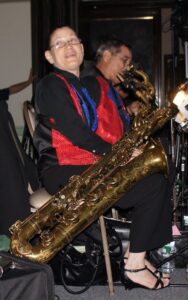
Talking with Puerto Rican saxophonist Carmen Laboy is so pleasurable that it becomes a therapeutic experience for the listener as she leads the musical journey that has become her working life.

The enthusiasm with which she talks about her work is contagious. With that effervescence that characterizes her, for thirty years she balanced her work as a teacher with artistic contracts that led her to perform on countless stages. As an educator, until her retirement in 2012, she headed the Music Department at Columbus High School in New York.  As a musician she remains active and current, accompanying when hired and conducting when it is her turn

Talking with Puerto Rican saxophonist Carmen Laboy is a pleasure
Talking with Puerto Rican saxophonist Carmen Laboy is a pleasure.

She began her story by holding up a book of photographs while laughing out loud at the images that show a life surrounded by music greats at countless concerts.

Neither at the age of nine when she began taking private piano lessons, nor at the age of twelve when she auditioned for a place at the Escuela Libre de Música in her native Ponce, did she imagine that thanks to music she would travel the world accompanied by her inseparable baritone saxophone. Today she reflects and reports a full life, with no regrets.

Graduated from the Interamerican University of San Germán with a Bachelor’s degree in Music Education and Performance, she obtained her Master’s degree in Music Education and Orchestration from Herbert H. Lehman College in the Bronx, New York; but not before having been awarded a scholarship as an outstanding student by the Vienna International Music Center in Austria.

The woman in music Carmen Laboy gives an account of a full life, with no regrets.

The saxophonist Pete Miranda also connected her to the New York music scene when orchestras on Puerto Rican soil denied her a place because she was a woman, forcing her to leave the island that taught her to love the music she continues to treasure and share with the world.

She decided not to comment on this unfortunate rumor. She preferred to thank that from then on she has not ceased to make music with large format orchestras (big band), delivering Latin music. Colleagues such as Tito Puente, José Madera, Eddie Montalvo, Jimmy Delgado, José Alberto “El Canario” and Frankie Morales have allowed the maestro to play her instrument while accompanying them or when she assumes the musical direction, as the case may be.

Puerto Rican saxophonist Carmen Laboy

The rejection to which she was subjected, which at first glance seems to have been a stroke of luck, did not divert her from her goal. On the contrary, she found in it the strength to blow in other lands. More than five decades of musical work at the helm of her baritone saxophone with the orchestras of Tito Puente, Machito, Ray Santos, Joe Cuba, Frankie Morales, Tito Rodríguez, Jr., The Big 3 Palladium Orchestra, Kit McClue Big Band and Harbor Conservatory Latin Band; as well as having accompanied Choco Orta, Paquito Guzman, Andy Montañez and Cano Estremera -among others- attest that her priority has always been to remain active in the music scene; this while wearing the same uniform as her male counterparts, be it a tuxedo or a tie. Among musicians, Carmen Laboy lets the music do the talking, far from worrying about her gender.

Bella Martínez Writer, Researcher in Afro-Caribbean music.


Bella Martínez
Writer, Researcher in Afro-Caribbean music.


Miguelito Cuní recognized among the best soneros of Cuba

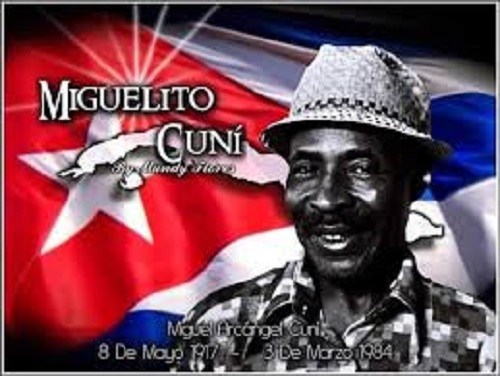
Miguelito Cuní. Pinareño recognized among the best soneros of Cuba, who shared the stage with Benny Moré, Arsenio Rodríguez, Félix Chapotín, Richard Egües, Enrique Jorrín, among others.

Miguel Arcángel Conill, better known as Miguelito Cuní (Pinar del Río, May 8, 1917 – Havana, March 3, 1984), was a Cuban music singer. He was one of the emblematic voices of Cuban son in the 1940s and 1960s.
He was born in Pinar del Río, the westernmost province of the island of Cuba, into a humble family.

Miguelito Cuní Pinareño reconocido entre los mejores soneros de Cuba

During his school days he dedicated himself to the exercise of minor trades to help support the family. In 1932, at the age of fifteen, he began as a vocalist in the group “Los Carameleros”.
Soon after, he was the vocalist of Septeto Lira, Septeto Caridad and other groups in his province.
In 1938, already in Havana, he joined Arsenio Rodríguez’s group, and also worked actively with the orchestras “Melodías del 40” and Arcaño y sus Maravillas, making recordings and performing live and on the radio.

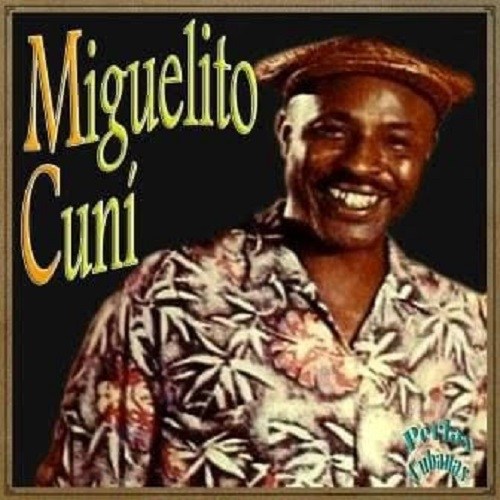
Miguelito Cuní
Miguelito Cuní

During the forties he developed an intense artistic life, he lived two years in Panama and in 1949 he settled in New York, as director of the orchestra of trumpeter Félix Chappottín.

He worked with Cuban music icons such as Beny Moré and in 1956 he traveled to Caracas to work with the “Bárbaro del Ritmo” with the group “La Tribu”. In 1960 he returned to New York, where he made several presentations, including the famous “Palladium”.

He returned to Cuba in 1966 where he founded his own group.
He participated in the film “Nosotros, la música” and other documentaries.

Some of the melodies that reached popularity in his voice were Con maña se rompe, No hay amor sin caridad, Viejo Socarrón, Nos estamos alejando, Canallón, Quimbombó, Yo sí como candela, Ay qué Canuto, Ya tú ves campeón, Cuento na’ ma, Mi son, mi son, mi son, mi son, Alto Songo, Canto al monte, Cuchillo para la piña cubana, Sacando palo del monte, Camina y prende el fogón, Rompe Saragüey, Convergencia, La protesta de Baraguá, Todos bailan con la guajira, Cárdenas, Guachinango, El carbonero, among others, most of them recorded with the group Chappottín y sus Estrellas, a group with which he achieved great projection and in which he sang until his death.

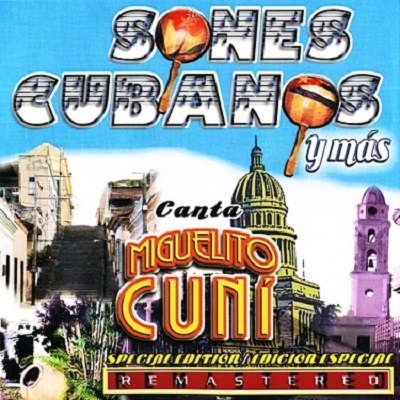
Sones Cubanos con Miguelito Cuni

In his last recording he interpreted the bolero “Lágrima” from the long-playing record entitled “De nuevo Arcaño”. His last trip abroad was to Mexico in 1982.

Composer

Besides being a singer, he ventured into the world of musical composition, of his authorship are cited: Congo africano, Ay mamita!, Batanga africana, A bailar con la guajira.
Sones montunos from the late 1950’s, the boleros: Lloró Changó, Toque santo, Las ansias mías, A ti, Benny Moré.
And the guaracha “Esto no se ve”, among other titles.

He died in Havana on March 3, 1984, three months after his dear friend and companion of countless days, Félix Chapotín, who had passed away on December 21, 1983.

Tribute

Miguelito Cuní was admired by all those who knew him, highlighted by all his friends and close ones as a man of excellent human qualities, in homage to his trajectory the Commander of the Revolution, Juan Almeida composed the lyrics “Este son homenaje”, which was interpreted by the singer-songwriter Pablo Milanés.
In the artistic field, he deserved the recognition of his colleagues and thousands of admirers, and in the personal field, those who treated him remember him as a man of impeccable words and good speech, Miguelito Cuní was a true Creole gentleman.

Source: Ecured

Mexican announcer Jesse ‘‘Chuy’’ Varela and the radio today

‘‘Chuy’’

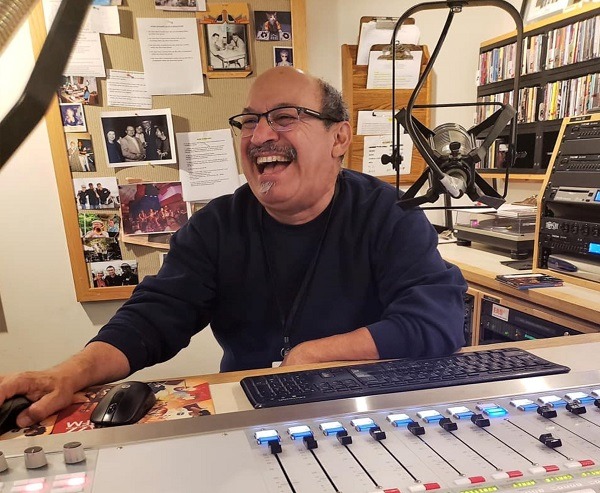
Jesse ”Chuy” Varela is a famous radio host from the San Francisco Bay Area who currently works at KCSM Jazz 91 and constantly interviews all kinds of important figures of the present day such as artists, singers and musicians of all genres, but especially jazz. We had the opportunity to talk with the well-respected communicator to learn about his transition from musician to announcer and his history in general.

Jesse ''Chuy'' Torrealba airing on KCSM Jazz 91
Jesse ”Chuy” Torrealba airing on KCSM Jazz 91

His career as a musician

He began his career as a musician in the entertainment world when he was just in high school in his native Mexico. He started playing the guitar at a very young age and his uncles taught him to play ”La Bamba” and other very famous songs in those years, which led him to continuing on this path. That’s why it did not take long for him to start playing grupera music in Mexican groups in Oakland.
However, a great passion for jazz came over him, which made him learn to play this genre with the guitar. One of his greatest inspirations during those years was Carlos Santana and the great work he was doing in the Bay Area. Varela did imitations of Santana and played his songs, which generated a great deal of interest in the circle in which he developed and helped him to get much work in groups that saw potential in his talent. About these years, he commented that, on one occasion, the singer’s father, Don José Santana, went see him play, which was a source of great pride for Jesse and his budding career.
Although the Mexican artist was one of his major influences, there were other big names from other genres that helped him expand his horizons, such as Eddie Palmieri and other salsa singers who already had a recognized career.
As he pursued his professional career, he began to be part of jazz groups at Diablo Valley College and other schools, until he realized that this set of activities was financially unprofitable, so he began working as a volunteer at KPFA in Berkeley and later at KJAZZ. ”I managed to show my qualities as a volunteer and intern, so they decided to give me a part-time job and I became a reporter at KPFA. At KJAZZ, I started doing shows and I was given The Latin Jazz Show, which continues to air.
His first big break came during the promotion of some shows by Tito Puente, whose tickets were not selling well, so the artist needed all possible support to arouse public interested in his shows. That made the owners of the club where the shows were being held decide to use this station to broadcast commercials to publicize them. It was then when the programming manager wanted Varela to interview Puente, who gladly accepted.
After interviewing the artist and putting the material on the air, many listeners contacted the station because they were fascinated by the work done by the announcer, to the point that the timbalero himself asked the programming manager to give a chance to this young communicator, since he saw great potential in him. That is when he was given the space dedicated to Latin Jazz, something for which Varela will always be grateful to Tito Puente.

Cuban composer, arreglist, and pianist Chucho Valdés and Jesse ''Varela'' Varela
Cuban composer, arreglist, and pianist Chucho Valdés and Jesse ”Varela” Varela

Announcer of the first bilingual program in the U.S.

Jesse told us that he began working as a volunteer in a bilingual program called ”La Onda Bajita”, which was entirely focused on a young audience. What it is looking to do with that program was to make young people see that violence and gangs were very negative for their lives and that difficulties overcame with education and effort. He also liked to play ”oldies”, Chicano music, salsa, Latin rock, among other genres.

Throughout his career, most programs hosted by him were in English, although he also served as public affairs director and reporter at KPFA in Berkeley, where he did a lot of bilingual work. At the same time, he worked for Radio Bilingüe in Fresno, which led him to use both languages in his reports and expand his audience. At that time, he covered controversial topics such as discrimination towards Latinos, farm worker leader Cesar Chavez, the situation with crime and guerrillas in Central America, among others.

These reports took him to visit these countries and many other places where he discovered typical music and rhythms. This interest he has always had in music led him to become the music director of KPFA for a while until he moved to KCSM, where he has been working for 22 years.

Multifaceted

Although today he works as an announcer, he says he always wanted to be a sound engineer to have his own salsa groups, but ended up learning a lot about mixing, editing and much more. What he liked most in this world of radio was the possibility to interview artists and he considers this to be one of the best talents he has to offer. Getting the story or report from interviewees is a pleasure for him and helps him understand this business better.

Many veteran announcers adviced him and helped him a lot to perfect his skills and improve his work as much as he could. Some of them even gave him their record collections so he could learn more about music and soak up more the topics he had to cover in his programs.

Jesse is also dedicated along with other colleagues to give classes to young people who wish to train for this career and be part of the new generations of announcers with all the knowledge of the old school.

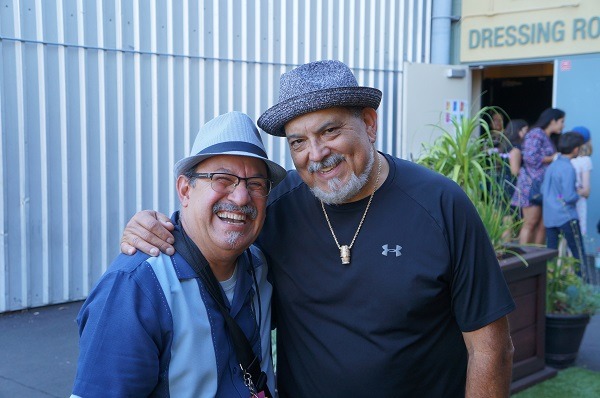
Jesse ''Chuy'' Varela and bandleader, percussionist and singer Poncho Sánchez
Jesse ”Chuy” Varela and bandleader, percussionist and singer Poncho Sánchez

What does a radio station need to work properly?

To tell you the truth, a radio station needs money to function properly. In the case of public and college radio stations, we are forced to ask our listeners to support us with their donations and subscribe as supporters. We have been fortunate to have a very generous audience in that regard,” said the announcer. He also added that the pandemic was to some extent beneficial for shows like his, as they got a great amount f audience due to the quarantine.

Varela mentions that one of the biggest problems facing most public broadcasters is communication. ”There is a division between the administrations and workers. The boards do not have the best ideas regarding the use of available resources. Many times, they start spending in an uncontrolled way without notifying the public about how they invest that money” said the communicator.

In the opinion of Varela, the most important thing for a station to maintain is public trust and to let people know that their money will be used in the best interests of the station. When administrators use those economic resources for trips, dinners and luxury hotels, listeners will consider it an abuse. I have seen this unfortunate situation on every station where I have worked,” the announcer continues.

Read also: Steffen Kuehn and Christian Tumalan talk about their musical roots and orchestra

The magic timbales of Nicky Marrero

Today’s character

After a long wait, we have managed to make the talented New York musician Nicholas Marrero, better known as Nicky Marrero, to come to the Spanish Harlem Salsa Museum to share with Johnny Cruz and his friendly staff on February 26th of this year. Therefore, we would like to take this opportunity to talk a little about his brilliant career and the great contributions he has made to Latin music in the United States.

Nicky Marrero playing the timbales

Beginnings

Nicholas Marrero was born in the Bronx, New York, on June 17, 1950 and both his parents are Puerto Rican. This made the boy grow up among maracas, guitars, güiros and other instruments at home. In addition to the roots of his parents and the whole family, young Nicholas showed a talent that made him stand out very quickly and led him to study drums until his interests began to change and he started feeling drawn to the music made by Willie Bobo and ”The King of Timbales” Tito Puente. Both figures were arguably two of his greatest influences and inspirations in the world of music.

According to rumors in certain circles, his first recording was with Willie Colón’s band when he was only 15 years old, but the material was never released because of some alleged problems with the record label involved. The first albums with his participation as timbalero that were made public were ”El Malo” and ”The Hustler” by Willie Colón, both made in 1968. The usic productions were released in LP format in both cases.

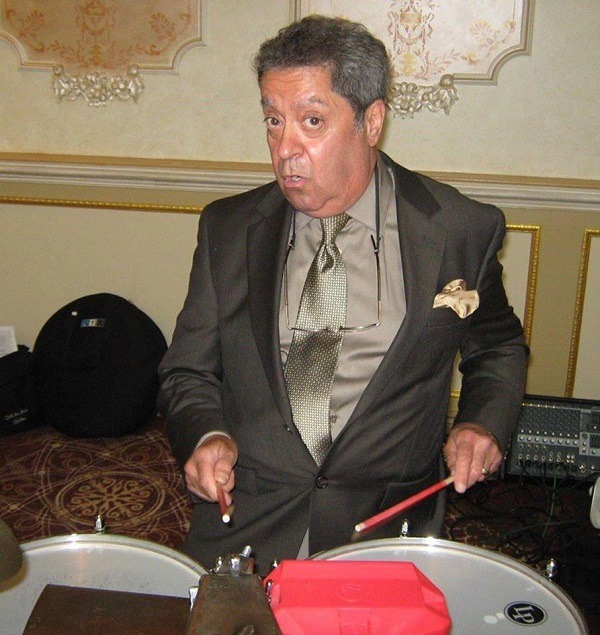
Johnny Cruz and Nicky Marrero playing the timbales in 2017

Collaborations with Eddie Palmieri and others  (título 3)

That same year, the growing artist began collaborating with Eddie Palmieri’s orchestra and had an important participation in the album ”Champagne”, which was released through the Tico Records label and whose repertoire includes songs such as ”Cinturita”, ”Palo De Mango” and ”Ay Que Rico”. Marrero contribute his talent to Palmieri’s on 15 more productions over the next 50 years that followed. Many of them were extremely successful and earned him the Latin Grammy Award on several occasions.

Another important step in his career was the replacement of Orestes Vilato as timbalero in the Fania All Stars, with whom he performed all kinds of activities in many countries such as tours, concerts, press releases, among other things. He played in 25 music productions for this important salsa and Caribbean music orchestra during the time that he was a member of the group.

Johnny Cruz and Nicky Marrero again in 2023

Although the artist’s most outstanding collaborations have been with Eddie Palmieri and Fania All Stars, the timbalero has also collaborated with other great names in the world of salsa and Latin music such as Hector Lavoe, Louie Ramirez, Larry Harlow, Alfredo De La Fé, Ismael Miranda, Cheo Feliciano, Joe Quijano, Daniel Santos and many more.

Among the latest works in which Nicky participated is the album ”Full Circle” by Eddie Palmieri for the Ropeadope Records / Uprising Music label. The unmistakable sound of the musician is more than present with his characteristic bongos and timbalitos along with the unforgettable notes from the piano of maestro Palmieri, who has been more than a mentor since the artist started his prolific career.

Read also: Life and career of Ernie Acevedo

        By Johnny Cruz, ISM Correspondents, New York, New York City

  • « Go to Previous Page
  • Page 1
  • Interim pages omitted …
  • Page 110
  • Page 111
  • Page 112
  • Page 113
  • Page 114
  • Interim pages omitted …
  • Page 155
  • Go to Next Page »

International Salsa Magazine (ISM) is a monthly publication about Salsa activities around the world, that has been publishing since 2007. It is a world network of volunteers coordinated by ISM Magazine. We are working to strengthen all the events by working together.