|
|
Vienna Bachata Congress
|
Palais WertheimCanovagasse 1-5. 1010 Vienna DescriptionThe 4th edition of Vienna Bachata Congress offers workshops, shows and social dancing with national and international instructors, performers and dj’s. Cost: Full Pass from € 99 + € 1.99 Fee |
|
|
Eden Urban Kiz Festival
|
Hotel PinijaPetrčane V. ulica 1 a, 23231, Petrčane , Zadar, Croatia DescriptionCatch the last summer sun in a breath taking scenery of the Adriatic. We set the scene in an exquisite 4 star hotel that will cater to all your needs. We handpicked a selection of artists that will take you on an exotic journey to paradise. Cost: Full pass COUPLE € 195 |
|
|
Prague Zouk Marathon Autumn Edition
|
Na MarjanceBelohorska 35/262, Prague, Czech Republic, 169 00 DescriptionThe 9th edition of the first 100% Zouk social dance event in the world. Parties all day & night long. No shows and No workshops. Drinks & Dining: Food and Water all inclusive Cost: Full pass from € 118 |
Prague Salsa Marathon Autumn Edition
|
• Na MarjánceBelohorska 262/35., Prague, Czech Republic, 169 00 •Vineyard GazeboHavlickovy sady 1369, Prague, Czech Republic, 120 00 DescriptionPrague Salsa Marathon Autumn Edition presents 3 days & 2 nights of Salsa workshops, shows and after parties. DJ Playing: Sergio, Cycy, Julian, Gaby & Karlos Cost: Full Pass from € 149 |
|
|
|
Alpes Bachata Congress
|
Impérial Palace HotelAllee de l’Impérial, Annecy, France, 74000 DescriptionOffers workshops, shows, parties & socials with national & international instructors, performers & dj’s: Cost: Full pass from € 120 |
The Wave Dance Festival
|
Les Villages sous les Pins2747 Avenue de l’Océan, Leon, France, 40550DescriptionThe second edition of Wave Dance Festival offers 50 hours of workshops, national & international shows, socials, parties with local & international instructors, performers & dj’s playing: Ralph, Ibra, Neko, Timbahe, Lafuriosa, Jeff & SmachCost: Full Pass from € 80 |
|
Kiz N You Non-Stop
|
Espace Jean Jaurès Dance Studio3 Avenue De La Paix, Tomblaine, France, 54510 DescriptionThe 5th edition of Kiz N You Non-Stop offers workshops, parties, parties, after- parties & socials with national & international Kizomba instructors, performers & Dj’s. Cost: Full Pass from € 50 |
|
Paris Salsa marathon2
|
Le Boreas1 Port de Bercy, Paris, France, 75012 DescriptionOffering workshops, parties, and socials. Cost: Full Pass €145 |
|
Festival Corazon Latino
|
Rocher de Palmer Ballroom1, rue Aristide Briand, Cenon, France, 33150 DescriptionThe 10th edition of Festival Corazon Latino provides 2 days of Salsa, Bachata, Kizomba workshops, parties, shows and concerts with national/international performers and Djs. Cost: from € 109 |
|
KAMBA Kizomba Festival 2023
|
Théâtre Foirail105 Avenue du Général de Gaulle, Angers, France DescriptionPassion SBK is delighted to welcome you to Chemillé in Anjou for its first edition of Kamba Latino. A Salsa & Bachata Festival Cost: € 83 |
|
Lambazouk Paris
|
Studio Des Rigoles School Kim Kan46 Rue des Rigoles, Paris, France, 75020 DescriptionThe first edition of LambaZouk Paris offers 10hrs of programs on weekends + parties in Lambada and Brazilian Zouk Cost: From € 90 |
|
|
|
Yo Vengo De Cuba
|
KongresshalleGögginger Strase 10, Augsburg, Germany, 86159 DescriptionA Cuban Style Festival with the most popular teachers in Europe, two parties with shows, animation and 3 days of workshops (Afro Cuban, Casino Rueda, Reggaeton, Salsa) and the DJ El Gato Cost: Full Pass from € 100 |
Kizomba Days Cologne Weekender
|
Tanzschule TanzraumSalierring 33, Cologne, Germany, 50677 DescriptionThe third edition of Kizomba Days Cologne Weekender offers more than 20 hours of workshops, 3 parties, 2 socials with national & international instructors, performers & dj’s. Kizomba, Semba, Tarraxinha Cost: COUPLE Passes € 205 |
|
Kizomba Festival Stuttgart
|
Singing HallLindenschulstrasse 29, Stuttgart, Germany, 70327 DescriptionThe 10th edition of Kizomba Festival offers 4 days of Kizomba workshops, socials, parties & shows with national and international teachers, performers and dj’s playing: Lenhy, Iron Mams, Hazel Beats & Harry Cost: Full pass from € 99 |
|
Festival Timba Paradies
|
Congresshalle Convention CentreHafenstr.12, Saarbrucken, Germany, 66111 DescriptionThe 6th edition of Festival Timba Paradies offers 40 workshops, shows, 3 parties with national & international instructors, performers & Dj’s: Francois Timbalero, Yannick, Pastaguero Samir, Assane Kane & Herve Timbaleaks Cost: From € 99 |
|
Zouk Festival Hannover
|
Move & Style Dance AcademyVahrenwalderstr. 195 A, Hannover, Germany, 30165 DescriptionZouk Festival Hannover offers 3 days of workshops (Brazilian Zouk), 3 days of parties, with extra 4h of special masterclass training with BZCC official Jack & Jill. Cost: From € 120 |
|
|
|
Dance Casa Festival
|
Hungarian University of Sports ScienceBudapest, Alkotás u. 42-48, 1123 DescriptionWelcome to Dance Casa Festival A Ukrainian Festival that will take place in Budapest. See you all from 29th of September to 01st of October 2023 We are a well-established Ukrainian based festival and we are happy to announce our first Budapest edition. We are expecting all of you from September 29th to October 1st 2023 for an amazing experience where dancers from all over the world will join us to learn, teach, have some fun and share together our passion for dancing Afro Latin, Bachata, Kizomba, Salsa, Tarraxinha in one of the most beautiful cities in Europe. Cost: Fom € 150 |
|
|
On 2 Salsa Congress
|
Tower Genova Airport Hotel & Conference CenterVia Pionieri e Aviatori d’Italia, 44, Genova, Italy, 16154 DescriptionThe 11th edition of On 2 salsa Congress offers workshops and social dance parties in Salsa with world performers and instructors. Cost: From € 140 |
|
|
Vilnius Bachata Festival
|
Vilniaus Lenkų Kultūros NamaiNaugarduko gatvė 76, Vilnius, Lithuania, 03202 DescriptionThe 7th edition of Vilnius Bachata Festival offers 3 days and nights of workshops, shows and social dancing with national and international performers, instructors and dj’s playing: York, Husky & GAT Cost: From € 90 |
|
|
Bindaas Bachata Amsterdam – Bachata Sensual & Fusion Event
|
CanDance StudiosIsolatorweg 28, Amsterdam, Netherlands, 1014 AS DescriptionThe third edition of Bindaas Bachata Amsterdam offers 14 hours of workshops, parties on Saturday & Sunday + day socials on Sunday & 14 hours of Social dancing. Cost: Full Pass from € 75 |
|
|
Zouk Porto Festival
|
The View HotelAv. de Ramos Pinto 240, Vila Nova de Gaia, Portugal, 4400-261 DescriptionZouk Porto Festival offers workshops, shows, socials & parties with local & international instructors, performers & Dj’s playing: Carballo, Jano & Zouk OF on Bachata, Kizomba, Salsa, Semba, Brazilian Zouk Cost: From € 70 |
LIKE Lisbon’s International Kizomba Energy Festival
|
Inatel Costa Caparica HotelAv. Afonso de Albuquerque, S. João de Caparica, Costa da Caparica, Portugal, 2825-450 DescriptionThe 12th edition of Lisbon International Kizomba Energy (LIKE) offers workshops and parties with lineup performers, teachers and dj’s. Cost: From € 95 |
|
|
|
Bachata Takes Over Bucharest Dance Festival Autumn Special Edition
|
Caro Hotel Bucharest164A Barbu Vacarescu Blvd, Bucharest, Romania, 020285 DescriptionBachata Takes Over Bucharest Dance Festival / B to B Dance Festival ALL STAR EDITION offers workshops, shows and parties with national and international instructors, performers and dj’s. Cost: From € 100 |
|
|
Latino Afro Festival Varijanta Bachata Salsa Kizomba
|
Dom OmladineMakedonska 22, Belgrade, Serbia and Montenegro DescriptionThis festival is a one in a lifetime experience with a perfect combination of partytime and workshop, where the best international stars in Cuban salsa, salsa crossbody, Tarraxinha, kizomba, Bachata meet in the beautiful city of Belgrade, Serbia. Cost: Full Pass from € 95 |
|
|
DyD Be Unlike
|
Vértice Sevilla Aljarafe HotelAv. República Argentina, 1, Bormujos, Seville, Spain, 41930 DescriptionDyD Be Unlike offers Bachata workshops, shows, parties, socials with national & international instructors, performers & dj’s. Cost: Full Pass from € 80 |
Pirineos Salsa Festival
|
Albergue – Hostel PirenariumAv. Del Ejército, 27, 22609, Sabiñanigo (Huesca), Spain DescriptionDear friends Pirenaicosalseros, we return with our Pirineos Salsa Festival 6 Edition, bustle, party, learning in a unique setting of the Pyrenees Oscense, a singular Event, outdoors, this year we return with everything, tents, floors, Shows, Orchestra, artists of national and international renown, an Event with about 50 training workshops, Djs specialized in each rhythm, animations, etc. Cost: Full pass € 80 |
|
Karga Kizomba Festival
|
Hotel Evenia Olympic ParkCarrer Sra. de Rossell, s/n, Girona, Spain, 17310 DescriptionThe 8th edition of Karga Kizomba Festival offers workshops of Kizomba, Semba, Kuduro, Afrohouse, shows and parties with international and national performers, instructors and dj’s. Cost: Full Pass from € 60 |
|
Madrid Zouk Bachata Congress
|
Eurostars Madrid Foro HotelRonda de Europa, 1, Madrid, Spain, 28760 DescriptionThe 5th edition of Madrid Zouk Bachata Congress provides workshops, shows and parties with national and international performers, instructors and dj’s. Cost: Full Pass € 145 |
|
On1 Salsa Festival
|
Hotel Isla de la GarenaC. Galileo Galilei, 18, Madrid, Spain, 28806 DescriptionOn1 Salsa Festival offers workshops, shows, socials, parties with national & international instructors, performers: Adrián & Anita, Terry & Cecile, Fernando & Ayelén, Talía & Pocho & dj’s playing: Cumbanchero, Pulpo, Rebo & Ya Cost: From € 40 |
|
|
|
Kyiv Sense to Dance Festival
|
Mercure Kyiv Congress HotelVadyma Hetmana St, 6, Kiev, Ukraine, 02000 DescriptionKyiv Sensual Festival offers 50 workshops, 80 hours of parties & beyond compare partners, 2 grand show programs & live concerts, 4 parties with national and international instructors, performers and dj’s of Bachata, Kizomba, Salsa, Brazilian Zouk Cost: Full Pass: from € 60 |
|
|
Bachata King Festival
|
Kipriotis Village ResortOdyssea Elyt, Kos , Greece, 853 00 DescriptionThe 4th edition of Bachata King Festival offers 50 hours of workshops, more than 20 shows, Bachata competition with 40 national and international artists. Cost from € 69 |
Search Results for: Salsa Orchestra


Humberto Ramírez
Latin America/ Puerto Rico / San Juan
Humberto Ramírez one of the most innovative musicians on the Island of Enchantment Puerto Rico
Recognized as one of the most innovative musicians of his generation, Humberto Ramírez grew up in a home where the music of Miles Davis, Thelonious Monk, John Coltrane, Lee Morgan, Tito Puente, Tito Rodríguez, Cal Tjader and Machito was heard.
His father, who is a saxophonist and conductor, was the one who inspired him to play the flugelhorn at age 11.
By the age of 14, Humberto was performing professionally with his father’s orchestra and at the same time taking orchestration courses with bassist Inocencio “Chencho” Rivera.
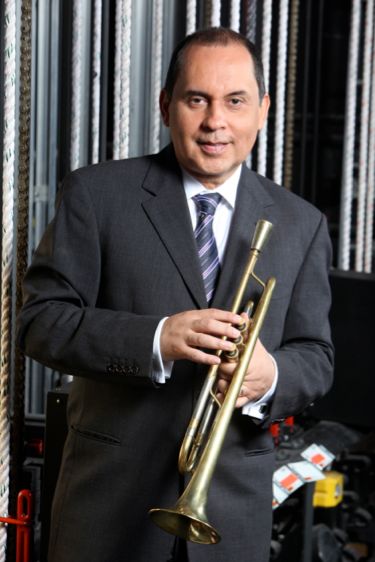
At the age of 18, after graduating from the Escuela Libre de Música de San Juan, his interest in composing and arranging music motivated him to enroll at Berklee College of Music in Boston, Massachusetts where he obtained his bachelor’s degree in music, then studied composition and orchestration for film and television at the Dick Grove School of Music in Los Angeles, California.
In 1985, and for a period of four years, Humberto worked with the Willie Rosario orchestra, one of the most popular bands in Puerto Rico.
In 1989 he became the musical director of Tony Vega.
His admirable ability as a producer and arranger led him to make important collaborations with great figures in music.
In 1999 he took over the musical direction of merengue and tropical music star Olga Tañón.
His work as a producer, arranger, composer and director for tropical music artists such as Willie Colón, Gilberto Santa Rosa, Marc Anthony, India, Domingo Quiñones, Lourdes Robles, Rubén Blades, Brenda K. Starr, Tito Nieves, Víctor Manuelle and others , has established him as one of the busiest arrangers and producers in the industry.
He has also had the responsibility of directing the concerts of important exponents of reggaeton such as Daddy Yankee, Tito El Bambino and Zion, which undeniably demonstrates his broad musical mastery in various genres.
His great dream was always to develop a career in Jazz. In 1992, Humberto Ramírez debuted as group leader in his first production for the Tropijazz label entitled “Jazz Project”.
Since then he has shared the stage with important jazz musicians such as Freddie Hubbard, Justo Almario, Alex Acuña, Chick Corea, McCoy Tyner, Gonzalo Rubalcaba, Tito Puente, Hilton Ruiz, Michel Camilo, Herbie Hancock, Eddie Gómez, Michael Brecker, Paquito D ‘Rivera, Chucho Valdés, Ray Santos, Gato Barbieri, Terence Blanchard and Herb Alpert, with whom he recorded the album “Passion Dance”.
His music has received rave reviews from prestigious publications such as Down Beat, Jazz Times, Jazziz, Latin Beat, CD Review, Hispanic Magazine, New York Daily News, The Plain Dealer, Miami Herald, The Boston Globe, and Austin Chronicle.
From the launch of his first record proposal, Humberto Ramírez has established himself as the most important exponent and promoter of Jazz in Puerto Rico.
He has recorded 26 albums in which he has experimented with all kinds of formats: duets, trios, quartets, quintets, sextets, octets and “Big Bands”.
His collaborations with the group Rumbantela and with the queen of filin, Lucy Fabery have received great praise from specialized critics. In 2005 he founded his own record label, Nilpo Music and last year he began to present his own Jazz festival: Puerto Rico Jazz Jam, marking a new stage in his musical career.

This year 2011 celebrates its 20 years cultivating the difficult expression of Jazz, a career that began with its debut as a leader in the first edition of the Puerto Rico Heineken Jazz Fest in June 1991. This year 2016 celebrates its 25 years.
Humberto Ramírez has received 4 Grammy Award nominations as a producer. His first nomination was for the album “Nueva Cosecha” by Willie Rosario in 1985, then for “Hecho en Puerto Rico” by Willie Colón in 1993, “Tony Vega” in 1996 and “Olga Viva, Viva Olga” by Olga Tañón, which earned him the Grammy Award in 2000.
In 2013 he was nominated for a Latin Grammy for his album Sentimentales with Lucy Fabery.
Among the awards he has received are 6 Platinum records, 12 Gold records, 4 “Visionary Awards” and six “Tu Música” awards. He has received tributes from Ohio State Representative Dennis J. Kucinich and from the Senate of Puerto Rico.
In 1997 he had the honor of entertaining the inauguration of the President of the United States, Bill Clinton in Washington, D.C. In October 2009 he was invited to play at the White House for President Barack Obama.
After having received several awards and nominations, as well as having recorded his own record successes, Humberto Ramírez shows that his creative explosion is still in its infancy.
https://www.humbertoramirez.com/#home-section
https://www.facebook.com/Humberto-Ram%C3%ADrez-Jazz-Project-110525453672/
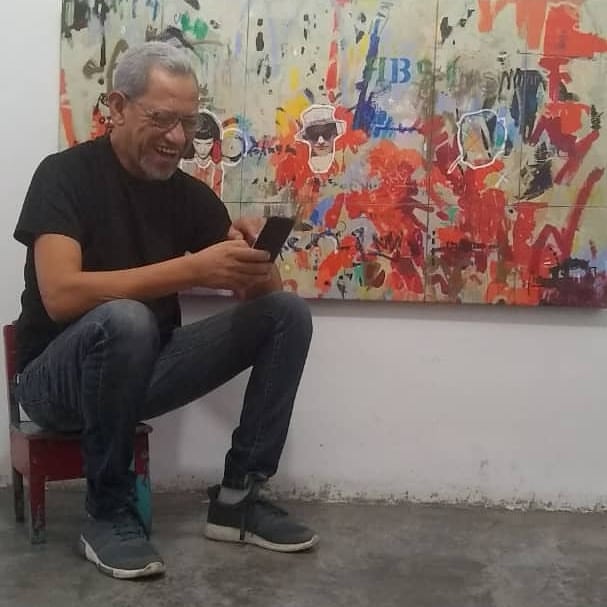
José Madera Niño & his 3rd his World
Latin América / Venezuela / Caracas
José Madera Niño “The records and the radio were my first teachers”
Soon he will premiere his second production entitled Matices, with the promotional song Canta Sonero.

A creator, a great human being, this is José Madera Niño, this Colombian-Venezuelan musician, self-taught, percussionist, composer and plastic artist; who after participating in different groups decides to form his own Orchestra, José Madera Niño & 3er Mundo, assures that his passion for music began when he was very young, following the example of his father, uncle and his older brothers, defines his songs as “simple and diaphanous”. He confesses that our salsa genre, “needs to feed on new things, unpublished songs, in short, proposals, and that the music lover is the one who decides if it is good or not”; As the chorus of one of their songs says, let them be the ones to speak and express their emotions.
His first record production De amor, desamor y rumba, contains 8 songs, of which 6 are his own, with the participation of leading Venezuelan musicians; in this work he presents us with an innovative style, where he sings to love, to spite and invites us to dance to the rhythm of the conga that is in fashion. In each composition, everyday life is reflected, the adventures and misadventures that music lovers make their own, a work made of guava trees and poetic joys.
Soon he will launch his second record production with a very striking name; Nuances, something that in his words “makes him very happy”, where there is no doubt, his gift as an artist will be present and a motley of musicians with a great career who will put the final touch on his new production.
How did you start in music?
“I remember that at the age of seven, I was drawing a lot, on paper, on the walls and on whatever came my way. My older brothers already showed an interest in music, so instruments began to arrive at the house. While I drew they practiced and when they went to school I took possession of a drum and a radio, I tried to accompany all the rhythms I heard on the stations”.
Was your training professional or are you a self-taught musician?
“Autodidact. I entered the school of plastic arts, to study drawing and painting, at the age of fourteen. There I saw nine subjects, also I started at the high school where I saw nine more subjects, so there was no space to study music. I listened to a lot, yes. Records and the radio were my first teachers”.

Tell us about your experience with Orlando Poleo?
“In a self-taught way, almost without realizing it, I began to play with different groups and orchestras, I was already in trouble, so on the fly, I decided to take theory and solfeggio classes at the headquarters of the Musical Association. On a Caracas night I was playing with La Orquesta Ideal and there I met Williams Hernández -Percussionist and manufacturer of Latin percussion instruments-. It was he who recommended that I attend the workshop in Sarria where the teacher Orlando Poleo taught. The experience there at the beginning was a bit traumatic because although I already had time playing congas, I didn’t have the ideal technique. I had to get rid of what I learned on my own and put new ways into practice. It was not easy but I am very grateful to have passed through the school of Grand Master Poleo”.
Where does your musical vein and passion for painting come from?
“My father was a bolero singer back in his native Colombia, my uncle was a guitarist. That’s where the taste for music comes from.”
What motivated you to make your first production, in a market so Competitive and often poorly supported by the media?
“I was motivated by a passion for music and by that need to contribute at least one point of view, a way of doing things. For example, I think that this genre that we love, called Salsa, needs to feed on new things, unpublished songs, in short, proposals and that it is the music lover who decides if it is good or not”.
What is the reason for the name of the group; 3rd world?
“That’s where we are, that’s where we come from. This is how they classified the countries of our region and we assumed them without complexes or pride. I think it’s just a title that doesn’t detract from our ability to do great things. Baptizing the band with that name was an act of rebellion, it shows a little that despite many limitations we are capable of making quality music”.
Why the name De Amor, Desamor y Rumba?
“There were many hours of recording, then editing, then came the art of the album and when we were already finalizing details, a doubt assailed me, I thought: Isn’t the selection going to be very rockolera? I started to review the production and I realized that it was balanced. We sing to spiteful love and I think it’s very danceable. From there the title was born: “Of love, lack of love and rumba”.
What inspired you to write 6 songs of your first production?
“The need to do unpublished things, on the other hand I didn’t know so many composers who wanted to risk their songs in a novel production. The language of my songs is simple and diaphanous”.

Which of the themes do you identify with, and why?
I like them all.
How would you define the 3rd world style and how do you get there?
“It’s just Salsa, without a “surname”, as it was before. It’s not erotic Salsa or hard Salsa or Nothing Salsa… Just dance music”.
Any relationship with the percussionist José Madera -the one from Tito Puente-?
“Only immense admiration for his work and the fact that like him I play percussion and have the same first and last name.”
Have you ever been interested in another musical style?
“I listen to almost everything and in my career I have had the opportunity to play other popular music rhythms such as merengue, cumbia, vallenato.”
An artist you admire?
“There are many whom I admire, it would be unfair to name just one.”
What inspires you to write a song about love or heartbreak?
“Both, in addition to the simple, everyday things.”
Define yourself in one sentence?
Creator
How does the soul see through painting or music?
The soul sees and manifests itself in the purest and most honest way through art. Call it painting, music or another related manifestation.
Tell us about your 2nd production, who participates in it?
This is something that makes me very happy because we are giving the last brushstrokes, soon, very soon my dear friends will know about this work. There are many guests.
Why nuances?
Precisely because of the variety of its guests.
“Trayectoria de Clásicos” – Johnny Cruz and Adalberto Santiago
North America / United State / New York
Johnny Cruz releases his new Salsa album “Trayectoria de Clásicos” with Adalberto Santiago to the musical arena
The famous Timbalero and musical producer presents a CD tribute to all the Puerto Rico and the world’s Soneros, along with one of the most privileged voices of Latin music and Fania All-Stars’ vocal ex-leader: Adalberto Santiago.

Johnny Cruz “El Señor del Timbal” launches his second historical compilation “Trayectoria de Clásicos” directed to all the Salseros lovers of the whole world, which can relive in a single album ten great classics of this tropical genre in the interpretation of the vocal versatility most famous of six decades, Adalberto Santiago.
This four-years recording album involved more than 20 Latin music personalities, including: Jason Villamar, Louis Perieda and the special guest: Richi Ray (Piano), Rubén Rodríguez and Freddy Rivera (Bass), Johnny Rodríguez, Pedro Segundo and Luisito Rodríguez (Bongos), Eddie Montalvo and Erick Vélez (Congas), Jerry Rivas and Luisito Rodríguez (Three), Nelson Jaime Gazu (Trumpet), Johnny Cruz (Timbales), Moisés Noguera (Trombones), Freddy Miranda (Baritone), Jerry Rivas, Adalberto Santiago and Frankie Vásquez in the choirs and Adalberto Santiago as Leader Vocal.
Each track of this Salsa flagship CD was chosen with special attention for being emblems of the salsa movement of the 60s, 70s, and 80s popularized by great artists and orchestras, such as: Fania All-Stars, El Gran Combo de Puerto Rico, Cheo Feliciano, Tommy Olivencia, Adalberto Santiago, and Justo Betancourt.

“Trayectoria de Clásicos” comes with the differentiating touch of musical arrangements of extreme sonority concerning their original compositions. “Anacaona” (1971) by Cheo Feliciano with the Fania All-Stars, “El Swing” (1965) and “Un Verano en New York” (1975) by El Gran Combo de Puerto Rico and “Hipocresía”, the work of the Cuban master: Adalberto Álvarez are interpreted by the legendary vocalist Adalberto, who at 82 years of age keeps his voice intact and dominates a wide range of tones. This former member of the Chuíto Vélez orchestra, Ray Barretto, Típica 73 and Los Kimbos has one of the most prominent careers in the music industry, which has allowed him to share stage and recording with almost all the world-famous Salseros.
In this Salsa compilation, the New Yorker Cruz, also included the six singles: “Planté Bandera” (1975) whose original composition is Tommy Olivencia, “No hago más Na” (1973) belonging to El Gran Combo de Puerto Rico, “Pa’ Bravo Yo” (1972) by Justo Betancourt, and “Imposible ha de Ser” (1977), “Más Sabroso” (1985) and “Mañoño” (1973) with Típica 73 by Adalberto Santiago.
Undeniably, it’s an album that was worth every year of waiting. “Trayectoria de Clásicos” is of incomparable quality and a super Salsera production highly recommended.
Waiting for the big concert in the city of New York for all lovers of the genre this year!
Release: 2019
Label: Cruz Music Inc.
“Salsa music means everything to me. It’s a passion that goes hand in hand with my culture and roots… I have been playing it for 40 years as a musician and love it dearly”. Johnny Cruz
Johnny Cruz “El señor del Timbal”
The New Yorker musician, CEO, businessman, audio engineer, producer and broadcaster of radio and television, Johnny Cruz since 20 years ago has had one of the most important programs of the five counties of the city of New York dedicated to Salsa, “The Johnny Cruz Show”. This program seeks to enhance the genre, raise awareness and make a difference to what has already been established with interviews with Salsa Mainstays and emerging artists. “The Johnny Cruz Show” is already part of the New York Latino culture and you can enjoy it on public access television every Saturday from 3:30 PM to 4:30 PM and also through www.mnn.org and https://www.youtube.com/channel/UCNT-nQee0t_uiDvUGlyh5dA

Likewise, Cruz is also the host of the digital radio program “Galería de la Salsa” dedicated entirely to this tropical rhythm, concentrating on the biggest hits of all times and salsa styles, as well as presenting outstanding live interviews. “Galería de la Salsa” is broadcasted all over the world online at www.miradio.fm.us
This humble, sincere, and successful multifaceted artist told us that among his plans are to make great concerts in his hometown and the rest of the world.
“My legacy rests on what I have created like the SPAHA Salsa Gallery, my radio show, my TV show and all of my musical productions. I hope future generations look at my work here and are inspired to continue the Salsa tradition”. Johnny Cruz
Johnny Cruz Timbal: https://www.facebook.com/profile.php?id=100028301633677
Adalberto Santiago:
https://www.facebook.com/adalberto.santiago.1401
Balazo Destacado:
Johnny Cruz releases his new Salsa album “Trayectoria de Clásicos” with Adalberto Santiago
Puerto Rican singer and talented sonero Charlie Maldonado
Interview with Charlie Maldonado
José Charlie Maldonado Rodríguez, artistically known only as Charlie Maldonado, is a Puerto Rican singer who has a great talent as a backup singer and sonero, which he has been developing throughout a prominent and very successful career in the world of music.
After having read his biography and being interested in the journey he has been on in salsa, we decided to contact him and arrange a conversation in which we could learn more about him and everything he has done to get here. Next, is a little bit of Charlie’s beginnings and, later on, everything he told us.

Beginnings
Charlie was born on October 4, 1964 in the city of San Juan, Puerto Rico. At a very young age, he was always exposed to boleros and salsa music, as his father belonged to a musical trio that was very popular at the time.
For those years, he listened to Ismael Rivera, Cheo Feliciano, Gilberto Monroig, Danny Rivera, Marco Antonio Muñiz, among others. Charlie said that, with such references at that time, it was impossible not to be enchanted by the music, so his interest in this branch of the arts grew and grew over time.
His interest got to the point where he wanted to learn to play percussion instruments such as the tambourines, the maracas, the drums and, most especially, the bongo (it was the first instrument Charlie learned to play).
Although he does not consider himself as the best bongo player of the world, he is believed to be very capable of playing it efficiently and delighting the listening audience. Most interestingly, he did not achieve this level through formal academic training at an institute, but through constant practice at ”rumbones de esquina” (congregation of people who play music, dance and drink alcohol on a street corner), school activities, family gatherings and Christmas parties.
These informal activities in which he was able to participate gave him the opportunity to develop as an artist from a very young age. In addition, his father and other musicians in the family helped him a lot in this process. The magic you feel when you play music, the family warmth and interaction with the public are not learned in any academy,” said Charlie.

The Saljaztet
The first opportunity for Charlie to play in a professional group came with The Saljaztet in 1990 thanks to its founder Bobby Concepción, who saw him singing in one of those street parties and believed in his talent and what could be done with it.
Bobby is an industry veteran who has worked with many orchestras such as Orquesta Panamericana and La Orquesta del Maestro Willie Rosario. Being around him taught him a lot and he gained a lot of experience by seeing him in action on stage.
He even taught him some vocal and instrumental techniques to apply in his performances.
Charlie keeps the best memories of this group, its director and his colleagues. He is extremely grateful for everything he learned from them and continues to apply many of these things today.
Osvaldo Núñez, Sammy Marrero, La Selecta and more
”Every human being who comes into our lives has a lot to contribute and teach us. Lord made is different, so all the musicians I’ve worked with have taught me different things” said the artist.
Osvaldo ”Cuchón” Núñez is a brilliant musician who was very dynamic on stage. He was able to play the trumpet, do chorus and lead at the same time. He performed all of these functions excellently, which is why Charlie paid too much attention to what he was doing and copied him.
Raphy Levitt from La Selecta de Puerto Rico was an extremely regimented person who ran the orchestra very well and was excellent for business. He had an almost military discipline and was extremely picky about his musicians and vocalists, to the point that he made them rehearse separately depending on their roles on stage.

In the case of Sammy Marrero, he was always at the height of Levitt’s demands and sometimes exceeded them. In addition to being extremely disciplined, he always lived up to what was required of him on each project and even a little more. He even worked with him when he had his own orchestra, a period in which Charlie learned even more from him.
On this subject, the singer concludes that ”The personalities mentioned have taught me three fundamental things: discipline, perseverance and respect for the public”.
Solo career
The idea of becoming a soloist was always on his mind, but it was not until 2016 that he was able to carry it forward. The previous year, in 2015, the maestro Raphy Levitt unfortunately passed away, at which time Charlie had some songs recorded.
He was already thinking about becoming independent and creating his own musical project, but had not decided to leave the orchestra until the death of Levitt. That is when he got hands on work and finished the record production he had already started.
In 2016, he launched his first solo project entitled ”Dueño de Nada”, whose songs are mostly written by Charlie Ramos. The only cover in the album is precisely ”Dueño de Nada”, which was written by Manuel Alejandro and masterfully played by José Luis Rodríguez ”El Puma” in the 1980’s.
His most recent album is entitled ”Vida Artificial”, which was released in September last year and addresses very interesting and current issues. The single that gives its name to the whole album, ”Vida Artificial”, ”is perfect for today. Phones, tablets and computers are damaging everyone’s mind. There are families who sit at the table, but don’t even talk to each other focus their attention to electronic devices. Technology is important, but we can’t be connected to it all the time. That was the message we wanted to bring with Artificial Life” said Charlie.

Future projects
Charlie is about to release a song titled ”Señora Rumba” written by Eduardo Saya. The material has already been recorded and Charlie and his team are working on the video clip, which has a few shots filmed. It is expected to be released this August.
Likewise, he is working on his concerts and private presentations in Puerto Rico, but some opportunities are opening up in Colombia in the future.
También lee: We spoke with Andrea Chaparro from Lulada Club