• Skip to primary navigation
  • Skip to main content

International Salsa Magazine

  • Home
  • Previous editions
    • 2025
      • ISM / November 2025
      • ISM / October 2025
      • ISM / September 2025
      • ISM / August 2025
      • ISM / July 2025
      • ISM / June 2025
      • ISM / May2025
      • ISM / April 2025
      • ISM / March 2025
      • ISM / February 2025
      • ISM / January 2025
    • 2024
      • ISM / December 2024
      • ISM / November 2024
      • ISM / October 2024
      • ISM / September 2024
      • ISM / August 2024
      • ISM / July 2024
      • ISM / June 2024
      • ISM / May 2024
      • ISM / April 2024
      • ISM / March 2024
      • ISM / February 2024
      • ISM / January 2024
    • 2023
      • ISM / December 2023
      • ISM / November 2023
      • ISM / October 2023
      • ISM – September 2023
      • ISM – August 2023
      • ISM July 2023
      • ISM Edition June 2023
      • ISM – May 2023
      • ISM April 2023
      • ISM March 2023
      • ISM February 2023
      • ISM January 2023
    • 2022
      • ISM December 2022
      • ISM November 2022
      • ISM October 2022
      • ISM September 2022
      • ISM August 2022
      • ISM July 2022
      • ISM June 2022
      • ISM May 2022
      • ISM February 2022
      • ISM January 2022
    • 2021
      • ISM December 2021
      • ISM November 2021
      • ISM October – 2021
      • ISM September 2021
      • ISM August 2021
      • ISM July 2021
      • ISM May 2021
      • ISM April 2021
      • ISM June 2021
      • ISM March 2021
      • ISM February 2021
      • ISM January 2021
    • 2020
      • ISM December 2020
      • ISM November 2020
      • ISM October 2020
      • ISM September 2020
      • ISM August 2020
      • ISM July 2020
      • ISM June 2020
      • ISM May 2020
      • ISM April 2020
      • ISM March 2020
      • ISM February 2020
      • ISM January 2020
    • 2019
      • ISM December 2019
      • ISM November 2019
      • ISM October 2019
      • ISM Septembre 2019
      • ISM August 2019
      • ISM July 2019
      • ISM June 2019
      • ISM May 2019
      • ISM April 2019
      • ISM March 2019
      • ISM February 2019
      • ISM January 2019
    • 2018
      • ISM December 2018
      • ISM November 2018
      • ISM October 2018
      • ISM September 2018
      • ISM August 2018
      • ISM July 2018
      • ISM June 2018
      • ISM May 2018
      • ISM April 2018
      • ISM March 2018
      • ISM February 2018
      • ISM January 2018
    • 2017
      • ISM December 2017
      • ISM November 2017
      • ISM October 2017
      • ISM September 2017
      • ISM August 2017
      • ISM July 2017
      • ISM June 2017
      • ISM May 2017
      • ISM April 2017
  • Download Salsa App
    • Android
    • Apple
  • Spanish

Search Results for: Salsa en Venezuela

Wilmer Lozano from a very young age his mother saw in him the desire to be a musician

Wilmer Lozano is a Venezuelan singer and composer. He was born in Caracas, Venezuela, on October 7.
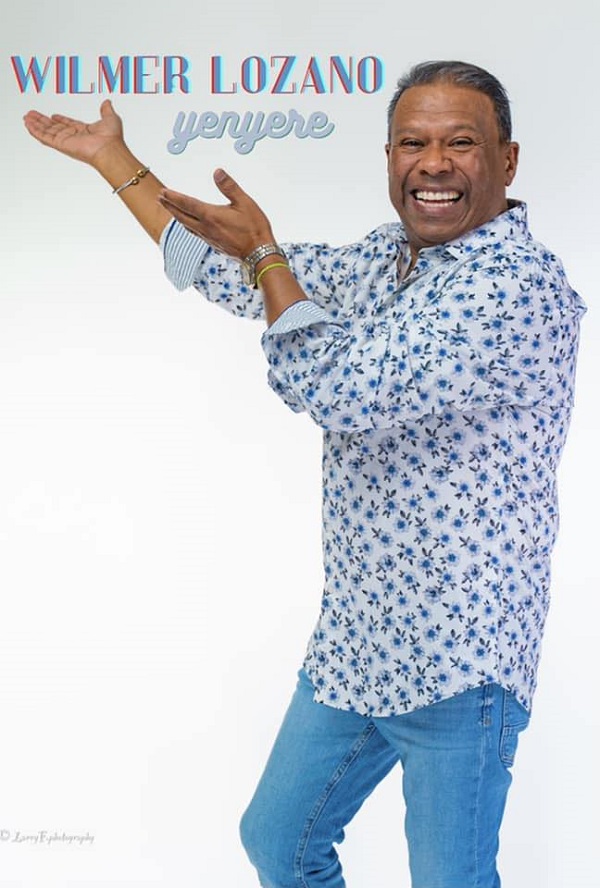
Wilmer Lozano Yenyere

When talking about successful Latin singers and good salsa, one has to talk about Wilmer Lozano, one of the greatest exponents of Latin music in the world, who has made millions of people around the world dance.

Among his musical hits are: “Me marcharé”, “Aún estoy de pie”, “Si acaba bien”, “Descarga pa ti”, “Se me pasó la mano” and “Igual que yo”.

Childhood, Youth and Family Life.

Wilmar Lozano’s mother saw in him the desire to be a musician since he was a child.

Every night before going to sleep and saying his prayers, he would dedicate himself with his grandfather Lino Lozano to practicing décimas, which would be very useful in his career as a sonero.

Wilmer Lozano’s Beginnings in Music.

Wilmer Lozano’s career began when he was in school, participating in all the events that took place there.

He got his first singing lessons at the Casa de la Cultura Germán Lira and that’s how he arrived at a very popular radio program for the time, rumbos, coplas y canciones directed by the great Venezuelan Simón Díaz.
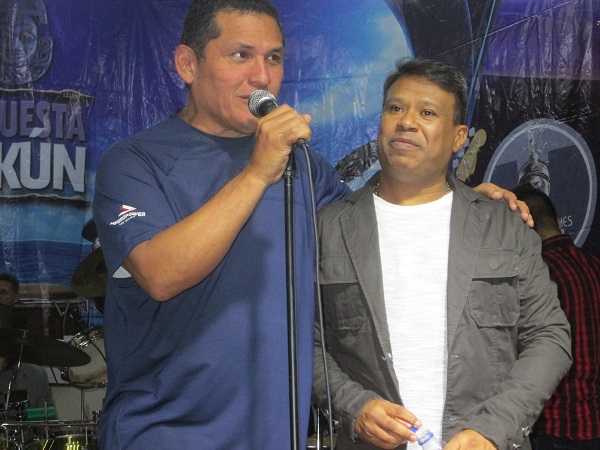
Jose Hidalgo y Wilmer Lozano

Wilmer Lozano and his union with different groups.

Soon after, he belonged to an orchestra in the block where he lived and shared his studies with music. Little by little he belonged to orchestras based in Caracas, such as: Grupo Autana, Grupo Rayta, La Quinta Galaxia, Quinteto Visa, Conjunto Sensación, Sonora Habanera, Hildemaro y su Orquesta, Orquesta Selecto, Marianela y su Orquesta, Orquesta Vía de Escape and Orquesta La Júnior.

He later joined the ranks of the Dimensión Latina Orchestra. With this orchestra he has the privilege of sharing with the excellent bolerista Wladimir Lozano and the sonero Rodrigo Mendoza, both recognized nationally and internationally, with whom he further nurtured his knowledge as an interpreter and sonero.

He also formed part of the youth orchestra called Los Adolescentes, where he is a key piece of it, standing out as a leading artist.

With this project he recorded two productions where he performed several hits, with which he became known worldwide.

Musical genre.

Wilmer Lozano is a performer who is considered one of the best salsa singers due to his graceful voice register.

Career and Legacy

Wilmer Lozano has managed to place eleven songs in the first place of the Hit Parade. According to information provided by the company Record Report, besides being the only Venezuelan singer, who in two opportunities being in the first place, is incorporated again to the same place of honor with the same interpretations.
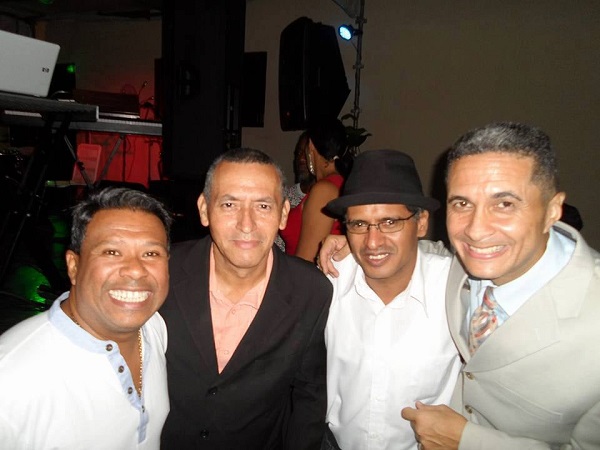
Wilmer Lozano, Tuky Torres, Dj. Augusto Felibertt y Rey Torcatt

Then his artistic life assumes another challenge, which he achieves with great professionalism, since his talent exceeds many expectations. Proof of this was his record production “Wilmer Lozano Original”, where he took the opportunity to launch himself as a soloist.

In this work he shows all the experience he has acquired during his artistic career, with the help of producer Thomas Bernal.

He achieves an excellent production, with very varied Latin rhythms and social themes. This album has the participation of the composers: Thomas Bernal, Ruby Pérez, José Luis Perales, Amaury Gutiérrez, Ángel Flores and Pedro Vargas, among others.

Among the hits of his debut are: “Me han contando que existe un paraíso”, “Me marcharé”, “Se me pasó la mano”, “Completamente” and “Sueño guaireño”, this last one was dedicated to the people who had something to do with the tragedy of La Guaira, Vargas, Venezuela.

In many of his songs he also talks about the social content, as well as the concern of many people to move forward beyond their borders.

He has also collaborated with renowned interpreters of the salsa genre, such as: Tito Puente, Tito Rojas, Rey Ruiz, Victor Manuel, Cheo Feliciano, Gilberto Santa Rosa, Tony Vega, Celia Cruz and Oscar D’León.

Wilmer Lozano is a salsa performer who has achieved musical success. His career has excelled nationally and internationally, with his arduous talent that has characterized him.

His tours have taken him to Latin America, the United States, Asia and Europe.

Theme: Se me paso la mano

Album: Wilmer Lozano “Original”.

Composition and Arrangement: Tomas “Monchy” Bernal (RIP)

Year: 2001

Label: Plátano Record

“I don’t know what I’m going to do with me, today I’m destroying myself little by little, I was wrong I lost my way because of her my destiny is transformed, because I don’t know what to do with this love that makes me run amok, she makes me see everything differently”.

Sources: Buena Música

Also Read: If you want to listen to Tasty Salsa tune in to Ritmo Sabor y Salsa with Nesmary J. Gómez
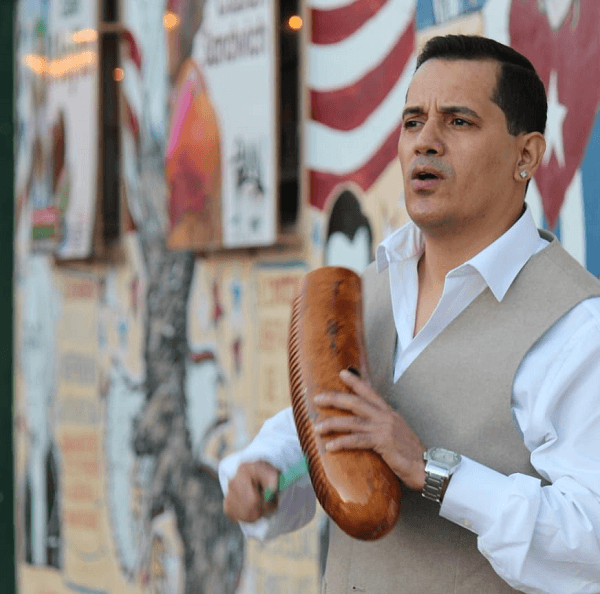

Julio Vilchez and his orchestra conquer Miami

Peru continues to give us something to talk about thanks to all the salsa talent coming out that country in recent years and today we had the opportunity to talk with one of them, which is the producer, composer and singer Julio Vilchez. 

After we communicated with Vilchez via email and WhatsApp to schedule an interview, we have managed to have a great conversation in which we knew a little more about the artist’s beginnings in this fascinating world that is music.   

singer Julio Vilchez
This is Peruvian producer, composer and singer Julio Vilchez

Childhood and musical roots in the Vilchez family 

It is not surprising that Vilchez took that parth of life considering that his father, Juan José Vilchez Sanchez, was a talented actor, comedian and professional dancer who carried music in the blood and ran some of the most famous salsa clubs in the city of Lima, which served as a stage for important national and international groups and singers of all genres.   

Having referred with admiration to his father because of all that he achieved in life thanks to music, he assured that music definitely ran through the veins of his family and had always been a very important part of his childhood and youth. 

Seeing all this, the years were not many when Vilchez became interested in musical instruments such as maracas, the bongo bell and the güiro, which led him to participate in groups such as Raíces, La Fragua and Soy Calidad.   

Salsa and other genres 

A large majority of Peruvian artists whom we had the honor to interview have typically ventured in Peruvian Creole music before getting involved in salsa, but not Vilchez. In fact, he pointed out to us that his country was heavily influenced by Cuba musically speaking and there used to be a time when groups from the island visited Peru such as La Sonora Matancera and Los Compadres. Peru also received influence from Colombia, Venezuela and Puerto Rico, although to a lesser extent. 

The artist also remembers that, at home, he and his family always used to listen to Venezuelan singers and orchestras such as La Dimensión Latina, Oscar D’ León, Luisito Quintero, Nati Y Su Orquesta, among others. In the case of Puerto Rico, of course Vilchez and his family used to listen to La Fania All Stars.  

Vilchez was part of Raíces, La Fragua and Soy Calidad
Julio Vilchez was part of groups such as Raíces, La Fragua and Soy Calidad

Formal beginnings of Julio Vilchez in music 

In the neighborhood Vilchez and his family lived in, the singer made friends with other local boys and met up with them to sing in a completely amateur way. In addition to that, he liked to participate in school talent shows, in which he delighted the crowd performing songs from Oscar D’León, Rubén Blades and Willie Colón. 

After attaining the age of 17, he began working alongside his father in the business of running clubs, which gave him the opportunity to spend time with the members of the orchestra La Progresiva del Callao, who performed on Tuesdays, Wednesdays and Thursdays in one of those places.   

Since Vilchez loved to dance and the orchestra focused a lot on its choreographies, the young man identified himself a lot with the group and began to learn the steps the singers performed on stage. One day, the boys saw him dancing and invited him to sing with them in one of their shows, in which he danced very well, but he did not sing in the best way. For this reason, he got the opportunity to stay permanently in the orchestra, but only as a dancer for the moment.   

Over time, he was grabbing experience on stage and getting over stage fright until he managed to keep up with the rest of his orchestra fellows with the passing of days.  

Julio Vilchez with Cano Estremera
Julio Vilchez with Puerto Rican salsa singer Cano Estremera

Vilchez’s time in Venezuela 

Vilchez made friends with a group of Venezuelan musicians who accompanied Oscar D’ León in one of his concerts and invited him to travel with them to Venezuela because they wanted him to be part of the sextet they were going to create, which was meant to perform at a tavern in Caracas. 

Seeing that things were going well in Venezuela at that time, Vílchez decided to accept the invitation and immigrate to the South American country to try his luck. Once there, he spent a lot of time alone because the boys from the sextet traveled a lot, something which took advantage to get to know other groups, one of them being La Selecta de Cúa. One day, Vilchez was walking down the street and heard this orchestra rehearsing, but it needed a singer. That is when Vilchez proposed himself as an option, was admitted and worked for about two years in this orchestra. 

Although he did well in Venezuela, he ended up returning to his native country because he missed his homeland and his father could not get used to having him away, so he packed suitcases and decided to return.   

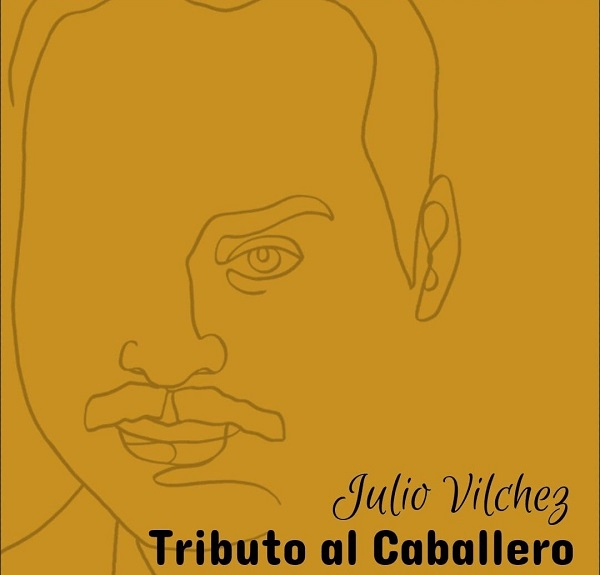
Tributo al Caballero by Julio Vilchez
Cover of the album Tributo al Caballero by Julio Vilchez

Life in the United States 

One of the songs he released in 1995 led him to make a video clip, which started to become very popular on music channels and shows, giving him the recognition Vilchez aimed for so long.  

Since things were not going as he expected on his solo career, he joined the Orquesta La Novel to continue working on music for the next two years. Although his name was not as well known as Vilchez needed it to be, his song was still sounding loud internationally for quite some time, which led him to receive a proposal to perform eight shows with his orchestra in the United States in 2000. 

When Vilchez and the rest of the musicians traveled to Miami, about nine members of the orchestra received proposals to stay in the country and decided to accept. It was there where the artist gathered his courage and says to himself ”I’m staying too”. That was over 24 years ago now.   

At that point, the Peruvian had to look for other musicians to replace the others in order to finish the concert tour they had scheduled. It was then when he contacted José Alberto ”El Canario” through a Peruvian colleague of his to use his band for the remainder of the tour and so he did. Vilchez did two or three shows with this band and stayed in Miami from 2001 to 2004.   

Given the lack of musical proposals, he spent a few years in New York, but returned to Miami some time later to work both with music and with a business sector linked to gastronomy, since living only from music is complicated. In addition to that, his children live in Miami and he wanted to spend more time with them, so this was also a powerful reason to return.   

Read also: Argentine-American composer and guitarrist Alejandro Meola kindly talked to us 

Nolita Golding Soulful Latin

Europe / Reino Unido/ Londres

Nolita Golding has a new single & video with the amazing collaboration of Latin Grammy-nominated Tony Succar & LUKAS winner Alex Wilson

With her powerful, compelling voice, to kick off 2019 Nolita Golding launches her new single “There Must Be An Angel”  This single release is a step-change up in her career, cementing her reputation as a world class vocalist who can seamlessly weave between Soul and Latin in both English and Spanish.

The 80’s hit “There Must Be An Angel” (penned by Annie Lennox & David A. Stewart) has been deliciously arranged by Alex Wilson into a Soulful Latin version full of Caribbean flavour and laced with Gospel. Driven by Nolita’s power vocals and personality, she sets the scene for a definite hit in 2019! Soulful Latin… the new wave to hit the dance floors!

At present there is a musical trend focussed on the wonderful cultural revolution of the 60s in New York, when Latin America’s sounds were fused with jazz, soul and rock. This gave birth to fresh new styles such as boogaloo, spearheaded by luminaries such as Pete Rodriguez, Ricardo Ray, Joe Bataan and Joe Cuba.

Nolita Golding
Nolita Golding

Nolita Golding carries the soul of those pioneers and her unmistakable style proves it.  In her constant search for excellence, Nolita completed this new single at Wincraft Music Studios, owned by Steve Winwood. The production was masterminded by award-winning producer Alex Wilson and features special guest and Latin Grammy-nominated Tony Succar on timbales. In addition, Venezuelan percussion master Edwin Sanz and Cuban rock guitar powerhouse, Dany Labana, have added their magic … this band is simply smoking!

The creative process has been a unique and magical experience, resulting in a track fully loaded with rhythm, positive energy, Caribbean flavor and mucho sabor!

As ever, the impressive power of Nolita Golding’s voice combined with her bilingual skills has her in continuing high demand as the session vocalist who consistently delivers the goods!


We invite you to enjoy this new single, which comes out at the beginning of this month…
It was created just for you and we guaranteed you will fall in love with it!

Don’t miss the opportunity to experience Nolita Golding Soulful Latin live concerts during her Europe Tour 2019.


Nahití Ortega. Dance is her Passion and Life

Latin America / Venezuela / Caracas

Nahiti Ortega, is a Venezuelan with exceptional talent, more than 25 years as a performer of traditional Venezuelan dances, this time International Salsa Magazine has the privilege of conversing with this artist of international stature.

She began her Dance studies in the Popular Culture workshops of the Bigott Foundation, taking classes in different regions of the country.

Nahiti Ortega
Nahiti Ortega

It also conducts courses in other international dances such as: African, Colombian, Cuban, Argentine, Dominican, Bolivian, Brazilian, Chilean, among others.

She expands her knowledge by taking other workshops on dance accessories, body expression, rhythm, dance analysis, theory of popular culture, anti-stress elements of music and singing, vocal technique, artistic makeup, stage costume design, organization of special events, corporate image, online tradition, training of teletrainers, pedagogical resources of a virtual classroom: moodle among others.

Augusto: What does dance mean to you personally?

Nahití: Dance is life…

Life begins with a dance, since we are conceived, we dance when a child is inside his mother’s womb, when the earth turns on its own axis, when the waves of the sea reach the shore, when the wind blows and moves the leaves of the trees… in all those movements a beautiful dance is produced, as well as life itself.

“The Dance is so important that the celestial heroes created the world with the power of the dance, and the whole earth is the magical work of the first dancers. The very existence of human beings is the result of the dance. Therefore, dancing is ensuring the continuation of existence” (Morela Maneiro)

For me, dance is a way of life that connects me with the depths of my being and allows me to undress and show myself as I am. My movements are the physical expression of everything intangible that happens to me. By moving I highlight the relationship I have with myself and with my surroundings.

Augusto : Is there or was there any guide that inspired you to this art?

Nahití : My father has always been my inspiration and my guide; Since I was little I always wanted to dance, one day he asked me, do you really want to dance? and I said yes, it was then he who took me by the hand to study dance and introduce me to this wonderful world.

Throughout my career I have had incredible teachers, which I must mention Professor Freddy Medina who, due to his discipline, demand and dedication, I learned to differentiate and perform a large part of our traditional dances and Omar Orozco who taught me that dance, beyond if interpreted, it serves us for life itself.

Augusto: Name me the best anecdote in your career, nationally and internationally

Nahiti: Hahaha… Woow! Throughout my career I have had many anecdotes, I can tell you a few:

One of the ones I remember right now was in a presentation with Master Cheo Hurtado where I had to show the difference in the execution of the Venezuelan Joropos, when I got to the dressing room and took out the costumes I realized that I had two shoes on the same foot, namely; I had two right shoes, you can imagine my frightened face, after this I had a fit of laughter and my friend Rossmary Rondón, also a dancer, seeing the situation and my reaction, asked me if I was crazy, why was I laughing?…

? and I replied “because I still have to solve it and I don’t do anything to bother myself”. Finally I danced with my two identical shoes and nobody noticed that detail, only she and I knew. And everything went well.

Another was on a long tour of Asia, we were in Korea and we did 3 shows a day, I remember that on the third of the day we did the monkey dance, in this piece we invited the public to join in, in the performance we threw ourselves on the ground and then we couldn’t stop quickly due to fatigue and it made us laugh a lot, the public had to act by imitation and since they didn’t know what was happening, they ended up getting our laughter.

Augusto : Was your father an influence on your work?

Nahití : Undoubtedly yes, I greatly admire my father, he is a great artist one of the best in his style, he has always been a reference in the musical field, I have learned that with discipline, perseverance, dedication and love for what you do you can achieve the proposed goals, my father currently has more than 50 years of uninterrupted artistic career, which shows that his formula works.

Augusto : Tell us a little about your career as a teacher

Nahití : In my classes I usually teach the origin of the dance to be worked on, the main body movements, basic steps and choreographic sequences, depending on the level, as well as breathing and physical preparation for each dance. I also introduce the student to the personal search so that he can achieve his own style and projection.

Augusto : We express, how was your work as Artistic Director of Vasallos de Venezuela?

Nahití : I like to stimulate the members mentally, we create a world together with some characteristics and rules. For me, each body has a story to tell, each one has particular movements acquired through their experiences that they can contribute, so I try to find ways in which the members can identify with the motivation, get involved and feel willing to propose. What I seek is to find during the process, movements that adapt to what I propose.

I also like to work a lot on muscle memory through repetition, to make the movements non-robotic. We work deeply, the gestures and the staging is important for each one to take out and project their personal style.

Nahiti Ortega
Nahiti Ortega

Augusto: Do ​​you have future projects?

Nahití: Many projects, tours, concert that I won’t tell you details for cabal hahaha…

Augusto : Explain your experience as manager of Coco y su Sabor Matancero

Nahití : It is really wonderful, seeing how successful my father’s career has been and now his Manager, it is a great commitment, all the years of experience in the artistic world made me worthy of this responsibility. In this short time we managed to record his new record production entitled “Con Todo” in which we managed to bring together great artists such as: Mariana “La Sonera”, Wilmer Lozano, Rodrigo Mendoza and El moreno Michael, and we have already visited several countries for its promotion. , United States, Chile, Peru and Panama, we have just performed a concert in one of the best venues in Venezuela, just as we performed its baptism.

Nahití Ortega, has a long history at the National and International level, has an extraordinary personality that transmits joy, good vibes, harmony, feeling for what she does that comes straight from the heart, taking into account her particularity and professionalism of the teachings of her dad.

He began his activities in the field of Popular Culture by participating in the Agrupación la Patria y su Gente led by Professor Freddy Medina for three years; In 1994, she participated as a special guest of the Agrupación Autochthono de la Vega in the “Barcelos Festival”, belonging to the CIOF – UNESCO circuit, in the countries of Portugal and Spain.

In 1995 he joined the group with Venezuela directed by Professor Oswaldo Lares in which he worked for four years, participating in the “Caribbean Festival 95” in the cities of Cancun, Cuzumel, Playa El Carmen, State of Quintana Roo – Mexico, in 1996, he carried out the Afro-Venezuelan percussion workshop in the Popular Culture workshops of the Bigott Foundation, dictated by Professor Jesús Paiva, with a duration of three years.

She participated as a dancer in the Oscar D´ León video clip “Mírala Como se Menea”, as well as in the Venezuelan film “Juegos Bajo la Luna”, directed by Mauricio Walerstein.

In 1995 he joined the group with Venezuela directed by Professor Oswaldo Lares in which he worked for four years, participating in the “Caribbean Festival 95” in the cities of Cancun, Cuzumel, Playa El Carmen, State of Quintana Roo – Mexico, in 1996, he carried out the Afro-Venezuelan percussion workshop in the Popular Culture workshops of the Bigott Foundation, dictated by Professor Jesús Paiva, with a duration of three years.

She participated as a dancer in the Oscar D´ León video clip “Mírala Como se Menea”, as well as in the Venezuelan film “Juegos Bajo la Luna”, directed by Mauricio Walerstein.

In the teaching area, he has taught traditional dance workshops at a national and international level.

As well as accessories for dance, body language, dance therapy, clothing, basic stage makeup, artistic makeup, staging, among others.

Among the institutions in which he has given workshops we can mention some such as: Popular Culture Workshops of the Bigott Foundation – Venezuela University of the Arts in Lima – Peru.

Simon Rodriguez University. Nucleus Barquisimeto -Venezuela

She has done work as a dancer, choreographer, image consultant and producer for various groups.

In 1993, he joined the group “Vasallos del Sol” of the Bigott Foundation under the direction of Professor Omar Orozco.

In 2000 she joined Danzas Itanera, as a dancer, costume designer and image consultant for the group.

He has shared the stage with artists such as: Serenata Guayanesa, Un Solo Pueblo, Francisco Pacheco y su pueblo, Simón Díaz, Cruz Tenepe, Vidal Colmenares, Cristóbal Jiménez, Gurrufio, El cuarteto, Caracas Youth Symphony Orchestra, Chamber Orchestra of the Armed Forces , Coco y Su Sabor Matancero, Oscar de León, Guaco, Invisible Friends, Aquiles Báez among others.

He has toured the entire national territory, appearing on countless stages with participation in international festivals. In 2009, she participated as a dancer and workshop facilitator at the X Meeting for the promotion and dissemination of the intangible heritage of Ibero-American countries “Fiestas and Rituals” in Lima, Peru. Currently Manager of Coco y Su Sabor Matancero and dance and artistic director of the Vasallos de Venezuela group.

Nahiti Ortega
Nahiti Ortega

Photos courtesy of Nahití Ortega

Antonio Laya a traditional artist

Latinoamerica / Mexico / Cancun

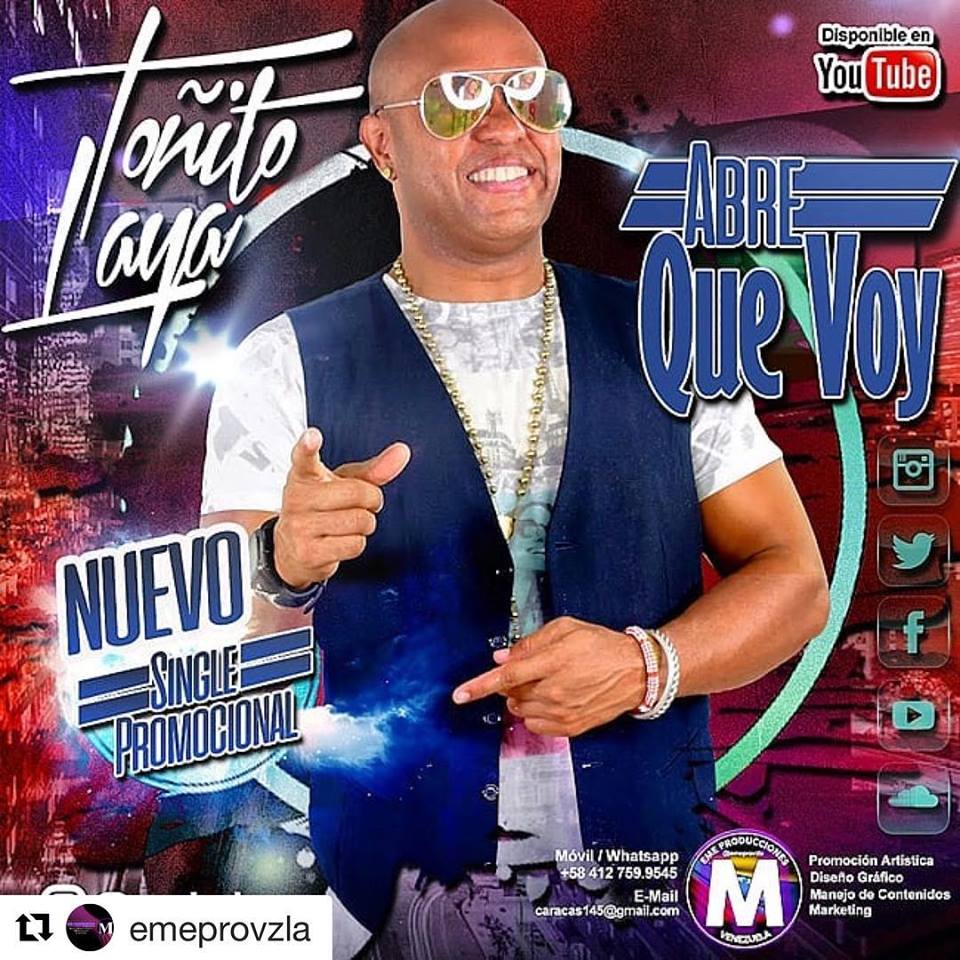
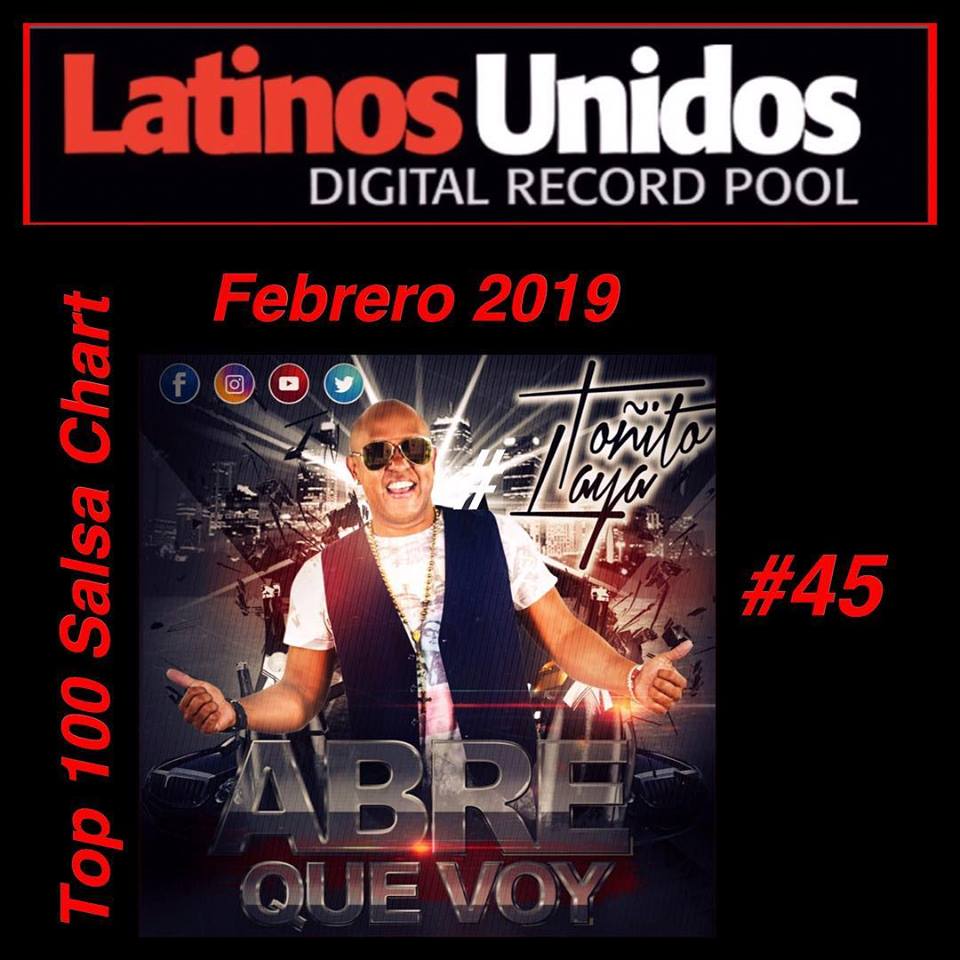
Antonio Laya  “He tells us a little about his new single Abre que voy”

Today we are pleased to learn a little about the life of Antonio Jose Laya Gonzalez (Antonio Laya), a Venezuelan who with his voice and his particular way of dancing has managed to climb and carve his way to success, this Taurean with a great career as a singer of good salsa and especially son, he presents us his new single, abre que voy, a success that has gradually positioned itself on the best musical platforms from his current hometown, the beautiful city of Mexico.

Antonio Laya
Antonio Laya

Good afternoon friend Antonio, thank you in advance for the time you give us to learn a little about your life and give our great readers a little about your son, but in letters, we know from your artistic review that you come from a cultural world. the dance? Why the singing?

I come from a family of musicians, teachers and athletes, in 1995/96 I started in the popular culture workshops of the “Fundación Bigott” (cultural house of great social impact in Venezuela) in the Afro-Venezuelan percussion workshops with Professor Jesús Raúl Paiva, where he gave me the opportunity to enter this world of culture…

Years later this would bear fruit, when I joined the Vasallos del Sol group, a representative entity of Venezuelan folklore, on one of their tours in Europe “Germany” to be exact, one of its dancers stayed, leaving an open vacancy, it was then that I received the invitation to audition, at a festival of San Juan of the foundation, where I was able to win a spot. From then on I became a vassal of the sun.

All this experience in the middle of the show made me lean towards dance, where I got to venture as direct from my own dance school destined to spread the Cuban casino. With Vasallos del Sol I had the opportunity to travel the world, Colombia, Cuba, Ecuador, Spain, Mexico, Korea, Japan, the United States,

How many years has it been since the idea of ​​entering the cultural world of your country?

22 years since I formally started at the Bigott Foundation.

How did the idea of ​​giving life to singing come about?

On the tour of the United States, I began to sing with the vassals accompanied by the guitar of Luis Gonzalez, assuring me later that it was there that he heard me and knew that I could sing, quickly and a few months later he called me and invited me to participate in a project that neither It didn’t even have a name, which would quickly begin to take shape and to date is known as the seventh bohemian.

I began to sing very badly, I lost my voice because I didn’t know how to use the phonator, I began to take classes with several teachers, the first of them Ronald Gonzalez, fundamental pillar to start singing, placing and improving my vocal technique, successively Fabby Olano, Gladys Salazar, Maigualida Ocaña, Dayan Montiel, Marcial, Gustavo Gerardo. We recorded 3 albums on national tours, the second of which is entitled “She takes me” a song that I believe made the Seventh Bohemia popular. Singing was not in the plans but it ended up being one of my great passions.

Antonio Laya
Antonio Laya

A song that marks you?

She sings: The earrings that the moon lacks, I have them saved to make you a necklace I found them this morning in the mist when I was walking next to the immense sea. Since I was a child I woke up very early listening to music by La Sonora Matancera, Felipe Pírela, Damiron and Danzón de Acerina, it fascinated me.

Let’s talk about the seventh bohemia. How do you join this septet?

I am a founder, just in the second rehearsal when only Luis Freites, Cesar “Chagu” Bolívar and Luis Gonzalez were there I was summoned along with Krlos Gonzalez to be part of the group, from then on I started singing “Bilongo” to be exact, hahaha I’m so in love with the black tomasa……….., El Jamaiquino, Me que, among others.

What is the greatest thing you have experienced so far with music? -You could perhaps refer to a concert or moment to share with an artist-

I think the greatest thing I have experienced in music is having shared the stage with great figures both Venezuelan and foreign, Francisco Pacheco, Canelita Medina, Trina Medina, among, Jose Alberto “el canario”, Cheo Feliciano, Alexander Abreu and his Habana de First, Manolito Simonet and his Trabuco, Tiburón Morales, El Septeto Santiaguero, among others. On the other hand, being at the 2014 and 2015 Pepsi Music Awards, the biggest thing, achieving 4 nominations for the 2015 Latin Grammys, a great privilege.

What has given you and what has taken away the artistic life you lead?

It has given me the satisfaction of feeling and receiving the applause of an audience, feeling the magic of a stage, dancing on the most important stages of Venezuela and the countries I visit, I don’t know if there is another artist who performed in the same weekend in two different facets and groups in the most important venue in Venezuela

The Teresa Carreño Theater where on Saturday I danced in my last Vasallos de Venezuela concert in the concert “Guiados por la Luz” occasion to baptize the latest production, with guests from the cultural movement and the next day singing with La Séptima Bohemia alternating with Francisco Pacheco, El Septeto Santiaguero, Jose Alberto “El Canario” Canelita Medina and El Tiburón Morales and as special guests all the best dance academies in Caracas.

Antonio Laya
Antonio Laya

Antonio let’s laugh a little. Tell us about the funniest thing that has happened to you at a concert and the most painful.

WUUAOOO, too many, Well, a concert with Los Vasallos where I went out to dance and my pants began to drop, at a concert at the Yerba Buena Garden Festival 2008 in San Francisco we got the foot burn of the century since the stage was al pure sun and linoleum floor and at the baptism of the album “She takes me” in the main hall of the Central University of Venezuela after the great presentation of the renowned Ramón Castro We went on stage and I couldn’t see anything through my glasses hahaha and I I put in the place of my partner Miguel Guanchez colliding spectacularly ahaha to start singing. What a laugh.

We know of the great success that you have had in Venezuela with the successes that you have sung and have marked the public, they have gone from a sound to a necessity for the dancer. What do you consider this great impact?

Definitely because I come from the world of dance, I’m a dancer and a dancer and I understood perfectly that I needed the same audience that the casineros came from, those of us who at some point went to the Goiticoa school or the Monagas house. By the way, as a curious fact, I was the one who organized one of the first casino parties in a place called Beisboland, a party where I dare say it was the second presentation of one of the most important dance groups in the Venezuelan casino Son Rumbero, where they danced “Cuentas Verdes y Amarillas de Adalberto Álvarez.

How has your foray into Latin music in Mexico been?

Since my arrival in Mexico I have participated in several musical projects, Los Panas.com, La Formula Perfecta, Swing Latino to mention a few, it has not been easy since musically Cancun has a particularity and that is that the music that is danced is still that of the 80s when they talk about salsa, of course with its exceptions, but it has cost me to adapt but in the end it is what is consumed here. Here the forte is the hotel industry, so the Latin genres that marked an era are what is worked on, that’s why as a salsero it has been difficult for me to adapt, although I have worked anyway.

Antonio Laya and his Orchestra

The Salsa or the Son? Which one do you lean towards?

Definitely La Salsa, I grew up in the middle of the Salsa de La Sonora Ponceña, Willie Rosario and the great Ray Barretto to name a few. Son also became my passion but I have to be realistic! came into my life thanks to the Seventh.

Open, I’m coming. Tell us a little about this great topic?

When I got on the plane to leave my country, in addition to nostalgia, I only had one thought, to make my album as a soloist first, I knocked on many doors, I looked for a lot of help, until I finally reached what today is called “Abre que I’m going” in that search the day came when I remembered that I had a buddy who was Omo Aña (Drummer) Maurice Melo and that after conversations, long conversations we would take a first step, start aggravating a theme, my first promotional single.

What surprise do we have to see from Antonio Laya during this 2019?

With God’s favor, to continue recording my album, including my first music video, if money allows me, hahaha For this 2019 I’m going to release my second single, it’s called… (Thinks) Not yet, let’s leave it as a surprise , do a launch concert and seek my respective nomination for the 2019 Pepsi Music Awards and the 2019 Latin Grammys.

Antonio Laya February 2019

Where can our followers find you?

My social networks Facebook and Instagram through @ToñitoLaya, on twitter as @Negrolaya and through my YouTube channel, Toñito Laya


  • « Go to Previous Page
  • Page 1
  • Interim pages omitted …
  • Page 55
  • Page 56
  • Page 57
  • Page 58
  • Page 59
  • Interim pages omitted …
  • Page 89
  • Go to Next Page »

International Salsa Magazine (ISM) is a monthly publication about Salsa activities around the world, that has been publishing since 2007. It is a world network of volunteers coordinated by ISM Magazine. We are working to strengthen all the events by working together.