• Skip to primary navigation
  • Skip to main content

International Salsa Magazine

  • HOME
  • Previous editions
    • 2026
      • ISM / March 2026
      • ISM / February 2026
      • ISM / January 2026
    • 2025
      • ISM / December 2025
      • ISM / November 2025
      • ISM / October 2025
      • ISM / September 2025
      • ISM / August 2025
      • ISM / July 2025
      • ISM / June 2025
      • ISM / May2025
      • ISM / April 2025
      • ISM / March 2025
      • ISM / February 2025
      • ISM / January 2025
    • 2024
      • ISM / December 2024
      • ISM / November 2024
      • ISM / October 2024
      • ISM / September 2024
      • ISM / August 2024
      • ISM / July 2024
      • ISM / June 2024
      • ISM / May 2024
      • ISM / April 2024
      • ISM / March 2024
      • ISM / February 2024
      • ISM / January 2024
    • 2023
      • ISM / December 2023
      • ISM / November 2023
      • ISM / October 2023
      • ISM – September 2023
      • ISM – August 2023
      • ISM July 2023
      • ISM Edition June 2023
      • ISM – May 2023
      • ISM April 2023
      • ISM March 2023
      • ISM February 2023
      • ISM January 2023
    • 2022
      • ISM December 2022
      • ISM November 2022
      • ISM October 2022
      • ISM September 2022
      • ISM August 2022
      • ISM July 2022
      • ISM June 2022
      • ISM May 2022
      • ISM February 2022
      • ISM January 2022
    • 2021
      • ISM December 2021
      • ISM November 2021
      • ISM October – 2021
      • ISM September 2021
      • ISM August 2021
      • ISM July 2021
      • ISM May 2021
      • ISM April 2021
      • ISM June 2021
      • ISM March 2021
      • ISM February 2021
      • ISM January 2021
    • 2020
      • ISM December 2020
      • ISM November 2020
      • ISM October 2020
      • ISM September 2020
      • ISM August 2020
      • ISM July 2020
      • ISM June 2020
      • ISM May 2020
      • ISM April 2020
      • ISM March 2020
      • ISM February 2020
      • ISM January 2020
    • 2019
      • ISM December 2019
      • ISM November 2019
      • ISM October 2019
      • ISM Septembre 2019
      • ISM August 2019
      • ISM July 2019
      • ISM June 2019
  • Spanish
  • Download Salsa App
    • Android
    • Apple

Search Results for: Salsa music

The Callao Carnival A Burst of Gold, Rhythm, and Tradition

The Cultural Heartbeat of Bolívar State

In the mining heart of Venezuela, where gold dictates the pulse of the land, an annual celebration arises that transcends simple festivity: The Callao Carnival.

This is not merely a costume party; it is a living chronicle of resistance, cultural fusion, and joy that has echoed through Bolívar State for over a century. Declared a UNESCO Intangible Cultural Heritage of Humanity in 2016, this festival is the result of a fascinating blend of West Indian, African, and European cultures.
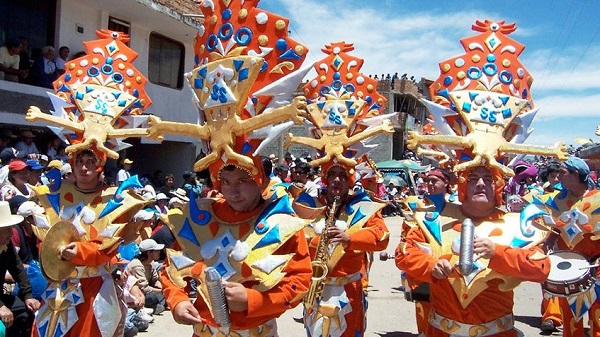
El Carnaval de El Callao de Venezuela, Patrimonio Inmaterial de la Humanidad

A Journey to the Roots: The Origins of Calypso

The history of this carnival is intrinsically linked to the 19th-century gold rush. Immigrants from the British and French West Indies (Trinidad, Grenada, Saint Lucia) brought with them their languages (patois), their cuisine, and, above all, their music: calypso.

Unlike Trinidadian calypso, Callao Calypso developed its own distinct identity. It is sung in both English and Spanish, accompanied by the bumbac drum, the rallo (metal scraper), the bell, and the Venezuelan cuatro, creating a contagious rhythm that narrates the hardships and hopes of the miners of that era.

Iconic Characters: Guardians of Heritage
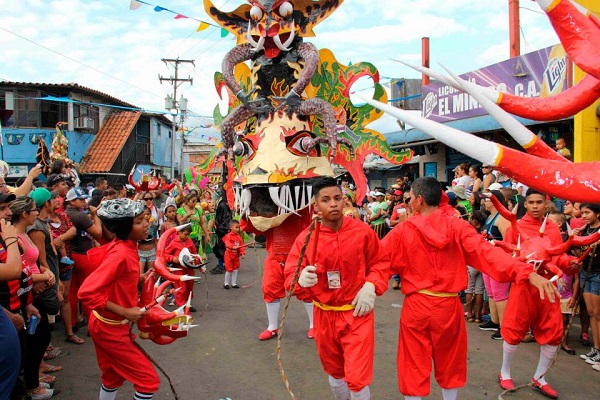
El Carnaval del Callao. Un Estallido de Oro, Ritmo y Tradición

What makes the Callao Carnival unique is its colorful and unchanging hierarchy of characters, each carrying deep significance:

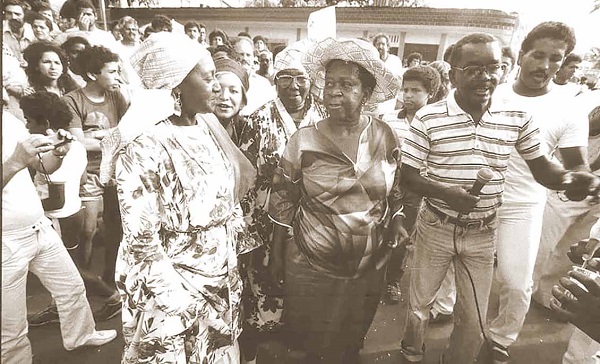
  • The Madamas: They are the central figures and pillars of the tradition. They represent the matriarchs of the West Indies, dressed in regal, brightly colored gowns, headscarves (turbans), and abundant jewelry. The figure of Isidora Agnes, the legendary “Negra Isidora,” is remembered as the great defender of this culture.
  • The Dancing Devils: Dressed in red and black, they wear impressive masks with multiple horns. Their original role was to clear the path for the parade and maintain order with their whips, symbolizing the protection of the festivities.
  • The Mediopintas: Characters who roam the streets smeared in a mixture of charcoal and molasses. With humor, they threaten to “paint” passersby unless they are given a coin (a medio).
  • The Miners: Clad in helmets and carrying tools, they pay homage to the region’s primary economic activity and the workers who founded the town.

More Than a Party: An Identity
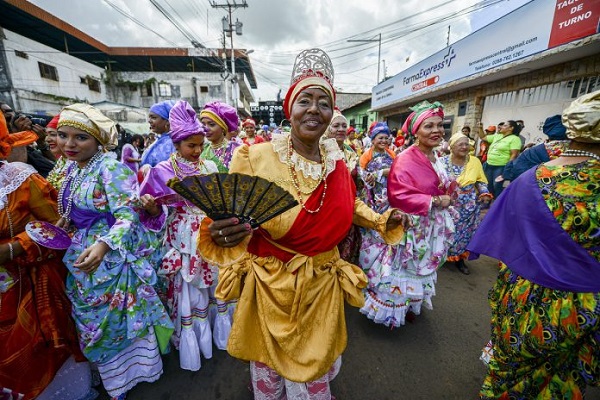
En el corazón minero de Venezuela

The Callao Carnival is a prime example of cultural resilience. During the festivities, social barriers dissolve under the sound of the bumbac. Families prepare all year to sew costumes and rehearse songs, passing this legacy from generation to generation.

Visiting El Callao during this time is to immerse oneself in a whirlwind of energy, history, and hospitality, where every parade tells a story and every beat celebrates freedom.

Isidora Agnes: The Eternal Queen Who Turned Calypso into World Heritage.

To speak of Isidora Agnes, universally known as “La Negra Isidora,” is not just to remember a figure from the past; it is to invoke the very soul of the El Callao Carnival. She was the vital force who rescued, protected, and championed this tradition until it reached its current status as a UNESCO World Heritage treasure.
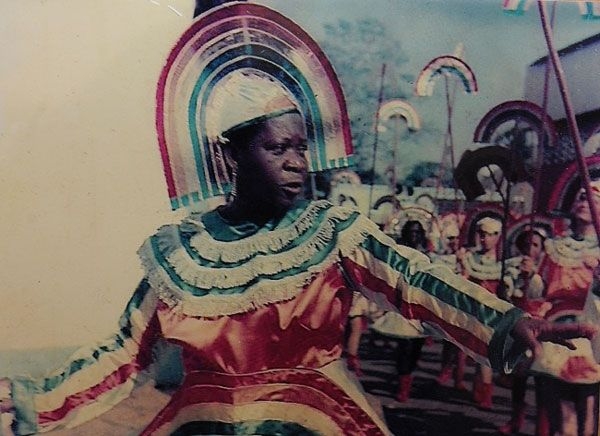
Isidora Agnes La Reina del Calipso de El Calla

A Leader Forged in El Callao

Born on August 17, 1923, Isidora was much more than a festive figure. With a firm character and clear convictions, she stood out as a social leader and labor unionist. Her role as the town’s first telephone operator was no coincidence; this position allowed her to be the town’s communication hub, hearing firsthand the needs and struggles of her people.

With deep West Indian roots (the daughter of immigrants from Saint Lucia and Martinique), Isidora grew up with calypso in her blood, leading her to fiercely defend her identity at a time when the tradition was beginning to fade.

Rescuing a Fading Tradition

In the mid-20th century, the El Callao Carnival was facing an identity crisis and losing ground to outside influences. Determined not to let her heritage die, Isidora launched a cultural crusade:

  • Institutionalization: In 1954, she founded the “Friends of Calypso Association,” giving the festival a formal structure.
  • Discipline and Aesthetics: She organized the parades under strict standards of authenticity, demanding rigor in costume making and respect for traditional music.
  • National Exposure: She took calypso beyond the borders of Bolívar State. Thanks to her, Caracas and the rest of Venezuela discovered the thundering bumbac and the patois choruses.

The “Madama” Par Excellence

While the carnival features many “Madamas,” Isidora became the ultimate icon. She didn’t just wear the dress; she personified the elegance, respect, and stately joy of the figure. Her presence in the streets dictated the rhythm of the entire festival.

Beyond the Dance: Her Social Legacy

“La Negra” Isidora’s commitment didn’t end when the drums were put away. She was a tireless advocate for El Callao. It is said she never hesitated to travel to the Miraflores Palace to demand improvements from the nation’s presidents, achieving milestones such as the installation of the sewage system and the construction of the local hospital.
Isidora Agnes
Isidora Agnes

Facts That Immortalize Her Legend

  • The Carnival Anthem: The famous song “Isidora, Isidora, Isidora Callao Calipso Queen,” composed by her close friend Lulú Basanta, is considered the unofficial anthem of the festivities today.
  • A Poetic Farewell: She passed away on March 5, 1986. Ironically, it was Ash Wednesday—the day the carnival ends. She was laid to rest with state honors and, as per her final wish, to the rhythm of calypso.
  • A Date of Honor: In commemoration of her birth, every August 17th is celebrated as Municipal Calypso Day in El Callao.

Also Read: Samba el baile que despierta el Carnaval en Brasil 

Jorge Duran

Europe / Germany

Interview to Jorge Duran & his Jalea de Mambo

Now settled in Europe, venezuelan vibraphonist Jorge Duran is leading Jalea de Mambo band which mix musicians from different nationalities recovering the swing and mambo of the 50s with the smart flavor of the New York Palladium, the famous Broadway dance-hall, and the color of the best Latin Jazz that can be heard in Europe right now. Its characteristic vibraphone sound makes this band a unique and raw example in the current music panorama.

Recently documentary “We Like It Like That” has been released worldwide http://latinboogaloo.com/ emphasizing that cultural revolution where boogaloo, mambo, among other genres, were considered the so-called “Latin Soul” creating that cultural movement which day by day takes more strength everywhere.

Jorge Duran
Jorge Duran

1) Jorge, tell us a little bit about your background, your roots, and your musical influences.

Well, I started playing Latin American percussion in Venezuela (Caracas) having the chance to share with great musicians beside studying with amazing percussion players but my degree was focus in composition. Then I begun to play jazz vibraphone and it took me a few years to play again Latin American Music although here I am ready to give my very best.

2) How did you come to the idea of Jalea de Mambo?

The idea of Jalea de Mambo came to me long time ago (10 years ago or more) when I first heard the album Cal Tjader Modern Mambo Quintet, quite old album indeed (1955). That record change everything for me and blew my mind up focus then on mambo, latin jazz and what so called “Latin Soul”.

3) Mambo, Boogaloo, what many people called “Latin Soul” was a revolution during the 50s. Do you think that nowadays these genres could reach something similar?

I really think everything is possible if you work hard, I’m not trying to make a revolution my idea is that every single person come to see us playing, enjoying magic music, having a great time. Obviously that “revolution” happened once but its essence has come along the years in all musicians who play caribbean rhythms. Nowadays, this genre is getting popular again but honestly I believe it has never lost validation.

Photo of Jorge Durán and his band members in the music world

4) What are your feelings coming from Venezuela performing in Europe and worldwide? Is the musical movement opened and active enough over there?

My feeling is that in Europe we, musicians, have more opportunities to show our culture and most of the people here are opened enough to hear or see our projects.

Beyond Europe is quite the same because I have Heard about concerts with more tan 100.000 audiences in Arab Countries, for instance. It simply means that latin and caribbean music “hook” people hearts so they enjoy it full.

5) Now that you are settled in Europe tell us a bit more about your projects and expectations.

I’m living in Germany now and it is a huge challenge for me as it is a real different culture and language but my idea is to spread the Latin American culture and music not only in Europe but worldwide. We are living very tough moments at this very moment and firmly believe that músic and culture are more needed than ever because music tame the beasts, as people usually say, and that’s what we need now, I mean, peace, calm and mainly love.

Photo of Jorge Durán and his team at the live concert

6) Looking for these goals, are you working on your own or you are supported by a company, agency or similar.

Now I have the great pleasure to say that I’m not alone in this business because Cat 7 Production is my new family and they are really focused in spreading my music to reach more people. I think this is the idea, music is a language we need to be heard as I said before.

7) Finally Jorge, let’s share a message for all your fans beside colleagues who work hard to achieve similar goals you are looking for.

Well, I’m always very grateful when some one takes time to send emails or messages after watching us in a concert, I love it and love fans who give me strenght to keep doing what my heart says. My humbly advice to all musicians who have an idea or project is that never stop making music because everything is possible in life and the real power is inside us. This is one of more beautiful and hard profession but sure worth it!

Jorge Duran in concert

Asia / February 2026

Apocalypse Now 2025Dubai Latin Crazy TribeGuia Fu 2025

Karina Bernales present February 2026 FESTIVALS

Japan circular flag
JAPAN
Fusafes 2026

FUSAFES Fukuoka Salsa Festival

Feb 20-22, 2026

Dining Event Space
TIEMPO HALL
3F Daimyo11511 Bldg., 1-15-11 Daimyo, Chuo-ku
Fukuoka 810-0041, Japan

Calibrated maracasBill Martinez

Directory of Asian nightclubs

Hong Kong `circular flag

HONG KONG

Graffiti LKFGraffiti LKF
G/F, 17-18 Lan Kwai Fong, Central
Central, Hong Kong
Solar LKFSOLAR LKF
Central 2nd Floor, Ho Lee Commercial Building, 38-44 D’Aguilqr Street, Lang Kwai Fong Central
HKI Hong Kong
Sole Mio RestaurantSole Mio
Upper Ground Floor, 51 Elgin Street, Soho
Central Hong Kong, Hong Kong

ISRAEL

Havana Music Club
Havana Music Club
Yigal Alon St 126
Tel Aviv-Yafo, Israel
+972 3-562-3456

Japan circular flag
JAPAN

Egoland
Egoland Bar Akihabara
Chiyoda City, Kanda Sakumacho, 4 7-3 2F
Tokyo, Japan
Bar MirageBar Mirage
5F VORT Roppongi Briller, 3-14-14 Roppongi, Minato-ku
Tokyo 106-0032, Japan
+03-5860-6946
FiestaFiesta Latin Spot Bar
3F, 1 Chome-14-6 Kabukicho, Shinjuku City
Tokyo 160-0021, Japan
+81 90-1086-2878
El Cafe Latino TokyoEl Cafe Latino

3 Chome-15-24 Roppongi, Minato City
Tokyo 106-0032, Japan
+81 3-3402-8989

Latin Club Leon
Latin Club Leon
5-17-6 B1 Shinjuku, Shinjuku-ku
Tokyo 160-0022, Japan

La Tropi Azabu
La Tropi Azabu
3F Roppongi Azelea Bldf. 1-3-6 Nishi-Azabu, Minato-ku
Tokyo1060031, Japan

Thailand circular flag
THAILAND

bAFROS lOUNGE
Bafros
Sugar Club Complex Sukhumvit Soi 11
Bangkok 10110, Thailand
+66 63 039 8700

Havana Social Cocktail Bar
Havana Social
1/1 Sukhumvit Rd. Soi 11
Bangkok, Thailand
+66 2 821 6111

Vietnam circle flag
VIETNAM
Apocalypse Now Vietnam
Apocalypse Now Sai Gon
2F Thi Sach
Ho Chi Minh City, Vietnam 70000
+84 799 741 261


La Habanera Vietnam
La Habanera
Basement 81 xuân diệu Tay Ho
Hanoi 100000, Vietnam
+84 35 320 7220

La Pachanga Saigon
La Pachanga Club Saigon
3rd Floor, 39A Co Bac Street, Cau Ong Lanh Ward, District 1
Ho Chi Minh City 700000, Vietnam
+84 93 855 79 21

Africa / February 2026

PedSalsa Angola 2025

Karina Bernales present  February 2026  FESTIVALS

Benin Circle Flag
BENIN
Wst African Kizomba 2026

WEST AFRICAN KIZOMBA FESTIVAL

Feb 23 / Mar 01

HOTEL La CASA CIELO
Maison Rouge, Cotonou
Cotonou, Bénin

€ 405

Calibrated maracasMartinez attorney

Directory of African nightclubs

Angola circular flag
ANGOLA

Casa da Música Talatona
Avenida S8, Espaços Avenida, 2do anda, porta 36,Talatona
Luanda, Angola

Marginal Lounge Conceito 3D
Marginal Lounge
Avenida 4 de Fevereiro, Marginal de Luanda, Edifício Deana Day Spa
Luanda, Angola

PediSalsa Luanda
Restaurante Péd’Salsa
Ilha de Luanda (ex Cais de 4)
Luanda, Angola

South Africa cIRCULAR FLAG
SOUTH AFRICA
Pa Mi Corazon Academic
Pa Mi Corazon
Suite 4, 680 Musgrave Rd, Essenwood, Durban, 4001, South Africa

Salsa Addicts Academic
Salsa addicts
47 5th Ave, Parkhurst
Randburg, 2193, South Africa

Carlos Jimenez offers his talent and passion to charm the audience in universities, hotels, and restaurants all over New York

We are very happy because this beginning of the year has brought us a very friendly conversation with brilliant bandleader, composer, vocalist, and flutist Carlos Jiménez, who kindly answered the questions we had for him. 

The New Yorker has many interesting things to tell, so we hope that everyone will enjoy the material below.

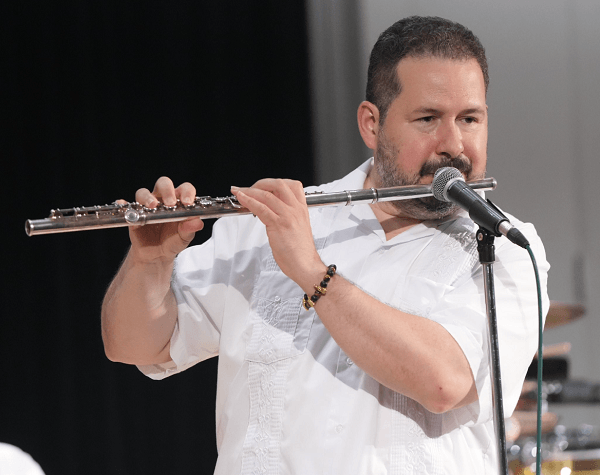
Carlos Jimenez playing
Carlos Jimenez playing the flute live

Carlos’ beginnings in music

Carlos was born in New York City, but moved to Puerto Rico with his family when he was six years old. It was on the Island of Enchantment that he discovered his inclination toward music thanks to his trumpeter father William, and his cuatrista grandfather Cruz, who encouraged him to take music lessons. Therefore, he also began to receive musical training and built competence for playing percussion instruments such as the timbales, bongos, and congas. 

His first lyrical instrument was the trumpet, which he learned to play under the tutelage of Professor Pablo León at Francisco Zayas Santana High School. However, inspired by Mongo Santamaría and his musical arrangements for his song “Song For You,” he decided to switch instruments and start playing the flute, which he has continued to do.

Carlos’ return to New York

As a young man, he decided to return to his hometown highly motivated by the vibrant Latin music scene there, which he describes as “the city where all our dreams come true.” While there, he enrolled at the Music Conservatory of Westchester to study classical flute, but his training have not been completed. 

He also studied jazz harmony and voicing with piano teacher Michael Longo, who he describes as a good friend and teacher to the point of making a recording together. Unfortunately, Longo was one of the many victims of the COVID-19 pandemic, which was an immense sadness for Carlos and those who had the privilege of knowing him. 

Orlando Marín and Carlos Jimenez
Orlando Marín ”El último Rey del Timbal” and Carlos Jimenez

Results of his prolific career

After more than 20 years of successful career, Carlos has built a great reputation in the industry at the point of passion and hard work. He himself says that his good name comes as a result of his responsibility, reliability, and, most importantly, his ability to play good music.

His great skills as a professional and musician have led him to play at corporate events for companies such as Victoria’s Secret, Nike, ScotiaBank, Regeneron, and many others. In addition to that, he has also been able to play and lead orchestras in performances for universities and cultural institutions such as Lehman College, Sarah Lawrence College, New York Botanical Garden, Columbia University, and many more. 

Likewise, Carlos’ band has performed in so many festivals such as West Harlem Jazz Festival, Harbour Jazz Festival, Fall Harvest Fishkill Farm Festival, Lake George Festival, Summer Sound Festival, and many others. 

Altruistic side

In addition to the above, Carlos has also earned the respect of his colleagues thanks to the numerous galas, charity events, and community activities the artist has been involved in recent years, which has made him worthy of numerous awards for his community service. This shows that the flutist is not only passionate about his craft, which is music, but also uses it to do good to those in need. We can also add that he has headlined numerous shows at well-known restaurants and hotels such as Casa Cipriani Hotel, The Marriott, Ritz Carlton, The Lexington Hotel, among others.

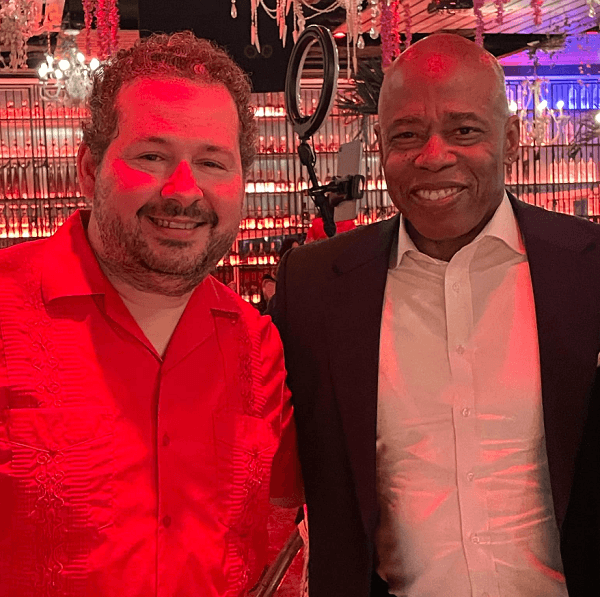
Carlos Jimenez and Eric Adams
Carlos Jimenez and former New York Mayor Eric Adams

The Carlos Mambo Dulcet

Together with his orchestra, Carlos has released several albums, including “Red Tailed Hawk Vol. 1,” “Red Tailed Hawk Vol. 2,” and “Despierta Boricua,” among others. The artist closed the conversation by saying that his group continues to be formed and has more than 100 musicians and all are are wonderful.

Read also: La Nota Band showcases the best of Venezuelan talent

  • « Go to Previous Page
  • Page 1
  • Interim pages omitted …
  • Page 102
  • Page 103
  • Page 104
  • Page 105
  • Page 106
  • Interim pages omitted …
  • Page 293
  • Go to Next Page »

International Salsa Magazine (ISM) is a monthly publication about Salsa activities around the world, that has been publishing since 2007. It is a world network of volunteers coordinated by ISM Magazine. We are working to strengthen all the events by working together.